
Gastric Band Surgery | Procedure & Cost
PACE Hospitals is recognized as the best hospital for gastric band surgery in Hyderabad, India, offering safe and effective Lap Band Surgery for long-term weight management. Our expert bariatric surgeons specialize in minimally invasive techniques, ensuring a smooth lap band procedure, quicker recovery, and sustained results.
With advanced technology & comprehensive care, we help patients manage obesity and related health conditions through personalized treatment plans. We also provide clear guidance on gastric band surgery cost, supporting informed decisions throughout your weight-loss journey.
Book Appointment for Gastric Band Procedure
Gastric Band Surgery Appointment
Why Choose PACE Hospitals for Gastric Band Surgery?
Recognized for excellence in healthcare delivery with
NABH, NABL, NBE/DNB, NABH Nursing Excellence, and ISCCM accreditations.
Gastric Band Surgery
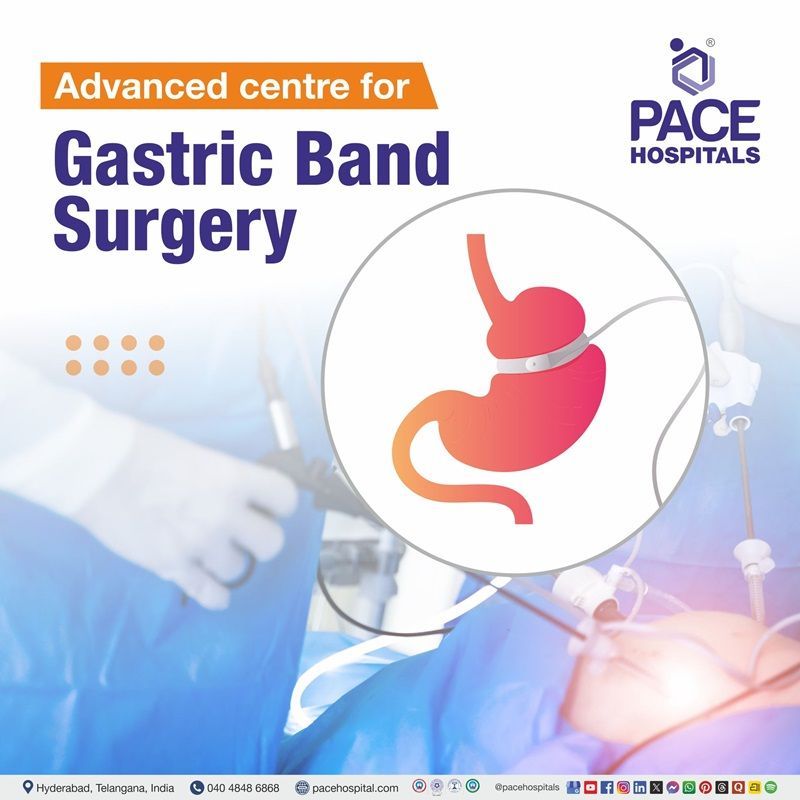
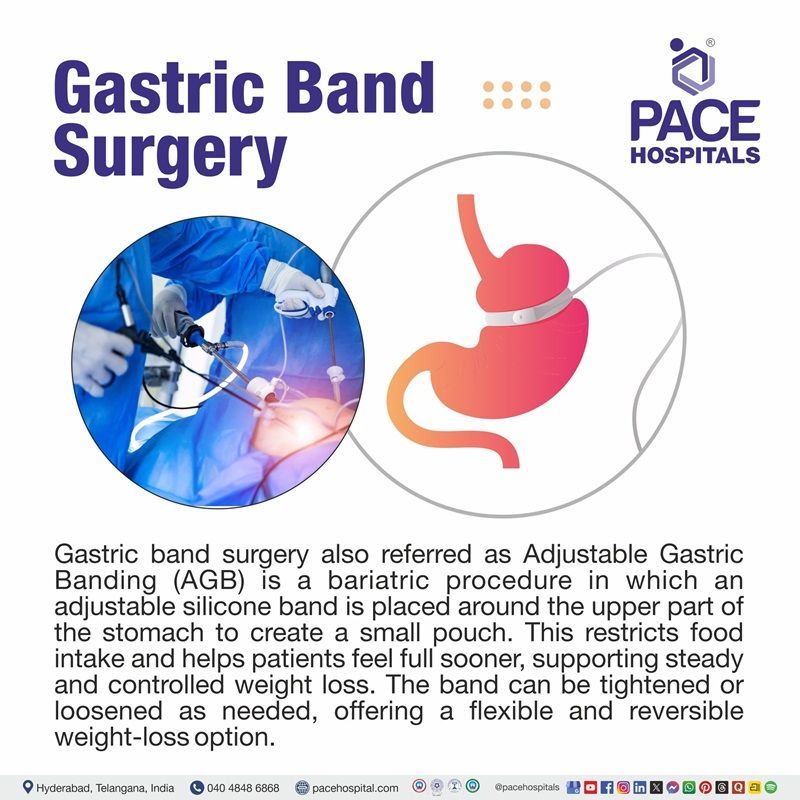
Gastric banding surgery is a type of restrictive weight loss procedure. In this procedure, the gastric banding surgeons wrap a saline-inflatable silicone band around the proximal section of the stomach, decreasing its luminal volume nearly by 15ml.
Alternative Names used for Gastric Band Surgery
Lap-Band; LAGB; Laparoscopic adjustable gastric banding; Bariatric surgery - laparoscopic gastric banding; Obesity - gastric banding; Weight loss - gastric banding
Laparoscopic Adjustable Gastric Banding Meaning
Since this surgery is done using a laparoscopic method called laparoscopic adjustable gastric banding. Deriving its name from Greek origin, lapara meant the loins or the soft part of the body between the hips and ribs and scopy - meant to see; laparoscopic surgery is done by inserting a series of tubes (with a camera in one of them) in the abdomen. This modern surgical technique is also called minimally invasive or keyhole surgery, as it requires only a few orifices for penetration of surgical instruments compared to open surgery, in which a substantial cut on the abdomen is made.
What is Laparoscopic Adjustable Gastric Banding Procedure?
A laparoscopic adjustable gastric banding procedure is also called an Adjustable Gastric Band or simply just a Lap band is a type of bariatric surgery which is done to reduce weight. The adjustable gastric band is made of silicone that is surgically placed around the upper portion of the stomach to help restrict the quantity of food a person is allowed to consume. When compared to other operations, the effect on illnesses caused by obesity and weight reduction over the long term in this procedure is much lower. As a result, the use of it has decreased during the previous decade.
The laparoscopic implantation of an adjustable gastric banding (LAGB) was first described by Belachew in a journal “Surgical Endoscopy” in 1993. Since then, the laparoscopic adjustable gastric banding underwent to a lot of modifications, revision and refinements to become as it is currently defined. These changes affected both the technological and the surgical techniques, but above all the pre- and post- operative management.
Principle of Lap Band Surgery
Obese individuals are less satiated when compared with lean individuals after a meal. In this restrictive procedure, a band is placed around the upper portion of the stomach, shrinking it. This causes satiety even with a lesser quantity of food, thus creating the feeling of “fullness” in the patient.
The degree of constriction of the stomach is variable. It may be adjusted by modifying the amount of saline injected into a subcutaneous port, which is linked to a balloon within the confines of the band. The capacity to adjust the degree of constriction is believed to be responsible for the superior outcomes associated with this procedure compared to procedures such as vertical banded gastroplasty (VBG)
Laparoscopic Adjustable Gastric Banding Indications
- A body mass index (BMI) of 40 or above or a BMI above 35 or greater with at least one comorbid condition connected to obesity. These illnesses include hypertension, diabetes, and very debilitating musculoskeletal problems.
- The previous history of nonoperative weight loss attempts unsuccessfully.
- Clearance of mental health without reliance on alcohol or illicit substance dependence.
- No medical contraindications to surgery.
Laparoscopic Adjustable Gastric Banding Contraindications
Patients who are unable to endure general anaesthesia should avoid this surgery. It is also not recommended for those with uncontrolled coagulopathy or high operative risk. Relative contraindications could include:
- Pregnancy,
- Prader-Willi syndrome,
- Malignant hyperphagia,
- Untreated severe psychiatric illness,
- Cirrhotics with portal hypertension,
- Autoimmune connective tissue disorders,
- Chronic inflammatory conditions, and
- The need for chronic corticosteroid use.
Considerations of a Gastro Surgeon Before Performing Laparoscopic Adjustable Gastric Banding (LAGB)
The multidisciplinary team of doctors performing bariatric surgery of laparoscopic adjustable gastric banding take the utmost care in creating tailor-cut data-driven patient selection protocols and evaluative pathways to streamline practice and improve patient safety.
Best evaluatory protocols for the patient will yield a comprehensive understanding of a patient’s medical history as it pertains to predicted outcomes apart from weight loss, such as
- Cardiac health
- Venous thromboembolism risk
- Sleep architecture
- Pulmonary function
- Gastroesophageal anatomy
- Helicobacter pylori status
- The psychological ability to comply with postoperative health maintenance and weight loss recommendations.
The patients are also checked for their medical history for any form of large hiatus hernia or severe gastro-oesophageal reflux, as it could be a relative contraindication. Silicon-allergic patients are usually not selected for this surgery.
An interdisciplinary team prepares and motivates the patient in order to cut down risks and failures before laparoscopic adjustable gastric banding. They mainly include the identification and the management of organic and behavioural pathologies as well as the implementation of personal health optimization and performance through sustainable lifestyle changes thereby achieving synchronistic weight loss.
Furthermore, the interdisciplinary team clearly describes to the patients the complexity of the pathway required to reach the desired weight loss, which includes the requirement of changes in diet and life-style behaviours. Finally, the interdisciplinary team explains the meaning of the informed consent regarding the procedures.
Preoperative Weight Loss and its Principle
Apart from other evaluatory pathways, the concept of preoperative weight loss has been used as a screening tool for predicting success in surgical candidates. It is accepted that patients who weigh less have decreased risk with surgery and less weight-related comorbidity.
- Thinner patients generally require less rigorous preoperative clearance than their heavier counterparts due to a lower burden of obesity-related disease.
- It is technically easier to operate on someone thinner due to improved exposure and accessibility.
- Preoperative programs to decrease BMI would theoretically result in decreased perioperative and postoperative complications such as bleeding, wound infection, etc.
- In addition, shorter operative times and hospital stays could occur.
- In addition to the hypothetical risk improvement with preoperative weight loss, many medical providers theorised that patients who demonstrate preoperative weight loss are more motivated and serious about adhering to postoperative diet and exercise recommendations.
Steps for preoperative weight loss
Most preoperative weight loss programs include several meetings with nutritionists and physicians and psychiatric assessments and weigh-ins at these appointments.
In these and other meetings, the bond between the patient and healthcare providers strengthens, which is necessary for a low attrition rate during the postoperative phase.
If the patients cannot show adequate weight loss or miss appointments, they may be forced to start over or, in extreme cases, are even refused surgery.
Laparoscopic Adjustable Gastric Band Procedure & Preparation
The preparation for surgery may start months before the actual procedure. A preoperational weight loss procedure plan is presented to the patients, and is expected to stick with it. Apart from various other advantages, the preoperational weight loss procedure plan provides discipline to the patient, which helps restrict food after surgery.
The doctor explains to the patient that although laparoscopic adjustable gastric banding is an effective bariatric surgery, it may not work over the long term if the patient fails to change their habits and lifestyle.
Preoperative evaluations
Preoperative evaluations are necessarily done once the patient demonstrates substantial preoperative weight loss. These evaluations include:
- Allergy evaluation
- Cardiac evaluation
- Nutritional evaluation
- Anaesthetic evaluation
- Sleep apnoea evaluation
- Psychological evaluation
- Obesity Hypoventilation evaluation
- Upper gastrointestinal anatomy evaluation
- Pulmonary evaluation is usually for pulmonary embolism and venous thromboembolism
Informed consent
After undergoing all the aforementioned evaluations, the new information about the patient’s overall candidacy for surgery is revalued, considering the result of preoperative weight loss. This new information may change the benefit-risk equation discussed at the patient’s initial evaluation.
If the patient is deemed for bariatric surgery, what type of surgery comes in. Once laparoscopic adjustable gastric banding surgery is confirmed, the patient is provided with all the information about the surgery required to make an informed decision.
The language associated with consent is in simple terms. The consent process, theoretically and ideally, should be a focused discussion reinforcing the personalised risks and benefits to the specific patient, which usually varies from case to case. The patient is provided with ample opportunities to ask any questions.
Ultimately, both the patient and the caretakers should fully understand the therapy and the risks associated with the therapy.
Commencement of surgery is done only after the informed consent form is signed.
During the laparoscopic adjustable gastric banding surgery
Entry into operation theatre and anaesthesia
- The operation can take around 2-3 hours.
- A surgical gown will be provided to change the dress.
- An intravenous line will be inserted into the patient’s arm or hand, through which medications will be administered.
- The patient will be positioned supine and put to sleep with general anaesthesia. The anaesthetic dose is calculated to the body weight.
- The patient's vital signs (heart rate, blood pressure, breathing rate, and blood oxygen level) will be monitored during surgery.
Pneumoperitoneum and exposure of left crus
- Once the patient is sedated, five apertures are created on the abdomen above the umbilicus to insert four 5-mm ports and one 15-mm port.
- Once the patient is sedated, a pneumoperitoneum is created with sufficient intraabdominal pressure to place the trocars and liver retractor (laparoscopic instruments).
- By watching the visuals on the monitor, the surgeon can plan the stomach dissection from the greater curvature (back of the stomach), which is continued towards the diaphragm. This culminates in the dissection of the left paraesophageal ligament dissection exposing the left crus.
Calibration tube and attachment of the gastric band
- The next step begins with the anaesthetist's introduction of a calibration tube into the stomach. The calibration tube has a balloon at the end, which can be inflated with approximately 15–20 mL of fluid and pulled back towards the oesophagus. This determines the position of placing of the band.
- The next step deals with the creation of retrogastric tunnel by opening the pars flacida to enter the lesser sac level. Just below the calibration balloon, the retrogastric tunnel is built by the dissection made from the lesser curvature close to the stomach.
- Through this tunnel, a long atraumatic instrument is advanced, which contains a gastric band attached to the appropriate end.
Locking with caution and fixation of port
- The gastric band is retracted back from this tunnel, and the site of the band is adjusted according to the calibration tube placed earlier, after which the lock mechanism of the band is closed.
- Ventral sutures with 2-3 stitches (from the anterior and lateral surfaces of the stomach) prevent band migration following its placement.
- The tube of the band is removed from the abdomen using the proper trocar site so that it may be attached to the injection port and linked to it.
- Care must be taken while closing the band as insufficient weight loss may occur if the stoma (opening) is too large but could risk postoperative food intolerance in case of the narrow stoma.
- After adjusting the stoma width, the port is fixed with sutures across the anterior rectus sheath. Most surgeons postpone fluid injections to the band until the first postoperative visit to avoid vomiting.
After the laparoscopic adjustable gastric banding surgery (post-surgical)
- After having a laparoscopic adjustable gastric banding surgery, the patient needs to stay in the hospital for one or two days.
- The patients will be taken into a recovery room or post-anaesthesia unit once their vital signs (heart rate, respiration rate, and blood pressure) are stabilised.
- The patient will be kept on observation to rule out any anomalies.
- The patient and the caretakers are given all the necessary advice for a faster recovery and improving lifestyle.
- Patients may need to follow up with their surgeon or primary care provider to ensure their recovery is progressing as expected. They may also need additional tests or procedures to monitor their progress.
- The patient may need to take time off work or other normal activities to recover. They should follow the advice of their healthcare team about when it is safe to return to their normal activities.
Laparoscopic Adjustable Gastric Banding Recovery Time
Laparoscopic adjustable gastric banding surgery has the quickest recovery time of all procedures. Patients who underwent laparoscopic adjustable gastric banding surgery often take one week to heal completely before returning to work. Laparoscopic adjustable gastric banding surgery patients often stay in the hospital for about one to two days.
Band Adjustment Technique
Band adjustments are a critical component of the management and success of this procedure. The first band adjustment is usually performed four weeks after surgery to allow healing and avert early tightness of the stoma and emesis. Good outcomes are associated with patient compliance and periodic adjustments.
Patients are seen monthly for the first 6-12 months; approximately five to six adjustments are performed in the first year, tapering to two or three annually in the next two years. Adjustments to instil fluid in the band are performed when there is an insufficiency of satiety between meals, large food portions at meal times, or inappropriate weight loss (i.e., ideally, 0.5-1.0 kg per week in the first year). Adjustments to remove fluid from the band are performed in response to symptoms of band over-tightness.
Follow-Up Protocol
Patients after gastric band placement require a more frequent initial follow-up, which includes: monthly visits during the first year to assess the need for band adjustment, as-needed visits when the patient is experiencing over-restriction symptoms, continuous evaluation of eating habit changes (chewing food thoroughly, eating slowly, and taking small bites) to avoid over distension of the lower oesophageal contractile segment above the band, and assessment under fluoroscopy with a contrast swallow on a routine basis to assess the anatomy and band position.
The necessity of being adherent to the follow-up protocol
Maximum success following laparoscopic adjustable gastric banding surgery requires continual lifelong aftercare. This is essential for band adjustments, weight and dietary assessments, patient education and diagnosis of complications. Although all patients are encouraged to regularly attend laparoscopic adjustable gastric banding aftercare, non-attendance is common, with reported attrition rates ranging from 15 % to more than 45 %. Failure to attend aftercare has been associated with the development of postoperative complications, poorer weight loss and maintenance and inferior resolution of obesity-related comorbidities.
Questions that the patients can ask the healthcare team about laparoscopic adjustable gastric banding surgery?
- Can I have an online consultation for follow-up, or should I be present there?
- Now that I am eating less compared to earlier, won't I feel weak and tired?
- When can I start riding my bike or driving my car after surgery?
- How much time does it take to fully heal the surgical cuts?
- How many months will the follow-up is going to be?
- How many times should I come for a follow-up?
- How often do I need to adjust the band?
- How can I manage pain after surgery?
- What should my diet plan be?
- When can I start exercising again?
- How do I care for my incisions?
- When can I return to work?
Risk Factors of Laparoscopic Adjustable Gastric Band Surgery
The risks and benefits of any surgery are calculated before its commencement. The various risk factors which directly affect the surgery and concern the surgeon are:
- Male gender: An increased risk of postoperative complications, such as an anastomotic leak, infection and peritonitis, is associated with males, according to several studies.
- Obstructive sleep apneea syndrome (OSAS): A well-recognised risk factor, OSAS is a common disorder involving the collapse of the upper airway resulting in repetitive episodes of nocturnal breathing cessation. It is associated with excessive daytime somnolence (increased daytime sleep) and significant cardiovascular morbidity and mortality.
- Diabetes and insulin resistance: Although common among candidates for bariatric surgery, diabetes (prevalence: 20–35%) is a risk factor, especially fasting hyperglycaemia (increased blood sugar even after fasting). Obesity is a prime cause of insulin resistance and fasting hyperinsulinemia. The diabetic patient experiences an increased risk of anastomotic leak. Interestingly, the highest preoperative insulin can be correlated with reduced cardiovascular risk after bariatric surgery.
- Active tobacco abuse: alters the microcirculation, thereby increasing risks of delayed healing and post-surgical infections. Tobacco abuse can increase the risk of prolonged endotracheal intubation, pneumonia, shock and prolonged hospitalisation. These can be corrected within four weeks by the cessation of tobacco use.
- Cardiovascular disease (arterial hypertension, arterial disease, coronary artery disease, heart failure): risk related to heart failure, the strongest risk factor with a 9.5-fold increased risk for death.
- Pre-surgical weight loss: Research indicates that weight loss was not desirable before surgery (>10% loss of body weight within six months before surgery was associated with a significant mortality risk).
- Hypoalbuminemia: Increased risk of postoperative complications is seen with it.
- Obesity: It causes insulin resistance and fasting hyperinsulinemia. Obesity also causes sarcopenia (diminished muscular mass), promoted by weight fluctuations.
- Debilitation and functional handicap: Obese patients with ambulation difficulty (who need wheelchair assistance) are a significant risk factor for postoperative complications.
- Medication: Corticosteroid use was associated with a high risk of post-surgical mortality.
Laparoscopic Adjustable Gastric band Surgery Complications
Patients under 55 with BMIs below 50 kg/m2 had less than 1% mortality, but for people with >60 kg/m2 BMIs, the mortality rate is 2-4%. The rate of bariatric surgery side effects is less than 10%.
The experience of the surgeon and the frequency (> 100 cases per year) can positively reduce the risk of morbidity and mortality. Laparoscopic adjustable gastric banding side effects are divided into early and late complications.
Early complications:
Postoperative bleeding: Approximately 3.1% of patients experience bleeding after bariatric surgery in which
- spontaneous healing is seen in 22%,
- blood transfusion requirement is seen in 55% and
- operative intervention requirement is seen in 22%.
Late complications
- Nausea / vomiting: The healthcare team may prescribe anti-emetics, prokinetics, antacids and adequate hydration to stop it. The feeling of postoperative gastric fullness or gastric spasm was the possible reason, which would subside after adaptation.
- Gastric perforation: This is a rare but serious complication accompanied by pain, tachycardia, and high leukocyte count. The surgeon must be immediately consulted.
- Band erosion or infection: As with the laparoscopic adjustable gastric banding procedure, the band may get infected and usually needs removal.
- Band slippage: Usually seen with severe gastroesophageal reflux disease. The surgeon may prescribe an X-ray to detect the loss of a 45° angle between the band and the horizontal line. Mostly it needs the removal of the band, which can be replaced three months later.
Conversion Surgery in Case of laparoscopic Adjustable Gastric Banding Surgery
Obese individuals who undergo laparoscopic adjustable gastric banding surgery to lose weight must also prepare for the scenario of surgery failing, i.e., the surgery may not offer the expected weight loss. In such cases (inadequate weight loss or weight regain), conversion to Roux-en-Y gastric bypass, biliopancreatic diversion with duodenal switch, or re-sleeve gastrectomy can be the surgical options.
Conversion surgery is performed once again on the patient who underwent one type of bariatric surgery to convert into another, thus achieving the goal of inadequate weight loss.
A series of studies demonstrated that laparoscopic adjustable gastric banding surgeries have a conversion rate of around 1%, usually due to hepatomegaly or occasionally to adhesions.
Laparoscopic Adjustable Gastric Banding Surgery Outcomes
Weight Loss: The average percent excess weight loss (% EWL) after laparoscopic adjustable gastric banding surgeries is as follows
- 26.5% at six months
- 34.5% at 12 months
- 37.8% at 24 months, and
- 36.2% at 36 months.
Type 2 diabetes mellitus: While 100% of patients showed a significant improvement in all measures of glucose metabolism, a complete remission of diabetes is seen in 63% of patients and improved control in 26%.
Insulin resistance: A fall in serum insulin and fasting blood glucose levels is seen during a 4-year period after the surgery. Insulin sensitivity improved from 37.5-62% within the first year.
Gastroesophageal reflux disease (GERD): For the post-surgical period of 12 months, several GERD symptoms are presented in 89% of patients.
Obstructive sleep apnoea and other sleep disturbances: Before treatment, significantly disturbed sleep was found in both the men (59%) and the women (45%). After operation
- the rate of observed sleep apnoea decreased from 33-2%,
- the habitual snoring decreased from 82-14%,
- abnormal daytime sleepiness decreased from 39-4%, and
- poor sleep quality from reduced from 39-2%.
Depression: Beck Depression Inventory (BDI) is a scale to calculate the intensity of depression. Most patients were diagnosed with moderate depression (17.7± 9.5 in BD) before the operation.
- After a year of surgery with a reduction in weight, the patients were less depressed, with an elevation in BDI mean scores (7.8 ± 6.5)
- By four years, 27% of the patients who had shed about 54% of excess weight also had an improvement in depression scale. The BDI was 9.6 ± 7.7
Changes in quality of life: Medical Outcomes Trust Short Form-36 (SF36) is a reliable scale validated in obese people. Severely obese subjects scored lower when compared with healthy individuals for all aspects of quality of life measured, especially physical health. The surgery affected a dramatic and sustained improvement in all measures of the SF-36.
Band Removal
All bariatric procedures carry the possibility of failure or patient intolerance. Laparoscopic adjustable gastric bands are typically removed due to
- failed weight loss,
- band erosion, or
- uncontrolled symptoms of reflux esophagitis or
- dysphagia
The laparoscopic adjustable gastric banding surgery has a real advantage in its ability to be easily removed by laparoscopy and easy conversion to alternate procedures. This seems to occur at a 3-6% rate in most large series. Patients tend to be converted to either other types of bariatric surgery, such as Roux-en-Y Gastric Bypass or biliopancreatic diversion.
Laparoscopic Adjustable Gastric Banding Advantages and Disadvantages
Advantages and Disadvantages of Gastric Banding
Despite bringing out various outcomes, LABG also has considerable disadvantages. The healthcare team will provide all the information before handing out the informed consent form. The laparoscopic adjustable gastric banding pros and cons are as follows:
| Advantages | Disadvantages |
|---|---|
| Unlike other bariatric surgeries, LAGB does not necessitate the removal of any stomach tissue or the use of staples. As a result, nutrients are absorbed from meals in the same way they were before surgery. | The level of follow-up effort must be high to achieve enough restriction. Numerous band modification appointments are needed, especially in the early post-surgery stages. |
| One of the safest weight loss surgeries. | Weight loss results are often variable compared with more aggressive weight loss surgery, such as the gastric sleeve or bypass. Weight loss in the long term also tends to be more difficult after gastric banding than other weight loss procedures. |
| Weight reduction with a gastric band is safest and most successful when combined with |
Gastric Band Surgery Cost in Hyderabad, India
The
cost of Surgical Gastric Banding in Hyderabad generally ranges from ₹1,20,000 to ₹2,40,000 (approx. US $1,440 – US $2,880). The final cost varies depending on the type of band used, patient’s BMI, presence of comorbidities (diabetes, hypertension, PCOS, fatty liver), preoperative evaluation, anesthesia, surgeon experience, hospital stay, and postoperative follow-up — along with cashless insurance, TPA tie-ups, and documentation support wherever applicable.
Cost Breakdown According to Type of Surgical Gastric Banding and Other Requirements
- Bariatric Surgeon Consultation – ₹800 – ₹2,500 (US $10 – US $30)
- Preoperative Evaluation (CBC, LFT, RFT, Thyroid, ECG, Echo, CXR) – ₹3,500 – ₹7,500 (US $42 – US $90)
- Upper GI Endoscopy (If Recommended) – ₹2,000 – ₹4,500 (US $24 – US $54)
- Anesthesia Assessment –
₹1,000 – ₹2,500 (US $12 – US $30)
Surgery Cost According to Procedure Type
- Standard Laparoscopic Gastric Banding – ₹1,20,000 – ₹2,10,000 (US $1,440 – US $2,520)
- High-BMI / Complex Gastric Banding – ₹1,50,000 – ₹2,40,000 (US $1,800 – US $2,880)
Additional Cost Components
- Hospital Stay (1–2 days) – ₹10,000 – ₹30,000 (US $120 – US $360)
- Postoperative Medications – ₹3,000 – ₹8,000 (US $36 – US $96)
- Dietitian & Lifestyle Counseling – ₹1,500 – ₹4,000 (US $18 – US $48)
- Follow-up Adjustments (Band Tightening/Loosening) – ₹1,000 – ₹3,000 per sitting (US $12 – US $36)
Frequently Asked Questions (FAQs) on Gastric Band Surgery
Is lap band safe?
It is generally accepted that LAGB, a restrictive procedure, has fewer complications than other more invasive weight-loss surgeries such as gastric bypass, gastric sleeve, or biliopancreatic diversion. A 2010 study demonstrated that out of the 2,909 patients who underwent lap band procedure reported that only 12.2% (363) experienced one or more complications.
Which Is the best hospital for Gastric Band Surgery in Hyderabad, India?
PACE Hospitals, Hyderabad, is one of the most trusted centers for Surgical Gastric Banding, offering personalized and minimally invasive solutions for weight loss.
We have enthusiastic and experienced bariatric surgery experts and other medical professionals in the team to treat:
- Moderate to severe obesity
- PCOS & weight-related hormonal imbalance
- Type 2 diabetes (early stages)
- Sleep apnea
- Fatty Liver (NAFLD/MASLD)
- Weight gain unresponsive to diet and exercise
We deliver our services supported by experienced bariatric surgeons, modern laparoscopic facilities, structured nutritional support, and long-term follow-up guidance, PACE Hospitals ensures safe, effective, and patient-focused care — supported by cashless insurance options, TPA tie-ups, and complete documentation assistance.
How efficient is lap banding?
Globally, one of the most common bariatric surgical procedures is laparoscopic adjustable gastric banding. This method is relatively safe and effective on treatment of obesity and comorbidities over the short term and midterm. A meta-analysis published in 2004 indicated that laparoscopic adjustable gastric banding results in 45.5% weight excess loss and comorbidity resolution of the patients: type 2 diabetes in 80.2%, hyperlipidaemia in 71%, hypertension in 71.5%, and sleep apnoea in 55.6% of patients.
Is there an age limit for Lap-Band surgery?
No, there is an age limit for Lap-Band surgery and FDA had approved it for teenagers and adults 18 years of age or older. A 2005 Italian study even demonstrated the efficiency of a Lap-Band surgery in obese teenagers whose ages ranged from 15 to 19. Nevertheless, all these subjects were eligible for bariatric surgery (BMI ≥40 or ≥35 kg/m2 with comorbidities)
Is a gastric band permanent?
A gastric band is intended to be a long-term weight loss tool, however it is not permanent and can be removed if necessary. The band wraps around the upper region of the stomach, forming a tiny pouch, and can be tightened or loosened over time with modifications. If someone develops difficulties such as slippage, erosion, intolerance, or inadequate weight loss, the band can be surgically removed. After the band removal, the stomach generally returns to its original shape, although some individuals may require another bariatric procedure for continued weight control. In routine cases, the band can remain safely in place for years as long as regular follow-ups are maintained.
Can you gain weight after gastric band surgery?
Yes. Weight regain may occur following a gastric band, particularly if the band becomes too loose, slides out of position, or is not changed on a regular basis. Moreover, eating high-calorie foods, snacking throughout the day, or failing to change recommended lifestyle modifications can all contribute to weight gain. Even with correct changes, some people may gain weight, which is why long-term follow-up and monitoring are necessary. Additional treatment or revision surgery may be needed if the band no longer provides adequate restriction.
How much does the lap Band Surgery cost in Hyderabad at PACE Hospitals?
At PACE Hospitals, Hyderabad, the cost of lap band surgery typically ranges from ₹1,15,000 to ₹2,20,000 and above (approx. US $1,380 – US $2,640), offering an affordable and specialized option for weight-loss surgery. However, the final cost depends on:
- Type of gastric band used (standard or premium)
- Patient’s BMI and associated medical conditions
- Need for endoscopy or advanced imaging
- Band adjustment requirements during follow-up
- Postoperative supplements and diet support
- Duration of hospital stay and monitoring
Patients undergoing standard laparoscopic banding are at the lower range, while complex cases fall toward the higher range.
After clinical evaluation, medical screening, and nutritional assessment, our bariatric team provides a personalized treatment plan and a transparent cost estimate tailored to individual needs.
What can you eat after lap band surgery?
Patients will be kept on an all-liquid diet for the first couple of weeks post-surgery. Pureed, soft, and solid foods will be in gradual phases. Rushing into solid foods could induce severe abdominal pain and vomiting. It usually requires at least a 1 month for the gut to adjust for solid nutrition after surgery. Since the volume of the stomach is reduced, it wouldn’t be able to store as much food as before, so it’s important to eat slowly and stop once satiety is achieved. The gastro surgeons recommend a tailor-cut daily supplement regimen which helps to prevent deficiencies and the gradual transition for solid foods.
Why does my lap band port hurt?
The majority of the surgeons consider port-related problems to be minor complications. Complications are generally classified as major and minor, with complications of the port considered to be mostly minor. However, the mechanical port exposes the patients not only to possible infectious complications of the foreign body, but also to the consequences of mechanical wear and tear of the device, primarily around the port and connecting tubing, which can lead to its failure. It is important to consult the gastro surgeons for appropriate evaluation and management.
Who does lap band surgery?
Lap band surgery requires the entire efforts of interprofessional team for both evaluated and execution of the procedure. The interprofessional team could include a psychiatric specialist, a nutritionist, the gastro surgical team, the nursing staff, along with the primary care clinician.
How lap band works?
Laparoscopic gastric banding works on the principle of restricting the amount of food an obese patient can consume, by reducing the size of stomach through the help of the placement of a soft silicone ring that is secured to the upper part of the stomach. This arrangement reduces the size of the stomach pouch. The band is tightened by inflating small balloons on the device with saline. The food which will be filling in the pouch slowly empties into the rest of the stomach to continue the normal digestion process.
Who is eligible for lap band surgery?
Lap band surgery is typically performed on individuals who are severely obese and have not been successful with other weight loss methods. Candidates for lap band surgery usually have a body mass index (BMI) of 40 or higher, or a BMI of 35-39.9 with obesity-related health conditions. The surgery is generally recommended for adults who are committed to making long-term lifestyle changes.
Can lap band slippage fix itself?
No. Lap band slippage needs surgical intervention. Slippage is one of the complications that may occur in patients with a gastric band. Slippage is the situation of gastric prolapse occurrence when excessive gastric tissue is propelled upward and becomes trapped above the lumen of the band, either anteriorly or posteriorly. In such cases band repositioning surgeries can be considered with which can be done laparoscopically.
Does loose skin go away?
It depends on individual to individual. For small to moderate amounts of weight loss, your skin will likely retract on its own. Natural home remedies may help too. However, more significant weight loss may need body-contouring surgery or other medical procedures to tighten or get rid of loose skin.
Can a gastric band be adjusted?
Yes. A gastric band is intended to be modified after surgery to control the amount of weight loss and increase comfort. The band includes an access channel under the skin that allows saline to be added or removed. By tightening the band, it can delay the passage of food and increases fullness, while loosening it relieves constriction if swallowing is difficult or reflux develops. Adjustments are made during routine follow-up consultations, allowing the band to be tailored to each person's specific needs during the weight loss journey.
Is there an alternative to a gastric band?
Yes. Some other alternatives include sleeve gastrectomy, which removes the majority of the stomach to naturally reduce appetite and limit food consumption. Another alternative is gastric bypass surgery, which not only reduces stomach size but also reroutes a piece of the intestine to improve metabolic function. Depending on their medical history, some people may be eligible for non-surgical endoscopic weight loss treatments. The best technique is unique to each individual and is determined by their general health and long-term weight-management goals.
Why choose PACE Hospitals?
- A Multi-Super Speciality Hospital.
- NABH, NABL, NBE & NABH - Nursing Excellence accreditation.
- State-of-the-art Liver and Kidney transplant centre.
- Empanelled with all TPAs for smooth cashless benefits.
- Centralized HIMS (Hospital Information System).
- Computerized health records available via website.
- Minimum waiting time for Inpatient and Outpatient.
- Round-the-clock guidance from highly qualified super specialist doctors, surgeons and physicians.
- Standardization of ethical medical care.
- 24X7 Outpatient & Inpatient Pharmacy Services.
- State-of-the-art operation theaters.
- Intensive Care Units (Surgical and Medical) with ISO-9001 accreditation.


