
Minimally Invasive Spine Surgery (MISS) | Procedure & Cost
PACE Hospitals is recognized as one of the best hospitals for Minimally Invasive Spine Surgery in Hyderabad, India, offering advanced keyhole spine procedures performed through small incisions with minimal muscle disruption. These techniques help reduce pain, blood loss, and hospital stay compared to traditional open spine surgery.
With a dedicated Spine Surgery Department, our expert spine surgeons provide comprehensive evaluation and precise treatment for slipped disc, spinal stenosis, herniated disc, spinal fractures, and selected spinal deformities. Supported by advanced technology and structured rehabilitation, we focus on faster recovery and improved mobility.
Book an Appointment for Minimally Invasive Spine Surgery
Minimally Invasive Spine Surgery Appointment
Why Choose PACE Hospitals for Minimally Invasive Spine Surgery?
Expert Spine Surgeons Specializing in Advanced Minimally Invasive & Endoscopic Techniques
Minimally Invasive Spine Surgery with Smaller Incisions, Less Pain & Faster Recovery
Transparent Spine Surgery Packages with Insurance Support and Cashless Facilities
Recognized for excellence in healthcare delivery with
NABH, NABL, NBE/DNB, NABH Nursing Excellence, and ISCCM accreditations.
Doctors for Minimally Invasive Spine Surgery (MISS)

Dr. U L Sandeep Varma
MBBS, M.S. (General Surgery), M.Ch (Neurosurgery), Post Doctoral Fellowship in Minimal Invasive and Advanced Spine Surgery
Experience : 10+ years
✅ 1000+ Spine Surgeries Performed
Consultant Brain and Spine Surgeon
What is minimally invasive spine surgery?
Minimally invasive spine surgery (MISS) is an advanced surgical technique used to treat spinal problems through small skin incisions using specialised instruments and imaging guidance. Unlike traditional open spine surgery, this approach causes less damage to surrounding muscles and tissues. It generally results in reduced blood loss, less postoperative pain, shorter hospital stay, and faster recovery.
MISS is commonly used to treat conditions such as herniated (slipped) discs, spinal stenosis (narrowing of the spinal canal), degenerative disc disease, spinal instability, vertebral fractures, and some spinal deformities. This procedure is also used to treat spinal infections or tumours in selected cases. This approach helps relieve nerve compression, reduce back/ leg pain, restore spinal stability, and improve mobility.
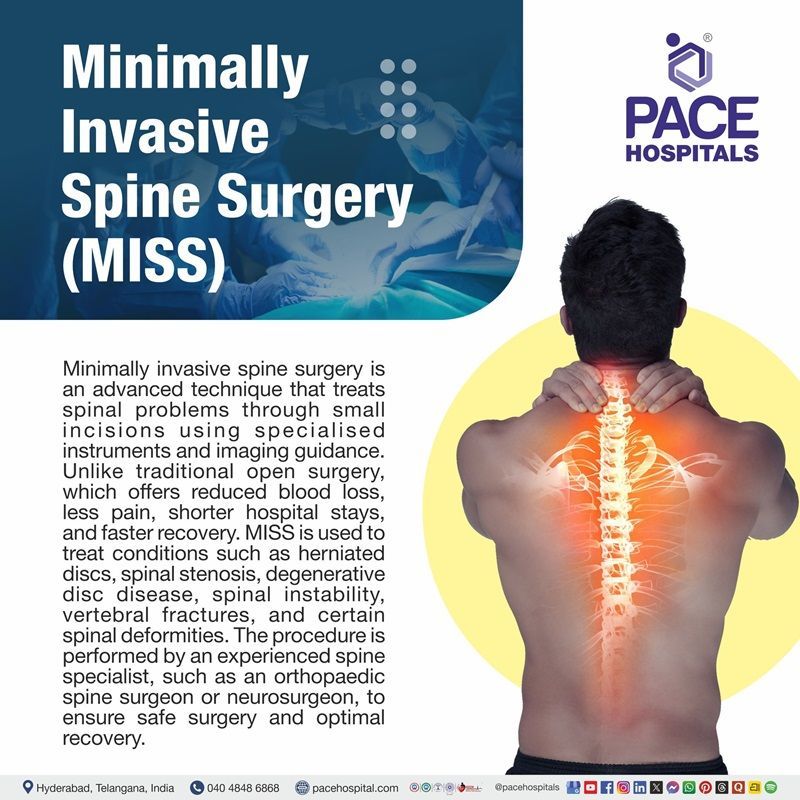
This surgery is usually performed by a highly skilled spine specialist, such as an orthopaedic spine surgeon or a neurosurgeon with expertise in spinal procedures. A multidisciplinary team, which involves anesthesiologists, physiotherapists, and critical care specialists, supports patient care to ensure safe surgery and optimal recovery outcomes.
Types of Minimally Invasive Spine Surgery
Minimally invasive spine surgery includes a range of advanced procedures designed to treat spinal disorders through small incisions with minimal disruption to surrounding muscles and tissues. These techniques use specialized equipments, microscopes, or endoscopic cameras to access the spine with precision. The following are the main minimally invasive spine surgery types commonly performed:
- Microdiscectomy
- Minimally invasive laminectomy
- Minimally invasive spinal fusion (MIS Fusion)
- Minimally invasive spine transforaminal lumbar interbody fusion (MIS TLIF)
- Minimally invasive spine posterior lumbar interbody fusion (MIS PLIF)
- Endoscopic spine surgery
- Vertebroplasty and kyphoplasty
- Microdiscectomy: Microdiscectomy is commonly used to treat herniated (slipped) disc pressing on a spinal nerve. Through a small incision, the surgeon removes the portion of disc material causing nerve compression. Special instruments and a surgical microscope are used for precision. This procedure helps relieve leg pain (sciatica), numbness, and weakness while allowing faster recovery compared to traditional open surgery.
- Minimally invasive laminectomy: This is performed to treat spinal stenosis, a condition where the spinal canal becomes narrow and compresses nerves. A small portion of the lamina (bone covering the spinal canal) is removed through a small incision to create more space for the nerves. This reduces back pain, leg pain, and walking difficulty, with less muscle damage and shorter hospital stay.
- Minimally invasive spinal fusion (MIS fusion): This is used to stabilise the spine when there is abnormal movement, instability, or deformity. Small incisions are used to insert screws, rods, and bone graft material to join two or more vertebrae together. This technique reduces muscle injury and promotes quicker recovery while improving spinal stability and reducing chronic pain.
- Minimally invasive spine transforaminal lumbar interbody fusion (MIS TLIF): MIS TLIF is a specialised fusion procedure performed from one side of the spine. The damaged disc is removed and replaced with a small cage filled with bone graft to promote fusion. Screws and rods are inserted via small incisions for stability. It is commonly used for spondylolisthesis, disc degeneration, and spinal instability.
- Minimally invasive spine posterior lumbar interbody fusion (MIS PLIF): MIS PLIF is performed from the back (posterior approach) of the spine. The damaged disc is removed and replaced with a bone graft or cages placed between the vertebrae. It helps treat spinal instability, severe disc problems, and nerve compression.
- Endoscopic spine surgery: Endoscopic minimally invasive spine surgery uses a thin tube with a small camera (endoscope) inserted through a tiny incision. The surgeon views the spine on a monitor and removes the tissue causing nerve compression. It is commonly used for disc problems and selected cases of spinal stenosis.
- Vertebroplasty and kyphoplasty: These are less invasive procedures used to treat painful vertebral compression fractures, often caused by osteoporosis. In vertebroplasty, medical bone cement is injected into the fractured vertebra to stabilise it. In kyphoplasty, a small balloon is first inserted to restore height before cement injection. Both procedures relieve pain, improve stability, and allow early mobilisation.
Minimally Invasive Spine Surgery Indications
Minimally invasive spine surgery is indicated for patients with spinal conditions that cause persistent pain, neurological symptoms, or instability and that have not improved with conservative treatment like medication, physical therapy, or injections. Below are the indications for MISS surgery:
- Herniated disc
- Spinal stenosis
- Spondylolysis
- Spondylolisthesis
- Spinal instability
- Spinal deformities
- Fractured vertebra
- Spinal infection
- Spinal tumor
- Herniated disc: This occurs when the soft inner part of a spinal disc protrudes and presses against adjacent nerves, causing back pain, leg pain (sciatica), numbness, or weakness. When symptoms persist despite medications and physiotherapy, MISS surgery, such as microdiscectomy or endoscopic discectomy, may be recommended. MISS removes the disc fragment through a small incision, relieves nerve compression, and reduces pain.
- Spinal stenosis: It is the narrowing of the spinal canal, which compresses the spinal cord or nerves, leading to back pain, leg pain, numbness, and difficulty walking. If conservative treatment fails, MISS procedures such as minimally invasive laminectomy or decompression are indicated. These surgeries remove small portions of bone or thickened tissue to create more space for nerves, which relieves the pressure.
- Spondylolysis: It is a stress fracture or defect in a part of the vertebra called the pars inter-articularis. It commonly affects adolescents and athletes and may cause persistent
lower back pain. When symptoms do not improve with rest and physiotherapy, minimally invasive surgical repair or stabilisation may be considered.
- Spondylolisthesis: This occurs when one vertebra slips forward over the one below it, causing back pain and nerve compression. If symptoms are severe or progressive, minimally invasive spinal fusion procedures such as MIS-TLIF may be indicated. MISS stabilises the slipped vertebra using screws and bone grafts, relieves nerve pressure, and improves spinal alignment.
- Spinal instability: Spinal instability refers to excessive or abnormal movement between vertebrae due to degeneration, trauma, or previous surgery. This condition can cause chronic back pain and nerve compression. MISS fusion procedures are indicated to stabilise the affected spinal segment. Surgery helps in restoring stability and reducing pain.
- Spinal deformities: Spinal deformities like scoliosis or kyphosis involve abnormal curvature of the spine. When deformity causes pain, nerve symptoms, or functional limitations, minimally invasive corrective procedures may be indicated in selected cases. MISS techniques allow partial correction and stabilisation using specialised instruments.
- Fractured vertebra: A fractured vertebra due to osteoporosis or trauma, can cause severe back pain and reduced mobility. Minimally invasive surgical procedures such as vertebroplasty or kyphoplasty are indicated when pain persists despite conservative care.
- Spinal infection: Infection of spine like discitis or spinal abscess can damage vertebrae and compress nerves. When antibiotics alone are not sufficient, minimally invasive surgical drainage or stabilisation may be required. MISS allows removal of infected tissue, drainage of abscess, and stabilisation through small incisions.
- Spinal tumor: Tumors can compress the spinal cord or nerves, causing pain, weakness, and neurological symptoms. In certain cases, MISS is used to remove or decompress the tumor while conserving the surrounding tissues.
Minimally Invasive Spine Surgery Contraindications
Minimally invasive spine surgery (MIS surgery) is not suitable for every patient. Although it offers smaller incisions and rapid recovery, certain medical and spinal conditions may make traditional open surgery a safer or more effective option. Careful patient evaluation by a spine specialist is important before selecting this approach.
The following are the contraindications for minimally invasive spine surgery:
- Severe spinal deformity
- Multilevel extensive disease
- Severe spinal instability
- Large spinal tumors
- Severe osteoporosis
- Active systemic infection
- Epidural scarring from prior surgery
- Patient-related medical contraindications
- Prior fusion masses or hardware
- Severe spinal deformity: Severe deformities such as advanced scoliosis or kyphosis involve major spinal curvature and rotation. These cases usually require wide exposure of the spine for proper alignment and fixation. MISS may not provide enough access to safely correct large deformities, making open surgery a more appropriate option.
- Multilevel extensive disease: When several spinal levels are affected by degeneration, stenosis, or instability, treatment may require broad decompression or fusion across multiple segments. MISS is technically challenging in extensive disease because limited access may not allow adequate correction or stabilisation.
- Severe spinal instability: If there is abnormal movement between vertebrae, especially involving multiple levels, stronger fixation and direct visualisation may be necessary.
- Large spinal tumors: Large tumors that involve many vertebrae or compress important nerve structures might not be safely removed using small incisions. Open surgery provides better visibility and control, especially when significant decompression or reconstruction is needed.
- Severe osteoporosis: Very weak bones may not hold screws or implants securely when placed through minimally invasive techniques. This increases the risk of implant loosening or failure, making MISS less suitable in advanced osteoporosis.
- Active systemic infection: When a patient has an ongoing infectious disease in the body, elective spine surgery is typically postponed. Performing MISS during a current infection increases the risk of infection transmission and poor recovery.
- Epidural scarring from prior surgery: Scar tissue from previous spine operations can distort normal anatomy. This may increase the risk of nerve injury during minimally invasive access.
- Patient-related medical contraindications: Patients with underlying conditions like uncontrolled
diabetes, severe heart or lung disease, bleeding disorders, or poor overall health may increase surgical risks
- Prior fusion masses or hardware: Existing fusion masses or previously implanted screws and rods can block the minimally invasive surgical pathway. Revision cases often require open surgery to safely remove or adjust hardware and address the underlying problem.
Benefits of Minimally Invasive Spine Surgery
Minimally invasive spine surgery (MISS) offers several advantages compared to traditional open spine surgery. Key minimally invasive spine surgery advantages include:
- Faster recovery and reduced pain
- Smaller incisions and less scarring
- Reduced blood loss
- Reduced infection risk
- Shorter hospital stay
- Advanced accuracy
- Faster recovery and reduced pain: MISS uses small incisions and avoids cutting large back muscles. Instead, muscles are gently separated, which reduces tissue injury. Because of this, patients usually experience less postoperative pain and require fewer pain medications. Reduced tissue trauma also allows earlier mobilisation and a quicker return to daily activities.
- Smaller incisions and less scarring: The surgery is performed through small skin openings, often just a few centimetres. Smaller incisions lead to minimal visible scarring and better cosmetic outcomes.
- Reduced blood loss: Since MISS involves less muscle dissection and smaller surgical exposure, there is typically less bleeding during the procedure. This lowers the need for blood transfusions and reduces surgery-related complications.
- Reduced infection risk: In MISS, small incisions and minimal soft tissue handling reduce the area exposed to pathogens. In certain cases, shorter operating periods and hospital stays reduce the overall risk of post-operative infections.
- Shorter hospital stay: Because patients experience less pain and recover rapidly, many patients can be discharged in 1 or 2 days. Some minimally invasive treatments can even be conducted as day-care surgeries, which lowers hospital expenses and increases patient comfort.
- Advanced accuracy: MISS uses cutting-edge imaging guidance, operating microscopes, or endoscopic cameras. These technologies allow surgeons to clearly visualise the affected area and perform targeted treatment while protecting healthy tissues.
Get a Free Second Opinion for Minimally Invasive Spine Surgery
At PACE Hospitals, we are committed to providing our patients with the best possible care, and that includes offering second medical opinions with super specialists for treatment or surgery. We recommend everyone to get an expert advance medical second opinion, before taking decision for your treatment or surgery.
Minimally Invasive Spine Surgery Procedures Steps
Minimally invasive spine surgery steps include the following:
Before minimally invasive spine surgery
- Preoperative investigations: The surgeon orders preoperative tests, including blood tests to assess haemoglobin levels, kidney function, blood sugar, and clotting profile. Imaging studies such as X-ray, MRI, or CT scan of the spine are reviewed to confirm the exact location and extent of the problem. In selected patients, an electrocardiogram (ECG) or chest X-ray may be performed to assess cardiac and pulmonary fitness for anaesthesia.
- Medication review: Patients must inform the doctor about all prescription drugs, over-the-counter medicines, vitamins, and herbal supplements. Blood-thinning medications may need to be stopped for several days before surgery under medical supervision to reduce bleeding risk. Any allergies to medicines, latex, tape, or anaesthetic agents should be clearly communicated.
- Informed consent: Patient is counselled regarding the procedure, expected benefits, possible risks, recovery time, and postoperative precautions. After understanding the details, written informed consent is obtained.
- Lifestyle optimisation: Patients who smoke or use nicotine products should stop at least 3 to 4 weeks before surgery because nicotine slows wound healing and raises the risk of complications. People who drink alcohol regularly should avoid it for at least one month before surgery. The doctor also recommends managing weight to keep body mass index (BMI) below 35 and controlling diabetes if needed to help improve results. For patients dealing with anxiety or depression, psychological support such as cognitive behavioural therapy is also suggested.
- Fasting instruction: Patients must carefully follow instructions regarding fasting. Usually, no food or drinks are allowed for several hours before the procedure to ensure safe administration of anaesthesia.
During minimally invasive spine surgery
- Anaesthesia and monitoring: The patient is first brought to the operating room and positioned carefully on the operating table, usually lying face down (prone position), depending on the site of the surgery. An anaesthesiologist delivers general anesthesia, which keeps the patient entirely asleep throughout the treatment. Regional anesthesia may be used based on the surgical plan and the patient's health.
- Surgical access: After cleaning the surgical site, the surgeon makes a small incision over the affected spinal level.
- Imaging guidance and visualisation: Advanced imaging techniques, such as fluoroscopy and surgical navigation systems, are used to precisely determine the correct spinal level. A surgical microscope or endoscope gives magnified and illuminated images of the operational area, allowing the surgeon to complete the treatment precisely.
- Surgical technique: The choice of a minimally invasive technique depends on the specific spinal condition. Surgeons use small incisions, tubular retractors, specialised instruments, and real-time imaging to access the spine with minimal muscle disruption. This includes:
- Microdiscectomy: In this, the surgeon removes only the herniated disc fragment compressing the nerve root while preserving surrounding structures.
- Minimally invasive laminectomy: Surgeon removes a small portion of the lamina to widen the spinal canal and relieve pressure on the spinal cord or nerves.
- Minimally invasive spinal fusion (MIS fusion): The surgeon removes the damaged disc, a bone graft or interbody cage is placed between the vertebrae, and screws and rods are inserted through small incisions under fluoroscopic guidance to stabilise the spine.
- Endoscopic spine surgery: In this, the surgeon introduces a thin endoscope with a camera through a tiny incision, allowing removal of disc fragments or bone spurs under direct visualisation with minimal tissue trauma.
- Vertebroplasty or kyphoplasty: During this, a surgeon inserts a needle into a fractured vertebra under X-ray guidance. Bone cement is injected to stabilise the fracture, and in kyphoplasty, a balloon may be inflated first to restore vertebral height before cement placement.
- Stabilisation and haemostasis: Throughout the procedure, bleeding is carefully controlled. If implants are used, their position is confirmed with imaging before completion of the surgery.
- Closure: Once the required correction or stabilisation is completed, the instruments and retractors are removed. Because the incision is small, only a few stitches or surgical staples are needed to close the wound. A sterile dressing is applied, and the patient is transferred to the recovery room for close monitoring as the anaesthesia wears off.
After minimally invasive spine surgery
- Immediate recovery: After the procedure, the patient is shifted to the recovery room where vital signs such as heart rate, blood pressure, oxygen levels, and breathing are closely monitored as the effects of anaesthesia wear off. Mild drowsiness, nausea, or throat discomfort (if general anaesthesia was used) may be experienced temporarily. Pain at the incision site is usually manageable with prescribed medications.
- Hospital stay: Many minimally invasive spine procedures allow discharge within 24–48 hours. Some patients undergoing simpler procedures, such as microdiscectomy or endoscopic surgery, may even go home the same day. The duration of hospital stay depends on the type of surgery performed, overall health condition, and recovery progress.
- Pain control and mobility: Pain is generally less compared to traditional open spine surgery because muscle damage is minimal. Patients are usually encouraged to sit up and walk with assistance within a few hours after surgery. Early mobilisation helps reduce the risk of blood clots and promotes faster recovery.
- Wound care: The incision is small and typically covered with a sterile dressing. Instructions are provided on how to keep the area clean and dry. Stitches or staples, if used, are removed during a follow-up visit unless absorbable sutures were placed.
- Activity restrictions: Vigorous physical activities, heavy lifting objects, bending, and twisting are prohibited for many weeks. A back brace may be needed in unusual conditions, most notably after spinal fusion. On the advice of the surgeon, a gradual return to everyday activities is recommended.
- Rehabilitation & physiotherapy: Physical therapy may be started within days to weeks after surgery, depending on the procedure performed. Rehabilitation focuses on strengthening back muscles, improving flexibility, and restoring functional mobility.
- Follow-up care: Follow-up appointments are scheduled to monitor healing and, if fusion was performed, to assess bone healing through imaging studies. Patients are advised to report symptoms such as fever, increasing pain, redness at the incision site, leg weakness, or difficulty in bladder or bowel control immediately.
Minimally Invasive Spine Surgery Risks
Although MIS surgery results in less blood loss, shorter hospital stay, and faster rehabilitation compared to open surgery, it still involves operating near delicate nerves, blood vessels, and spinal structures. Because of this, complications may occur. Knowing about these risks helps patients to recognise warning signs early and seek timely care. The following are the complications of minimally invasive spine surgery:
- Infection
- Bleeding or hematoma
- Nerve injury
- Dural tear (cerebrospinal fluid leak)
- Implant-related complications
- Blood clots (deep vein thrombosis – DVT)
- Adjacent segment degeneration
- Anaesthesia-related complications
- Infection: Despite sterile precautions, bacteria may enter through the incision. Infections can affect the skin, deeper tissues, or, rarely, implanted hardware. Symptoms include redness, fever, inflammation, wound discharge, or increasing pain. This can be prevented with early diagnosis and antibiotic treatment.
- Bleeding or hematoma: Small blood vessels may bleed during or after the surgery; bleeding is typically less. Blood can sometimes collect in the surgical area, forming a hematoma. If large, it may compress nearby nerves and require drainage.
- Nerve injury: The spinal cord and nerve roots lie very close to the surgical area. During the removal of disc material or bone, nerves may be irritated, stretched, or rarely damaged. This results in numbness, tingling, weakness, or difficulty walking.
- Dural tear (cerebrospinal fluid leak): The dura is a protective coating for the spinal cord that holds cerebrospinal fluid (CSF). A tiny tear may occur after surgery when a herniated disc or scar tissue is removed. This can result in cerebrospinal fluid (CSF) leaking, which causes
headaches that increase with standing.
- Implant-related complications: When screws, rods, or cages are placed (as in spinal fusion), there is a small risk of malposition, loosening, breakage, or failure of fusion.
- Blood clots: After surgery, reduced movement can slow blood flow in the legs, leading to clot formation. Swelling, calf pain, or redness may occur. If a clot migrates to the lungs (pulmonary embolism), it becomes life-threatening. Early walking, leg exercises, and compression devices significantly reduce this risk.
- Adjacent segment degeneration: In fusion surgeries, the operated spinal segment no longer moves. Over time, the levels above or below may experience increased stress, leading to faster wear and tear.
- Anaesthesia-related complications: General anaesthesia carries potential risks such as allergic reactions, breathing difficulties, heart rhythm changes, or postoperative nausea and vomiting. These risks are generally low and are carefully monitored by the anaesthesia team.
Minimally Invasive Spine Surgery Recovery
Recovery after minimally invasive spine surgery allows for a faster and less painful recovery compared to open spine surgery. Most patients walk within a day and can start light activities soon after surgery. Hospital stays are 1–2 days, and guided rehabilitation begins within the first few weeks. Many people return to routine daily activities and desk work within 2–4 weeks, while physically demanding work may take 4–6 weeks. Heavy lifting and twisting are restricted for several more weeks. Minimally invasive spine surgery recovery time depends on factors like age, overall health, type of procedure, and adherence to rehabilitation, but studies consistently show MISS leads to less pain, shorter hospitalisation, and quicker early recovery than traditional open surgery.
Post-Operative Rehabilitation Following Minimally Invasive Spine Surgery (MISS)
Post-operative rehabilitation following minimally invasive spine surgery (MISS) focuses on restoring mobility, reducing pain, and improving strength while protecting the surgical area. It includes:
- Early mobilisation
- Pain management
- Wound care and precautions
- Activity restrictions
- Structured physiotherapy program
- Core strengthening and flexibility training
- Gradual return to daily activities
- Ergonomic and lifestyle education
- Regular follow-up
- Early mobilisation: Patients are encouraged to begin gentle walking within 24 hours of surgery, as tolerated. Early activity promotes blood circulation, decreases stiffness, and minimises the chance of problems such as blood clots.
- Pain management: Pain management is important after surgery to allow comfortable movement and participation in rehabilitation. Taking prescribed medications, cold therapy, and guided exercises helps reduce pain.
- Wound care and precautions: Proper care of the surgical incision prevents infection. Patients are instructed to keep the area clean and dry and to report redness, swelling, or discharge.
- Activity restrictions: During the early recovery phase, twisting, bending, heavy lifting objects, and prolonged sitting are avoided to protect the incision site and improve healing.
- Structured physiotherapy program: A supervised recovery plan begins within 2-6 weeks, depending on the treatment. Therapy seeks to restore the range of motion and enhance muscular control.
- Core strengthening and flexibility training: Exercises targeting abdominal and back muscles help stabilise the spine. Gentle stretching improves flexibility and reduces stiffness.
- Gradual return to daily activities: Routine tasks and work activities are resumed progressively, based on healing and medical advice. Light activities are introduced first, followed by more demanding tasks.
- Ergonomic and lifestyle education: Patients are educated on maintaining proper posture, safe lifting techniques, and healthy weight management to prevent recurrence.
- Regular follow-up and monitoring: Scheduled follow-up visits with the spine specialist ensure proper recovery, allow adjustments in rehabilitation, and help identify any early complications.
What questions can patients ask the healthcare team about minimally invasive spine surgery?
- Why is minimally invasive spine surgery recommended in my case?
- What happens if I delay or avoid surgery?
- What type of minimally invasive spine surgery will I undergo?
- How long will the surgery take?
- What type of anaesthesia will be used?
- What are the possible risks or complications in my case?
- What are the warning signs I should watch for after surgery?
- How much pain should I expect?
- How long will I stay in the hospital?
Difference between endoscopic spine surgery (ESS) and minimally invasive spine surgery (MISS)
Endoscopic spine surgery vs minimally invasive spine surgery
Both endoscopic spine surgery and minimally invasive spine surgery (MISS) are advanced techniques designed to treat spinal disorders with smaller incisions, less tissue damage, and rapid recovery compared to traditional open spine surgery. However, they differ in technique, visualization, and surgical approach. The table discusses the differences between the two surgeries:
| Parameter | Endoscopic spine surgery (ESS) | Minimally invasive spine surgery (MISS) |
|---|---|---|
| Definition | It is a highly advanced spine surgery technique performed using a thin endoscope (camera) inserted through a very small incision. | It is a broader category of spine surgeries performed through small incisions using tubular retractors and specialised instruments. |
| Incision size | Very small incision (usually 5–10 mm). | Small incision (usually 1.5–3 cm). |
| Common indications | Herniated disc, spinal stenosis (selected cases). | Herniated disc, spinal stenosis, spinal instability, deformity correction, spinal fusion procedures. |
| Anesthesia | Typically conducted under local anaesthesia with sedation or general anesthesia. | Usually performed under general anesthesia. |
| Hospital stay | Often, a day-care or short hospital stay. | Short hospital stay (1–3 days, depending on procedure). |
| Recovery time | Faster recovery due to minimal tissue trauma. | Faster than open surgery, but slightly longer than endoscopic surgery. |
Minimally Invasive Spine Surgery Cost in Hyderabad, India
The cost of Minimally Invasive Spine Surgery (MISS) in Hyderabad generally ranges from ₹1,80,000 to ₹6,50,000 (approx. US $2,165 – US $7,830).
The exact cost of MISS varies depending on the underlying spinal condition (disc herniation, spinal stenosis, spondylolisthesis, or degenerative disc disease), number of spinal levels involved, type of procedure performed (microdiscectomy, laminectomy, fusion), implants required, surgical approach, duration of hospital stay, and surgeon expertise. Hospital infrastructure, navigation technology, anesthesia requirements, and availability of cashless treatment options, TPA corporate tie-ups, and insurance assistance may also influence the overall cost.
Cost Breakdown According to Type of Minimally Invasive Spine Surgery
- Minimally Invasive Microdiscectomy – ₹1,80,000 – ₹3,00,000 (US $2,165 – US $3,615)
- Minimally Invasive Laminectomy – ₹2,00,000 – ₹3,50,000 (US $2,410 – US $4,210)
- Minimally Invasive Spinal Fusion (Single Level) – ₹3,20,000 – ₹5,50,000 (US $3,855 – US $6,630)
- Multi-Level MISS Fusion – ₹4,50,000 – ₹6,50,000 (US $5,420 – US $7,830)
- Minimally Invasive Cervical Spine Surgery – ₹2,50,000 – ₹5,00,000 (US $3,010 – US $6,020)
- Revision / Redo Minimally Invasive Spine Surgery – ₹4,00,000 – ₹6,50,000 (US $4,820 – US $7,830)
Frequently Asked Questions (FAQs) on Minimally Invasive Spine Surgery
What is the success rate of minimally invasive spine surgery?
Minimally invasive spine surgery success rate (MISS) generally ranges between 70% and 95%, depending on the specific condition being treated. Spine studies report that minimally invasive lumbar discectomy for herniated discs provides significant pain relief in about 80–90% of appropriately selected patients. Minimally invasive spinal fusion surgical procedure also show high success rates when performed for spinal instability or stenosis. Success is usually measured by reduction in pain, improved function, and return to daily activities. Outcomes depend on factors such as correct diagnosis, severity of the condition, patient health status, and surgical expertise.
Which Is the best hospital for Minimally Invasive Spine Surgery in Hyderabad, India?
PACE Hospitals, Hyderabad, is a trusted centre for advanced minimally invasive spine surgery, offering specialised care for patients with chronic back pain, nerve compression, spinal instability, and degenerative spine disorders.
We have highly experienced spine surgeons, neurosurgeons, orthopedic specialists, anesthesiologists, and rehabilitation teams who follow evidence-based surgical protocols and use precision-guided, minimally invasive techniques to reduce tissue damage, minimise blood loss, and promote faster recovery.
We resolve complicated cases with access to modern spine navigation systems, intraoperative imaging, advanced MRI and CT diagnostics, minimally invasive surgical instruments, and structured physiotherapy programs, PACE Hospitals ensures safe, effective, and patient-centred spine surgery — supported by cashless insurance facilities, TPA corporate tie-ups, and smooth documentation assistance.
What is the recovery time for MISS surgery?
Recovery time after minimally invasive spine surgery varies depending on the type of procedure performed and the patient’s overall health. Many patients undergoing procedures like lumbar discectomy may return to light daily activities within 2 to 4 weeks. For minimally invasive spinal fusion, recovery is usually longer. Basic activities may resume in 4 to 6 weeks, while complete recovery and bone healing may take 3 to 6 months. Because MISS causes less muscle damage than traditional open surgery, hospital stay, pain, and time away from work are often reduced.
Is minimally invasive spine surgery safe?
Minimally invasive spine surgery (MISS) is considered safe when performed in appropriately selected patients by experienced spine surgeons. MISS uses smaller incisions and causes minor muscle damage; it is often associated with reduced blood loss, lower infection risk, shorter hospital stay, and rapid recovery. However, like all surgeries, it carries potential risks such as nerve injury, infection, bleeding, or the need for revision surgery. Safety largely depends on correct diagnosis, careful patient selection, surgical expertise, and proper postoperative care.
When can normal activities be resumed after surgery?
Resumption of normal activities following minimally invasive spine surgery depends on the procedure type and the patient's overall health. After minimally invasive lumbar discectomy, light daily activities such as walking and basic self-care can usually start within few days, and many patients return to desk work within 2 to 4 weeks. For minimally invasive spinal fusion, recovery is slower. Light activities may resume in 4 to 6 weeks, while heavy lifting, strenuous exercise, or physically demanding work may require 3 months or longer.
What Is the cost of Minimally Invasive Spine Surgery at PACE Hospitals, Hyderabad?
At PACE Hospitals, Hyderabad, the cost of Minimally Invasive Spine Surgery (MISS) typically ranges from ₹1,70,000 to ₹6,00,000 and above (approx. US $2,050 – US $7,230), making it a cost-effective option for advanced spine care compared to others. However, the final cost depends on:
- Type and severity of spinal condition
- Number of spinal levels involved
- Type of minimally invasive procedure performed
- Requirement for implants (screws, rods, cages)
- Surgeon expertise and technology used
- Duration of hospital stay and anesthesia requirements
- Diagnostic tests (MRI, CT scan, X-rays)
- Postoperative physiotherapy and rehabilitation
For single-level minimally invasive procedures, costs remain toward the lower end, while multi-level fusion or revision surgeries fall toward the higher range.
After a detailed spine evaluation, imaging review, and neurological assessment, our specialists provide a personalised treatment plan and transparent cost estimate, aligned with your pain relief goals, functional recovery, and long-term spine health.
Which hospitals in Hyderabad provide minimally invasive spine surgery?
For people searching for top hospitals offering minimally invasive spine procedures in Hyderabad, PACE Hospitals at Hitech City is one of the leading centers. Our surgeons perform keyhole surgeries for conditions such as slipped discs, spinal stenosis, herniated discs, and selected spinal deformities. These minimally invasive procedures are done through small cuts, which helps reduce muscle damage and allows patients to recover faster. The hospital's advanced imaging technology, post-operative rehabilitation, and patient-focused care ensure better outcomes, less pain, and faster return to daily activities.
What tests are needed before minimally invasive spinal surgery?
Before MISS, a thorough medical evaluation is required. MRI is most commonly used to identify nerve compression, disc problems, or spinal narrowing. In some cases, X-rays or CT scans assess bone structure and alignment. Routine blood tests, ECG, and anesthetic assessment are also performed to ensure safety.
Looking for a minimally invasive spine surgery hospital near me?
If you’re searching for a minimally invasive spine surgery hospital near locations such as HITEC City, Madhapur, Kondapur, Gachibowli, Kukatpally, or KPHB, choosing a centre with experienced spine specialists and advanced surgical technology is essential for a safe, faster recovery.
At PACE Hospitals, expert orthopedic spine surgeons and neurosurgeons offer advanced minimally invasive spine surgery (MIS surgery) using high-precision imaging, microscopes, and endoscopic techniques.
Conditions Treated with MISS:
- Slip disc (herniated disc)
- Spinal stenosis
- Spondylolisthesis
- Degenerative spine disorders
- Selected spinal fractures
Benefits of Minimally Invasive Spine Surgery:
- Smaller incisions
- Less blood loss
- Reduced postoperative pain
- Shorter hospital stay
- Faster return to daily activities
What is minimally invasive spine surgery (MISS)?
MIS surgery is a surgical technique used to treat spine problems through small skin incisions instead of large open cuts. Special instruments, tubular retractors, endoscopes, and real-time imaging (such as fluoroscopy) are used to reach the spine with less disruption to surrounding muscles and tissues. MISS is commonly used for conditions such as herniated discs, spinal stenosis, certain fractures, infections, and some cases of spinal instability. However, it is not suitable for all spine disorders. The choice of technique depends on the patient's diagnosis, overall health, and the surgeon's expertise.
Who is a candidate for minimally invasive spine surgery?
A candidate for minimally invasive spine surgery (MISS) is typically a patient with a clearly diagnosed spine condition that has not improved with conservative treatment such as medications, physiotherapy, or injections. Common conditions suitable for MISS include herniated discs, lumbar spinal stenosis, certain cases of spondylolisthesis, spinal fractures, and selected spinal infections or tumors. Individuals who have persistent back or leg pain, nerve compression symptoms (like numbness or weakness), or reduced daily function.
How long is bed rest after minimally invasive spine surgery?
Bed rest after minimally invasive spine surgery (MISS) is usually very short, and prolonged bed rest is generally not recommended. Early mobilization (walking within 24 hrs) improves recovery and reduces complications such as blood clots and muscle weakness.
In many cases, patients are encouraged to sit up and walk on the same day or the next day after surgery, depending on the procedure and overall health. Short periods of rest are advised, but strict bed rest for several days is rarely required.
Is spinal surgery considered a major surgery?
Spinal surgery is generally considered a major surgery, mainly when it involves procedures such as spinal fusion, deformity correction, or multi-level operations. Spinal surgery is a complex procedure because it involves operating near the spinal cord and nerves, requires anesthesia, and may involve implants or bone work. However, not all spine surgeries carry the same level of risk. MISS is often less traumatic than traditional open surgery, with smaller incisions, reduced blood loss, and shorter hospital stays.
How is minimally invasive spine surgery (MISS) different from open spine surgery?
Minimally invasive spine surgery differs from open spine surgery mainly in incision size, muscle handling, and recovery time. Open spine surgery involves a larger incision and wider separation of back muscles to clearly expose the spine. This may lead to more blood loss, postoperative pain, and longer recovery. On the other hand, MISS uses small incisions and specialized instruments to reach the spine with minimal muscle disruption. As a result, patients often experience less pain, shorter hospital stays, and faster return to daily activities.
What are the primary benefits of minimally invasive spine surgery (MISS)?
Minimally invasive spine surgery (MISS) uses small skin incisions and special instruments to reach the spine with less damage to surrounding muscles and tissues. Compared with traditional open spine surgery, MISS has several benefits including:
- Reduced blood loss during surgery
- Smaller incision and less muscle injury
- Lower risk of infection
- Minimal postoperative pain
- Shorter hospital stay
- Smaller surgical scar
- Faster return to daily activities
What conditions can be treated with these techniques?
Minimally invasive spine surgery can be used to treat several common spinal conditions, particularly those caused by nerve compression or degeneration. These include lumbar disc herniation, where slipped disc material presses on nearby nerves; spinal stenosis, which involves narrowing of the spinal canal, and degenerative spondylolisthesis, where one vertebra slips over another. This surgery may also be used for selected cases of spinal instability requiring fusion, vertebral compression fractures treated with procedures such as vertebroplasty or kyphoplasty, and certain small spinal tumors or infections.
What factors might prevent someone from having MISS?
Although MISS offers several advantages, it is not appropriate for all patients. Individuals with severe spinal deformities, extensive instability requiring complex reconstruction, large tumors affecting multiple spinal levels, or advanced osteoporosis that weakens the bones may not be suitable candidates. Having had several spine surgeries that created a lot of scar tissue can make minimally invasive techniques harder to perform. Patient eligibility is determined after thorough clinical evaluation and detailed imaging studies, such as MRI or CT scans.
What type of anesthesia is used in MISS?
Minimally invasive spine surgery is most frequently performed under general anesthesia, meaning the patient is completely asleep and does not feel pain during the procedure. General anesthesia allows better control of breathing and body movement, which is important when operating near the spinal cord and nerves. In selected cases, particularly for certain endoscopic spine procedures, spinal or regional anesthesia with sedation may be used. The choice of anesthesia depends on the type of surgery, duration of the procedure, patient health status, and anesthesiologist's assessment to ensure safety and comfort.
How long does minimally invasive spine surgery take?
Duration depends on the specific procedure and the number of spinal levels treated. Minimally invasive lumbar discectomy typically takes about 60 to 120 minutes. More complex procedures, such as minimally invasive spinal fusion, may take 2 to 4 hours or longer, depending on surgical complexity and patient factors. Total time in the operating room may also include anesthesia preparation and positioning, which adds to the overall duration.
Will physiotherapy be required after minimally invasive spine surgery (MISS)?
Yes, physiotherapy is typically recommended after MISS. The intensity and duration depend on the specific procedure. Structured rehabilitation enhances muscle strength, flexibility, posture, and healing. Following surgeries such as discectomy, supervised activities may begin within a few weeks. Rehabilitation after spinal fusion is slow and controlled to prevent bone regeneration. Physiotherapy also reduces stiffness, prevents re-injury, and promotes a safe return to routine activities.
Is spinal fusion possible through minimally invasive techniques?
Yes, spinal fusion can be performed using minimally invasive techniques. Procedures such as minimally invasive transforaminal lumbar interbody fusion (MIS-TLIF) use small incisions and specialised instruments to stabilise the spine with screws and bone grafts. Minimally invasive fusion offers outcomes similar to open fusion, with less blood loss, shorter hospital stays, and faster early recovery for selected patients.
Why choose PACE Hospitals?
- A Multi-Super Speciality Hospital.
- NABH, NABL, NBE & NABH - Nursing Excellence accreditation.
- State-of-the-art Liver and Kidney transplant centre.
- Empanelled with all TPAs for smooth cashless benefits.
- Centralized HIMS (Hospital Information System).
- Computerized health records available via website.
- Minimum waiting time for Inpatient and Outpatient.
- Round-the-clock guidance from highly qualified super specialist doctors, surgeons and physicians.
- Standardization of ethical medical care.
- 24X7 Outpatient & Inpatient Pharmacy Services.
- State-of-the-art operation theaters.
- Intensive Care Units (Surgical and Medical) with ISO-9001 accreditation.


