
Rectal Prolapse Diagnosis, Treatment and Surgery Cost
PACE Hospitals offers comprehensive
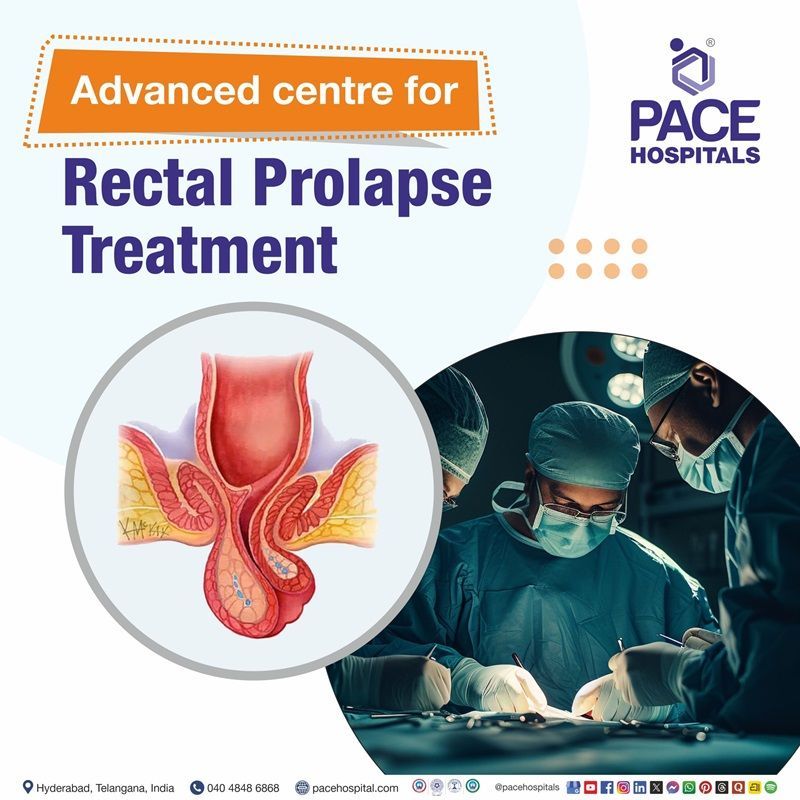
rectal prolapse treatment in Hyderabad, India, with a patient-centric approach focused on long-term relief and improved quality of life. Our experienced rectal prolapse specialist team provides accurate diagnosis and personalized rectal prolapse management, ranging from conservative care to advanced rectal prolapse surgery. Using evidence-based techniques and modern surgical methods, we aim for safe outcomes and a high success rate, tailored to the patient’s condition and overall health.
Book an Appointment for Rectal Prolapse Treatment
Rectal Prolapse Treatment Appointment
Why Choose PACE Hospitals for Rectal Prolapse Surgery?
Advanced Diagnostic Facilities: Colonoscopy, Defecography, Anorectal Manometry & Imaging Studies
Best Surgical Gastroenterologists, Proctologists & Rectal prolapse specialist in Hyderabad
Comprehensive Rectal Prolapse Treatment with Laparoscopic & Perineal Surgical Options
Transparent Rectal Prolapse Treatment with Insurance & Cashless Options
Recognized for excellence in healthcare delivery with
NABH, NABL, NBE/DNB, NABH Nursing Excellence, and ISCCM accreditations.
Rectal Prolapse Diagnosis
Rectal prolapse is diagnosed after a thorough clinical assessment of the patient's symptoms and physical characteristics. A Proctologist, a doctor specialised in the lower gastrointestinal tract, such as the colon, rectum, and anus, usually start by asking about medical history in detail, including bowel habits, constipation, and straining during defecation and then advises further lab tests. A proctologist or colorectal surgeon considers the following before selecting the appropriate rectal prolapse diagnostic tests:
- Medical history
- Physical examination
Medical history
In diagnosing rectal prolapse, medical history is crucial. The proctologist or colorectal surgeon may ask the following questions:
- Is there chronic constipation or diarrhoea?
- Is there a sensation of tissue protruding from the anus during defecation?
- Is there frequent straining during bowel movements?
- Is there passage of blood or mucus in the stools?
- Is there a history of laxative abuse?
- Is there a history of spinal cord problems or stroke?
- Is abdominal pain or discomfort present?
- Is there a history of infection with certain parasites?
- Is pelvic floor weakness present?
Physical examination
During the physical exam, a proctology or colorectal surgeon looks for a protruding rectal mass, mucus discharge, ulceration, or bleeding in the perianal area. The doctor may ask to strain, which makes the prolapse more obvious. A full-thickness rectal prolapse has concentric folds that are readily visible. A digital rectal exam is done to check the strength of the pelvic floor and the tone of the anal sphincter. The examination also helps distinguish rectal prolapse from other conditions, such as haemorrhoids.
✅Diagnostic Evaluation of Rectal Prolapse
Based on the above information, a colorectal surgeon or proctologist might recommend the following diagnostic tests to detect rectal prolapse:
- Laboratory tests
- Blood tests
- Imaging tests
- Defecogram/ Defecography
- Barium enema
- Endoscopic Evaluation
- Colonoscopy
- Other diagnostic tests
- Anorectal manometry
- Special urologic or gynaecologic evaluations
Laboratory tests
Blood tests: Blood tests are not used to diagnose rectal prolapse directly, but they help determine how healthy the patient is overall and identify other problems that might be related. A complete blood count (CBC) may be performed to assess for anaemia resulting from chronic rectal bleeding or indications of infection. Tests for serum electrolytes and kidney function can help people who are dehydrated or have been constipated for a long time. Blood tests are also helpful for older people or those at high risk before surgery, and for ruling out underlying systemic conditions.
Imaging tests
Defecogram/ Defecography: Defecography uses X-ray or MRI, which helps to check how the rectal and pelvic muscles are working. It is used to help determine what is causing faecal incontinence, constipation, and other problems that make it hard for a person to pass stool, such as rectal or pelvic prolapse. In this procedure, a contrast material will be applied around the rectum, and the patient will be asked to sit on the commode type in X-ray or MRI. Images are taken while straining, squeezing and defecating. It takes 30 minutes to one hour.
Barium enema : An X-ray imaging test called a barium enema is used to examine the lower gastrointestinal (GI) tract. The large intestine (colon and rectum) is examined on X-ray film with the help of a liquid suspension. Barium is used to highlight specific areas in the body to create a clearer picture. Fluoroscopy, which studies moving body structures, helps the radiologist see how barium moves through the large intestine as it is introduced through the rectum during a barium enema.
Endoscopic Evaluation
Colonoscopy: The primary purpose of a colonoscopy is to rule out problems with the colon. Colonoscopy is necessary to rule out a mass or polyp as the cause of rectal prolapse. Other findings related to rectal prolapse that may be observed during colonoscopy include rectal ulceration or erythema due to chronic prolapse. A solitary rectal ulcer occurs on the anterior rectal wall and affects 10 to 15% of individuals with rectal prolapse.
Other diagnostic tests
Anorectal manometry: Anorectal manometry is a non-invasive test that assesses how well the muscles of the rectum and anus function. The anorectal sphincter is a group of muscles that controls how poop leaves the body. Anorectal manometry can help determine whether these muscles are too loose, too tight, or not working at the right time. This test checks the pressures the muscles generate, the feeling in the rectum (the tube that connects the large intestine to the anus), and the nerve reflexes needed for regular bowel movements.
Special urologic or gynaecologic evaluations: Patients experiencing urinary incontinence, retention, or incomplete micturition—frequently due to traction from a prolapsing rectum or concurrent prolapse—require urologic Evaluation. Urodynamics and stress testing are two tests that assess urethral weakness that can be corrected during surgery. Although it is not frequently used without prior injury, endoanal ultrasonography evaluates sphincter integrity in cases of faecal incontinence or obstetric trauma history
Concomitant pelvic organ prolapse (such as rectocele, enterocele, or uterine prolapse) can occur in women who experience pelvic pressure, vaginal bulge, or incomplete evacuation. This is frequently caused by shared pelvic floor weakness. A pelvic exam during Valsalva, a speculum exam of the vaginal apex, and a defecography can all show problems in more than one compartment that need the help of a urogynecologist. A history of vaginal delivery or hysterectomy increases risk, necessitating evaluation before colorectal surgery.
✅Rectal Prolapse Differential Diagnosis
The differential diagnosis of rectal prolapse encompasses various conditions characterised by a protruding anal mass. They include the following:
- Hemorrhoids
- Anal fissures
- Proctitis
- Anal cancer
- Colorectal polyps
- Intussusception
Hemorrhoids: Haemorrhoids, also called piles, are swollen, inflamed veins around the anus or the lower rectum. These are two types: external haemorrhoids grow around the skin of the anus, and internal haemorrhoids, which grow inside the lining of the anus and the lower rectum. Symptoms and causes are similar to those of rectal prolapse.
Anal fissures: An anal fissure is a small tear in the anus that causes pain during defecation. It occurs in both adults and children. Symptoms include sharp, tearing pain and the passage of blood in the stool. Constipation, chronic diarrhoea, and inflammatory bowel disease (IBD) are some of the causes. These lesions can be acute, lasting less than 6 months, or chronic, persisting longer.
Proctitis: Proctitis is inflammation of the rectal lining; it can be acute or chronic. Some common causes of proctitis include inflammatory bowel disease (IBD) and infections. Symptoms include chronic diarrhoea or constipation, passing blood in the stools, tenesmus (frequent urge to pass urine or stool).
Anal cancer: One rare kind of cancer that affects the anus is called anal cancer. It can occur anywhere in the anus and is caused by the human papillomavirus (HPV). Symptoms include pain and itching around the anus, small lumps around the anus, and bleeding during defecation.
Colorectal polyps: The abnormal growth of cells in the lining of the colon or rectum is known as colorectal polyps or bowel polyps. Symptoms include chronic diarrhoea, constipation and blood or mucus in the stools.
Intussusception: Intussusception is a process in which one part of the intestine slides into another part, causing obstruction. Common symptoms are abdominal pain, vomiting, blood in the stool, and lethargy.
✅Goals of Therapy for Rectal Prolapse
The goals of treatment for rectal prolapse are mainly focused on reducing the prolapse, managing symptoms to relieve pain or inflammation, and preventing complications. A few goals of treatment include:
- Reducing the prolapsed rectum to its normal position
- Preventing the prolapse from happening again
- Reducing symptoms such as bleeding, pain, mucus or blood discharge, and discomfort.
- Reducing faecal incontinence
- To prevent complications like ulceration, strangulation and ischemia.
- To maintain the sphincter and pelvic floor function
Get a Medical Second Opinion to Explore the Right Treatment for Rectal Prolapse
At PACE Hospitals, we are committed to providing our patients with the best possible care, and that includes offering second medical opinions with super specialists for treatment or surgery. We recommend everyone to get an expert advance medical second opinion, before taking decision for your treatment or surgery.
Rectal Prolapse Treatment
There is no specific treatment for rectal prolapse. The treatment for rectal prolapse includes reducing prolapse manually, easing symptoms like pain and bleeding, and making it easier to control bowel movements. Lifestyle and dietary changes also help treat prolapse. Rectal prolapse treatment options includes:
- Non-pharmacological therapy
- Pharmacological therapy
- Surgical interventions
Non-pharmacological therapy
- Most rectal prolapses can be reduced manually with gentle digital pressure, pushing the prolapsed rectum back into the anal canal.
- In incarcerated prolapse, edema is reduced by applying salt or sugar.
- Factors that cause prolapse, like constipation and diarrhoea, are managed.
- Biofeedback therapy is a non-invasive, behavioural therapy which trains the patient about the rectal pressure and sphincter relaxation during defecation to improve the anal and sphincter functions.
- Changing diet by increasing the fibre intake and maintaining hydration
Pharmacological therapy
There is no specific treatment for rectal prolapse; symptoms can be managed. They are:
- Stool softeners
- Laxatives
- Anti-diarrhoeal drugs
- Suppositories or enema
Stool softeners: Stool softeners are used to reduce straining during bowel movements caused by constipation. These are less likely to cause dehydration or an electrolyte imbalance than hypertonic sugar solutions. These are not absorbed and continue to hold water by osmosis in the small bowel and colon. This creates a laxative effect and mechanically cleans the body.
Laxatives: Laxatives are used in treating constipation and various other gastrointestinal conditions. These medications help in improving digestion, bowel movements and reducing the straining during defecation. These make the stool soft and bulky, helping in bowel motility.
Anti-diarrheal drugs: Chronic diarrhoea is one of the common symptoms of rectal prolapse. Anti-diarrhoeal drugs are fibre-forming agents used to treat diarrhoea. This acts by reducing the intestinal motility and reducing the absorption. This reduces bowel movements and makes stool less watery.
Suppositories or enema: Suppositories, which are in solid form, and enemas, which are in liquid form, are the medications used for incomplete bowel movements or for problems emptying the rectum. It helps empty the rectum by relaxing the sphincter muscles, stimulating the rectum, and triggering the reflex to empty it.
Surgical interventions
Surgical treatment of rectal prolapse is based on the patient’s age and other comorbidities. These are classified into two types:
- Abdominal procedures
- Perineal procedures
Abdominal procedures
These procedures are usually performed in younger, healthy patients who have a longer life expectancy. These procedures have less recurrence and higher morbidity, and are selected based on the extent of constipation. They are:
- Laparoscopic surgical rectopexy
- Anterior resection
- Marlex rectopexy
- Suture rectopexy
- Resection rectopexy
Laparoscopic surgical rectopexy: It is a minimally invasive procedure used to treat complete rectal prolapse. It helps in treating problems like incontinence and constipation. It has a good outcome compared with the open abdominal procedures, shorter hospital stay, less pain and less recurrence.
Anterior resection: Patients with rectal prolapse and constipation frequently exhibit a redundant colon (the large intestine is abnormally long and forms into twists); its resection reduces constipation and reduces the recurrence of rectal prolapse. During an anterior resection for rectal prolapse, the rectum is moved up to the level of the lateral ligaments, and the extra colon (sigmoid) is cut out. The left colon is then connected to the top of the rectum. This anastomosis is performed without loosening the colon, which keeps the rectum in place and prevents prolapse. Currently, it is not regarded as a solution for anatomical anomalies like inadequate rectal fixation.
Marlex rectopexy: Marlex rectopexy (Ripstein procedure) is a surgical method for fixing a complete rectal prolapse. During this procedure, the rectum is completely separated from the surrounding tissues and pulled back into its normal position. A non-absorbable mesh is attached to the presacral fascia (layer of sacrum) and partially wraps around the rectum to keep it in place. The front wall is left open to avoid blockage. After that, the peritoneum is closed over the mesh. The mesh causes scars that permanently fix the rectum. Patients with severe constipation or a redundant sigmoid colon should not have this procedure done. If the rectum is accidentally opened, mesh should not be used, as it could lead to infection.
Suture rectopexy: A suture rectopexy is like a Marlex rectopexy, but instead of mesh or an Ivalon sponge, the rectum is attached to the presacral fascia with suture material.
Resection rectopexy: It is a combination of anterior rectopexy and Marlex rectopexy. Rectal prolapse with constipation can be treated with resection and rectopexy (Frykman–Goldberg procedure). The rectum is completely freed up, and the extra sigmoid colon is cut away. The rest of the colon is connected to the rectum. Then, using sutures under tension, the rectum is attached to the presacral fascia. To avoid contamination and infection, sutures are better than mesh.
Perineal procedures
Perineal procedures are done in patients who are not suitable for abdominal procedures, such as those for external rectal prolapse. These are mostly done in elderly patients and have fewer complications. They are:
- Anal encirclement
- Delorme mucosal sleeve resection
- Altemeier perineal rectosigmoidectomy
- Perineal stapled prolapse resection
- Haemorrhoidectomy
Anal encirclement: When treating full-thickness rectal prolapse in elderly patients with high-risk comorbidities, the mesh-based anal encirclement technique is a viable alternative due to its ease of use, safety, low rate of postoperative complications, and ability to prevent recurrence.
Delorme mucosal sleeve resection: Mucosal sleeve resection is effective in treating patients with short, full-thickness rectal prolapse. However, the risk of recurrence rate is higher when compared to abdominal procedures, so the Delorme procedure was recommended in patients with high risk in abdominal procedures or nerve damage. In this procedure, constipation and faecal incontinence improve. Following a Delorme's procedure, a lower incidence of defecatory issues is linked to improved anal sphincter and rectal sensation.
Altemeier perineal rectosigmoidectomy: Perineal rectosigmoidectomy offers low mortality and acceptable recurrence rates, making it a viable treatment option for strangulated and incarcerated rectal prolapse. Early surgical intervention is crucial in cases of strangulated rectal prolapse complicated by necrosis. Altemeier's method is perfect for treating strangulated rectal prolapse.
Perineal stapled prolapse resection: Rectal prolapse can be treated easily, quickly, and safely with perineal stapled prolapse resection. Because of low complication rates and good functional outcomes, it is perfect for elderly, frail patients and those who are not fit for abdominal surgery. Younger obese women with thick prolapse may find the technique difficult. The Altemeier procedure is a good alternative in these situations, but the Perineal stapled prolapse resection remains simpler and quicker than other perineal methods.
Haemorrhoidectomy: Haemorrhoidectomy is not used in full-thickness rectal prolapse. It may be performed in cases of mucosal or partial rectal prolapse associated with advanced (grade III–IV) haemorrhoids, where fibrosis helps fix the mucosa. In true rectal prolapse, haemorrhoidectomy alone leads to recurrence and is contraindicated.
Rectal Prolapse Prognosis
Rectal prolapse prognosis is favourable when treated surgically. Abdominal procedures offer better long-term durability. Although there is less surgical risk, perineal procedures have a higher recurrence rate. Long-term prolapse may leave residual incontinence, but functional outcomes like faecal continence frequently improve. Age, comorbidities, surgical type, and prolapse duration all affect the prognosis.
Rectal Prolapse Surgery Cost in Hyderabad, India
The cost of Rectal Prolapse Surgery in Hyderabad generally ranges from ₹85,000 to ₹3,60,000 (approx. US $1,025 – US $4,335).
The exact cost of rectal prolapse surgery varies depending on factors such as the type of prolapse (partial, complete, or recurrent), patient age and general health, presence of constipation or fecal incontinence, and the surgical approach selected. Additional factors include whether a perineal or abdominal procedure is performed, use of laparoscopic or robotic techniques, duration of hospital stay, surgeon expertise, and hospital facilities — including cashless treatment options, TPA corporate tie-ups, and assistance with medical insurance wherever applicable.
Cost Breakdown According to Type of Rectal Prolapse Surgery
- Perineal Rectal Prolapse Surgery (Delorme / Altemeier Procedure) – ₹85,000 – ₹1,70,000 (US $1,025 – US $2,050)
- Open Abdominal Rectopexy – ₹1,30,000 – ₹2,60,000 (US $1,565 – US $3,135)
- Laparoscopic Rectal Prolapse Surgery (Rectopexy) – ₹1,60,000 – ₹3,00,000 (US $1,930 – US $3,615)
- Rectal Prolapse Surgery with Pelvic Floor Repair – ₹1,90,000 – ₹3,30,000 (US $2,290 – US $3,975)
- Revision / Recurrent Rectal Prolapse Surgery – ₹2,20,000 – ₹3,60,000 (US $2,650 – US $4,335)
Frequently Asked Questions (FAQs) on Rectal Prolapse
Can rectal prolapse be cured?
Yes, rectal prolapse can be effectively treated and often essentially cured, especially with surgery. Lifestyle modifications, such as a high-fibre diet, are used to manage rectal prolapse, whereas complete treatment requires surgery, such as rectopexy, Delorme, or Altemeier procedures.
Which Is the best hospital for Rectal Prolapse Treatment in Hyderabad, India?
PACE Hospitals, Hyderabad, is a trusted centre for the diagnosis and management of rectal prolapse and complex colorectal disorders, offering advanced surgical and non-surgical care for adults and elderly patients.
We have team of highly experienced colorectal surgeons, gastroenterologists, pelvic floor specialists, anesthesiologists, and physiotherapists who follow evidence-based protocols to restore bowel anatomy, improve continence, and reduce recurrence risk.
We are equipped with advanced laparoscopic and robotic surgery facilities, high-resolution imaging, pelvic floor evaluation, modern operation theatres, and structured postoperative rehabilitation programs, PACE Hospitals ensures safe, effective, and patient-centred rectal prolapse treatment — supported by cashless insurance facilities, TPA corporate tie-ups, and smooth documentation assistance.
What is the treatment of rectal prolapse?
Surgery is frequently used to treat rectal prolapse. Stool softeners, suppositories, and other medications are commonly used to treat constipation. Rectal prolapse can be treated surgically using a variety of techniques. For the majority of patients, laparoscopic ventral rectopexy offers improved durability and functional results.
What are the non-surgical treatments for rectal prolapse?
A high-fibre diet, stool softeners, and treatment for constipation are all parts of conservative management. These things help in reducing straining during defecation. Biofeedback and pelvic floor exercises can help control the sphincter and stay dry. These treatments only help with symptoms for a short time and are mostly used for mild cases or patients who can't have surgery.
What Is the cost of Rectal Prolapse Treatment at PACE Hospitals, Hyderabad?
At PACE Hospitals, Hyderabad, the cost of rectal prolapse treatment typically ranges from ₹42,000 to ₹3,20,000 and above (approx. US $505 – US $3,855), making it a cost-effective option for specialised colorectal care compared to others. However, the final cost depends on:
- Type and severity of rectal prolapse
- Choice of surgical approach (perineal vs abdominal)
- Patient’s age and associated medical conditions
- Surgeon expertise and technology used
- Duration of hospital stay and anesthesia requirements
- Diagnostic tests (colonoscopy, defecography, imaging studies)
- Medications, consumables, and postoperative care
For partial or early prolapse, costs remain toward the lower end, while complete or recurrent prolapse requiring advanced surgery may fall toward the higher range.
After a detailed colorectal evaluation, imaging review, and functional assessment, our specialists provide a personalised treatment plan and transparent cost estimate, aligned with symptom severity, recovery expectations, and long-term bowel health goals.
Does rectal prolapse worsen if left untreated?
Rectal prolapse usually gets worse over time. Due to damage to the nerves and sphincters, postponing treatment increases the risk of permanent faecal incontinence. Conservative treatment may be advantageous for patients who are at high risk or for mild cases. Diet, fibre, biofeedback, and pelvic floor exercises are all part of this, but their effectiveness is limited in cases of advanced prolapse.
Can a colonoscopy detect rectal prolapse?
Yes, Colonoscopy is used, but alone it is not sufficient to diagnose the rectal prolapse. It can be used to rule out a mass or polyp as the cause of rectal prolapse, but it cannot diagnose external rectal prolapse. Other findings related to rectal prolapse that may be observed during colonoscopy include rectal ulceration or erythema due to chronic prolapse.
How is rectal prolapse diagnosed?
The diagnosis of rectal prolapse is made solely on history and physical examination. Patients can explain tissue protruding from the rectum. Colonoscopy and adjunctive studies such as defecography, transit studies, and anal manometry may provide additional information about commonly associated conditions.
How to deal with rectal prolapse without surgery?
The goal of non-surgical rectal prolapse management is to lessen symptoms, but it cannot stop progression in full-thickness prolapse. When surgery is not an option, this is the most effective treatment for mild or internal prolapse. Treating symptoms like diarrhoea, constipation, pain, and inflammation.
Is laparoscopic surgery better than open surgery in rectal prolapse?
Yes, laparoscopic surgical rectopexy is a minimally invasive procedure used to treat complete rectal prolapse. It helps in treating problems like incontinence and constipation. It has a good outcome compared with the open abdominal procedures, shorter hospital stay, less pain and less recurrence.
What are the goals of treatment for rectal prolapse?
The goals of treatment for rectal prolapse are to return the prolapsed rectum to its normal anatomical position and prevent recurrence. The main goal of treatment is to relieve symptoms such as bleeding, pain, mucus discharge, and discomfort while also making bowel movements easier to control. It also aims to keep the sphincter and pelvic floor working properly and stop problems like ulcers, strangulation, and ischemia from happening.
What is the role of defecography in rectal prolapse?
Defecography is an X-ray or MRI test that helps assess how the rectal and pelvic muscles function. It is used to help determine what is causing faecal incontinence, constipation, and other problems that make it hard for a person to pass stool, such as rectal or pelvic prolapse. In this procedure, a contrast material like barium will be pasted around the rectum, and the patient will be asked to sit on the commode type in X-ray or MRI. Images are taken while straining, squeezing and defecating.
When are abdominal procedures preferred?
Abdominal procedures are preferred in younger, healthy patients because they have lower recurrence rates and higher morbidity. The procedure chosen depends on whether constipation is present and its severity.
When are perineal procedures preferred in rectal prolapse?
Perineal procedures are preferred in elderly or medically unfit patients because they have a lower morbidity rate, can be carried out under local or regional anaesthesia, and are linked to a shorter hospital stay.
Does surgery improve quality of life in rectal prolapse?
Yes, surgery significantly improves quality of life in patients with rectal prolapse when the operative approach is individualised to the patient's comorbidities, symptoms, and priorities. Minimally invasive techniques—especially laparoscopic rectopexy offer advantages such as lower complication rates, faster recovery, and reduced recurrence. These benefits make laparoscopic rectopexy a preferred option compared with perineal, open abdominal, and posterior abdominal approaches.
What is the prognosis of rectal prolapse?
When rectal prolapse is surgically treated, the prognosis is favourable. Abdominal procedures offer greater long-term durability, whereas perineal procedures have a higher recurrence rate but a lower operative risk. Long-term prolapse may leave residual incontinence even though functional outcomes, like faecal continence, frequently improve. The prognosis is influenced by age, comorbidities, type of surgery, and length of prolapse.


