
List of Spine Disorders | Spine Related Problems & Spine Disease Names - A to Z
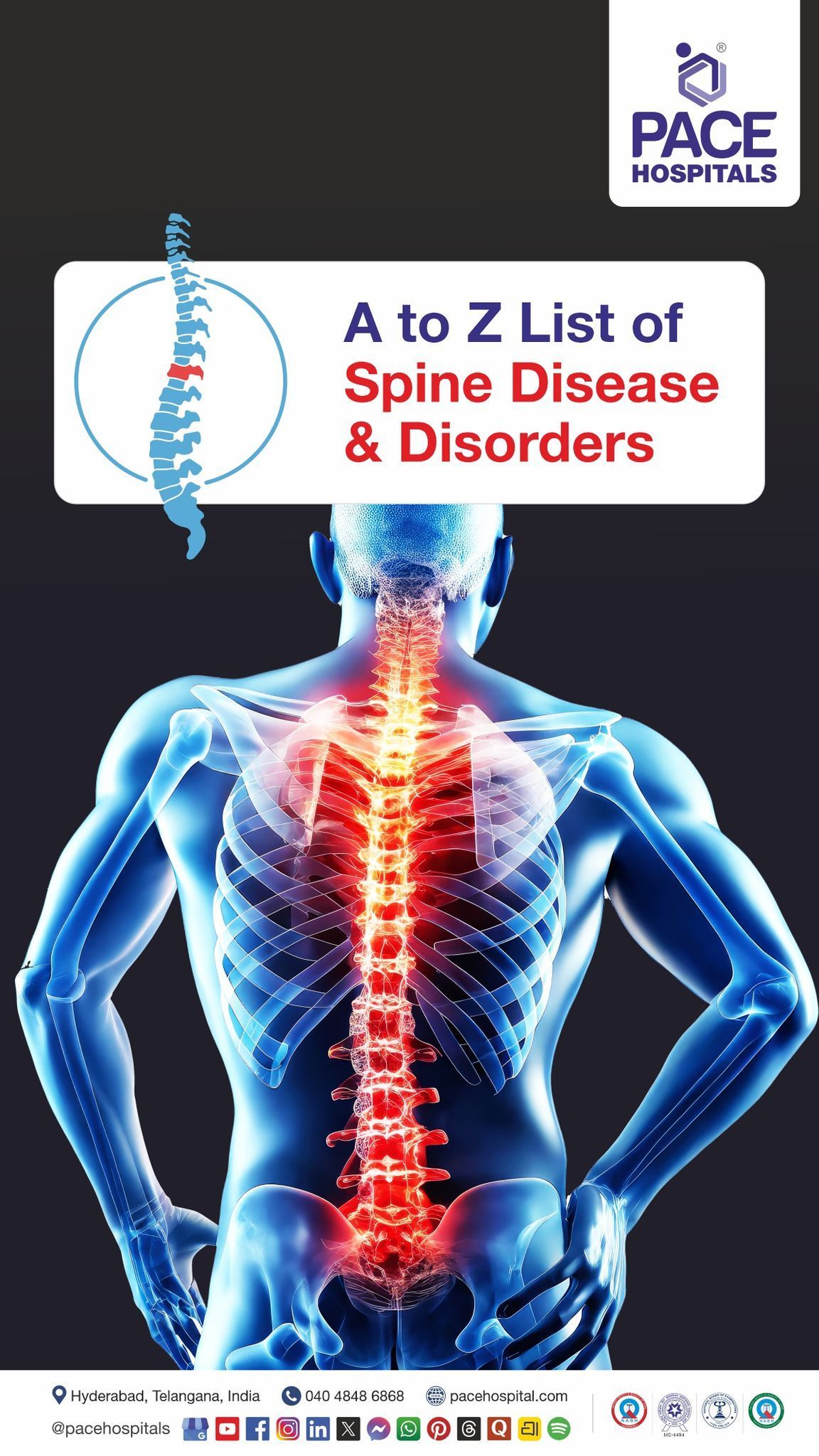
The spine, also called the backbone, is a strong yet flexible part of the body that provides support and helps maintain an upright posture. It runs from the base of the head down to the lower back, consisting of 33 vertebrae stacked on top of one another, with intervertebral discs acting as shock-absorbing cushions between them. The spinal cord runs through a protective canal in the vertebrae, transmitting signals between the brain and body.
Spine diseases are conditions that affect the vertebrae, discs, nerves, or surrounding muscles and ligaments. They can cause back or neck pain, stiffness, weakness, or numbness in the arms or legs. These problems may develop due to ageing, poor posture, injury, infection, or long-term strain.
In general, the signs and symptoms of spine diseases in humans include:
- Persistent back or neck pain that does not improve with rest
- Stiffness in the spine, especially in the morning or after long periods of inactivity
- Pain that spreads to the arms, shoulders, hips, or legs
- Numbness, tingling, or weakness in the arms, hands, legs, or feet
- Difficulty bending, twisting, or standing upright
- Sharp or shooting pain while walking, sitting, or changing posture
- Loss of balance or coordination
- Muscle spasms or tightness along the back or neck
- Reduced ability to walk or perform daily activities due to pain
- Changes in bladder or bowel control (in severe or advanced spine conditions)
- Pain that worsens with movement, coughing, or lifting objects
List of Types of Spine Disorders
Types of spine disorders generally involve degenerative changes, structural deformities, traumatic damage, infections, and conditions affecting the spinal cord and nerve roots.
List of Degenerative Spine Diseases
Degenerative spine diseases are age-related conditions caused by wear and tear of spinal discs, joints, and vertebrae, leading to pain, stiffness, and reduced mobility.
- Degenerative Disc Disease
- Spinal Osteoarthritis (Facet Joint Arthritis)
- Cervical Spondylosis
- Lumbar Spondylosis
- Spinal Stenosis
- Spondylolisthesis (degenerative type)
List of Spinal Disc Disorders
Disc disorders involve damage or degeneration of the intervertebral discs, resulting in back pain, nerve compression, and restricted movement.
- Slipped (herniated) disc
- Bulging disc
- Disc degeneration
- Disc prolapse
- Annular tear
- Degenerative disc collapse
List of Inflammatory Spine Diseases
Inflammatory spine diseases are autoimmune conditions that cause chronic inflammation of the spine and joints.
- Ankylosing spondylitis
- Axial spondyloarthritis
- Reactive arthritis (spinal involvement)
- Psoriatic spondylitis
- Enteropathic spondyloarthritis
- Rheumatoid arthritis of the spine
List of Spinal Injuries
Spinal injuries result from trauma or accidents and may affect the vertebrae, ligaments, or spinal cord.
- Spinal fractures
- Vertebral dislocations
- Ligament injuries of the spine
- Spinal cord injury (SCI)
- Whiplash injury
List of Nerve-Related Spine Disorders
Nerve-related spine disorders occur when spinal nerves or the spinal cord are compressed or damaged.
- Sciatica
- Radiculopathy (cervical, thoracic, lumbar)
- Myelopathy
- Cauda equina syndrome
- Nerve root compression
- Spinal nerve entrapment
List of Spinal Infection Diseases
Spinal infection diseases are caused by bacterial, tubercular, or fungal infections affecting the vertebrae, discs, or spinal canal.
Bacterial (Pyogenic) Spinal Infections: Infections caused by bacteria leading to inflammation and destruction of spinal structures.
- Vertebral Osteomyelitis
- Discitis
- Spondylodiscitis
- Spinal Epidural Abscess
- Spinal Subdural Abscess
- Postoperative Spinal Infection
- Paraspinal Abscess
- Infectious Myelitis
- Brucellar Spondylitis
Tubercular Spinal Infections: Spinal infections caused by Mycobacterium tuberculosis.
- Spinal Tuberculosis (Pott’s Disease)
Fungal Spinal Infections
- Fungal Spondylitis
- Aspergillosis of the Spine
- Candidal Spinal Infection
Ankylosing Spondylitis
Ankylosing spondylitis is a severe inflammatory disease that mainly affects the spine and sacroiliac joints (it is the area where the spine meets the pelvis). Over time, inflammation can cause the spinal bones to fuse, leading to stiffness and reduced flexibility. The exact cause is unknown, but it is strongly linked to genetics, especially the HLA-B27 gene. Risks that can increase the development of AS include male gender, young age (late teens to early 40s), and having a family history of the disease. Clinical presentations are chronic lower back pain, morning stiffness lasting more than 30 minutes, reduced spinal movement, fatigue, and pain that improves with activity but worsens with rest.
Axial Spondyloarthritis (axSpA)
It is an inflammatory arthritis that mainly affects the spine. It includes both early, invisible disease on X-rays and advanced forms such as ankylosing spondylitis. The condition occurs due to immune system–related inflammation, often associated with genetic factors. Risk increases with factors like family history, young age, male gender, and coexisting conditions like inflammatory bowel disease or psoriasis. The primary symptoms include inflammatory back pain for more than 3 months, morning stiffness, pain that improves with movement, fatigue, and, sometimes, pain in the hips or buttocks.
Arachnoiditis
Arachnoiditis is a rare but serious condition in which the arachnoid mater (one of the thin membranes that surround and preserve the brain and spinal cord) becomes inflamed and irritated. This inflammation of the arachnoid mater causes the spinal cord's nerves to stick together and malfunction, leading to chronic pain and neurological problems. The cause is unknown, but the risk is associated with spinal surgery, repeated spinal injections, infections (such as meningitis or tuberculosis), spinal injuries, or exposure to irritating chemicals used in some diagnostic tests in the past.
People with arachnoiditis experience ongoing burning or stabbing pain in the back and legs, numbness or tingling, muscle cramps or weakness, and difficulty sitting or standing for long periods. Severe symptoms may also involve issues with bowel, bladder, or sexual function.
Acute Flaccid Myelitis
Acute flaccid myelitis is an uncommon but serious condition that affects the spinal cord, causing sudden muscle weakness or loss of reflexes. It mostly affects children and can sometimes lead to partial or complete paralysis, showing symptoms similar to polio. The cause is still unknown, but it is linked with viral infections, particularly enteroviruses. Early diagnosis and treatment are important because the condition can progress quickly and may result in long-term disability.
Annular Fissures
Annular fissures (also called annular tears) are small cracks or splits in the annulus fibrosus, the tough outer ring of an intervertebral disc in the spine. They usually occur due to age-related wear and tear of the spine or repeated mechanical stress. Common causes are disc degeneration, sudden spinal strain, poor posture, or trauma like fall or accident. Many people have no symptoms at all, but when present, they can include localised low back or neck pain, pain that worsens with motion or sitting, stiffness, and, sometimes, radiating pain if the fissure irritates nearby nerves.
Apophyseal Ring Avulsion/Fracture
Apophyseal ring avulsion (or apophyseal ring fracture) is a spinal injury in which a small fragment of bone breaks away from the outer edge (ring apophysis) of a vertebral body, most commonly in the lower back. It usually occurs in adolescents and young adults because the apophyseal ring is not fully fused to the vertebra during growth. Causes are sudden forceful movements, heavy lifting, sports-related injuries, or recurrent spinal stress. Patients present with acute or chronic lower back pain, pain that worsens with activity, stiffness, and, in some cases, leg pain or weakness.
Baastrup Syndrome
Baastrup Syndrome, or kissing spine syndrome, is a spine condition in which two or more adjacent spinous processes come into abnormal contact with each other, usually in the lower back. This happens due to degeneration of the spine and loss of disc height over time. Risk of developing Baastrup syndrome increases with older age, chronic poor posture, obesity, and long-standing degenerative spine disease. Causing symptoms like midline low back pain that worsens when bending backwards and improves when bending forward, along with localised tenderness and stiffness.
Bone Spurs on the Spine
Bone spurs (osteophytes) are smooth, extra-bony growths that develop along the edges of bones, most commonly in the spine and joints, due to long-term wear and tear. They usually form as a response to ageing, osteoarthritis, disc degeneration, spinal instability, or repetitive stress, and are more common in older adults or people with chronic joint overload. Many bone spurs cause no symptoms, but when they compress nearby nerves or the spinal cord, they can lead to localised pain, stiffness, reduced range of motion, tingling, or weakness in the arms or legs, which may depend on the affected spinal level.
Burst Fractures
Burst fractures are serious spine injuries that occur when a vertebra breaks because of a high-energy force, causing the bone to shatter outward in several directions. This type of fracture is unstable and can harm the spinal cord or nerves. These fractures are caused by trauma, such as car accidents, falls from great heights, or serious sports injuries. This causes symptoms like severe back pain, spinal deformity, difficulty moving, numbness or weakness in the limbs, and, in severe cases, paralysis if the spinal cord is affected.
Cervical Spondylosis
Cervical spondylosis is the most common age-related condition caused by wear and tear of the cervical spine (neck), leading to degeneration of the discs, joints, and bones. This degeneration can reduce disc height and form bone spurs that may affect nearby nerves. Risk factors are increasing age, poor posture, prolonged computer or mobile use, smoking, and previous neck injury. Patients with cervical spondylosis experience neck pain and stiffness, headaches, shoulder or arm pain, and, in some cases, weakness of the arms if nerves are involved.
Cervical Radiculopathy
Cervical radiculopathy, also called a pinched nerve, occurs when a nerve root in the neck is irritated or compressed, most often due to a herniated disc or bone spur. This nerve compression affects signals travelling from the spinal cord to the arm. This condition is caused by cervical disc herniation, spondylosis, or spinal narrowing. Repetitive neck strain, heavy lifting, smoking, and age-related disc degeneration are the risk factors. Symptoms are sharp or burning neck pain radiating to the shoulder, arm, or hand, along with tingling, numbness, or weakness in the muscle.
Cauda Equina Syndrome
Cauda equina syndrome (CES) is a medical emergency that occurs when the cauda equina (the bundle of nerve roots extending from the end of the spinal cord) becomes compressed. This compression interferes with nerve signals to the legs and pelvic organs. A large lumbar disc herniation, spinal tumors, infections, trauma, or severe spinal stenosis can cause the condition. People with existing lumbar spine problems or a history of spinal injury are at higher risk. Patients with CES experience severe lower back pain, weakness in both legs, loss of sensation around the buttocks or inner thighs (known as saddle anaesthesia), and problems with bladder or bowel control.
Congenital Scoliosis
Congenital scoliosis is a spinal curvature present at birth, caused by abnormal formation of the vertebrae during fetal development. The curve may worsen as the child grows. It results from developmental defects of the spine before birth. This condition develops when there are genetic influences and other associated congenital abnormalities. Symptoms may vary from mild to severe and may include uneven shoulders or hips, a noticeable spinal curve, and, in serious cases, breathing difficulties or neurological issues.
Cervical Myelopathy
It is a condition caused by compression of the spinal cord in the neck, often due to degenerative changes. This compression affects nerve signals travelling to the arms and legs. Several causes lead to cervical myelopathy, such as cervical spondylosis, disc herniation, ligament thickening, or spinal canal narrowing. Risk increases with older age, long-standing neck degeneration, and previous cervical spine injury. Causing symptoms like difficulty with balance or walking, weakness or numbness in the arms or legs, and neck stiffness. New Paragraph
Degenerative Disc Disease
Degenerative disc disease is a common condition of the spine in which the intervertebral discs gradually lose their flexibility, hydration, and shock-absorbing ability because of ageing and normal wear and tear. As the discs degenerate, disc height may decrease, which adds strain on nearby joints and nerves. The condition is caused by natural ageing, repetitive spinal stress, and previous spinal injuries, with risk factors including increasing age, obesity, smoking, heavy physical labor, and prolonged sitting.
Disc Herniation (Slipped Disc)
A herniated or slipped disc occurs when the soft inner material of a spinal disc pushes through a tear in its outer layer and compresses nearby nerves. This can cause pain, tingling, numbness, or weakness, depending on whether it affects the cervical, thoracic, or lumbar spine. The condition is also referred to as a prolapsed intervertebral disc, ruptured disc, bulging disc, or protruding disc. A slipped disc often results from spinal injury, wear and tear, or excessive strain on the spine.
Discitis
Discitis is a rare but serious condition involving inflammation or infection of an intervertebral disc space, most commonly affecting children or older adults. It usually result from bacteria that are reaching the disc through the bloodstream or after spinal procedures. Discitis causes include bacterial infections (such as Staphylococcus aureus, Staphylococcus, Escherichia coli, and Streptococcus pneumonia), recent surgery, or bloodstream infection. Individuals with weakened immunity, diabetes, intravenous drug use, and recent spinal interventions are more at risk.
Diffuse Idiopathic Skeletal Hyperostosis (DISH)
Diffuse idiopathic skeletal hyperostosis (DISH) is a non-inflammatory condition characterised by abnormal bone formation along the ligaments and tendons of the spine, leading to stiffness and reduced mobility as the spine gradually becomes rigid. Although the cause is not fully understood, it is often linked to metabolic factors. Symptoms commonly include spinal stiffness, especially in the morning, reduced range of motion, and mild back pain, while severe cases may involve difficulty swallowing if the neck is affected.
Epidural Abscess
An epidural abscess is a serious spinal infection in which pus collects in the epidural space (the area between the spinal bones and the protective covering of the spinal cord). This condition usually develops when bacteria spread through the bloodstream or enter the spine after surgery, injections, or nearby skin infections. Individuals with diabetes, weakened immunity, chronic kidney disease, or a history of intravenous medication use are at higher risk. Symptoms start gradually with severe localised back pain and fever, and may progress to weakness, numbness, difficulty walking, or bladder and bowel problems if the spinal cord becomes compressed.
Epidural Hematoma
Epidural hematoma occurs when blood accumulates in the epidural space of the spine, putting sudden pressure on the spinal cord or spinal nerves. It is considered a life-threatening condition because nerve damage can develop rapidly. The condition is most often caused by spinal trauma, falls, road traffic accidents, use of blood-thinning medications, bleeding disorders, or complications from spinal or epidural procedures. Symptoms typically include sudden, severe back pain followed by rapidly worsening weakness, numbness, difficulty walking, and loss of bladder or bowel control.
Facet Joint Syndrome
Facet joint syndrome is a spine disorder characterised by inflammation or degeneration of the tiny joints (facet joints) that connect vertebrae and allow for smooth spinal movement. It usually develops due to age-related wear and tear, arthritis, repeated stress on the spine, or injury. Older people, overweight, have poor posture, do heavy physical work, or have had previous spine injuries, are at higher risk. The condition commonly causes localised neck or lower back pain, stiffness, pain that worsens with bending or twisting, and reduced flexibility, sometimes with pain spreading to the buttocks or upper thighs.
Flatback Syndrome
Flatback syndrome is a spinal alignment problem in which the normal inward curve of the lower back is reduced or lost, making it hard to stand upright. It may develop due to degenerative disc disease, spinal arthritis, vertebral fractures, or as a complication of previous spinal surgery. Risk of developing this syndrome increases with ageing, osteoporosis, long-standing spinal degeneration, and past spine procedures. People with flatback syndrome often experience chronic lower back pain, muscle fatigue, a forward-leaning posture, and increasing discomfort or difficulty while standing or walking for long periods.
Giant Cell Tumor of the Spine
A giant cell tumor of the spine is a rare, usually benign but locally aggressive bone tumor that affects the vertebrae, most commonly in young adults. It develops due to abnormal overgrowth of bone cells, though the exact cause is not clearly known. People with this kind of tumor are presented with gradually worsening symptoms, which may include persistent back pain, spinal tenderness, stiffness, nerve compression symptoms such as numbness or weakness in the arms or legs, and, in severe cases, spinal instability or difficulty walking.
Herniated Disc
A herniated disc, also called a slipped disc, happens when the soft inner portion of a spinal disc pushes out through a tear in its outer covering, putting pressure on surrounding nerves. It is typically caused by age-related disc degeneration, sudden strain, heavy lifting, or an injury. There are different types of herniated discs based on location:
- Cervical disc herniation: It occurs in the neck and causes neck pain, numbness, or weakness radiating to the shoulders, arms, and hands.
- Thoracic disc herniation: It affects the upper or mid-back and causes back pain that may radiate around the chest or abdomen with possible numbness.
- Lumbar disc herniation: It occurs in the lower back and causes lower back pain with sciatica (radiating leg pain), numbness, or weakness in the legs or feet.
Hemivertebra
Hemivertebra is a congenital spinal condition in which one side of a vertebra fails to form completely, resulting in a wedge-shaped bone. This abnormal development may occur during early embryonic growth, and the specific cause is unknown; however, it could be due to genetic or developmental factors. The main risk factors are congenital anomalies present at birth. Common symptoms are abnormal spinal curvature, uneven shoulders or hips, visible spinal deformity, back pain as the child grows, and, in severe cases, nerve compression or difficulty with posture and balance.
Infectious Spondylitis
Infectious spondylitis is an infection of the vertebrae caused by bacteria, fungi, or, commonly in some regions, tuberculosis. The infection may spread to the spine through the bloodstream or from nearby tissues. People with weakened immunity, diabetes, tuberculosis, recent infections, intravenous drug use, and prior spine surgery are more prone to infectious spondylitis. Symptoms usually develop gradually, such as persistent back pain, fever, chills, night sweats, spinal tenderness, stiffness, and, in advanced cases, nerve compression leading to weakness or numbness.
Intervertebral Disc Disease
Intervertebral disc disease is a common condition characterised by the breakdown of one or more discs that separate the bones of the spine, causing pain in the back or neck and frequently in the legs and arms. It occurs as part of the natural ageing process but may be accelerated by repetitive strain, injury, or poor spinal mechanics.
Juvenile Idiopathic Scoliosis
Juvenile idiopathic scoliosis is a spinal condition seen in children between 4 and 10 years of age, where the spine curves sideways without any clear cause. However, it is thought to result from a combination of genetic and growth-related factors rather than injury or posture. Symptoms may be minor at first, but they can include uneven shoulders or hips, an asymmetrical waist, apparent spinal curvature, back tiredness, and, in severe cases, back discomfort or breathing difficulties as the curve increases.
Kyphosis (Hunchback Deformity)
Kyphosis is a spinal condition characterised by an excessive outward curvature of the upper back, leading to a rounded appearance. It can result from poor posture, age-related spinal degeneration, osteoporosis-related fractures, congenital spinal deformities, or diseases like Scheuermann's disease. Causing symptoms which include visible rounding of the back, back pain or stiffness, muscle fatigue, reduced flexibility, and in severe cases, breathing difficulty due to restricted chest expansion.
- Postural Kyphosis: This type develops from habits like slouching or hunching, which create muscle imbalances but spare the spine's structure.
- Scheuermann Disease (Juvenile Kyphosis): Scheuermann disease is characterised by wedged thoracic vertebrae that form during adolescent growth (ages 10-15), producing rigid curvature, back pain, and limited flexibility.
- Congenital Kyphosis: Congenital kyphosis begins from congenital disabilities like hemivertebrae or fused segments, driving gradual deformity and possible nerve issues—spinal Hemangioma.
Kyphoscoliosis
Kyphoscoliosis is a spinal deformity in which the spine curves abnormally in two directions at the same time—sideways (scoliosis) and forward (kyphosis). It may develop due to congenital spinal abnormalities, neuromuscular disorders, degenerative spine disease, osteoporosis-related fractures, or as a progression of untreated scoliosis or kyphosis. Risk factors include being born with spinal defects, having spinal problems during childhood, getting older, having weak or brittle bones, and having neuromuscular disorders. Symptoms vary with severity and may include visible spinal deformity, irregular shoulders or hips, back pain, stiffness, reduced mobility, and, in severe cases, breathing difficulty due to restricted chest expansion.
Lumbar Spondylosis
It is a degenerative condition of the lower spine caused by age-related wear and tear of the discs, joints, and vertebrae. It develops over time due to disc dehydration, bone spur formation, and joint degeneration. Risk factors include increasing age, obesity, poor posture, repetitive heavy work and previous spine injury. Symptoms generally include chronic lower back pain, stiffness (especially after rest), reduced flexibility, and, sometimes, nerve-related symptoms like leg pain, numbness, or tingling if nearby nerves are compressed.
Lumbar Spinal Stenosis
In lumbar spinal stenosis, the spinal canal in the lower back narrows, which puts pressure on the spinal nerves. It is most commonly caused by degenerative alterations such as disc bulging, thickened ligaments, and bone spurs. Ageing is the leading risk factor, along with arthritis, a congenitally narrow spinal canal, and prior spine surgery.
Lordosis (Abnormal Lumbar Curve)
Lordosis is the inward curving of the lower back beyond the normal range. This makes the buttocks appear more prominent. The causes are poor posture, being obese, pregnancy, and spinal conditions like spondylolisthesis or congenital abnormalities. Risk of developing lordosis increases with a sedentary lifestyle, muscle imbalance, and spinal disorders. Many people suffering from lordosis have no symptoms, but a more pronounced lordosis may cause lower back pain, muscle strain, fatigue, stiffness, and difficulty standing or walking for long periods.
Myelopathy
Myelopathy is a condition caused by compression or damage to the spinal cord, leading to impaired nerve signal transmission. It most commonly occurs due to degenerative spine diseases. Risk increases with ageing, arthritis, previous spine injury, and congenital spinal narrowing. Symptoms often involve progressive gradual and may include weakness of the arms or legs, numbness or tingling, poor coordination, difficulty walking, balance problems, stiffness, and in advanced cases, bowel or bladder dysfunction.
Metastatic Spine Tumor
A metastatic spine tumor occurs when cancer from another part of the body spreads to the spinal bones or surrounding structures. It most commonly originates from cancers of the breast, lung, prostate, kidney, or thyroid. Patients with metastatic spine tumor experience persistent or worsening back pain (especially at night), spinal tenderness, pathological fractures, nerve compression causing numbness or weakness, and, in severe cases, spinal cord compression.
Multiple Myeloma (Spinal Involvement)
Multiple myeloma with spinal involvement is a blood cancer that affects plasma cells and commonly weakens the vertebrae. The disease causes abnormal plasma cells to build up in the bone marrow, which leads to bone destruction. Spinal symptoms may include persistent back pain, vertebral compression fractures, reduced height, spinal instability, nerve compression causing weakness or numbness, and general symptoms such as fatigue or frequent infections due to bone marrow involvement.
Neurogenic Claudication
Neurogenic claudication is a condition caused by compression of the spinal nerves, most commonly due to lumbar spinal stenosis, leading to pain and discomfort during walking or standing. The narrowing of the spinal canal reduces blood flow and irritates the nerves, especially when the spine is extended.
Osteoporotic Vertebral Fractures
This type of fracture occurs when weakened spinal bones collapse due to osteoporosis (a condition that reduces bone strength and density). These fractures can also occur with minimal trauma, such as a minor fall, sudden bending, or even normal daily activity. Risk factors include advanced age, postmenopausal status in women, long-term steroid use, low calcium or vitamin D levels, smoking, and a sedentary lifestyle.
Osteomyelitis of the Spine
It is a serious infection of the vertebral bones, most often caused by bacteria that spread through the bloodstream from another part of the body or enter the spine after surgery or injury. The condition commonly develops in people with weak immunity, diabetes, chronic kidney disease, tuberculosis, intravenous drug use, or recent spinal procedures.
Pott’s Disease
Pott’s disease (spinal tuberculosis) is a form of tuberculosis that affects the vertebrae, leading to destruction of spinal bones and possible compression of the spinal cord or nerves. It occurs when Mycobacterium tuberculosis spreads from the lungs or other organs to the spine through the bloodstream. People with weak immunity, malnutrition, diabetes, HIV infection, close contact with TB patients, and delayed treatment of pulmonary tuberculosis are at higher risk.
Quadriplegia (Tetraplegia)
Quadriplegia is a condition characterised by partial or complete paralysis of all four limbs and the trunk, resulting from damage to the cervical (neck) portion of the spinal cord. It is commonly caused by traumatic injuries, but may also result from spinal tumors, infections, severe disc herniation, or inflammatory conditions that affect the spinal cord. Symptoms vary with the level and severity of injury and may include loss of movement and sensation in the arms and legs, breathing difficulty, muscle stiffness or spasms, loss of bladder and bowel control, and impaired autonomic functions.
Radiculopathy
Radiculopathy is a condition that is characterised by the compression or irritation of one or more spinal nerve roots, generally occurring at the point where these nerves exit the spinal column. It can affect any individual and is the result of disc degeneration, disc herniation, or other trauma. Arthritis, herniated disc, spondylosis, and bone spurs are some of the causes of radiculopathy.
There are three types of radiculopathies: cervical radiculopathy, lumbar radiculopathy, and thoracic radiculopathy. Numbness or tingling sensation in the arms, weakness in the arms, pain in the arms, legs, or shoulders are some of the symptoms of radiculopathy.
Rheumatoid Arthritis of the Spine
Rheumatoid arthritis of the spine is an inflammatory autoimmune disease in which the immune system attacks the joints of the spine, most commonly affecting the cervical (neck) region. It develops due to abnormal immune activity and chronic inflammation. The risk of developing RA of the spine increases with female gender, family history of autoimmune disease, smoking, and long-standing rheumatoid arthritis. Common symptoms are persistent neck or back pain, stiffness (especially in the morning), reduced range of motion, numbness, weakness, or difficulty walking.
Sciatica
Sciatica is defined as a pain that radiates along the route of the sciatic nerve, usually from the lower back through the buttocks and down one leg. It is not a disease, but rather a symptom produced by sciatic nerve compression or irritation, which is generally caused by a herniated disc, spinal stenosis, spondylolisthesis, or bone spurs. Sciatica causes sharp or burning leg pain, numbness, tingling, muscle weakness, and pain that worsens with sitting, standing, or sudden movements.
Spondylolisthesis
It is a spinal condition in which one vertebra slips forward over the vertebra below it, most commonly in the lower back (lumbosacral junction L5-S1). It can occur due to degenerative changes, stress fractures, congenital defects, trauma, or arthritis. Patient presented with lower back pain, stiffness, hamstring tightness, leg pain or sciatica, numbness, and weakness.
Spondylolysis
Spondylolysis is a stressed fracture or defect in a small portion of a vertebra called the pars interarticularis, most commonly affecting the lower lumbar spine. It develops due to repetitive stress or overuse, especially during childhood or adolescence. Causing symptoms like lower back pain that worsens with activity or extension, stiffness, and muscle tightness, though some people remain asymptomatic.
Spinal Cord Injury
This is a severe condition in which damage to the spinal cord interrupts signal transmission between the brain and rest of the body, resulting in partial or complete impairment of movement, sensation, or autonomic function below the point of injury. The most common causes are trauma, falls, sports injuries, but can also result from non-traumatic causes like spinal tumors, infections, degenerative spine disorders, or vascular problems.
Spinal Stenosis
It is a condition in which the spaces within the spine become narrowed, leading to compression of the spinal cord or spinal nerves. This develops due to age-related degenerative changes, but may also result from congenital spinal narrowing, spinal injuries, tumors, or previous spine surgery. Risk increases with advancing age, osteoarthritis, a history of spine trauma, obesity, and long-standing poor posture or heavy physical work. Causing symptoms that usually progress gradually and may include back or neck pain, numbness or tingling in the arms or legs, muscle weakness, difficulty walking, and balance problems.
Spinal Tumors
Spinal tumors are abnormal growths that develop within or around the spinal cord, spinal nerves, or vertebral bones, and can be non-cancerous or cancerous. They can arise mainly from spinal tissues or spread to the spine from cancers elsewhere in the body (metastatic tumors). A history of cancer, certain genetic syndromes, and immune system disorders increases the risk of spinal tumors. persistent back pain (often worse at night), nerve pain radiating to the arms or legs, difficulty in walking, spinal instability or deformity, and, in advanced cases, bladder or bowel dysfunction.
Transverse Myelitis
It is a neurological disorder caused by inflammation of the spinal cord. This inflammation disrupts nerve signal transmission between the brain and the body. It can be caused by autoimmune reactions, viral or bacterial infections, immunological responses to vaccinations, or immune system diseases such as multiple sclerosis or neuromyelitis optica. Transverse myelitis symptoms may include sudden back pain, weakness or paralysis in the arms or legs, changes in sensation, and difficulties with bladder or bowel control.
Tethered Spinal Cord Syndrome
It is a neurological condition where the spinal cord is abnormally attached to nearby tissues, this limits its normal movement within the spinal canal and causing progressive stretching of the cord as the spine grows or moves. It is most commonly congenital, associated with conditions such as spina bifida, lipomas, or thickened filum terminale, but can also be acquired after spinal surgery, trauma, or infections.
Vertebral Osteomyelitis
Vertebral osteomyelitis, also known as spinal osteomyelitis, is a serious infection of the vertebral bones. It usually happens when bacteria spread through the bloodstream from another infection site. Less commonly, it can occur after spinal surgery or procedures. Common symptoms include ongoing localised back pain, fever, chills, fatigue, and, in more severe cases, neurological deficits due to spinal instability or nerve compression.
Whiplash Injury
Whiplash injury is a neck injury caused by a sudden, forceful back-and-forth movement of the head, which is most commonly seen in rear-end road traffic accidents, but also in sports injuries or falls. Symptoms may appear immediately or within days, including neck pain and stiffness, headaches, shoulder or upper back pain, dizziness, reduced neck movement, and occasionally tingling or numbness in the arms.
Leading Spine Specialists and Spine Surgeons in Hyderabad, delivering comprehensive care for complex spinal conditions such as slipped discs, spinal stenosis, scoliosis, spinal injuries, and nerve-related spine disorders through advanced diagnostics and cutting-edge surgical and non-surgical treatments.


