
Piles Treatment | Laser Surgery, Cost & Benefits
PACE Hospitals, is renowned for its
excellence in Piles Laser Treatment in Hyderabad, India, offering blood less and painless procedures for haemorrhoids. Equipped with state-of-the-art latest laser technology and a team of highly skilled surgical gastroenterologists / proctologists. Our treatment options range from non-surgical methods like medication and diet changes to minimally invasive procedures such as laser surgery and rubber band ligation. We tailor personalized treatment plans for patients of all ages, ensuring comprehensive care and speedy recovery from Piles or hemorrhoids.
Request Appointment for Piles Treatment
Piles treatment appointment
Why Choose PACE Hospitals for Piles Treatment?

Advanced Diagnostic Facilities: Anoscopy, proctoscopy, sigmoidoscopy, colonoscopy, and imaging evaluation for accurate piles diagnosis & grading
Expert Surgical Gastroenterologists & Proctologists in Hyderabad for Complete Piles (Hemorrhoids) Management
Personalized Piles Treatment with Medications, Lifestyle Guidance, Laser Surgery, Stapler Surgery & Minimally Invasive Procedures
Transparent Piles Treatment with Insurance & Cashless Options
Recognized for excellence in healthcare delivery with
NABH, NABL, NBE/DNB, NABH Nursing Excellence, and ISCCM accreditations.
PACE Hospitals is widely recognized as the Best Hospital for Piles Treatment in Hyderabad, India, offering advanced and compassionate care tailored to each patient’s needs. With a team of experienced proctologists, general surgeons and surgical gastroenterologists, the hospital provides the best treatment for piles in Hyderabad, utilizing cutting-edge techniques such as minimally invasive surgery, laser treatment, and other modern procedures for effective and painless recovery.
Known for its patient-centered approach, PACE Hospitals ensures accurate diagnosis, personalized treatment plans, and dedicated post-treatment support. Combining state-of-the-art infrastructure, laser and 3D HD laparoscopic technology with affordable care, the hospital has earned a reputation for delivering exceptional results and improving patients’ quality of life. Whether you're seeking the Best treatment for Piles in Hyderabad or best piles treatment hospital in Hyderabad, PACE Hospitals emerges as the preferred choice, ensuring a comfortable and successful recovery journey.
Piles or Haemorrhoids Diagnosis
Usually, the piles' diagnosis starts with the physical examination of the patient, followed by further procedures.
Procedure for the piles/hemorrhoid diagnosis
- The gastrointestinal surgeon / surgical gastroenterologist initially takes the history of the patient's symptoms, personal history, medical-medication history, and family history for piles.
- The doctor wears gloves and lubrication to carefully inspect the inner and outer anal region before placing the finger through the anus into the rectum.
- Usually, this process is done using an instrument anoscope which helps to visualise the haemorrhoidal tissue; this process is known as digital rectal examination.
- The gastrointestinal surgeon further needs additional information regarding the colon to find out any bleeding causes, cancers, or polyps. Usually done by sigmoidoscopy (to examine the sigmoid colon) or colonoscopy (to examine the entire colon).
Physical inspection of the body by physician/consultant surgeon
The doctor will assess the area around the anus for -
- Skin irritation
- Skin tags or sentinel pile - extra skin left behind after the clot dissolves or breaks.
- Anal fissures - a small tear or laceration in the anus/anal region that may cause pain, itching, or bleeding.
- Lumps or swelling
- Internal hemorrhoids descending from the anal opening are called prolapse haemorrhoids (protruded hemorrhoids).
- External hemorrhoids with a clot in a vein, called thrombus hemorrhoids
- Leakage of stool or mucus with blood
Diagnostic tests for piles/hemorrhoids
Anoscopy: The doctor performs the anoscopy procedure by inserting the finger-sized instrument (short scope) into the anus to visualise the rectal and anal tissues to rule out the abnormalities.
Proctoscopy: Proctoscopy is often called proctosigmoidoscopy or rigid sigmoidoscopy. This procedure uses a proctoscope to visualise the inside part of the rectum and anus. The proctoscope measures about 10 inches long, holding the camera with a light to visualise the abnormalities inside the colon and rectum.
Proctoscopy is done to examine the following:
- Presence of hemorrhoids.
- Polyps or tumours that may cause bleeding and inflammation.
- Causes of diarrhoea and constipation.
- The exact location of the tumour and other signs
Colonoscopy: The colonoscopy for piles procedure examines the entire large intestine, colon. This procedure uses a tool called a colonoscope containing a camera attached to the end of a long tube to visualise the abnormalities in the colon.
A colonoscopy is done to know the following:
- Inflamed tissues of the colon
- The causes of bleeding
- Cancer
- Ulcers
✅Differential Diagnosis of Piles / Hemorrhoids
Differential diagnoses can be elucidated from two categories
- Differential diagnosis based on the symptoms
- Differential diagnosis based on the clinical presentation
Differential diagnosis based on the symptoms
Differential diagnosis related to anal bleeding:
- Anal crack: An anal fissure is where the tearing or rupture of the anal canal is seen.
- Chronic irritant eczema: Itchy or eczematic (allergic) reaction to toxic chemicals, which leads to inflammation and bleeding.
- Anal cancer: Anal cancer is a rare cancer that occurs in the anal canal. Signs include bleeding in the anus or rectum or lump formation near the anus.
- Rectal cancer: Malignant (cancer) cells develop in the tissues of the rectum in the case of rectal cancer. Stool with blood or changes in bowel habits are two indicators of rectal cancer.
- Proctitis: Proctitis is the condition of rectal inflammation.
Differential diagnosis related to itching:
- Anal eczema: Pruritus ani, often known as itchy bottom, is indicated by a strong tendency to itch the region around the anus.
- Chronic anal fissures: Anus tears or cracks are known as anal fissures. Haemorrhoids and fissures can occasionally be confused. These are swollen blood vessels that are inside or close to the anus. Fissures and haemorrhoids are frequently caused by passing tough stools.
Differential diagnosis related to pain:
- Peri anal venous thrombosis: Hematomas in or around the veins of the anus are referred to as perianal venous thrombosis. It is sometimes mistakenly called an external haemorrhoid.
- Acute anal fissure: A superficial skin tear distal to the dentate line is known as an anal fissure. Anal fissures are frequent in those with a history of trauma, low-fibre diet, constipation, previous anal surgery, or hard stools. Anal fissures lasting less than six weeks are often called acute anal fissures.
- Abscess: A skin abscess is a sore, pus-filled bump on the skin.
Differential diagnosis related to tumours:
- Peri anal venous thrombosis
- Abscess
- Benign tumours (non-cancerous tumours)
- Condyloma acuminata: It is a condition caused due to the growth of skin around the anus due to human papillomavirus (HPV)
- Hypertrophic anal papillae: Skin tags that protrude from the dentate line, or the intersection of the skin and the anus epithelial lining, are known as hypertrophied anal papillae.
- Anal cancer
Differential diagnosis based on the clinical presentation
- Anal or rectal prolapse: When the rectum descends through the anus, it is known as rectal prolapse. The entire rectum wall passes through the anus in a full rectal prolapse. Only the rectum's lining drops through the anus in partial rectal prolapse.
- Hypertrophic anal papillae
- Condyloma acuminata
- Anal vein thrombosis
- Anal fissure
✅Staging of Piles
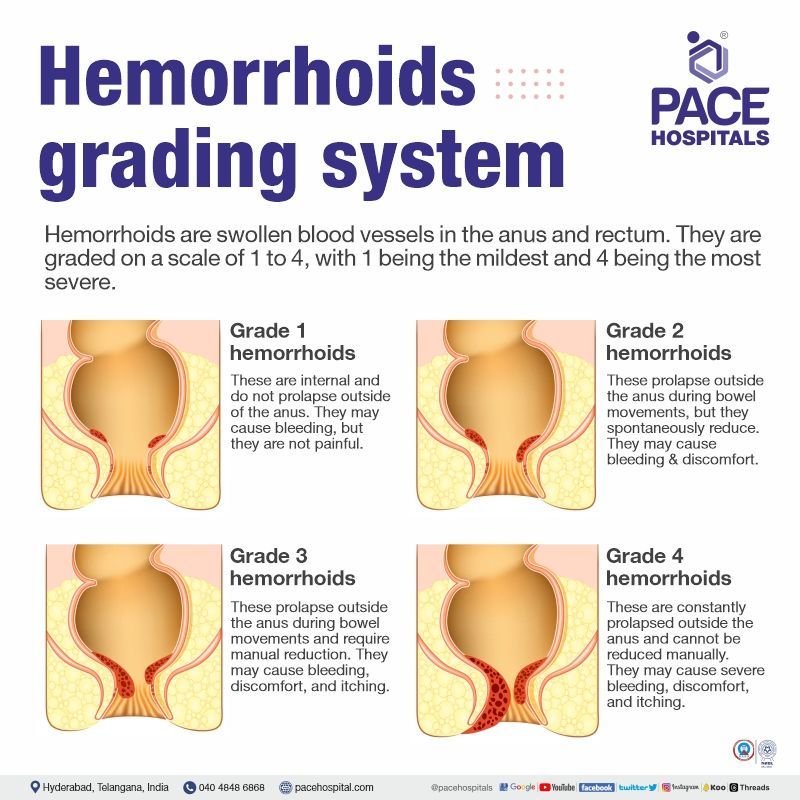
Piles/Hemorrhoids are classified into the following grades based on severity and anatomy:
- Grade - 1: Small, swollen areas on the internal anal canal lining appear from outside the aperture of the back channel (anus). They are not visible or perceptible. Grade-1 piles are more common and grow larger in some people, reaching grade 2 or higher.
- Grade - 2: These are bigger and may be partially pulled outside the anus when the patient wipes the anal region or uses the toilet, but as soon as the patient stops straining, they return inside.
- Grade - 3: Grade - 3 patients experience prolapses from the anus when using the toilet. One or more of them may feel like tiny, bouncy bumps that hang from the anus. With a finger, the patient may force them back into the anus.
- Grade - 4: In this stage, haemorrhoids drop-down continuously from the anus (prolapse) and can’t push back inside. They become quite large sometimes.
Piles Management: Severity, Treatment & Recovery Time
Piles treatment and recovery depend on the severity of the condition and the procedure used. Grade-wise treatment options and expected recovery timelines are outlined as follows:
| Symptoms / Clinical Presentation | Severity Level (Grade) | Diagnosis & Treatment Approach | Recovery & Expected Outcome |
|---|---|---|---|
| Mild itching, pain and discomfort, small internal piles without prolapse | Mild (Grade I) | Diagnosis with Digital Rectal Examination and High-resolution anoscopy; treatment includes taking stool softeners, dietary correction and topical medications | Symptoms often improve within 1-2 weeks with conservative care |
| Bleeding during bowel motions, discomfort when sitting; piles may prolapse but retract naturally | Moderate (Grade II) | Evaluation using High-resolution anoscopy or Endoanal ultrasound (if required); treatment includes Rubber Band Ligation, Radiofrequency ablation, or Doppler-guided hemorrhoid artery ligation (DGHAL) | Relief from the condition typically seen within 1–2 weeks; minimal downtime |
| Piles prolapsing during bowel movement and requiring manual repositioning | Severe (Grade III) | Detailed assessment with Endoanal ultrasound; treatment options include Laser piles surgery, Stapled hemorrhoidopexy (PPH procedure), or DGHAL | Faster recovery with minimally invasive methods; return to routine in 2–5 days |
| Permanently prolapsed piles with persistent bleeding, severe pain, or complications | Very Severe (Grade IV) | Comprehensive evaluation with Digital Rectal Exam and imaging as needed; treated with advanced laser hemorrhoidectomy, Stapled hemorrhoidopexy (PPH), or conventional hemorrhoidectomy | Recovery usually takes 1–2 weeks, supported by post-procedure care |
Need More Clarity About Your Piles Condition?
Get a free second opinion from the best proctologists.
At PACE Hospitals, we are committed to providing our patients with the best possible care, and that includes offering second medical opinions with super specialists for treatment or surgery. We recommend everyone to get an expert advance medical second opinion, before taking decision for your treatment or surgery.
Piles Treatment
Management of piles/hemorrhoids includes:
- Non-pharmacological piles or hemorrhoids treatment
- Pharmacological piles or hemorrhoids treatment
Non-pharmacological piles or hemorrhoids treatment
Diet
- Consuming high-fibre foods for piles, such as wholegrain bread, cereals, fruits, and vegetables, helps the stool move more easily.
- Keeping hydrated helps patients to pass soft stools effortlessly.
- Preventing constipation can be accomplished by taking fibre supplements like ispaghula, methylcellulose, bran, or sterculia.
- Limit your intake of alcohol and caffeine.
The American Dietary Guidelines, 2020–2025, suggested consuming 14 grams of dietary fibre per 1,000 calories. For instance, the recommended daily fibre intake is 28 grams for a 2,000-calorie diet for piles.
The following 5 foods to avoid with hemorrhoids:
- Prepared foods (frozen and snack foods)
- Processed foods (microwavable dinners)
- Cheese
- Fast food
- Meat
The 5 hemorrhoids high fiber diet includes:
- Cereals
- Oats
- Brown rice
- Beans
- Lentils (daal)
Medications
- Patients could avoid painkillers that may lead to constipation.
Habits
- Avoid spending extended periods in the lavatory or toilets.
- Maintenance of healthy weight.
- Avoid putting any strain on bowel movements.
- Regular exercise can help with constipation.
- Avoid heavy lifting.
- Take a sitz or tub bath to get relief from pain.
Sitz bath: It is one of the best hemorrhoids home treatments. It is a type of therapy where the patient sits in warm or cold water to minimise the itching, pain symptoms and gives a soothing effect in the anal and genital areas.
✅Medical and Surgical Treatment for Haemorrhoids or Piles
Medications
Ointment for piles, piles cream, piles tablet and suppositories containing corticosteroids (reduces the pain and inflammation), soothing agents (gives cooling and smooth effect), astringents (hemorrhoids medicine that reduces bleeding piles and other abrasions) and antibiotics (to treat infections).
The above medications are given as OTC (over-to-the-counter) and prescription.
If there is severe pain and bleeding, the piles specialist doctor may prescribe corticosteroids and medicines that cause numbness to relieve the pain.
Non-surgical procedures
Rubber band ligation (banding treatment)
Usually, this procedure will be done for the patients with grade 1 hemorrhoids, grade-2 and 3 haemorrhoids. It is an outpatient procedure and involves the placement of a rubber or elastic band around the base of hemorrhoid. Upon placing the rubber band, the blood supply to the piles cuts off, making the piles dead and falling off automatically.
Rubber band ligation is usually painless. It has the best curing rate (out of 10 cases, 8 cases will get cured). The recurrence of piles is based on the strain during constipation. Internal haemorrhoids treatment can be effectively done non-surgically with rubber band ligation compared to other techniques. Overall, this is a secure method.
Minor complications such as bleeding, infection, and ulcers occur in a few patients after the ligation procedure.
Injection sclerotherapy
In some cases of haemorrhagic internal haemorrhoids, ambulatory treatment with sclerosants is injected, resulting in scarring and shrinkage of blood vessels in haemorrhoidal tissues. Before starting the sclerosant treatment, an endoscopic examination is conducted. This treatment method significantly lowers rectal bleeding and rarely results in local or widespread issues, such as scarring. It is only indicated for one or two series of injections.
It is also an outpatient procedure and involves shorter sessions. This procedure is contraindicated in patients who are taking blood thinners.
Infrared photocoagulation
This tool uses heat to direct infrared rays on the internal haemorrhoid. The heat generated by the infrared light causes scar tissue to occur, which cuts off the blood supply and shrinks piles.
Electrocoagulation
This tool uses electric current on internal hemorrhoid and causes scar tissue to form, which cuts off the blood supply and shrinks piles.
There are some laser treatments for piles which include:
Haemorrhoidal laser procedure (HeLP)
'HeLP' is needed in patients with symptomatic hemorrhoids where conservative treatment failed and when mucosal prolapse is scarce or not symptomatic. The technique comprises the closure of the terminal branches of the superior rectal artery roughly 2-3 cm above the dentate line through laser shots originated by a diode laser platform.
Patients well tolerate the laser beam. For this reason, anaesthetic is not required in most situations, and the operation allows a speedy return to regular activities.
Haemorrhoidal laser procedure + mucopexy (HeLPexx)
The inclusion of mucopexy to laser treatment (HeLPexx) contributes to the overall treatment of symptoms when mucosal prolapse is a cause.
Laser hemorrhoidoplasty (LHP)
LHP is a minimally invasive outpatient procedure with less discomfort and recovery time. In order to have the laser coagulate with hemorrhoidal nodes, a laser haemorrhoidoplasty kit is used in this treatment. Haemorrhoids that are swollen will decrease due to the laser energy’s-controlled emission. Prolapse has been proven to be prevented with this method. Using clamps or other foreign objects within the body is unnecessary for this type of laser surgery.
Since no stitches or incisions are used during hemorrhoidoplasty, and thus it has great healing results. In this process, a small perianal port is used to get access/entry to hemorrhoidal tissue. After this procedure, the patient can resume normal daily activities within a few hours.
In treating symptomatic hemorrhoidal disease, laser haemorrhoidoplasty looks promising and effective non-excisional surgical approach with high patient satisfaction, mild postoperative symptoms, few complications, and swift-to-operate activities.
Surgical procedures
Surgical hemorrhoidectomy
Surgical hemorrhoidectomy (traditional piles surgery) is indicated to treat third- and fourth-degree hemorrhoids in conditions such as failure of medical management, bulging out of the large component, advanced disease, coagulopathic patients with bleeding and for the treatment of incarcerated internal hemorrhoids.
This procedure is an inpatient procedure done under general anaesthesia. However, it may cause pain for a few days after surgery. Among other contraindications, haemorrhoidectomy is also contraindicated in patients suffering from rectocele who cannot undergo anaesthesia.
Stapled haemorrhoidopexy
In this procedure, a stapling gun is used to cut the circular section of the anal canal lining above the piles. This procedure pulls the piles back to the back passage and reduces the blood supply to the piles, which in turn causes shrinkage.
It is a less painful procedure when compared to that of traditional surgery.
Haemorrhoidal artery ligation
The arteries which supply blood to the piles are tied (ligated), and thereby it causes the piles to shrink.
✅Laser Piles Treatment Benefits
Laser piles treatment offers several advantages over traditional surgical methods:
Minimal Invasiveness
- No incisions or stitches, reducing infection and scarring risk.
- Less pain, requiring minimal anesthesia.
- Faster recovery; patients can resume daily activities within a few days.
Precision and Efficiency
- Targeted laser beam treatment, minimizing damage to healthy tissue.
- Minimal bleeding during the procedure.
- Short procedure time.
Long-term Benefits
- Lower risk of piles recurrence due to precise treatment.
- Improved quality of life with quick recovery and minimal discomfort.
Additional Advantages
- Typically an outpatient procedure, avoiding hospital stay.
- Reduced infection risk due to minimally invasive nature.
- Minimal or no scarring due to the absence of incisions.
Long-term Success Rates of Piles Treatment
Long-term results after piles treatment are generally favorable when the underlying causes are also managed properly. Modern procedures such as laser hemorrhoidoplasty and DGHAL are associated with good symptom control, lower recurrence risk, and quicker return to normal activity in selected patients.
However, recurrence can still occur if contributing factors such as chronic constipation, prolonged straining, obesity, low-fibre diet, or sedentary lifestyle are not corrected even after being noticed. Long-term success therefore depends not only on the procedure but also on dietary changes, bowel habits, hydration, and regular follow-up care which needs guidance of an experienced proctologist or a colorectal surgeon.
What to Expect on Surgery Day
On the day planned for piles surgery, the hospital team usually completes routine admission procedures and performs a final health check before treatment begins for a patient. Basic assessments such as blood pressure, pulse rate, and review of medical records are commonly carried out before shifting to the surgical area. In most cases, confirmation of fasting status and completion of consent formalities are also done before the procedure.
Once the surgery is completed, monitoring is continued for some time until the patient becomes comfortable and stability is checked. Depending on the recovery condition and the type of procedure performed, discharge may be possible within the same day or after brief observation. Before going home, instructions are generally explained regarding food intake, medicines, bowel movement care, personal hygiene, physical activity, and the next follow-up review..
Piles Treatment Cost in Hyderabad, India
The cost of Piles Treatment in Hyderabad generally ranges from ₹900 to ₹95,000 (approx. US $11 – US $1,140).
The exact cost varies depending on the type and severity of piles (Grade I–IV), required diagnostic tests (proctoscopy, anoscopy, ultrasound), type of medical or surgical treatment (medications, banding, sclerotherapy, laser piles surgery, or hemorrhoidectomy), specialist consultation, hospitalization, and hospital facilities — including cashless options, TPA corporate tie-ups, and assistance with medical insurance wherever applicable.
Cost Breakdown According to Type of Piles Treatment
- Proctologist Consultation + Basic Medication – ₹900 – ₹2,000 (US $11 – US $24)
- Diagnostic Tests (Proctoscopy, Anoscopy, CBC) – ₹800 – ₹2,500 (US $10 – US $30)
- Non-Surgical Treatment (Medicines, Ointments, Sitz Bath Plan) – ₹1,200 – ₹3,000 (US $14 – US $36)
- Rubber Band Ligation (OPD Procedure) – ₹8,000 – ₹15,000 (US $95 – US $180)
- Sclerotherapy for Internal Piles – ₹7,000 – ₹18,000 (US $84 – US $215)
- Infrared Coagulation (IRC) – ₹10,000 – ₹22,000 (US $120 – US $265)
- Laser Piles Surgery (Most Preferred) – ₹45,000 – ₹95,000 (US $540 – US $1,140)
- Stapler Hemorrhoidectomy – ₹60,000 – ₹95,000 (US $720 – US $1,140)
- Conventional Hemorrhoidectomy – ₹38,000 – ₹75,000 (US $455 – US $900)
Related Resources
Frequently Asked Questions (FAQs) on Piles or Haemorrhoids
What is piles?
Haemorrhoids, often known as piles, typically develop inside and around the anal canal. A complex network of small blood vessels lines the surface of the anal canal. Sometimes, the blood in these veins increases and causes them to bulge. The tissue above the enlarged veins might combine to create one or more piles.
Which Is the best hospital for Piles Treatment in Hyderabad, India?
PACE Hospitals, Hyderabad, is one of the most trusted centres for advanced piles and anorectal treatment. Our experienced team of expert proctologists and colorectal surgeons provide comprehensive evaluation and targeted care for:
- Internal & external piles
- Bleeding hemorrhoids
- Chronic constipation-related piles
- Thrombosed piles
- Recurrent piles
- Painful swelling or discharge
With high-resolution anoscopy, minimally invasive laser technology, day-care surgical options, and specialised wound-care protocols, PACE Hospitals ensures fast, safe, and patient-focused piles management — supported by cashless insurance, TPA tie-ups, and complete documentation assistance.
What causes hemorrhoids or piles?
The possible causes for piles or hemorrhoids are straining during bowel movement, chronic constipation or diarrhoea, abnormal bowel habits such as longer duration in bathrooms, increased abdominal pressure due to pregnancy, lifting heavy weights, eating spicy foods, and lack of water (dehydration).
How piles look like?
Piles are small bumps or lumps (fleshy and swelling) like structures and range from pea to grape size. They usually occur above, below or around the anal canal (anus) and appear pink or purple.
Which juice is good for piles?
Not only specific juice, drinking water and liquids such as fruit juices and clear soups helps the patient relieve piles or haemorrhoids.
In addition to these fiber rich foods such as vegetables, fruits, and cereals makes the patient pass the stools softly and easier to get rid of pain and constipation during stool pass.
how much does piles operation cost in hyderabad at PACE Hospitals?
At PACE Hospitals, Hyderabad, the cost of piles treatment typically ranges from ₹850 to ₹89,000 and above (approx. US $10 – US $1,070), offering an affordable and specialised option for all grades of piles (Grade I–IV).
However, the final cost depends on:
- Grade and severity of piles
- Need for proctoscopy or diagnostic imaging
- Medical vs minimally invasive vs surgical treatment
- Requirement for laser surgery, sclerotherapy, or banding
- Hospital stay and postoperative care
- Proctologist consultation and follow-up
- Associated conditions (fissure, fistula, constipation, infection)
Minor Grade I–II piles managed with medication stay at the lower range, while advanced or recurrent piles requiring laser surgery or stapler hemorrhoidectomy fall in the higher range.
After clinical examination and diagnostic assessment, our proctology specialists provide a personalized treatment plan and a clear cost estimate based on your condition and healthcare needs.
What are the specific cost components of piles laser surgery?
The total cost of laser surgery for piles usually depends on several medical and hospital-related factors rather than the procedure alone. Common components may include consultation charges, pre-operative investigations, surgeon fees, operation theatre charges, anaesthesia costs, laser equipment usage, hospital stay, medications, and post-surgical follow-up care. In some patients, the overall cost may also vary depending on the grade of piles, associated fissure or fistula, and whether additional procedures are required.
At advanced centres, pricing may also include modern technologies that improve precision and recovery. Many multi-speciality hospitals now focus on affordable and transparent pricing, allowing patients to understand treatment expenses clearly before surgery planning, which enables them to have a better healthcare.
How does DGHAL treatment compare to standard laser surgery?
Doppler-Guided Hemorrhoidal Artery Ligation (DGHAL) is a minimally invasive procedure that identifies and ties off the blood vessels supplying hemorrhoids, reducing swelling and bleeding without removing large amounts of tissue that may be required. Laser piles surgery, in contrast, uses focused laser energy to shrink or remove hemorrhoidal tissue with minimal cutting and reduced bleeding.
Both procedures aim to reduce pain and shorten recovery time compared to conventional surgery. DGHAL may be preferred in those selected patients with bleeding hemorrhoids, while laser treatment is commonly chosen for symptomatic piles requiring tissue reduction with minimal postoperative discomfort. However, the most suitable option for the treatment also may change based upon hemorrhoid grade, symptoms, and clinical examination findings.
What are the common post-operative red flags for patients?
Mild discomfort, temporary swelling, and slight bleeding can occur after piles surgery and usually improve gradually with passage of time. However, certain symptoms may indicate complications and should not be ignored.
Important warning signs that need proper attention include:
- Persistent or heavy rectal bleeding
- Fever or chills
- Difficulty passing urine
- Severe constipation or inability to pass stools
- Increasing pain not relieved by medicines
- Pus discharge or foul-smelling fluid at the surgery site
- Sudden swelling around the anal region
Early medical screening and diagnosis tests can detect infections, urinary retention, excessive bleeding, and delayed healing before problems emerge.
How soon one can sit comfortably after piles surgery?
Comfort while sitting gradually improves during the recovery period, although the exact timeline varies depending on the type of procedure performed and individual healing response. Patients undergoing minimally invasive laser procedures often experience less postoperative discomfort compared to conventional hemorrhoid surgery.
However, many individuals after minimally invasive surgery are able to sit for short periods within a few days, while complete comfort may take longer in more extensive procedures of major/open surgery. It has been observed that warm sitz baths, prescribed medications, adequate hydration, and avoiding constipation can significantly improve comfort during recovery.
Which doctor treats piles?
Initially, the physician/general practitioner will confirm piles, and the surgical procedures and treatment for piles or hemorrhoids will be done by a gastrointestinal surgeon/surgical gastroenterologists.
What is the age of piles starting?
Piles can occur at any age in one’s life. However, studies have shown that piles commonly occur between 45-65. About half of the people will be affected with piles or hemorrhoids by age 50.
Does piles affect periods?
Until now, no proven studies regarding the periods and piles relation exist.
How to prevent piles?
Piles can be prevented by drinking a lot of water and liquids, taking a fibre-rich diet, avoiding sitting continuously on toilets and hard surfaces, maintaining a healthy weight, taking fibre supplements, and exercising for piles (constipation relief).
How to reduce piles pain?
The factors that are used to reduce pain are:
- Keeping the stool soft by consuming plenty of fluids and fibre.
- Cleaning the bottom with damp toilet paper.
- Take a warm or cold sitz bath to relieve aching and discomfort for hemorrhoids (tub).
- Taking OTC analgesics relieves pain for the initial stage of piles.
- Placing an ice pack in a towel to get relief from pain.
- Gently push the pile inside.
- Maintain the bottom dry and hygienic.
Is egg good for piles?
There is no significant relation between piles and egg consumption. However, some studies have shown that components of eggs such as phospholipids, cholesterol, lutein, zeaxanthin, and proteins play an important role in circulating levels of the anti-inflammatory adipokine, adiponectin and indirectly reduce inflammation.
How to get rid of external hemorrhoids in 48 hours?
There are no natural procedures to remove external haemorrhoids in 48 hours, nor piles cure in 3 days beyond surgeries.
What is the difference between symptoms of piles in male and symptoms of piles in female?
There is no differentiation between symptoms of piles in males or females. However, it was understood that the complaint of piles in males is high as males report more frequently than females. Nevertheless, the reason for piles usually remains the same in both genders.
What is the cost of piles laser treatment in Hyderabad, Telangana?
The average piles laser treatment cost in Hyderabad ranges varies from ₹65,000 to ₹ 1,20,000 (INR sixty-five thousand to one lakh twenty thousand). However, hemorrhoids or piles treatment cost in Hyderabad depends upon the multiple factors such as patient age, severity of the condition (grade of piles), medical treatment, pre-operative tests, type of surgery (hemorrhoidectomy, rubber band ligation, sclerotherapy, and laser surgery), medication, post-operative care and insurance or corporate approvals for cashless facility.
How Does Laser Surgery Compare to Doppler-Guided Artery Ligation (DGHAL)?
Laser surgery and Doppler-guided hemorrhoid artery ligation (DGHAL) are both minimally invasive treatments for piles, but they differ in technique and application. Laser surgery works by directly shrinking or sealing the hemorrhoidal tissue using focused laser energy, which reduces bleeding and prolapse with minimal tissue damage and mild pain. It is often preferred for quicker recovery and less postoperative discomfort.
DGHAL, on the other hand, uses Doppler ultrasound to locate and tie off the arteries supplying blood to the hemorrhoids. By reducing blood flow, the hemorrhoids gradually shrink. DGHAL is particularly useful for bleeding piles and can be combined with mucopexy for prolapsing hemorrhoids. The choice between the two depends on hemorrhoid grade, symptoms, and patient suitability.
What Diagnostic Tools Like High-Resolution Anoscopy Are Used for Piles?
Diagnosis of piles involves both clinical examination and specialized tool usage to accurately assess the severity level and type of hemorrhoids (internal or external). High-resolution anoscopy allows detailed visualization of the anal canal and internal hemorrhoids, helping identify bleeding points, prolapse, and associated lesions in anorectal part.
Other commonly used diagnostic tools include such as digital rectal examination (DRE) to assess tone and masses, and endoanal ultrasound, which helps evaluate deeper anal structures and rule out other anorectal conditions. These tools improve diagnostic accuracy and guide appropriate treatment selection.
What Are the Primary Diagnostic Methods and Clinical Grades Used to Identify Piles?
Piles are diagnosed based on severity including symptoms, physical examination, and anoscopic findings. Initial assessment usually includes a digital rectal examination, followed by anoscopy or proctoscopy to visualize internal hemorrhoids. Imaging such as endoanal ultrasound may be used in selected cases.
Clinically, piles are graded from Grade I to Grade IV. Grade I involves mild internal swelling without prolapse, Grade II prolapses during straining but reduces spontaneously, Grade III requires manual reduction, and Grade IV remains permanently prolapsed. Grading helps determine whether conservative, non-surgical, or surgical treatment is needed.
Which Non-Surgical Treatment Options Are Available for Piles Treatment in Hyderabad?
Non-surgical treatment options are commonly recommended for early to moderate grades of piles such as Grade I and II. These include dietary modification, stool softeners, topical medications, and office-based procedures such as rubber band ligation, infrared coagulation, radiofrequency ablation, and Doppler-guided hemorrhoid artery ligation (DGHAL).
These treatments aim to reduce bleeding, inflammation, and prolapse while allowing faster recovery and minimal downtime. Selection depends on hemorrhoid grade, symptom severity, and response to initial medical therapy.
Which Dietary Deficiency Is a Leading Cause of Piles?
A diet low in dietary fibre is one of the most important contributing factors to the development of piles. Insufficient fibre intake leads to hard stools and chronic constipation, increasing straining during bowel movements, which places pressure on hemorrhoidal veins.
Lack of fibre is often associated with inadequate intake of whole grains, fruits, vegetables, and legumes. Increasing fibre and fluid intake helps soften stools, reduce straining, and plays a key role in both prevention and management of piles.
Is piles surgery covered by insurance?
Patients undergoing piles treatment at PACE Hospitals can use health insurance benefits when the procedure is advised as part of medical care. Surgical treatment is often recommended for conditions such as continuous bleeding, painful or prolapsing piles, clot-related swelling, or symptoms that persist even after medicines and dietary modifications.
Insurance approval can vary according to the individual health plan, treatment category, waiting period status, and hospitalization criteria. To help patients during the admission process, the coordination team at PACE Hospitals provides assistance with treatment estimates, required records, approval-related documentation, and guidance regarding available cashless or reimbursement procedures before scheduling surgery.


