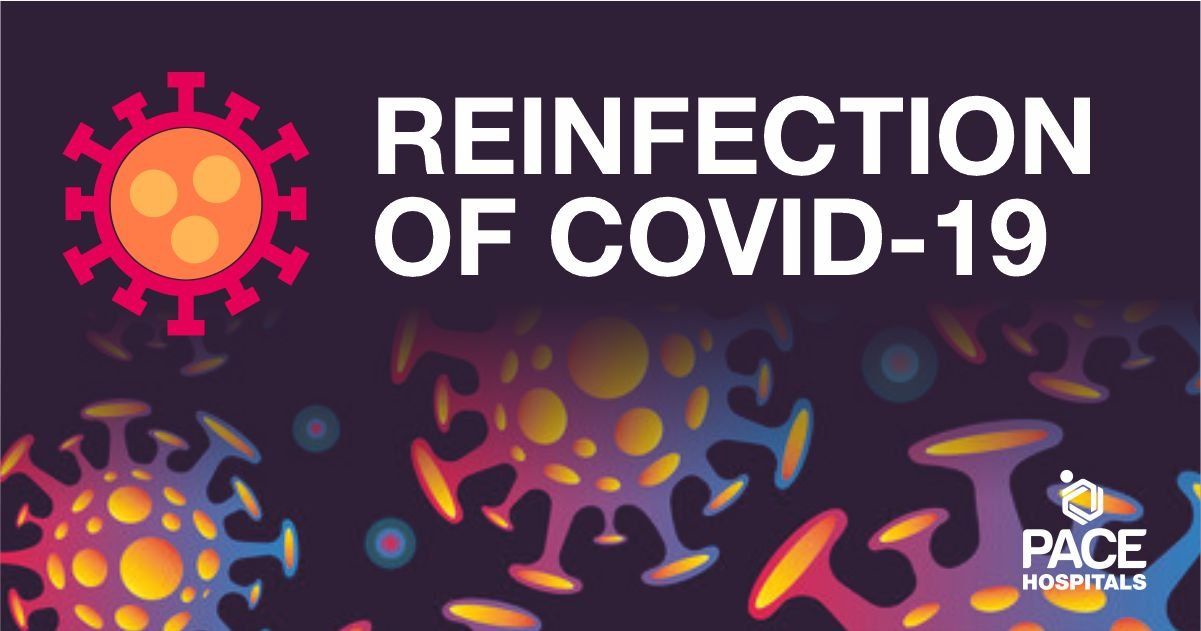
Reinfection of Covid-19 (Coronavirus), is it possible?
PACE Hospitals
Few cases of COVID-19 reinfection have been reported across the world. The reinfection cases have raised the concern about people's immunity to the coronavirus as the world struggles to tame the pandemic. It is a question that has implications for the health and economic challenges posed by the pandemic.
Is reinfection possible?
Scientists don’t know for sure but they believe unlikely. A recent study by researchers from Hongkong found that 33 years old man was the first documented reinfection. He tested positive on March 26 with mild symptoms and tested negative twice by April 14, but on August 15 he tested positive again after a trip to EUROPE. The second time though he was asymptomatic. I think genes showed the man was infected with a different variant of the coronavirus second time. Though he did not have detectable amount of antibodies in his system after the first infection, which likely why he was asymptomatic 2nd time.
New Delhi, Immunologist says conclusions on the immune system working against the virus cannot be made from individual patient case studies. According to experts, reinfection are rare but possible. We knew this already because immunity is never 100%, Anderson, Prof of Immunology said.
I emphasized that reinfection with the virus is probably rare but said the recent findings imply that initial exposure to the virus may not result in full immunity for everyone.
Do people develop immunity after being infected?
There is no current evidence that people who have recovered from COVID-19 and have antibodies are protected, WHO. The development of the immunity to a pathogen though natural infection is a multi step process.
According to WHO, some Governments have suggested that the detection of antibodies to the SARS-COV2, the virus that causes COVID-19 could serve as the basis for an immunity passport or risk free certificate that could enable individuals to travel or to return for work assuming that they are protected against reinfection. There is no evidence that who has recovered from COVID-19 and have antibodies are protected from a second infection.
Why does reinfection happens?
Even though there exist have only little clinical evidence about people catching COVID-19 again. Scientists suggest that there can be multiple meanings of what reinfection could mean, making us understand as to why this could happen.
A probable reason for this could be the fact that once a person recovers from the infection, the viral load in the body depletes. In some cases, a recovered patients could go on to have low levels of virus in the body hence make them prone to show symptoms and get infected.
The viral load could persists in the body for up to 2 to 3 months time in this duration most people who get reinfected were diagnosed with.
The viral load could persists in the body for up to 2 to 3 months time in this duration most people who get reinfected were diagnosed with.
Vaccines role
Cases of reinfection may prompt questions about efficacy of vaccines, but we say reinfections is the big reason for getting vaccinated as vaccines can produce better immunity than the disease. Researchers from Hongkong told it is likely that vaccination can reduce a more potent and prolonged immunity than natural infection. SARS-COV2 may persist like other common cold coronaviruses, even for those who acquire immunity via natural infection / vaccination. Hence it may require periodic booster shots for the immunity against evolving strains of the virus, as is the case with the flu.
INDIA's reinfection cases
In INDIA, Telangana and Gujrat have reported what could be the country's 1st documented reinfections. Last week Telanagana Govt said it has 2 cases of COVID-19 reinfection among frontline medical professionals and is investigating whether 2 different strains of the novel coronavirus were responsible for it. Although they had undergone the RT-PCR tests both times and had tested positive, they were completely asymptomatic initially. There is a chance that they got reinfected after getting exposed to different strain of the virus said by the health officials of Telangana.
Get Home Care for suspected or diagnosed COVID-19 patient.
Share on
Request an appointment
Fill in the appointment form or call us instantly to book a confirmed appointment with our super specialist at 04048486868
Appointment request - health articles
Recent Articles