
Endoscopic Sleeve Gastroplasty (ESG) | Procedure & Cost
PACE Hospitals stands as the best hospital for Endoscopic Sleeve Gastroplasty (ESG) in Hyderabad, India, offering an advanced minimally invasive, non-surgical approach to weight loss that is both safe and effective. ESG, a minimally invasive procedure, is performed by our highly skilled team of interventional gastroenterologists and bariatric experts who are pioneers in the field of endoscopic weight loss treatments.
At PACE Hospitals, each patient receives a personalized treatment plan tailored to their specific needs, supported by comprehensive nutritional and lifestyle counseling to maximize the long-term success of the procedure.
Request an Appointment for Endoscopic Sleeve Gastroplasty (ESG)
Endoscopic Sleeve Gastroplasty appointment
Why Choose PACE hospitals for Endoscopic Sleeve Gastroplasty?
Minimally Invasive, Non-Surgical Weight Loss Procedure
Team of the Best Bariatric Doctors in Hyderabad
Precision Treatment with 99.9% success rate
All insurance accepted with No-cost EMI option
Recognized for excellence in healthcare delivery with
NABH, NABL, NBE/DNB, NABH Nursing Excellence, and ISCCM accreditations.
ESG - Endoscopic Sleeve Gastroplasty definition
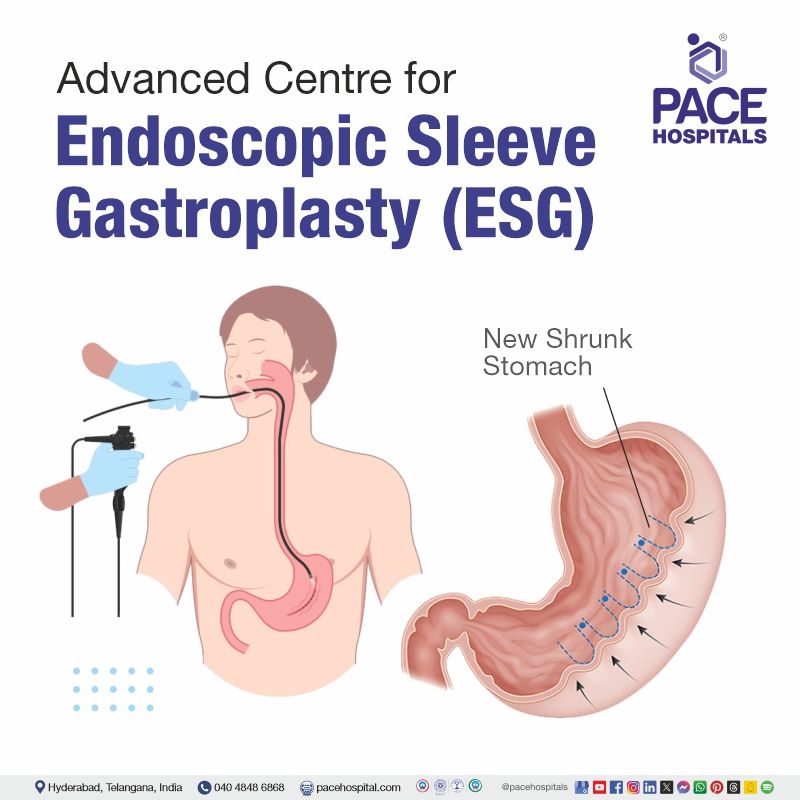
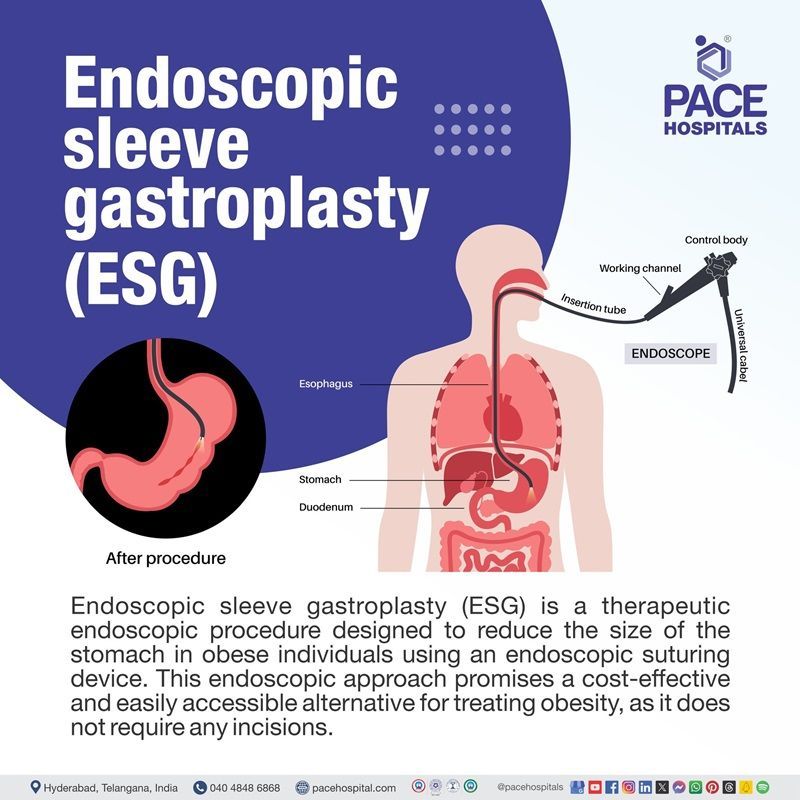
Endoscopic Sleeve Gastroplasty (ESG) surgery is a minimally invasive endobariatric weight reduction procedure that involves reducing the size of the stomach (about 70%) with the help of an endoscope and an endoscopic suturing device. Interventional
gastroenterologists perform the ESG procedure by inserting an endoscope through the mouth, suturing the front and back walls of the stomach, tightening them, and bringing the walls together. This results in decreasing the stomach volume and its length, leading to a delay in stomach emptying or feeling full for longer.
ESG - Endoscopic Sleeve Gastroplasty Indications
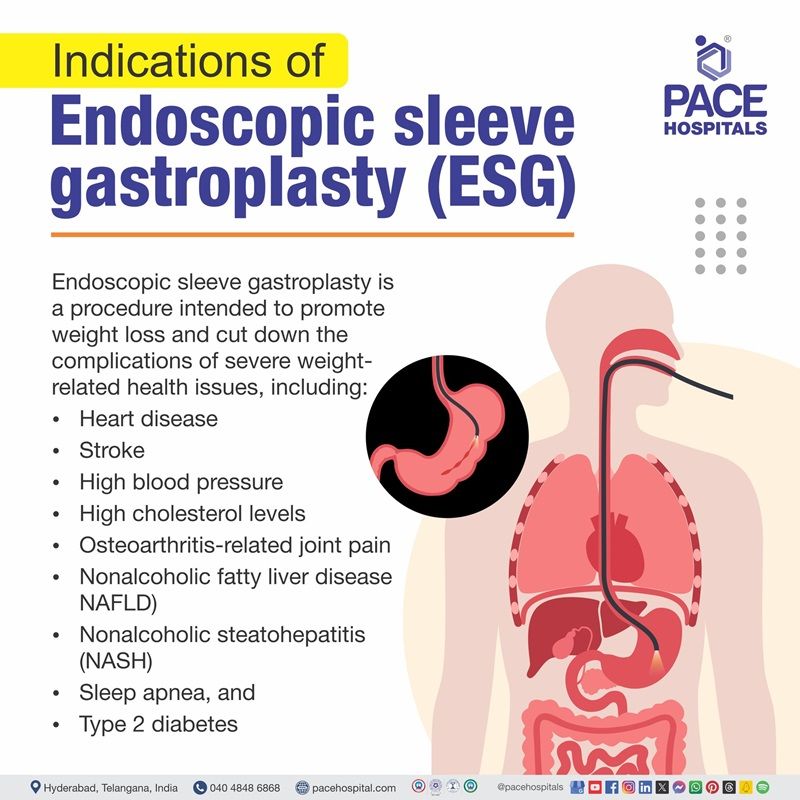
The ESG surgery is indicated in people with a body mass index of 30 or more and in patients for whom exercise and diet have not shown any positive effect in reducing their weight. ESG surgery reduces the gastric capacity by placing a running constrictive full-thickness triangular suture pattern endoluminal that starts from the prepyloric antrum (last part of the stomach) to the gastroesophageal junction (esophagus connects to the stomach). This leads to reduced gastric emptying and increased satiety, thereby improving the patient's metabolic profile. This procedure will be the ideal treatment for obese or moderately obese patients who are not willing or cannot have bariatric surgery.
Endoscopic sleeve gastroplasty is a novel endoscopic technique indicated for the treatment of obesity or abnormal or excessive fat accumulation.
Considerations of interventional gastroenterologist before endoscopic sleeve gastroplasty surgery
Endoscopic sleeve gastroplasty surgery is one of the most commonly used procedures as a part of obesity treatment or to reduce body weight. However, the gastroenterologist might check the following conditions before prescribing endoscopic sleeve gastroplasty surgery:
- The patient’s body mass index (BMI) should be more than 30 kg/m2.
- The patient had no improvement in reducing their body weight with a change in diet and exercise.
- Looking for an alternative to invasive bariatric surgery procedures.
ESG - Endoscopic Sleeve Gastroplasty Contraindications
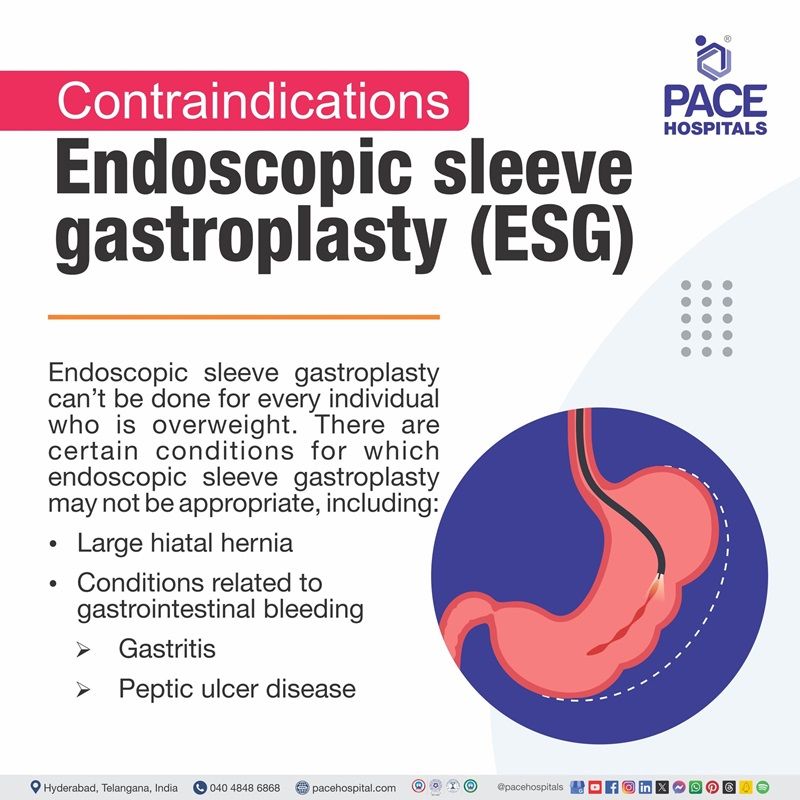
The presence of the following conditions is contraindicated while opting for endoscopic sleeve gastroplasty surgery:
- Gastric mucosal lesions or acute gastritis
- Neoplastic lesions
- Hiatus hernia, more than 3 cm
- Psychiatric disorders
- Coagulopathy (impaired blood coagulation process)
Getting ready for Endoscopic Sleeve Gastroplasty Surgery (ESG)
The interventional gastroenterologist might follow the below prior to the endoscopic sleeve gastroplasty surgery.
- The interventional gastroenterologist might check for the patient’s medical history (including the patient's daily intake of prescribed medications, over-the-counter medication, and allergy information), diet and lifestyle changes, weight loss goals, and perform a physical examination followed by prescribing evaluation tests to ensure the patient’s health condition is good enough for the procedure.
- If the patient is on antihypertensives or seizure management, the gastroenterologist might advise taking them in the morning (on the day of the procedure) or at least two hours prior to the surgery with a small sip of water.
- If the patient has diabetes, the gastroenterologist might advise special instructions on how and when to take them or whether to stop taking them on the day of the procedure.
- If the patient is on anticoagulants or blood thinners, the gastroenterologist might advise consulting the prescribed physician for special instructions on how, when, or when to stop taking them.
- The gastroenterologist might suggest the patient be on a clear liquid diet on the day prior to the surgery, such as water, tea or coffee without milk or cream, fruit juices without pulp, etc. The patient might be suggested not to have anything after midnight (the day prior to the surgery).
- The entire procedure and risk (if any) of the endoscopic sleeve gastroplasty surgery will be explained clearly to the patient, and the patient will be provided with a consent form to sign that gives the patient permission to carry out the procedure. The patient needs to read the consent document carefully and ask any questions they may have before signing.
During Endoscopic Sleeve Gastroplasty Surgery (ESG)
The endoscopic sleeve gastroplasty surgery might require hospitalization, and it is usually carried out while the patient is under general anesthesia. This procedure might take 60 to 90 minutes; however, it might take more time based on the patient’s condition.
In general, endoscopic sleeve gastroplasty surgery might follow the below process:
- The patient will be administered with fluids, anesthesia, antibiotics, and other necessary medications through the intravenous route.
- The patient will be provided with a surgical gown to change the dress.
- The patient will be placed on the table, and an endoscope that consists of a camera and an endoscopic suturing device will be inserted through the patient's mouth, which passes through the throat and reaches the stomach.
- The other end of the endoscope will be connected to a monitor or screen to visualize the inner view of the stomach and the endoscope movement.
- Once it reaches the stomach, the interventional gastroenterologist releases the gases into the stomach to expand it, and lines will be drawn on the walls of the stomach (front and backward) where the sutures will be placed.
- The interventional gastroenterologist might place sutures in the shape of a tube or sleeve (number depends on the patient's requirement) between the front and back walls of the stomach and tighten them together, resulting in decreasing the stomach volume and its length.
- With the help of a suturing device, the interventional gastroenterologist starts operating while watching the screen.
- The sutures placed are non-dissolvable. Hence, the stomach tissue will heal around them to form a new shape.
- Once the procedure is complete, the endoscope will be removed.
After Endoscopic Sleeve Gastroplasty Surgery (ESG)
Once the patient’s vital signs are stable, they will be shifted to the recovery room.
- After recovering from sedation, based on their condition, they either might leave on the same day or might require further hospitalisation.
- The patient might not be suggested to eat any food for a few hours post-surgery. After that, they will be restricted to having only liquids, at least for the first two weeks from the day of surgery, which will be followed by slowly transitioning into semi-solids and then to a regular healthy diet.
- The patient will be prescribed pain, vomiting, and other required medications as per their condition.
- The patient will be advised to have regular follow-ups with dieticians, interventional gastroenterologists.
Endoscopic Sleeve Gastroplasty Diet
The diet after ESG surgery plays a vital role in determining the efficacy of it. The patient will be suggested to follow up with dieticians or nutritionists at least twice a month for the first three months, followed by once a month, based on their condition.
The following hierarchy is the endoscopic sleeve gastroplasty diet after surgery, which dieticians or nutritionists might suggest for the initial few weeks from the day of surgery:
- Only clear liquids for the first eight hours post-surgery.
- Powdered protein-associated liquid diet for the first week.
- Low sugar and fat-associated soft foods for the second week.
- Small portions of solid food after four weeks.
Endoscopic Sleeve Gastroplasty results
The ESG weight loss results are purely dependent on the diet and lifestyle changes post-ESG surgery. However, the studies have demonstrated the ESG surgery results have shown significantly greater weight loss (nearly 16% total body weight loss and nearly 60% excess body weight loss) after one year of surgery compared to a combination of high-intensity diet and lifestyle therapy alone (low-calorie diet, behavioral therapy and increase in physical activity).
A 2022 international study showed a significant decrease in excess body weight loss (17.3% at one month, 29.2% at three months, and 35.6%at six months; p<0.000) and body mass index (7.3 kg/m2 at three months, 9.3 kg/m2 at six months and 8.6 kg/m2 at 12 months; p<0.000) in obese patients (average weight of 38.7 kg/m2). In addition to a sustained decrease in body weight and body mass index for 12 months, it had also shown a decrease in mean HbA1c, liver enzymes (alanine transaminase and aspartate aminotransferase), triglycerides, and low-density cholesterol (bad cholesterol).
Endoscopic Sleeve Gastroplasty complications
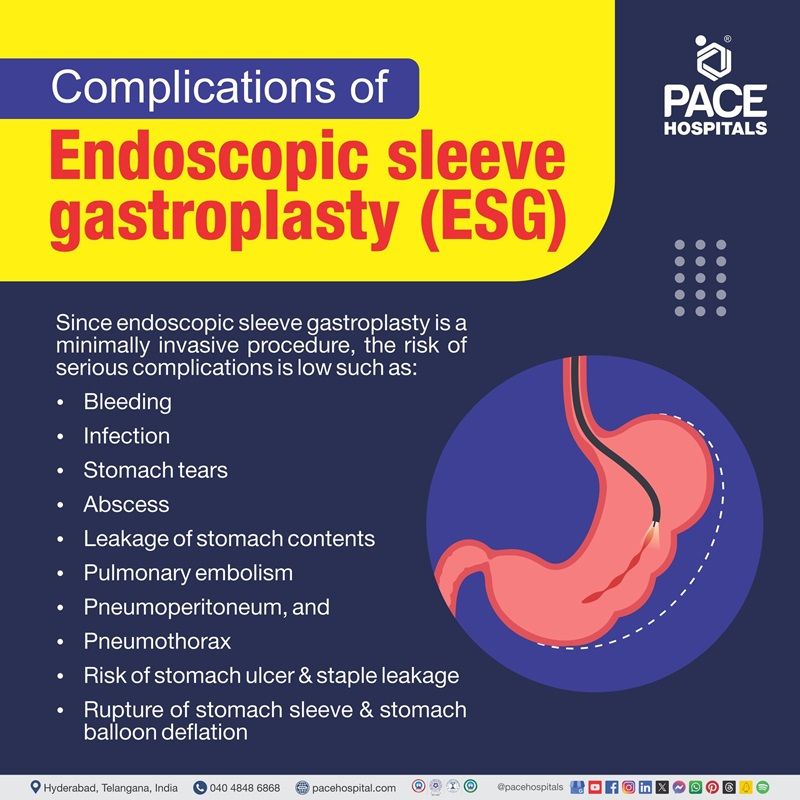
Endoscopic sleeve gastroplasty has proven to be a safe and effective procedure (based on the research studies). However, some patients might show side effects post-surgery, which might resolve on their own within two to three days or might require treatment. The following are the endoscopic sleeve gastroplasty side effects:
- Stomach pain
- Vomiting
- Abdominal bloating
- Dehydration
- In some research studies, apart from the above, the following are the serious adverse effects of ESG.
- Gastrointestinal bleeding
- Perigastric fluid leak
- Pulmonary embolism (blood clot that stops blood flow to lungs)
- Pneumoperitoneum (presence of air in the abdominal cavity)
- Deep vein thrombosis (formation of blood clots in deep veins)
Endoscopic Sleeve Gastroplasty in Pregnancy
Obesity is the major common health problem in women of reproductive age (20 to 39 years), where nearly 40% of women are being affected. Obesity at the initial stages of pregnancy can be a potential risk factor for gestational and postpartum maternal complications, in addition to adversely affecting fetal, neonatal, and infant outcomes.
Endoscopic sleeve gastroplasty procedure is an effective option for weight loss, especially in women of childbearing age. The gastroenterologist might advise avoiding pregnancy for at least 1.5 years following an ESG procedure. As per the research studies, patients who underwent Endoscopic sleeve gastroplasty prior to pregnancy had shown lower rates of several adverse obstetric outcomes such as gestational diabetes mellitus, gestational hypertension, postpartum hemorrhage, and cesarean delivery in comparison to controls who were matched for pre-surgery BMI.
Advantages of Endoscopic Sleeve Gastroplasty (ESG)
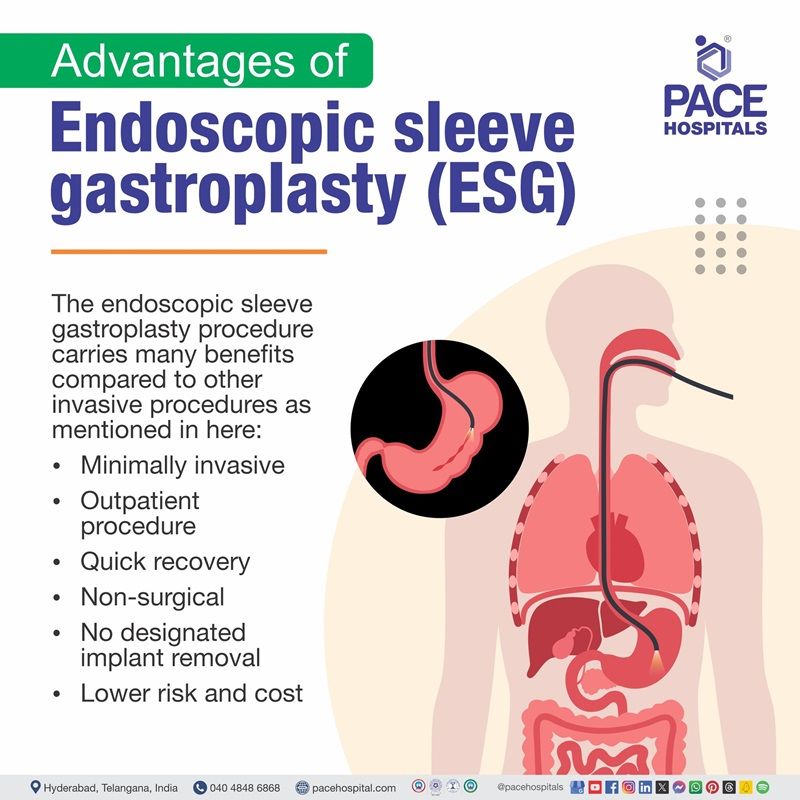
- There will be no formation of post-surgical scars, as it is an endoscopic procedure where an endoscope will be inserted through the mouth.
- Required fewer hospitalization days compared to other bariatric procedures.
- Aids in low food intake due to low gastric volume, thereby reducing body weight.
- Cost-effective therapy compared to other bariatric procedures.
- No alterations in the natural flow of digestion.
Questions that the patients can ask the healthcare team post Endoscopic Sleeve Gastroplasty (ESG)?
- What are the possible side effects I can have after the procedure?
- Is my endoscopic sleeve gastroplasty procedure successful?
- To whom should I consult if I have any complications?
- What diet precautions should I follow?
- When should I come back for further follow-up?
Difference between endoscopic sleeve gastroplasty vs sleeve gastrectomy
Endoscopic sleeve gastroplasty vs gastric sleeve
Both procedures are used to reduce the volume or size of the stomach; however, the following are the differences between them:
| Elements | Endoscopic sleeve gastroplasty (ESG) | Sleeve gastrectomy (SG) |
|---|---|---|
| Effectiveness | According to research reports, ESG was slightly less effective than sleeve gastrectomy. | As per research reports, sleeve gastrectomy has been more effective than ESG. |
| Type | Endoscopic technique | Surgical procedure |
| Incisions / Scars | No incisions will be made as this procedure is done by inserting an endoscope. | Small incisions will be made on the abdominal wall through a laparoscopic procedure. |
| Safety | ESG is a safe procedure with minimal complications compared to sleeve gastrectomy | The risk of complications in sleeve gastrectomy is high compared to ESG, as sleeve gastrectomy surgery involves the cutting and stapling of the stomach. |
| Recovery | 2-3 days; might extend based on patient’s condition | 2-3 weeks; might extend based on patient's condition |
Endoscopic Sleeve Gastroplasty (ESG) Cost in Hyderabad, India
The cost of Endoscopic Sleeve Gastroplasty (ESG) in Hyderabad generally ranges from ₹3,00,000 to ₹5,00,000 (approximately US $3,620 – US $6,030). The exact endoscopic sleeve gastroplasty cost in India varies depending on factors such as the patient’s BMI, stomach size reduction required, the endoscopic suturing system used, whether ESG is combined with metabolic therapy, surgeon/endoscopist expertise, and the hospital facilities chosen — including cashless treatment options, TPA corporate tie-ups, and assistance with medical insurance approvals wherever applicable.
Cost Breakdown According to Type of Procedure
- Standard ESG (Moderate BMI) – ₹3,00,000 – ₹3,80,000 (US $3,620 – US $4,590)
- ESG with Metabolic Modification / Weight-Loss Programmes – ₹3,80,000 – ₹4,40,000 (US $4,590 – US $5,320)
- ESG for High BMI / Complex Cases – ₹4,40,000 – ₹5,00,000 (US $5,320 – US $6,030)
FAQs on Endoscopic Sleeve Gastroplasty (ESG)
How long does endoscopic sleeve gastroplasty last?
The effect of endoscopic sleeve gastroplasty depends on the patient's condition and their determination to have a healthy lifestyle. However, as per the research studies, the durability of endoscopic sleeve gastroplasty lasts for one to five years.
Which Is the best hospital for Endoscopic Sleeve Gastroplasty (ESG) Procedure in Hyderabad, India?
PACE Hospitals, Hyderabad is regarded as one of the leading centres for advanced endoscopic bariatric procedures such as ESG.
Our team of specialised interventional gastroenterologists performs the procedure using high-precision suturing systems, real-time endoscopic visualisation, and enhanced recovery protocols to ensure safe, minimally invasive, and long-term weight-loss outcomes.
With state-of-the-art endoscopy suites, dedicated bariatric support teams, personalised dietician guidance, and modern monitoring facilities, PACE Hospitals ensures safe, effective, and patient-centric care — supported by cashless facility options, TPA corporate tie-ups, and assistance with medical insurance processing for eligible patients.
Is ESG better than gastric sleeve?
It is based on the patient’s condition and requirement, as both procedures are used to decrease the volume or size of the stomach. However, the surgical gastroenterologist might opt for ESG over gastric sleeve as it is an endoscopic procedure that is done with the help of an endoscope that doesn't require any skin cutting followed by low post-surgical complications compared to gastric sleeve.
Is ESG surgery permanent?
Yes, ESG procedure is a permanent procedure as it is a non-invasive, endoscopic procedure used to decrease body weight by reducing the stomach size (up to 70%) with the help of sutures, resulting in the formation of a sleeve-shaped stomach. Thus, it reduces the size and volume of the stomach, leading to an increase in the feeling of fullness or delay in stomach emptying. These non-absorbable sutures are strong enough to hold the shape of the stomach (sleeve or tube shape), which aids in the provision of long-lasting duration.
Is endoscopic sleeve gastroplasty a safe procedure?
Endoscopic sleeve gastroplasty (ESG) is a safe weight loss procedure due to its minimal invasive nature and low risk of serious complications. Side effects like pain, nausea, and vomiting are temporary and can be treated with medication. This procedure is also effective and can produce clinically significant results, with a lower risk of adverse events compared to surgical interventions and intragastric balloon procedures
What Is the cost of ESG surgery at PACE Hospitals, Hyderabad?
At PACE Hospitals, Hyderabad, the ESG surgery cost typically ranges from ₹2,80,000 to ₹4,80,000 and above (approximately US $3,380 – US $5,785), depending on:
- Patient’s BMI and weight-loss goals
- Type of endoscopic suturing system used
- Whether metabolic/endocrine evaluation is required
- Surgeon/endoscopist expertise
- Duration of day-care/observation stay
- Pre- and post-procedure nutritional counselling
- Additional investigations required before surgery
For standard ESG, costs fall at the lower end, while cases requiring enhanced suturing or metabolic interventions fall toward the higher end.
After a complete bariatric assessment and endoscopic evaluation, our team provides a personalised treatment plan and a detailed, transparent cost estimate tailored to your needs.
What are the risks of ESG procedure?
The risk of ESG surgery varies with the person; however, post-ESG surgery, the patient might feel sharp stomach pain, nausea, and vomiting that might last for a few days from the day of the surgery. The gastroenterologist might prescribe medications to subside the side effects of ESG surgery.
How long does it take the stomach to heal after ESG?
ESG is a non-invasive and endoscopic procedure where an endoscope will be inserted through the oral route (mouth). Depending on the patient's condition, the patient might get discharged within a couple of days. The patient can resume their work or daily activities within one to three days after the procedure. The patient can be expected to fully recover after four weeks from the day of the procedure.
When can you work out after ESG?
The patient can have workout exercises after two weeks from the day of ESG surgery. During the first week, the patient will be advised not to lift heavy objects and can perform moderate exercises. The patients will be encouraged to move out of bed or perform light exercises such as climbing steps and taking care of themselves. After one month, the patient might shift to regular exercises as they initiate taking solid foods after four weeks of ESG procedure.
How often should I follow up with a nutritionist after ESG?
For the patient who underwent an endoscopic sleeve gastroplasty procedure, the gastroenterologist strongly recommends having a follow-up with a dietician or nutritionist at least twice a month, as diet plays a major role in the success of an endoscopic sleeve gastroplasty procedure.
Will endoscopic sleeve gastroplasty affect the daily medications?
No, the endoscopic sleeve gastroplasty procedure doesn’t affect the effectiveness of the daily medications. However, the patient can experience a longer onset time if they have consumed in a tablet or capsule form. Some anti-inflammatory agents might cause stomach irritations more than before the procedure.
How much weight can I expect to lose with ESG?
Reduction of body weight after an ESG surgery is completely based on the patient's commitment to the diet and lifestyle changes. Adhering to strict diet and adopting healthy lifestyle as per the dietician's plan or gastroenterologist's advice post-ESG can aid in reducing up to 59% of excess weight in a duration of one year.
How does ESG differ from other weight loss surgeries?
The working principle of endoscopic sleeve gastroplasty includes stitching of the front and back walls of the stomach, resulting in a decrease in stomach size with the help of an endoscope that is passed through the mouth, whereas other weight loss surgeries such as sleeve gastrectomy, which includes removal of part of the stomach thereby reducing its size and shape. The sleeve gastrectomy can be performed through minimally invasive procedures such as laparoscopic, where the gastroenterologist place 2 to 3 tiny incision on the patient's abdomen and insert the laparoscope and other surgical tools to cleave the stomach.
What is the success rate of endoscopic sleeve gastroplasty?
The success rate of Endoscopic Sleeve Gastroplasty (ESG) can vary based on factors such as patient selection, lifestyle changes, and individual metabolic responses. Studies typically report an average percentage of total body weight lost (TBWL) ranging from 15% to 20% at one year post-procedure. Patients can maintain a significant portion of weight loss over a two- to five-year period, although some may regain weight. Factors influencing success include patient motivation, comorbidities, and follow-up care from healthcare professionals. While ESG has shown promising results in weight loss and metabolic health improvements, individual success can vary widely.


