International Self-Care Day, 24 July 2026 - Importance, Theme & History
PACE Hospitals
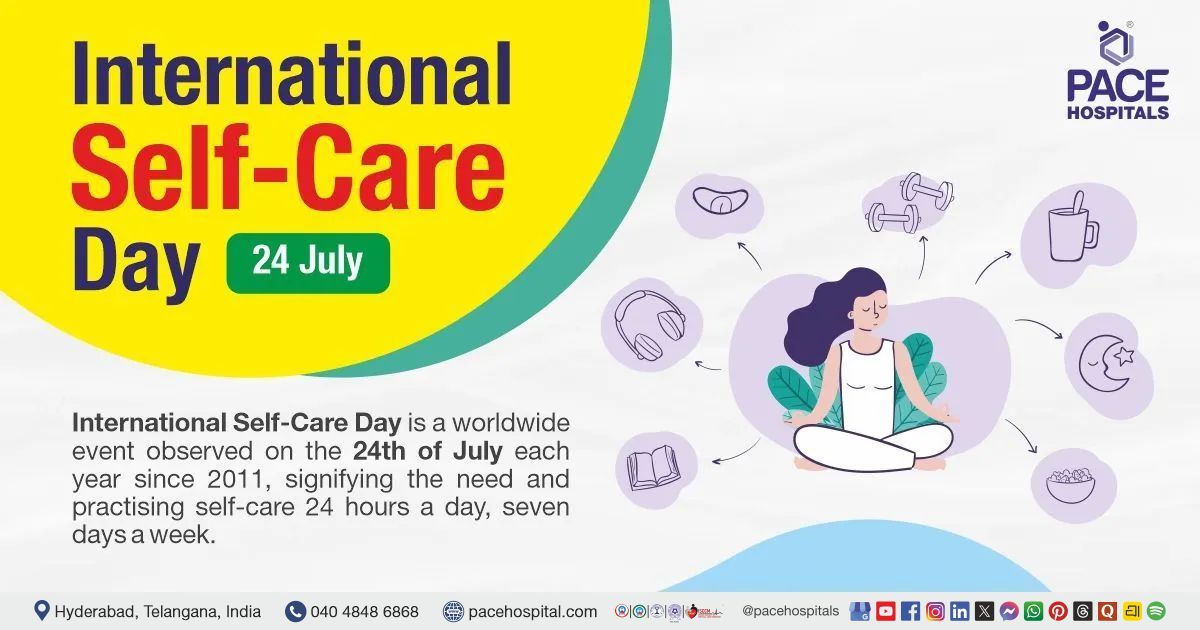
International Self-Care Day is a worldwide event observed on the 24th of July each year, signifying the need and practising self-care 24 hours a day, seven days a week. This day marks the final day of the international self-care month (the 24th of June-the 24th of July), which provides a significant opportunity to spread the word about the advantages of effective self-health -management globally.
On this day, people from all over the world step forward to increase public knowledge about their self-care and self-care interventions, celebrating the advantages they bring to people's lives and the progress made thus far, and call for renewing commitments and demands for expanding health systems to incorporate self-care interventions.
Self-care is the process through which people, families, and communities, with or without the help of a healthcare professional, promote and maintain their own health, avoid disease, and deal with illness and disability based on the available information. Self-care is actively protecting one's happiness and well-being, especially during times of stress. It is a decision-making process that enables people to quickly and comfortably take care of their health.
Importance of Self-Care Awareness Day
There are 430 crore people who do not have appropriate access to necessary hospital-based health treatments across the globe. One crore health workers are reportedly needed worldwide, primarily in low- and middle-income nations. Humanitarian crises affect 20% of the global population, making it difficult for health systems to provide essential treatments. Armed conflicts, pandemics like COVID-19, and climate change affect and strain health care globally.
As the epidemic outbreak, healthcare systems, including primary care settings became overburdened in many nations, non-emergency services were drastically decreased in the count, and staff members responsible for self-management support of chronic patients were delayed. Self-care aims to enable individuals to actively participate in their own healthcare, thereby preventing the burden on healthcare systems while simultaneously putting patients at the centre of their own treatment.
Self-care interventions provide an opportunity to choose and receive health care at any point. Self-care practices enhance healthcare systems rather than replace them. They are a component of a comprehensive healthcare strategy that enhances primary care and universal health coverage.

International Self-Care Day 2026 theme
This year 2026, the International Self-Care Day 2026 theme is “Self-Care puts your health in your hands: Test. Track. Thrive.” This theme highlights the importance of regular health checks and tracking daily habits so people can understand their health status and act early. It reinforces that preventive self-care helps individuals stay healthier, avoid complications, and improve overall well-being.
Year-by-Year Themes for International Self-Care Day
- International Self-Care Day 2025 theme: Self-care is healthcare
- International Self-Care Day 2024 theme: Self-care is healthcare
- International Self-Care Day 2023 theme: Resilience, adaptability, and thriving in adversity
- International Self-Care Day 2022 theme: #SelfCarePromise (focus on resilience)
International self-care day activities
On this day, various people from local and international organisations contribute to providing self-care awareness to the public by hosting a self-care workshop, writing blogs, displaying placards at public rallies, creating and posting self-care kits and vision boards on social media platforms, etc.
History of International self-care day
The International Self-Care Foundation (ISF), a UK-based organisation, created International Self-Care Day in the year 2011. Since then, the day has been observed annually with a unique theme centred on the importance of taking care of oneself. It's a chance to reach more people through the media and raise awareness about the value of self-care.
Measures of Self-care Day at Home
The following self-care day ideas can be initiated on the international self-care day that aids in improving one's health.
- Walking for 30 minutes a day or daily exercise
- Having 3 to 4 litres of water in a day
- Consuming balanced and healthy diet rich in fibre
- Having 6 to 8 hours of sleep in a day
- Decreasing screen time
- Relaxing activities such as meditation and yoga regularly
- Developing a positive attitude
- Scheduling regular screening tests
- Maintaining body hygiene
- Having a long walk in the garden
- Volunteering for charity work
- Listening to music
- Reading motivational stories
- Solving brain puzzles
- Learning something new daily.
Share on
Request an appointment
Fill in the appointment form or call us instantly to book a confirmed appointment with our super specialist at 04048486868
Appointment request - health articles
Recent Articles