World Bipolar Day (WBD) 30 March 2026 - Theme, Importance, History & Prevention
PACE Hospitals
We recognize World Bipolar Day annually on 30 March, the birthday of Vincent van Gogh, who is known to have had bipolar disorder. This global campaign aims to increase knowledge, lessen stigma, and increase awareness of bipolar disorder across the world.
World Bipolar Day 2026 Theme
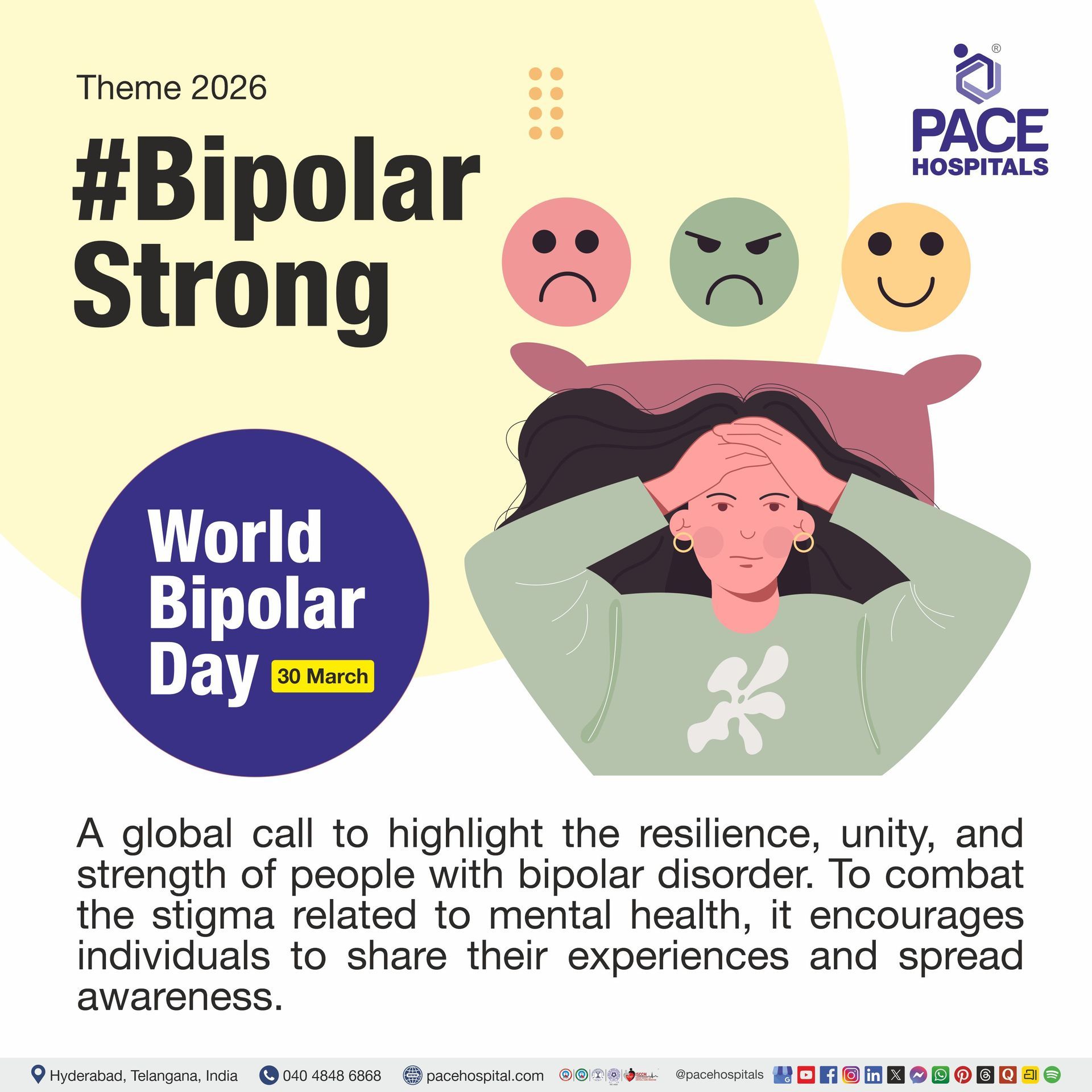
This year, 2026, the World Bipolar Day theme is "#BipolarStrong”. This theme highlights the resilience, unity, and strength of people with bipolar disorder. To combat the stigma related to mental health, it encourages individuals to share their experiences and spread awareness. The program aims to increase empathy and support for people with bipolar disorder, empowering those individuals who are coping with the illness and creating a sense of community.
Year by year, themes of World Bipolar Day
- World Bipolar Day 2025 Theme: Bipolar Strong
- World Bipolar Day 2024 Theme: Bipolar Strong
- World Bipolar Day 2023 Theme: Bipolar Together
Understanding Bipolar Disorder
Bipolar disorder is a mental health condition marked by severe mood fluctuations, including emotional highs (mania or hypomania) and lows (depression). These mood swings can significantly impact a person's energy, judgment, activity level, and ability to complete routine tasks. The illness is complex and requires correct evaluation and treatment to be effectively managed.
Types of Bipolar Disorder
- Bipolar I Disorder: It is characterized by manic episodes that last for at least seven days or severe manic symptoms necessitating immediate hospitalization. Depressive episodes are also relatively common.
- Bipolar II Disorder: It is characterized by a pattern of hypomanic and depressive episodes (less severe than complete mania), that can affect daily functioning.
- Cyclothymic Disorder: It is characterized by episodes of hypomanic and depressive symptoms that do not match the criteria for a full episode but can have an impact on quality of life.
- Other specified and unspecified bipolar disorders: Symptoms that do not match the criteria for the preceding types but need attention and care.
Importance of World Bipolar Day (WBD)
Extreme mood swings, like manic and depressive episodes, are hallmarks of bipolar disorder, a chronic mental illness. It significantly impacts people's lives, influencing their well-being, jobs, and relationships. World Bipolar Day fulfills several vital functions.
- Increasing Awareness: Educating the individuals about bipolar disorder's symptoms, complications, and therapies.
- Reducing Stigma: Promoting open discussions regarding mental health to clarify myths and discrimination.
- Increasing Support: Providing tools to help people with bipolar disorder and their families get treatment and live happy, fulfilling lives.
History of World Bipolar Day (WBD)
The International Society for Bipolar Disorders (ISBD), the Asian Network of Bipolar Disorder (ANBD), and the International Bipolar Foundation (IBPF) worked together to recognize World Bipolar Day for the first time in 2014. In recognition of Vincent van Gogh's legacy and to highlight the significance of mental health awareness, March 30 was chosen.
Prevention of Bipolar Disorder
Below are the effective ways for the prevention and management of bipolar disorder:
- Psychoeducation: Educating patients and their families about the symptoms, causes, and available treatment options for bipolar disorder. Psychoeducation helps prevent new episodes and enhances treatment adherence.
- Lifestyle Modifications: It promotes healthy eating, regular exercise, and staying away from drugs, alcohol, and smoking. These adjustments reduce the metabolic side effects of drugs and enhance general health.
- Interpersonal and Social Rhythm Therapy (IPSRT): It aims to reduce the triggers for episodes of depression by regulating daily routines and circadian rhythms. It also helps patients in resolving conflicts with others and upholding social norms.
- Early Intervention: Implementing family-centered therapies to target biological and psychological risk factors in children who are at risk. It reduces family disputes, stabilizes sleep/wake cycles, and deals with environmental stressors immediately.
Share on
Request an appointment
Fill in the appointment form or call us instantly to book a confirmed appointment with our super specialist at 04048486868
Appointment request - health articles
Recent Articles