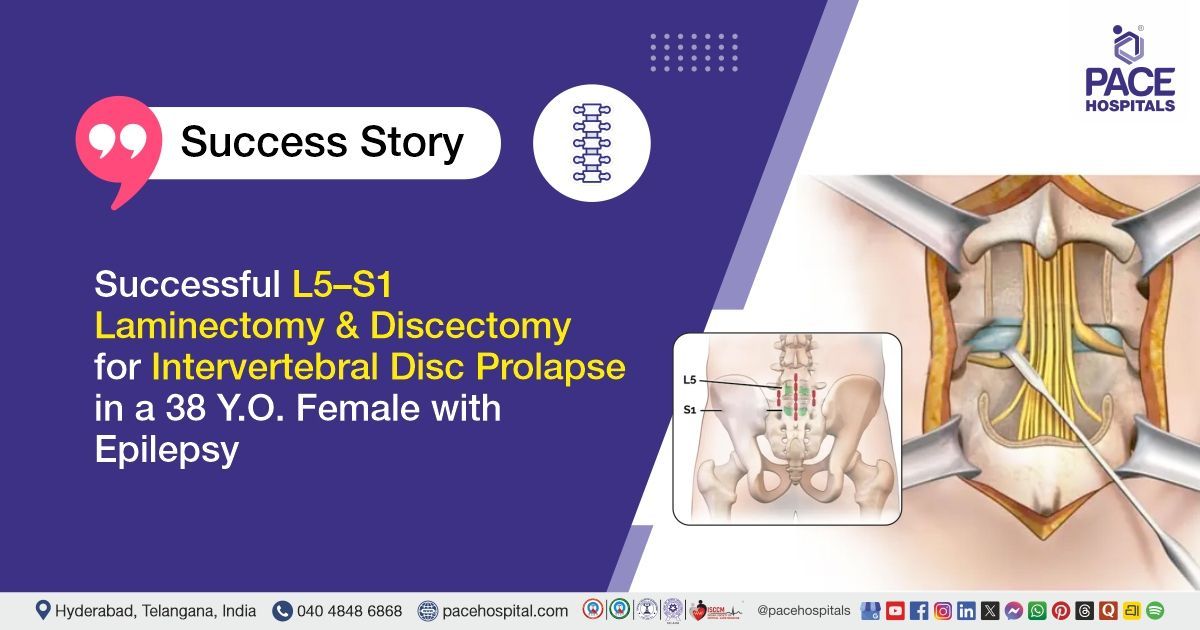
Successful L5–S1 Laminectomy & Discectomy for Intervertebral Disc Prolapse in a 38 Y.O. Female
PACE Hospitals
PACE Hospitals’ expert Neurosurgery team successfully performed an L5–S1 Minimally Invasive Laminectomy and Discectomy on a 38-year-old female patient diagnosed with L5–S1 intervertebral disc prolapse. The aim of the procedure was to relieve pressure on the affected nerve root, reduce severe low back pain and radiculopathy, and restore normal spinal function through a minimally invasive surgical approach.
Chief Complaints
A 38-year-old female patient with a body mass index (BMI) of 22 presented to the Neurosurgery Department at PACE Hospitals, Hitech City, Hyderabad, with complaints of low back pain associated with left lower limb radiculopathy for one month. The patient initially experienced pain during activity, but over the last 7 days, the pain persisted even at rest, causing significant discomfort. There were no complaints of limb weakness, paresthesia, or urinary symptoms.
Past Medical History
The patient had a known history of epilepsy, which was well-controlled on medication. No other significant systemic illnesses were reported.
On Examination
On examination, the patient was conscious, coherent, and oriented, and was moderately built and nourished. The cardiovascular and respiratory systems were normal on clinical assessment. The abdomen was soft and non-tender. Neurological examination revealed normal motor power and sensation in both lower limbs, with a positive Straight Leg Raising Test (SLRT) on the left side at 60 degrees, suggestive of nerve root irritation.
Diagnosis
Upon admission, the patient underwent a comprehensive clinical evaluation, along with the patient’s medical history and diagnostic investigations conducted by the Neurosurgery team.
Laboratory investigations were conducted as part of the preoperative assessment. Complete blood count (CBC), platelet count in normal range with mild leukocytosis. Thyroid function tests (T3, T4, and TSH) were within normal limits. Viral screening for HIV, Hepatitis B, and Hepatitis C was non-reactive. Coagulation profile, including prothrombin time and INR, was within normal range.
Neuroimaging investigations, including Magnetic Resonance Imaging (MRI) of the lumbosacral spine, demonstrated L5–S1 intervertebral disc prolapse.
Based on the confirmed diagnosis, the patient was advised to undergo Intervertebral Disc Prolapse Treatment in Hyderabad, India, under the expert care of the Neurosurgery Department.
Medical Decision-Making (MDM)
After a detailed consultation by Dr. U.L. Sandeep Varma, Consultant Neurosurgeon, the patient was diagnosed with symptomatic L5–S1 intervertebral disc prolapse with persistent radiculopathy. Since the patient experienced severe pain that persisted even at rest and did not adequately respond to conservative management, surgical intervention was considered the most appropriate treatment.
It was determined that minimally invasive L5–S1 laminectomy and discectomy under general anaesthesia was identified as the most appropriate surgical intervention to decompress the affected nerve root and relieve symptoms.
The patient and her family members were counselled in detail regarding the nature of the disease, surgical procedure, expected outcomes, postoperative care, medication adherence, and the need for regular follow-up to optimise recovery and functional outcomes.
Surgical Procedure
Following the decision, the patient was scheduled to undergo a L5–S1 minimally invasive laminectomy and discectomy surgery in Hyderabad at PACE Hospitals, under the expert supervision of the Neurosurgery team.
The procedure involved the following steps:
- Preoperative Preparation: The patient was positioned and prepared under strict aseptic precautions. The surgical area was painted and draped, and the L5–S1 level was precisely localized using fluoroscopy.
- Incision and Exposure: A vertical midline incision was made, and the surgical dissection was carefully deepened to expose the left L5–S1 interlaminar space.
- Laminotomy and Ligament Removal: L5 laminotomy was performed, followed by excision of the ligamentum flavum, which allowed visualization of the dura and S1 nerve root.
- Discectomy: A disc bulge at L5–S1 with an inflamed nerve root was identified. Discectomy was performed in a piecemeal manner. Decompression was achieved until the nerve roots were lax and pulsatile.
- Closure and Hemostasis: Hemostasis was secured, and the wound was closed meticulously in layers. Standard postoperative dressing was applied, completing the procedure.
Postoperative Care
The patient’s postoperative care was uneventful. She was shifted to her room four hours after surgery. Postoperatively, the patient reported a significant reduction in pain, and neurological examination showed normal motor power in both lower limbs. She was advised to continue medications and follow postoperative precautions.
Discharge Medications
Upon discharge, the patient’s wound was healthy, pain was reduced, and vital signs were stable. Muscle power was noted 5/5 in both lower limbs. She was prescribed medications for infection prevention, neuropathic pain relief, gastric protection, anti-inflammatory therapy, and nerve health support.
Advice on Discharge
The patient was advised that she could take a bath and gradually resume daily activities such as walking and climbing stairs. She was instructed to avoid strenuous exercises and prolonged sitting for more than one hour. She was also instructed to strictly adhere to medications, and follow-up consultations were recommended.
Emergency Care
The patient was informed to contact the emergency ward at PACE Hospitals in case of any emergency or development of symptoms such as fever, wound discharge, severe pain, or weakness in the limbs.
Review and Follow-Up Notes
The patient was advised to return for a follow-up with the Neurosurgeon in Hyderabad at PACE Hospitals after 2 weeks for postoperative evaluation and wound assessment.
Conclusion
This case highlights L5–S1 intervertebral disc prolapse presenting with severe low back pain and left-sided radiculopathy, which was successfully treated with minimally invasive laminectomy and discectomy. The procedure effectively decompressed the affected nerve root, resulting in significant pain relief. The patient was discharged in stable condition with normal motor power, reduced pain, and advice for medication adherence and follow-up care.
Surgical Management of Lumbar Disc Herniation with Radiculopathy
Lumbar intervertebral disc prolapse at the L5–S1 level is a common cause of persistent low back pain and lower limb radiculopathy. When symptoms continue despite conservative treatment, surgical decompression may be required to relieve pressure on the affected nerve root. Minimally invasive laminectomy and discectomy enable the neurosurgeon to access the compressed nerve root through a smaller incision while preserving surrounding muscles and spinal structures. This approach helps reduce postoperative pain, lowers the risk of tissue damage, and supports quicker recovery.
Successful management also depends on careful postoperative care and lifestyle adjustments. Patients are usually encouraged to begin gentle walking early while avoiding prolonged sitting or heavy physical strain during the recovery period. Continued monitoring through follow-up visits with the
neurosurgeon/neurosurgery doctor helps evaluate nerve recovery, wound healing, and overall functional improvement. With proper surgical technique, medication adherence, and activity modification, most patients experience significant relief from radicular pain and improved daily functioning after surgery.
Share on
Request an appointment
Fill in the appointment form or call us instantly to book a confirmed appointment with our super specialist at 04048486868
Appointment request - health articles
Recent Articles