
Urology Treatments and Surgical Procedures in Hyderabad
PACE Hospitals offers advanced and comprehensive urology treatment for conditions affecting the kidneys, ureters, bladder, urethra, prostate, and male reproductive organs. From managing urinary infections and kidney stones to treating prostate disorders and urological cancers, our specialists provide evidence-based medical and surgical care tailored to each patient.
With state-of-the-art facility, minimally invasive and laser-assisted procedures, and experienced urologists, we focus on precise treatment planning, faster recovery, and improved long-term outcomes.
Book an Appointment
Urology Treatment Appointment Enquiry
Why Choose PACE Hospitals for Urology Treatment?
Comprehensive Urology Treatment
We offer complete medical and surgical management for kidney, bladder, prostate, and male reproductive disorders — from common urinary conditions to complex urological cancers.
Advanced Diagnostic and Treatment Technology
Our department is equipped with modern imaging systems, laser technology, and minimally invasive surgical facilities to ensure precise diagnosis and effective treatment.
Experienced Urology Specialists
Our skilled urologists and surgeons have extensive expertise in endoscopic, laparoscopic, and laser-assisted procedures, ensuring safe and high-quality care.
Complete Range of Urology Treatments and Procedures
Non-pharmacological treatment
Lifestyle Modifications
Simple daily changes can improve urinary symptoms. Reducing caffeine, alcohol, and spicy foods can decrease bladder irritation. Stopping smoking lowers the risk of
bladder cancer and chronic cough (which can worsen urine leakage). Regular physical activity improves bladder control and overall urinary health.
Behavioral Therapies
These are bladder training techniques that help improve control.
Catheterization
It is used when someone cannot empty their bladder properly (such as in urinary retention,
enlarged prostate, or nerve-related bladder problems). It prevents complications like infection and kidney damage caused by retained urine.
Physical & Supportive Measures
These include using pads for leakage, penile clamps (in selected men), or supportive devices like pessaries in women with pelvic organ prolapse. These measures improve comfort and quality of life while other treatments are being used.
Weight Reduction
Losing excess weight reduces pressure on the bladder and pelvic muscles, improving stress urinary incontinence.
Fluid Management
Adjusting fluid intake, like limiting fluids at night, helps to control frequent urination and night-time symptoms. Plenty of fluid is important in UTIs to flush out infection.
Pelvic Floor Muscle Training
Pelvic floor exercises like Kegel exercises strengthen muscles that control urination, helping prevent leakage.
Biofeedback
Biofeedback helps patients learn proper pelvic muscle control to improve bladder function and reduce incontinence.
Pharmacological treatment
Alpha-1 Blockers
These medicines helps to relax the muscles in the prostate and the opening of the bladder. When the prostate becomes enlarged (a condition called benign prostatic hyperplasia (BPH), it can press on the urine tube and make urination difficult. These agents help urine flow more easily, reduce straining, and improve weak stream. They can also be used passing out small kidney stones pass more easily.
5-Alpha Reductase Inhibitors
These medicines slowly shrink an enlarged prostate by lowering a hormone that makes the prostate grow. They are used for men with a significantly enlarged prostate. Over time, they improve urine flow and reduce the risk of sudden urine blockage or the need for surgery.
Antibiotics for infection
Antibiotics treat infections in the urinary tract, bladder, kidneys, prostate, or testicles. They work by killing the bacteria causing the infection. This helps relieve symptoms like burning during urination, fever, pelvic pain, and frequent urination.
Antimuscarinics
These medicines calm an overactive bladder. It relieves the sudden urges to urinate, go to the bathroom very often, or leak urine before reaching the toilet. These medicines help by relaxing the bladder muscle and reducing unwanted contractions.
Beta-3 Agonist
This is another type of medicine for an overactive bladder. It relaxes the bladder so it can hold more urine comfortably. It helps reduce urgency, frequent urination, and accidental leakage.
Analgesics (Pain Relievers)
These medicines reduce pain caused by conditions like
kidney stones, urinary infections, or after surgery. Some pain relievers also reduce swelling and muscle spasms in the urinary tract, which can ease severe pain such as kidney stone pain.
Stone Prevention Drugs
These medicines help your body keep calcium in the bones and reduce the amount of calcium that passes into the urine. Since calcium in the urine can combine with other substances to form stones, lowering it helps prevent new stones from forming. These medications generally include:
- Thiazide diuretics: These medicines help the body keep calcium in the bones and reduce the amount of calcium that passes into the urine. Since calcium in the urine can combine with other substances to form stones, lowering it helps prevent new stones from forming.
- Potassium citrate / alkalinising agents: These medicines make the urine less acidic. When urine is less acidic, uric acid and cystine are less likely to form crystals, which reduces the risk of these types of stones.
- Xanthine oxidase inhibitors: These medicines lower the amount of uric acid in the blood and urine. Lower uric acid levels mean fewer crystals can form, which helps prevent uric acid stones.
- Vitamin B6 (Pyridoxine): Vitamin B6 helps reduce the production of oxalate, a substance that can combine with calcium to form stones. Lowering oxalate levels in the urine, it reduces the risk of calcium oxalate stones.
Diuretics
Diuretics are medicines that help the body remove extra water and salt through urine. They increase urine production. In urology, certain diuretics are used to help prevent kidney stones. For example, some types (like thiazide diuretics) reduce the amount of calcium released into the urine, which helps prevent calcium kidney stones from forming again. Other diuretics may be used in special situations, such as managing fluid buildup or helping doctors check kidney function.
Surgical and procedural intervention
Endoscopic procedures
Urethrotomy
It is a surgical procedure used to treat the narrowing of the urethra (a tube that carries urine and semen to the penis). This procedure is done with the help of a rigid telescope that will be inserted into the urethra to examine the narrowing. Through the
urethrotomy (which consists of a small blade), the surgeon will make a cut in the scar tissue (that causes narrowing) and make the urethra wider. Chest infection, bleeding, allergic reactions to the equipment or medications used in the procedure, swollen penis, and difficulty passing urine are the complications associated with the procedure.
TURP (Transurethral Resection of the Prostate) or Prostatectomy
It is a surgery to remove parts of the enlarged prostate to treat benign prostatic hyperplasia.
TURP is an option for men who have moderate to severe urinary problems that have not responded to the drug.
Transurethral Resection of Bladder Tumor (TURBT)
This is an important procedure for diagnosing and treating bladder cancer. In this procedure, a thin instrument is inserted through the urethra to remove and cauterise tumours inside the bladder.
TURBT removes the tumor, controls bleeding, relieves urinary blockage, and provides tissue for testing to determine the cancer’s grade and stage. Temporary urinary frequency or mild discomfort may occur while the stent is in place.
Transurethral Cystolitholapaxy
Cystolithalopaxy is usually performed procedure that is indicated to treat bladder stones. The surgeon might insert an instrument known as a cystoscope (flexible tube with a camera) to visualise the exact location of the stone(s). A laser beam will be passed to the stone, resulting in crushing the large stone into small pieces. Transurethral cystolitholapaxy and percutaneous suprapubic cystolitholapaxy are the two types of cystolithalopaxy procedures. Urethra scar tissue, excess bleeding, blood clots in the legs, and reoccurrence of bladder stones are the complications of cystolitholapaxy
Laser Lithotripsy (Ureteroscopic)
Lithotripsy is a minimally invasive approach to disintegrating renal stones into small pieces so that they can easily move through the urinary tract and be expelled from the body. Different lithotripsy techniques include shock wave lithotripsy (SWL) and laser lithotripsy. In SWL, high-energy shock waves are applied to kidney stones from outside the body, aiming to break them into pieces to be discharged with the urine. In laser lithotripsy, a thin scope is inserted in the urinary tract to indicate and break the stones using laser energy. Lithotripsy is considered more effective than the traditional surgical approach because of its lesser recovery time.
Retrograde Intrarenal Surgery (RIRS)
RIRS is a noninvasive procedure for kidney stones located within the kidney and upper urinary tract. This minimally invasive procedure is effective for medium to large complex kidney stones located anatomically in the critical position. In this procedure, an incision is not required; the surgeon inserts the flexible ureteroscope (a thin, lighted instrument with a camera) through the urethra and bladder into the ureter and kidney. With the help of navigational equipment, the urology surgeon navigates and visualizes the stone. Once the stone is identified, specialized tools like laser fibers and the basket are used to break the stone and collect it. The stone is extracted utilizing the retrieval basket or flushed out naturally through urine.
Retrograde Double J (DJ) Stent Placement
It is a simple urological procedure used to keep the urine pathway open and ensure smooth urine flow from the kidney to the bladder. It is commonly done when there is a blockage due to kidney stones, swelling, strictures, tumors, or after urology surgeries. The stent helps relieve pain, protect kidney function, reduce infection risk, and support healing until the blockage is resolved.
Ureteric Balloon Dilatation (retrograde approach)
This is a less invasive technique used to treat a benign, narrowed ureter. A balloon catheter is placed across the narrowed section and inflated to widen the ureter, which improves urine drainage. This procedure reduces obstruction-related symptoms, prevents renal damage, and is also combined with DJ stent placement.
Minimally invasive procedures
- Adrenalectomy
- Nephrectomy
- Pyeloplasty
- Ureteral Reimplantation
- Percutaneous Nephrolithotomy (PCNL)
- Percutaneous Nephrostomy (PCN): It is a procedure in which a small tube is placed directly into the kidney through the skin to drain urine. It is usually done in emergency or planned situations when urine flow is blocked due to infection, severe swelling of the kidney (hydronephrosis), cancer, or sepsis.
- Antegrade Ureteric Stenting: This procedure is performed when retrograde stenting is unsuccessful or not possible, utilised in cases of severe obstruction, malignancy, or distorted anatomy. The stent is inserted through an existing nephrostomy tract and advanced into the ureter and bladder.
- Renal Artery Stenting
- Urethral Sling Procedure
- Artificial Urinary Sphincter (AUS) Placement
- Shock Wave Lithotripsy (SWL)
Open surgical procedures
- Cystectomy
- Bladder Augmentation (Cystoplasty)
- Urethroplasty
3,28,338
99,825
684
2011
Best Urology Doctor in Hyderabad | Top Urology Specialist in India
Team of Best Urologist Doctor in Hyderabad, Telangana, India; having 40+ years of experience, offers a wide range of expertise and surgical treatment for urinary disorders of the male and female urinary tracts, as well as conditions of the male genital tract or reproductive system. The team is having long term experience in diagnosing and treating Kidney Stones, Prostate Enlargement, Prostate Cancer, Kidney Cancer, Bladder Cancer and Incontinence, Male infertility and Erectile Dysfunction – Impotence.

Dr. Vishwambhar Nath
MBBS, MS (General Surgery), DNB (Urology), M.Ch (Urology)
40+ years of Exp.
Senior Consultant Urologist & Renal Transplant Surgeon

Dr. Abhik Debnath
MBBS, MS (General Surgery - IMS, BHU), MCh (Urology - CMC Vellore), DNB (Urology)
12+ years of Exp.
Consultant Laparoscopic Urologist, Endourologist, Andrologist & Kidney Transplant Surgeon
Get a Free Second Opinion before undergoing any urology Treatment or surgery.
At PACE Hospitals, we are committed to providing our patients with the best possible care, and that includes offering second medical opinions with super specialists for treatment or surgery. We recommend everyone to get an expert advance medical second opinion, before taking decision for your treatment or surgery.
Urology Diseases and Conditions Explained by Drs
FAQs on Urological Treatment and Procedures
What is a urological surgery?
Urological surgery is a medical operation used to treat problems of the urinary system. This includes the kidneys, bladder, urethra, prostate, and testes. These surgeries help treat blocked urine flow, remove stones or growths, and repair damaged parts. Procedures can be open, minimally invasive, or done using small cameras and instruments to reduce recovery time.
Are urological surgeries safe?
Urological surgeries are generally safe, especially when performed in experienced hospitals using modern techniques such as minimally invasive surgery. While minor issues like mild discomfort or infection can occur, these are usually manageable with proper care and follow-up. These surgeries are effective and help improve health and quality of life.
Is urology surgery painful?
Most urology surgeries are not painful during the procedure because they are performed under general or regional anesthesia. This means you are either completely asleep or the surgical area is fully numb while the surgeon works.
After the surgery, some mild to moderate discomfort or soreness is common, depending on the type of procedure. For example:
- Minor surgeries, such as DJ stent placement or cystoscopy, usually cause only mild irritation or burning afterwards.
- Moderate procedures, such as TURBT or ureteric balloon dilatation, may cause temporary soreness, mild urinary burning, or abdominal discomfort for a few days.
- Major surgeries like nephrectomy or pyeloplasty may involve postoperative pain, which is well-controlled with pain medications.
Doctors always provide pain relief and guidance for a comfortable recovery, and most patients find the discomfort manageable.
What are the common urology surgeries performed by a urologist?
Common urology surgeries include:
- Kidney stone removal – surgeries to take out stones blocking the urinary tract.
- Prostate surgeries – procedures to improve urine flow, e.g., for enlarged prostate (BPH).
- Bladder and kidney tumor removal – to treat or remove cancers in these organs.
- Repair of blocked urine passages – correcting strictures or obstructions in the ureters or urethra.
- Minimally invasive options – many surgeries are done with small cuts, causing less pain, shorter hospital stays, and quicker recovery.
How long is the recovery after a urology procedure?
Recovery time after a urology surgery depends on the type of operation performed. Minimally invasive procedures allow for recovery in a few days to two weeks. More difficult or open surgeries may take several weeks for complete recovery. Following medical advice, taking prescribed medications, and attending follow-up appointments help proper healing and a safe return to normal daily activities.
What conditions are treated by urology surgeries?
Urology surgeries treat many conditions affecting the urinary system. These include kidney stones, blocked urine flow, enlarged prostate, urinary tract tumors, bladder control problems, and cancers of the kidney, bladder, or prostate. Surgeries are also used to correct structural problems or remove damaged tissue. Surgery is generally recommended when symptoms are severe or when non-surgical treatments are not effective.
Can urological conditions recur after surgery?
Some urological conditions can return after surgery; this depends on the condition and the patient's health factors. For example, kidney stones or prostate problems may recur over time. Surgery only treats the existing problem but may not remove the underlying causes. Regular follow-up visits, lifestyle changes, and medical guidance after surgery help lower the chance of recurrence and symptom control.
Are urology procedures suitable for elderly patients?
Yes, urology surgeries can be safely performed in elderly patients when carefully planned. Age alone is not a barrier to surgery. Doctors assess overall health, underlying medical conditions, and physical strength before surgery. Minimally invasive techniques are preferred because they reduce stress on the body and support faster recovery. With proper evaluation and postoperative care, many elderly patients experience good outcomes after urological surgery.
Why Choose PACE Hospitals for Urology Surgery in Hyderabad?
PACE Hospitals in Hyderabad is recognised as one of the leading centres for urology diagnosis and surgery. The hospital provides:
- Comprehensive urological evaluation
- Personalised treatment plans
- State-of-the-art diagnostic facilities
- Cutting-edge surgical technology
- Wide range of treatment options
- Structured long-term follow-up
- Safe, ethical, and patient-focused care
Which hospital is best for the Urology Surgery in Hyderabad?
PACE Hospitals is considered one of the best hospitals for urology surgery in Hyderabad due to its team of highly experienced urologists, advanced diagnostic facilities, and modern surgical technology. The hospital offers comprehensive care for kidney, bladder, prostate, and urinary tract conditions, including minimally invasive procedures. Patient-centric care, high success rates, and state-of-the-art infrastructure make PACE Hospitals a trusted destination for urological treatment.
What is a Cystoscopy?
A cystoscopy is a simple procedure that allows doctor to look inside bladder and urethra (the tube that carries urine out of the body). It is done using a thin, flexible tube with a small camera and light at the end called a cystoscope. Doctors use cystoscopy to find the cause of problems such as blood in the urine, repeated urinary infections, pain while passing urine, difficulty urinating, or suspected bladder stones or tumors.
What are the surgical options for an enlarged prostate (BPH)?
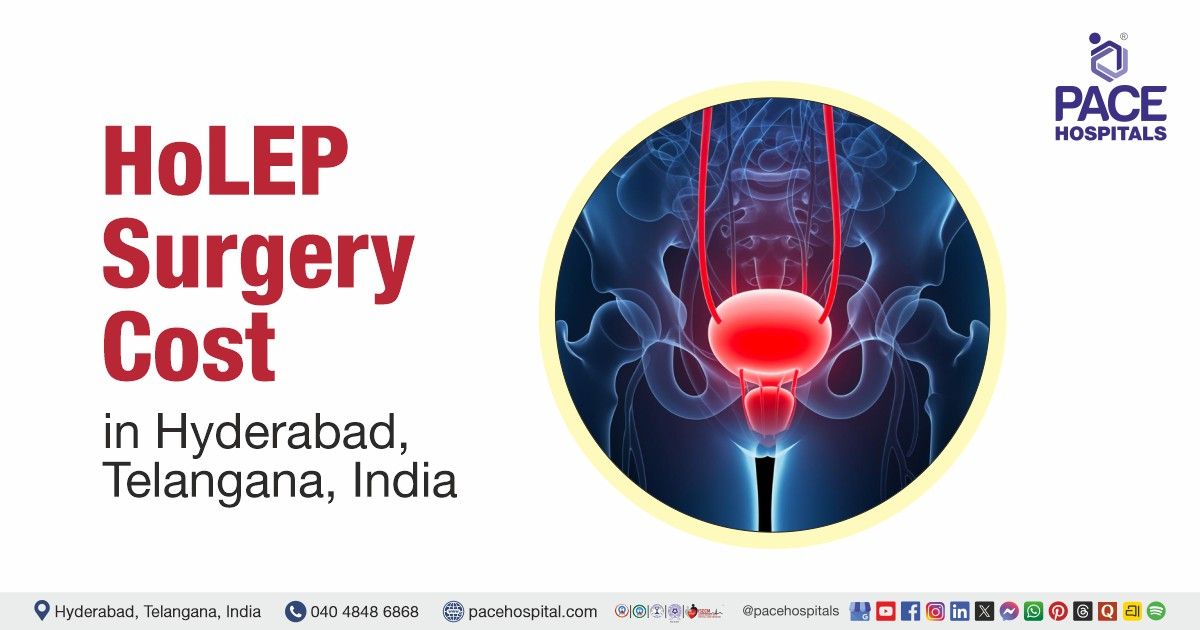
When medications do not relieve symptoms of benign prostatic hyperplasia (BPH), surgery may be recommended to improve urine flow. The most common procedure is transurethral resection of the prostate (TURP), where excess prostate tissue is removed through the urinary passage without external cuts. Laser surgeries such as Holmium Laser Enucleation of the Prostate (HoLEP ) or other laser techniques use energy to remove or vaporize the enlarged tissue with less bleeding. For very large prostates, a simple prostatectomy (open, laparoscopic, or robotic) may be performed to remove the enlarged inner portion of the gland. The choice of surgery based on prostate size, overall health, and surgeon recommendation.
What is the Difference Between Simple and Radical Prostatectomy?
Simple prostatectomy is performed to treat severe BPH. In this surgery, only the enlarged inner part of the prostate causing urinary blockage is removed, while the outer portion remains. It is done to improve urine flow and does not treat cancer.
Radical prostatectomy is done to treat prostate cancer. In this procedure, the entire prostate gland is removed, along with nearby tissues and sometimes lymph nodes. It may be performed using open, laparoscopic, or robotic techniques. The main goal is cancer control rather than just symptom relief.
What are the Common Side Effects of Prostate Surgery?
Most men recover well after prostate surgery, but some temporary or long-term side effects can occur. These may include:
- Urinary incontinence (urine leakage), especially early after surgery
- Erectile dysfunction (more common after radical prostatectomy)
- Retrograde ejaculation (semen flows backward into the bladder, common after TURP)
- Burning sensation during urination (temporary)
- Blood in the urine (temporary)
Is a Vasectomy Reversible?
Yes, a vasectomy can often be reversed, but success is not guaranteed. A vasectomy is a permanent birth control procedure in which the tubes that carry sperm (vas deferens) are cut or sealed. If a man later decides to have children, a vasectomy reversal can reconnect these tubes using microsurgery. The success rate depends on how much time has passed since the vasectomy and individual factors. The earlier the reversal is completed, the greater the likelihood of success.
What Treatment Options Are Available for Severe Erectile Dysfunction?
Treatment options for severe erectile dysfunction (ED), especially when medications do not work, several effective treatments are available. These include penile injection therapy, where medication is injected into the penis to help achieve an erection, and vacuum erection devices, which use suction to draw blood into the penis. For men who do not respond to other treatments, a penile implant (prosthesis) may be recommended. This is a surgically placed device inside the penis that allows a man to achieve an erection when desired. Penile implants have high satisfaction rates and provide a long-term solution for severe ED.
What is orchiopexy?
Orchiopexy is a surgical procedure performed to move an undescended testicle into the scrotum and permanently fix it there. This condition, called an undescended testis, is commonly seen in infants and young boys. If left untreated, it may increase the risk of fertility problems or testicular cancer later in life. The surgery is usually done under general anesthesia and is considered safe and effective. Most children recover quickly and go home the same day.
Patient Testimonials
Successful and safe Ureteric stone surgery in the presence of multiple comorbidities.
Patient was suffering with kidney tumor. Surgical removal done using Laparoscopic Nephrectomy.
20 mm Kidney Stone Removal through Retrograde Intrarenal Surgery (RIRS).
Health Blogs & Patient Education on Urology

Why choose PACE Hospitals?
- A Multi-Super Speciality Hospital.
- NABH, NABL, NBE & NABH - Nursing Excellence accreditation.
- State-of-the-art Liver and Kidney transplant centre.
- Empanelled with all TPAs for smooth cashless benefits.
- Centralized HIMS (Hospital Information System).
- Computerized health records available via website.
- Minimum waiting time for Inpatient and Outpatient.
- Round-the-clock guidance from highly qualified super specialist doctors, surgeons and physicians.
- Standardization of ethical medical care.
- 24X7 Outpatient & Inpatient Pharmacy Services.
- State-of-the-art operation theaters.
- Intensive Care Units (Surgical and Medical) with ISO-9001 accreditation.


