
TURP Surgery, Procedure, Benefits & Cost
PACE Hospitals offers advanced TURP surgery in Hyderabad, India, for men with urinary symptoms caused by prostate enlargement. The TURP procedure, or Transurethral Resection of the Prostate, is a minimally invasive operation planned based on symptom severity, prostate size, and overall health, aiming to relieve obstruction and improve urine flow.
Our experienced urologists perform the procedure using precise endoscopic techniques. The key steps include inserting a resectoscope through the urethra, removing excess prostate tissue, and controlling bleeding. Each TURP surgery is carefully tailored to ensure safety, faster recovery time, shorter hospital stay, and long-term symptom relief.
Book an Appointment for TURP Procedure
TURP Surgery Appointment
Why Choose PACE Hospitals for Transurethral Resection of the Prostate?

Expert Urologists Specializing in Safe TURP procedure for Enlarged Prostate (BPH)
TURP Surgery with Minimal Incisions, Reduced Bleeding & Faster Recovery
Transparent & Cost-Effective TURP Surgery with Insurance and Cashless Options
Recognized for excellence in healthcare delivery with
NABH, NABL, NBE/DNB, NABH Nursing Excellence, and ISCCM accreditations.
Best Urology Doctor in Hyderabad | Top Urology Specialist in India
Team of Best Urologist Doctor in Hyderabad, Telangana, India; having 40+ years of experience, offers a wide range of expertise and surgical treatment for urinary disorders of the male and female urinary tracts, as well as conditions of the male genital tract or reproductive system. The team is having long term experience in diagnosing and treating Kidney Stones, Prostate Enlargement, Prostate Cancer, Kidney Cancer, Bladder Cancer and Incontinence, Male infertility and Erectile Dysfunction – Impotence.

Dr. Vishwambhar Nath
MBBS, MS (General Surgery), DNB (Urology), M.Ch (Urology)
40+ years of Exp.
Senior Consultant Urologist & Renal Transplant Surgeon

Dr. Abhik Debnath
MBBS, MS (General Surgery - IMS, BHU), MCh (Urology - CMC Vellore), DNB (Urology)
12+ years of Exp.
Consultant Laparoscopic Urologist, Endourologist, Andrologist & Kidney Transplant Surgeon
TURP Definition
Transurethral resection of the prostate (TURP) is a surgical procedure used to remove a portion of the prostate gland through the urethra. During the procedure, excess prostate tissue that is blocking urine flow is carefully trimmed away to relieve obstruction and improve urinary function.
The TURP procedure is most commonly performed to treat benign prostatic hyperplasia (BPH), a non-cancerous enlargement of the prostate gland that commonly affects older men. When the enlarged prostate presses against the urethra, it can cause symptoms such as difficulty starting urination, weak urine stream, frequent urination (especially at night), incomplete bladder emptying, and urinary retention. TURP is usually recommended when medications and other non-surgical treatments have not provided sufficient relief.
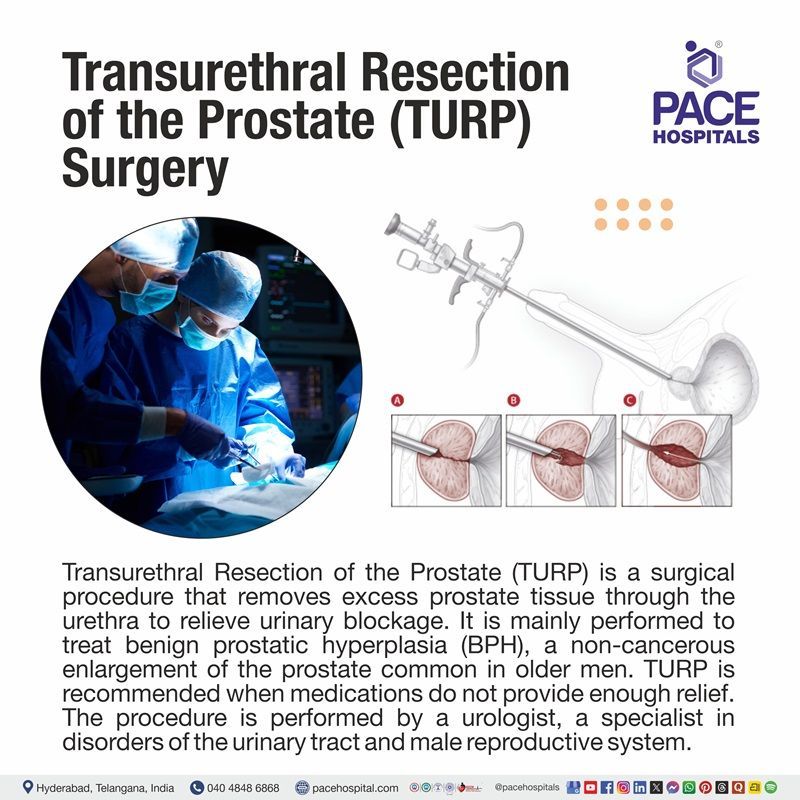
This surgery is performed by a urologist, a medical doctor who specialises in diseases of the urinary tract and male reproductive system. Urologists are specially trained to diagnose and manage prostate conditions and perform procedures such as TURP to treat urinary obstruction caused by prostate enlargement.
Types of TURP Procedures
Transurethral resection of the prostate (TURP) is a commonly performed endoscopic surgery for the treatment of benign prostatic hyperplasia (BPH). With advancements in surgical technology, different types of TURP have been developed based on the energy source and technique used, aiming to improve safety, reduce complications, and enhance surgical outcomes.
- Monopolar TURP
- Bipolar TURP
Monopolar TURP
Monopolar TURP is the traditional and most commonly used type of Transurethral Resection of the Prostate. In this procedure, electric current passes from the resectoscope loop through the prostate tissue and exits the body via a grounding pad placed on the patient’s skin. A non-conductive irrigation fluid, such as glycine, is used to maintain visibility during surgery. The electrical energy cuts and cauterises excess prostate tissue to relieve urinary obstruction.
Bipolar TURP
Bipolar TURP procedure is a newer and advanced modification of the traditional technique. In this method, the electrical current flows between two electrodes located on the resectoscope itself, rather than passing through the patient’s body. Normal saline is used as the irrigation fluid, which reduces the risk of TUR syndrome. This provides effective tissue removal with improved safety, less bleeding, and reduced fluid- related complications.
TURP Indications
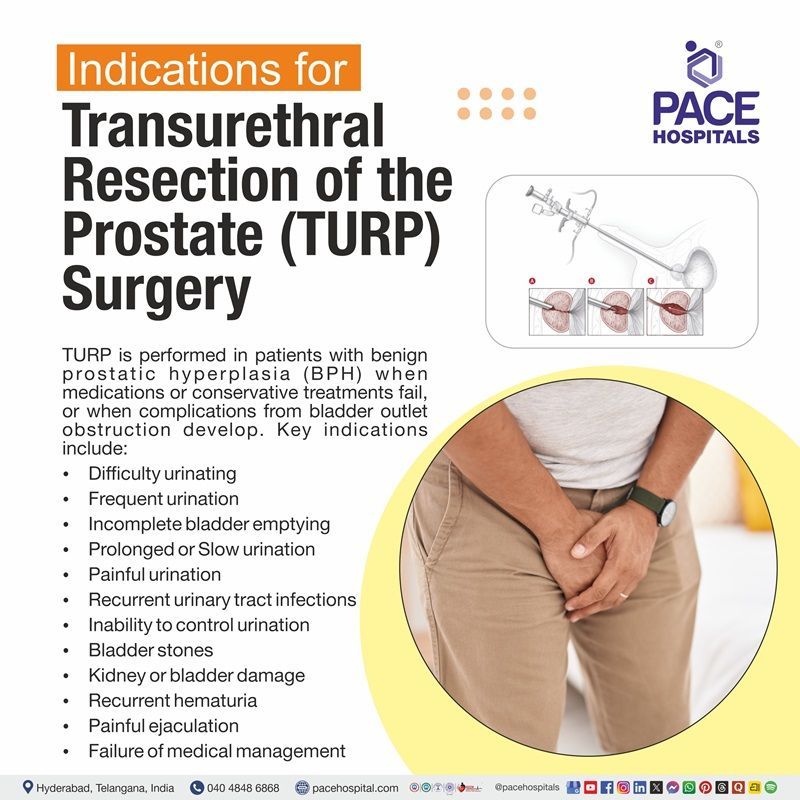
TURP is performed in patients with benign prostatic hyperplasia (BPH) when conservative or medical treatment fails, or when complications arise due to bladder outlet obstruction. The indications are based on the severity of symptoms and the presence of obstruction-related complications affecting the urinary system. Below are the indications for TURP surgery:
- Difficulty urinating
- Frequent urination
- Incomplete bladder emptying
- Prolonged or Slow urination
- Painful urination
- Recurrent urinary tract infections
- Inability to control urination
- Bladder stones
- Kidney or bladder damage
- Recurrent hematuria
- Painful ejaculation
- Failure of medical management
Difficulty urinating
Difficulty in starting or maintaining urine flow is a common symptom of prostate enlargement. When the enlarged prostate compresses the urethra, it obstructs the normal passage of urine. If this obstruction becomes significant and does not respond to medical therapy, TURP is indicated.
Frequent urination
Frequent urination, especially at night (nocturia), occurs because the bladder cannot empty properly due to obstruction. The bladder becomes overactive and signals the need to urinate more often. When this symptom severely affects quality of life and does not respond to medical treatment, TURP is recommended to relieve the blockage.
Incomplete bladder emptying
Patients may feel that the bladder is not completely emptied after urination due to residual urine caused by obstruction. Persistent incomplete emptying can lead to infections and bladder damage. TURP helps by removing the obstructing tissue and allows complete bladder emptying.
Prolonged or slow urination
A weak or slow urinary stream and prolonged time to pass urine indicate significant urethral narrowing from prostate enlargement. When this becomes troublesome or progressive, TURP is performed to widen the urinary channel.
Painful urination
Pain during urination may occur due to bladder strain, infection, or irritation from chronic obstruction. If painful urination is associated with an enlarged prostate and persists despite treatment, TURP may be required to eliminate the underlying obstruction.
Recurrent urinary tract infections (UTIs)
Incomplete bladder emptying allows urine to stagnate, creating a favourable environment for bacterial growth. Recurrent infections that are linked to prostate enlargement are a strong indication for TURP.
Inability to control urination
Chronic bladder outlet obstruction can weaken bladder muscles, leading to overflow incontinence or urgency incontinence. If urinary control problems are caused by prostate obstruction, TURP may be advised.
Bladder stones
Bladder stones can develop due to long-term urine retention and stagnation. When bladder stones occur secondary to prostate enlargement, TURP is performed along with stone removal.
Kidney or bladder damage
Severe and prolonged obstruction can cause back pressure on the kidneys, leading to kidney damage or thickening and dysfunction of the bladder wall. TURP becomes necessary in such cases to relieve obstruction and prevent organ damage.
Recurrent hematuria
Repeated episodes of blood in the urine may occur due to enlarged and fragile blood vessels in the prostate. When hematuria is persistent or recurrent and linked to benign prostatic enlargement, TURP helps control bleeding by removing the problematic tissue.
Painful ejaculation
Obstruction and inflammation related to prostate enlargement can sometimes cause pain during ejaculation. If symptoms are severe, TURP may be considered to relieve pressure within the prostate.
Failure of medical management
When medications such as alpha-blockers or 5-alpha reductase inhibitors fail to relieve symptoms or are not tolerated due to side effects, surgical management with TURP becomes the next line of treatment to provide long-term relief.
TURP Contraindications
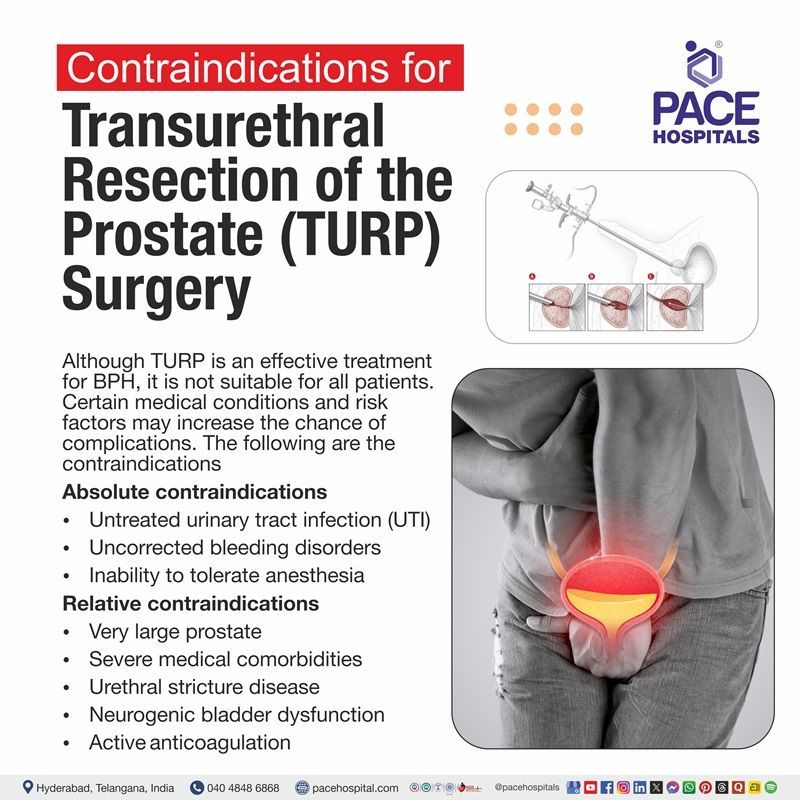
Although TURP is an effective and commonly performed procedure for BPH, it may not be suitable for all patients. Certain medical conditions and risk factors increase the likelihood of complications, making TURP contraindicated either absolutely or relatively.
These contraindications are assessed to ensure patient safety and optimal surgical outcomes. The contraindications of TURP operation include:
Absolute Contraindications
- Untreated urinary tract infection (UTI)
- Uncorrected bleeding disorders
- Inability to tolerate anesthesia
Relative Contraindications
- Very large prostate
- Severe medical comorbidities
- Urethral stricture disease
- Neurogenic bladder dysfunction
- Active anticoagulation
Absolute Contraindications
- Untreated urinary tract infection (UTI): An active, untreated urinary tract infection is an absolute contraindication to TURP because performing surgery in the presence of infection can spread bacteria into the bloodstream and lead to critical complications such as sepsis.
- Uncorrected bleeding disorders: Patients with untreated or uncontrolled bleeding disorders (such as clotting factor deficiencies or severe thrombocytopenia) are at high risk of excessive bleeding during and after TURP.
- Inability to tolerate anesthesia: TURP is usually performed under spinal or general anesthesia. If a patient cannot safely tolerate anesthesia due to severe cardiopulmonary instability or other critical conditions, the surgery cannot be performed, making it an absolute contraindication.
Relative Contraindications
- Very large prostate: In cases of extremely enlarged prostate glands, TURP may be technically difficult, time-consuming, and associated with increased bleeding risk. Alternative procedures like open prostatectomy or laser enucleation may be more appropriate.
- Severe medical comorbidities: Patients with serious conditions such as uncontrolled heart disease, severe lung disease, or poorly managed diabetes may have increased surgical and anesthetic risk. These conditions must be optimised before considering TURP.
- Urethral stricture disease: Narrowing of the urethra (urethral stricture) can make insertion of the resectoscope difficult or impossible. The stricture may need to be treated first before TURP can be safely performed.
- Neurogenic bladder dysfunction: In patients with neurogenic bladder (bladder dysfunction due to nerve problems), urinary symptoms may not be solely due to prostate obstruction. Performing TURP may not significantly improve symptoms, so careful evaluation is required before deciding on surgery.
- Active anticoagulation: Patients who are taking blood-thinning medications have an increased risk of bleeding during TURP. While not always an absolute contraindication, anticoagulation therapy needed to be temporarily stopped or carefully managed before surgery to reduce bleeding risk.
Benefits of TURP Surgery
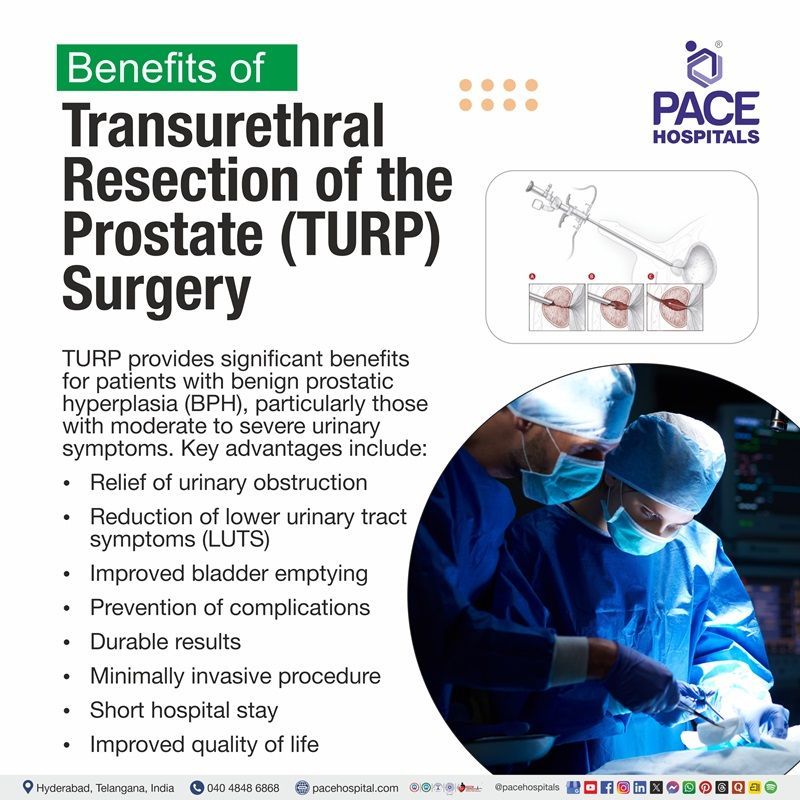
Transurethral Resection of the Prostate (TURP) offers significant advantages for patients with BPH, especially those with moderate to severe symptoms. Below are the various TURP surgery benefits:
- Relief of urinary obstruction
- Reduction of lower urinary tract symptoms (LUTS)
- Improved bladder emptying
- Prevention of complications
- Durable results
- Minimally invasive procedure
- Short hospital stay
- Improved quality of life
Relief of urinary obstruction
TURP removes the enlarged portion of the prostate that compresses the urethra and blocks urine flow. By resecting the obstructing tissue, the procedure restores a clear urinary passage, allowing urine to flow more freely and effectively.
Reduction of lower urinary tract symptoms (LUTS)
LUTS such as weak stream, hesitancy, urgency, frequency, and nocturia are significantly reduced after TURP. Since these symptoms are mainly caused by bladder outlet obstruction due to prostate enlargement, removing the excess tissue directly improves urinary function.
Improved bladder emptying
After TURP, patients are usually able to empty their bladder more completely. This reduces post-void residual urine volume, decreases bladder strain, and lowers the risk of urinary retention and infections.
Prevention of complications
By treating obstruction, TURP helps to prevent serious complications of untreated prostate enlargement, like recurrent UTI, bladder stones, kidney damage, and acute urinary retention.
Durable results
TURP provides long-lasting relief compared to medications. Many patients experience sustained improvement in symptoms for years after the procedure, making it a reliable and effective surgical treatment option.
Minimally invasive procedure
TURP is performed through the urethra without any external incision. This minimally invasive approach reduces surgical trauma, lowers the risk of wound complications, and promotes faster recovery.
Short hospital stay
Most patients require only a short hospital stay, which usually takes about 1 to 3 days, depending on recovery and overall health.
Improved quality of life
By relieving bothersome urinary symptoms and preventing complications, TURP significantly enhances a patient’s daily comfort, sleep quality, confidence, and overall well-being.
Get a Medical Second Opinion for TURP Surgery
At PACE Hospitals, we are committed to providing our patients with the best possible care, and that includes offering second medical opinions with super specialists for treatment or surgery. We recommend everyone to get an expert advance medical second opinion, before taking decision for your treatment or surgery.
TURP Procedure Steps
Procedure steps for TURP surgery steps are:
TURP preparation
- Pre-operative medical evaluation: Before surgery, a complete pre-operative medical evaluation is done. The doctor reviews the patient’s medical history, performs a physical examination, and orders necessary investigations such as blood tests, urine examination, ECG, and sometimes a chest X-ray. Any existing conditions like diabetes, hypertension, or heart disease must be well-controlled before surgery.
- Medication management: The doctor asks for the medication that the patient is taking. Medications like blood thinners and certain painkillers may need to be stopped a few days before surgery, as advised by the doctor. Herbal supplements that increase bleeding risk should also be discontinued. Essential medicines for blood pressure or heart conditions may be continued according to medical advice.
- Fasting instructions (NPO): This must be followed strictly. Usually, the patient is advised not to eat solid food for 6–8 hours before surgery. This reduces the risk of complications during anesthesia.
- Infection prevention: The patient is advised to take a bath before coming to the hospital and avoid shaving the operative area. A urine test is done to rule out urinary infection, and prophylactic antibiotics may be given before surgery to prevent infection.
- Anesthesia consultation: The anesthesiologist evaluates the patient and explains whether spinal anesthesia or general anesthesia will be used. The patient is asked about allergies, previous surgeries, and any past problems with anesthesia.
- Consent and counselling: The doctor explains the procedure, its benefits, and possible risks before surgery. Informed consent is taken before the operation.
During TURP
- Anaesthesia and positioning: TURP is performed under spinal or general anaesthesia. The patient is placed in the lithotomy position. The perineal and genital area is cleaned and draped in a sterile manner, and prophylactic antibiotics are administered.
- Introduction of resectoscope and initial inspection: A resectoscope is introduced through the urethra into the bladder under direct vision. The bladder is carefully inspected to identify important landmarks like the ureteric orifices, bladder neck, and verumontanum.
- Irrigation: The surgeon begins continuous irrigation to maintain clear visualisation throughout the procedure. Glycine is commonly used in monopolar TURP, whereas normal saline is used in bipolar TURP.
- Resection of prostatic tissue: The surgery begins with resection of the median lobe if enlarged, followed by the lateral lobes. Prostatic tissue is shaved off in small chips using an electrically heated wire loop. A wide channel is created from the bladder neck up to the verumontanum while taking care to avoid capsular perforation and injury to the external sphincter.
- Hemostasis and final inspection: After removing the enlarged prostate tissue, the surgeon seals any bleeding blood vessels to control bleeding. The removed tissue is then washed out of the bladder, and a final check is done to make sure the area is clear, bleeding is controlled, and nearby structures are safe.
Post TURP
- Immediate post-operative care: After completion of TURP, the patient is shifted to the recovery room, where vital signs are closely monitored. Special attention is given to blood pressure and pulse to detect complications of bleeding or fluid absorption.
- Bladder irrigation: A three-way Foley catheter is left in place, and continuous bladder irrigation (CBI) is initiated to prevent clot formation. The irrigation flow is adjusted to maintain light pink urine. If urine becomes dark red or clots appear, the irrigation rate is increased, and clots may need to be evacuated.
- Pain and spasm control: Analgesics are given for pain relief. Anticholinergic medications may be administered to relieve bladder spasms.
- Fluid management: Intravenous fluids are continued initially. Input and output charting is maintained carefully to monitor urine output and fluid balance.
- Catheter removal: Continuous irrigation is usually stopped once the urine clears (within 24–48 hours). The catheter is removed after 48–72 hours. A trial of voiding is performed to assess urinary flow.
- Discharge advice: Before discharge, the patient is advised:
- To avoid heavy lifting and strenuous physical activity for 4–6 weeks
- To drink plenty of fluids
- That mild hematuria and frequency may persist temporarily
- To report fever, severe bleeding, urinary retention, or severe pain
TURP Surgery Complications
Transurethral resection of the prostate is a commonly performed and generally safe surgical procedure for the treatment of benign prostatic enlargement. However, TURP is associated with certain risks and potential complications. These complications may occur during the procedure (intraoperative) or after surgery (postoperative), and they can range from mild and temporary to more serious conditions requiring additional treatment.
The following are the TURP surgery complications:
- Intraoperative complications
- General anesthesia risks
- Bladder perforation
- Ureteral orifice injury
- Bladder neck undermining
- Excessive bleeding
- Postoperative complications
- Common / Expected
- Retrograde ejaculation (very common)
- Temporary urinary symptoms
- Early Complications
- Transurethral resection (TUR) syndrome
- Bleeding
- Urinary tract infection (UTI)
- Ongoing prostatitis
- Urinary retention
- Temporary urinary incontinence
- Late complications
- Urethral strictures
- Bladder neck contracture
- Persistent or severe incontinence
- Prostatic regrowth
Intraoperative complications
General anaesthesia risks
Although TURP is usually done under spinal anaesthesia, general anaesthesia may sometimes be used. Possible risks include low blood pressure, breathing problems, irregular heartbeat, allergic reactions, or vomiting with aspiration. Elderly patients or those with heart or lung problems have a higher risk.
Bladder perforation
It can occur due to overdistension from excessive irrigation fluid or accidental deep insertion of the resectoscope loop. It may also happen during aggressive resection near the bladder neck. Signs include sudden loss of vision, abdominal distension, and reduced return of irrigation fluid.
Ureteral orifice injury
The openings through which urine enters the bladder from the kidneys can be accidentally injured during surgery. This may cause blockage or narrowing later.
Bladder neck undermining
Excessive or deep resection at the bladder neck can undermine the supporting tissue. This may result in weakening of the bladder outlet, leading to postoperative incontinence or later development of bladder neck contracture.
Excessive bleeding
The prostate has many blood vessels, so bleeding can occur during surgery. Heavy bleeding can make the operation difficult and may require a blood transfusion. Proper sealing of blood vessels helps reduce this risk.
Postoperative Complications of TURP
Common / Expected Complications
Retrograde ejaculation (very common)
Normally, the bladder neck closes during ejaculation, so semen exits through the penis. During TURP, part of this area is removed, which can disrupt this mechanism. As a result, semen may flow backwards into the bladder instead of coming out, and it is later passed with urine.
Temporary urinary symptoms
After surgery, patients commonly experience urinary frequency, urgency, dysuria (burning), and mild
hematuria. These symptoms occurs due to irritation of the urethra and bladder mucosa from instrumentation and healing of the prostatic fossa.
Early postoperative complications
Transurethral resection (TUR) syndrome
This occurs due to excessive absorption of irrigation fluid during surgery (more common in monopolar TURP). This leads to dilutional hyponatremia and fluid overload.
Bleeding
The prostate is highly vascular, and postoperative oozing from the prostatic bed may continue after surgery. This can result in persistent hematuria or clot retention. Severe bleeding may require bladder washout, blood transfusion, or rarely re-operation.
Urinary tract infection (UTI)
Catheterisation and instrumentation increase the risk of bacterial infection. Patients may develop fever, dysuria, foul-smelling urine, or systemic infection if untreated.
Ongoing prostatitis
Inflammation or infection of residual prostatic tissue may persist after surgery, leading to pelvic discomfort, dysuria, and irritative urinary.
Urinary retention
After catheter removal, some patients may be unable to void due to postoperative edema, blood clots, or temporary bladder atony. Recatheterization may be required temporarily.
Temporary urinary incontinence
Incontinence may occur due to temporary weakness or irritation of the external urethral sphincter during surgery. It is usually minor and gets better over time as the tissues heal.
Late Complications of TURP
Urethral stricture
Scar tissue can form in the urethra after surgery, narrowing the passage. This may cause a weak urine stream, difficulty urinating, or repeated urinary infections. Treatment can include stretching the urethra or a minor surgical procedure.
Bladder neck contracture
Excessive scarring at the bladder neck can narrow the outlet, causing difficulty with urination similar to the original prostate blockage. It may require a small surgical procedure to reopen the area.
Persistent or severe incontinence
Most patients regain control of urination, but in rare cases may have long-term leakage if the sphincter is injured. Treatments may include exercises, medications, or surgical options for severe cases.
Prostatic regrowth
TURP removes only the obstructing part of the prostate, not the entire gland. Residual prostatic tissue may continue to grow over time under hormonal influence. This can lead to recurrence of urinary obstruction years after surgery.
TURP Surgery Recovery Time
TURP procedure recovery time varies from person to person, but most patients stay in the hospital for 1 to 2 days after surgery. A catheter is usually placed in the bladder to help drain urine and is generally removed within 1 to 3 days. Mild discomfort, burning during urination, or small amounts of blood in the urine are common for a few weeks.
At home, most men can resume light activities within 1 to 2 weeks, but full recovery takes about 4 to 6 weeks. During this period, heavy lifting, strenuous physical exercises, and sexual activity are avoided to prevent bleeding and allow proper healing. It is also important to drink plenty of fluids to flush the bladder. Some urinary symptoms, such as urgency or frequency, may temporarily worsen before gradually improving. A urologist will usually schedule a follow-up visit within a few weeks to monitor recovery and ensure there are no complications.
Questions that patients can ask about transurethral resection of the prostate (TURP) to the health care team?
- Why do I need TURP surgery?
- How long does the surgery take?
- How many days will I stay in the hospital?
- Will I have a catheter after surgery? For how long?
- Will TURP affect my sexual function or erections?
- Are there risks of urinary incontinence?
- What signs or symptoms should make me call the doctor?
- Can the prostate grow back after TURP?
- Will I need any long-term medications after surgery?
- How much pain should I expect?
Differences between Holmium Laser Enucleation of the Prostate (HoLEP) and Transurethral Resection of the Prostate (TURP)
HoLEP vs TURP
While both procedures aim to relieve blockage by removing prostate tissue, they differ in technique, energy source, peri-operative outcomes, and suitability for prostate size. The following table presents the differences between the two procedures:
| Parameters | Holmium laser enucleation of the prostate (HoLEP) | Transurethral resection of the prostate (TURP) |
|---|---|---|
| Definition | A minimally invasive surgical procedure that uses a holmium laser to completely remove (enucleate) the enlarged inner portion of the prostate that is blocking urine flow. | A surgical procedure in which excess prostate tissue is cut away (resected) piece by piece using an electric loop inserted through the urethra. |
| Surgery best for | Suitable for small, medium, and very large prostates. | Suitable for small to medium-sized prostates. |
| Amount of tissue removed | Removes almost the entire obstructing portion of the prostate. | Removes only the obstructing tissue piece by piece. |
| Bleeding risk | Lower because the laser seals blood vessels while cutting. | Slightly higher compared to HoLEP. |
| Recovery time | About 4–6 weeks for full recovery. | About 4–6 weeks for full recovery. |
| Long-term results | Very durable; low chance of needing repeat surgery. | Effective, but small chance of needing repeat treatment over time. |
Frequently Asked Questions (FAQs) on TURP Surgery
How long does it take to recovery after TURP surgery?
Most men start to feel better within 1 to 2 weeks, but full recovery usually takes about 4 to 6 weeks. During this time, it is important to avoid heavy lifting, strenuous exercise, and sexual activity. Mild burning during urination, urgency, or frequency can continue for a few weeks but gradually improve. Many patients can return to light work within 2 weeks, depending on their job.
Is HoLEP better than TURP?
Holmium laser enucleation of the prostate (HoLEP) and TURP are both effective treatments for an enlarged prostate. HoLEP may have advantages such as less bleeding, shorter catheter time, and better results for very large prostates. It also has a lower chance of needing repeat surgery in the future. However, TURP is a well-established procedure with decades of proven success and is widely available. Which surgery is better depends on prostate size, patient health, and the surgeon's experience.
Which is the best hospital for TURP Surgery in Hyderabad, India?
PACE Hospitals, Hyderabad, is regarded as one of the trusted centres for advanced prostate surgery and urological care. Our team of expert urologists — including some of the best prostate surgeons in Hyderabad — specialises in minimally invasive endoscopic prostate procedures such as TURP.
Using advanced bipolar resection systems, high-definition endoscopic visualisation, and enhanced safety protocols, PACE Hospitals ensures:
- Improved urinary flow
- Reduced bleeding risk
- Shorter hospital stay
- Faster recovery
- Long term symptom relief
Our comprehensive prostate care program includes complete pre-operative evaluation, expert anaesthesia support, structured post-operative monitoring, and guided recovery — supported by cashless facility options, TPA corporate tie-ups, and assistance with medical insurance processing for eligible patients.
What is bipolar TURP?
Bipolar TURP surgery is a newer variation of TURP that uses bipolar electrical energy instead of the traditional monopolar current. The main advantage is that it uses normal saline fluid during surgery, which reduces the risk of a rare complication called TUR syndrome. Bipolar TURP prostate surgery may also cause less bleeding and allow safer surgery in some patients. Recovery and outcomes are generally similar to standard TURP.
What is the success rate of TURP surgery?
Transurethral resection of the prostate has a high success rate, about 80–90% of men experience significant improvement in urinary symptoms such as weak stream, difficulty starting urination, frequent urination, and incomplete bladder emptying. Most patients notice better urine flow within weeks after surgery. The results are long-lasting for many years, although a small percentage of men may need additional treatment later in life.
Does TURP surgery cause impotence?
Permanent erectile dysfunction (impotence) after TURP is uncommon. Most men are able to maintain erections after surgery. However, a common side effect is retrograde ejaculation, where semen flows backwards into the bladder instead of coming out during sexual intercourse. This does not usually affect sexual pleasure but can affect fertility.
What is the cost of TURP Surgery at PACE Hospitals, Hyderabad?
At PACE Hospitals, Hyderabad, the cost of TURP surgery typically ranges from ₹80,000 to ₹1,70,000 and above (approximately US $960 – US $2,040), depending on:
- Type of technology utilised (monopolar vs bipolar TURP)
- Associated bladder complications (stones, retention, infections)
- Prostate size and complexity of obstruction
- ICU monitoring requirements (if medically indicated)
- Surgeon expertise and post-operative recovery care
The price is typically lower for cases of moderate benign prostatic hyperplasia (BPH). The higher range may apply to patients who require more surgeries or have larger prostates.
After a detailed urological evaluation, PSA testing, ultrasound findings, and clinical assessment, our team provides a personalised surgical plan and precise cost estimate tailored to the condition and recovery needs.
What is TURP surgery?
TURP full form in medical, is the transurethral resection of the prostate, a procedure used to treat urinary problems caused by an enlarged prostate. During the surgery, a thin instrument is passed through the penis into the urethra, and small pieces of the enlarged prostate tissue are removed to improve urine flow. There are no external incisions. It helps relieve symptoms such as a weak urine stream, difficulty starting urination, frequent urination, and incomplete bladder emptying.
Is TURP a major surgery?
TURP is considered a surgical procedure, but it is not classified as major open surgery because it does not involve any external cuts on the body. It is performed through the natural urinary passage (urethra). However, it still requires anesthesia and a short hospital stay, so it is more than a minor procedure. Most patients recover well within a few weeks.
What are the other surgical procedures performed for prostate disease?
Besides Transurethral Resection of the Prostate (TURP), there are several other surgical treatments available for prostate problems. One common alternative is Holmium Laser Enucleation of the Prostate (HoLEP), which uses a laser to remove enlarged prostate tissue and is particularly useful for larger prostates. Other options are laser vaporization procedures such as Photoselective Vaporization of the Prostate (GreenLight laser), which vaporizes excess tissue, and minimally invasive treatments like UroLift, which lifts and holds enlarged prostate tissue away from the urethra without removing it. In very large prostates, an open or robotic simple prostatectomy may be recommended. The choice depends on prostate size, symptoms, overall health, and the surgeon's expertise.
Can TURP cause incontinence?
Yes, temporary urinary leakage can occur after TURP surgery because the bladder and urinary muscles need time to adjust post-surgery. In most cases, this improves within weeks to months. Permanent incontinence is rare. Pelvic floor exercises (like Kegel exercises) may help strengthen bladder control during recovery.
How long does bleeding last after TURP surgery?
After transurethral resection of the prostate, it is normal to see blood in the urine for about 1 to 2 weeks. The urine may appear pink, especially after activity. Around 2–3 weeks after surgery, some patients notice a small increase in bleeding as the internal healing tissue; this is usually temporary. Drinking plenty of water helps flush the bladder. However, heavy bleeding with clots, difficulty urinating, or bright red urine that does not clear should be reported to the doctor immediately.
What is the difference between TURBT and TURP?
Transurethral Resection of Bladder Tumor (TURBT) and Transurethral Resection of Prostate TURP are both endoscopic urological procedures performed via the urethra, but their indications, targets, and techniques differ significantly.
TURBT is mainly performed to diagnose and treat bladder tumors. The procedure is usually performed in cases of hematuria, bladder cancer, or suspicious bladder lesions, and it focuses on removing localized lesions rather than reshaping or reducing an organ.
TURP is mainly indicated for benign prostatic hyperplasia (BPH) to relieve urinary obstruction. In TURP, excess prostate tissue causing blockage of the urethra is resected using a similar endoscopic approach, improving urine flow and reducing symptoms of bladder outlet obstruction.
How long does pain last after TURP surgery?
Pain post-TURP is usually mild to moderate and improves within a few days to a week. Some men experience a burning sensation during urination, mild lower abdominal discomfort, or bladder spasms while the catheter is in place. Mild burning during urination can last for 2–3 weeks as the prostate heals internally. Severe pain is uncommon, and if it occurs, patients should contact their doctor.
What is TURP syndrome?
TURP syndrome is a rare but serious complication of TURP operation. It happens when too much irrigation fluid (used during surgery to wash out prostate tissue) gets absorbed into the bloodstream. This can cause like as nausea, vomiting, confusion, headache, high blood pressure, slow heart rate, or breathing difficulty. With modern techniques, especially bipolar TURP, the risk is very low. Doctors closely monitor patients during surgery to prevent this complication.
Why is glycine used in TURP?
In traditional (monopolar) TURP, a special irrigation fluid is needed during surgery to wash away prostate tissue and maintain clear vision. Glycine solution is used because it does not conduct electricity, making it safe with monopolar instruments. However, if too much glycine fluid is absorbed into the bloodstream, it can lead to a rare complication called TURP syndrome. Today, many surgeons use bipolar TURP, which allows the use of normal saline and reduces this risk.
How safe is TURP surgery?
TURP is considered a safe and well-established procedure that has been performed for many decades. Most men recover without serious problems. Common temporary side effects include mild bleeding, burning with urination, or temporary urinary urgency. Serious complications such as heavy bleeding, infection, or TURP syndrome are rare. The overall success rate is high, and the majority of patients experience significant improvement in urinary symptoms.
Who are the candidates for TURP procedure?
TURP is typically recommended for men who have moderate to severe urinary symptoms caused by an enlarged prostate (benign prostatic hyperplasia or BPH) that do not improve with medications. Candidates generally have symptoms such as weak urine stream, difficulty starting urination, frequent urination (especially at night), urinary retention, recurrent urinary tract infections (UTI), bladder stones, or kidney problems caused by prostate blockage. The doctor will evaluate prostate size, overall health, and severity of symptoms before recommending surgery.
Why choose PACE Hospitals?
- A Multi-Super Speciality Hospital.
- NABH, NABL, NBE & NABH - Nursing Excellence accreditation.
- State-of-the-art Liver and Kidney transplant centre.
- Empanelled with all TPAs for smooth cashless benefits.
- Centralized HIMS (Hospital Information System).
- Computerized health records available via website.
- Minimum waiting time for Inpatient and Outpatient.
- Round-the-clock guidance from highly qualified super specialist doctors, surgeons and physicians.
- Standardization of ethical medical care.
- 24X7 Outpatient & Inpatient Pharmacy Services.
- State-of-the-art operation theaters.
- Intensive Care Units (Surgical and Medical) with ISO-9001 accreditation.


