
Orthopedic Tests in Hyderabad
PACE Hospitals provides advanced Orthopedic tests and diagnosis to accurately evaluate conditions affecting bones, joints, muscles, ligaments, and the spine. Our comprehensive orthopedic diagnostic tests help detect fractures, arthritis, ligament injuries, and other musculoskeletal disorders with precision.
From X-rays, blood tests, ultrasound, CT scans, MRI scans, and bone density tests (DEXA) to specialized procedures like arthroscopy, we ensure accurate orthopedic diagnosis tailored to each patient’s symptoms, enabling early detection and effective treatment planning.
Book an Appointment
Orthopaedic Tests Appointment Enquiry
Why Choose PACE Hospitals for Orthopedic Tests?
Comprehensive Orthopedic Testing Services
Thorough evaluation for bone, joint, muscle, and spine conditions using advanced orthopedic diagnostic methods to identify the exact cause of pain, injury, or movement problems.
Advanced Diagnostic Technology
Modern imaging and diagnostic tools such as digital X-ray, MRI, CT scans, bone density tests, and specialized orthopedic assessments for precise and early diagnosis.
Experienced Orthopedic Specialists
Highly skilled orthopedic doctors and musculoskeletal specialists who interpret diagnostic results carefully to determine the most effective treatment plan.
Orthopedic Diagnosis & Tests
At PACE Hospitals, we provide comprehensive and precise orthopedic diagnostics to deliver evidence-based treatments for a wide range of musculoskeletal impairments. Our advanced screening protocols are designed to detect and evaluate abnormalities in the bones, joints, muscles, ligaments, and tendons at an early stage, ensuring accurate diagnosis and timely intervention.
Using the latest imaging technology and diagnostic tools, our team of orthopedists, sports injury doctors, and orthopedic surgeons can make well-informed clinical decisions to proceed with the most suitable treatment modalities or surgical procedures. This approach not only ensures better outcomes but also minimizes recovery time and improves long-term joint function.
Recognized among the
best hospitals in Hyderabad for orthopedic care, PACE Hospitals is committed to delivering patient-centered, high-precision orthopedic services that restore mobility, relieve pain, and enhance overall quality of life.
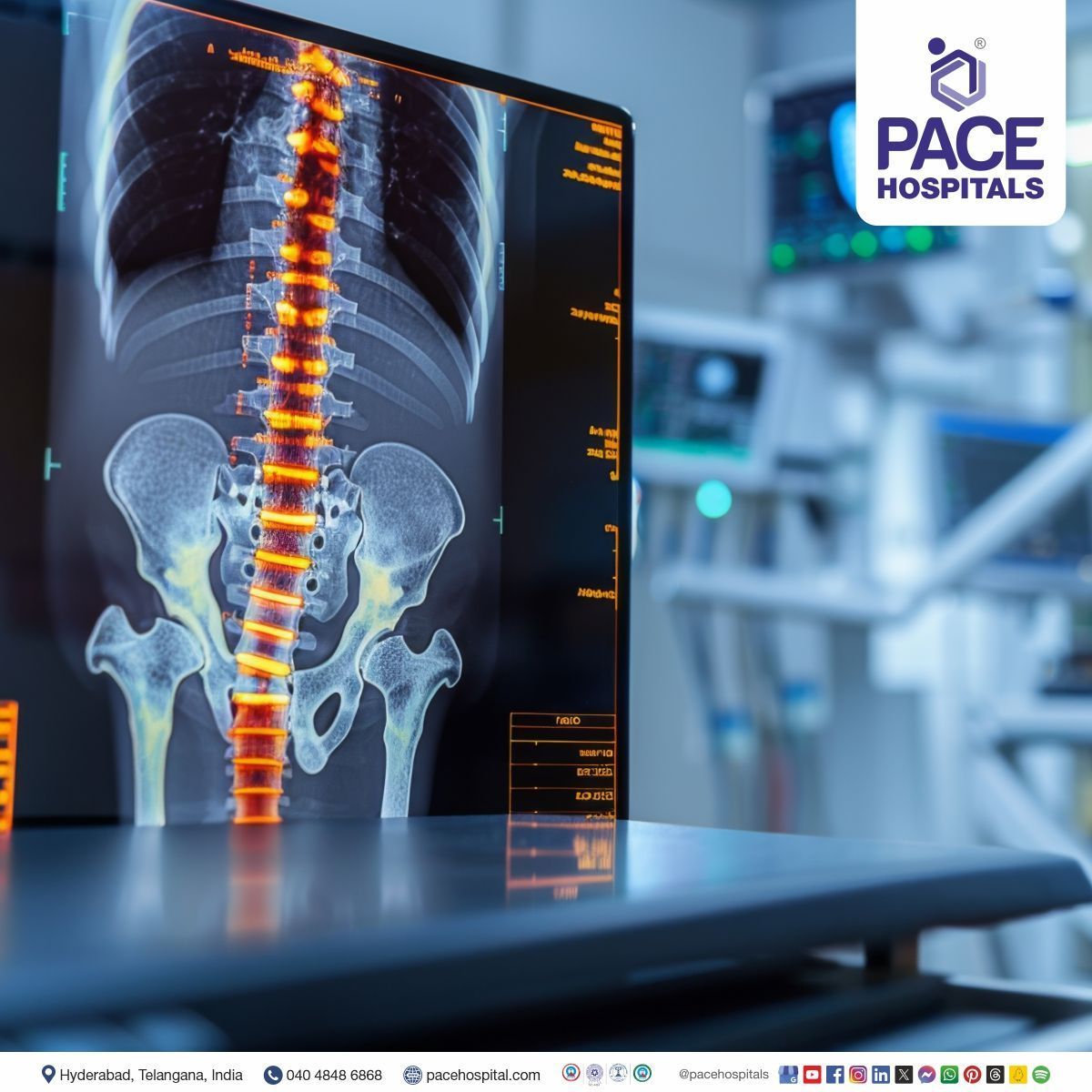
Imaging Diagnostics
X-ray (Radiography)
X-rays are commonly used as the first test to assess orthopedic problems because they clearly show bones and joint alignment. They helps to diagnose fractures, dislocations, bone deformities,
arthritis, bone infections, and some bone tumors. X-rays can reveal loss of joint space, bone spurs, and changes in bone density, which are typical in conditions such as
osteoarthritis or
osteoporosis.
Magnetic resonance imaging (MRI)
This provides detailed images of both bones and soft tissues, making it very useful for diagnosing orthopedic conditions that are not visible on X-rays. It helps to detect injuries of ligaments, tendons, muscles, cartilage, spinal discs, and nerves.
MRI is especially helpful in conditions such as ligament tears, meniscus injuries, disc prolapse, avascular necrosis, and early bone marrow changes.
Computed Tomography (CT scan)
CT scans combine multiple X-ray images to create detailed cross-sectional views of bones and joints. They are particularly useful for evaluating complex fractures, joint injuries, spinal problems, and bone tumors. They are also useful when an MRI is not suitable for a patient, such as those with certain implants or devices.
Ultrasound (musculoskeletal USG)
Musculoskeletal ultrasonography is a dynamic, radiation-free technique that assesses soft tissue structures surrounding joints. It is utilised to detect
ligament injuries, muscle strains, tendon tears, bursitis, joint effusions, and soft tissue edema.
Ultrasound enables real-time examination while moving, which is useful for detecting damage or instability. It is also frequently used to guide injections and aspirations in orthopedic treatment.
Nuclear Medicine Imaging
- Bone Scan (Skeletal Scintigraphy): A bone scan is also called a skeletal scintigraphy, a specialized radiology procedure used to examine the abnormal areas or damage in various bones of the skeleton, which is performed to detect areas of chemical and physical changes in bone. During this procedure, a tiny amount of radioactive material is injected into a person's vein, travels through the blood, collects in the bones and is detected by a special camera that takes images of the inside of the body called a scanner. This scan is advised to detect bone non-cancerous tumours or cancers that have spread to the bone and to diagnose other bone conditions, including bone infections, fractures, etc.
Bone Density Assessment
- Dual-Energy X-ray Absorptiometry: Dual-energy X-ray Absorptiometry (DEXA) is a medical imaging technique primarily used to assess bone mineral density (BMD) and body composition. It employs two different X-ray energy levels to distinguish between bone and soft tissue, providing precise measurements of bone density, which is crucial for diagnosing conditions like osteoporosis, monitoring the effectiveness of osteoporosis treatments and predicting the likelihood of bone fractures can also include measuring muscle and fat composition in specific body areas.
Electrodiagnostic Tests
Electromyography
Electrodiagnostic studies are used to detect neuromuscular abnormalities, measuring the electrical activity in muscles and nerves to assess nerve function and evaluate injuries. These studies include electromyography (EMG) and nerve conduction studies (NCS), which are commonly ordered during the assessment of patients with suspected peripheral nerve compression. These tests are often conducted together, and the combined evaluation is commonly referred to as two and abbreviated as an EMG/NCS or commonly called an EMG test. During the test, thin needles are placed in specific muscles, and then a healthcare professional asks the patient to mobilize the muscle to look at the electrical signals.
Nerve Conduction Studies
A nerve conduction velocity (NCV) test is performed to measure how fast (velocity) an movement of electrical impulse moves through the person's nerve. During this examination, two electrodes are placed on the skin over a muscle or over a nerve where one electrode stimulates the nerve with a very mild electrical impulse, and others record it, which is repeated for each nerve being tested. Healthcare professionals measure the distance between electrodes and the time taken for electrical impulses to travel between them to calculate the speed of electrical impulses.
Endoscopic / Minimally Invasive Diagnostic Procedures
Arthroscopy
Arthroscopy is a keyhole surgery (minimally invasive surgical procedure) used to examine and treat problems inside the joint. During this test, a surgeon inserts a thin tube attached to a camera (arthroscope) into the joint through small incisions to view the joint on a monitor and address issues such as cartilage damage, tears, or loose fragments.
Tissue Biopsy Diagnostics
Muscle Biopsy
Muscle biopsy is a common diagnostic procedure used by clinicians to evaluate patients with weakness that may be caused by muscle disease. It involves removing a small tissue sample for testing in a laboratory to diagnose neuromuscular disorders, infections that affect muscle, and other abnormalities in muscle tissue, including muscular dystrophy (MD), myasthenia gravis (MG), polymyositis (chronic disease involving skeletal muscles) etc.
Bone Biopsy
A bone biopsy involves removing a small sample of bone tissue for microscopic examination. It is performed when imaging tests such as X-rays, CT, or MRI show abnormal bone lesions, abnormal bone destruction, or suspected infection or tumor. Bone biopsy helps diagnose bone tumors (benign or malignant), bone infections, metabolic bone diseases, and metastatic cancer spread to bone. This provides crucial information for deciding appropriate surgical, medical, or oncological treatment.
Laboratory Investigations
Laboratory investigations play an important supportive role in diagnosing orthopedic conditions. These tests include:
Complete blood count (CBC)
A
complete blood count checks many components of blood, such as red blood cells, white blood cells, and platelets. In orthopedics, CBC is often used to detect infections, anemia, or inflammatory responses. An elevated white blood cell count may indicate a bone or joint infection, but low hemoglobin levels may impair healing and recovery following injury or surgery.
Erythrocyte sedimentation rate (ESR) and C-reactive protein (CRP)
These inflammatory markers are present in the body. These tests are commonly done when conditions like arthritis, bone infection, joint infection, or inflammatory spine disorders are suspected. Any elevations in these markers indicate active inflammation and are also useful for monitoring treatment response after surgery or infection control.
Rheumatoid Factor (RF) and Anti-CCP Antibodies: RF and Anti-CCP tests help diagnose autoimmune inflammatory arthritis, especially rheumatoid arthritis. Anti-CCP antibodies are more specific and can detect the disease at an early stage. These tests are important when patients present with chronic joint pain, stiffness, swelling, and deformity, particularly involving small joints.
Serum uric acid
Serum uric acid testing is mainly used to identify gout, a disorder in which uric acid crystals build up in joints, producing severe pain and swelling. Elevated levels support the diagnosis, particularly in individuals who experience abrupt joint pain, which usually affects the big toe, knee, or ankle.
Calcium, phosphate, and vitamin D: These exams measure bone metabolism and strength. Abnormal amounts of these minerals can suggest osteoporosis, osteomalacia, rickets, or metabolic bone diseases.
Vitamin D insufficiency is a prevalent cause of bone discomfort, muscle weakness, and increased fracture risk, making this test critical in orthopedic evaluation.
Alkaline Phosphatase (ALP)
This is an enzyme related to bone formation and turnover. Elevated ALP levels may be seen in bone healing, fractures, metabolic bone diseases, Paget’s disease, and bone tumors. This test helps assess bone activity and remodelling, especially in growing children or healing fractures.
Joint Fluid Analysis
Joint aspiration (synovial fluid analysis)
Joint aspiration is a diagnostic procedure in which fluid is removed from a joint space using a sterile needle and syringe. The collected synovial fluid is tested for infection, inflammation, crystal deposition, and bleeding within the joint. Joint aspiration is also useful for identifying septic arthritis, gout, pseudogout, rheumatoid arthritis, and osteoarthritis. The presence of bacteria confirms joint infection, while uric acid or calcium crystals help diagnose gout or pseudogout. This test allows rapid and accurate diagnosis, guiding timely treatment.
Pediatric Orthopedic Diagnostics
Hip ultrasound (DDH screening)
Hip ultrasound is a safe and painless imaging test mainly used in newborns and young infants to identify developmental dysplasia of the hip (DDH). Ultrasound clearly shows the structure, position, and stability of the hip joint. Early diagnosis allows prompt treatment, which helps ensure normal hip development and reduces the risk of long-term problems like limping, chronic pain, or early-onset arthritis.
Growth plate evaluation
Growth plate evaluation is done to assess the health and development of the growth plates (physes), which are areas of soft cartilage at the ends of long bones in children and adolescents. These plates control bone growth and are vulnerable to injury from trauma, overuse, or infection.
Skeletal survey (metabolic or genetic bone disorders)
A skeletal survey is a series of X-rays of the entire skeleton. It is used to diagnose metabolic or genetic bone disorders, identify abnormal bone development, and detect multiple or unexplained fractures in children.
3,28,338
99,825
684
2011
Best Orthopedic Doctors in Hyderabad | Top Orthopaedic Surgeons
A team of the best Orthopaedic doctors in Hyderabad, India provides expert Orthopedic tests and diagnosis for a wide range of musculoskeletal conditions, including arthritis, fractures, osteoporosis, joint pain, ligament injuries, and sports injuries. Our experienced specialists carefully evaluate orthopedic diagnostic tests and imaging reports to identify the root cause of bone and joint problems, ensuring accurate diagnosis and personalized care for patients of all ages.

Dr. Anand Agroya
MBBS, D.Ortho, Fellow in Joint Replacement, Arthroscopy & Sports Medicine
Experience : 15+ years
Senior Orthopaedic Consultant, Trauma Surgeon & Sports Medicine Specialist | Expert in Knee & Joint Replacement & Arthroscopy Surgery

Dr. Raghuram
MBBS, DNB ORTHO, Fellowship in Joint Replacement and Arthroscopy, Fellowship in Shoulder and Upper limb, Sports medicine and Replacement
Experience : 14+ years
Orthopaedic Consultant, Trauma, Shoulder and Knee Arthroscopic Surgeon, Hip and Knee Joint Replacement Specialist
Orthopaedic Diseases and Disorders Explained
Get a free second opinion before proceeding with recommended orthopaedic tests.
At PACE Hospitals, we are committed to providing our patients with the best possible care, and that includes offering second medical opinions with super specialists for treatment or surgery. We recommend everyone to get an expert advance medical second opinion, before taking decision for your treatment or surgery.
Frequently asked questions (FAQs) on Orthopedic Tests
Why are diagnostic tests important in orthopedics?
Diagnostic tests are important for orthopedics conditions because they help identify the exact cause of bone, joint, or muscle problems. Clinical presentations like pain, swelling, or stiffness may occur from many conditions, and tests help doctors confirm the correct diagnosis. Accurate testing guides proper treatment, avoids unnecessary procedures, and helps detect problems early.
What diagnostic tests are commonly used to identify bone and joint problems?
Common orthopedic diagnostic tests include X-rays, MRI scans, CT scans, and ultrasound imaging. Blood tests may also be used to detect infection or inflammation. X-rays help to assess bones, while MRI and CT scans show soft tissues and complex structures. Using the right combination of tests improves accuracy in diagnosing fractures, arthritis, ligament injuries, and joint disorders, allowing treatment to be planned more effectively.
When is an X-ray recommended for orthopedic conditions?
An X-ray is recommended when bone injury or structural changes are suspected. It is frequently used after trauma to detect any kind of fractures, dislocations, or bone alignment problems. X-rays are also useful in diagnosing arthritis, bone infections, and spinal deformities. X-rays are usually the first imaging test because they are quick, affordable, and effective for assessing hard tissues like bones.
What is the difference between an X-ray and an MRI scan in orthopedics?
X-rays mainly show bones and joint spaces, making them useful for detecting fractures, bone wear, and deformities. On the other hand, MRI scans produce more precise images of soft tissues such as muscles, ligaments, cartilage, and nerves. MRI does not use radiation and provides more details on soft-tissue injuries.
Why is an MRI scan advised for ligament or cartilage injuries?
MRI scans are advised for ligament or cartilage injuries because these tissues cannot be clearly detected on X-rays. MRI provides high-resolution images that show tears, swelling, and internal joint damage. MRI improves accuracy in diagnosing sports injuries and joint disorders.
When is electromyography (EMG) required in orthopedic evaluation?
Electromyography is required when nerve or muscle damage is suspected. It is used in conditions such as nerve compression, muscle weakness, unexplained pain, or numbness. EMG assess how well nerves send signals to muscles. It is commonly used in suspected carpal tunnel syndrome, spinal nerve problems, and muscle disorders.
How does a bone density (DEXA) scan help diagnose osteoporosis?
A DEXA scan measures bone strength by assessing bone mineral density. It is the standard test for diagnosing osteoporosis. The scan compares bone density with healthy reference values, helping orthopedic doctors to identify bone loss before fractures occur. DEXA is a painless, quick, and uses very low radiation.
How do orthopedic diagnostic tests guide treatment planning and surgery decisions?
Orthopedic diagnostic tests help determine the exact cause, severity, and location of bone or joint problems. Accurate test results guide doctors in choosing between medical treatment, physical therapy, or surgery. Imaging tests aid in plan surgical approach, implant selection, and risk assessment. Diagnostic findings also help to predict recovery outcomes and avoid unnecessary procedures, hence safer and more effective patient care.
Why Choose PACE Hospitals for Orthopedic Diagnosis?
Here’s why patients and families trust PACE Hospitals for orthopedic diagnosis and care:
- Comprehensive Orthopedic Services: PACE Hospitals offers complete musculoskeletal care—from early diagnosis and imaging to advanced treatment and rehab.
- State-of-the-Art Diagnostic Technology: The hospital is well equipped with high-resolution imaging systems, X-rays, MRI facilities, and advanced diagnostic tools that help in the precise evaluation and early detection of orthopedic issues.
- Expert Orthopedic Specialists: A team of highly skilled orthopedic surgeons and physicians, including specialists like Dr Anand Agroya and Dr Raghuram, who are experienced in diagnosing complex conditions and planning effective personalised treatment strategies.
- Patient-Centric & Compassionate Care: The hospital emphasises a patient-focused approach, ensuring that every individual gets tailored attention, clear communication, and a comfortable care experience.
- Advanced Treatment Options: Treatment options like minimally invasive procedures, joint replacements, trauma care, and rehabilitation services, promoting faster recovery and better outcomes.
- Clubbed Multispecialty Support: As a multi-super speciality hospital, we integrate orthopaedic care with other disciplines (like physiotherapy, rheumatology, sports medicine, and pain management) to ensure a holistic treatment journey.
- Convenient Access & Insurance Support: With hospitals in HITECH City and Madinaguda, and empanelment with major insurance and government schemes, we offer easy access and smoother cashless services for patients.
Which Hospital Is Best for Orthopedic Diagnosis in Hyderabad?
PACE Hospitals is one of the best choices in Hyderabad for accurate orthopedic diagnosis, offering expert evaluation of bone, joint, muscle, and spine conditions. With skilled orthopedic specialists, advanced diagnostic imaging, and a patient-focused approach, PACE Hospitals ensures accurate diagnosis and the right treatment plan from the very first consultation.
Why choose PACE Hospitals?
- A Multi-Super Speciality Hospital.
- NABH, NABL, NBE & NABH - Nursing Excellence accreditation.
- State-of-the-art Liver and Kidney transplant centre.
- Empanelled with all TPAs for smooth cashless benefits.
- Centralized HIMS (Hospital Information System).
- Computerized health records available via website.
- Minimum waiting time for Inpatient and Outpatient.
- Round-the-clock guidance from highly qualified super specialist doctors, surgeons and physicians.
- Standardization of ethical medical care.
- 24X7 Outpatient & Inpatient Pharmacy Services.
- State-of-the-art operation theaters.
- Intensive Care Units (Surgical and Medical) with ISO-9001 accreditation.


