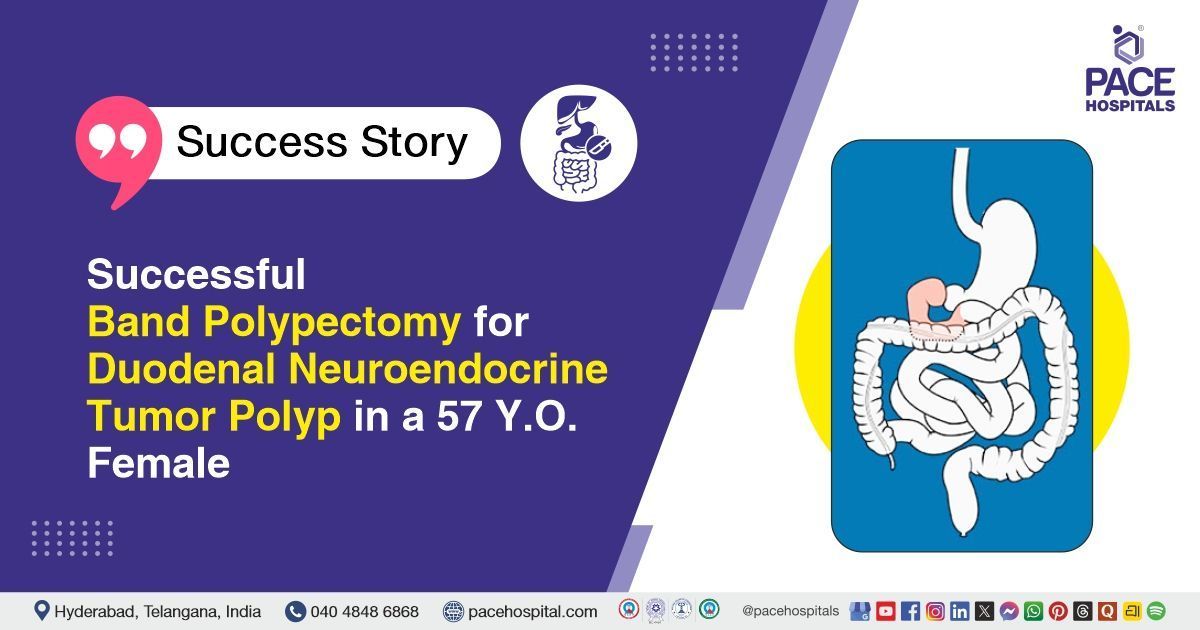
Successful Band Polypectomy for Duodenal Neuroendocrine Tumor Polyps in a 57 Y.O. Female
PACE Hospitals
PACE Hospitals’ expert Surgical Gastroenterology team successfully performed a Band Polypectomy on a 57-year-old female patient diagnosed with a Duodenal Neuroendocrine Tumor (NET) polyp. The aim of the procedure was to achieve complete endoscopic removal of the polyp and to prevent disease progression while avoiding the need for invasive surgery.
Chief Complaints
A 57-year-old female with a
body mass index (BMI) of 22.3 presented to the Surgical Gastroenterology Department at
PACE Hospitals, Hitech City, Hyderabad, with chief complaints of intermittent episodes of vomiting for the past three months, associated with nausea and aggravated on coughing. There was no history of fever, weight loss, chest pain, loose stools, or constipation.
Past Medical History
The patient had a history of systemic
hypertension and bronchial asthma, both of which were managed with regular treatment.
On Examination
On general examination, the patient was conscious, coherent, and oriented, with no pallor or icterus. Vital signs were within normal limits except for elevated blood pressure. Systemic examination showed a soft, non-tender abdomen, normal central nervous system status, and a normal cardiovascular examination with normal heart sounds.
Diagnosis
Upon admission to PACE Hospitals, the patient was thoroughly evaluated by the Surgical Gastroenterology team following a three-month history of intermittent vomiting associated with nausea, aggravated on coughing. There was a clinical suspicion of a duodenal polyp based on prior investigations.
The patient underwent a comprehensive diagnostic evaluation, including upper gastrointestinal endoscopy, which revealed an 8 × 8 mm polyp on the anterior wall of the first part of the duodenum (D1). Routine blood investigations, including complete blood picture, liver and renal function tests, were within normal limits and the lipid profile was deranged. Cardiological and general medicine evaluations were also performed due to a history of systemic hypertension and bronchial asthma.
Based on the confirmed diagnosis, the patient was advised to undergo
Duodenal Neuroendocrine Tumor (NET) Polyp Treatment in Hyderabad, India, under the expert care of the Surgical Gastroenterology Department.
Medical Decision-Making (MDM)
After a detailed consultation with the consultant gastroenterologist, Dr. M Sudhir, along with cross-consultants cardiologist Dr. Seshi Vardhan Janjirala and General Medicine Dr. Mounika Jetti, a thorough evaluation was conducted considering the patient’s complaints of intermittent vomiting with nausea over the past three months, history of systemic hypertension and bronchial asthma, and findings of a duodenal polyp on endoscopy.
Based on these clinical findings, endoscopic evaluation, and biopsy results, it was determined that Band Polypectomy was identified as the most appropriate intervention to achieve complete removal of the duodenal neuroendocrine tumor (NET) polyp, prevent disease progression, and minimize the need for invasive surgical procedures. The patient’s comorbidities were optimized with cardiology and general medicine input prior to the procedure to ensure hemodynamic stability.
The patient and her family members were counseled regarding the diagnosis, the planned Band Polypectomy procedure, potential risks including bleeding or perforation, and the expected benefits in terms of symptom relief and prevention of future complications.
Surgical Procedure
Following the decision, the patient was scheduled to undergo Band Polypectomy Surgery in Hyderabad at PACE Hospitals under the expert supervision of the Surgical Gastroenterology Department.
The following steps were carried out during the procedure:
- Pre-procedure Preparation: The patient was prepped and stabilized, with her comorbid conditions of systemic hypertension and bronchial asthma optimized. Informed consent was obtained after explaining the procedure, its benefits, and potential risks. She was positioned appropriately for upper gastrointestinal endoscopy, and standard monitoring of blood pressure, pulse, and oxygen saturation was initiated.
- Endoscopic Assessment: Upper gastrointestinal endoscopy revealed an 8 × 8 mm polyp on the anterior wall of the first part of the duodenum (D1). The polyp was small in size and non-functional, with no evidence of surrounding mucosal abnormalities or invasion.
- Band Placement: A polypectomy banding device was introduced through the endoscope. The polyp was suctioned into the banding cap, and a rubber band was deployed at its base to securely capture the tissue.
- Polyp Resection: Following band deployment, the polyp was snared and resected using electrocautery. Hemostasis was confirmed endoscopically, with no immediate bleeding or perforation observed.
- Post-procedure Management: The resected polyp was sent for biopsy and IHC staining, and the procedure was uneventful. The patient remained stable with monitoring for potential complications such as bleeding or perforation.
Postoperative Care
The procedure was uneventful, and the patient’s postoperative recovery was satisfactory. During her hospital stay, she was managed with intravenous fluids, intravenous antibiotics, and required medications. She remained hemodynamically stable throughout and was discharged in stable condition with the prescribed medications.
Discharge Medication
Upon discharge, the patient was prescribed medications to prevent and treat infection, reduce gastric acid, aid digestion, relieve constipation as needed, and manage her blood pressure and lipid levels. She was advised to continue her regular treatment for hypertension and
dyslipidemia, along with short-term medications for symptom control and gastrointestinal protection.
Advice on Discharge
The patient was advised to follow a low-salt diet to help manage blood pressure and support overall cardiovascular and gastrointestinal health.
Emergency Care
The patient was informed to contact the emergency ward at PACE Hospitals in case of any emergency or development of symptoms such as fever, abdominal pain and vomiting.
Review and Follow-Up
The patient was advised to return for a follow-up visit with the Surgical Gastroenterologist in Hyderabad at PACE Hospitals, after 1 week, for further evaluation.
Conclusion
This case highlights the diagnosis and endoscopic management of a duodenal neuroendocrine tumor (NET) polyp in a patient with systemic hypertension and bronchial asthma. An uneventful Band Polypectomy was performed with complete polyp removal. The patient had a satisfactory postoperative recovery and was discharged in stable condition with medications, dietary advice, and follow-up instructions.
Endoscopic Management of Duodenal Neuroendocrine Tumor Through a Multidisciplinary Approach
Early detection and minimally invasive endoscopic management are important for gastrointestinal polyps, which often present with non-specific symptoms. Careful preoperative assessment and consultation with a surgical gastroenterologist / surgical gastroenterology doctor help ensure safe outcomes, even in patients with additional health conditions. Endoscopic removal allows complete excision with minimal risk of complications.
Close postoperative monitoring and supportive care aid smooth recovery. Histopathological evaluation guides further management and long-term planning. Proper discharge instructions, including diet, medication adherence, and follow-up, are essential for maintaining health and preventing recurrence. Coordinated care improves overall outcomes in complex gastrointestinal conditions.
Share on
Request an appointment
Fill in the appointment form or call us instantly to book a confirmed appointment with our super specialist at 04048486868
Appointment request - health articles
Recent Articles