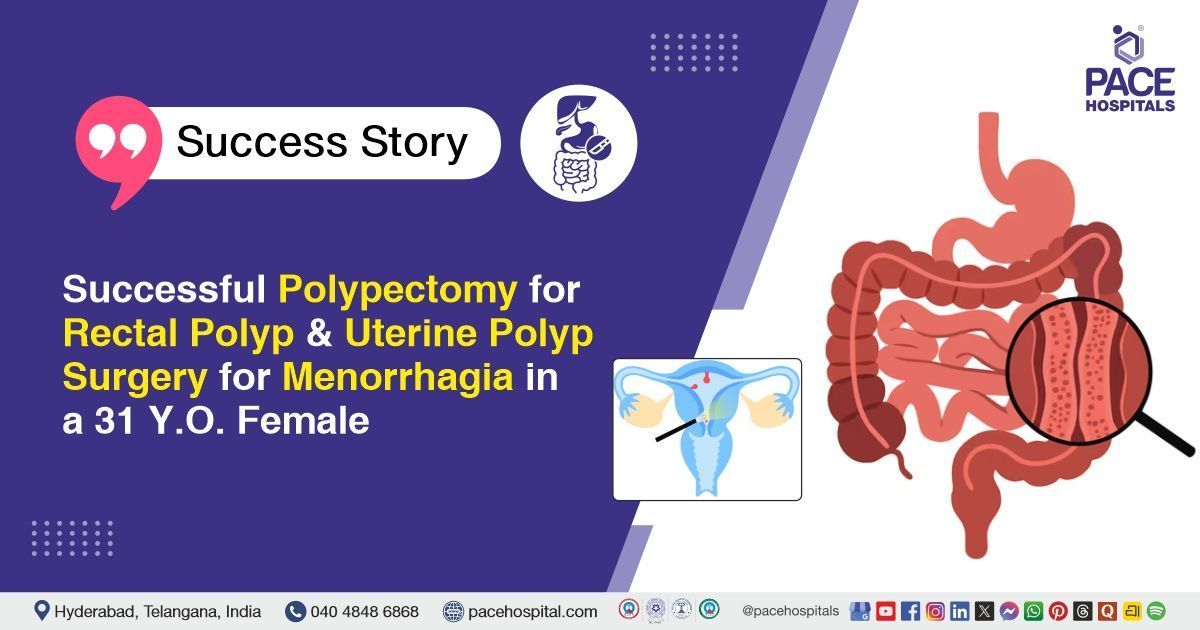
Successful Polypectomy for Rectal Polyp and Uterine Polyp Surgery for Menorrhagia in a 31 Y.O. Female
PACE Hospitals
PACE Hospitals’ expert Gastroenterology and Gynaecology teams successfully performed Hot Snare Polypectomy, Dilation and Curettage (D&C), and Laparoscopic Tubectomy on a 31-year-old female patient diagnosed with a rectal polyp (Paris Is, JNET I) and uterine polyp/retained products of conception (RPOC), with the aim of removing the polyps to prevent complications, including colorectal cancer progression.
Chief Complaints
A 31-year-old female with a body mass index (BMI) of 18 presented to the Gastroenterology Department at PACE Hospitals, Hitech City, Hyderabad, with a one-year history of increased stool frequency (4–5 episodes per day), occurring after meals (normal stool consistency and no associated mucus or vomiting) and complaints of menorrhagia.
Past Medical History
There was no history of other chronic conditions, such as diabetes, hypertension, or liver disease, documented at the time of admission.
On Examination
The patient was conscious, oriented, and hemodynamically stable. General physical examination revealed a normal appearance and no signs of distress. Vital signs were within normal limits. Abdominal examination showed normal contour, soft consistency, and no organomegaly, bowel sounds were normal. No abnormal findings were noted on systemic examination.
Diagnosis
Following the clinical examination, the Gastroenterology and Gynaecology teams conducted a comprehensive assessment, including a detailed review of the patient’s medical history and a focused evaluation of the rectal and uterine regions.
To confirm the diagnosis and evaluate the extent of the pathology, a comprehensive clinical and systemic examination was performed. The patient exhibited no significant abdominal tenderness, organomegaly, or systemic abnormalities. Laboratory investigations revealed mild anemia. Ultrasound imaging demonstrated a normal liver, gallbladder, pancreas, spleen, kidneys, uterus, and ovaries, with minimal endometrial collection. Colonoscopic evaluation identified a rectal polyp, and hysteroscopy revealed a uterine polyp or retained products of conception (RPOC). These clinical, endoscopic, and radiological findings established the diagnosis and guided the treatment plan.
Based on the confirmed diagnosis, the patient was advised to undergo
Rectal Polyp Treatment in Hyderabad, India, along with uterine polyp treatment under the care of the Gastroenterology Department, ensuring effective stabilization and optimal functional recovery.
Medical Decision Making (MDM)
After a detailed consultation with consultant gastroenterologists, Dr. Govind Verma, Dr. M Sudhir, Dr. Padma Priya, and cross consultation with gynecologist Dr. Mugdha Bandawar, a thorough evaluation was conducted considering the patient’s complaints of increased stool frequency, menorrhagia, and recent weight loss, along with a history of rectal polyp and uterine polyp/retained products of conception (RPOC). All relevant laboratory, imaging, and prior diagnostic data were reviewed.
Based on these clinical and imaging findings, it was determined that Hot Snare Polypectomy and Dilation and Curettage (D&C) and laparoscopic tubectomy were identified as the most appropriate interventions to manage the rectal polyp and uterine polyp/RPOC, prevent potential complications, and alleviate associated symptoms.
The patient and her family members were counselled about the planned procedures, their risks, such as bleeding or other complications, and the expected benefits in relieving symptoms, improving gastrointestinal and reproductive health, and preventing further complications.
Surgical Procedure
Following the diagnosis, the patient was scheduled for a Hot snare polypectomy procedure in Hyderabad at PACE Hospitals, along with Dilation and Curettage (D&C), and Laparoscopic Tubectomy under the supervision of the Gastroenterology and gynaecology departments.
The polypectomy procedure involved the following steps:
- Pre-procedure Preparation: The patient was positioned appropriately for the colonoscopy, and standard aseptic precautions were followed. Sedation and anesthesia were administered, intravenous access secured, and vital signs monitored throughout the procedure. The colonoscope and hot snare instruments were prepared and checked for proper functioning.
- Polyp Identification: The colonoscope was advanced to the rectal region, and the mucosa was carefully examined. The polyp was visualized, and its size, shape, and base were assessed. The surrounding mucosa was inspected to determine the safest approach for removal and to minimize risk of bleeding or perforation.
- Hot Snare Application and Polyp Removal: A snare loop was positioned around the base of the polyp. Electrocautery was applied to excise the polyp while simultaneously achieving coagulation to prevent bleeding. The polyp was completely removed, and the site was inspected for any residual tissue or immediate complications.
- Specimen Retrieval and Site Inspection: The excised polyp was retrieved through the colonoscope for histopathological examination. The resection site was examined for hemostasis, ensuring no bleeding or mucosal injury. The colonoscope was withdrawn carefully, completing the procedure safely.
The Dilation and Curettage and Laparoscopic Tubectomy involved the following steps:
- Preoperative Preparation: The patient was positioned in lithotomy, anesthesia was administered, and aseptic precautions were followed. Surgical instruments and hysteroscope were prepared, and vital signs were monitored.
- Diagnostic Hysteroscopy: The hysteroscope was inserted through the cervix to visualize the uterine cavity. Both cornua and the fundus were inspected, and a 1x2 cm polyp or retained product of conception was identified.
- Cervical Dilation: The cervix was carefully dilated to allow passage of operative instruments. This ensured safe access to the uterine cavity while minimizing trauma to the endometrium.
- Dilation and Curettage (D&C): Curettage was performed to remove the polyp or retained tissue. The specimen was collected and sent for histopathology, and the cavity was inspected to ensure complete removal.
- Hemostasis and Abdominal Assessment: Hemostasis was achieved at the resection site, and the uterus, fallopian tubes, and ovaries were examined laparoscopically. Bowel loops were noted as distended, minimal free fluid was observed in the pouch of Douglas, and the rest of the abdomen appeared normal.
Postoperative Care
The postoperative period was uneventful. The patient received supportive care to prevent infection, control pain, and maintain hydration. She tolerated a liquid diet well and remained hemodynamically stable throughout her stay. Her symptoms improved, and she was discharged with appropriate medications for ongoing management.
Discharge Medications
Upon discharge, the patient was prescribed medications for infection prevention, management of gastric acidity, relief of gastrointestinal discomfort, and control of pain as needed. Therapy was advised for a short duration to ensure proper healing, prevent infection, and manage any postoperative discomfort effectively.
Emergency Care
The patient was informed to contact the emergency ward at PACE Hospitals in case of any emergency or development of symptoms such as fever, abdominal pain, or vomiting.
Review and Follow-up Notes
The patient was advised to return for a follow-up visit with the Gastroenterologist in Hyderabad at PACE Hospitals and follow up with the Gynaecologist after 1 week for further evaluation and follow-up.
Conclusion
This case highlights the management of a patient with rectal and uterine polyps associated with menorrhagia. The patient underwent Hot snare polypectomy along with diagnostic hysteroscopy, D and C, and laparoscopic tubectomy. Intraoperative findings showed a normal uterus, tubes, and ovaries, and the polyps were successfully removed. The patient remained stable and was discharged with appropriate medications and follow-up instructions.
Comprehensive Management of Concurrent Gastrointestinal and Gynaecological Polyps
An integrated multidisciplinary approach is essential in managing patients with both gastrointestinal and gynecological polyps. Coordination between a gastroenterologist / gastroenterology doctor, and gynecology specialists allows for simultaneous assessment and treatment, improving efficiency and outcomes. Careful preoperative evaluation, including imaging and laboratory investigations, supports precise planning of procedures such as polypectomy and hysteroscopy. Targeted removal of polyps helps prevent complications like bleeding, recurrence, or malignant transformation. Maintaining hemodynamic stability and providing appropriate supportive care are essential for patient safety. Synchronized interventions for multifocal pathologies optimize recovery, reduce hospital stay, and enhance overall patient outcomes.
Share on
Request an appointment
Fill in the appointment form or call us instantly to book a confirmed appointment with our super specialist at 04048486868
Appointment request - health articles
Recent Articles