What Is the Role of Endocrinology in Hormone Health?
PACE Hospitals
Written by: Editorial Team
Medically reviewed by: Dr. Tripti Sharma - Consultant Endocrinologist (Adult & Paediatric), Physician & Diabetologist
Endocrinology treats hormone imbalances that affect diabetes, thyroid, PCOS, growth, metabolism, bone health, and fertility. Endocrinologists diagnose the cause using hormone tests and imaging, then create a personalized plan—lifestyle, medicines, hormone replacement, and long-term monitoring—to prevent complications like heart disease, infertility, fractures, and nerve/kidney damage.
Endocrinology is the medical specialty dedicated to the diagnosis, treatment, and management of hormone-related disorders affecting the endocrine system. Endocrinologists are physicians with specialized training in understanding how hormones regulate virtually every bodily function—from metabolism and growth to reproduction, mood, sleep, and energy levels.
The endocrine system is a complex network of glands that produce and secrete hormones—chemical messengers that travel through the bloodstream to control and coordinate activities throughout your body. These glands include the thyroid, pancreas, pituitary, adrenal glands, ovaries, testes, parathyroid glands, and hypothalamus. When this intricate system malfunctions, even slight hormone imbalances can trigger widespread symptoms affecting multiple organ systems.
India has a very high burden of endocrine disorders, highlighting the growing importance of Endocrinology in India in addressing these health challenges. An estimated 77 million Indians live with diabetes—the second-highest number globally. Thyroid disorders affect 42 million Indians, with hypothyroidism being significantly more prevalent in women. Polycystic ovary syndrome (PCOS) affects 1 in 5 Indian women of reproductive age. Osteoporosis, vitamin D deficiency, and metabolic syndrome add to this growing burden.
Modern endocrinology has revolutionized the management of these conditions. insulin therapy therapy transformed diabetes from a fatal disease to a manageable chronic condition. Thyroid hormone replacement enables millions to live normal and healthy lives. Advanced diagnostic testing detects modest hormone abnormalities before they cause permanent damage and disrupt normal functioning. Precision medicine approaches allow for individualized treatment based on genetic predisposition, metabolic, and lifestyle factors.
Understanding endocrinology's role in hormone health enables a pesron to spot warning signals, seek timely care, and take control of diseases that may otherwise progress silently over years.
Quick Summary: Endocrinology in One Minute
- Endocrinology treats Diseases/Metabolic Disorders: Diabetes, thyroid disorders, PCOS, obesity, osteoporosis, pituitary and adrenal problems, calcium/parathyroid disorders, and lipid issues.
- What an endocrinologist does: Identifies the cause with the right tests, starts targeted treatment, and monitors long-term to prevent complications.
- Why it matters: hormone conditions often progress silently—early treatment prevents heart disease, kidney damage, nerve damage, infertility, fractures, and vision loss.
Symptom Triage: What Your Symptoms May Indicate?
Use this as a guide, not a diagnosis.
- Fatigue + weight gain + constipation + dry skin → Hypothyroidism (underactive thyroid)
- Palpitations + weight loss + sweating + anxiety → Hyperthyroidism (overactive thyroid)
- Irregular periods + acne + facial hair + weight gain → PCOS / insulin therapy resistance
- Excess thirst + frequent urination + weight loss → Diabetes (or sometimes thyroid/adrenal issues)
- Sudden shakiness + sweating + confusion → Low blood sugar (hypoglycemia)
- Severe headaches + vision changes → Pituitary problem (needs urgent evaluation and require proper medical attention)
- Purple stretch marks + easy bruising + central weight gain → Cortisol excess (Cushing’s syndrome)
- Back pain + height loss + fracture after minor fall → Osteoporosis / low bone density
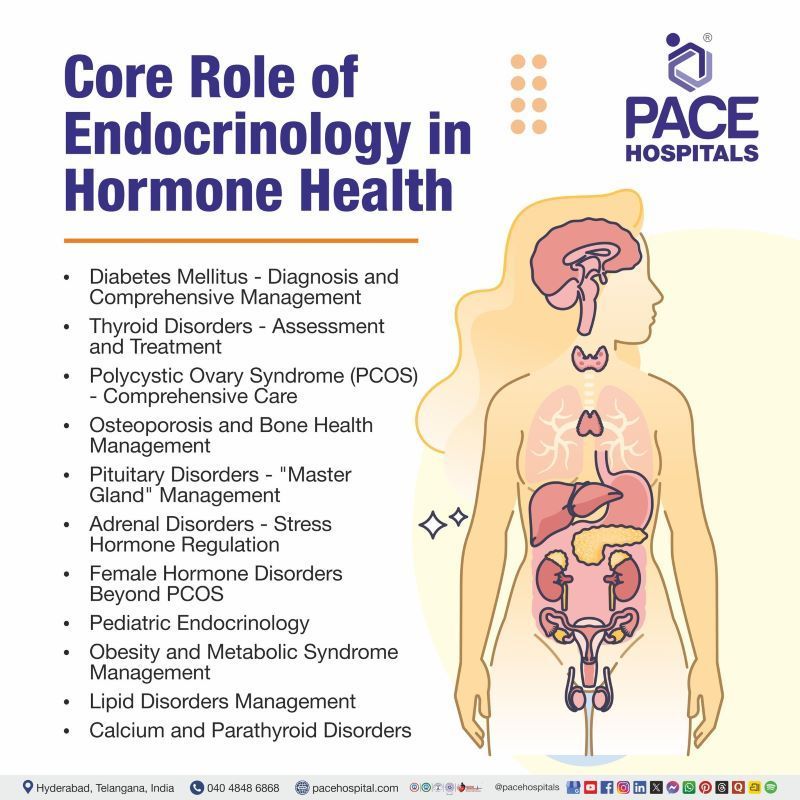
Core Roles of Endocrinology in Hormone Health
1. Diabetes Mellitus - Diagnosis and Comprehensive Management
Diabetes is the cornerstone of endocrinology practice and represents India's most pressing endocrine health challenge.
India's Diabetes Crisis:
- 77 million Indians have diabetes (estimated)—second only to China globally
- Projected 134 million by 2045—a 74% increase
- 50 million have prediabetes—at high risk of progression
- Age of onset: 10-15 years younger than Western populations (peak 25-40 years vs. 40-50 years)
- Urban-rural divide: Urban prevalence 11.2% vs. rural 8.3% (but rural numbers rising rapidly)
- Complications: Indians develop complications earlier and more aggressively
Type 1 Diabetes:
- Autoimmune destruction of insulin therapy-producing beta cells
- Typically diagnosed in childhood/adolescence but can occur at any age
- India statistics: It is estimated that about 97,700 children aged in between 0-14 years are affected with Type 1 diabetes
- Requires: Lifelong insulin therapy therapy, carbohydrate counting, continuous glucose monitoring
- Endocrinologist's role: Insulin therapy regimen optimization, pump therapy, preventing DKA (diabetic ketoacidosis), managing hypoglycemia
Type 2 Diabetes:
- Insulin therapy resistance combined with inadequate insulin therapy production
- Risk factors in Indians: Genetic predisposition (PPARG, TCF7L2 gene variants), central obesity (even at normal BMI), sedentary lifestyle, high-carbohydrate diet, rapid urbanization commonly contribute to diabetes in Indian population.
- "Thin-fat" phenotype: 30-40% of Indian diabetics have normal BMI but high visceral fat
- Endocrinologist's comprehensive approach:
- Personalized medication selection (an antidiabetic agent, SGLT2 inhibitors, GLP-1 agonists, DPP-4 inhibitors, insulin therapy). Medicines for diabetes should be started, adjusted, or stopped only as advised by an endocrinologist or the treating specialist/ experienced diabetologist, based on regular monitoring.
- Complication screening and prevention
- Target setting: HbA1c <7% for most, individualized for elderly/complications
- Nutrition counseling adapted to Indian diets
- Eye care coordination as diabetic retinopathy act as a major cause of blindness in working-age Indians
- Cardiovascular risk reduction as diabetes doubles heart attack risk
- Foot care and preventing amputations (Preventing foot ulcers, diabetic foot)
- Kidney protection because diabetic nephropathy affects 40% by 10-20 years
Gestational Diabetes:
- Prevalence: It is observed 10-15% of pregnancies in India (double the global average)
- Glucose intolerance first detected during pregnancy
- High risk: Prior GDM, family history, obesity, PCOS, age >35
- Management: Diet modification, blood sugar monitoring, insulin therapy if needed
- Postpartum: 50% develop Type 2 diabetes within 5-10 years—requires ongoing monitoring
Advanced Diabetes Technologies:
- Continuous Glucose Monitors (CGM): Provides Real-time glucose tracking and trend analysis
- Insulin pumps: Automated insulin therapy delivery, hybrid closed-loop systems
- Flash glucose monitoring: Increasingly accessible in India
- Smartphone integration: Apps connecting devices, providing decision support fastly
India-specific challenges
Affordability of newer medications (SGLT2i, GLP-1 agonists cost ₹3,000-15,000/month), limited access to diabetes educators, strategic nutritionists, food planners, and dietitians, cultural dietary patterns (high glycemic index foods), joint family dynamics affecting dietary adherence and dietary behavior.
2. Thyroid Disorders - Assessment and Treatment
Thyroid diseases are among the most common endocrine disorders globally and particularly prevalent in India due to iodine deficiency in certain regions.
Thyroid Function Overview:
- Butterfly-shaped gland in neck producing T3 and T4 hormones
- Regulates metabolism, body temperature, heart rate, weight, mood, energy
- Controlled by TSH (thyroid-stimulating hormone) from pituitary gland
India Thyroid Statistics:
- 42 million Indian populations (approx.) are affected by thyroid disorders
- Female predominance: 8:1 ratio (women:men)
- Hypothyroidism: Most common (affecting 10-11% of population)
- Subclinical hypothyroidism: 8-9% prevalence, controversial treatment
- Iodine deficiency: Still present in sub-Himalayan regions, tribal areas
Hypothyroidism (Underactive Thyroid) Causes:
- Hashimoto's thyroiditis: Autoimmune destruction (most common cause)
- Iodine deficiency: Still relevant in certain specific regions of India despite salt iodization - process of fortifying salt for human consumption for iodine intake ( require more awareness among people)
- Post-thyroidectomy: After thyroid surgery
- Radioactive iodine treatment: For hyperthyroidism. Thyroid medicines should be taken only as advised by an endocrinologist, with dose adjustments based on follow-up tests.
- Medications: Certain cancer drugs
Hypothyroidism (Underactive Thyroid) Symptoms:
- Fatigue, lethargy, weakness
- Weight gain despite normal appetite
- Cold intolerance
- Constipation
- Dry skin, brittle nails, hair loss
- Depression, poor concentration, memory problems
- Heavy menstrual periods, infertility
- Slow heart rate
- Muscle aches, joint pain
Hypothyroidism (Underactive Thyroid) Diagnosis:
- TSH: Primary screening test done and TSH is elevated in hypothyroidism
- Free T4: Confirms diagnosis
- Anti-TPO antibodies: Identifies Hashimoto's thyroiditis
Hypothyroidism (Underactive Thyroid) Treatment:
- Thyroid hormone replacement (T4): Daily oral medication as advised by Endocrinologist
- Dosing: Weight-based, adjusted based on TSH levels every 6-8 weeks initially
- Timing: Taken in the morning on an empty stomach, 30-60 minutes before food
- Monitoring: TSH checked 6-8 weeks after dose changes, then further checked every 6-12 months when TSH is stabilized in the normal range
- Pregnancy: Increased dose needed (25-30% increase), critical for fetal brain development
- Cost: Very affordable—₹50-200/month for most patients
Special Considerations:
- Subclinical hypothyroidism: This shows Elevated TSH, normal T4—treatment debated, considered if TSH >10, symptoms present, or pregnancy planned
- Central hypothyroidism: Pituitary/hypothalamus problem—different management
Hyperthyroidism (Overactive Thyroid) Causes:
- Graves' disease: Autoimmune stimulation (most common, 60-80% of cases)
- Toxic adenoma: Single autonomous nodule
- Thyroiditis: Transient hyperthyroidism (subacute, postpartum, drug-induced)
- Toxic multinodular goiter: Multiple autonomous nodules
Hyperthyroidism (Overactive Thyroid) Symptoms:
- Weight loss despite increased appetite
- Heat intolerance, excessive sweating
- Rapid/irregular heartbeat, palpitations
- Insomnia
- Anxiety, irritability, nervousness
- Tremors (usually starts in the hands)
- Frequent bowel movements/diarrhea
- Muscle weakness
- Eye problems (Graves' ophthalmopathy—bulging eyes, double vision)
- Light or missed periods
Hyperthyroidism (Overactive Thyroid) Diagnosis:
- TSH: Suppressed (<0.1)
- Free T4 and T3: Elevated
- TSH receptor antibodies (TRAb): Elevated in Graves' disease
- Thyroid scan: Determines cause (Graves' vs. nodules)
Hyperthyroidism (Overactive Thyroid) Treatment Options:
- Anti-thyroid medications: Antithyroid medication as advised by healthcare professional—first-line, 12-18 month courses, 40-50% remission rate
- Radioactive iodine (I-131): Permanent cure, results in hypothyroidism requiring lifelong replacement (common in US, less in India)
- Surgery (thyroidectomy): Large goiters, suspicious nodules, patient preference
- Beta-blockers: Symptom control (a beta-blocker – drug used as advised by healthcare professional ) while awaiting definitive treatment
Special Situations:
- Thyroid storm: Life-threatening hyperthyroidism emergency—ICU management
- Pregnancy: Antithyroid medication preferred first trimester, careful monitoring essential
Thyroid Nodules and Cancer:
- Prevalence: Nodules detected in 50-60% of people above age 60 years on ultrasound testing
- Cancer risk: Only 5-10% of nodules are malignant (cancerous growths)
- Evaluation: Ultrasound, TSH, fine needle aspiration (FNA) biopsy for suspicious nodules
- Management: Surgery is performed if cancerous growths identified, observation or surgery if benign depending on size/symptoms
- Thyroid cancer: Generally excellent prognosis—>95% 10-year survival for papillary thyroid cancer
Endocrinologist's Role:
- Interpreting complex thyroid function tests
- Distinguishing between different thyroid disorders
- Medication adjustment and monitoring
- Managing subclinical disease
- Evaluating nodules, coordinating biopsies
- Pre-conception and pregnancy thyroid management
- Post-treatment surveillance for cancer recurrence
3. Polycystic Ovary Syndrome (PCOS) - Comprehensive Care
PCOS is the most common hormonal disorder among women of reproductive age and has reached epidemic proportions in India.
PCOS in India:
- Prevalence: 20-25% of women aged 15-44 years (1 in 5 women)
- Higher than global average (8-13%)
- Urban women more affected than rural
- Leading cause of female infertility in India
- Associated with 4times increased diabetes risk, 7times increased risk of heart disease
What is PCOS? A hormonal disorder causing enlarged ovaries with small cysts, irregular periods, and elevated male hormones (androgens). It's a syndrome—not all women have all features.
Diagnostic Criteria (Rotterdam Criteria - Need 2 of 3):
- Irregular or absent periods: Oligo-ovulation or anovulation
- Hyperandrogenism: Elevated male hormones, clinically it shows—excess hair growth, acne, male-pattern baldness; or biochemically—elevated hormone
- Polycystic ovaries on ultrasound: Shows more than equal to 12 follicles or ovarian volume >10ml
- Rotterdam criteria defined PCOS as 2 of 3 factors: oligo-anovulation, hyperandrogenism (clinical or biochemical), or ≥12 follicles in a single ovary or ovarian volume >10 cm3.
Symptoms:
- Menstrual irregularities: Infrequent occurence ( less than 9 cycles/year), absent periods, or heavy bleeding
- Hirsutism: Excess facial/body hair (70% of women)
- Acne: Persistent, adult acne
- Alopecia: Male-pattern hair thinning
- Weight gain: Especially central obesity (50% are overweight/obese)
- Darkening skin: Acanthosis nigricans (dark patches in neck folds, armpits)
- Infertility: Difficulty conceiving due to irregular ovulation
- Insulin therapy resistance: 50-70% have insulin therapy resistance regardless of weight
Long-term Health Risks:
- Type 2 diabetes: 50% develop diabetes by age 40
- Metabolic syndrome: 40-50% prevalence
- Cardiovascular disease: Increased risk of hypertension, dyslipidemia, heart attacks
- Endometrial cancer: It can have 3times increased risk due to unopposed hormones from lack of ovulation
- Sleep apnea: Particularly in overweight women
- Mental health: Depression, anxiety, eating disorders
Endocrinologist's Comprehensive Management:
Lifestyle Modification (Foundation of Treatment):
- Weight loss: Even 5-10% reduction improves ovulation, reduces insulin therapy resistance
- Diet: Need to follow diet plan with Low glycemic index, Mediterranean diet, portion control—adapted for Indian foods
- Exercise: 150 minutes/week moderate activity, resistance training
- Benefits: Restores ovulation in 30-40% of women with weight loss alone
Medical Management:
- Medicines for PCOS and menstrual or fertility concerns should be taken only as advised by an endocrinologist or gynecologist, based on individual goals and risk factors. It is always recommended to avoid self-medication.
For Menstrual Regulation:
- Combined oral contraceptive pills: Regulate periods/ menstrual cycles, reduce androgens, and protect endometrium
- Synthetic man-made compounds (As Drugs): Induce withdrawal bleeding every 3 months if hormone contraindicated
For insulin therapy Resistance:
- An antidiabetic agent: First-line, improves insulin therapy sensitivity, aids weight loss, restores ovulation in some
- Benefits beyond PCOS: Reduces diabetes risk, may reduce miscarriage risk
For Hirsutism/Acne:
- Oral contraceptives: Reduce androgens
- Anti-androgen therapy: Anti-androgen medication
- Topical a topical hair-growth inhibitor: Facial hair growth reducer
- Cosmetic: Laser hair removal, electrolysis (not covered by insurance)
For Infertility:
- Ovulation induction: Ovulation induction therapy - Drugs are used as advised by healthcare professional (first-line)
- An antidiabetic agent: Adjunct therapy
- Man-made injections: Second-line
- IVF: If other methods fail
- Ovarian drilling: Laparoscopic surgery option
For Metabolic Health:
- Diabetes screening: Oral glucose tolerance test done at diagnosis, then need to be done in every 1-3 years
- Lipid screening: Annually
- Blood pressure monitoring: Each visit
- Cardiovascular risk assessment: Ongoing
Monitoring:
- Clinical: Menstrual pattern, hirsutism score, weight, blood pressure
- Biochemical: Glucose tolerance, lipids, TSH level are checked
- Ultrasound: Endometrial thickness if prolonged amenorrhea
PCOS Phenotypes (Indian Population):
Indian women with PCOS often present with:
- Higher insulin therapy resistance at lower BMI ("metabolically obese normal weight")
- More severe hirsutism
- Earlier age of presentation
- Stronger family clustering
Emerging Therapies:
- Inositol supplements: Improve insulin therapy sensitivity and makes better ovulation
- GLP-1 agonists: Weight loss, metabolic benefits (GLP‑1–based therapy studied in PCOS)
- Anti-androgens: Newer agents in development
Patient Education:
Critical for endocrinologists to explain:
- PCOS is lifelong but manageable
- Not just a fertility problem—systemic metabolic disorder
- Treatment goals change across life stages (reproductive years vs. menopause)
- Importance of long-term cardiovascular and diabetes screening
4. Osteoporosis and Bone Health Management
Osteoporosis—a condition of weak, brittle bones prone to fractures—is an underappreciated epidemic in India, particularly among postmenopausal women.
India Osteoporosis Burden:
- 50 million people affected by osteoporosis or low bone mass
- 1 in 3 women over age 50 have osteoporosis
- 1 in 5 men over age 50 get affected by it
- Hip fracture statistics: 200,000-300,000 annually; 20-30% mortality within 1 year; 50% never regain independence
- Earlier onset: Indians develop osteoporosis 10-20 years earlier than Western populations
- Vitamin D deficiency: 70-90% of Indian population deficient despite abundant sunshine
Risk Factors in Indian Population:
- Dietary: Low calcium intake by Indian population affects a lot (400-600mg/day vs. 1000-1200mg recommended), lactose intolerance, vegetarian diet, phytate-rich foods reducing calcium absorption
- Vitamin D deficiency: Despite tropical location—dark skin, indoor lifestyle, pollution blocking UVB, cultural dress covering skin also affects Vit. D deficiency
- Genetics: Smaller bone size, lower peak bone mass
- Lifestyle: Sedentary, lack of weight-bearing exercise
- Early menopause: Indian women reach menopause 5-7 years earlier (mid-40s vs. 51 globally)
- Medical: Thyroid disorders, diabetes, rheumatoid arthritis, malabsorption
Endocrinologist's Role in Bone Health:
Screening and Diagnosis:
- DEXA scan (Dual-energy X-ray absorptiometry): Regarded as Gold standard bone density measurement
- WHO criteria:
- Normal: T-score ≥ -1.0
- Osteopenia (low bone mass): T-score -1.0 to -2.5
- Osteoporosis: T-score ≤ -2.5
- Severe osteoporosis: T-score ≤ -2.5 with fracture
Who Should Be Screened?:
- All women aged ≥65 years, men aged ≥70 years (as these groups face high risk for low bone mass)
- Anyone with fracture after age 50
- Postmenopausal women aged <65 with risk factors
- Rheumatoid arthritis, chronic kidney disease
- Prolonged glucocorticoid use (>3 months)
- Hyperparathyroidism, hyperthyroidism, hypogonadism
- Early menopause (<45 years)
Prevention Strategies:
- Calcium supplementation: Need to take 1000-1200mg daily (diet + supplements)
- Food sources: Taking milk, yogurt, cheese, ragi, sesame seeds, leafy greens are required in the diet plan
- Indian diet challenge: Average intake only 400-600mg, which is not sufficient
- Vitamin D:
- Target level: >30 ng/ml (some experts recommend >40 ng/mL)
- Supplementation: 1000-2000 IU daily maintenance, higher for deficiency correction
- Sun exposure: 15-20 minutes daily (challenging due to cultural/lifestyle factors)
- Weight-bearing exercise: Recommended activities include walking, jogging, dancing, strength training—30 minutes, 5–7 days a week, plus 2–3 days of strength training as per body need
- Fall prevention: Home safety, vision correction, balance exercises
- Lifestyle: Smoking cessation, alcohol moderation, avoid excessive caffeine
Medical Treatment:
First-line (Antiresorptive):
- Bisphosphonates: Bisphosphonate therapy with drugs use(weekly), bisphosphonate therapy (weekly/monthly) with drugs use, bisphosphonate therapy with drugs use (yearly IV) as advised by healthcare professional
- Reduces fracture risk 40-50%
- Side effects: GI upset (oral), flu-like symptoms (IV), rare jaw osteonecrosis
- Duration: 3-5 years, then drug holiday considered
- A bone-strengthening injection (antiresorptive therapy): Injection every 6 months
- More potent than bisphosphonates
- Rapidly reversible (rebound bone loss if stopped—must transition to bisphosphonate)
- Cost: ₹18,000-25,000 per injection
Second-line (Anabolic):
- An anabolic bone-building therapy: Parathyroid hormone analogue, daily injection to be taken as per Physician recommendation
- Builds new bone
- Reserved for severe osteoporosis or treatment failure
- Cost: ₹35,000-45,000/month (3 months coverage under some insurance)
- Maximum 2-year use
Hormone Therapy:
- Hormone replacement: For early menopause/premature ovarian failure
- Protects bones but can lead to cardiovascular risks (specifically heart attack) in older women
- Risk-benefit assessment crucial
Selective Estrogen Receptor Modulators (SERMs):
- A selective estrogen receptor modulator (SERM): Spine protection, breast cancer risk reduction
- No benefit for hip fractures
Calcium/Vitamin D:
- Adjunct to all treatments, not sole therapy for osteoporosis
Monitoring:
- DEXA scan: Every 1-2 years to assess treatment response
- Bone turnover markers: CTX, P1NP (research/specialized use)
- Fracture risk calculator: FRAX tool estimates 10-year fracture probability
Secondary Causes to Address are mentioned and it shows related issues as follows:
- Hyperthyroidism: Accelerates bone loss
- Hyperparathyroidism: Overactive parathyroid glands
- Vitamin D deficiency: Correct aggressively
- Cushing's syndrome: High levels of cortisol production
- Hypogonadism: Low sex hormones secretion
- Celiac disease: Malabsorption
India-Specific Challenges:
- Low dietary calcium intake as Indians have typical vegetarian diets
- High prevalence of vitamin D deficiency despite sunshine
- Cost of DEXA scans (₹2,000-5,000) limiting screening
- Medication costs, especially newer agents
- Cultural factors (indoor lifestyle, sun avoidance)
- Limited awareness—osteoporosis is considered "Western disease"
5. Pituitary Disorders - "Master Gland" Management
The pituitary gland, located at the base of the brain, is the "master gland" controlling other endocrine glands. Pituitary disorders can have far-reaching effects throughout the body.
Common Pituitary Conditions:
Prolactinoma (Most Common Pituitary Tumor):
- Benign tumor secreting excess prolactin
- Symptoms:
- Women: Have irregular/absent periods, infertility, breast milk production (galactorrhea)
- Men: Have problems such as Erectile dysfunction, decreased libido, infertility, gynecomastia
- Both: Headaches, vision problems if large tumor
- Diagnosis: Elevated prolactin levels, MRI showing pituitary adenoma
- Treatment:
- Medications: Use of drugs as advised by healthcare professional—shrink tumor, normalize prolactin in 80-90%
- Surgery: Reserved for medication failure or intolerance
- Monitoring: Hormone levels, repeat MRI periodically
Acromegaly (Growth Hormone Excess):
- Cause: Growth hormone-secreting pituitary adenoma
- Symptoms: Enlarged hands/feet/jaw, coarse facial features, headaches, sweating, joint pain, carpal tunnel syndrome, sleep apnea, hypertension, diabetes
- Diagnosis: Findings shows Elevated IGF-1 (primary screening marker), oral glucose tolerance test showing non-suppressed GH, MRI
- Treatment:
- Surgery: Transsphenoidal surgery (through nose)—first-line, curative in 60-70% if microadenoma
- Medications: Use of drugs as advised by healthcare professional with analogue therapy
- Radiation: Third-line
- Complications if untreated: Heart disease, colon cancer, early death
Cushing's disease (Pituitary ACTH Excess):
- Pituitary tumor secreting ACTH → excess cortisol production by adrenal glands
- Symptoms: Central weight gain, round "moon" face, buffalo hump, purple stretch marks, easy bruising, muscle weakness, hypertension, diabetes, mood changes, osteoporosis
- Diagnosis: Complex—24-hour urine cortisol, midnight salivary cortisol, dexamethasone suppression test, ACTH levels, pituitary MRI, sometimes inferior petrosal sinus sampling
- Treatment:
- Surgery: Transsphenoidal removal of pituitary adenoma—first-line
- Medications: Use of drugs as advised by healthcare professional with analogue therapy and medication use as guided by specialist if surgery unsuccessful
- Radiation: Stereotactic radiosurgery if persistent disease
- Prognosis: Significant improvement with successful treatment but often incomplete recovery
Hypopituitarism (Pituitary Hormone Deficiency):
- Causes: Pituitary tumors, surgery, radiation, traumatic brain injury, Sheehan's syndrome (postpartum pituitary necrosis), autoimmune hypophysitis
- Symptoms: Vary by which hormones deficient—fatigue, weight changes, cold intolerance, low blood pressure, loss of body hair, infertility, erectile dysfunction
- Diagnosis: Stimulation tests for growth hormone, ACTH; baseline measurements for TSH, LH, FSH, prolactin
- Treatment: Hormone replacement
- Monitoring: Regular hormone level checks, dose adjustments
Diabetes Insipidus (ADH Deficiency):
- Not related to diabetes mellitus—different hormone (ADH/vasopressin) and mechanism
- Symptoms: Extreme thirst, massive urine output (5-20 liters/day), dehydration risk
- Types:
- Central DI: Pituitary doesn't produce ADH (trauma, surgery, tumors)
- Nephrogenic DI: Kidneys don't respond to ADH (genetic, lithium, hypercalcemia)
- Diagnosis: Water deprivation test, ADH/copeptin levels
- Treatment:
- Central DI: Synthetic ADH (vasopressin) replacement through drugs as advised by healthcare professional—nasal spray or tablets
- Nephrogenic DI: Treat underlying cause, thiazide diuretics paradoxically help
Endocrinologist's Expertise:
- Recognizing subtle pituitary hormone abnormalities
- Pre- and post-surgical hormone assessment
- Coordinating complex diagnostic testing to know exact cause
- Medical management of pituitary tumors
- Lifelong hormone replacement management
- Collaboration with neurosurgeons for tumor removal
6. Adrenal Disorders - Stress Hormone Regulation
The adrenal glands sit atop each kidney and produce cortisol (stress hormone), aldosterone (blood pressure/salt regulation), and androgens (male hormones).
Adrenal Insufficiency (Addison's Disease):
- Causes:
- Primary: Autoimmune destruction of adrenal glands (most common in developed countries), tuberculosis (still significant in India), infections, hemorrhage
- Secondary: Pituitary doesn't produce ACTH (tumors, surgery)
- Tertiary: Hypothalamic problem
- Iatrogenic: Long-term steroid use suppressing natural production (a complication of chronic steroid - arise with medically induced action)
- Symptoms: Common symptoms are chronic fatigue, muscle weakness, weight loss, low blood pressure, darkening skin (primary only), salt craving, nausea, dizziness
- Adrenal crisis: Life-threatening emergency with severe hypotension, confusion, abdominal pain—requires immediate IV glucocorticoid replacement
- Diagnosis:
- Low morning cortisol
- ACTH stimulation test (low cortisol response)
- ACTH levels (high in primary, low in secondary)
- Antibodies (21-hydroxylase) for autoimmune
- Treatment:
- Use of medicines with daily doses as advised by healthcare professional (mimicking natural hormone rhythm)
- Stress dosing: Double/triple during illness, injury, surgery
- Emergency injection: Patients taught self-injection for crisis to manage serious situations
- Medical alert bracelet: Helps to check health conditions like allergies, medications, and more (Act as Critical identification- first responders)
Cushing's syndrome (Cortisol Excess):
- Causes:
- Exogenous: Long-term corticosteroid medications usage (most common overall cause observed in most cases)
- Pituitary tumor: Cushing's disease (observed in 70% of endogenous cases)
- Adrenal tumor: Adenoma or carcinoma
- Ectopic ACTH: Lung tumors, carcinoid tumors
- Symptoms: Common signs and symptoms typically noticed are moon face, weight gain (central), buffalo hump, purple striae, easy bruising, muscle weakness, hypertension, diabetes, osteoporosis, psychiatric symptoms
- Diagnosis: Multi-step process
- ACTH level: Differentiates ACTH-dependent vs. independent
- Screening: It involves identifying high cortisol levels using tests such as 24-hr urine cortisol, late-night salivary cortisol, low-dose dexamethasone suppression test
- Sometimes petrosal sinus sampling
- High-dose dexamethasone test: Pituitary vs. ectopic
- Imaging: Pituitary MRI, adrenal CT, chest CT
- Treatment: Remove source
- Surgery: Pituitary or adrenal tumor removal
- Medications: Use of medicines with daily doses as advised by healthcare professional
- Radiation: Performed for persistent pituitary disease
Primary Hyperaldosteronism (Conn's Syndrome):
- Excess aldosterone → Persistent hypertension, low potassium (hypokalemia)
- Screening: Aldosterone/renin ratio in resistant hypertension
- Treatment: Surgical removal if single adenoma, anti-androgen therapy if bilateral hyperplasia
Pheochromocytoma:
- Rare tumor secreting catecholamines (adrenaline, noradrenaline)
- Symptoms: Episodic headaches, sweating, palpitations, very high blood pressure (paroxysmal or sustained)
- Diagnosis: 24-hr urine metanephrines, plasma metanephrines, adrenal imaging
- Treatment: Surgical removal after careful medical preparation (alpha/beta blockade)
- Rule of 10s: 10% bilateral, 10% malignant, 10% extra-adrenal, 10% familial and 10% occur in children
Adrenal Incidentalomas:
- Adrenal masses found incidentally on CT/MRI for other reasons
- Common: 4-5% of people on imaging
- Evaluation: Hormone testing to exclude functioning tumor, imaging characteristics for cancer risk
- Management: Surgery is performed if hormonal secretion shows or suspicious for cancer, observation if benign non-functioning
Congenital Adrenal Hyperplasia (CAH):
- Genetic disorder of cortisol production enzymes
- Most common: 21-hydroxylase deficiency
- Presentation:
- Severe (salt-wasting): Newborn crisis with dehydration, low sodium, high potassium
- Milder (simple virilizing): Ambiguous genitalia in girls, early puberty in boys
- Non-classic: Diagnosed in adolescence/adulthood—hirsutism, irregular periods, infertility in women
- Treatment: It include - Glucocorticoid replacement, mineralocorticoid if salt-wasting, surgical correction of genital abnormalities
- Monitoring: Growth in children, hormone levels, bone age
7. Female Hormone Disorders beyond PCOS
Premature Ovarian Insufficiency (POI):
- Definition: Menopause before age 40
- Prevalence: 1% of women
- Causes: Genetic diseases such as Turner syndrome, Fragile X premutation, autoimmune disease, chemotherapy/radiation, surgery, idiopathic condition (in majority cases observed)
- Symptoms: Irregular/absent menstrual periods, night sweats, hot flashes, vaginal dryness, infertility
- Diagnosis: Elevated Follicle-stimulating hormone (FSH) level (>40 IU/L) on two occasions, low estradiol
- Treatment:
- Hormone replacement therapy (HRT): Can be applied until age 50-51 (natural menopause age) but critical for bone, heart, brain health as observed in some cases
- Fertility: Require donor eggs, rare spontaneous pregnancy (5-10% individuals have Primary Ovarian Insufficiency (POI), advanced maternal age, or poor egg quality are some of the conditions
- Psychological support: Significant emotional impact
- Health implications: Increased risks of cardiovascular disease, osteoporosis, cognitive decline/mental issues if untreated
Menopause Management:
- Average age in India: It can be done for women 46-47 years (which is notably earlier than the global average of 51 years)
- Symptoms: Hot flashes, night sweats, sleep disturbance, mood changes, vaginal dryness, decreased libido
- Treatment:
- HRT—most effective
- Timing: Benefit vs. risk depends on age, time since menopause
- Non-hormonal: Selective Serotonin Reuptake Inhibitors (SSRIs), medicines (an anticonvulsant medication used as advised by healthcare professional) for hot flashes
- Osteoporosis prevention: Critical period—rapid bone loss first 5-10 years post-menopause
8. Pediatric Endocrinology
Growth Disorders:
- Short stature evaluation: Growth hormone deficiency, genetic syndromes, malnutrition, chronic disease
- Growth hormone therapy: Recombinant GH for deficiency, Turner syndrome, chronic kidney disease (CKD)
- Tall stature: Rare but can indicate gigantism (pituitary tumor)
Precocious Puberty:
- Central precocious puberty: Early activation of hypothalamic-pituitary-gonadal axis
- Girls: Breast development before 8 years
- Boys: Testicular enlargement before 9 years
- Treatment: GnRH analogues to pause puberty, resume when age-appropriate
- Peripheral: Caused by sex steroid production outside normal pathway—requires different management
Delayed Puberty:
- Definition: Girls no breast development by age of 13 or no period by the age of 15 ; boys no testicular enlargement by the age of 14
- Causes: Constitutional delay (most common), hypogonadotropic hypogonadism, Turner syndrome, Klinefelter syndrome, chronic disease
- Evaluation: Based on hormone level, bone age, sometimes GnRH stimulation test
- Treatment: Often observation for constitutional delay, hormone replacement if pathological
Type 1 Diabetes in Children:
- Require insulin therapy management, continuous glucose monitoring
- Hypoglycemia prevention, diabetic ketoacidosis education
- School/parent coordination for comprehensive diabetes health care
9. Obesity and Metabolic Syndrome Management
India's Obesity Crisis:
- Urban obesity: It is a major public health concern with 20-25% prevalence (BMI ≥25 kg/m²), affecting developing societies of India population
- Metabolic syndrome: 20-30% of urban adults
- "Asian paradox": Indians develop metabolic complications at lower BMI than Caucasians
- Central obesity cutoffs for Indians: Waist >90 cm (men), >80 cm (women)
Metabolic Syndrome Criteria (Need 3 of 5):
- Central obesity (waist circumference)
- Triglycerides ≥150 mg/dL
- HDL <40 mg/dL (men) or <50 mg/dL (women)
- Blood pressure ≥130/85 mmHg
- Fasting glucose level ≥100 mg/dL
Endocrinologist's Role:
- Identifying hormone causes: Cushing's syndrome, Hypothyroidism, Polycystic ovary syndrome (PCOS), hypogonadism
- Metabolic assessment: insulin therapy resistance, prediabetes, diabetes screening
- Complication prevention: Cardiovascular risk reduction
- Medical weight management:
- Lifestyle: Intensive diet/exercise counseling
- Medications: Drugs as advised by healthcare professionals or Physicians
- Bariatric surgery referral: BMI >37.5 kg/m² or >32.5 with complications (Asian criteria)
10. Lipid Disorders Management
Dyslipidemia in India:
- Prevalence: 25-30% of adults have abnormal lipids
- Pattern: High triglycerides, low HDL more common than high LDL (unlike West)
- Familial hypercholesterolemia: 1 in 250-500—often undiagnosed, causes premature heart disease
Endocrinologist’s Role:
- Secondary causes: Hypothyroidism, diabetes, Cushing's syndrome
- Severe hypertriglyceridemia: >500 mg/dL increases pancreatitis risk
- Familial disorders: Genetic testing, cascade screening of family
- Treatment:
- Drugs used as advised by Endocrinologist (first-line for high LDL)
- Drugs used as advised by Endocrinologist (for high triglycerides)
11. Calcium and Parathyroid Disorders
Hyperparathyroidism:
- Primary: Parathyroid adenoma/hyperplasia → excess PTH → high calcium
- Symptoms: It includes Kidney stones, bone pain, abdominal pain, fatigue, depression ("stones, bones, abdominal groans, psychiatric overtones")
- Diagnosis: High calcium, high PTH
- Treatment: Parathyroidectomy (surgical removal)
Hypoparathyroidism:
- Most common cause: Neck surgery (thyroidectomy, parathyroidectomy)
- Symptoms: Low calcium causing muscle cramps, tingling, seizures
- Treatment: Calcium and vitamin D supplementation, sometimes Recombinant human parathyroid hormone (rPTH)
Vitamin D Deficiency:
- Epidemic in India: 70-90% prevalence across all age groups
- Causes: Indoor lifestyle, pollution blocking UVB, cultural dress covering skin, dark skin (requires more sun exposure), vegetarian diet are the factors affecting
- Consequences: Gives rise to osteoporosis, muscle weakness, increased infection risk, possibly increased cancer/autoimmune disease risk
- Treatment:
- Deficiency correction: 60,000 IU weekly for 8-12 weeks
- Maintenance: 1,000-2,000 IU daily
- Safe sun exposure: 15-20 minutes daily (arms/legs exposed)
Why Endocrinology Is Essential for Hormone Health?
- Early detection prevents complications: Diabetes problems, osteoporotic fractures, cardiovascular illness due to untreated thyroid/lipid abnormalities.
- Subtle symptoms recognized: Endocrinologists identify hormone imbalances causing vague symptoms such as fatigue, weight changes, mood disturbance, that others might dismiss or skip or even ignore
- Precision management: Individualized treatment based on hormone levels, comorbidities, lifestyle—not one-size-fits-all
- Lifelong care: Many endocrine conditions are chronic, requiring ongoing monitoring and adjustment
- Fertility preservation: PCOS, thyroid, prolactinoma treatment can restore fertility
- Quality of life: Properly controlled hormone abnormalities change energy, mood, sexual function, and physical capability
- Multi-system impact: Hormones affect every organ—comprehensive endocrine care prevents cascading health problems
- India's unique burden: Epidemic rates of diabetes, thyroid disorders, PCOS, osteoporosis require specialized endocrine expertise
How an Endocrinologist Chooses the Right Treatment Plan?
- Endocrine treatment is not one-size-fits-all. A typical plan is built using:
- Based upon individual symptoms + medical history including family history, pregnancy plans, weight changes, medications, lifestyle
- Clinical exam include checking of blood pressure, pulse rate, thyroid neck exam, body fat pattern, skin signs, foot exam in diabetes)
- Baseline labs to confirm diagnosis and severity
- Root-cause identification are noted by taking into consideration of conditions such as autoimmune, metabolic, gland tumor, medication-related, nutritional deficiency
- Personalized therapy selection based on risk profile and goals
- Lifestyle + diet + activity plan
- Medicines (and dose selection)
- Hormone replacement (when needed)
- Technology support (CGM, insulin therapy plans) for diabetes
- Complication prevention plan include heart, kidney, eye, nerve, bone, fertility check up
- Follow-up schedule that matches the condition
- Diabetes: Often every 8–12 weeks until controlled
- Thyroid dose changes: Labs in 6–8 weeks
- Osteoporosis: DEXA typically every 1–2 years
- PCOS/metabolic risk: Periodic sugar level, lipid, BP checks
The aim is not only symptom relief but long-term protection from preventable complications.
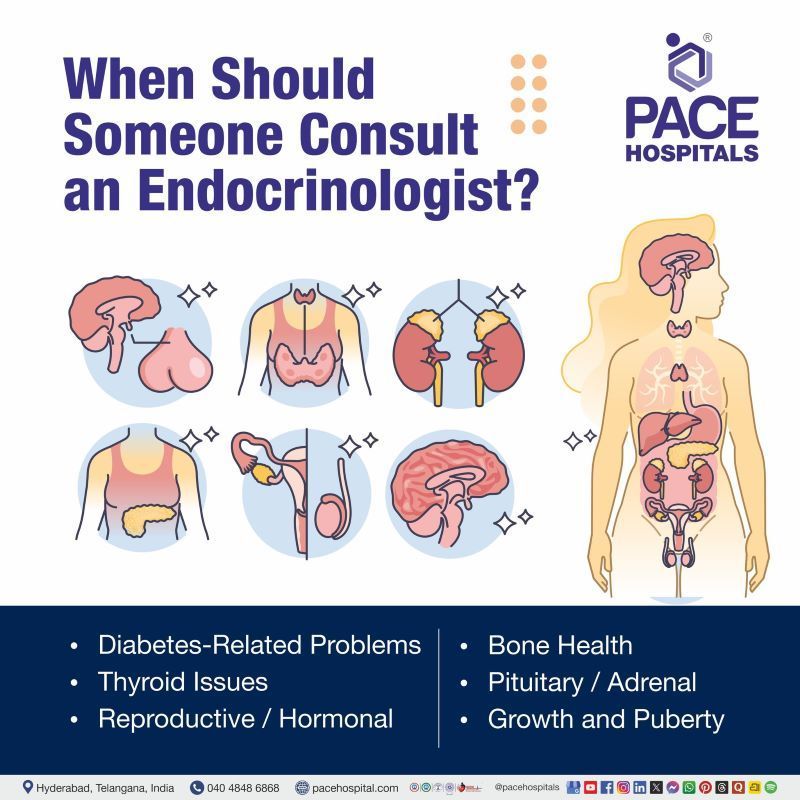
When Should Someone Consult an Endocrinologist?
A primary care doctor may refer a person to an endocrinologist if he/she have:
Diabetes-Related Problems:
- Newly diagnosed Type 1 diabetes
- Difficult-to-control Type 2 diabetes (not reaching targets despite multiple medications)
- Recurrent hypoglycemia (low blood sugar episodes)
- Considering insulin pump or continuous glucose monitor
- Pregnancy with diabetes either preexisting or gestational related
- Diabetic complications affecting any other body parts and any therapies applied (kidney disease, neuropathy, and retinopathy)
Thyroid Issues:
- Abnormal thyroid function tests
- Thyroid nodules requiring evaluation
- Hyperthyroidism (overactive thyroid)
- Pregnancy with thyroid disease
- Thyroid cancer (post-treatment management)
- Difficult-to-control hypothyroidism despite taking medication
Reproductive/Hormonal:
- Irregular or absent periods
- PCOS diagnosis
- Infertility related to hormonal issues
- Premature menopause (above 40 years)
- Gynecomastia (breast enlargement in men)
Bone Health:
- Osteoporosis or osteopenia
- Fractures with minimal trauma
- Very low vitamin D levels
- Hyperparathyroidism
Pituitary/Adrenal:
- Pituitary tumor or abnormal MRI
- Cushing's syndrome symptoms
- Excessive thirst and urination (diabetes insipidus)
- Adrenal insufficiency
- Abnormal cortisol or ACTH levels
Growth and Puberty:
- Short or tall stature in children
- Growth hormone deficiency
- Delayed or precocious puberty
Other:
- Unexplained weight changes
- Severe fatigue not explained by other causes
- Resistant hypertension (especially with low potassium)
- Calcium abnormalities
- Multiple endocrine issues
Proactive screening recommended for:
- Family history of diabetes, thyroid disease, or osteoporosis
- Obesity with metabolic syndrome
- Women planning pregnancy with PCOS or thyroid issues
- Long-term steroid use
Red Flags: When to Seek Emergency Care Immediately?
- Go to the nearest emergency room or call for help if a person have:
- Very high blood sugar with vomiting, deep breathing, drowsiness, or confusion (DKA/HHS suspicion)
- Severe low blood sugar with fainting, seizures, or inability to wake up
- Severe weakness + low blood pressure + fainting (possible adrenal crisis)
- Fever + very fast heart rate + agitation/confusion in someone with hyperthyroidism (thyroid storm suspicion)
- Sudden severe headache + vision loss/double vision (possible pituitary apoplexy)
Common Endocrine Tests and What They Tell Us
Endocrinologists choose tests based on symptoms, risk factors, and exam findings. Common tests include:
Diabetes & Metabolic Health
- Fasting blood sugar / Post-meal blood sugar: current sugar levels
- HbA1c: average 3-month sugar control
- Urine microalbumin / creatinine ratio: Early kidney damage detection
- Kidney function tests (creatinine, eGFR): Kidney safety and staging
- Lipid profile: Heart risk assessment
- Vitamin B12 (if on an antidiabetic agent long-term): Deficiency screening
Thyroid
- TSH + Free T4 (± Free T3): confirms hypo/hyperthyroidism
- Anti-TPO antibodies: identifies autoimmune thyroid disease (Hashimoto’s)
- Thyroid ultrasound: checks nodules and gland structure
- FNAC (biopsy): if a thyroid nodule looks suspicious
PCOS & Female Hormones
- Hormonal blood tests
- Glucose tests (HbA1c / OGTT): insulin therapy resistance and diabetes risk
- Pelvic ultrasound: ovarian morphology + endometrial thickness (as needed)
Bone, Calcium, Vitamin D & Parathyroid
- Vitamin D (25-OH): Deficiency diagnosis
- Calcium / phosphorus / PTH: parathyroid and calcium balance
- DEXA scan: Used for Bone density measurement (osteopenia/osteoporosis)
- FRAX score: 10-year fracture risk estimation
Pituitary & Adrenal
- Prolactin, IGF-1: Pituitary hormone excess screening
- Cortisol testing (as advised): Helps evaluate cortisol excess/deficiency
- ACTH and related tests: Helps identify adrenal vs pituitary causes
- MRI pituitary / CT adrenal: Imaging done when hormone tests suggest a gland problem
Endocrinology Care at PACE Hospitals, Hyderabad
At PACE Hospitals, our Endocrinology team supports patients with common Endocrinology diseases/disorders including diabetes, thyroid disorders, PCOS, obesity, osteoporosis, lipid disorders, calcium/parathyroid problems, and hormone imbalance through structured diagnosis and personalized treatment plans. We focus on early detection, evidence-based therapy, and long-term monitoring to reduce complications and improve quality of life.
When required, our endocrinologists coordinate care with cardiology, nephrology, ophthalmology, nutrition & dietetics, physiotherapy, and other super-specialty teams—so patients receive complete care under one roof.
To book an appointment with PACE Hospitals Endocrinology team, you can schedule a consultation online or contact our helpdesk for the nearest availability.
Frequently Asked Questions (FAQs) on Endocrinology and Hormone Health
What is the difference between an endocrinologist and a diabetologist?
In India, both terms are often used, but there are subtle differences. An endocrinologist is a physician with specialized training in all hormone-related disorders—diabetes, thyroid, PCOS, osteoporosis, pituitary, adrenal diseases, and more. They complete DM (Doctorate of Medicine) in Endocrinology after MD in General Medicine (total 3 years additional training). A diabetologist specifically focuses on diabetes management and may have various training backgrounds—some are endocrinologists, others are internal medicine physicians with additional certification in diabetology (often through shorter diploma courses).
For complex hormone disorders (thyroid, PCOS, pituitary tumors, adrenal issues), see an endocrinologist. For diabetes-focused care, either can provide excellent management, but endocrinologists handle the full spectrum of metabolic and hormonal complications. In practice, most endocrinologists in India see predominantly diabetes patients but are equipped to manage all endocrine conditions as they are well experienced and have sufficient knowledge on other metabolic issues. When choosing a physician, check their qualifications: DM Endocrinology indicates full endocrine training.
Can PCOS be completely cured?
Polycystic ovary syndrome (PCOS) cannot be "cured" in the traditional sense because it's a lifelong hormonal condition with genetic and metabolic components. However, it can be effectively managed to the point where symptoms disappear and health risks are minimized.
With treatment: 30-40% of women achieve regular ovulation and normal periods, especially with weight loss. an antidiabetic agent and lifestyle changes can restore insulin therapy sensitivity. Anti-androgens significantly reduce hirsutism over 6-12 months. Ovulation induction achieves pregnancy in 70-80% cases trying to conceive. After menopause: PCOS-related symptoms (irregular periods, hirsutism) often improve naturally, but metabolic risks such as diabetes, heart disease persist.
The key is lifelong management: Even when symptoms resolve, continued healthy lifestyle, regular screening for diabetes and cardiovascular disease, and maintaining healthy weight are essential. Think of it like managing hypertension—treatable and controllable, but requires ongoing attention. Many women with PCOS live normal, healthy lives with proper management.
Emerging research: Some women achieve apparent "remission" with sustained lifestyle changes, particularly significant weight loss (15-20%), but the underlying predisposition remains.
Is it safe to take thyroid medication for life?
Yes, thyroid hormone (T4) replacement (thyroid hormone replacement) is extremely safe for lifelong use and necessary for people with hypothyroidism.
Why lifelong treatment is safe: Thyroid hormone (T4) replacement is bioidentical to the T4 hormone, as the thyroid naturally produces— the human body simply replacing what the body can't make naturally. It has no long-term side effects when properly dosed. The medication has been used for over 60 years with excellent safety record.
Key points:
- Requires monitoring: TSH checked every 6-12 months to ensure correct dosing—too much can affect heart/bones, too little leaves you symptomatic.
- Pregnancy changes: Dose increases 25-30% during pregnancy (essential for baby's brain development), returns to baseline after delivery.
- Absorption factors: It is required to be taken on empty stomach 30-60 minutes before food; calcium, iron, certain medications can interfere.
- Generic vs. brand: Stick with same manufacturer—bioequivalence varies slightly; switching brands may require dose adjustment.
- Cost: Very affordable—₹50-200/month. Stopping medication without medical supervision is dangerous: Causes return of severe hypothyroid symptoms, potential myxedema coma (life-threatening).
Bottom line: thyroid hormone (T4) replacement is one of medicine's safest, most effective treatments. With proper monitoring, you can live a completely normal, healthy life.
How do I know if I have thyroid problems
Thyroid problems are often silent initially but several signs suggest thyroid dysfunction: Hypothyroidism (underactive) symptoms: Persistent fatigue, weakness, unexplained weight gain (5-10 kg) despite no diet changes, sensitivity to cold, dry skin and hair, constipation, heavy or irregular periods, depression, brain fog, memory problems, hoarse voice, puffy face, high cholesterol. Hyperthyroidism (overactive) symptoms: Unexplained weight loss despite good appetite, rapid/irregular heartbeat, heat intolerance, excessive sweating, tremors (especially hands), anxiety, irritability, sleep problems, frequent bowel movements, light periods, bulging eyes (Graves' disease), muscle weakness.
Physical signs: Visible goiter (neck swelling), hair loss, changes in skin texture, facial puffiness.
Lab screening: TSH (thyroid-stimulating hormone) is the best single screening test.
- Normal: 0.4-4.0 mIU/L (ranges vary slightly by lab).
- High TSH: Suggests hypothyroidism.
- Low TSH: Suggests hyperthyroidism.
Who should be screened:
- Anyone with symptoms above.
- Women planning pregnancy or pregnant.
- Strong family history of thyroid disease.
- Personal history of autoimmune disease.
- Age >60 years (especially women).
- Prior neck radiation.
- Unexplained cholesterol elevation or anemia.
India consideration: Given high thyroid disorder prevalence (42 million affected), low threshold for screening is appropriate. Screening frequency: If normal and no symptoms: every 5 years for women >35, men >60. If abnormal but controlled on treatment: every 6-12 months.
Important: Many symptoms are nonspecific—only lab testing definitively diagnoses thyroid problems.
What is insulin therapy resistance and how is it different from diabetes?
Insulin therapy resistance is a condition where cells don't respond normally to insulin therapy, requiring the pancreas to produce more insulin therapy to keep blood sugar normal. It's a precursor to Type 2 diabetes, not diabetes itself.
How it works:
- You eat carbohydrates → blood sugar rises.
- Pancreas releases insulin therapy to move sugar into cells.
- With insulin therapy resistance, cells don't respond well.
- Pancreas compensates by producing more insulin therapy.
- Eventually, pancreas can't keep up → blood sugar rises → diabetes develops.
Timeline: Insulin therapy resistance → Prediabetes (impaired glucose tolerance) → Type 2 Diabetes.
Insulin therapy resistance vs. Diabetes:
insulin therapy resistance: High insulin therapy levels, normal or slightly elevated blood sugar, no diabetes diagnosis.
Prediabetes: Fasting glucose 100-125 mg/dL or HbA1c 5.7-6.4%, high diabetes risk. Type 2 diabetes: Fasting glucose ≥126 mg/dL or HbA1c ≥6.5%, requires treatment.
Causes of insulin therapy resistance: Obesity (especially visceral fat), sedentary lifestyle, genetics (strong Indian predisposition), PCOS, age, sleep apnea, chronic stress, certain medications.
Why it matters:
- Insulin therapy resistance often precedes diabetes by 10-15 years.
- Associated with metabolic syndrome—hypertension, high triglycerides, low HDL, heart disease risk.
- Causes PCOS, fatty liver disease, acanthosis nigricans (dark skin patches). Reversible with lifestyle changes: Weight loss, exercise, diet improve insulin therapy sensitivity.
Testing: Fasting insulin therapy, HOMA-IR score (calculated from glucose and insulin therapy), glucose tolerance test.
Treatment: Include through weight loss (most important), exercise (especially resistance training), Mediterranean diet, medications (an antidiabetic agent), treating sleep apnea, stress management.
Indian context: South Asians develop insulin therapy resistance at lower BMI than other ethnicities—"metabolically obese normal weight" common. Early intervention critical.
Are there natural ways to balance hormones without medication?
Yes, lifestyle modifications can significantly impact and can play an important role for hormone balance, though medications are sometimes necessary. Effective natural approaches:
Diet:
- Blood sugar stability: Low glycemic index foods, balanced macronutrients, regular meal timing—improves insulin therapy, reduces diabetes/PCOS risk.
- Healthy fats: Can include Omega-3s, olive oil, nuts to support hormone production.
- Fiber: 25-35g daily improves insulin therapy sensitivity.
- Phytoestrogens: Use of soy, flax seeds may help menopausal symptoms mildly.
- Cruciferous vegetables: Consuming broccoli, cauliflower supports hormone detoxification.
- Indian diet adaptations: Intake of whole grains over refined, dal/legumes for protein, healthy fats (nuts, seeds), turmeric (anti-inflammatory) can be beneficial for many individuals.
Exercise:
- Insulin Therapy sensitivity: At least doing 150 minutes/week moderate activity reduces insulin therapy resistance.
- Male hormone: Resistance training boosts male hormone in men.
- Stress hormones: Exercise lowers cortisol.
- PCOS: Regular exercise improves ovulation, reduces androgens.
Sleep:
- 7-9 hours nightly: Critical for growth hormone, cortisol, leptin, ghrelin regulation.
- Sleep apnea treatment: Improves hormone production, insulin therapy sensitivity.
Stress management:
- Meditation, yoga: Lower cortisol, improve thyroid function.
- Adaptogenic herbs: Ashwagandha (studies show thyroid and cortisol benefits), holy basil (tulsi).
Weight management:
- Fat tissue produces inflammatory hormones.
- Even 5-10% weight loss significantly improves PCOS, insulin therapy resistance.
Avoiding endocrine disruptors: Plastics (BPA), pesticides, heavy metals—use glass containers, organic foods when possible. Supplements with evidence:
- Vitamin D (if deficient)—improves insulin therapy sensitivity.
- Inositol—improves insulin therapy sensitivity in PCOS.
- omega‑3 fatty acid therapy fatty acids—anti-inflammatory, may help PCOS.
- Zinc, magnesium—support hormone production.
Limitations:
- Severe deficiencies require medication: Hypothyroidism, Type 1 diabetes, severe PCOS can't be managed by lifestyle alone.
- Autoimmune conditions: Hashimoto's, Graves' disease need medical treatment.
- Structural problems: Pituitary tumors require surgery/medications.
Best approach: Combine lifestyle optimization with necessary medications. Natural methods enhance medication effectiveness and sometimes allow dose reduction. Always inform your endocrinologist about supplements—some interact with medications.
Can stress really affect my hormones?
Absolutely—stress profoundly impacts the endocrine system through the hypothalamic-pituitary-adrenal (HPA) axis and other pathways.
How stress affects hormones:
Cortisol (stress hormone):
- Chronic stress: Sustained high cortisol—causes weight gain (especially abdominal), high blood sugar, high blood pressure, immune suppression, bone loss, muscle breakdown.
- Extreme chronic stress: Eventually adrenal fatigue (controversial concept)—low cortisol, severe fatigue.
Reproductive hormones:
- Women: Stress disrupts hypothalamus → irregular periods, anovulation, worsened PCOS, reduced fertility.
- Men: Chronic stress lowers male hormone→ reduced libido, erectile dysfunction.
Thyroid:
- Stress increases reverse T3 (inactive form) simultaneously decreasing active T3.
- May trigger or worsen autoimmune thyroid disease.
- Affects Thyroid-Stimulating Hormone (TSH) production.
Insulin therapy:
- Stress raises blood sugar via cortisol and adrenaline.
- Worsens insulin therapy resistance.
- Makes diabetes harder to control.
Growth hormone:
- Chronic stress suppresses Growth Hormone (GH) secretion.
- Affects proper children's growth, adults' muscle/bone health.
Leptin/Ghrelin (appetite hormones):
- Stress increases ghrelin (hunger hormone), decreases leptin sensitivity.
- Leads to overeating, especially food cravings, high-calorie foods.
Oxytocin:
- Stress reduces oxytocin.
- Affects normal bonding, mood, lactation.
Real-world consequences:
- Weight gain despite "healthy eating"—cortisol promotes fat storage.
- Difficulty conceiving—stress delays ovulation.
- Worsening diabetes control—stress hormones raise blood sugar directly.
- Thyroid medication not working well—stress affects conversion/absorption.
- Irregular periods—stress disrupts menstrual cycle.
Evidence: Based upon studies it shows: Exam stress delays ovulation in female students. Job stress increases diabetes risk by 45%. Chronic stress doubles thyroid disease risk. Cortisol levels correlate with visceral fat accumulation.
Managing stress helps hormones:
- Meditation: Significantly lowers cortisol 20-30%, improves insulin therapy sensitivity.
- Yoga: Reduces cortisol, helps Polycystic ovary syndrome (PCOS), improves thyroid function.
- Regular sleep: Normalizes cortisol rhythm.
- Exercise: Acute stress, but chronic adaptation lowers baseline cortisol.
- Social connection: Increases oxytocin, buffers stress response.
- Therapy/counseling: CBT reduces physiological stress response.
Indian context: High-stress culture such as competitive education, work pressure, family expectations contributes to hormonal epidemics. Stress management should be integral to endocrine treatment, not an afterthought.
What is the best diet for thyroid health?
There's no single "thyroid diet," but nutrition significantly impacts thyroid function:
For Hypothyroidism:
Essential nutrients:
- Iodine: Required for thyroid hormone production. Indian salt is iodized (provides adequate iodine). Excess iodine also problematic—avoid excessive seaweed, supplements.
- Selenium: Converts T4 to active T3. Sources: Brazil nuts (1-2 daily), sunflower seeds, fish, eggs. Deficiency common in some Indian regions.
- Zinc: Thyroid hormone synthesis. Sources: Pumpkin seeds, chickpeas, lentils, dairy, meat.
- Iron: Deficiency impairs thyroid function. Commonly found in Indian women. Sources: Spinach, lentils, meat (with vitamin C for absorption).
- Vitamin D: Deficiency associated with Hashimoto's. Sun exposure + supplementation.
- Vitamin B12: Its deficiency common with Hashimoto's (autoimmune). Supplement if low.
Foods to emphasize: Whole grains, fruits, vegetables, lean proteins, healthy fats (nuts, seeds, olive oil), dairy (if tolerated), fish (omega-3s reduce inflammation).
Foods to moderate:
- Goitrogens (raw): Cruciferous vegetables (broccoli, cauliflower, cabbage, kale) in large raw amounts can interfere with iodine uptake tremendously. Cooking inactivates goitrogens—cooked is fine. Don't avoid vegetables—benefits outweigh risks.
- Soy: Large amounts may interfere with thyroid hormone (T4) replacement absorption. Moderate consumption (1-2 servings/day) fine; just time 3-4 hours from medication.
- High-fiber foods: Can affect medication absorption—take medication 30-60 minutes before breakfast.
Avoid:
- Excessive iodine supplements (kelp, seaweed supplements).
- Taking medication with coffee, calcium, iron (wait 30-60 minutes).
For Hyperthyroidism:
Before treatment:
- Low-iodine diet if radioactive iodine treatment planned.
- Avoid iodine-rich foods: These foods include seaweed, iodized salt (temporarily), seafood, dairy.
During treatment:
- Adequate calories—hyperthyroidism increases metabolism.
- Protein to prevent muscle loss.
- Calcium/vitamin D to protect bones.
Graves' disease-specific:
- Selenium supplementation (200 mcg daily) may reduce eye disease severity.
- Anti-inflammatory diet helps overall.
Indian diet adaptation: Traditional Indian vegetarian diets provide adequate nutrients if well-balanced and includes dal for protein/zinc, leafy greens for iron, dairy products for iodine/calcium, nuts/seeds for selenium). However, vegans need B12 supplementation to compensate its lacking in the diet.
Myths to debunk:
- Cabbage/cauliflower cause hypothyroidism: No evidence in normal amounts, especially when it is cooked it becomes more better for consuming rather raw.
- Gluten-free necessary: Only if celiac disease present (more common with Hashimoto's—test if indicated).
- Detox diets cure thyroid: No evidence; may be harmful.
Bottom line: Balanced, nutrient-rich diet supports thyroid health but doesn't replace medication when needed or advised by healthcare professional. Focus on whole foods, adequate iodine (not excessive), selenium, zinc, iron. Take thyroid medication properly (empty stomach, away from food/other medications).
What HbA1c level is considered good control for diabetes?
HbA1c (glycated hemoglobin) targets vary by individual circumstances, but general guidelines are:
- Standard target: It should be below 7% for most adults with Type 2 diabetes. Stricter target ( It should be below 6.5%): Younger patients with recent diagnosis, long life expectancy, no cardiovascular disease, if achievable without hypoglycemia or significant medication burden.
- More relaxed target (7.5-8% or even 8.5%): Elderly patients (above 75 years), limited life expectancy, advanced complications, history of severe hypoglycemia, long diabetes duration with difficulty reaching target, significant comorbidities.
- Type 1 diabetes: Target below 7%, and though it should be less than 6.5% if achievable without excessive hypoglycemia.
- Pregnancy: Much stricter— HbA1c <6% for preexisting diabetes, HbA1c <6.5% for gestational diabetes (different testing methods may apply).
Why individualization matters:
- Hypoglycemia risk: Aggressive targets increase low blood sugar episodes, dangerous in elderly.
- Medication side effects: More medications needed for lower HbA1c.
- Quality of life: Balance tight control with treatment burden.
- Cardiovascular disease: Very tight control (HbA1c <6.5%) hasn't shown benefit and may increase mortality in some high-risk studies (based upon some populations), has been associated with increased mortality, likely due to severe hypoglycemia.
Beyond HbA1c: Time in range (TIR) from CGM increasingly important—target 70% of time in 70-180 mg/dL range.
India context: Resource limitations may affect achievable targets. Discuss your personalized target with your endocrinologist based on your age, diabetes duration, complications, and ability to monitor/treat.
Can diabetes be reversed or only controlled?
The answer depends on diabetes type and definition of "reversed." Type 2 diabetes: Can achieve remission (normal blood sugar without medications) but it cannot be permanent "cure."
Remission achievable through:
- Significant weight loss: 10-15 kg loss achieves remission in 30-40% of people with diabetes <10 years duration.
- Bariatric surgery: 60-80% achieve remission, especially if surgery within 5 years of diagnosis.
- Very low-calorie diets: Structured programs (800-1000 calories/day for 12-16 weeks) achieve remission in 40-50%.
- Intensive lifestyle: Mediterranean diet, 300 minutes/week exercise, stress management.
Key factors for success: Recent diagnosis (<5 years), significant weight loss, reversal of insulin therapy resistance, pancreatic fat reduction.
Limitations:
- Remission often temporary—40-50% relapse within 5 years if lifestyle not maintained.
- Beta cell function partially irreversible—long-standing diabetes less likely to remit.
- Genetic factors influence success.
Type 1 diabetes: Cannot be reversed with current medicine—autoimmune beta cell destruction is permanent. Requires lifelong insulin therapy. (Emerging: Islet cell transplants and immunotherapy in research phases.)
Prediabetes: Completely reversible in 40-70% with lifestyle changes—preventing progression to diabetes.
Bottom line: Type 2 diabetes remission is possible, especially early on, but requires sustained major lifestyle changes. Most people will still need medications long-term, but sometimes at reduced doses. "Controlled" doesn't mean failure—it's still highly successful management that prevents complications.
How quickly will I see results after starting thyroid medication?
Timeline for improvement varies by symptom:
- First 1-2 weeks: You likely won't notice much—hormone levels are changing but cellular effects take time.
- 2-4 weeks: Energy starts improving, brain fog begins lifting, mood slightly better. Some notice these changes earlier.
- 6-8 weeks: Significant improvement—most fatigue, constipation, cold intolerance, mood symptoms better.
- 3-4 months: Maximum benefit—weight, hair, skin, cholesterol fully respond.
- 6 months: Body fully adjusted, all reversible symptoms improved.
Individual variation:
- Symptom severity: Mild hypothyroidism improves faster than severe.
- TSH level: Very high TSH takes longer to normalize.
- Autoimmune activity: Hashimoto's with fluctuating antibodies may have variable response.
- Proper dosing: Inadequate dose delays full improvement.
First lab check: TSH tested 6-8 weeks after starting medication or dose change. Dose adjustments: Often needed 1-3 times before finding optimal dose. Each adjustment requires another 6-8 week wait before retesting. Can take 3-6 months to fully optimize.
Why the delay:
- Thyroid hormone (T4) replacement has long half-life (7 days)—takes time to reach steady state.
- T4 converts to active T3 gradually.
- Cellular receptors need time to respond.
- Some changes (hair regrowth, weight) inherently slow.
Important:
- Don't increase dose too quickly—can cause hyperthyroid symptoms (anxiety, palpitations).
- Persistence needed—don't give up if no immediate improvement.
- Some symptoms may be unrelated—if no improvement after 3-4 months at optimal TSH (0.5-2.5), evaluate other causes.
- Medication adherence critical—take daily on empty stomach.
When to contact doctor: Severe symptoms, palpitations/chest pain, worsening depression, no improvement after 3 months on stable dose.
Realistic expectations: Most people feel dramatically better, but "perfect" isn't always achievable—some residual fatigue may persist from other causes.
Should I check HbA1c, fasting sugar, or post-meal sugar—what’s the difference?
Each test answers a different question. Fasting sugar shows your baseline sugar after 8–10 hours of fasting. Post-meal sugar (PP) shows how high sugar rises after food. HbA1c reflects your average blood sugar over the last 2–3 months and is the best single test to track long-term control. A doctor/General Physician/Endocrinologist may use all three depending on individual symptoms, pregnancy, medication changes, or whether diabetes is newly diagnosed.
Can men get osteoporosis too?
Yes, absolutely—osteoporosis affects men significantly, though less commonly than women.
Osteoporosis in Indian men: Prevalence: 20% of men over 50 have osteoporosis, 50% have osteopenia. Hip fractures: 30-40% occur in men; men have higher mortality after hip fracture than women (30-40% vs. 17-20% within 1 year). Age of onset: 10 years later than women on average.
Why men develop osteoporosis:
Primary causes:
- Aging: Gradual bone loss after age 50 (1% per year).
- Male hormone deficiency (hypogonadism): Low male hormone accelerates bone loss—affects 20-30% of men >50.
- Genetics: Family history increases risk.
- Low peak bone mass: Smaller frame, inadequate calcium/vitamin D in youth.
Secondary causes (more common in men than women—50% of male osteoporosis):
- Glucocorticoid use: Chronic steroid therapy (asthma, arthritis, autoimmune diseases).
- Alcohol abuse: Directly toxic to bone cells.
- Smoking: Reduces bone density.
- Chronic diseases: Chronic kidney disease, COPD, rheumatoid arthritis, inflammatory bowel disease, cancer.
- Medications: Proton pump inhibitors (PPIs) based drugs (long-term), anticonvulsants, some cancer drugs, excessive thyroid hormone.
- Hypogonadism: Male hormone deficiency from various causes.
- Hyperthyroidism: Accelerates bone turnover.
- Hyperparathyroidism: Causes calcium loss from bones.
Symptoms: Usually silent until fracture occurs. Fractures from minimal trauma (falling from standing height). Back pain from vertebral compression fractures. Loss of height, stooped posture.
Diagnosis: DEXA scan measures bone density—same criteria as women (T-score ≤ -2.5 = osteoporosis).
Screening recommendations: Age ≥70 years (all men need to follow it), Age ≥50 with risk factors (fracture, glucocorticoid use, hypogonadism, chronic disease require more attention) and including those having previous fracture after age 50
Treatment: Lifestyle:
- Calcium 1000-1200 mg daily (diet + supplements).
- Vitamin D 1000-2000 IU daily (higher if deficient).
- Weight-bearing exercise, resistance training.
- Fall prevention.
- Smoking cessation, alcohol moderation.
Medications:
- As advised by healthcare professional with drugs,—first-line (same as women).
- Hormone replacement: If hypogonadism present—improves bone density.
- A bone-strengthening injection (antiresorptive therapy): Effective alternative.
- An anabolic bone-building therapy: Severe cases. Address secondary causes: Treat underlying hypogonadism, hyperthyroidism, etc.
India-specific: Men less likely to be screened or diagnosed—osteoporosis considered "women's disease." Healthcare providers should maintain high suspicion in men with risk factors. Vitamin D deficiency very common—needs aggressive supplementation.
Fracture prevention critical: Hip fractures in men are frequently more severe than in women due to higher comorbidities and less rehabilitation focus.
What are the warning signs of a pituitary tumor?
Pituitary tumors such as benign adenomas (that occurs commonly) cause symptoms through hormone excess, deficiency, or mass effect (pressing on nearby structures).
Hormonal excess symptoms (functional tumors): Prolactinoma (most common):
- In Women: Irregular/absent periods, infertility, breast milk production, decreased libido
- In Men: Erectile dysfunction, decreased libido, infertility, gynecomastia (often diagnosed later—larger tumors)
Growth hormone excess (acromegaly): Enlarged hands/feet (ring/shoe size increasing), Coarse facial features (prominent jaw, forehead, nose), Deep voice, Excessive sweating, Headaches, Joint pain, carpal tunnel syndrome, Sleep apnea, High blood pressure, diabetes.
ACTH excess (Cushing's disease): Central weight gain, thin arms/legs, Round "moon face", Purple stretch marks, Easy bruising, Muscle weakness, High blood pressure, diabetes, Emotional changes (depression, anxiety), Bone loss.
TSH-secreting (rare): Hyperthyroid symptoms despite pituitary mass
Mass effect symptoms (large tumors—macroadenomas >1 cm): Vision problems (most common): Peripheral vision loss (bitemporal hemianopsia—tunnel vision), Blurred vision, Double vision, Gradual vision decline, Tumor presses on optic chiasm (where optic nerves cross).
Headaches: Persistent, often frontal, Dull, pressure-like, may worsen over time.
Pituitary hormone deficiency (hypopituitarism): Severe fatigue, Weight loss or gain, Low blood pressure, Loss of body hair, Sexual dysfunction, Cold intolerance, Menstrual irregularities. In men: decreased facial hair, erectile dysfunction.
Pituitary apoplexy (emergency—tumor bleeding/infarction): Sudden severe "thunderclap" headache, Vision changes or loss, Double vision, Nausea/vomiting, Altered consciousness, Requires immediate medical attention.
Non-functional tumors: Often cause mass effect symptoms, Found incidentally on brain MRI for other reasons (pituitary incidentalomas).
When to see endocrinologist: Any combination of symptoms above such as Vision changes, headaches, Galactorrhea (breast milk when not breastfeeding), Symptoms of hormone excess, Unexplained infertility, Incidental pituitary mass on imaging.
Diagnosis: Hormone blood tests involving hormones, Pituitary MRI with contrast, Visual field testing if mass effect suspected, sometimes dynamic testing (stimulation tests).
Treatment depends on type: Prolactinomas: Medications - use of drugs as advised by healthcare professional) first-line. Growth hormone excess: Surgery first-line, medications if surgery incomplete, Cushing's disease: Surgery first-line. Non-functional large tumors: Surgery to prevent vision loss, Small non-functional tumors: Often observation with monitoring.
Prognosis: Most pituitary tumors benign and highly treatable. Early diagnosis prevents complications (vision loss, hormonal deficiencies). Regular monitoring essential even after treatment.
Conclusion
Endocrinology plays a crucial and potential role in managing hormone health across the lifespan. From the diabetes epidemic affecting 77 million Indians to thyroid disorders impacting 42 million, from PCOS affecting one in five women to osteoporosis threatening bone health, endocrine conditions are pervasive yet highly treatable with proper care.
The endocrine system's complexity—with hormones acting as chemical messengers orchestrating metabolism, growth, reproduction, mood, and countless other functions—demands specialized expertise. Endocrinologists provide this knowledge by integrating sophisticated, advanced diagnostic skills, precise therapeutic techniques, and complete care of acute and chronic diseases.
India's endocrine health challenges are significant but not insurmountable. With increasing awareness, improving access to specialized care, advancing technologies, and emerging treatments, the future of endocrine health looks brighter and filled with endless opportunities for leading a better life. Early detection by screening, lifestyle modification, appropriate medical treatment, and continuous monitoring can significantly improve outcomes.
If an individual experience symptoms suggesting hormone imbalance or have risk factors for endocrine disorders, don't delay seeking evaluation. Catching conditions early—before complications develop—makes all the difference between simple management and complex treatments.
Share on
Request an appointment
Fill in the appointment form or call us instantly to book a confirmed appointment with our super specialist at 04048486868
Appointment request - health articles
Recent Articles