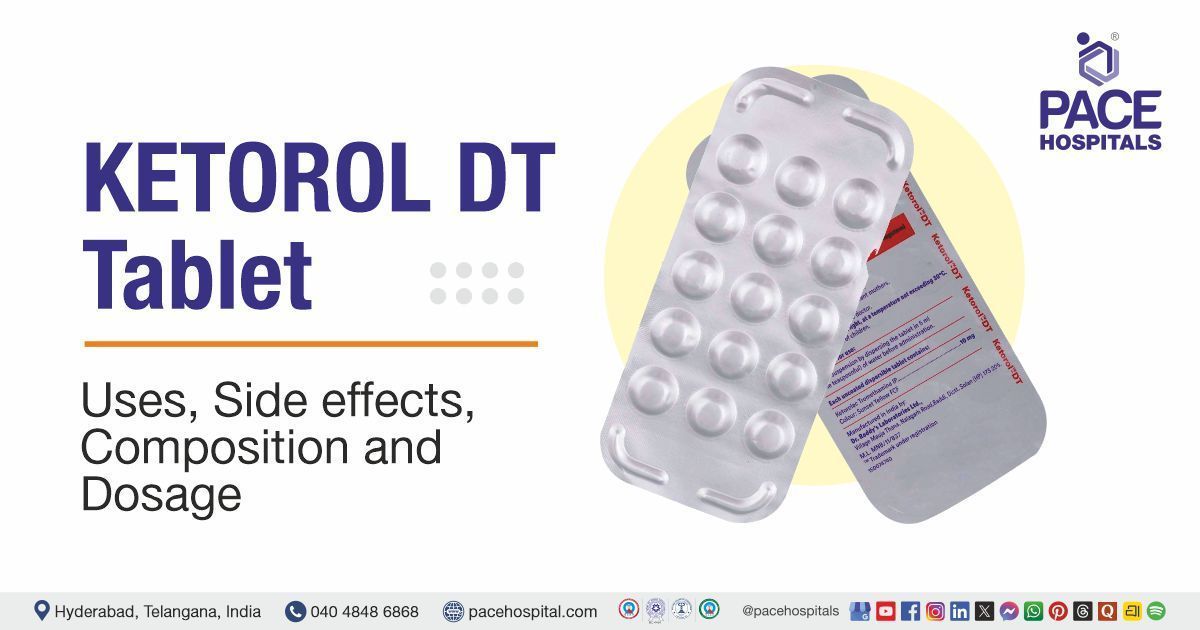
Ketorol DT Tablet: Uses, Side effects & Dosage Guide
PACE Hospitals
Manufactured by: Dr. Reddy's Laboratories Ltd, Sun Pharmaceutical Industries Ltd, Intas Pharmaceutical Ltd, Intra Labs India Pvt.Ltd, Micro Labs Ltd.
Ketorol DT Classification: Ketorol DT belongs to the class of non-steroidal anti-inflammatory drugs (NSAIDs) containing ketorolac tromethamine as an active ingredient.
Overview
- Ketorol and Ketorol DT contain the active ingredient ketorolac tromethamine, where DT indicates a dispersible tablet that dissolves easily in the mouth with water or saliva, suitable for patients who have difficulty swallowing.
- Ketorol DT (ketorolac tromethamine) belongs to the class of non-steroidal anti-inflammatory drugs (NSAIDs), and it is an acetic acid derivative.
- Ketorol DT tablet contains 10mg ketorolac tromethamine as an active ingredient, and it is available as round, white, film-coated, red-printed tablets.
- Ketorol DT is used as an analgesic agent in the treatment of acute, moderate to severe pain, mainly used to treat postoperative pain, but not preferred during obstetric analgesia because of bleeding risks.
- The other uses of Ketorol DT include the management of pain associated with musculoskeletal injuries (sprains, strains, and arthritis). It also helps to manage menstrual disorders, migraine and dental pain.
- Ketorol DT's potency is increased in combination with opioids such as morphine, and this approach also helps to overcome side effects such as vomiting and decreased gastrointestinal motility.
- Common side effects of oral ketorol DT include nausea, dizziness, headache, dyspepsia (indigestion), drowsiness, and gastrointestinal (GI) pain. In contrast, serious side effects include bleeding, ulceration/perforation of the stomach or intestines, renal complications, and hypersensitivity reactions, such as allergic reactions (e.g., angioedema -swelling of lips, tongue, etc.).
Ketorol DT Composition
- Ketorol DT tablet composition includes Ketorolac tromethamine 10mg as the active ingredient, along with other excipients such as calcium phosphate dibasic, microcrystalline cellulose, magnesium stearate, and cross-povidone.
- It is usually available in blister packs of 10 or 15 tablets per strip.
Ketorol DT Tablet Uses
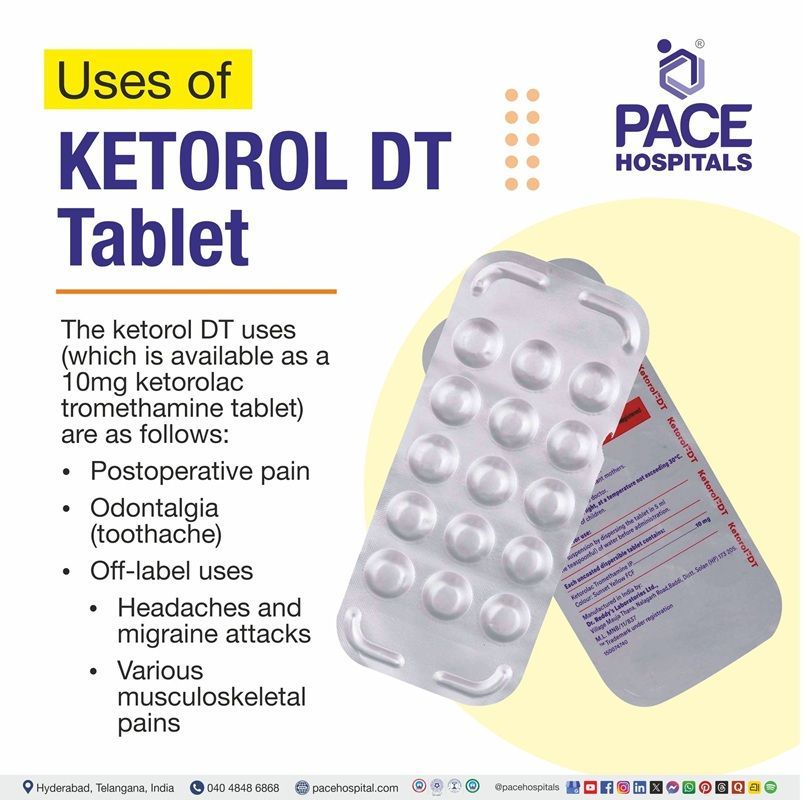
The ketorol DT uses (which is available as a 10mg ketorolac tromethamine tablet) are as follows:
- Postoperative pain: Ketorol DT is used to manage severe to moderate pain (analgesic action), especially in the postoperative period. Intravenous or intramuscular dosage form of Ketorol DT is preferred initially, and the oral form is considered post-surgery as continuation of treatment if necessary. The treatment with oral ketorol DT should be limited to 5 days due to the increased risk of side effects, and the lowest effective dose for the shortest duration is preferred.
- Odontalgia (toothache): It is also used to treat acute dental pain.
Ketorol DT off-label uses
- Ketorol DT helps manage pain associated with menstrual cramps.
- It is also used to treat severe headaches and migraine attacks.
- Ketorol DT is used to treat pain associated with cancer, especially in bone metastasis.
- It is recommended to suppress pain associated with the defective blood cells that block the blood vessels in sickle cell disease.
- Ketorol DT is used to manage pain after total knee arthroplasty (TKA).
- It is used as an alternative agent to opioids in children to manage moderate to severe pain and avoid opioid dependency.
- Various musculoskeletal pains affecting muscles, ligaments, tendons, and joints due to muscle injury or disease (rheumatoid arthritis, osteoarthritis) can be effectively treated.
Guidelines to follow while taking the Ketorol DT Tablet
- Patients who are sensitive to ketorol DT and its excipients and have an allergic history to the use of acetylsalicylic acid, other NSAIDs, are not advised to take Ketorol DT.
- Patients on drugs such as aspirin, heparin, and warfarin (which prolongs bleeding time) can be used with caution while using Ketorol DT simultaneously.
- All NSAIDs, including ketorol DT, can delay wound healing. So, topical steroids can promote wound healing, which ketorol DT usually delays.
- Clinical data suggest that the use of ketorolac causes bronchospasm (constriction of bronchioles), which may trigger an asthma attack in patients with already existing asthma disease. In such patients, ketorol DT can be used with caution to avoid undesirable effects.
- The shortest effective dose with the shortest duration, preferably for 5 days, is preferred for postoperative pain management to help prevent adverse effects.
Ketorol DT Mechanism of Action
- Ketorol DT is a non-selective inhibitor that acts by inhibiting both cyclooxygenase (COX-1) and COX-2, which are formed from the conversion of arachidonic acid.
- Inhibition prevents synthesis of prostaglandins (from arachidonic acid via COX).
- This inflammatory mediator is responsible for pain, fever and inflammation.
- So, overall analgesic action is exerted by blocking COX-2 and suppressing the release of inflammatory cytokines.
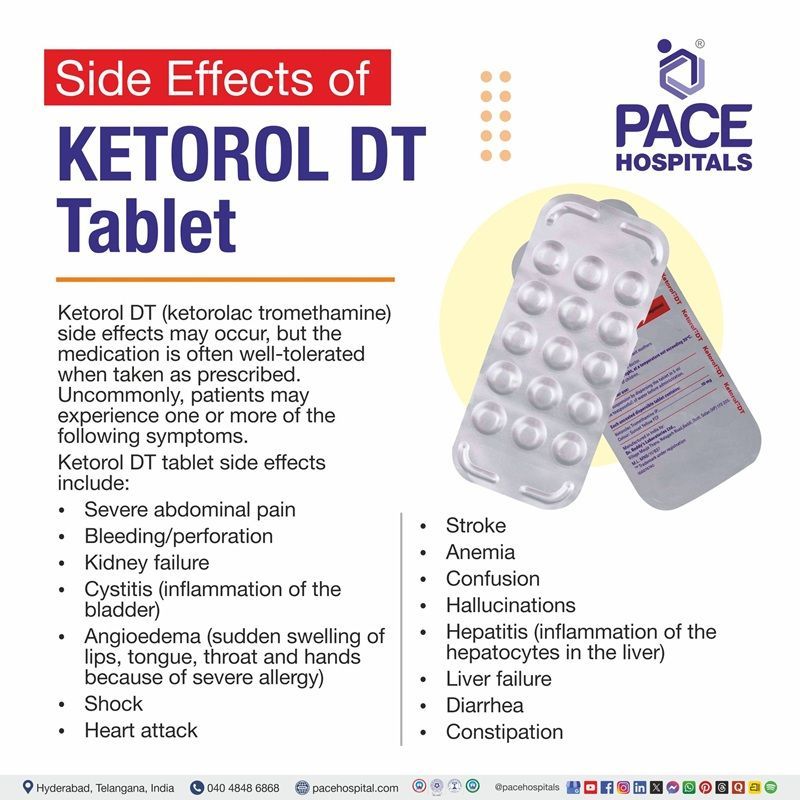
Ketorol DT Side Effects
Ketorol DT (ketorolac tromethamine) side effects may occur, but the medication is often well-tolerated when taken as prescribed. Uncommonly, patients may experience one or more of the following symptoms.
Serious side effects of Ketorol DT
The affected organ system, which is severely affected and not safe to use ketorol DT, includes:
Gastrointestinal side effects
- Severe abdominal pain
- Bleeding/perforation
- Dyspepsia (indigestion)
- Gastric ulcers
- Duodenal ulcers
- Postoperative bleeding
- Hematemesis (blood vomiting)
Renal side effects
- Kidney failure
- Cystitis (inflammation of the bladder)
- Hematuria (loss of blood in urine)
- Urinary retention
- Increased urinary frequency
- Interstitial nephritis (inflammation of the kidneys' interstitial tissues)
Hypersensitivity side effects
- Angioedema (sudden swelling of lips, tongue, throat and hands because of severe allergy)
- Shock
Cardiovascular side effects
- Heart attack
- Stroke
- Heart failure (fluid retention)
- High blood pressure
- Shortness of breath
- Blood disorder side effects
- Anemia
Rare but serious side effects
Neurological side effects
- Confusion
- Hallucinations
- Blurred vision
- Convulsions
- Vision changes
Hepatic side effects
- Hepatitis (inflammation of the hepatocytes in the liver)
- Liver failure
- Common side effects of ketorol DT (usually mild)
- Diarrhea
- Constipation
- Nausea
- Vomiting
- Dizziness
- Stomach pain
- Flatulence (gas)
- Heartburn
NOTE: If any of the above symptoms are noticed, it is recommended to contact the concerned doctor immediately.
Ketorol DT Dosage
Ketorolac tromethamine (ketorolac DT) is a non-selective cyclooxygenase COX-1 and COX-2 inhibitor, a class of non-steroidal anti-inflammatory drugs (NSAIDs), used to treat conditions such as postoperative pain, migraine, toothache, menstrual cramps and musculoskeletal pain.
Ketorol DT tablet dosage in the following population includes:
Ketorol DT dosage for adults
- Ketorol DT is available as a 10mg oral dose.
- The oral form of ketorolac is administered as continuation of treatment only after intravenous (i.v.) or intramuscular (i.m.) administration during the operative scenario.
- The recommended dosage in adults is 20mg as a single dose, followed by 10mg every 4-6 hours, depending on the patient's requirements.
- The daily average dose per day should not exceed 40mg/day.
- The combined duration of oral and IV therapy is limited to 5 days, and alternative analgesics are preferred after 5 days of treatment with ketorol DT.
- The risks of bleeding tendencies, renal failure, peptic ulcers and cardiac thrombus formation may occur during ketorol DT toxicity.
Ketorol DT dosage in paediatrics
- Oral Ketorol DT is not indicated/approved for pediatrics <17 years (FDA). Parenteral (IV/IM) forms have limited off-label use ≥2 years at 0.5 mg/kg (max 15-30 mg/dose) under specialist supervision only.
Ketorol DT dosage in older patients
- For patients 65 years of age with less than 50kg of bodyweight and with renal impairment, 10mg once followed by 10mg every 4-6 hours based on necessity, is recommended.
- The maximum daily dosage is restricted to 40mg.
Ketorol DT dosage in hepatic and renal impairment
- There is no information available on the adjustment of the ketorol DT dosage in patients with hepatic impairment.
- All NSAIDs, including ketorol DT, are not recommended if creatinine clearance is less than 30ml/min. It is because 92% of the drug and its metabolites are excreted via the kidneys.
Ketorol DT dosage for pregnancy and lactation
- There is no clear clinical data availability regarding ketorol DT usage in pregnancy. So, it is not recommended during pregnancy unless the advantage is more than the risks to the fetus.
- It is not preferred during labour and delivery because of the prostaglandin inhibition, which may further increase the risk of uterine haemorrhage due to decreased uterine contractions.
- Ketorol DT is not recommended for use in women planning to conceive due to impaired fertility.
- Breastfeeding women should be used with caution when the patient is already taking the Ketorol DT tablet.
Ketorol DT overdose
The following symptoms are limited to acute poisoning, which are reversible with therapeutic care and include:
- Lethargy
- Drowsiness
- Nausea
- Vomiting
- Epigastric pain
- Headache
- Indigestion
- Severe But Rare symptoms of overdose
- Gastrointestinal bleeding (GI)
- Hypertension (high blood pressure)
- Coma
- Renal failure
- Respiratory depression (a condition where breathing becomes abnormally low).
Treatment of overdose
- No standard antidote is available for treating ketorolac poisoning, but it is managed symptomatically.
- Firstly, if a large overdose occurs 5 -10 times higher than the regular dosage, within 4 hours of ingestion, emesis or activated charcoal 60g to 100g in adults and 1g/kg to 2g/kg is recommended to manage serious adverse effects and symptoms.
- Secondly, an osmotic cathartic may be advised. [Osmotic cathartics are laxatives used for easy evacuation of stools by withdrawing water from the intestines, making the stool softer].
Ketorol DT Contraindications
Contraindications of Ketorol DT include the following:
- It is contraindicated in patients suffering from or having a history of peptic ulcer, gastrointestinal bleeding or perforation.
- It is avoided in patients who are sensitive to ketorol DT with a previously known allergic history.
- It is not recommended in patients with asthma, allergic reactions due to the concomitant use of aspirin and other NSAIDs, because rare but serious fatal adverse effects are seen.
- It is restricted before any major operation.
- It is not advisable for patients with compromised kidneys because of the risk of decreased urine output, and it is also not used in treating pain before the CABG (coronary artery bypass graft) surgery.
- Ketorol DT is contraindicated during labor and parturition (delivery) because of the increased risks of uterine haemorrhage due to the inhibition of uterine contractions.
- It is not recommended in patients currently on aspirin and NSAIDs therapy due to the increased risk of severe adverse effects.
- Patients having a history of bleeding tendencies or active cerebrovascular bleeding, hemorrhagic diathesis (prolonged bleeding due to a defect in the coagulation system) are at risk of bleeding. So, ketorolac is contraindicated in such patients because it inhibits platelet function, thereby increasing bleeding time.
Warnings and Precautions of the Ketorol DT Tablet
- Gastrointestinal risks: Patients with severe active or with a history of peptic ulcers that affect the stomach, small intestines, large intestines, gastrointestinal bleeding or perforation can occur at any time during the treatment, with or without warning symptoms, and can be fatal. So, ketorolac is strictly prohibited in such patients; special care should be taken in such populations who are on active corticosteroids, anticoagulants, using NSAIDs for a long time, etc. To avoid serious side effects, the lowest effective dose for the shortest duration is preferred. Patients with inflammatory bowel disease (ulcerative colitis, Crohn’s disease), ketorol DT can be given carefully because of the risk of exacerbation. Simultaneous use of aspirin and NSAIDs increases the risk of Gastrointestinal bleeding.
- Haemorrhage: Use of ketorol DT increases the risk of bleeding tendency by inhibiting prostaglandins, which play an essential role in platelet aggregation during the coagulation cascade. Patients currently on anticoagulants such as heparin, warfarin, etc, are at higher risk. Some studies suggest postoperative complications with the use of ketorolac, including bleeding from wounds, hematomas (internal bleeding) and should be used with caution where hemostasis is not stable.
- Renal caution: Ketorol DT inhibits prostaglandins, which are essential for kidney blood perfusion. So, it may lead to acute renal failure and high risks for patients with active therapy of diuretics and ACE inhibitors. Kidney injury is reversible once ketorolac is discontinued, and renal function should be monitored regularly.
- Hypersensitive reactions: Patients who are severely allergic to aspirin in such patients' ketorolac are highly contraindicated because of the risks of bronchospasm, urticaria and fatal respiratory depression. Immediate action is required in case of any emergency.
- Cardiovascular effects: Patients with a history of diabetes, hypertension (high blood pressure), smoking, and alcohol consumption are at higher risk due to the inhibition of selective or non-selective COX-2 enzyme, which can develop heart attacks, stroke, which may be fatal, and the risks can appear early. So, this can be overcome by using the lowest effective dose, preferably 5 days in combination with the i.v. Therapy for a shorter duration.
- Hypertension (high blood pressure): Ketorol DT can be used with caution in patients with hypertension because it worsens the condition, and regular blood pressure monitoring is recommended.
- Congestive heart failure: Patients with hypertension and heart failure are at higher risk because ketorolac impairs sodium and water retention, which leads to oedema and increased serum creatinine. So, it should be avoided or used with extreme caution.
- Pregnancy: Ketorol DT should be contraindicated in late pregnancy because it may cause premature closure of the ductus arteriosus (a fetal blood vessel connecting the pulmonary artery to the aorta, which constricts and seals after birth to adapt to postnatal circulation).
- Severe skin reactions: Serious toxic epidermal necrolysis can occur with the use of ketorolac with or without any warning symptoms, which can be fatal. In such cases, patients need to withdraw the drug and report to the concerned doctor immediately.
Ketorol DT Tablet Interactions
When two or more pharmaceuticals interact, it's called a drug interaction; when a drug and food interact, it's called a food interaction. An interaction between a medication and a disease is called a disease-drug interaction.
Drug-drug interactions
- Diuretics such as furosemide and thiazides are inhibited with the use of concomitant ketorolac because it blocks the effect of prostaglandins, which helps in removing fluid from the body (diuretic effect), thereby increasing blood pressure and fluid accumulation in case of congestive heart failure.
- Patients are at risk of seizures with drugs such as phenytoin and carbamazepine when used with ketorolac.
- Use of ACE inhibitors and ARBs with ketorolac may lead to acute kidney failure.
- Concomitant use of lithium with ketorolac will decrease the clearance of lithium from the kidneys, therefore increasing serum lithium levels, resulting in lithium toxicity.
- Methotrexate with ketorolac combination may lead to methotrexate toxicity because of the decreased renal clearance.
- Combined use of selective serotonin reuptake inhibitors with ketorolac increases the bleeding tendency because this combination of drugs impairs platelet function.
Drug-food interactions
- It is advisable to take the drug with food to avoid gastric irritation.
- Meals with higher fat content decrease the peak concentration and delay the absorption by approximately 1 hour.
Drug-disease interactions
- Patients with a history of or active gastrointestinal diseases, such as peptic ulcer disease or gastrointestinal bleeding/perforation, may experience gastric irritation with ketorolac tablets because it inhibits prostaglandins, which play an essential role in protecting the gastric mucosa.
- Post-CABG surgery and having a history of ischemic heart disease, with the use of ketorolac, can cause complications such as myocardial infarction (heart attack) and stroke.
- The use of ketorolac in patients with advanced renal impairment may increase the risk of renal failure because prostaglandin inhibition further decreases renal perfusion.
- Patients suffering from conditions such as vomiting and dehydration are highly prone to the risk of acute kidney injury.
- Active gastrointestinal bleeding, cerebrovascular bleeding and hemorrhagic diathesis (prolonged bleeding) conditions risk the lives of patients with concomitant use of ketorol DT because it inhibits platelet aggregation, which increases bleeding tendencies.
- Ketorolac is avoided during labour in pregnant women because it affects the fetal circulation and inhibits uterine contractions, which increases the risks of uterine haemorrhage.
- Elderly patients with age > 65 years have a high risk of gastrointestinal disorders and renal impairment, with ketorolac, resulting in increased side effects. In such patients, dose modification is required.
Storage
Ketorol DT should be stored at 15-30 °C.
Frequently Asked Questions (FAQs) on Ketorol DT Tablet
How to take Ketorol DT tablet?
Ketorolac is used for up to 5 days to treat moderate to severe pain. The recommended dosage is 20mg as a single dose, followed by 10mg every 4-6 hours, based on the requirement, and should not exceed 40mg per day. Ketorol DT is a dispersible tablet with the active ingredient (ketorolac tromethamine). It can be taken with or without food; it is best taken after meals to avoid gastric irritation. It is dissolved in half a glass of water or dispersed in the mouth or water before swallowing. It can also be swallowed whole with water.
What is Ketorol DT used for?
It is used to relieve short term pain, especially in postoperative conditions, but is not used before any major surgery. Ketorol DT is also used to manage severe to moderate pain associated with postoperative pain, menstrual cramps, toothache, migraine and musculoskeletal injuries (sprains, strains, and arthritis).
Is Ketorol DT safe in pregnancy?
No, it is not considered safe in pregnancy, especially during the third trimester and at the time of delivery, because it enters the fetal circulation and inhibits the uterine contractions, which increases the risks of uterine hemorrhage and also contraindicated in late pregnancy because it may cause premature closure of the ductus arteriosus (closure of fetal blood vessel which is connecting to pulmonary artery to the aorta resulting in constriction and shutting of seal after birth to adapt to postnatal circulation).
Is Ketorol DT a painkiller?
Yes, Ketorol DT is used as a painkiller to treat acute severe to moderate pain, especially in postoperative conditions and in the management of pain associated with postoperative pain, menstrual cramps, toothache, migraine and musculoskeletal injuries (sprains, strain and arthritis).
How long does Ketorol DT take to work?
The onset of action of ketorolac is 30 to 60 minutes, whereas the complete analgesic effect is reached in 2-3 hours, with peak concentration. The smaller dose will affect the duration of action but not the potential analgesic effect.
Can I take Ketorol DT for a toothache?
Yes, it is used to relieve pain by inhibiting inflammatory mediators, such as prostaglandins, which are responsible for causing pain.
Is Ketorol DT safe?
Yes, ketorolac is safe when used at the lowest effective dose for a shorter duration of up to 5 days to treat moderate to severe pain, as recommended by the physician. Still, it is not considered safe in the following conditions:
- Active bleeding complaints (gastrointestinal bleeding/cerebrovascular bleeding)
- Advanced renal impairment
- Pregnancy
- History of aspirin-related asthma attacks
- Bleeding disorders
- On anti-coagulation therapy (warfarin and heparin)
Is Ketorol DT safe in breastfeeding?
Ketorolac should be used with caution during breastfeeding. According to available clinical evidence, no adverse effects have been reported; if any side effects are noted with the use of the drug, they should be reported to the concerned doctor immediately.
Ketorol DT can be taken on an empty stomach?
Ketorol DT can be taken with or without food, but it is recommended to take it with food to avoid gastric irritation.
Ketorol DT is used for back pain?
Yes, ketorolac (ketorolac) can be used to treat the relief of short-term, moderate to severe pain associated with musculoskeletal pain, which occurs due to sprain, strain and muscle injury affecting the lower back region.
Can Ketorol DT be used to treat perioperative pain in CABG (coronary artery bypass graft) surgery?
No, Ketorol DT is not recommended to treat perioperative pain during CABG surgery. Also, there are cardiovascular risks associated with keroloac use, including myocardial infarction (heart attack), thrombus formation and stroke, which can be fatal, and the risk increases with the duration of therapy.
Is Ketorol DT safe in patients with renal disease?
Ketorolac DT is contraindicated in patients with a high risk of renal failure and suffering from advanced renal impairment conditions because of decreased renal blood flow.
Why is Ketorol DT not used in bleeding disorders?
Ketorol DT is not recommended in patients with active cerebrovascular bleeding or hemorrhagic diathesis (prolonged bleeding) because it inhibits platelet aggregation, which is essential in the coagulation pathway to stop bleeding.
Why is Ketorol DT contraindicated in gastrointestinal disorders?
It is contraindicated in gastrointestinal disorders because it increases the risks of bleeding/perforation in the stomach, small and large intestines and can cause peptic ulcers, which can be fatal.
Share on
Request an appointment
Fill in the appointment form or call us instantly to book a confirmed appointment with our super specialist at 04048486868
Appointment request - health articles
Recent Articles