3 Best Foods for Healthy and Shiny Hair

PACE Hospitals
Written by: Editorial Team
Medically reviewed by: Dr. Shiva Shankar Marri - Consultant Dermatologist & Cosmetologist
Introduction
Everyone desires smooth, thick and shiny hair, but getting that natural glow isn't just about shampoos or serums. The true hair health comes from nourishing your body from within. Hair health depends on essential nutrients like proteins, vitamins, minerals, and healthy fats, all of which strengthen the hair shaft, improve growth, and prevent dryness or breakage.
Here are three of the best foods that can help you naturally improve hair growth, texture, and shine — no expensive treatments required!
1. Carrots and Spinach – The Vitamin A Powerhouse
Carrots and spinach are loaded with beta-carotene, a nutrient your body converts into vitamin A. This vitamin helps your scalp produce sebum — a natural oil that keeps your hair shiny, smooth, and moisturized.
- Why it matters: A deficiency of vitamin A can lead to dry scalp and broken hair, while too much can sometimes cause hair thinning.
- How it helps: Beta-carotene helps protect hair follicles and promotes stronger hair growth from the root.
Foods rich in beta-carotene:
- Carrots
- Spinach
- Sweet potatoes
- Broccoli
- Lettuce and tomatoes
Health Tip: Just 100 grams of sweet potato gives you more than enough beta-carotene for an entire day!
These vegetables also supply iron and antioxidants, improving oxygen delivery to hair roots and keeping the scalp healthy.
2. Milk and Eggs – Protein for Strength and Growth
Hair is primarily made of keratin, a type of protein that provides structure and strength to each strand. Without enough protein, hair strands become weak, brittle, and prone to breakage. That’s why milk and eggs are considered hair superfoods.
Why Milk and Eggs Are Hair Heroes
- Protein boost: Supports hair regeneration and helps reduce hair fall.
- Iron: Enhances oxygen delivery to the scalp, and nourishing hair follicles.
- Vitamin B12 and Biotin: Important for strong, shiny, and healthy hair.
- Calcium and Zinc: Aid in maintaining hair follicle function and thickness.
Vegetarian options:
If you avoid eggs or dairy, include legumes, sprouts, chickpeas, lentils, tofu, and soy milk — all rich in plant-based proteins.
Simple easy ways to add protein to your day:
- Have a boiled egg at breakfast.
- Add low-fat milk or curd to your meals.
- Enjoy paneer cubes or tofu salads for dinner.
3. Fatty Fish – For Shine and Scalp Health
Fatty fish like salmon, sardines, tuna, and mackerel are rich in Omega-3 fatty acids, known to keep your hair strong, shiny, and elastic.
Omega-3s nourish the scalp, reduce inflammation, and prevent dryness and flakiness — common causes of dull-looking hair.
Nutritional Benefits of Fatty Fish:
- Omega-3 fatty acids: Strengthen hair follicles and improve shine.
- Vitamin D: Promotes growth of new hair follicles.
- Vitamin E: Helps repair damaged hair and reduces split ends.
Vegetarian Alternatives:
For those on a vegetarian diet, you can boost your Omega-3 intake with chia seeds, flaxseeds, walnuts, soybeans. Walnuts are effective as they provide both Omega-3 fatty acids and vitamin E, which helps to repair scalp cells and rejuvenate damaged hair follicles.
Balanced Hair-Friendly Meal Example
| Meal Time | Healthy Hair Food Choice | Benefits |
|---|---|---|
| Breakfast | Scrambled eggs with spinach and a glass of milk | Protein, Iron, Vitamin A |
| Lunch | Mixed salad with carrots, broccoli, and tofu | Beta-carotene, Protein |
| Evening Snack | Handful of walnuts or flaxseed smoothie | Omega-3 fatty acid, Vitamin E |
| Dinner | Grilled salmon or lentil soup | Omega-3s, Protein |
Pro Tip: For best results, pair these nutrient- rich foods, ensure hydrated, regular scalp massages, and 8 hrs of quality sleep.
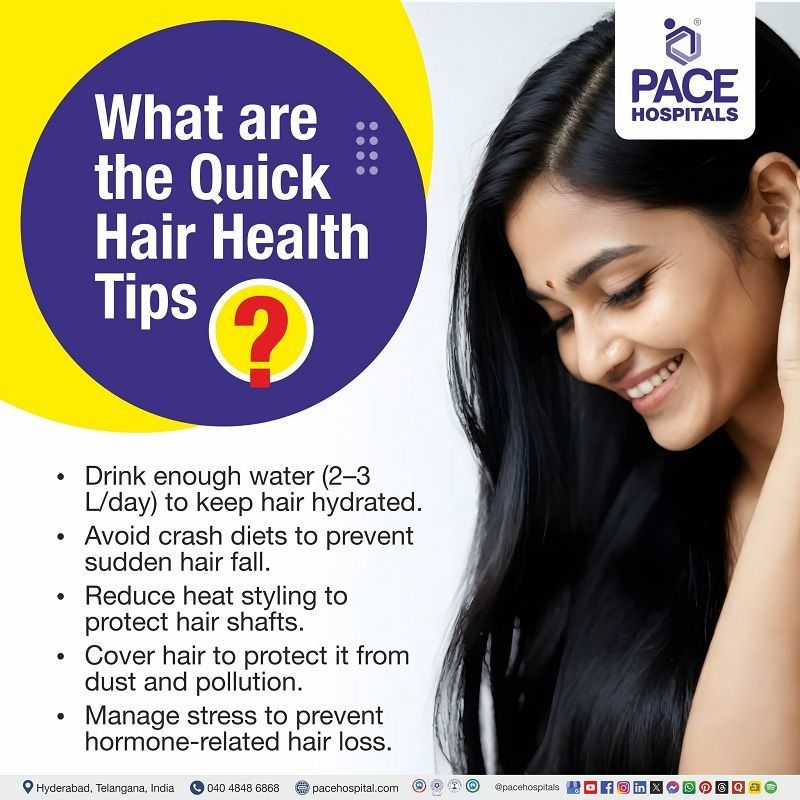
Quick Hair Health Tips:
- Ensure proper fluid intake: Drinking plenty of water at least 2-3 liters of water daily to maintain hair moisture.
- Say no to crash diets: Sudden weight fluctuations can cause hair fall.
- Limit heat styling: Frequent blow-drying, straightening, or curling can damage hair shafts.
- Shield your hair from pollution: Covering your hair when exposed to dust or polluted environments.
- De-stress: High stress levels can disrupt hormones and trigger temporary hair loss.
What is the Science Behind Healthy Hair?
Healthy hair growth relies on keratin production, which needs amino acids (from proteins), Vitamin A (for sebum), iron (for oxygen transport), and Omega-3s (for scalp hydration). These nutrients directly influence hair thickness, strength, and shine.
Research show that a balanced diet rich in vitamins, antioxidants, and healthy fats improves hair density and reduces breakage within 3–6 months.
FAQs on Best Foods for Healthy & Shiny Hair
What should you eat for strong, and glossy hair?
Food options include eggs, milk, fatty salmon, spinach, and carrots. These are high protein, iron, vitamin A, and omega-3s (from fishes), which strengthen and shine hair.
Why is protein essential for hair growth?
Hair is made of keratin, a protein. A protein-rich diet with eggs, milk, or legumes helps repair damaged strands and prevent hair thinning.
How long before dietary changes show hair results?
Usually, visible improvement in hair texture and growth appears after 8–12 weeks of consistent nutrition and care.
What should I avoid for healthy hair?
Avoid excess sugar, fried foods, alcohol, and nutrient-deficient crash diets — they can weaken hair roots and dull shine.
Does stress affect hair quality?
Yes, prolonged stress can disrupt hormones, leading to hair fall and poor growth. Managing stress helps restore healthy hair cycles.
How does Vitamin A help hair health?
Vitamin A, derived from beta-carotene in vegetables, helps produce natural scalp oils (sebum) that keep hair moisturized and glossy.
How do Omega-3 fatty acids improve hair?
Omega-3 fatty acids, commonly found in salmon, tuna, walnuts, and flaxseeds nourish hair follicles, strengthen roots, and prevent dryness and split ends.
Can a vegetarian diet also support shiny hair?
Yes. Include legumes, tofu, soybeans, walnuts, chia seeds, and flaxseeds for plant-based protein and Omega-3s to promote healthy hair.
Share on
Request an appointment
Fill in the appointment form or call us instantly to book a confirmed appointment with our super specialist at 04048486868
Appointment request - health articles
Recent Articles