
Open Reduction and Internal Fixation (ORIF) Surgery, Procedure & Cost
PACE Hospitals is recognized as one of the best hospitals for ORIF surgery in Hyderabad, India, offering advanced procedures for treating complex bone fractures and orthopedic injuries. Our skilled orthopedic surgeons perform precise open reduction and internal fixation procedures using plates, screws, and rods to ensure proper bone alignment and stability.
With advanced technology and comprehensive care, we treat fractures of the hip, femur, tibia, ankle, and upper limbs. Our approach focuses on safety and faster recovery time, supported by personalized rehabilitation for improved mobility and long-term outcomes.
Book an Appointment for ORIF Surgery
ORIF Surgery Appointment
Why Choose PACE Hospitals for ORIF Surgery?
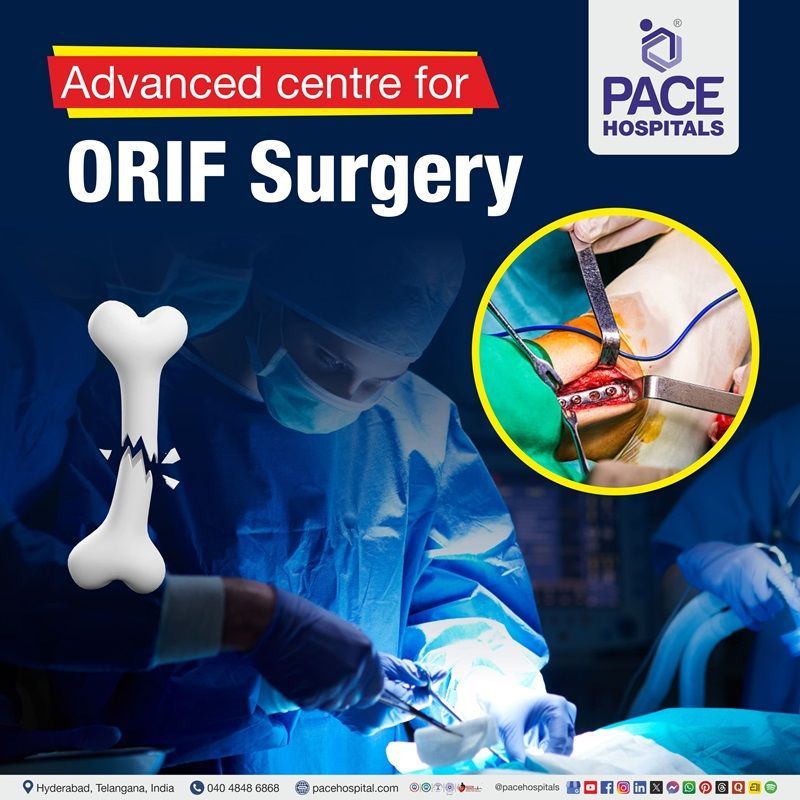
Expert Orthopedic Surgeons Specializing in ORIF for Complex Fracture Management
Precise ORIF Surgery with Advanced Implants, Plates, Screws & Minimally Invasive Fixation Techniques
Transparent ORIF Surgery with Insurance & Cashless Options
Recognized for excellence in healthcare delivery with
NABH, NABL, NBE/DNB, NABH Nursing Excellence, and ISCCM accreditations.
ORIF Definition
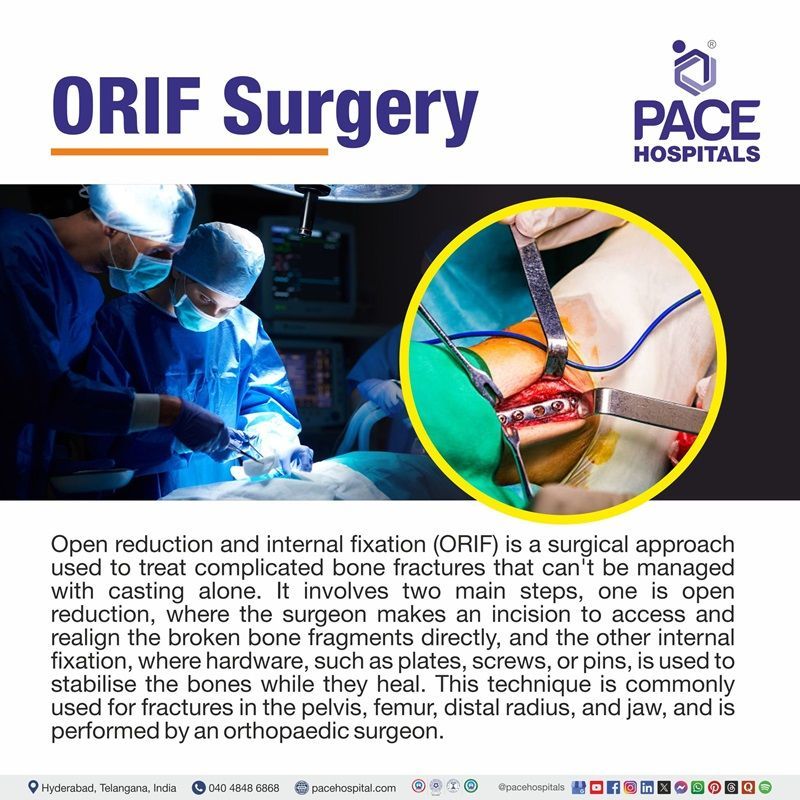
ORIF full form is open reduction and internal fixation. It is a surgical approach used to treat complicated bone fractures that are not manageable with splinting or casting alone. The procedure involves two main steps, one is open reduction, where the surgeon makes an incision to access and realign the broken bone fragments directly, and the other internal fixation, where hardware, such as plates, screws, or pins, is used to stabilise the bones while they heal.
This technique is frequently used in areas such as the pelvis, distal radius, femur, and jaw, and is recommended for fractures where conservative treatments are insufficient, like those involving multiple bone fragments, instability or displacement. An orthopaedic surgeon usually performs ORIF in a sterile operating room, usually under general anaesthesia, with the help of surgical nurses and anaesthesiologists.
Indications of ORIF Surgery
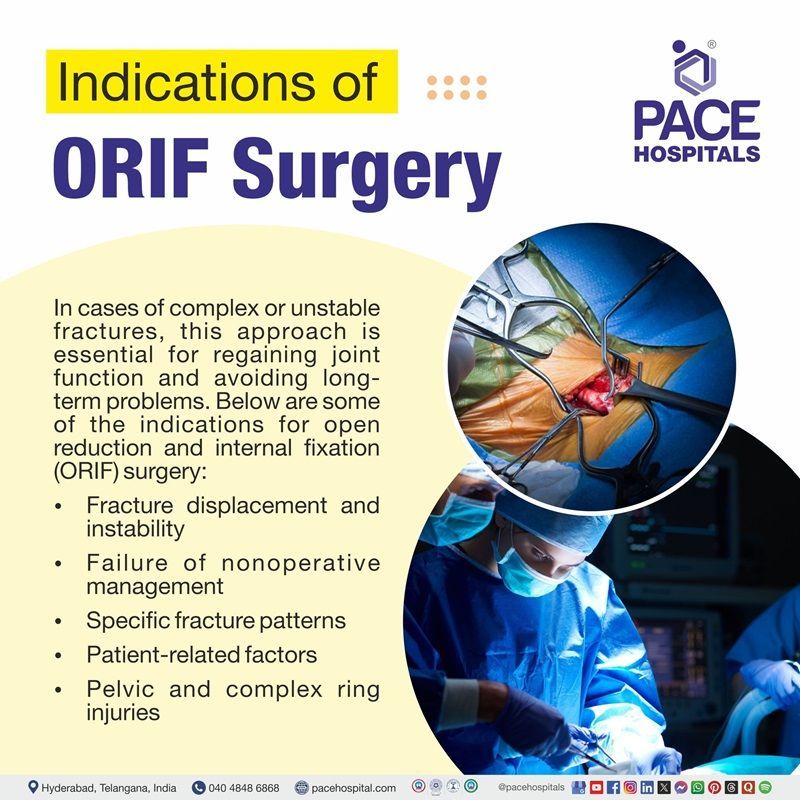
Direct visualisation and exact alignment of fractured bone segments are made possible by ORIF, which is frequently not possible with nonoperative techniques. In cases of complex or unstable fractures, this approach is essential for regaining joint function and avoiding long-term problems.
Below are some of the indications for open reduction and internal fixation (ORIF) surgery:
Fracture Displacement and Instability
- Significant bone fragment displacement, particularly in cases where anatomical reduction is necessary for function (e.g., surgical neck fractures with >100% displacement, articular fractures with >2 mm displacement).
- Fractures that are unstable and cannot be effectively treated with closed reduction or casting, such as ankle fractures (OTA/AO type 44-B3, C1.3, C2.3, and C3.3) that involve the posterior malleolus.
- Complex or comminuted fractures that require stable fixation to regain function and alignment.
Failure of Nonoperative Management
- Inability to maintain adequate alignment or stability after closed reduction or nonoperative treatment.
- Symptomatic non-union after conservative therapy, especially in non-union-prone bones like the clavicle.
Specific Fracture Patterns
- Intra-articular fractures, such as those of the proximal humerus, distal radius, and distal tibial pilon, require exact joint surface restoration to avoid post-traumatic arthritis.
- Ligamentous injury-related fractures, such as distal clavicle fractures, are associated with disruption of the coracoclavicular ligament.
- Fractures in which bone fragment displacement results in neurovascular compromise (e.g., clavicle fractures impinging on brachial plexus or vessels).
Patient-Related Factors
- The inability to tolerate extended immobilisation necessary for nonoperative therapy, as in patients with neuromuscular disorders (e.g., Parkinson's disease, seizure disorders).
- Younger, active patients whose primary goal is to preserve their natural anatomy and function.
Pelvic and Complex Ring Injuries
- Pelvic ring displacement or instability, especially in cases of acute trauma where there is a chance of bleeding, sitting imbalance, or unequal limb length.
Other Considerations
- Prevention of post-traumatic arthrosis in specific fracture types (e.g., Bennett fractures, although there is conflicting evidence about their superiority over percutaneous fixation).
- Restoring articular congruity and limb alignment in pilon and other complex fractures.
Contraindications of ORIF
Surgery
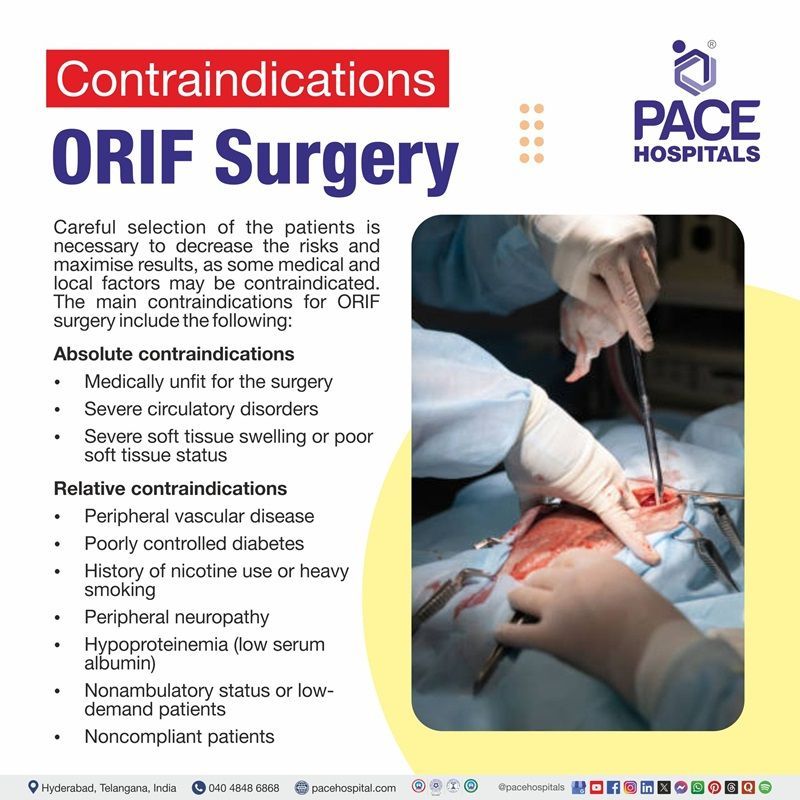
Open Reduction and Internal Fixation is a widely used surgical procedure for treating complex fractures. Careful selection of the patients is necessary to decrease the risks and maximise results, as some medical and local factors may be contraindicated. The main contraindications for ORIF surgery include the following:
Absolute contraindications
- Medically unfit for the surgery: Individuals who are medically unfit for anaesthesia or surgery, such as those with severe cardiac, pulmonary, or multi-organ failure, or who have critical general conditions.
- Severe circulatory disorders: Significant circulatory compromise, either local or systemic, that would raise the risk of surgery or impair healing.
- Severe soft tissue swelling or poor soft tissue status: Significant swelling or damaged soft tissue at the surgical site, where it may be better to perform surgery later or with an external fixation initially.
Relative contraindications
- Peripheral vascular disease: A higher chance of infection and inadequate wound healing.
- Poorly controlled diabetes: Increased risk of postoperative complications, such as delayed healing and infection.
- Other significant medical comorbidities: Conditions that raise the risk of surgery or anaesthesia (e.g., advanced renal or hepatic disease).
- History of nicotine use or heavy smoking: It is associated with impaired soft tissue and bone healing.
- Peripheral neuropathy: It is associated with increased risk of wound complications and poor outcomes.
- Hypoproteinemia (low serum albumin): It indicates poor nutritional status and slowed healing.
- Nonambulatory status or low-demand patients: ORIF plating may not be beneficial for patients who are nonambulatory or who need advanced nursing care.
- Noncompliant patients: The inability or unwillingness of the patients to follow rehabilitation and postoperative care guidelines.
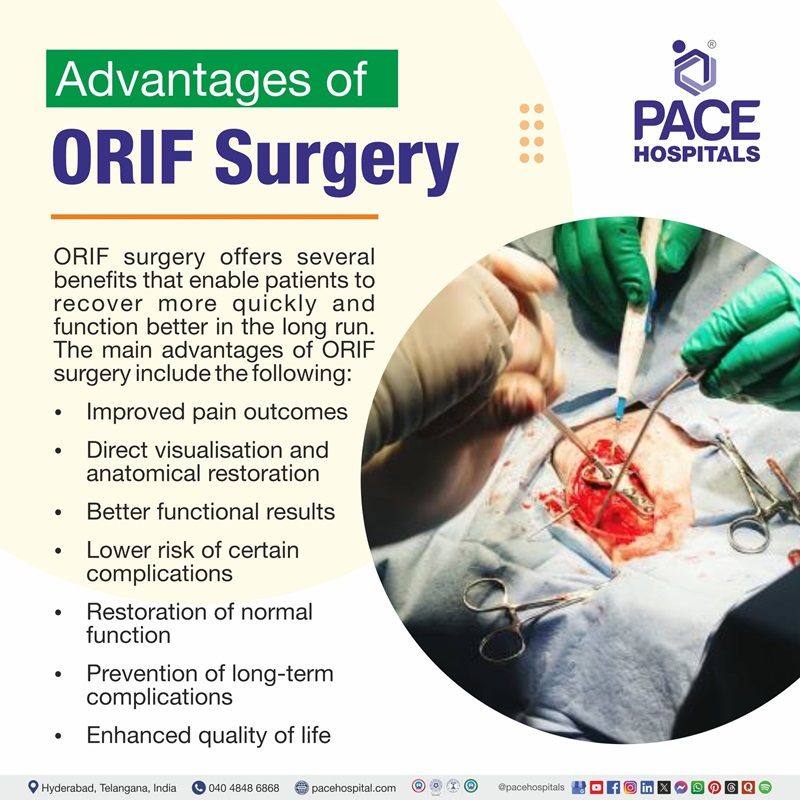
Advantages of ORIF
Surgery
ORIF surgery offers several benefits that enable patients to recover more quickly and function better in the long run. The main advantages of ORIF surgery include the following:
- Improved pain outcomes: Compared to non-operative or closed reduction techniques, patients undergoing ORIF report lower pain scores in the early postoperative phase and less persistent pain over the long run.
- Direct visualisation and anatomical restoration: For complicated or dislocated fractures, this technique provides direct visualisation of the fracture site, facilitating accurate anatomical reduction and stable fixation.
- Better functional results: As ORIF improves functional outcomes and range of motion, patients can resume daily and work-related activities more quickly. It is associated with easier physical task performance and less weight loss from treatment.
- Lower risk of certain complications: When compared to closed reduction internal fixation, ORIF is associated with a decreased risk of avascular necrosis in certain fracture types (such as femoral neck fractures).
- Restoration of normal function: The goal of ORIF is to return the joint to normal alignment and function, which is crucial in cases of intra-articular and unstable fractures.
- Prevention of long-term complications: ORIF improves outcomes and reduces long-term complications in cases of high fracture displacement, particularly in complex and paediatric fractures.
- Enhanced quality of life: Following ORIF, patients report a higher quality of life due to improved function, better pain management, and quicker recovery.
Get a Free Second Opinion for ORIF Surgery
At PACE Hospitals, we are committed to providing our patients with the best possible care, and that includes offering second medical opinions with super specialists for treatment or surgery. We recommend everyone to get an expert advance medical second opinion, before taking decision for your treatment or surgery.
ORIF Surgery Steps
ORIF procedure involves the following steps:
Before surgery
- To determine the bone quality and fracture pattern, the orthopaedic team performs a comprehensive physical examination and obtains imaging tests, such as CT scans, MRIs, and X-rays.
- They evaluate the patient's overall condition, level of activity, and possible risk factors for complications.
- Considering the patient's condition and the type of fracture, the orthopaedic doctor determines whether ORIF is appropriate for the patient or not.
- The patients will have to do a signature on a consent form authorising the doctors to perform the surgery. Patients should carefully read the form; if there are any questions, they can ask the doctors.
- Patients should inform the doctor if they are sensitive to or allergic to any medications, tape, latex, or anaesthetic agents (both local and general).
- Patients need to inform the doctor about every medication (prescription and over-the-counter) and herbal supplements they are taking.
- Patients must inform their doctor if they have a history of bleeding disorders or are using any anticoagulant (blood-thinning) medications, aspirin, or other blood-clotting inhibitors. Certain medications may need to be discontinued prior to the surgery.
- Patients who are pregnant or suspect they are pregnant need to inform their doctor.
- Patients are instructed not to eat or drink anything from the night before their procedure.
- Patients should arrange for assistance at home after discharge, as needed.
During surgery
- The patient should be positioned correctly for surgical access, such as in a beach chair for proximal humeral fractures or in a lateral decubitus position for pelvic fractures.
- Utilising a technique that reduces soft tissue damage, doctors make an incision to view the fracture site (e.g., an extensile lateral incision for intra-articular fractures, a deltopectoral incision for the shoulder).
- Exposed fracture fragments must be handled with care. Anatomically, they realign the bone fragments to perform open reduction; occasionally, they use temporary fixation to keep the fragments in place.
- To stabilise the fracture, they use fixation hardware, such as plates, screws, rods, or pins. They confirm the stability and proper positioning of implants, frequently with intraoperative imaging.
- Staples or sutures are used to close the incision, ensuring minimal tension and adequate soft tissue coverage to minimise the risk of infection.
After surgery
- Vital signs, including blood pressure, pulse, and respiratory status, are checked.
- To make sure there are no nerve or vessel injuries, they assess the neurovascular status distal to the surgical site.
- Patients are encouraged to start early mobilisation as tolerated to reduce complications and promote healing.
- Any signs of infection or wound complications are monitored.
- Patients are advised to initiate a tailored rehabilitation program that focuses on the gradual return of function, avoiding early active movement to prevent failure of the fixation.
- Patients are advised to have routine imaging follow-up appointments to assess the position of the hardware and evaluate fracture healing.
ORIF Surgery Complications
Despite being a common surgical method for managing fractures, Open Reduction and Internal Fixation (ORIF) carries a risk of several complications that can impact patient outcomes. It is essential to understand these concerns to improve postoperative care and treatment strategies. Below are some of the ORIF surgery complications:
- Infection: While both superficial and deep wound infections are known complications, meta-analyses of distal intra-articular tibia fractures typically indicate that ORIF has a lower incidence of superficial wound infection than external fixation.
- Malunion and Nonunion: Although nonunion (failure to heal) and malunion (healing in a non-anatomic position) are possible following ORIF, rates are typically lower with ORIF than with external fixation in certain fracture types.
- Hardware complications: Although less frequent, osteosynthesis failure (failure of the fixation device) is also reported.
- Joint stiffness and loss of motion: In older patients, postoperative joint stiffness is a common complication, especially in the elbow and other joints, and may occur more frequently following ORIF than following arthroplasty.
- Nerve injury: There is documentation of nerve injuries, with rates differing by anatomical site (e.g., transient facial nerve injury in mandibular ORIF, ulnar nerve injury in elbow ORIF).
- Post-traumatic arthritis: Compared to some other fixation techniques, ORIF is associated with lower rates of post-traumatic arthritis, particularly in tibial plafond fractures.
ORIF Surgery Recovery Time
Early mobilisation following ORIF surgery usually results in a quicker return to work and better range of motion during the first few weeks of recovery. By six weeks after surgery, the majority of functional recovery, including pain management, hand use, and strength, has occurred, with smaller but still noticeable improvements continuing up to six months later. Although some patients may still have residual disability five years after surgery, long-term studies show continuous improvement up to one year.
Questions that the patients can ask the healthcare team about ORIF surgery?
- When can I go home after the surgery?
- When should I return for follow-up appointments?
- What kind of pain should I expect after the surgery, and how will it be managed?
- When can I resume my normal daily activities or go back to work?
- How long is the typical recovery period for this type of fracture and surgery?
- What movements or activities should I avoid during recovery?
- What are the possible complications or risks after ORIF surgery?
- Will I need physical therapy, and for how long?
- Will the metal implants (plates, screws, rods) stay in permanently, or will they be removed later?
- What signs of infection or complications should I watch for?
- How will I know if the bone is healing properly?
ORIF vs CRIF
Difference between ORIF and CRIF Surgery
Open Reduction and Internal Fixation (ORIF) and Closed Reduction and Internal Fixation (CRIF) are two surgical procedures used to treat bone fractures. The choice is based on patient factors, stability, and fracture complexity. Below parameters help in differentiating ORIF and CRIF:
| Parameters | ORIF | CRIF |
|---|---|---|
| Definition | A surgical procedure in which the bone fragments are realigned (reduced), the fracture site is exposed through an open incision, and hardware is used to fix them internally. | A procedure that involves internal hardware fixation after the fracture has been realigned (reduced) without opening the fracture site. |
| Approach | It involves creating a surgical incision to directly view and work on the fracture. | Without surgically exposing the fracture, the bone is externally moved into alignment. |
| Invasiveness | Due to the open surgical technique, it is a more invasive procedure. | Less invasive because it doesn't require open surgery. |
| Indications | Used to treat fractures that are comminuted, unstable, displaced, or not possible to align with closed techniques. | Used to align fractures that are simple, stable, or minimally displaced without the need for open surgery. |
| Recovery | For complex fractures, it frequently results in improved anatomical alignment and functional outcomes. | Use for unstable fractures carries a higher risk of malalignment, but results are comparable for simple fractures. |
| Complication Risk | An open approach increases the risk of bleeding, soft tissue damage, and surgical site infection. | In complex fractures, there is a higher risk of loss of reduction or malunion, but a lower risk of soft tissue complications. |
| Fixation Method | Internal fixation by placing rods, wires, screws, or plates right at the fracture site. | Internal fixation with wires, screws, or pins that are inserted following closed reduction. |
ORIF Surgery Cost in Hyderabad, India
The cost of ORIF (Open Reduction and Internal Fixation) Surgery in Hyderabad generally ranges from ₹80,000 to ₹3,50,000 and above (approx. US $960 – US $4,210).
The exact cost of ORIF surgery varies depending on the type and location of fracture (arm, leg, ankle, hip, or wrist), complexity of the injury, type of implants used (plates, screws, rods, or nails), surgical approach, and the duration of hospital stay. Additional factors such as preoperative imaging (X-ray, CT scan), anesthesia, postoperative rehabilitation, and surgeon expertise may also influence the total cost. Availability of cashless treatment options, TPA corporate tie-ups, and assistance with insurance approvals may further affect the overall treatment expenses.
Cost Breakdown According to Type of ORIF Surgery
- ORIF Surgery for Wrist or Forearm Fractures – ₹80,000 – ₹1,50,000 (US $960 – US $1,805)
- ORIF Surgery for Ankle or Lower Leg Fractures – ₹1,20,000 – ₹2,20,000 (US $1,445 – US $2,650)
- ORIF Surgery for Femur (Thigh Bone) Fractures – ₹1,80,000 – ₹3,00,000 (US $2,165 – US $3,615)
- ORIF Surgery for Complex or Multi-Bone Fractures – ₹2,20,000 – ₹3,50,000 (US $2,650 – US $4,210)
- Revision ORIF Surgery for Failed Fixation – ₹2,50,000 – ₹4,00,000+ (US $3,010 – US $4,820+)
Frequently Asked Questions (FAQs) on ORIF Surgery
What is the success rate of ORIF surgery?
Studies have shown that ORIF surgery has a high overall success rate, with 76% of the patients experiencing excellent to good results for distal femur fractures and comparable rates for other fracture types. The 7-year joint survival after ORIF for elderly patients with acetabular fractures is approximately 80.7%; but this could be lower in cases with poor reduction or comorbidities. Factors like patient age, bone quality, and fracture complexity can impact the long-term success of ORIF.
Which Is the best hospital for ORIF Surgery in Hyderabad, India?
PACE Hospitals, Hyderabad, is a trusted centre for advanced orthopedic trauma care, offering specialised treatment for fractures and complex bone injuries requiring surgical fixation.
We have highly experienced orthopedic surgeons, trauma specialists, anesthesiologists, and rehabilitation teams who follow evidence-based protocols to restore bone alignment and stability using modern fixation techniques.
We have best services and facilities including state-of-the-art modular operation theatres, digital X-ray and CT imaging, advanced orthopedic implants, and structured physiotherapy programs, PACE Hospitals ensures safe surgery and faster recovery for patients with bone fractures.
What are some risk factors for complications after ORIF?
Advanced age, low preoperative serum albumin, peripheral neuropathy, open fracture, smoking, obesity, high ASA class, heart failure, hypertension, prolonged postoperative stay, and a history of chemotherapy or radiation therapy are important risk factors for complications following ORIF. By identifying these risk factors, patients who are more likely to experience wound healing problems, surgical site infections, and other postoperative complications can be identified.
What Is the Cost of ORIF Surgery at PACE Hospitals, Hyderabad?
At PACE Hospitals, Hyderabad, the cost of ORIF surgery typically ranges from
₹75,000 to ₹3,20,000 and above (approx. US $900 – US $3,855), making it a competitive option for advanced fracture management in Hyderabad. However, the final cost depends on:
- Type and location of fracture
- Type of orthopedic implants used (plates, screws, rods)
- Surgical complexity and duration
- Anesthesia and operation theatre charges
- Hospital stay and postoperative care
- Physiotherapy and rehabilitation needs
- Diagnostic imaging (X-ray, CT scan)
For simple fractures requiring ORIF, costs remain toward the lower end, while complex fractures requiring advanced implants or revision surgery may fall toward the higher range.
After a detailed orthopedic assessment and imaging evaluation, our specialists provide a transparent cost estimate based on the fracture type and treatment plan.
What is the difference between ORIF and external fixation?
Although external fixation uses wires or pins attached to an external frame outside the body to stabilise the fracture, open reduction and internal fixation (ORIF) surgically exposes the fracture and stabilises the bone with internal hardware like plates and screws. External fixation is associated with a higher rate of superficial infection and malunion; however, it may be preferred in cases with severe soft tissue injury or a high risk of infection. However, ORIF typically has a lower risk of superficial infection and better early functional outcomes.
How soon after ORIF can I start physical therapy?
Depending on the type of fracture, the surgeon's preference, and patient-specific factors, physical therapy following ORIF usually begins with gentle, supervised exercises during the first few days to weeks after surgery. It has been demonstrated that early therapy initiation improves functional outcomes without increasing adverse events; however, the treating surgeon should always determine the precise timing of initiation.
Looking for the best ORIF Surgery Hospital Near Me?
If you’re searching for the top fracture surgery hospital near me in areas like HITEC City, Madhapur, Kondapur, Gachibowli, Kukatpally, or KPHB, it is important to choose a hospital with experienced orthopedic trauma surgeons and advanced surgical infrastructure.
Effective ORIF surgery requires:
- Accurate fracture diagnosis with imaging
- Precise bone alignment and fixation
- High-quality orthopedic implants
- Postoperative physiotherapy and rehabilitation
At PACE Hospitals, Hyderabad, patients receive comprehensive orthopedic trauma care designed to restore mobility and ensure proper bone healing.
When is ORIF surgery needed?
ORIF surgery is frequently needed for fractures that are misplaced, unstable, or complicated. It is usually considered when a bone has split into many pieces, displaced out of its normal position, or if the fracture occurs at a joint, impairing its function. ORIF procedure may be required for conditions such as complex fractures (in which the bone protrudes through the skin), open fractures, or fractures that are unlikely to heal properly with conservative therapy. It is also applied when non-surgical procedures like casting or bracing are ineffective in aligning the bones or preventing additional injury.
What is ORIF surgery?
ORIF (Open Reduction and Internal Fixation) is a surgical procedure that repairs bone fractures. The procedure is divided into two parts: an open reduction, in which the bone is surgically pressed into the right alignment, and an internal fixation, in which surgical hardware like plates, screws, or rods are used to hold the bone in place while it heals. This approach is frequently used for complex fractures that cannot be effectively treated with a cast or splint alone. ORIF procedure is applied with an intention to restore bone and joint function, promote appropriate healing, and limit the risk of problems such as malunions or nonunion.
How long does ORIF surgery take?
Although the length of ORIF surgery varies based on the bone and the severity of the fracture, procedures such as those involving the hand or forearm typically take between 70 and 75 minutes on average. Longer surgical times, sometimes lasting several hours, may be necessary for more complex fractures or anatomically challenging locations.
What does the expected hospital stay after ORIF?
Although the length of hospitalisation following ORIF surgery changes depending on the type of fracture and the patient's health, most patients are discharged from the hospital within 3–7 days after procedures such as distal femur or ankle ORIF. This period may be prolonged by factors such as advanced age, comorbidities, and the timing of surgery; some complex cases may necessitate a more extended hospital stay.
Is ORIF surgery performed as an emergency?
In situations where immediate stabilisation is required to avoid further complications, ORIF surgery may be performed as an emergency procedure, especially for fractures that are open, unstable, or severely displaced. But if the patient is well enough and the fracture doesn't need immediate care, it can also be planned electively.
Which fractures are commonly treated with ORIF?
ORIF surgery is commonly used to treat different fractures in those areas where the bones cannot heal properly with a cast alone. Common fractures include:
- Tibia and fibula fractures in the lower leg
- Femur (thigh bone) fractures
- Ankle fractures
- Pelvic fractures
- Humerus (upper arm) fractures
- Clavicle (collarbone) fractures, especially displaced ones
- Wrist fractures such as distal radius fractures
- Spinal fractures involving the vertebrae
ORIF is used when fractures are displaced or when the risk of complications from non-surgical treatments is high.
Is ORIF surgery painful?
Like all surgical procedures, ORIF surgery involves some degree of pain, both during the procedure and during recovery. However, it is performed under general or regional anesthetic, guaranteeing that patients are not in agony during the procedure. Pain is normally controlled after surgery using prescribed drugs such as analgesics and, in severe cases, opioids. The discomfort progressively fades as the fracture heals, but it is typical to have soreness or stiffness in the affected area during recuperation. Long-term function and pain relief can be achieved through rehabilitation and physical therapy.
Will the implants used in ORIF need to be removed?
In most situations, implants utilized in ORIF surgery, such as plates, screws, or rods, are permanent. However, implant removal may be required in some cases if the patient develops infections or discomfort, or if the implants interfere with joint movement or daily activities. If removal is required, it is usually done when the bone has completely healed, which might take months or even years. Implant removal is often a minor surgery, however not all patients require it. The orthopedic doctor will discuss the best approach based on individual recovery.
How successful is ORIF surgery?
ORIF surgery has a high success rate for treating fractures and is widely considered to be an effective treatment for displaced or complex fractures. The operation allows the bone to mend properly, lowering the risk of problems including malunion and nonunion. Most patients can return to normal activities once they have fully recovered, but recovery times vary based on the location and severity of the fracture that damaged them. Complication rates are minimal, but efficacy is dependent on the patient's age, overall health, and desire to adhere to rehabilitation programs. With careful treatment and rehabilitation, most patients have outstanding results, restoring normal or nearly normal function.
What are the dos and don’ts of ORIF surgery?
Following ORIF surgery, patients must adhere to strict infection control protocols, including prompt preoperative antibiotic prophylaxis and avoiding unnecessary, prolonged postoperative antibiotic use, as this does not reduce the risk of infection and may have adverse side effects. To improve functional outcomes, it is important to avoid complications such as venous thrombosis and muscle atrophy and to speed up recovery. Early ambulation and rehabilitation are therefore advised. In the early stages of recovery, patients are advised not to use the operated limb or bear weight beyond what the surgeon has instructed. They should also report any neurological symptoms, ongoing pain, or infection as soon as possible.
Are the screws and plates used in ORIF permanent?
Frequently, the screws and plates used in ORIF are intended to remain in place indefinitely, particularly if they are not causing any symptoms or complications. Routine removal is generally not advised unless clinically indicated, but it may be required in cases of infection, hardware failure, pain, or other complications. Patient symptoms, fracture healing, and risk factors should all be taken into consideration when deciding whether to remove implants.
Can ORIF surgery be repeated if the first surgery fails?
If the initial ORIF procedure is unsuccessful due to complications such as fixation failure, infection, or non-union, the procedure can be repeated. Despite the low reoperation rates—repeat ORIF or revision surgery is reported in 1.5% to 4.5% of cases, according to studies—revision procedures are occasionally required to restore bone healing and function, particularly following significant complications.
Who is an ideal candidate for ORIF surgery?
A patient who is in good overall condition, physiologically suitable for surgery, has a displaced fracture that can be fixed, and had a high level of functional demands or ambulatory status before the injury is an ideal candidate for ORIF surgery. Alternative procedures or nonoperative management may be more appropriate for patients with low activity levels or poor bone quality.
Is ORIF always necessary for fractures?
No, ORIF is not always required for fractures; many can be treated nonoperatively, and surgery is typically reserved for intra-articular, displaced, or unstable fractures where conservative treatments are insufficient to achieve adequate alignment and function. The type of fracture, patient health, and functional requirements all influence the selection of ORIF.
Will I have permanent stiffness after ORIF?
Even with ideal fixation and rehabilitation, one of the most frequent complications following ORIF is permanent stiffness, which can occur, particularly for complex fractures like elbow fractures. With early mobilisation and appropriate physical therapy, most patients can expect a good to excellent recovery of motion; however, if stiffness persists, some patients may require additional procedures.
How to prepare for CABG surgery?
Preparation for CABG surgery involves preoperative tests like blood work, heart scans, and imaging. Patients will receive instructions on fasting, medications, and stopping smoking. The hospital stay typically starts on the day of surgery, when the care team prepares the patient with anaesthesia and monitoring before the procedure.
Can children undergo ORIF surgery?
Yes, children may undergo ORIF surgery for open, unstable, or complex fractures or when closed reduction fails. According to studies, when used for the correct indications, ORIF in paediatric patients may provide excellent results with low rates of complications.
Is ORIF Surgery Covered by Insurance at PACE Hospitals?
Yes, ORIF surgery is generally covered under most health insurance policies at PACE Hospitals, subject to policy terms and approval. Since fracture fixation surgery is considered a medically necessary orthopedic procedure, it is typically included under private insurance and corporate health plans.
At PACE Hospitals, patients can benefit from:
- Cashless hospitalization facilities with empaneled insurance providers
- Assistance from a dedicated insurance and TPA coordination team
- Pre-authorization support and documentation guidance
- Transparent cost estimates before admission
- Support for government health schemes where applicable
Coverage depends on waiting periods, sum insured limits, accident coverage clauses, and policy inclusions. Patients are encouraged to share their insurance details in advance so the hospital’s insurance desk can verify eligibility and streamline approvals.
Why choose PACE Hospitals?
- A Multi-Super Speciality Hospital.
- NABH, NABL, NBE & NABH - Nursing Excellence accreditation.
- State-of-the-art Liver and Kidney transplant centre.
- Empanelled with all TPAs for smooth cashless benefits.
- Centralized HIMS (Hospital Information System).
- Computerized health records available via website.
- Minimum waiting time for Inpatient and Outpatient.
- Round-the-clock guidance from highly qualified super specialist doctors, surgeons and physicians.
- Standardization of ethical medical care.
- 24X7 Outpatient & Inpatient Pharmacy Services.
- State-of-the-art operation theaters.
- Intensive Care Units (Surgical and Medical) with ISO-9001 accreditation.


