World Alzheimer's Day - 21 September 2026 | Theme, History & Importance
PACE Hospitals
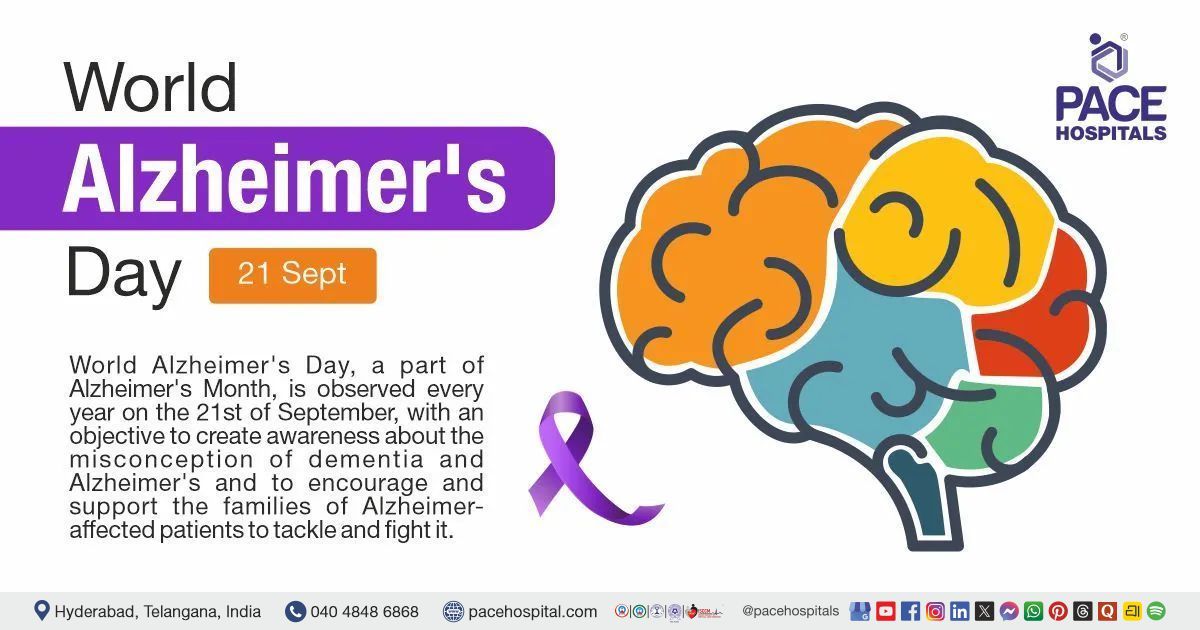
World Alzheimer's Day, a part of Alzheimer's Month, is observed every year on the 21st of September, with the objective of creating awareness about the misconception of dementia and Alzheimer's and to encourage and support the families of Alzheimer-affected patients to tackle and fight it.
World Alzheimer's Day Importance
Alzheimer's disease is a severe brain disorder of memory loss and confusion, if not diagnosed and managed on time, can adversely impact one's mental abilities of learning, thinking, reasoning, remembering, problem-solving, decision-making, and attention, which could compromise one's day-to-day life activities and control over emotions. This serious ailment impacts not only the patients but also their families and friends.
Every year, the entire September month is designated as "Alzheimer's Month." People across the world, various Alzheimer's societies and organisations come together in support of the people affected with Alzheimer's and dementia.
They organise various activities to educate people about the warning signs and symptoms, early diagnosis, and appropriate treatment of this severe mental disorder, apart from providing social and financial support to the affected.
How Alzheimer's Disease Progressively Affects the Brain
Alzheimer's disease causes changes in the brain that gradually interfere with the communication between nerve cells. Two abnormal protein deposits, called amyloid plaques and tau tangles, are associated with the disease. These changes damage brain cells and affect the areas responsible for memory, learning and thinking.
As the disease progresses:
- Hippocampus: This area, which plays an important role in forming new memories, is often affected early, making it difficult to remember recently learned information.
- Cerebral cortex: Damage to areas involved in language, reasoning and judgement can affect communication and the ability to perform familiar tasks.
- Other brain regions: As the disease spreads, changes can affect emotional responses, spatial awareness and the ability to recognise familiar people or surroundings.
Understanding these changes helps explain why Alzheimer's disease affects more than memory and why patients may gradually need additional support with everyday activities.
World Alzheimer's Day 2026 Theme
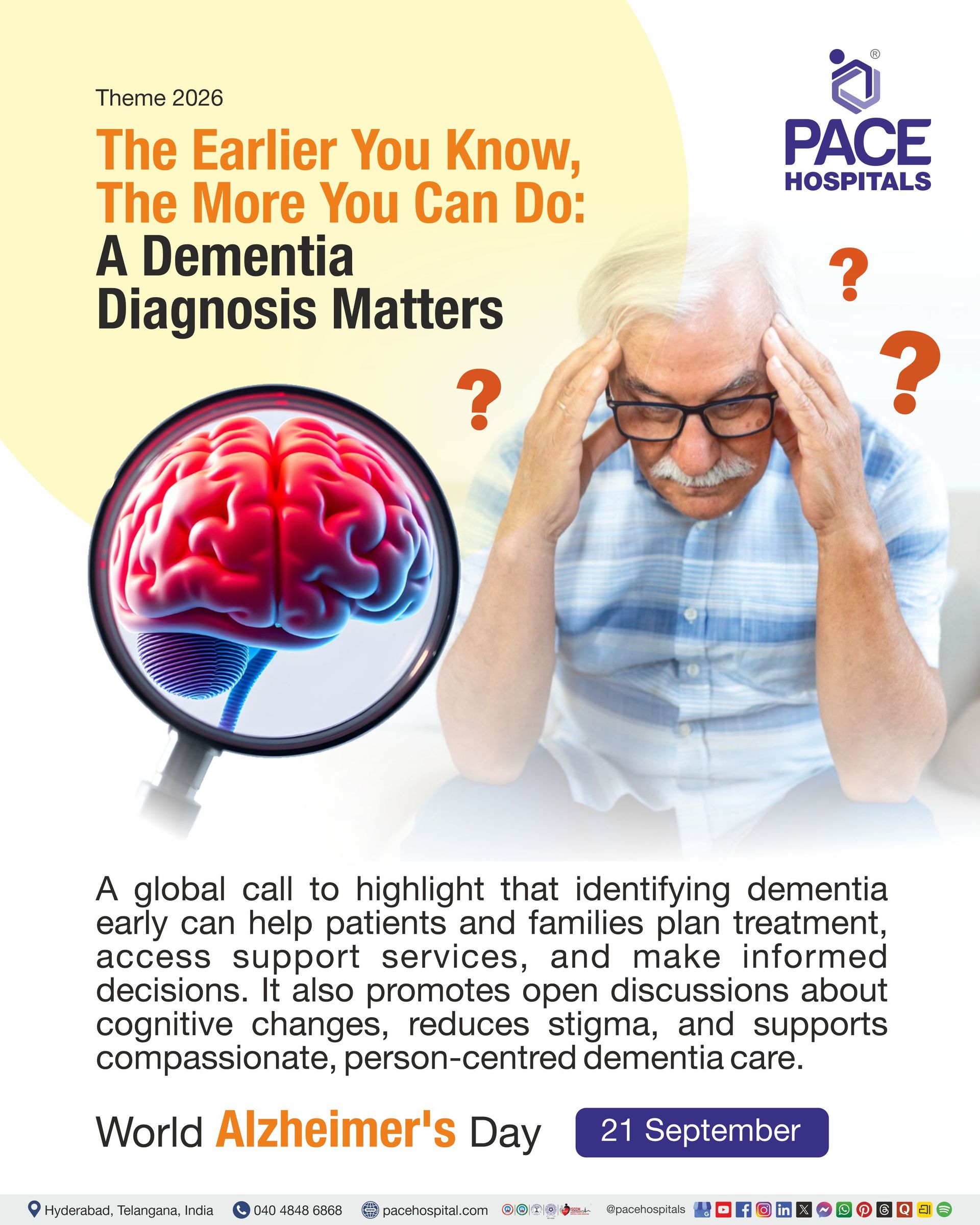
This year, 2026, the World Alzheimer's Day theme is "The Earlier You Know, The More You Can Do: A Dementia Diagnosis Matters.". This theme highlights that identifying dementia early can help patients and families plan treatment, access support services, and make informed decisions. It also promotes open discussions about cognitive changes, reduces stigma, and supports compassionate, person-centred dementia care.
Attitudes to dementia found that 62% of health care practitioners wrongly considered dementia to be a normal part of ageing; 35% of carers had hidden a diagnosis of dementia and 1 in 4 of the public thought there was nothing which could be done about dementia.
Year by year, the past themes for World Alzheimer's Day are:
- World Alzheimer's Day 2025 Theme - Ask About Dementia. Ask About Alzheimer's
- World Alzheimer's Day 2024 Theme - Time to act on dementia, Time to act on Alzheimer's
- World Alzheimer's Day 2023 Theme - Never too early, never too late
- World Alzheimer's Day 2022 Theme - Know Dementia, Know Alzheimer's
- World Alzheimer's Day 2021 Theme - Know Dementia, Know Alzheimer's
- World Alzheimer's Day 2020 Theme - Let's talk about dementia
- World Alzheimer's Day 2019 Theme - Let's talk about dementia
- World Alzheimer's Day 2018 Theme - Every 3 Seconds, Someone in the World Develops Dementia
History of World Alzheimer's Day
World Alzheimer's Day was introduced on 21st September 1994 in Edinburgh, on the occasion of the 10th anniversary of Alzheimer's Disease International (ADI). Alzheimer's Disease International (ADI) is an organisation founded in 1984 with the aim to support and guide Alzheimer's disease patients and their families.
The organisation also runs Alzheimer's University, which aims to connect people around the world to promote Alzheimer's Month and helps Alzheimer's associations throughout the globe in strategy-making to fight Alzheimer's and dementia. Alzheimer's Disease International (ADI) has around 100 Alzheimer's associations across the world that looks into the problem faced by Alzheimer's patients and families.
Alzheimer's Disease International (ADI) organises awareness campaigns to make the governments of different countries and WHO policymaking fight Dementia and Alzheimer's and support their victims; they are actively engaged in bringing down the dementia epidemic.
The disease got its name from "Alois Alzheimer", a German psychiatrist who first discovered this disorder while treating a lady in 1901.
Facts about World Alzheimer’s Day
- Alzheimer’s is one of the most common types of Dementia, accounting for 60-80% of all dementia cases around the world.
- It is estimated that the prevalence of Alzheimer's worldwide is around 2.4 crores.
- According to ADI, 13.5 crore people worldwide will be living with dementia by 2050.
- Finland is the country with the maximum no of Alzheimer's in the world, with 55 cases of Alzheimer's out of every 1 lakh people.
- It is evident that the majority of Alzheimer's patients are 65 or older, but it's not necessary that ageing is the only risk factor of Alzheimer's.
- It has been observed that 5% of Alzheimer's patients are hit by early-onset Alzheimer's between the ages of 40s and 50s.
- Alzheimer's doesn't have any cure, and it is progressive in nature, but early diagnosis and treatment can help in reducing the symptoms.
- The first Alzheimer's Month campaign was launched in 2012. In a study, it has been noticed that an average of 2 of 3 people globally have little understanding of Alzheimer's disease and associated dementia in their countries.
- Every year, Alzheimer's Disease International (ADI) publishes its report on World Alzheimer Reports, focused on different topics related to Dementia.
Share on
Request an appointment
Fill in the appointment form or call us instantly to book a confirmed appointment with our super specialist at 04048486868
Appointment request - health articles
Recent Articles