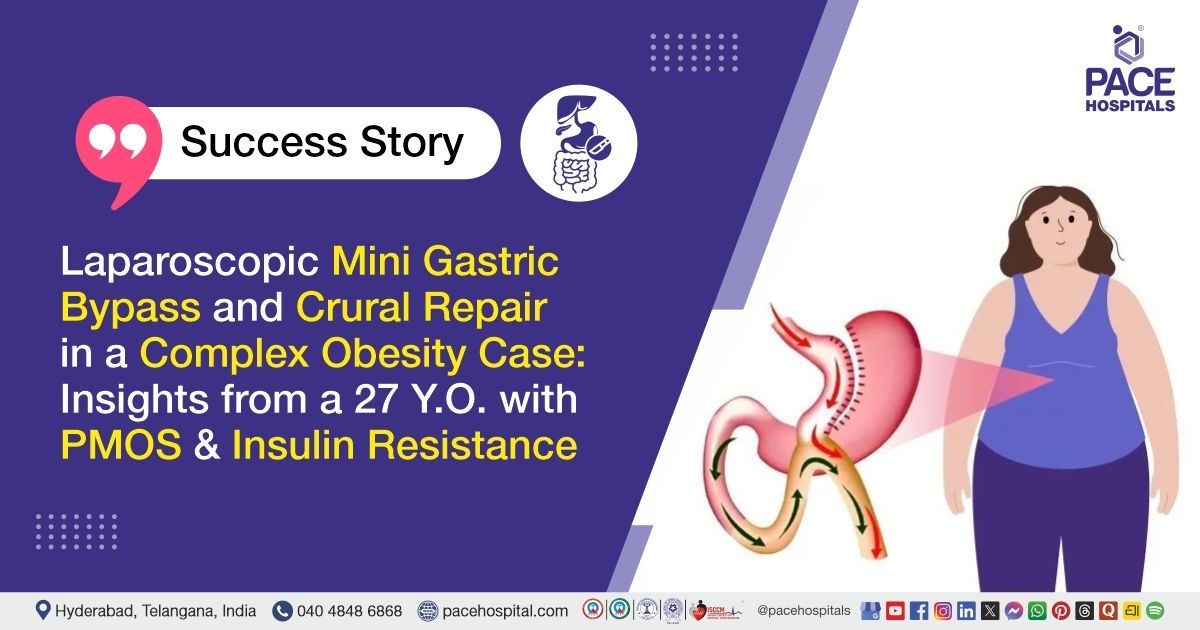
Laparoscopic Mini Gastric Bypass & Crural Repair in a Complex Obesity with PCOS & Insulin Resistance
PACE Hospitals
PACE Hospitals’ expert Bariatric and Metabolic Surgery team successfully performed a Laparoscopic Mini Gastric Bypass with Crural Repair on a 27-year-old female patient diagnosed with morbid obesity, polyendocrine metabolic ovarian syndrome (PMOS), insulin resistance, and bronchial asthma. The procedure aim was to support significant weight loss, improve metabolic health, reduce obesity-related health risks, address associated reflux-related anatomical concerns through crural repair, evaluate liver health through biopsy, and improve the patient’s overall quality of life.
Chief Complaints
A 27-year-old female patient with a body mass index (BMI) of 40.14 presented to the Bariatric and Metabolic Surgery Department at PACE Hospitals, Hitech City, Hyderabad, for further evaluation and management of morbid obesity.
Past Medical History
The patient was a known case of morbid obesity, Polycystic ovary syndrome (PCOS) officially renamed Polyendocrine Metabolic Ovarian Syndrome (PMOS), insulin resistance, and bronchial asthma. These associated conditions were considered during preoperative evaluation and bariatric surgery planning.
On Examination
On general examination, the patient was conscious, coherent, cooperative, and hemodynamically stable. She had morbid obesity. Respiratory examination revealed equal air entry bilaterally, with no active wheeze noted at the time of examination. Cardiovascular examination showed normal heart sounds. Abdominal examination was soft and non-tender, with no guarding or rigidity. No acute abnormality was noted on systemic examination.
Diagnosis
Upon admission to PACE Hospitals, the Bariatric and Metabolic Surgery team evaluated the patient for morbid obesity, associated metabolic concerns, and overall suitability for bariatric surgery. A detailed clinical assessment, physical examination, BMI evaluation, obesity-related risk assessment, and required diagnostic investigations were performed.
The patient was diagnosed with morbid obesity with a BMI of 40.14 kg/m², along with polyendocrine metabolic ovarian syndrome (PMOS), insulin resistance, and bronchial asthma. These associated conditions were considered important during preoperative planning, anaesthesia assessment, and postoperative recovery planning.
Routine preoperative investigations, including complete blood count, blood sugar profile, kidney function tests, liver function tests, lipid profile, thyroid profile, electrolyte assessment, coagulation profile, ECG, chest X-ray, abdominal ultrasound, and pre-anaesthesia evaluation, were performed to assess the patient’s overall medical condition and fitness for surgery. In view of morbid obesity, liver assessment was also considered important to evaluate possible obesity-related liver changes.
Based on the confirmed diagnosis and preoperative assessment, the patient was advised to undergo Morbid Obesity Treatment in Hyderabad, India, under the expert care of the Bariatric and Metabolic Surgery Department.
Medical Decision Making (MDM)
After detailed consultation with Dr. Suresh Kumar S (Consultant Surgical Gastroenterologist and Bariatric Surgeon), a comprehensive clinical evaluation was performed to determine the most appropriate treatment plan for the patient diagnosed with morbid obesity, polyendocrine metabolic ovarian syndrome (PMOS), insulin resistance, and bronchial asthma.
The patient had a BMI of 40.14 kg/m², which is classified as morbid obesity and is associated with increased metabolic risks. Considering the patient’s obesity, insulin resistance, PMOS, and need for effective long-term weight reduction, bariatric surgical management was considered appropriate.
Routine investigations, obesity-related assessment, liver evaluation, respiratory assessment in view of bronchial asthma, and pre-anaesthesia evaluation were completed to assess surgical fitness. Based on the clinical evaluation and preoperative assessment, it was determined that Laparoscopic Mini Gastric Bypass with crural repair and liver biopsy was the most appropriate surgical intervention.
The patient and family were counselled regarding the diagnosis, proposed procedure, expected benefits, possible risks, postoperative diet stages, early ambulation, activity restrictions, bariatric support group participation, regular follow-up, and the importance of long-term lifestyle changes for sustained weight loss and metabolic improvement.
Surgical Procedure
Following the clinical evaluation and confirmation of the diagnosis, the patient was scheduled to undergo Laparoscopic Mini Gastric Bypass with crural repair in Hyderabad at PACE Hospitals, under the expert care of the Bariatric and Metabolic Surgery Department.
The procedure involved the following steps:
- Patient Preparation and Anaesthesia: The patient was taken up for surgery under anaesthesia. Intravenous antibiotics were administered before the procedure.
- Laparoscopic Access and Assessment: The procedure was performed using minimally invasive laparoscopic techniques. The stomach and liver were assessed during surgery and appeared normal.
- Crural Repair: The distal esophagus was mobilised, and crural repair was performed to strengthen the gastroesophageal junction area as part of the planned surgical procedure.
- Creation of Gastric Conduit: A gastric conduit was created from above the incisura angularis up to the gastroesophageal junction using surgical staplers. This helped form a smaller stomach pathway to support reduced food intake after surgery.
- Gastrojejunostomy Formation: Gastrojejunostomy was performed 150 cm from the duodenojejunal flexure using staplers, and the connection was reinforced by oversewing. This allowed food to pass from the gastric conduit into the small intestine, supporting weight loss and metabolic improvement.
- Liver Biopsy: A liver biopsy was taken during the procedure to assess liver health and identify any obesity-related liver changes at an early stage.
- Completion of Procedure: The surgical site was checked, hemostasis was confirmed, and the procedure was completed successfully without reported intraoperative complications.
Postoperative Care
The postoperative period was uneventful. The patient received supportive care, including medicines for infection prevention, gastric protection, pain relief, and intravenous fluid support for hydration. She was closely monitored for pain, fever, vomiting, bleeding, wound condition, oral intake tolerance, and overall recovery.
The patient was started on a liquid diet on the second postoperative day, which was gradually increased to full oral liquids by the third postoperative day. Gynaecologist opinion was taken in view of polycystic ovary syndrome (PCOS). The liver biopsy taken during surgery was sent for histopathological evaluation, and further review was planned as part of follow-up care.
Early ambulation was encouraged, and the patient tolerated oral intake well. She was discharged in a hemodynamically stable condition with appropriate postoperative advice and follow-up instructions.
Discharge Medications
Upon discharge, the patient was prescribed medicines for infection prevention, gastric protection, pain relief, nutritional support, and other supportive care as required. She was advised to take all prescribed medicines as directed by the bariatric surgery team.
Advice on Discharge
The patient was advised to follow the diet plan given by the dietician, including a liquid diet for one week, a puréed diet for one week, followed by a soft diet as advised. She was instructed to take small portions, eat slowly, maintain hydration, and follow dietary instructions carefully.
She was also advised to attend bariatric support group meetings, take bed rest for two weeks, avoid strenuous activities for two months, and follow all lifestyle and recovery instructions provided by the treating team.
Emergency Care
The patient was advised to report to the emergency ward at PACE Hospitals in case of development of symptoms such as bleeding, fever, wound discharge, severe abdominal pain, persistent vomiting, severe pain, altered sensorium, breathing difficulty, or any other emergency symptoms after discharge.
Review and Follow-up Notes
The patient was advised to return for a follow-up visit with a Weight Loss Doctor in Hyderabad at PACE Hospitals after 1 week to assess wound healing, diet tolerance, recovery progress, liver biopsy report, weight-loss journey, and further bariatric care guidance.
Conclusion
This case highlights the successful management of morbid obesity with PCOS, insulin resistance, and bronchial asthma through laparoscopic mini gastric bypass with crural repair and liver biopsy. The procedure was completed successfully, and the postoperative period was uneventful. The patient tolerated oral liquids well, was encouraged to ambulate, and was discharged in a hemodynamically stable condition with diet instructions, medications, activity restrictions, support group advice, and follow-up guidance.
Comprehensive Bariatric Management of Morbid Obesity with PCOS and Insulin Resistance
Morbid obesity associated with polycystic ovary syndrome (PCOS) and insulin resistance requires a comprehensive treatment approach because excess body weight can worsen hormonal imbalance, metabolic dysfunction, and long-term health risks. Careful preoperative evaluation is important to assess BMI, nutritional status, respiratory fitness in view of bronchial asthma, metabolic risk factors, and overall suitability for bariatric surgery.
Laparoscopic mini gastric bypass is an effective bariatric procedure that supports weight loss by reducing food intake and calorie absorption. Successful recovery depends on structured diet progression, early ambulation, nutritional support, regular follow-up, bariatric support group participation, and long-term lifestyle changes. The role of a
Bariatric surgeon / Weight loss doctor is important in planning treatment, improving metabolic health, and supporting sustained weight loss and better quality of life.
Frequently Asked Questions (FAQs)
How is morbid obesity linked with PCOS?
Morbid obesity can worsen polycystic ovary syndrome (PCOS) by increasing hormonal imbalance and insulin resistance. Excess body weight may make menstrual irregularity, weight gain, acne, excessive hair growth, and fertility-related concerns more difficult to manage. Weight reduction can help improve overall hormonal and metabolic health in many patients with PCOS.
Why does obesity increase insulin resistance?
Obesity, especially excess fat around the abdomen, can make the body’s cells respond less effectively to insulin. When this happens, the body needs more insulin to control blood sugar levels. Over time, insulin resistance can increase the risk of Type 2 diabetes, metabolic syndrome, and worsening PCOS-related symptoms.
How does mini gastric bypass help in weight loss?
Mini Gastric Bypass helps in weight loss by creating a smaller stomach pouch, which allows the patient to feel full with less food. It also reroutes food into the small intestine, reducing calorie absorption. These changes support gradual and sustained weight loss when combined with diet, activity, and follow-up care.
What is crural repair, and why was it done with bariatric surgery?
Crural repair is a surgical repair done near the opening in the diaphragm where the oesophagus passes into the stomach. It helps strengthen the gastroesophageal junction area when laxity or widening is identified. In this case, crural repair was performed along with Mini Gastric Bypass as part of the planned surgical management.
Why is the gastroesophageal junction important during bariatric surgery?
The gastroesophageal junction is the area where the esophagus joins the stomach. It is important during bariatric surgery because the new stomach pouch or gastric conduit is created close to this region. Careful handling of this area helps support safe food passage and reduces the risk of reflux-related or anatomical problems after surgery.
Why was a liver biopsy taken during mini gastric bypass?
A liver biopsy was taken to assess possible obesity-related liver changes. Patients with morbid obesity and insulin resistance may have fatty liver, inflammation, or early fibrosis even if the liver looks normal from outside. The biopsy sample helps in detailed microscopic evaluation, and the report is usually reviewed during follow-up.
Why was respiratory assessment important in a patient with bronchial asthma?
Respiratory assessment was important because the patient had bronchial asthma. Before surgery, doctors assess breathing status to reduce anaesthesia-related and postoperative breathing risks. Proper evaluation helps plan safer anaesthesia, oxygen support if needed, and postoperative breathing care.
Why is early walking encouraged after bariatric surgery?
Early walking is encouraged after bariatric surgery to improve blood circulation, support lung expansion, reduce the risk of blood clots, and help faster recovery. Gentle ambulation also supports bowel movement and reduces postoperative stiffness.
How can patients maintain long-term weight loss after bariatric surgery?
Long-term weight loss depends on following the diet plan, eating small portions, chewing food properly, avoiding high-calorie foods and sugary drinks, staying hydrated, and doing regular physical activity. Taking prescribed supplements, attending support group meetings, and regular follow-up with the bariatric team are also important for sustained results.
Can bariatric surgery help improve insulin resistance and hormonal health?
Yes, bariatric surgery may help improve insulin resistance and metabolic health by supporting significant weight loss and reducing excess fat-related stress on the body. In patients with PCOS, weight loss may also support better hormonal balance and menstrual health. However, long-term improvement depends on regular follow-up, diet control, physical activity, and lifestyle commitment.
Share on
Request an appointment
Fill in the appointment form or call us instantly to book a confirmed appointment with our super specialist at 04048486868
Appointment request - health articles
Recent Articles