World COPD Day, 18 November 2026 - Theme, History and Importance
PACE Hospitals
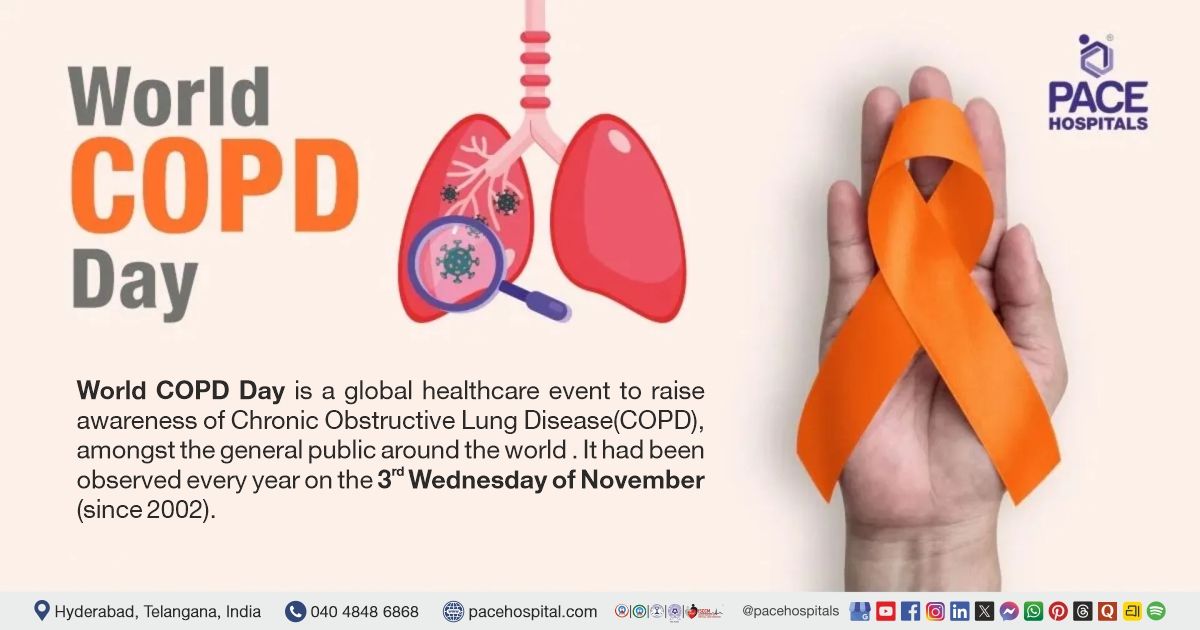
World COPD Day had been observed every year on the third Wednesday of November (since 2002). It is a global healthcare event to raise awareness of Chronic Obstructive Pulmonary Disease (COPD), amongst the public around the world. Activities have been held in over 50 countries by various organisations, making this day one of the world's most important COPD awareness and education events.
The Global Initiative for Chronic Obstructive Lung Disease (GOLD), with health care professionals and COPD patient groups from around the world, have collaborated to organise World COPD Day, an annual event dedicated to raising awareness of COPD through a variety of campaigns and activities aimed at highlighting the importance of education about the disease, and finding solutions to reduce the disease’s global burden.
World COPD Day is celebrated every 3rd Wednesday of November. This year, COPD Awareness Day will be held on November 18, 2026.
- World COPD Day 2025 - 19 November(Wednesday)
- World COPD Day 2024 – 20 November (Wednesday)
- World COPD Day 2023 - 15 November (Wednesday)
- World COPD Day 2022 - 16 November (Wednesday)
- World COPD Day 2021 - 17 November (Wednesday)
- World COPD Day 2020 - 18 November (Wednesday)
- World COPD Day 2019 - 20 November (Wednesday)
- World COPD Day 2018 - 21 November (Wednesday)
Necessity for COPD Awareness
Chronic Obstructive Pulmonary Disease (COPD) is the world's 3rd leading cause of death. As per year 2019, it was accounting for 32.3 lakh deaths. Smoking tobacco is one of the main causes of COPD. In addition to this, COPD under diagnosis also contributes to the hike in prevalence, which is financially burdensome for patients and limits their ability to learn about the disease and treatment options.
Studies reveal, evidence of variations in COPD prevalence rates and high levels of COPD underdiagnosis. The significant direct medical expenditures and indirect costs associated with treating COPD are mostly due to the late diagnosis of COPD. When compared to early diagnosis, late diagnosis of COPD is associated with a higher exacerbation rate, more comorbidities, and higher expenses.
The need for a COPD Awareness becomes transparent as a result of this. In addition to this, COPD is included in both the United Nations' 2030 Agenda for Sustainable Development and the World Health Organization's (WHO) Global Action Plan for the Prevention and Control of Noncommunicable Diseases (NCDs). In order to increase access to COPD diagnosis and treatment, the World Health Organisation (WHO) has been employing a number of strategies.
Importance of World COPD Day
Over the last 3.2 decades, the number of prevalent cases of COPD has increased by 974 lakhs. A study conducted in 2019, assessing public interest in COPD between 2004 and 2018, reported that COPD was highly underrepresented relative to its prevalence and effect on global health. This can be overcome by providing public awareness with regard to the disease, its symptoms and treatment, thereby improving the patient’s quality of life. Awareness of COPD risk factors may also help reduce the disease's prevalence. In addition to this, it raises awareness of the dangers of air pollution.
World COPD Day 2026 Theme
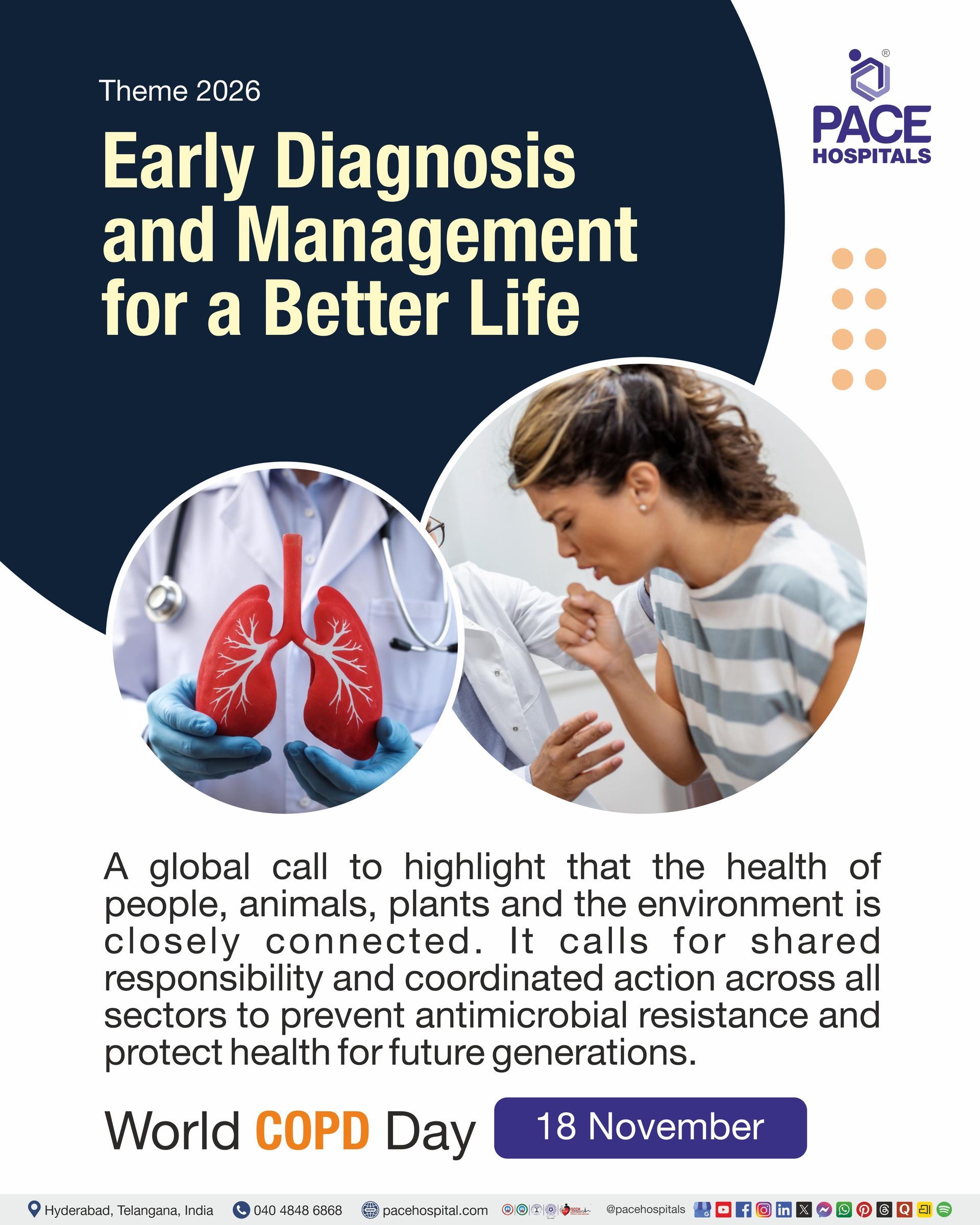
This year, 2026, the World COPD Day theme is "Early Diagnosis and Management for a Better Life". This theme highlights the importance of detecting COPD early and starting timely treatment. It encourages greater awareness and appropriate care to help people manage symptoms and improve their quality of life.
Year-by-Year Themes for World COPD Day:
- World COPD Day 2025 Theme: Short of Breath, Think COPD
- World COPD Day 2024 Theme: Know Your Lung Function
- World COPD Day 2023 Theme: Breathing is Life, Act earlier
- World COPD Day 2022 Theme: Your Lungs for Life
- World COPD Day 2021 Theme: Healthy Lungs - Never More Important
- World COPD Day 2020 Theme: Living Well with COPD - Everybody, Everywhere
- World COPD Day 2019 Theme: healthy lungs for all
- World COPD Day 2018 Theme: Never too Early, Never too Late
Warning signs of COPD
Warning signs play a significant role in early diagnosis and treatment, which includes:
- Difficulty in breathing
- Cough with increased mucus (yellow / green color) secretion
- Fever with chills
- Increased fatigue or weakness
- Sore throat
- Unusual headache and nasal congestion
How to Manage Breathlessness During Everyday Activities in COPD?
Breathlessness can make routine activities such as walking, bathing, dressing, cooking or climbing stairs difficult for people with Chronic Obstructive Pulmonary Disease (COPD). Certain breathing techniques, body positions and adjustments to daily routines may help reduce breathing effort, conserve energy and make everyday activities more manageable in the following ways:
- Pursed-Lip Breathing: For people with COPD who experience breathlessness during physical activity, breathing in through the nose and slowly exhaling through pursed lips may help keep the airways open for longer, improve control of breathing and ease the sensation of breathlessness.
- Pacing Daily Activities: For people who become breathless while performing routine tasks, maintaining a steady pace and taking short breaks between activities may reduce exertion and allow breathing to recover.
- Planning Everyday Tasks: For individuals with limited stamina, spreading demanding activities throughout the day and prioritizing essential tasks may help conserve energy and reduce fatigue.
- Comfortable Body Positioning: During episodes of breathlessness, sitting upright or leaning slightly forward with the arms supported may help reduce the effort of breathing and improve comfort.
- Breathing During Physical Effort: For people with COPD who experience breathlessness while bending, lifting or standing, exhaling during the effort may help avoid breath-holding and make movements easier to manage.
- Maintaining Physical Activity: For individuals with COPD, regular physical activity suited to their ability and pulmonary rehabilitation may help improve exercise tolerance, muscle strength and capacity to perform everyday activities.
Risk factors for COPD
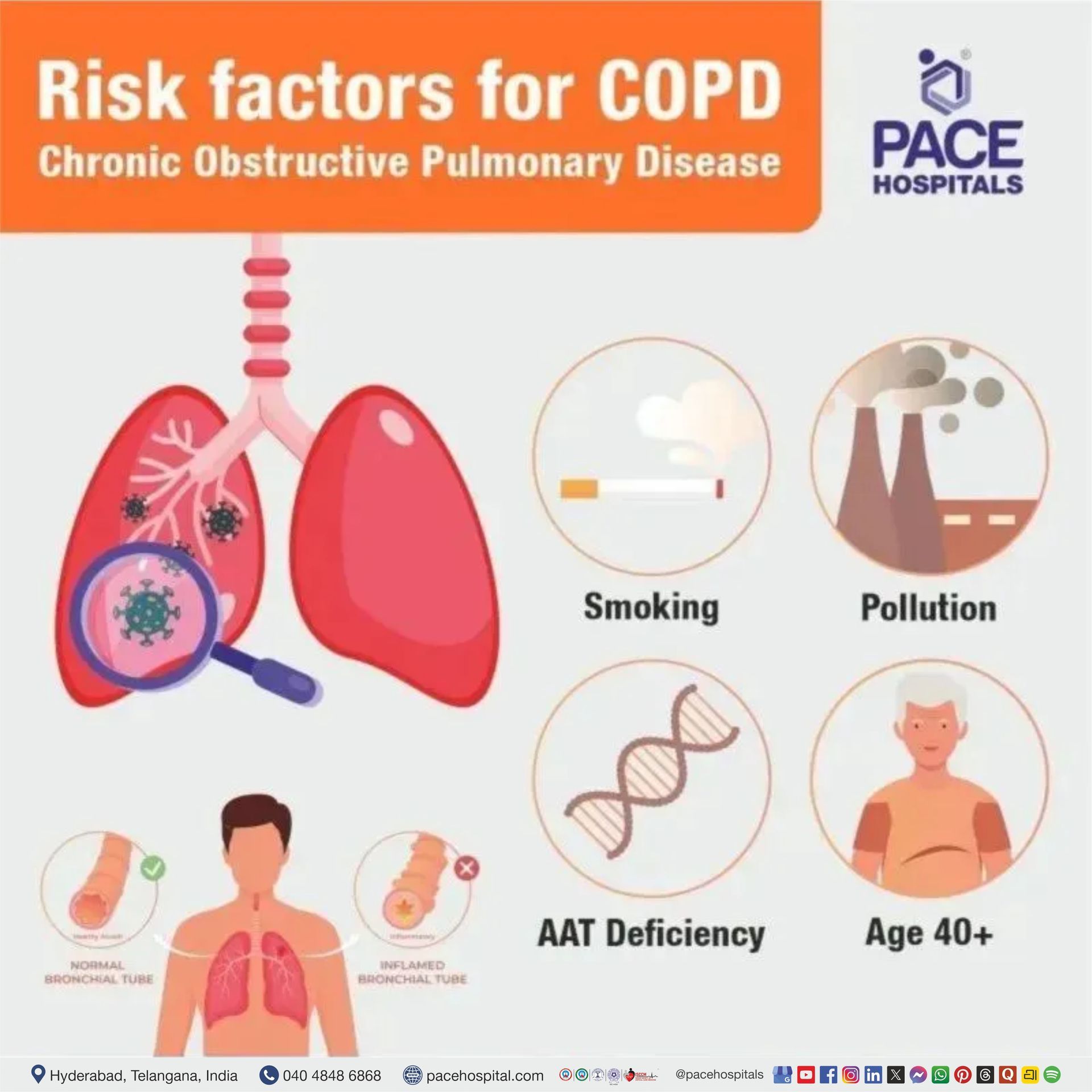
Smoking is the major risk factor for chronic obstructive pulmonary disease (which includes bronchitis and emphysema). 85 to 90% of COPD cases are caused by smoking, compared to non-smokers, female smokers have a roughly 13-fold increased risk of dying from COPD, whereas males who have smoked regularly have a nearly 12-fold increased risk. In addition to this, the other risk factors are:
- Family history
- Alpha-1 antitrypsin deficiency emphysema (a rare form of COPD, that is caused by a genetic condition that affects the body's ability to produce Alpha-1 protein, which protects the lungs.
- Evidence of previous childhood respiratory infection (medical history)
- Exposure to: Second hand smoke, Workplace toxins: chemicals, dust, and fumes and Air pollution
Preventive measures for COPD
Smoking is one of the important factors in COPD. To reduce the burden of COPD various government schemes are implemented such as:
- Restricting cigarette sales
- Increasing tobacco prices
- Lowering nicotine content
- Banning smoking in public places etc
The various other preventative factors that can be implemented individually are:
- Avoidance of passive smoking
- Avoidance exposure to air pollutants
- Being cautious to avoid exposure to harmful toxins such as chemicals, dust and fumes
- Occupational exposure prevention by improved indoor/outdoor air quality, reduced cooking, cleaner stoves and chimneys etc
If you have a persistent cough, breathlessness or wheezing, consult the Specialists at our Department of Pulmonology for COPD diagnosis, spirometry and long-term management.
Share on
Request an appointment
Fill in the appointment form or call us instantly to book a confirmed appointment with our super specialist at 04048486868
Appointment request - health articles
Recent Articles