National Epilepsy Day, 17 November 2025 - Importance & History
PACE Hospitals
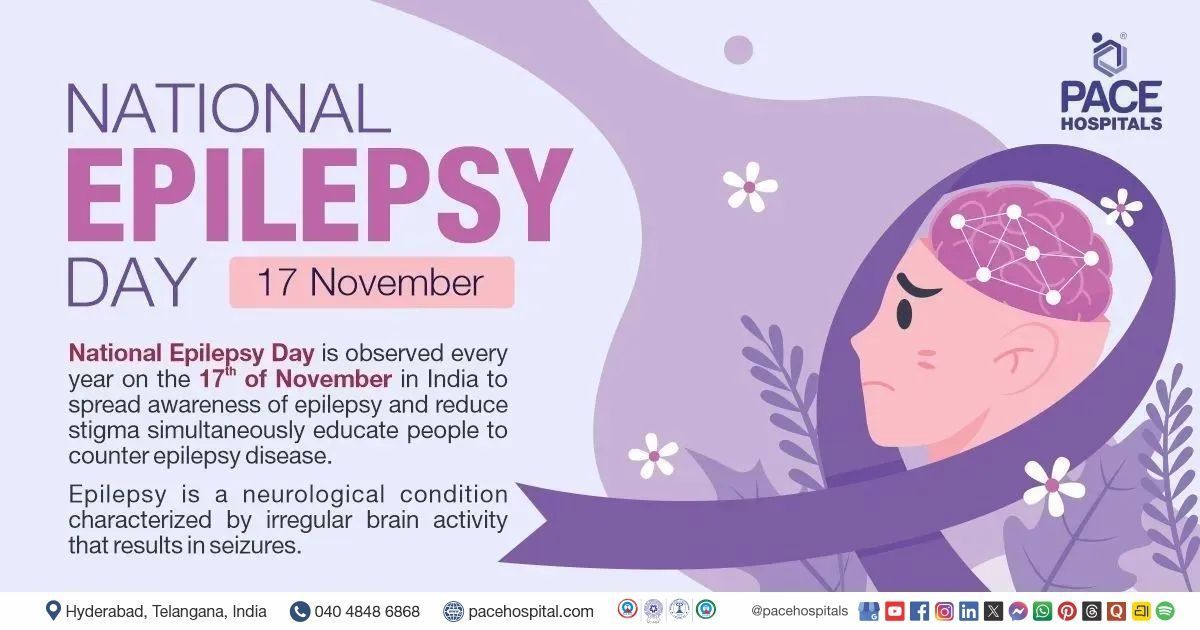
National Epilepsy Day is a national health care event observed in India on 17th November annually to raise awareness about epilepsy condition and its impact on individuals, families and communities who are affected by this disease.
On this day, various government and private organisations come together and conduct events, workshops and awareness programs to create awareness about epilepsy and clear the surrounding myths.
Importance of National Epilepsy Day
Epilepsy is a neurological condition characterised by irregular brain activity, which results in seizures or episodes of odd behaviour, sensations, and, on rare occasions, loss of consciousness. Epilepsy can affect men and women of all ages, ethnicities, and cultural backgrounds.
Seizures may occur in several ways. Some people with epilepsy stare impulsively for a small length of time during a seizure, while others shake their limbs or legs continuously. A single seizure does not always imply epilepsy. A diagnosis of epilepsy typically requires a minimum of two unprovoked seizures that happen at least 24 hours apart.
Most epilepsy patients can manage their seizures with medication, while some (rare) may require surgical treatment. Epilepsy is the second most prevalent and often-seen neurological disorder. According to a 2018 Indian study, 7 crore people globally have epilepsy, with over 1.2 crore Indians affected, contributed about one-sixth of the worldwide epilepsy burden.
Globally, it is considered that over seven crore individuals suffer from epilepsy, with the global prevalence of epilepsy estimated to be 5-9 per 1,000 populations. According to the Global Burden of Disease (GBD) analysis for 2010, epilepsy accounted for 0.7% of the worldwide burden, or more than 1.7 crore Disability-adjusted life years (DALYs), with low and middle-income countries (LMICs) reporting approximately 90% of these.
Except for a study that revealed a 5 year prevalence of 22.2 per 1,000 population among children aged 8–12 years, the prevalence rate of epilepsy among adults and older people ranged from 1.2 to 11.9 per 1,000 population.
It is estimated that approximately one-third of individuals diagnosed with epilepsy do not respond to treatment. Increased research is needed to understand pathophysiologic reasons better and develop more effective treatments. The significance of recognizing a specific day for epilepsy could raise awareness of the disease, which could benefit the patient in various ways, such as eliminating stigma towards the patient, increasing funding for medical research for the disease, and developing specific policies for patients, among others.
History of National Epilepsy Day
National Epilepsy Day was first initiated by the Epilepsy Foundation of India to reduce Epilepsy conditions in India. Epilepsy Foundation of India was formed by Dr. Nirmal Sury in 2009 in Mumbai. The Epilepsy Foundation is a non-profit charitable organisation that helps people suffering from this condition.
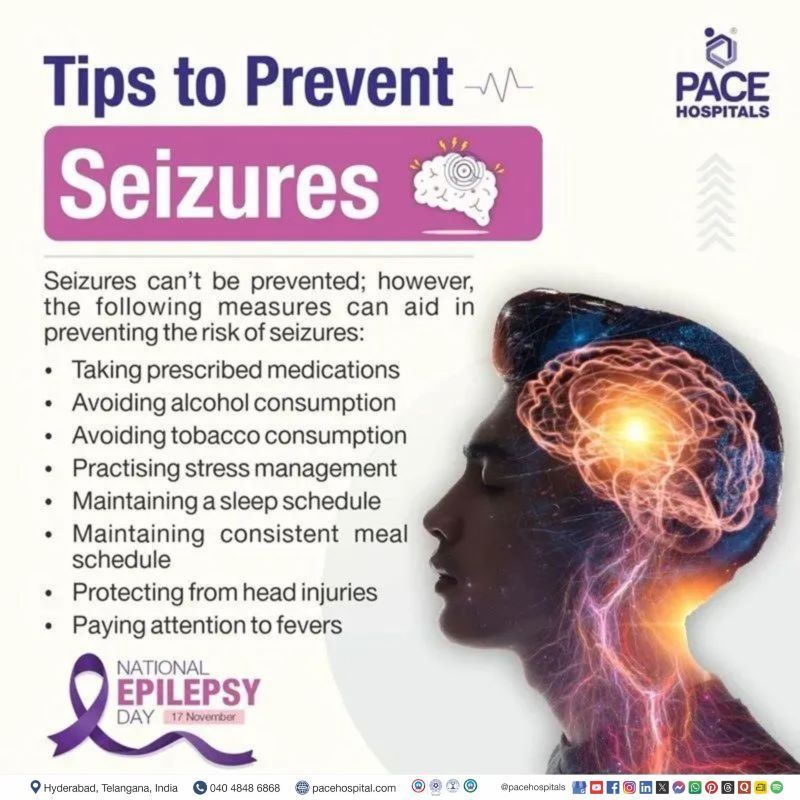
Tips to Prevent Seizures
Seizures can’t be prevented; however, the following measures can aid in preventing the risk of seizures:
- Taking prescribed medications
- Avoiding alcohol consumption
- Avoiding tobacco consumption
- Practising stress management
- Maintaining a sleep schedule
- Maintaining consistent meal schedule
- Protecting from head injuries
- Paying attention to fevers
Share on
Request an appointment
Fill in the appointment form or call us instantly to book a confirmed appointment with our super specialist at 04048486868
Appointment request - health articles
Recent Articles