World Encephalitis Day 22 Feb, 2023 – Theme & Importance

PACE Hospitals
World Encephalitis Day is a global healthcare event celebrated on the 22nd of February every year since 2013 with the goal intending to remind and cherish achievements made toward the control of encephalitis and encouraging everyone to join the growing movement in eradicating encephalitis as much as possible.
Through media featuring, events, and social media, the commemoration of World Encephalitis Day has touched over 29.5 crore people since its inception ten years ago.
Encephalitis is a dangerous brain illness that requires immediate treatment to reduce the risk of long-term consequences/death. Here, the brain's active tissues are inflamed due to any infection or an autoimmune reaction. The inflammation causes the brain to enlarge, resulting in headaches, stiff neck, photosensitivity, mental disorientation, and seizures.
Multiple outbreaks of encephalitis due to the unknown cause have occurred throughout India. Between 2008-2014, about 44,000 cases of encephalitis and approximately 6,000 fatalities were reported, primarily in Uttar Pradesh and Bihar. The year 2016 witnessed an increase in the intensity of encephalitis, with more than 125 children dying.
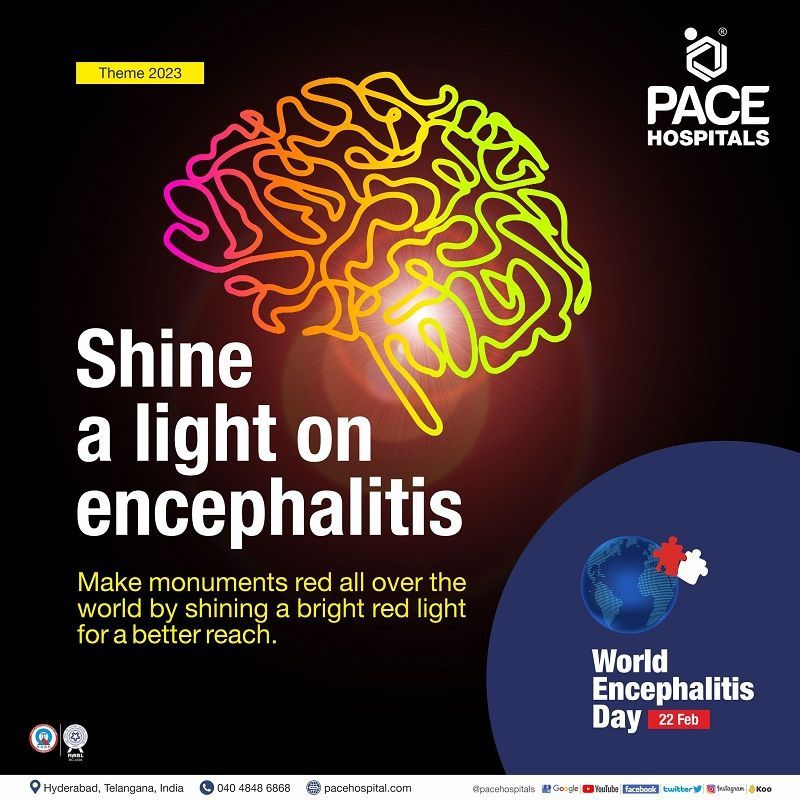
World Encephalitis Day 2023 Theme
This year 2023, World Encephalitis Day 2023 theme is "Shine a light on encephalitis", this year theme is focused on bringing up awareness about encephalitis and celebrating the 10th anniversary of WED. The organisers - Encephalitis Society launched a large-scale global campaign which urged the volunteers to make monuments red all over the world by shining a bright red light.
Currently, 177 landmarks and buildings from 26 countries have agreed to go red on the 22nd of February, thus raising awareness. As a part of the worldwide campaign, the XCyton building from Mental Health and Neuroscience Institute (NIMHANS) in Bangalore, India, has been selected to go red.
Importance of World Encephalitis Day (WED)
Severe neurological encephalitis can leave survivors with lasting brain damage. Annually, encephalitis affects 5,00,000 children and adults, or one person per minute worldwide.
Although encephalitis is more common than multiple sclerosis, motor neurone disease, bacterial meningitis, and cerebral palsy in many countries, there is little public knowledge of the condition. While the death rate is high, encephalitis survivors may be left with an acquired brain injury, causing a wide range of difficulties such as problems with memory and other cognitive skills, personality changes, emotional and behavioural challenges, making it difficult to return to school, work, family, and social life.
Encephalitis symptoms can coincide with various other diseases, ranging from flu-like sickness to headache, tiredness, unusual behaviour, difficulty talking or regulating movement, and seizures.
This makes it difficult for healthcare personnel to diagnose encephalitis accurately. With increased awareness, various beneficial results can be inferred, such as
- early screening of encephalitis, thus preventing it from advancing,
- reduction of stigma faced by patients with encephalitis,
- allocation of funding for medical research and
- forming particular policies for the patients etc.
Aim of Encephalitis Society
World Encephalitis Day (WED) has been organised by Encephalitis Society from the United Kingdom since 2013 through various campaigns. With rigorous campaigning resulting in accelerated awareness, the Encephalitis Society aim to achieve multiple goals by 2027. A few of them include:
- Make at least 50% of the general population aware of encephalitis in 10 countries.
- Touch at least 80,000 people through their support and services.
- Provide funding for encephalitis research or collaborate with six international guidelines on the treatment of encephalitis.
Preventing encephalitis
While Encephalitis could have several causes, such as viral infection, autoimmune inflammation, bacterial infection, and insect bites, there have been few cases where the cause hasn’t been identified. The best viral encephalitis preventive tips include:
- Good hygiene: By washing hands frequently with soap and water, especially after the toilet
- Avoid sharing utensils: Have separate utensils and cutlery.
- Immunisations: Get the necessary vaccinations before going to various destinations.
- Avoid mosquitoes and ticks: Get protected against mosquitoes and ticks with mosquito repellents and get rid of stagnated water.
Share on
Request an appointment
Fill in the appointment form or call us instantly to book a confirmed appointment with our super specialist at 04048486868
Appointment request - health articles
Recent Articles