International Kangaroo Care Awareness Day, 15 May 2026 | Importance & Benefits
PACE Hospitals
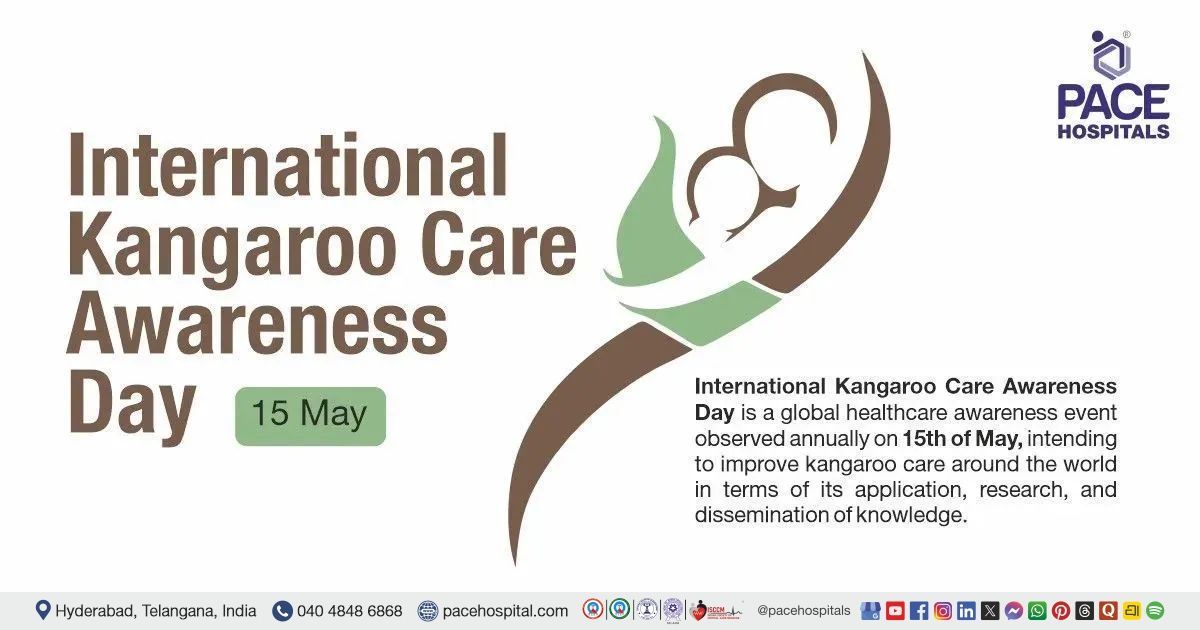
International Kangaroo Care Awareness Day or World Kangaroo Care Awareness Day is a global healthcare awareness event observed annually on 15th of May, intending to improve kangaroo care around the world in terms of its application, research, and dissemination of knowledge. On this day, many public and government hospitals, nursing staff would unite with the intention of spreading the importance and benefits of skin-to-skin contact care (kangaroo care).
Kangaroo care is a process of holding a baby in which the parent's skin is in direct contact with the baby's skin. The baby, who is only wearing a diaper, is propped up on the parent's bare chest in an upright position. Both mother and father can provide kangaroo care. It is often indicated for premature newborns while they are still hospitalised, but full-term babies can also be held with kangaroo care as it has many benefits for both mother and baby.
International Kangaroo Care Awareness Day 2026 Theme
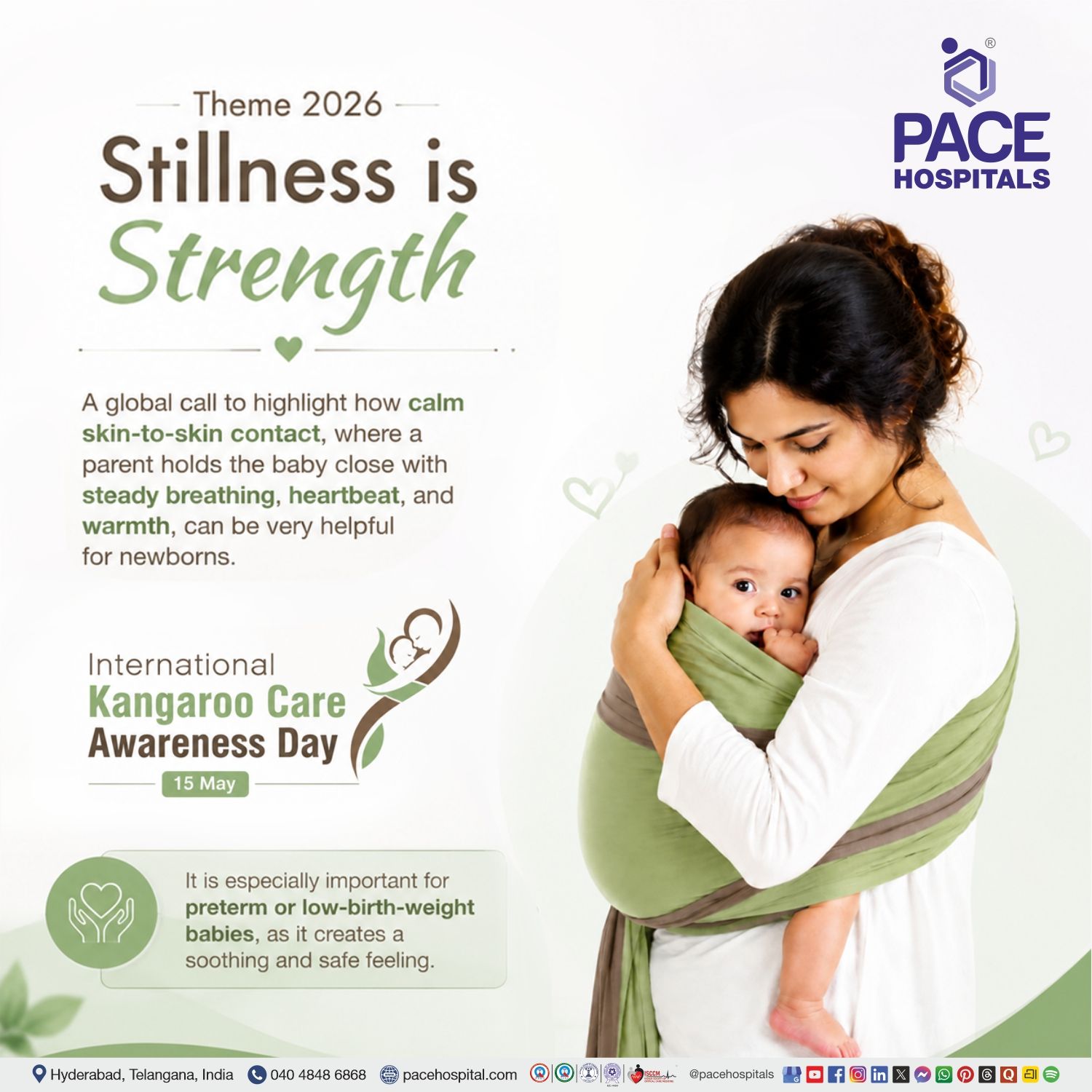
This year, 2026, the International Kangaroo Care Awareness Day Theme is "Stillness is Strength”. This theme highlights how calm skin-to-skin contact, where a parent holds the baby close with steady breathing, heartbeat, and warmth, can be very helpful for newborns. It is especially important for preterm or low-birth-weight babies, as it creates a soothing and safe feeling.
It also shows that this simple act of holding the baby gently and quietly can support stability,
strength, and brain development, helping the baby grow and recover in a better way.
Year By Year Themes for International Kangaroo Care Awareness Day
- International Kangaroo Care Awareness Day 2025 Theme: In My Arms, You Thrive
- International Kangaroo Care Awareness Day 2024 Theme: Embrace the Magic
Importance of International Kangaroo Care Awareness Day
Out of 13 crore babies born yearly, an estimated 40 lakh infants die each year within their first four weeks of life. As per World Health Organisation (WHO) 10% of all newborns globally are either low birth weight or preterm (i.e., delivery less than 37 weeks of gestational age). Infants born with low birth weight or before term are at higher risk of newborn death, morbidity, restricted growth, and chronic disease.
Incubators can aid in improving outcomes in high-risk infants, but their availability in low- and middle-income countries, where 99% of all neonatal deaths occur, has been questioned. In such locations, the need of low-cost alternatives and effective ways of providing newborn care are on top-notch.
Newborns who are born prematurely or with a low birth weight can benefit from an intervention called "kangaroo mother care" (KMC). Dr Edgar Rey Sanabria first presented Kangaroo mother care in Bogota, Colombia, in 1978 as an alternative to incubators for low-birth-weight infants. By keeping the newborn's temperature and other vital sign indicators stable through skin-to-skin contact (with the parent) and the provision of breastfeeding, KMC will enhance neonatal outcomes, especially in preterm infants.
Studies have reported that infants with low birth weight (less than equal to 2000 g at birth) who underwent KMC had a low death count compared to those in traditional care (the control group) during the first-year follow-up. In addition, the KMC group had lower rates of school absenteeism, hyperactivity, aggression, externalisation, and socio-deviant behaviour among young adults than the control group after 20 years of follow-up.
The above stats stand out as the cornerstone for KMC in newborns and preterm infants. International Kangaroo Care Awareness Day creates awareness among the hospital's newborn mothers, expectant, and nursing staff about the importance of practising kangaroo care.
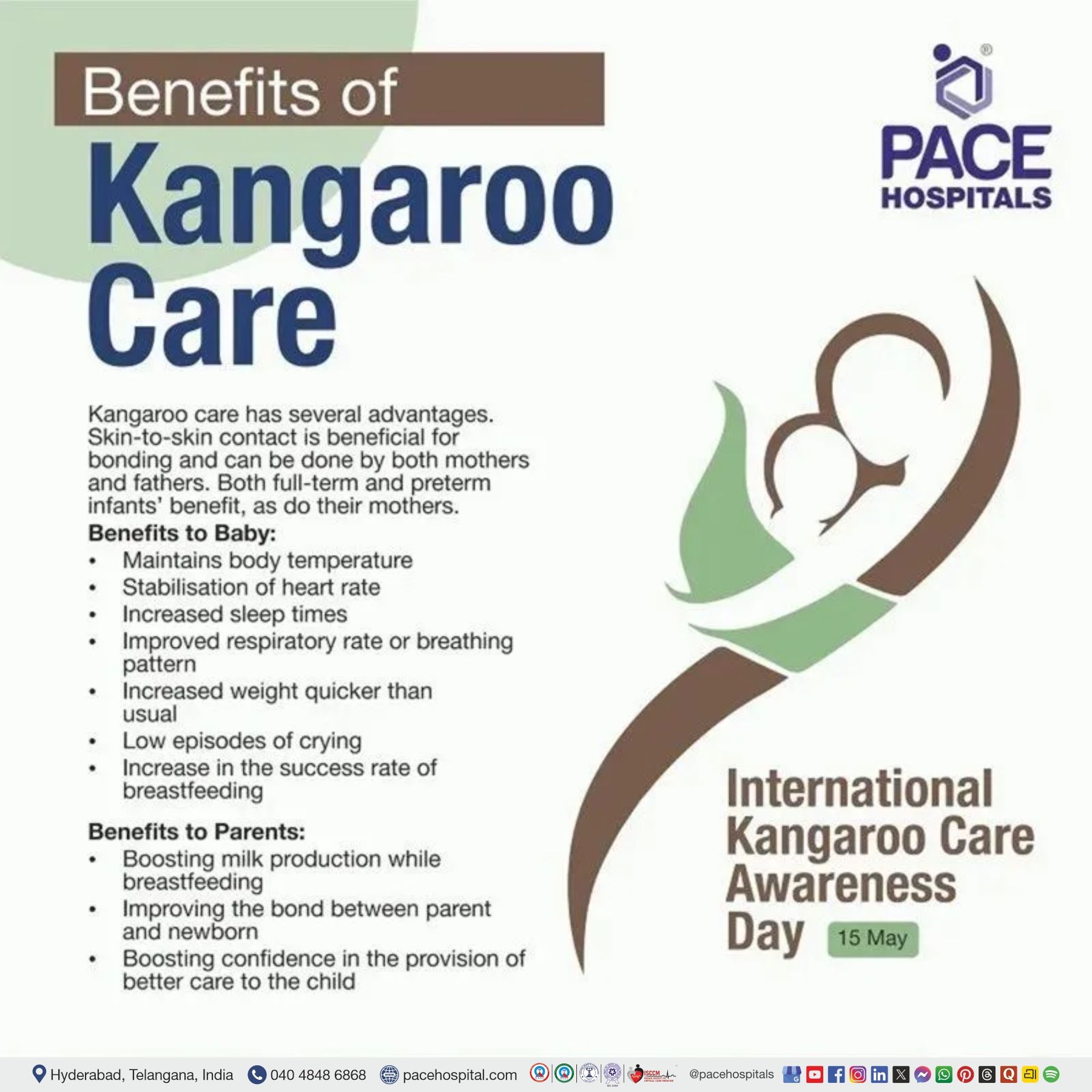
Benefits of Kangaroo Care
Kangaroo care has several advantages. Skin-to-skin contact is beneficial for bonding and can be done by both mothers and fathers. Both full-term and preterm infants’ benefit, as do their mothers.
Benefits to Baby:
- Maintains body temperature
- Stabilisation of heart rate
- Increased sleep times
- Improved respiratory rate or breathing pattern
- Increased weight quicker than usual
- Low episodes of crying
- Increase in the success rate of breastfeeding
Benefits to Parents:
- Boosting milk production while breastfeeding
- Improving the bond between parent and newborn
- Boosting confidence in the provision of better care to the child
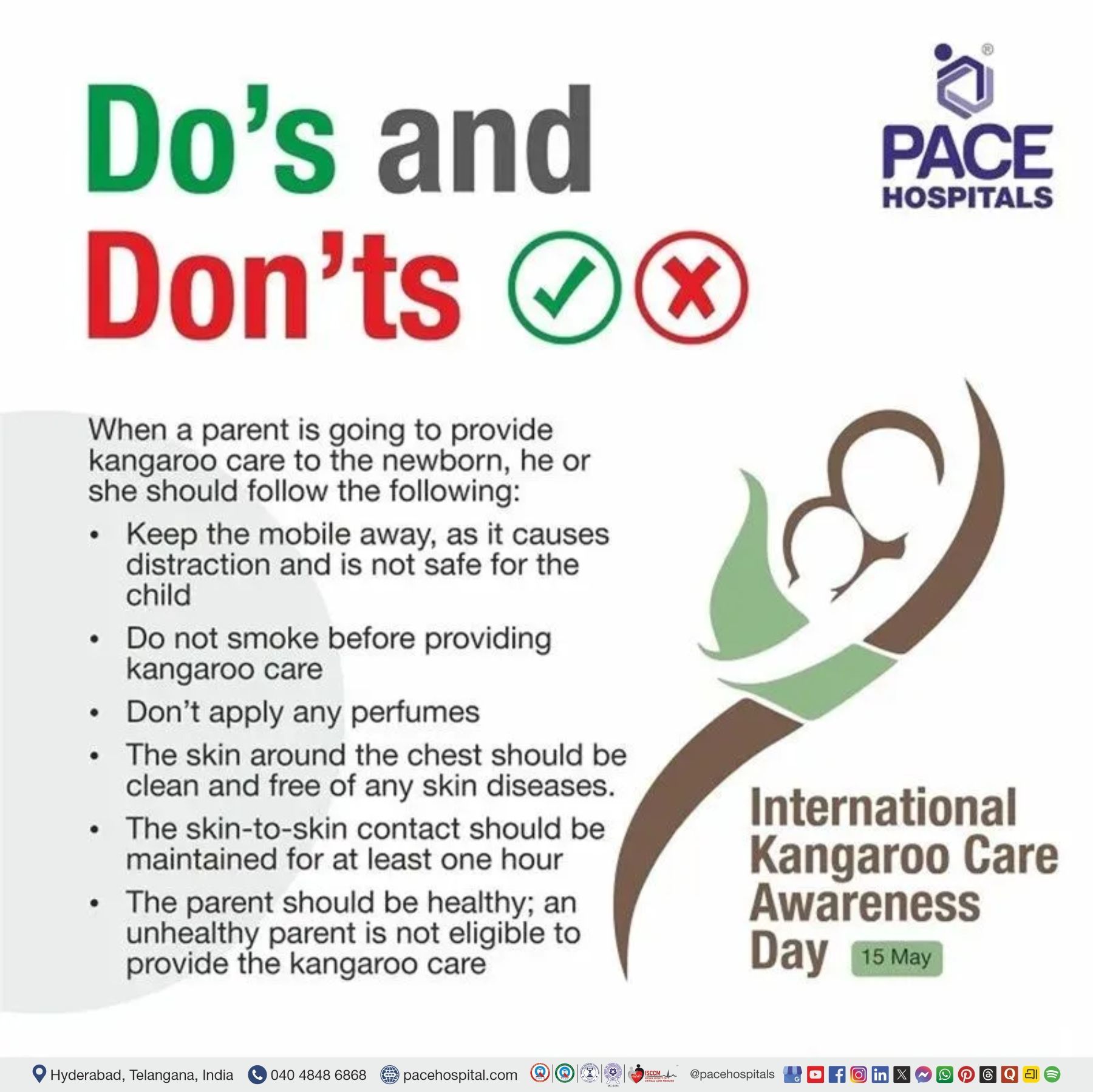
Dos and Don'ts in Providing Kangaroo Care
When a parent is going to provide kangaroo care to the newborn, he or she should follow the following:
Keep the mobile away, as it causes distraction and is not safe for the child:
- Do not smoke before providing kangaroo care
- Don’t apply any perfumes
- The skin around the chest should be clean and free of any skin diseases
- The skin-to-skin contact should be maintained for at least one hour
- The parent should be healthy; an unhealthy parent is not eligible to provide the kangaroo care
History of Kangaroo Mother Care
Kangaroo care first appeared in the late 1970s in Bogota, Colombia. During that period, premature infant mortality was around 70% due to infections, respiratory difficulties, and a lack of care. This necessitates the development of kangaroo care, as studies have found that babies held on their mothers' chests for long periods each day had a better survival rate and good overall development.
Share on
Request an appointment
Fill in the appointment form or call us instantly to book a confirmed appointment with our super specialist at 04048486868
Appointment request - health articles
Recent Articles