National Nutrition Week 1 – 7 Sept, 2026 | Importance, Theme & Health Tips
PACE Hospitals
The National Nutrition Week is a global healthcare event focussed on nutrition. In India, it is observed for the first week of September every year since 1982. During this day, various local and global communities gather around to advocate the importance of nutrition through various events and mediums.
A strong correlation is seen between a country's economic prosperity and the level of food production, as well as the extent of elimination of nutritional gaps. Nevertheless, it was discovered that there are various developed and developing countries in which one of the dominant issues is the prevalence of undernutrition.
Similarly, the Indian economy, which persists as one of the emerging markets, demonstrated the extent of malnutrition not only in the poor but also amongst all socio-economic groups. Steps are being taken to curb the nutritional gaps with serious crop diversification.
History of National Nutrition Week
It was in 1973 that the American Diabetes Association (ADA) launched the first National Nutrition Week campaign. The event was pushed into the public with radio service announcements, TV countdowns, news releases and even a presidential proclamation.
ADA advocated its position as an authority in nutrition along with the importance of good nutrition.
While India has fertile lands, famines from the British era impoverished the nation. India has experienced decades of remarkable shifts to counter it. During the independence era, due to the prevalence of various major nutritional diseases such as kwashiorkor, keratomalacia, beri-beri, pellagra, etc., the Green Revolution restructured farming, dramatically decreasing the extent of malnutrition.
With the worldwide growing popularity of National Nutrition Week, India too planned its own local events and launched National Nutrition Week in 1982 to cease the growing nutritional gaps.

National Nutrition Week Theme 2025
This year, 2025, the National Nutrition Week Theme is “Eat Right for a Better Life”. This theme sets to highlight the importance of healthy eating habits, balanced diets, and nutrition education, especially targeting students and families to promote overall well-being and prevent malnutrition.
Year by year, the themes for National Nutrition Week:
- National Nutrition Week Theme 2024: Nutritious Diets for Everyone
- National Nutrition Week Theme 2023: Healthy diet going affordable for all
- National Nutrition Week Theme 2022: Celebrate a World of Flavors
- National Nutrition Week Theme 2021: Feeding smart right from start
- National Nutrition Week Theme 2020: Eat Right, Bite by Bite
- National Nutrition Week Theme 2019: Har Ghar Poshan Vyavahar (Healthy Behaviour In Every Home)
Few Tips for Healthy Eating
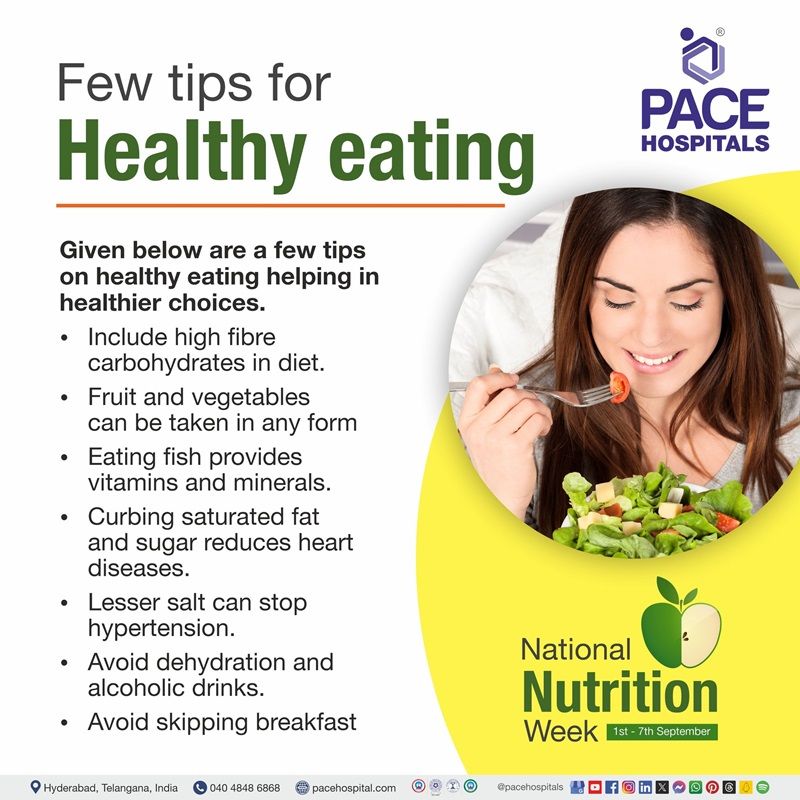
Given below are a few tips on healthy eating, helping in healthier choices.
A healthy diet comprises ingesting more or less the exact amounts of calories after understanding the average consumption of calories an individual consumes.
With extra calorific food, matching more than the needs of the body, it will result in weight gain with fat accumulation. A balanced diet is a must.
- Higher fibre starchy carbohydrates in the diet - At least 1/3rd of food must be of starchy carbohydrates such as potatoes, bread, rice, cereals, etc.
- Generous amounts of fruit and vegetables – They can be taken in either dried or juiced or in frozen form.
- Higher amounts of piscine diet – Diet containing fish (exclusively oily fish) as it is a good source of protein, vitamins, and minerals.
- Curbing saturated fat and sugar – cutting down fat and sugar can decrease cholesterol in the blood, thus reducing the risk of heart disease. Sugar reduction can stop the risk of diabetes and tooth decay. Therefore butter, cheese, cakes, biscuits etc must be cut down.
- Lesser salt: - Per day, no more than 6g of salt must be consumed. It can stop hypertension.
- Quench your thirst - Fluids must be consumed to avoid dehydration. Avoid alcoholic drinks.
- Avoid skipping breakfast - skipping breakfast to lose weight is a misconception, as a healthy breakfast can form a balanced diet for a healthy life.
How to Read Food Labels and Make Healthier Food Choices
Choosing healthy food is not just about what we eat at home. Packaged foods such as breakfast cereals, biscuits, bread, instant foods and ready-to-eat snacks can also influence our daily nutrient intake. Reading food labels before purchasing these products helps people understand what they are consuming.
Here are a few things to check on food packaging:
- Ingredients list: Ingredients are generally listed in descending order by weight. If sugar, refined flour or unhealthy fats appear among the first ingredients, consider choosing an alternative.
- Added sugar: Check the amount of added sugar rather than relying only on claims such as 'low fat' or 'healthy' on the front of the packet.
- Sodium content: Compare the sodium levels of similar products, particularly when choosing packaged snacks, sauces and instant foods.
- Saturated and trans fats: Check the fat content to identify products containing higher amounts of these fats.
- Serving size: Check the serving size mentioned on the nutrition label. The nutritional values displayed may apply to one serving rather than the entire packet.
- Expiry date and food safety details: Check the expiry or use-by date, storage instructions and FSSAI licence details before purchasing packaged foods.
Making it a habit to read food labels can help individuals compare products, avoid misleading packaging claims and make better-informed food choices.
Recommended Nutritional Intake
The Indian Council of Medical Research (ICMR) provides specific dietary guidelines tailored to the Indian population. These recommendations consider the traditional Indian diet, lifestyle, and prevalent health concerns such as diabetes and heart disease.
- Calories: The daily calorie requirement for an average adult range between 2,000 and 2,500 kcal, depending on age, sex, and activity level.
- Proteins: The FDA recommends that adults consume 50 grams of protein per day as part of a 2,000-calorie diet. However, protein needs vary depending on age, sex, activity level, and other factors. As per RDA guidelines, 0.8 grams of protein per kilogram of body weight is recommended.
- Carbohydrates: These should comprise 55-60% of total daily energy intake, primarily from the comforting and familiar complex carbohydrates like whole grains and vegetables that are staples in the Indian diet.
- Fats: Total fat intake should be less than 30% of total energy intake, with saturated fats contributing no more than 10%.
- Fibre: A daily intake of 25–30 grams of dietary fibre, primarily from fruits, vegetables, and whole grains, is recommended. This fibre-rich diet not only aids digestion but also empowers you to prevent constipation and maintain a healthy gut.
Share on
Request an appointment
Fill in the appointment form or call us instantly to book a confirmed appointment with our super specialist at 04048486868
Appointment request - health articles
Recent Articles