World Neuroendocrine Cancer Day, 10 November 2025 - Importance, Theme & History
Pace Hospitals
World Neuroendocrine Cancer Day is observed worldwide on the 10th of November annually to increase the awareness of neuroendocrine tumours (NETs) and to provide support to the NET community for improved diagnostics, treatments, care and research.
On this day, various local, international organisations and healthcare professionals join and conduct several events, awareness campaigns and educational webinars to raise awareness about misdiagnosed forms of neuroendocrine cancers.
Importance of World Neuroendocrine Cancer Day
Neuroendocrine tumours are malignancies that begin in neuroendocrine cells. These cells function similarly to nerve cells, that they send and receive messages within the neurological system. These specialised cells also function as hormones. Neuroendocrine tumours can develop in the lungs, appendix, rectum, small intestine, or pancreas.
Some tumours develop slowly, while others proliferate. Pain, lumps under the skin, tiredness, and weight loss are common symptoms. When these tumours create excess hormones, resulting in symptoms that might include diarrhoea, frequent urination, increased thirst, and dizziness.These symptoms are like those of other conditions, so neuroendocrine tumours are difficult to detect. Most of NET patients are given the wrong diagnosis where there are initially treated for the wrong condition.
Neuroendocrine tumours constitute only 0.5% of all cancers. Based on their appendiceal position, the incidence is around 2/100,000, with a female preponderance under 50. The most common primary locations are the gastrointestinal tract (62-67%) and the lung (22-27%).
Early neuroendocrine cancer diagnosis is essential for improved outcomes, yet it takes approximately of 5 years from initial symptoms to actual diagnosis worldwide. Because of this delay, 46% of patients are diagnosed with advanced-stage neuroendocrine carcinoma, making a cure less likely. Therefore, the World Neuroendocrine Cancer Day is intended to raise awareness about all types of Neuroendocrine tumours, push for scientific developments with a focus on identified unresolved needs, and provide a platform for global collaboration to address the numerous obstacles that NET patients and the medical community face in obtaining a timely diagnosis and accessing the most effective treatment, support, and care.
World Neuroendocrine Cancer Day 2025 Theme
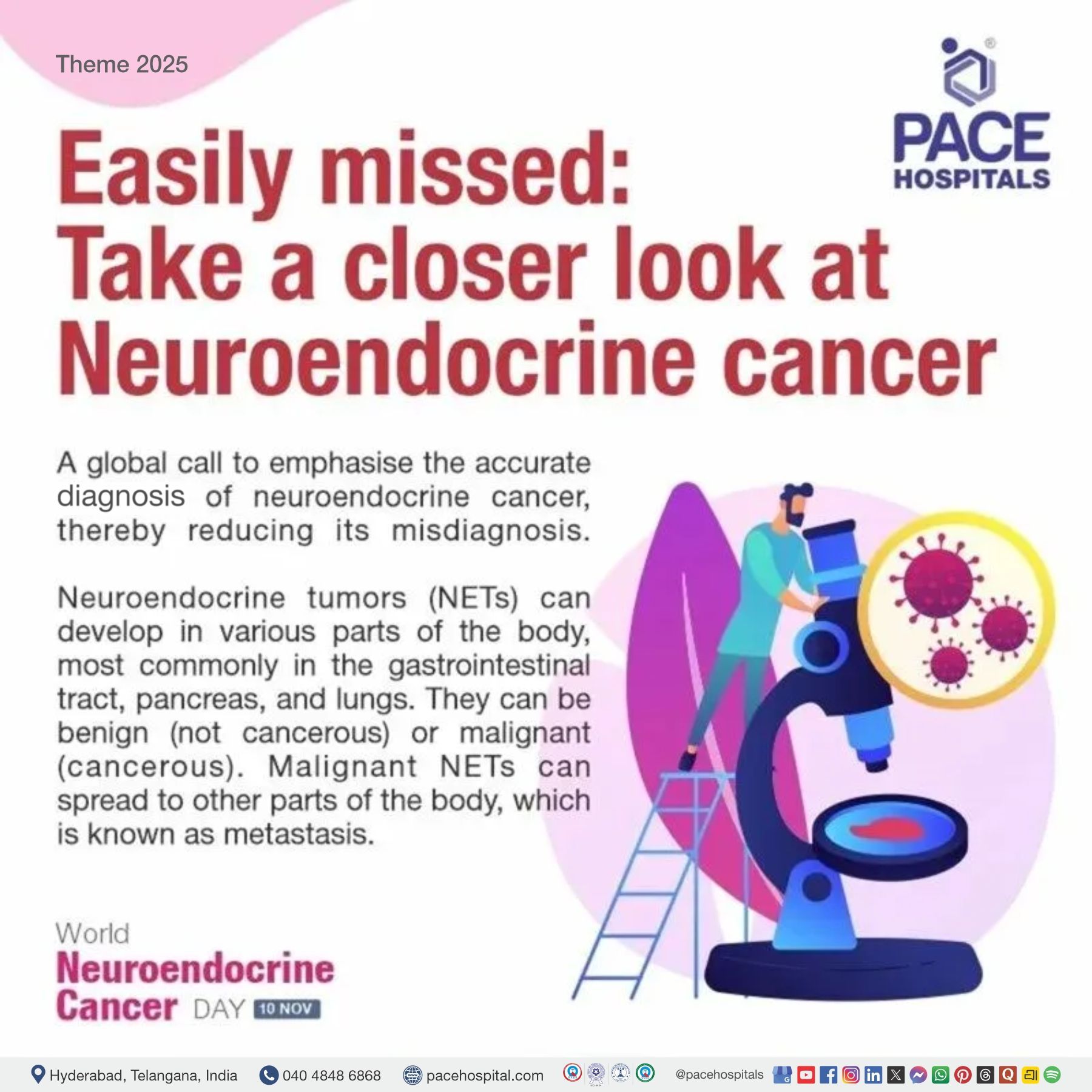
This year, 2025, the World Neuroendocrine Cancer Day Theme is “Easily missed: Take a closer look at neuroendocrine cancer”. This theme continues from 2023. It aims to highlight the common symptoms that can be mistaken as different conditions, but that can be an indication of neuroendocrine cancer.
Year-by-Year Themes for World Neuroendocrine Cancer Day:
- World Neuroendocrine Cancer Day 2024 Theme: Easily missed: Take a closer look at neuroendocrine cancer
- World Neuroendocrine Cancer Day 2023 Theme: Easily missed: Take a closer look at neuroendocrine cancer
- World Neuroendocrine Cancer Day 2022 Theme: Know the symptoms. Push for diagnosis.
- World Neuroendocrine Cancer Day 2021 Theme: Know the symptoms. Push for diagnosis.
- World Neuroendocrine Cancer Day 2020 Theme: #LetsTalkAboutNets
- World Neuroendocrine Cancer Day 2019 Theme: #LetsTalkAboutNets
- World Neuroendocrine Cancer Day 2018 Theme: #LetsTalkAboutNets
History of World Neuroendocrine Cancer Day
In 2010, the World NET Community Steering Committee created a proclamation for the first Worldwide NET Cancer Awareness Day. Since then, every year, November 10th has been observed as World Neuroendocrine Cancer Day. World Neuroendocrine Cancer Day is also known as World NET Cancer Day. The event is currently coordinated by the International Neuroendocrine Cancer Alliance (INCA).
The zebra has become the NET community's mascot and international symbol. This is because the name "zebra" is commonly used in the medical field to refer to a rare illness or condition.
Preventive Measures Neuroendocrine Cancer
Neuroendocrine cancer can’t be prevented; however, the following are the measures that can aid to reduce the risk of NET:
- Physically active
- Quitting smoking
- Quitting tobacco usage
- Consuming moderate amounts of alcohol
- Consuming fewer products preserved with sodium
- Having less red meat and processed meat
- Consuming more vegetables and fruits
Share on
Request an appointment
Fill in the appointment form or call us instantly to book a confirmed appointment with our super specialist at 04048486868
Appointment request - health articles
Recent Articles