
Aortic Aneurysm Surgery, Procedure & Cost
PACE Hospitals offers comprehensive aortic aneurysm surgery in Hyderabad, India, delivering personalized aortic aneurysm treatment based on the size, location, and risk profile of the aneurysm. Our experienced cardiovascular surgeons perform aortic aneurysm repair surgery using advanced open and minimally invasive techniques, aiming to prevent rupture, restore normal blood flow, and protect vital organs. Each treatment plan is carefully tailored to ensure safety, precision, and durable outcomes.
Book an Appointment for Aortic Aneurysm Surgery
Aortic Aneurysm Surgery Appointment
Why Choose PACE Hospitals for Aortic Aneurysm Surgery?

Expert Cardiothoracic Surgeons Specializing in Complex Aortic Aneurysm Surgeries
Aortic Aneurysm Surgery with Excellent Outcomes & Improved Recovery Time
Transparent Aortic Aneurysm Surgery Cost with Insurance Support & Cashless Options
Recognized for excellence in healthcare delivery with
NABH, NABL, NBE/DNB, NABH Nursing Excellence, and ISCCM accreditations.
Doctors for Aortic Aneurysm Surgery
Dr. Seshi Vardhan Janjirala
Interventional Cardiologist, Specialist in Endovascular Procedures
14 years of expertise
Expertise
- Advanced catheter-based imaging and angiography for aortic aneurysm evaluation
- Endovascular aneurysm repair (EVAR / TEVAR) planning and procedural support
- Risk assessment and patient selection for endovascular versus open aortic repair
- Post-repair surveillance and catheter-based management of graft-related complications

Dr. Shriniwas Rajamouli Dussa
Cardiothoracic & Vascular Surgeon
24 years of expertise
Expertise
- Open and endovascular repair of thoracic and abdominal aortic aneurysms
- Surgical management of complex and high-risk aortic aneurysms
- Hybrid aortic procedures combining open surgery and endovascular techniques
- Comprehensive preoperative evaluation and long-term postoperative surveillance
What is Aortic Aneurysm Surgery?
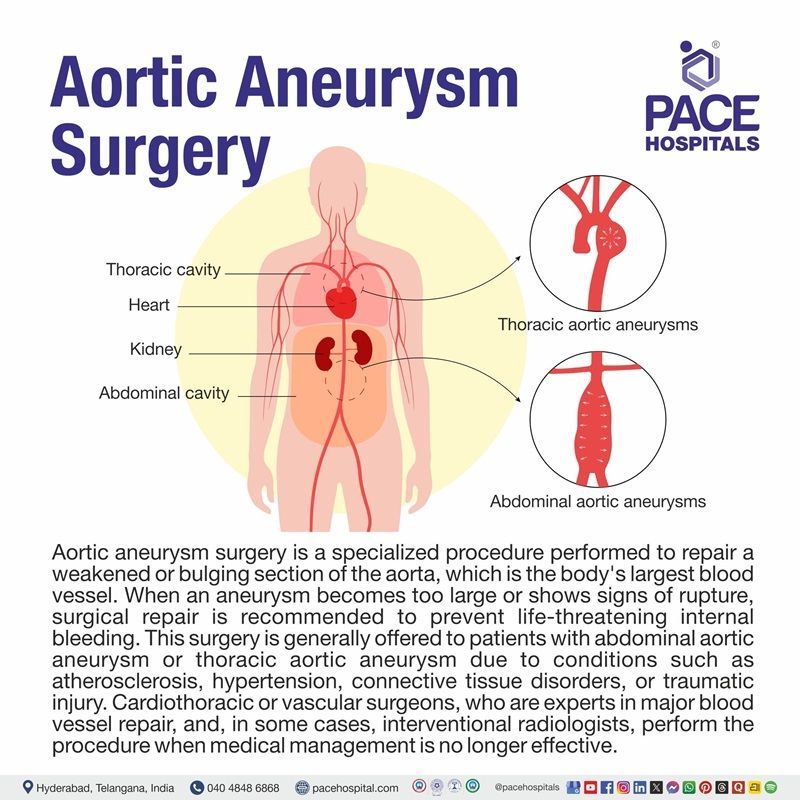
Aortic aneurysm surgery is a specialised procedure performed to repair a weakened or bulging section of the aorta (the body's largest blood vessel). When an aneurysm becomes too large or shows signs of rupture, surgical repair is recommended to prevent life-threatening internal bleeding. This surgery is generally offered to patients with abdominal aortic aneurysm (AAA) or thoracic aortic aneurysm (TAA) due to conditions such as atherosclerosis, hypertension, smoking, connective tissue disorders, or traumatic injury.
Cardiothoracic or vascular surgeons, who are experts in major blood vessel repair, and in some cases interventional radiologists, perform the procedure when medical management is no longer effective.
Types of Aortic Aneurysm Surgery
There are different types of aortic aneurysm surgery depending on where the aneurysm is located and its severity. These approaches are chosen based on the aneurysm’s size, location, and the patient’s overall health. Treatment options generally fall into two main categories:
- Open aortic aneurysm surgery
- Endovascular surgery for aortic aneurysm
Open aortic aneurysm surgery
This is a traditional procedure in which the surgeon makes a large incision in the abdomen or chest to reach the weakened part of the aorta. The diseased section is removed and replaced with a durable synthetic graft. The graft functions as a new vessel that restores normal blood flow. This procedure is recommended when the aneurysm is massive, fast-developing, infectious, or the patient's anatomy does not allow for stenting.
Endovascular surgery for aortic aneurysm
Endovascular surgery is a minimally invasive technique where surgeons insert a stent graft into the aorta through a small cut in the groin. Using X-ray guidance, the stent graft is positioned inside the aneurysm to create a new route for blood flow and reduce pressure on the weakened vessel wall. This approach is commonly known as endovascular aneurysm repair (EVAR) for abdominal aneurysms and thoracic endovascular aneurysm repair (TEVAR) for thoracic aneurysms.
Aortic Aneurysm Surgery Indications
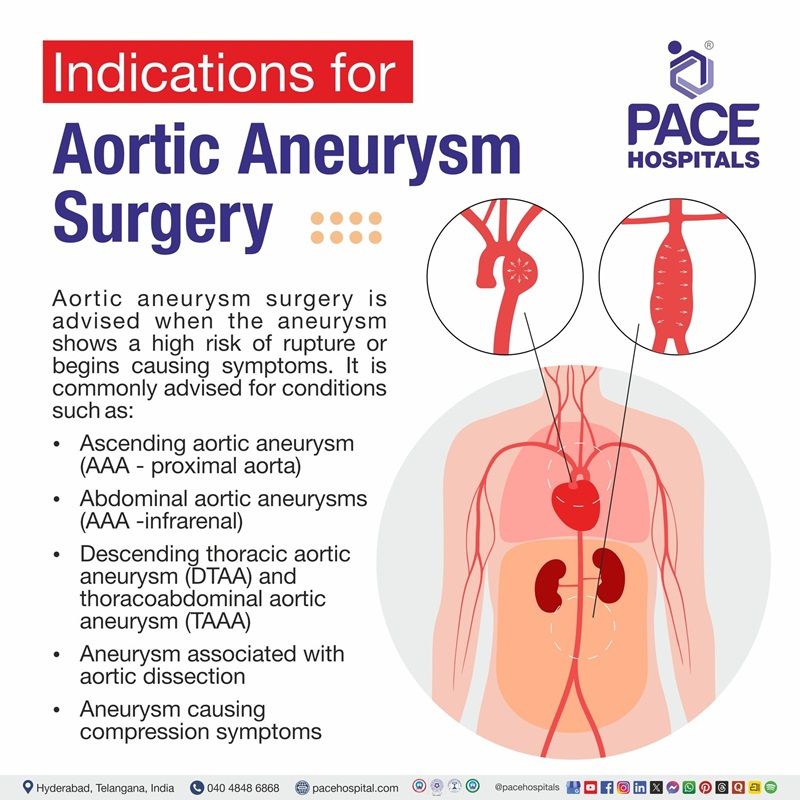
Aortic aneurysm surgery is advised when the aneurysm shows a high risk of rupture or begins causing symptoms. The main clinical indications of aortic aneurysm surgery include:
- Ascending aortic aneurysm (AAA - proximal aorta)
- Abdominal aortic aneurysms (AAA -infrarenal)
- Descending thoracic aortic aneurysm (DTAA) and thoracoabdominal aortic aneurysm (TAAA)
- Aneurysm associated with aortic dissection
- Aneurysm causing compression symptoms
Ascending aortic aneurysm (proximal aorta)
Ascending aortic aneurysms often require surgery because they carry a high risk of life-threatening complications such as rupture or acute aortic dissection. The ascending aorta is under significant pressure, and even moderate enlargement can rapidly progress. Surgery is recommended when the aneurysm reaches size, grows quickly, or occurs in patients with genetic disorders.
Abdominal aortic aneurysm (infrarenal AAA)
Infrarenal AAA requires surgical repair when the aneurysm becomes large enough (≥5.5 cm in men, ≥5.0- 5.5 cm in women) or grows rapidly, because the risk of rupture sharply increases. A ruptured abdominal aneurysm is often fatal due to massive internal bleeding.
Descending thoracic aortic aneurysm (DTAA) and thoracoabdominal aortic aneurysm (TAAA)
DTAA and TAAA are treated surgically because they risk major organs such as the lungs, spinal cord, kidneys, and digestive tract. As these aneurysms enlarge, grow rapidly or are saccular, they can rupture or cause dissection, leading to sudden death.
Aneurysm associated with aortic dissection
In this condition, when an aneurysm is associated with aortic dissection, surgery becomes critical because the weakened aortic wall is extremely prone to rupture. Dissection also disrupts blood flow to vital organs and can cause organ failure.
Aneurysm causing compression symptoms
Some aneurysms are large enough to compress neighbouring structures, such as the airway, esophagus, spinal nerves, or major veins. Compression can lead to difficulty breathing, difficulty swallowing, dysphonia (hoarseness), chest pain, and venous obstruction. In these cases, surgery is required to avoid worsening symptoms, organ failure, and probable rupture caused by ongoing growth.
Aortic Aneurysm Surgery Contraindications
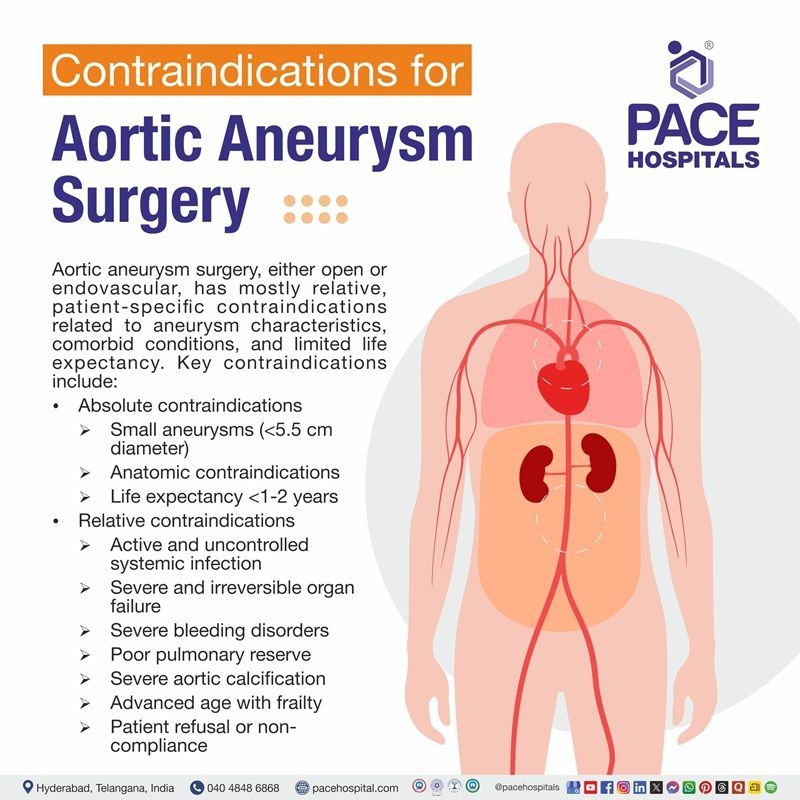
Aortic aneurysm surgery, whether open surgical repair or endovascular aneurysm repair, has few contraindications, which are mostly relative and patient-specific, with an emphasis on aneurysm features, comorbidities, and life expectancy. The contraindications for aortic aneurysm surgery include:
- Absolute contraindications
- Small aneurysms (<5.5 cm diameter)
- Anatomic contraindications
- Life expectancy <1-2 years
- Relative contraindications
- Active and uncontrolled systemic infection
- Severe and irreversible organ failure
- Severe bleeding disorders
- Poor pulmonary reserve
- Severe aortic calcification
- Advanced age with frailty
- Patient refusal or non-compliance
Absolute contraindications
- Small aneurysms (<5.5 cm diameter): Patients who have small aneurysms have a low risk of rupture, and the risk associated with surgery is higher than the natural risk of the aneurysm itself. Operating too early exposes the patient to major surgical complications without proven benefit. Therefore, surgery is not performed until the aneurysm reaches a certain size.
- Anatomic contraindications: Anatomic features, primarily for endovascular repair, absolutely preclude endovascular repair due to the inability to achieve secure stent-graft fixation and sealing; examples include excessive aortic tortuosity/angulation, hostile proximal neck (short, conical, heavily calcified, or thrombus-laden), and inadequate small-calibre iliac/femoral access vessels.
- Life expectancy <1-2 years: When a patient has a terminal illness or severely reduced life expectancy, the risks of aneurysm surgery outweigh the benefits. And the procedure may not improve overall survival or quality of life.
Relative contraindications
- Active and uncontrolled infection: Active systemic infection (such as sepsis) greatly increases the risk of postoperative complications, including graft infection and poor wound healing. Performing surgery during an untreated infection can lead to life-threatening sepsis and graft failure, so the procedure is postponed until the infection is controlled.
- Severe and irreversible organ failure: Conditions like end-stage heart failure, advanced liver disease, or irreversible kidney failure are condition that reduces the patient’s ability to survive major surgery. These organs cannot support the stress of anaesthesia, blood loss, and postoperative recovery, making surgery unsafe.
- Severe bleeding disorders: Patients with uncorrectable coagulation disorders are at extremely high risk of uncontrollable bleeding during and after the operation. Since open and endovascular aneurysm repair require blood vessel clamping and suturing, the inability to form clots safely makes surgery too dangerous.
- Poor pulmonary reserve: Patients with severe COPD or restrictive lung disease have reduced their ability to tolerate anaesthesia and postoperative ventilation. This increases the chances of respiratory failure, pneumonia, or prolonged ICU stay, and surgery will be postponed until lung function improves.
- Severe aortic calcification: An excessive amount of calcium deposits in the aorta can make clamping or suturing unsafe. This significantly raises the risk of stroke, embolisation, or aortic injury, making the procedure technically difficult.
- Advanced age with frailty:Frailty reduces a patient’s physiological reserve. Elderly frail patients have higher chances of complications, slow recovery, longer hospital stay, and mortality.
- Patient refusal or non-compliance: Even if surgery is medically recommended, the patient’s informed refusal becomes a contraindication. Aneurysm repair requires consent, long-term follow-up, and lifestyle changes, especially after EVAR; without patient agreement, the procedure cannot be performed.
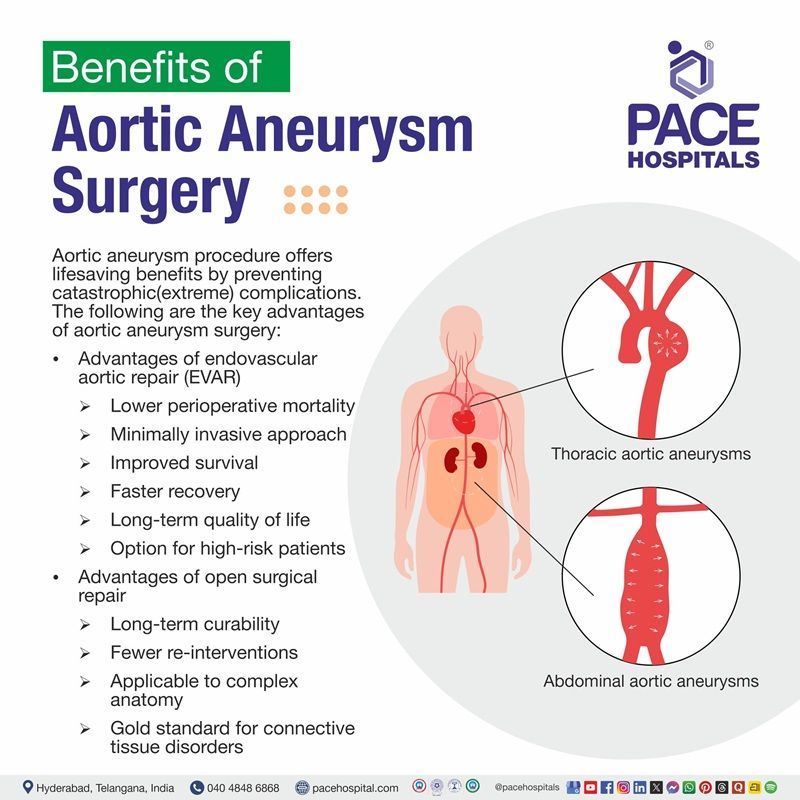
Advantages of Aortic Aneurysm Surgery
Aortic aneurysm procedure offers lifesaving benefits by preventing catastrophic(extreme) complications. By repairing the weakened section of the aorta before it fails, surgery restores vascular stability, improves long-term survival, and reduces the risk of sudden, life-threatening events. The following are the key benefits of aortic aneurysm repair:
Advantages of endovascular aortic repair (EVAR)
- Lower perioperative mortality
- Minimally invasive approach
- Improved survival
- Faster recovery
- Long-term quality of life
- Option for high-risk patients
Advantages of open surgical repair
- Long-term curability
- Fewer re-interventions
- Applicable to complex anatomy
- Gold standard for connective tissue disorders
Advantages of endovascular aortic repair (EVAR)
- Lower perioperative mortality: This intervention has shown lower death rates during the early postoperative period compared with open surgery. Because this procedure avoids large abdominal or thoracic incisions and does not require clamping of the aorta, the heart and lungs experience less stress, making this method significantly safer for elderly patients or those with heart or lung disease.
- Minimally invasive approach: Endovascular aortic repair (EVAR) is performed through two small groin incisions, allowing catheters to deliver the stent graft inside the aorta. This avoids opening the abdomen or chest, which reduces surgical trauma, postoperative pain, blood loss, and the risk of wound complications.
- Improved short-term survival: Endovascular aortic repair is gentler on the body and avoids major physiologic stress; patients typically have better short-term outcomes. They are less likely to require blood transfusions, prolonged ventilation, or ICU stays.
- Faster recovery: Most EVAR patients can walk within hours after surgery and return to normal activities within days to a couple of weeks. This is much faster than open repair, where recovery often takes 6–12 weeks. The reduced recovery time allows patients (especially older individuals) to regain independence sooner and experience fewer postoperative difficulties.
- Long-term quality of life: EVAR is less invasive, patients report: less pain, better mobility, greater independence, faster return to work and improved overall comfort. These benefits lead to a higher quality of life in the months following treatment.
- Option for high-risk surgical patients: Many patients with severe comorbidities cannot tolerate the stress of open surgery, which makes EVAR offer these individuals a safe alternative.
Advantages of open surgical repair (OSR)
- Long-term curability : Open repair involves completely removing the diseased part of the aorta and replacing it with a synthetic graft. This graft becomes a permanent part of the aorta and rarely fails. Open-heart surgery for aortic aneurysm provides a definitive solution with excellent long-term stability.
- Fewer re-interventions: While EVAR patients must undergo lifelong imaging and may require additional procedures for issues, open repair patients generally experience a lower need for secondary procedures. Once the graft is healed and incorporated, the risk of future aneurysm-related complications is significantly reduced.
- Applicable to complex anatomy: Some aneurysms have structures or locations that prevent EVAR, such as a very short or sharply tilted neck, involvement of the visceral arteries, excessive arterial tortuosity, and substantial calcification or thrombus. Open heart repair does not rely on anatomical restrictions to achieve sealing, making it highly effective for complex or challenging aneurysm anatomies.
- Gold standard for connective tissue disorders: Patients with genetic conditions such as Marfan syndrome have inherently weak aortic tissue that does not respond well to stent-based repairs. In certain cases, open repair provides a more secure and long-lasting fix, overcoming the limitations of stent grafts in fragile tissues.
Get a Free Second Opinion for Aorta Aneurysm Surgery
At PACE Hospitals, we are committed to providing our patients with the best possible care, and that includes offering second medical opinions with super specialists for treatment or surgery. We recommend everyone to get an expert advance medical second opinion, before taking decision for your treatment or surgery.
Aorta Aneurysm Repair Surgery Step by Step
Procedure steps for aortic aneurysm repair surgery are:
Before aortic aneurysm surgery
- If instructed by the surgeon, patients must complete all necessary preoperative tests. These tests may include blood tests, chest X-rays, aortic CT angiography, and an electrocardiogram (ECG) to check heart function. The surgeon may also order more imaging, like an echocardiogram or pulmonary evaluation, based on the patient’s health condition.
- Before surgery, patients may need to go to a preoperative assessment clinic. During this visit, the care team goes over medical history, medications, risks from anesthesia, and the surgical plan.
- Patients who are undergoing endovascular repair may need detailed vascular imaging to evaluate vessel anatomy, while those scheduled for open repair may require cardiac fitness.
- Patients need to stop taking blood-thinning medications before surgery. Ensure patients are clearly informed about when to discontinue anticoagulants, as continuing these could increase bleeding risk during the procedure.
- Patients who are using anticoagulants or NSAIDs may need temporary medication adjustments or bridging therapy based on cardiologist or haematologist recommendations. Patients should never stop taking these drugs without physician guidance. They must continue them until the doctor confirms when it is safe to pause.
- Patients need to fast for 8 hours before surgery, avoiding all food and drinks unless the anesthesiologist instructs otherwise. Clear instructions about fasting, water intake, and medication timing must be followed closely to ensure safe anesthesia.
During aortic aneurysm surgery
- Anaesthesia and monitoring: The procedure is performed under general anaesthesia to ensure complete immobility and optimal cardiorespiratory control. The anaesthesiologist will watch for vitals during the surgery. In selected patients undergoing EVAR, monitored anaesthesia care or regional anaesthesia may be used, depending on patient stability and anaesthesiologist preference.
- Surgical technique: The surgeon selects either of the two approaches, and the choice depends on the aneurysm size, location, anatomy, and patient health status. These are:
- Endovascular aneurysm repair (EVAR): During EVAR, the surgeon makes two small groin incisions to access the femoral arteries and advances guidewires and catheters into the aorta using X-ray imaging. A stent graft is carefully positioned across the aneurysm so that blood flows through the graft rather than the weakened aortic wall. Once deployed, imaging is repeated to ensure correct placement and confirm that there are no leaks around the graft.
- Open surgical repair (OSR): In open surgical repair, a larger incision is made in the abdomen or chest to expose the aorta directly. The surgeon places clamps on the aorta above and below the aneurysm to temporarily stop blood flow, then opens the aneurysm sac and removes any clot or debris. A surgeon places a durable synthetic graft and stitches it to replace the weakened section of the aorta, and the aneurysm wall is often wrapped around it for reinforcement. After the graft is secured properly, blood flow is restored, and the surgeon carefully checks for bleeding, graft stability, and organ protection.
Intraoperative care
- Throughout the surgery, the surgical team carefully manages hemostasis to minimise blood loss and ensure a clear operative field.
- Continuous monitoring of blood pressure, heart rhythm, oxygenation, and urine output helps maintain organ function and detect any early signs of instability.
- During open repair surgery for abdominal aortic aneurysm, additional steps are taken to protect vital organs, such as the kidneys, intestines, and spinal cord, from reduced blood supply while the aorta is clamped.
- In EVAR, surgeons use fluoroscopic imaging guidance for accurate stent graft deployment, and the team also evaluates the final angiogram to confirm proper sealing of the aneurysm.
- Every step focuses on maximising patient safety while ensuring the repaired segment of the aorta is stable and functioning correctly.
After aortic aneurysm surgery
- After aortic aneurysm surgery, the patient will be taken to the recovery room or intensive care unit (ICU), so the team can closely monitor the patient's condition. The patient will be connected to machines that monitor heart rate, blood pressure, breathing rate, and oxygen levels, which is important after major vascular surgery.
- During the early recovery period, the surgery team will help patients begin gentle movement and breathing exercises are suggested to improve lung function and prevent complications. Nurses and respiratory therapists will encourage deep breathing and coughing exercises to keep the lungs clear, especially after open surgery.
- Patients may start standing, sitting, and walking short distances with assistance as soon as they can do so. Early mobilisation helps to improve circulation and supports healing. Pain will be managed with appropriate analgesic medications so that patients can be comfortable.
- Before discharge, patients will receive instructions on wound care, medications, physical activity restrictions, and follow-up appointments.
Aortic Aneurysm Surgery Complications
Surgery for an aortic aneurysm, whether it is open repair or endovascular repair, is generally effective in preventing rupture, but like all major vascular procedures, it carries certain risks. The potential risk depends on the patient’s age, health, aneurysm size and location, and whether the procedure is elective or performed in an emergency. Below are the problems after aortic aneurysm surgery:
- Bleeding
- Infection
- Damage to blood vessels
- Decreased blood flow
- Endoleak
- Heart problems
- Kidney damage
- Spinal cord injury
- Stroke
- Bleeding: Bleeding may occur during or after aortic aneurysm surgery because the aorta is the body’s largest blood vessel. Open repair has a higher risk of blood loss than endovascular repair (EVAR). Severe bleeding may require a blood transfusion or additional procedures to control it.
- Infection: Infection may affect the surgical incision, the stent graft (rare but serious), or the internal tissues. Most of the infections are superficial and respond well to antibiotics, but a graft infection may require further surgery.
- Damage to blood vessels: Damage to blood vessels can occur during surgery, particularly when surgeons work near major arteries. Smaller vessels in the pelvis, abdomen, or legs may also be at risk of injury. Such damage can lead to bleeding, decreased blood flow, or may require vascular repair during the procedure.
- Decreased blood flow to the legs or organs: During the surgery, blood flow to the legs, kidneys, or intestines may temporarily decrease. This can lead to leg pain, weakness, or organ damage if prolonged. EVAR may also cause reduced flow if the stent graft limbs become narrowed or blocked.
- Endoleak (EVAR-specific complication): An endoleak occurs when blood continues to leak into the aneurysm sac instead of staying contained within the stent graft. This can cause the aneurysm to grow again and may require repeat procedures. It is the most common complication of EVAR surgery.
- Heart problems: Heart problems like heart attack, arrhythmias, or heart failure may occur after surgery, especially in older patients or those with existing heart disease. This happens because the body undergoes stress during major vascular surgery. It is important to monitor to detect problems earlier.
- Kidney damage: During the surgery, reduced blood flow or contrast dye used in EVAR can temporarily or permanently affect kidney function. Patients with pre-existing kidney disease have a higher risk. Monitoring urine output and hydration helps protect the kidneys.
- Spinal cord injury: This complication is uncommon but is more associated with thoracic or thoracoabdominal aneurysm repair. Techniques like maintaining blood pressure and using spinal drains help reduce this risk. This is more common in thoracic aortic aneurysm surgery.
- Stroke: During surgery, if a blood clot or plaque fragments travel to the brain, it may cause a stroke (especially in thoracic aortic aneurysm repair). Symptoms may include weakness, speech problems, or vision changes. Careful surgical technique and blood-pressure control help prevent this.
Aortic Aneurysm Surgery Recovery
Recovery after aortic aneurysm surgery is as follows:
- Recovery time for abdominal aortic aneurysm surgery depends on whether the repair was open surgery or endovascular repair (EVAR/TEVAR). Most of the patients spend 1–2 days in the ICU for close monitoring of the heart, lungs, kidney function, and circulation. EVAR patients usually leave the hospital in 1–3 days, while aortic aneurysm open surgery patients may need 5–10 days, especially until bowel function returns and pain is well controlled.
- At home, patients commonly may experience fatigue and reduced stamina for many weeks. Surgeons suggest light activities that can help improve lung function and circulation, while lifting heavy objects is allowed for about 4–6 weeks. Pain medicines, wound care, and gradual activity increase are part of speed recovery.
- Follow-up imaging is important to detect any complications; EVAR involves lifelong CT or ultrasound scans to monitor for endoleaks or graft movement, whereas open repair requires periodic imaging every few years.
- Most patients who undergo elective surgery regain a good quality of life over time, with faster early recovery after EVAR and a slower but steady return to activity after open repair.
Questions that patients can ask about aortic aneurysm surgery to the health care team?
- Why do I need surgery for my aortic aneurysm?
- What size aortic aneurysm requires surgery?
- How long in hospital after aortic aneurysm surgery?
- What to expect after aortic aneurysm surgery?
- What are the risks if I delay or avoid surgery?
- What are the benefits and risks of each type of surgery?
- Should I stop any medications before surgery (blood thinners, diabetes medicines)?
- How long will the surgery take?
- What type of anaesthesia will I receive?
- How long will I stay in the ICU and hospital?
Aortic Aneurysm Surgery Cost in Hyderabad, India
The cost of Aortic Aneurysm Surgery in Hyderabad generally ranges from ₹2,80,000 to ₹6,50,000 (approx. US $3,375 – US $7,830).
The exact cost of aortic aneurysm surgery varies depending on factors such as the location of the aneurysm (thoracic or abdominal aorta), size and complexity of the aneurysm, type of procedure performed (open surgical repair or endovascular repair), use of stent grafts, patient risk profile, surgeon expertise, ICU stay, and hospital facilities — including cashless treatment options, TPA corporate tie-ups, and assistance with medical insurance wherever applicable.
Cost Breakdown According to Type of Aortic Aneurysm Surgery
- Abdominal Aortic Aneurysm (AAA) – Open Repair – ₹2,80,000 – ₹4,80,000 (US $3,375 – US $5,780)
- Thoracic Aortic Aneurysm (TAA) – Open Repair – ₹3,50,000 – ₹6,50,000 (US $4,210 – US $7,830)
- Endovascular Aneurysm Repair (EVAR) – ₹3,80,000 – ₹6,20,000 (US $4,580 – US $7,470)
- Thoracic Endovascular Aortic Repair (TEVAR) – ₹4,20,000 – ₹6,50,000 (US $5,060 – US $7,830)
- Complex / High-Risk Aneurysm Repair – ₹4,80,000 – ₹6,50,000 (US $5,780 – US $7,830)
- Redo Aortic Aneurysm Surgery –
₹4,50,000 – ₹6,50,000 (US $5,420 – US $7,830)
Frequently Asked Questions (FAQs) on Aortic Aneurysm Surgery
What is the success rate of aortic aneurysm surgery?
The success rate of ascending aortic aneurysm surgery shows about 97.5% survival at 30 days for planned repairs, dropping to around 70% if the aneurysm bursts first. Long-term survival reaches 72% at nearly three years for elective cases. Factors like patient health influence results, with fewer issues in non-emergency settings.
Which Is the best Hospital for Aortic Aneurysm Surgery in Hyderabad, India?
PACE Hospitals, Hyderabad, is a trusted centre for advanced aortic aneurysm treatment, offering comprehensive care for patients with abdominal and thoracic aortic aneurysms, complex vascular disease, and high-risk cardiovascular conditions.
We have highly skilled and experienced cardiothoracic and vascular surgeons, interventional specialists, anesthesiologists, and critical care teams manage aortic aneurysms using evidence-based protocols, advanced imaging guidance, and both open and minimally invasive endovascular techniques to improve safety and long-term outcomes.
We provide best services with state-of-the-art hybrid operation theatres, advanced imaging systems, dedicated cardiac and vascular ICUs, in-house diagnostics, and structured postoperative monitoring, PACE Hospitals ensures safe, effective, and patient-focused aortic aneurysm surgery — supported by cashless insurance facilities, TPA corporate tie-ups, and seamless documentation assistance.
When does an aortic aneurysm need surgery?
Surgery is required for abdominal aortic aneurysms that are greater than 5.5 cm in males or 5 cm in women, or if they are growing rapidly by 1 cm per year. If symptoms such as pain, leaking, or bursting occur, immediate repair is required. Close monitoring with scans helps to balance risks.
Can an aortic aneurysm return after surgery?
Yes. Aortic aneurysms can return after surgery, but it is uncommon, especially following open repair, where rates are lower than with stent-based methods. Recurrence can happen years later at the repair site or elsewhere due to ongoing vessel weakening or high blood pressure.
What is the life expectancy of an aortic aneurysm without surgery?
Without surgery, the life expectancy for an abdominal aortic aneurysm depends on size; small ones under 5 cm allow normal spans with monitoring, but larger ones over 6 cm lead to rupture risks within 1-2 years. Annual rupture odds rise from 1% for 4-5 cm to 25% for over 7 cm, cutting average survival post-rupture to months.
What Is the cost of Aortic Aneurysm Treatment in Hyderabad at PACE Hospitals?
At PACE Hospitals, Hyderabad, the cost of aortic aneurysm Treayment typically ranges from ₹2,70,000 to ₹6,20,000 and above (approx. US $3,255 – US $7,470), making it a cost-effective option for advanced aortic and vascular care compared to many premium hospitals in Hyderabad. However, the final cost depends on:
- Location and size of the aneurysm
- Open surgery vs endovascular (EVAR / TEVAR) approach
- Type and number of stent grafts used
- Patient’s overall health and associated medical conditions
- Surgeon expertise and technology utilised
- Duration of ICU and hospital stay
- Anesthesia, imaging, and monitoring requirements
- Diagnostic tests (CT angiography, echocardiography, blood tests)
- Medications, consumables, and postoperative care
For standard abdominal aortic aneurysm repairs, costs remain toward the lower end of the range, while thoracic, endovascular, or complex aneurysm repairs fall toward the higher side.
After a detailed vascular and cardiac evaluation, imaging review, and risk assessment, our specialists provide a personalised treatment plan and transparent cost estimate, aligned with your medical condition, recovery expectations, and financial planning needs.
How long does abdominal aortic aneurysm surgery take?
Abdominal aortic aneurysm surgery usually takes 2 to 4 hours, depending on whether open repair or endovascular repair is performed. EVAR is shorter because it uses a minimally invasive approach, while open repair takes longer due to a larger incision and direct aortic reconstruction.
Is aortic aneurysm surgery open-heart surgery?
Aortic aneurysm surgery for the abdominal aorta is not considered open-heart surgery because the heart is not opened, and a heart-lung machine is not used. Instead, vascular surgeons operate on the major blood vessels in the abdomen. Only aneurysms involving the ascending aorta or aortic root require open-heart techniques.
What is the surgery for an abdominal aortic aneurysm?
There are two main procedures used for abdominal aortic aneurysm: open surgical repair, in which the weakened aorta is replaced with a synthetic graft, and endovascular aneurysm repair, where a stent graft is inserted through groin arteries to reinforce the aneurysm from inside.
What are the complications of ascending aortic aneurysm surgery?
Complications from ascending aortic aneurysm surgery include bleeding, infection, stroke, or kidney issues soon after the procedure. Later risks involve graft leaks, false aneurysms at stitch lines, or heart rhythm problems. Breathing difficulties or prolonged stays in intensive care also occur.
What to expect after aortic aneurysm surgery?
After abdominal aortic aneurysm surgery, patients generally spend 1-2 days in intensive care unit and 4-7 more days in the hospital with monitoring for any bleeding or infection. At home it requires a routine care for recovery which may take around 4-6 weeks, and it starts with short walks and avoiding heavy lifts. Most resume normal life in few months, with check-ups every few years.
What to avoid when someone has an aortic aneurysm?
People with an aortic aneurysm should avoid heavy lifting, intense straining, and activities that sharply raise blood pressure. They should also avoid smoking and uncontrolled high blood pressure, as these increase the risk of aneurysm growth and rupture.
What is the biggest risk factor for aortic aneurysms?
Smoking is considered the biggest risk factor for abdominal aortic aneurysms in multiple large studies. It accelerates weakening of the aortic wall and greatly increases rupture risk. Other major risk factors include older age, male gender, high blood pressure, and family history.
What tests are done before aneurysm surgery?
Before the surgery, doctors perform imaging tests such as CT angiography, the most accurate method to assess size, shape, and blood flow. Ultrasound may be used for initial screening. Blood tests check kidney function, blood counts, and clotting. Heart evaluation, like an ECG or echocardiogram, is done to ensure safe anesthesia.
What is the prognosis of an aortic aneurysm after surgery?
Aortic aneurysm prognosis after surgery is excellent when repaired before rupture. Studies show around 90 to 95% long-term survival with elective repairs, especially with good blood pressure control and lifestyle changes. EVAR offers quicker early recovery, while open repair provides durable long-term results.
How aortic aneurysm is treated without surgery?
Doctors normally treat small abdominal aortic aneurysms without the need for surgery through close monitoring with regular ultrasound or computed tomography scans to detect the size and growth. Medications such as blood pressure-lowering drugs, such as beta-blockers or ACE inhibitors, reduce strain on the vessel wall, while statins manage cholesterol to slow expansion.
Why choose PACE Hospitals?
- A Multi-Super Speciality Hospital.
- NABH, NABL, NBE & NABH - Nursing Excellence accreditation.
- State-of-the-art Liver and Kidney transplant centre.
- Empanelled with all TPAs for smooth cashless benefits.
- Centralized HIMS (Hospital Information System).
- Computerized health records available via website.
- Minimum waiting time for Inpatient and Outpatient.
- Round-the-clock guidance from highly qualified super specialist doctors, surgeons and physicians.
- Standardization of ethical medical care.
- 24X7 Outpatient & Inpatient Pharmacy Services.
- State-of-the-art operation theaters.
- Intensive Care Units (Surgical and Medical) with ISO-9001 accreditation.


