
Congenital Heart Disease Diagnosis, Treatment & Cost
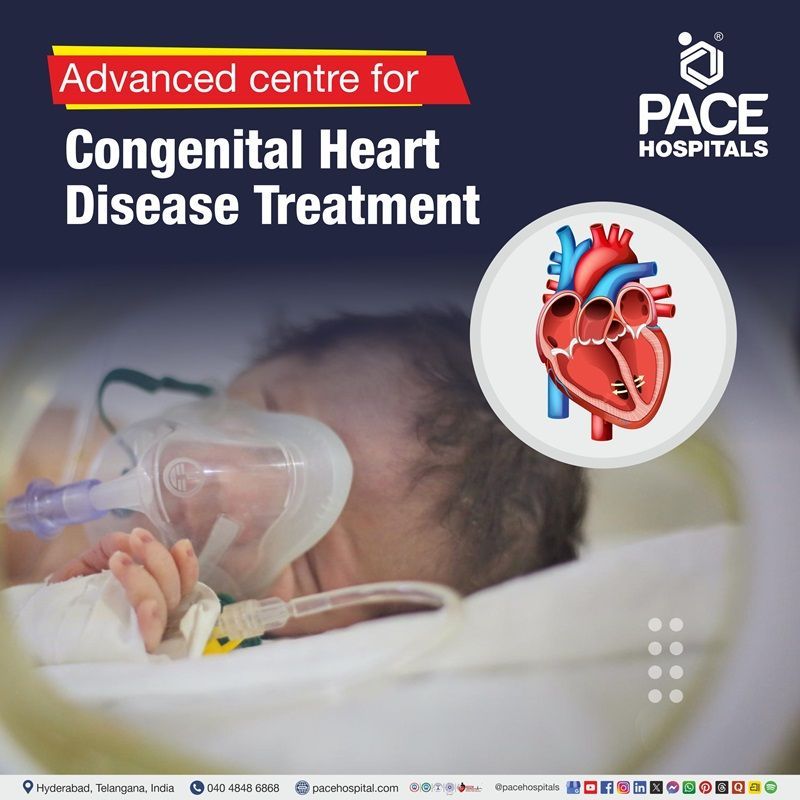
PACE Hospitals offers advanced congenital heart disease treatment in Hyderabad, India, delivering comprehensive care for all types of congenital heart defects, including cyanotic congenital heart disease, acyanotic congenital heart disease, and adult congenital heart disease. Our specialists ensure accurate congenital heart disease diagnosis through detailed clinical evaluation, echocardiography, cardiac imaging, and specialized tests, followed by personalized treatment plans for better long-term outcomes.
From congenital heart disease in babies to complex conditions in children and adults, we provide both medical management and interventional or surgical treatments with precision and high success rates.
Book Appointment for Congenital Heart Disease Treatment
Congenital Heart Disease Treatment Appointment
Why PACE Hospitals for Congenital Heart Defects Treatment?
Advanced Diagnostics with Echocardiography, ECG, Cardiac CT/MRI, Pulse Oximetry, and Cardiac Catheterization
Expert Pediatric and Adult Congenital Heart Specialists in Hyderabad for Complete Heart Defect Care
Personalized Congenital Heart Disease Treatment with Medications, Device Closure, Interventional Procedures, and Corrective Heart Surgery
24x7 Advanced Cardiac Care with ICU Support, Insurance Assistance, and Cashless Treatment Options
Recognized for excellence in healthcare delivery with
NABH, NABL, NBE/DNB, NABH Nursing Excellence, and ISCCM accreditations.
Congenital Heart Disease Diagnosis
The diagnosis of congenital heart disease (CHD) involves a comprehensive evaluation during both pregnancy and after birth to detect structural and functional heart abnormalities. It includes assessing medical history, clinical findings, and specialised tests that help cardiologists or pediatric cardiologists identify the condition accurately and plan appropriate care. This structured approach helps in early detection and effective management.
The following aspects are considered suitable diagnostic tests for congenital heart disease:
During Pregnancy (Prenatal Diagnosis)
- Medical history during pregnancy
- Physical examination during pregnancy
- Routine ultrasound
- Fetal echocardiography
- Genetic testing
- Maternal blood screening tests
In Children and Adults (Postnatal Diagnosis)
- Medical history
- Physical examination
- Screening / Bedside Tests
- Pulse oximetry
- Imaging Tests
- Chest X-ray
- Echocardiogram
- Cardiac MRI
- Cardiac CT scan
- Electrocardiogram (ECG)
- Cardiac catheterization
- Exercise stress test (mainly in older children and adults)
During Pregnancy (Prenatal Diagnosis)
Prenatal diagnosis of congenital heart disease involves maternal evaluation and specialized tests to detect fetal heart abnormalities early. Obstetricians and fetal medicine specialists consider the following before selecting appropriate diagnostic tests:
Medical history during pregnancy
- Is there a history of diabetes, hypertension, or thyroid disorders?
- Has there been any infection during pregnancy, like Rubella?
- Has there been exposure to alcohol, smoking, drugs, or any medications during pregnancy?
- Is there a family history of congenital heart disease or genetic disorders?
- Were there any complications in previous pregnancies or birth defects?
- Is there a history of consanguineous marriage (marriage between close relatives)?
Physical examination during pregnancy
Physical examination helps assess the overall health of the mother during pregnancy. It includes checking blood pressure, weight, and general physical condition. This helps identify underlying conditions that may affect fetal development. Regular examinations support early detection and management of potential risks.
Routine ultrasound
A routine ultrasound is performed to monitor fetal growth and development during pregnancy. It can detect structural abnormalities, including some heart defects. The anomaly scan done around mid-pregnancy is useful because it helps in the early identification of possible congenital heart disease.
Fetal echocardiography
Fetal echocardiography is a specialized ultrasound used to examine the fetal heart in detail. It identifies the heart structure, function, and blood flow patterns. This test is most recommended in high-risk pregnancies or when abnormalities are suspected. It is the most accurate prenatal test for detecting congenital heart defects.
Genetic testing
Genetic testing helps identify chromosomal abnormalities associated with congenital heart defects. Tests such as amniocentesis or chorionic villus sampling may be used in high-risk cases. Conditions such as Down syndrome are commonly linked to heart defects. These tests help confirm genetic causes.
Maternal blood screening tests
Maternal blood screening tests are simple, non-invasive tests used during pregnancy to evaluate the risk of chromosomal abnormalities. The first trimester screening, the quadruple marker test (quad screen), and the non-invasive prenatal testing (NIPT) are all common examples. These tests look for certain markers in the mother's blood to figure out how likely it is that the baby will have certain birth defects. If the results indicate a higher risk, additional confirmatory tests may be recommended.
In Children and Adults (Postnatal Diagnosis)
Postnatal diagnosis of congenital heart disease in children and adults is essential for identifying structural and functional abnormalities that may not have been detected at birth or during prenatal screening. These tests include:
Medical history
Medical history in babies and children helps identify symptoms, developmental concerns, and risk factors related to congenital heart disease. The doctor may ask the following questions:
- When did the symptoms, such as breathlessness or fatigue, first start?
- Is there difficulty in feeding (in infants) or reduced exercise tolerance?
- Are there any episodes of bluish discolouration of the lips or skin?
- Is there a history of frequent chest infections or poor weight gain?
- Has there been any history of fainting, dizziness, or palpitations?
- Is there a family history of congenital heart disease or genetic disorders?
- Are there any complications during birth or early childhood?
- Has the patient undergone any previous heart tests or treatments?
Physical examination
The doctor performs a physical examination to look for signs of congenital heart disease. The doctor listens to the heart for murmurs or abnormal sounds, checks breathing patterns, and observes for bluish discolouration of the lips or skin. Vitals like heart rate, oxygen levels, and blood pressure are assessed. The doctor also looks for signs like poor growth, swelling, or fatigue.
Screening / Bedside Tests
Pulse oximetry
Pulse oximetry is a basic screening test that is used to measure oxygen saturation in the blood. It helps in detecting low oxygen levels, which may indicate cyanotic heart defects. This test is commonly used in newborn screening and routine assessment. Abnormal results require further investigation.
Imaging Tests
- Chest X-ray: A chest X-ray can help doctors figure out the size and shape of the heart and lungs. It can show that the heart is larger or that excess blood is flowing to the lungs. This imaging test gives extra information that can help doctors figure out if someone has congenital heart disease. It is frequently utilized in addition to other diagnostic assessments.
- Echocardiogram: An echocardiogram is a test that uses sound waves to make detailed pictures of the heart. It is not painful. It helps check the heart's structure, such as its chambers, valves, and large blood vessels. The test is also able to detect abnormalities with the heart, like holes or valve defects, and show how blood flows through it. It is widely used and is considered to be the best test for finding congenital heart disease.
- Cardiac MRI: Cardiac MRI is a highly advanced imaging method that gives very clear pictures of the heart and the structures around it. It is especially helpful for examining complicated congenital heart defects. The test helps assess heart function, blood flow, and tissue characteristics. It is non-invasive but may take longer than other imaging methods. Cardiac MRI is often used when additional detailed information is required.
- Cardiac CT scan: Cardiac CT scan uses X-rays to produce detailed cross-sectional images of the heart and blood vessels. It helps detect structural abnormalities and evaluate complex defects. The test is quick and provides high-resolution images. It is useful in cases where precise anatomical detail is needed.
Electrocardiogram (ECG)
An ECG is a simple and common test that shows how the heart's electrical activity works. It helps find signs of heart strain or enlargement and abnormal heart rhythms. The test is quick, easy, and painless. It is frequently utilized as a preliminary screening instrument for individuals with suspected cardiovascular disease. It doesn't directly show structural problems, but it does give useful supporting information.
Cardiac catheterization
Cardiac catheterization is an invasive procedure, where a thin tube is inserted through a blood vessel and leads to the heart to check the heart function and the blood flow. It helps find structural problems, measure pressures, and check oxygen levels. This method can also be used for some treatments, such as closing defects. It is usually performed when a detailed evaluation or intervention is required.
Exercise stress test (mainly in older children and adults)
An exercise stress test assesses the heart's function during physical activity. It is mainly used in older children and adults with congenital heart disease. The test helps assess exercise capacity and detect hidden abnormalities. It provides important information about heart function under stress.
✅Congenital Heart Disease Differential Diagnosis
Differential diagnosis of congenital heart disease involves identifying other conditions that present with similar symptoms, such as breathlessness, cyanosis, or fatigue. This helps in accurate diagnosis and appropriate management. It has the following:
- Respiratory disorders (pneumonia, asthma)
- Pulmonary hypertension
- Congestive heart failure
- Anemia
- Sepsis
- Metabolic disorders
- Structural lung diseases
Respiratory disorders (pneumonia, asthma)
Respiratory disorders like pneumonia and asthma cause symptoms like rapid breathing and low oxygen levels, which look similar to congenital heart disease. However, these are lung conditions, not heart defects. Diagnosis is made using chest X-rays and lung function tests.
Pulmonary hypertension
Pulmonary hypertension causes breathlessness and fatigue, which can mimic congenital heart disease symptoms. It involves high blood pressure in the lungs. Diagnosis is confirmed with echocardiography and other imaging tests.
Congestive heart failure
Congestive heart failure from acquired conditions (e.g., myocarditis, cardiomyopathy) presents with fatigue, dyspnea, and edema that mimic untreated CHD. Unlike CHD, it typically lacks structural defects; Diagnosis requires echocardiography to assess ventricular function to differentiate.
Anemia
Anaemia reduces oxygen levels in the blood, causing fatigue and breathlessness, which may be confused with congenital heart disease. It is diagnosed through blood tests. Treatment based on the underlying cause of anaemia.
Sepsis
Sepsis is a severe infection that can cause symptoms like poor feeding, lethargy, and rapid breathing, which resemble congenital heart disease. It requires immediate medical treatment. Diagnosis is confirmed through blood cultures and clinical evaluation.
Metabolic disorders
Metabolic disorders can cause poor growth, fatigue, and developmental delays, similar to congenital heart disease symptoms. These disorders affect how the body processes nutrients. This condition diagnosis involves specialized metabolic tests.
Structural lung diseases
Lung diseases like bronchopulmonary dysplasia can cause breathing issues and cyanosis, mimicking heart disease. These conditions affect lung development and function. Imaging studies, such as X-rays, help in diagnosis.
✅Goals of Congenital Heart Disease Treatment
The goal of treating congenital heart disease is to improve heart function, reduce symptoms, and prevent complications. Treatment also focuses on ensuring proper growth and development, especially in children, with ongoing monitoring for long-term health. It includes:
- To correct heart defects and manage symptoms to improve heart function.
- To reduce symptoms like fatigue, breathlessness, and exercise limitations for a better quality of life.
- To prevent complications such as infections, arrhythmias, and pulmonary hypertension.
- To ensure proper growth and development, especially for children.
- To continuously monitor and follow up to manage treatments and avoid future problems.
Need clarity on congenital heart disease diagnosis or treatment? Get a free second opinion.
At PACE Hospitals, we are committed to providing our patients with the best possible care, and that includes offering second medical opinions with super specialists for treatment or surgery. We recommend everyone to get an expert advance medical second opinion, before taking decision for your treatment or surgery.
Treatment of congenital heart disease aims to correct heart defects and manage symptoms. It may include medical, interventional, or surgical approaches based on severity. The following are the congenital heart disease treatment options:
Non-pharmacological management
- Regular monitoring and follow-up
- Lifestyle modifications
- Oxygen therapy
- Infection prevention
Pharmacological management
- Diuretics
- Angiotensin-Converting Enzyme (ACE) inhibitors / Angiotensin II Receptor Blockers (ARBs)
- Beta-blockers
- Antiarrhythmic drugs
- Anticoagulants
Interventional / minimally invasive procedures
- Balloon valvuloplasty/angioplasty
- Device closure (e.g., ASD, VSD, PDA devices)
Surgical management
- Open-heart surgery
- Heart valve repair & replacement surgery
- Pacemaker implantation
- Implantable cardioverter-defibrillator (ICD)
- Heart transplant
Non-pharmacological Management
Non-pharmacological treatments help manage congenital heart disease by improving quality of life and supporting other treatments. It has the following:
Regular monitoring and follow-up
Regular check-ups are important for evaluating how effectively the heart is working, finding out complications early, and altering treatment plans as required. Doctors can check on the patient's heart health and see the extent to which treatments are working during follow-up visits. The frequency of these visits depends on the severity of the heart condition.
Lifestyle modifications
Making changes to lifestyle, such as eating healthy, avoiding physical strain, and keeping weight in check, can help lower stress on the heart. These changes can make people healthier overall and help avoid problems like high blood pressure. These changes can help keep the heart healthy if a person gets advice from a cardiologist.
Oxygen therapy
Oxygen therapy is given in congenital heart disease because it leads to low oxygen levels in the blood. This therapy helps reduce symptoms such as shortness of breath and fatigue by ensuring the body receives enough oxygen for proper function. Oxygen may be administered via nasal cannula or face mask, depending on the severity.
Infection prevention
People with congenital heart disease must prevent themselves from infections because heart defects can make them more likely to get infections like endocarditis. Vaccinations, dental care, and good hygiene are all important for lowering the risk of infection. Sometimes, doctors give patients prophylactic antibiotics before certain procedures to stop bacterial infections from happening.
Pharmacological Treatment
Pharmacological treatment is key in managing congenital heart disease, helping control symptoms and improve heart function. These medications complement other treatments for effective management. It includes:
Diuretics
Diuretics are drugs that help the body remove excess fluid by producing excess urine. Doctors often give them to individuals with congenital heart disease to help with symptoms like swelling and fluid retention. Diuretics help the heart work more easily by eliminating the buildup of extra fluid. This is especially helpful in cases of heart failure.
Angiotensin-Converting Enzyme (ACE) inhibitors / Angiotensin II Receptor Blockers (ARBs)
ACE inhibitors and ARBs reduce blood pressure and relax blood vessels. This makes the heart work less hard. These drugs can also help protect the heart from more damage by increasing blood flow and lowering the amount of workload. They are especially useful for controlling high blood pressure and stopping heart failure from getting worse.
Beta-blockers
Beta-blockers lower blood pressure and slow down the heart rate. This can help the heart pump more effectively. Doctors frequently provide them to people with arrhythmias or to help with symptoms of a fast heart rate. Beta-blockers can help people with congenital heart disease by making the heart work more easily, which can improve heart function and prevent complications from getting worse.
Antiarrhythmic drugs
People with congenital heart disease may have arrhythmias (irregular heart rhythms), which can be treated with antiarrhythmic drugs. These drugs work by stabilizing the heart's electrical activity, which helps bring the heart back to its normal rhythm and prevents complications. They are very important for controlling arrhythmias that can affect heart function.
Anticoagulants
Anticoagulants are drugs that help keep blood from clotting, which can happen in people with certain types of congenital heart defects. These drugs lower the risk of blood clots forming, which can cause stroke or other problems, by thinning the blood. They are often prescribed when there is a higher chance of blood clots forming because the blood flow is not normal.
Interventional / Minimally Invasive Procedures
Interventional and minimally invasive procedures are used to treat congenital heart defects without the need for open surgery, offering effective solutions with quicker recovery. They are:
Balloon valvuloplasty/angioplasty
Balloon valvuloplasty or angioplasty is a surgery that opens up the heart valves or blood vessels that have become too narrow. A small balloon is put through a catheter into the narrowed area and inflated to clear the blockage. This procedure is performed to help blood flow better and reduce stress on the heart in cases of valvular stenosis or narrowed arteries. It is minimally invasive and offers a shorter recovery time than traditional surgery.
Device closure (e.g., ASD, VSD, PDA devices)
Device closure is a minimally invasive procedure used to close abnormal openings in the heart, such as atrial septal defects (ASD), ventricular septal defects (VSD), or patent ductus arteriosus (PDA). A small device is delivered through a catheter and placed at the site of the defect to seal the hole. This method eliminates the need for open surgery and works very effectively to prevent problems like infections and blood flow problems. Recovery time is usually quick, with minimal hospital stay.
Surgical Treatment
Surgical management of congenital heart disease is crucial for treating severe defects that require corrective procedures to improve heart function and overall health. It has the following:
Open-heart surgery
Open-heart surgery is done for serious congenital heart defects by making an incision in the chest and connecting to the heart directly. It is used for conditions like large holes or malformed valves that cannot be treated with minimally invasive methods. This procedure helps to restore the heart's normal function. A hospital stay and follow-up care are part of recovery.
Heart valve repair or replacement surgery
This procedure is performed to treat heart valves that do not function properly due to congenital defects. If the valve can be repaired, the surgeon will restore its normal structure and function; if repair is not possible, it will be replaced with an artificial (prosthetic) valve. The primary goal is to improve blood flow and prevent complications such as heart failure. After surgery, the patient usually stays in the hospital for recovery and may need some time for rehabilitation to regain strength.
Pacemaker implantation
Pacemaker implantation is used for regulating abnormal heart rhythms due to congenital heart disease. A small device is implanted to control the heart rate by sending electrical impulses. It is a minimally invasive procedure with a quick recovery. Regular follow-up is needed to monitor the device.
Implantable cardioverter-defibrillator (ICD)
An ICD is implanted to monitor and correct life-threatening arrhythmias. It delivers electrical shocks to restore normal heart rhythms when necessary. The procedure is minimally invasive with a fast recovery. Long-term monitoring is required to check that the device works effectively.
Heart transplant
Heart transplant surgery is performed to replace a severely diseased heart with a healthy donor heart, often considered in advanced heart failure due to congenital heart disease. It is performed when other treatments are no longer effective. Recovery requires long-term medications to prevent rejection and careful monitoring. Regular follow-up is essential to ensure long-term outcomes.
Congenital Heart Disease Prognosis
The prognosis for congenital heart disease (CHD) depends on the kind and severity of the defect. Many people with CHD can live healthy and active lives if they are diagnosed and treated early, because of advances in medical treatments and surgical techniques. Some people, on the other hand, have long-term problems like arrhythmias, heart failure, or need more surgeries. To effectively manage the condition, it is important to check on it regularly.
Congenital Heart Disease Treatment Cost in Hyderabad, India
The cost of Congenital Heart Disease (CHD) treatment in Hyderabad generally ranges from ₹50,000 to ₹5,00,000 and above (approx. US $600 – US $6,020). The exact cost of CHD treatment depends on the type of congenital heart defect (such as ventricular septal defect, atrial septal defect, patent ductus arteriosus), the severity of the condition, and whether surgical or non-surgical interventions are required. Treatment may include medication management, minimally invasive catheter-based procedures, or open-heart surgery. Additional factors such as diagnostic tests (echocardiogram, ECG, MRI), hospital stay, ICU care, and post-surgical rehabilitation also influence the overall cost. Availability of cashless treatment options, TPA corporate tie-ups, and insurance assistance may further affect the total cost.
Cost Breakdown According to Type of Congenital Heart Disease Treatment
- Medical Management for Mild Cases – ₹50,000 – ₹1,00,000 (US $600 – US $1,205)
- Catheter-Based Procedures (For Atrial Septal Defect, Patent Ductus Arteriosus) – ₹1,00,000 – ₹2,50,000 (US $1,205 – US $3,010)
- Open-Heart Surgery (For Complex Congenital Defects) – ₹2,00,000 – ₹4,50,000 (US $2,410 – US $5,420)
- Cardiac Valve Repair/Replacement Surgery – ₹2,50,000 – ₹5,00,000 (US $3,010 – US $6,020)
- Congenital Heart Disease with Associated Complications (Heart Failure, Arrhythmia) – ₹3,00,000 – ₹6,00,000+ (US $3,610 – US $7,230+)
Frequently Asked Questions (FAQs) on Congenital Heart Disease
At what age is congenital heart disease diagnosed?
Congenital heart disease is often diagnosed at different stages depending on its severity. Many serious heart defects are detected before birth during routine pregnancy scans (usually around 18–22 weeks). Some babies are diagnosed soon after birth, especially if they show symptoms like breathing difficulty, bluish skin, or poor feeding. Mild conditions may not be noticed until infancy or childhood, when signs like tiredness, poor growth, or frequent infections appear. In some people, especially with small or less severe defects, CHD may even be diagnosed in adolescence or adulthood during a routine health check-up.
Why are babies born with congenital heart defects?
Congenital heart defects in babies can be caused by genetic factors, like chromosomal abnormalities, as well as maternal health conditions like diabetes or infections during pregnancy. Environmental factors such as drug or alcohol use can also play a role. In some cases, the exact cause is still not known, but these problems usually happen during fetal heart development.
Can congenital heart disease be treated without surgery?
Yes, congenital heart disease can be treated without surgery in some cases, depending on the type and severity of the defect. In some cases, medications may be used to manage symptoms, and other non-invasive treatments may be used. However, for more severe conditions, surgery is necessary to correct the condition. A healthcare provider will determine the most appropriate treatment based on individual factors.
Looking for the best Congenital Heart Disease Treatment Hospital Near Me?
If you’re searching for the top congenital heart disease treatment hospital near me in areas like HITEC City, Madhapur, Kondapur, Gachibowli, Kukatpally, or KPHB, it is important to choose a hospital with experienced pediatric cardiologists and advanced cardiac treatment technologies.
Effective congenital heart disease treatment requires:
- Early and accurate diagnosis through imaging (echocardiogram, MRI, CT)
- Minimally invasive procedures (catheterization, stenting)
- Complex heart surgeries for significant congenital defects
- Post-treatment care, rehabilitation, and lifestyle management
At PACE Hospitals, Hyderabad, we provide multidisciplinary care, ensuring the best possible outcomes for children and adults with congenital heart defects.
What to avoid when someone has congenital heart disease?
People with congenital heart disease are advised to avoid activities or behaviours that can strain the heart, like intense physical exertion or high-impact exercises, unless advised by a doctor. They are also advised to avoid smoking, excessive alcohol consumption, and a high-sodium intake, as these can worsen heart function. Regular check-ups are important to manage the condition and prevent complications.
What Is the cost of Congenital Heart Disease Treatment at PACE Hospitals, Hyderabad?
At PACE Hospitals, Hyderabad, the cost of congenital heart disease treatment typically ranges from ₹40,000 to ₹4,50,000 and above (approx. US $480 – US $5,420), making it a cost-effective and competitive option for pediatric and adult congenital heart care in Hyderabad. However, the final cost depends on:
- Type of congenital heart defect (ASD, VSD, PDA, etc.)
- Type of treatment required (medical management, catheter procedures, surgery)
- Severity of the defect and associated complications
- Need for diagnostic tests (echocardiogram, MRI, CT scan)
- Duration of hospital stay and ICU care
- Postoperative care and rehabilitation
For mild to moderate defects, treatment costs remain toward the lower end, while complex cases requiring open-heart surgery or valve replacement may fall toward the higher range.
After a detailed cardiological evaluation, imaging studies, and specialist consultation, our team will provide a transparent cost estimate based on the patient’s condition and treatment plan.
Can congenital heart disease affect a baby’s growth and development?
Yes, congenital heart disease can affect a baby's growth and development. Severe cases of heart defect can make it difficult for the baby to get enough oxygen and nutrients, which are important for normal growth. This can cause slow growth, missed developmental milestones, and other medical conditions. Early diagnosis and proper treatment can help deal with these effects and promote healthy growth and development.
Which Is the best Hospital for Congenital Heart Disease Treatment in Hyderabad, Telangana, India?
PACE Hospitals, Hyderabad, is a trusted centre for the diagnosis and treatment of congenital heart diseases and related cardiovascular conditions.
We have highly experienced pediatric cardiologists, cardiac surgeons, anesthesiologists, and critical care specialists who follow evidence-based treatment protocols to manage congenital heart defects, focusing on early diagnosis, minimally invasive procedures, and complex open-heart surgeries.
We provide excellent facilities including state-of-the-art diagnostic imaging (echocardiogram, MRI, ECG), cutting-edge cardiac catheterization labs, and well-equipped ICUs, PACE Hospitals ensures comprehensive and patient-centred care for congenital heart disease treatment.
What is the difference between heart disease and congenital heart disease?
Heart disease refers to several conditions that affect the heart and get progressively worse over time. This is because of ageing, lifestyle, or other health conditions. Congenital heart disease, on the other hand, is a condition that is present at birth and is caused by abnormalities with the heart's structure that happen during fetal development. The main difference is that congenital heart disease is present at birth, while heart disease develops later in life.
How long does congenital heart disease last?
Congenital heart disease is a lifelong condition. Based on the severity of the defect, it may require ongoing treatment, including medications, lifestyle adjustments, or surgeries. Some individuals may need regular check-ups and treatments throughout their lives, while others with less severe defects may lead normal lives with minimal intervention.
Can congenital heart disease be diagnosed through a blood test?
No, congenital heart disease is not diagnosed through a blood test. Imaging tests like an echocardiogram, electrocardiogram (ECG), or chest X-ray are used to identify the heart's structure and function. While blood tests may be used to check for related complications or conditions, they are not the primary method for diagnosing congenital heart defects.
How long does recovery take after surgery for congenital heart disease?
Congenital heart disease recovery time after surgery depends on the surgery type and the patient's health. Hospital stays typically last a few days to a week. Full recovery may take 3 to 6 months, with a gradual return to normal activities. Follow-up care is essential for monitoring progress.
What is the best treatment for congenital heart disease?
The best way to treat congenital heart disease depends on the type and severity of the condition. Medications to control symptoms, invasive procedures to fix some defects, or surgery to fix more serious problems are all part of treatment. In some cases, lifelong monitoring and follow-up care are necessary to ensure heart health. Treatment is personalized based on the individual's specific condition.
What are the two types of congenital heart disease?
Congenital heart disease is mainly classified into cyanotic and acyanotic defects. Cyanotic defects, like tetralogy of Fallot, lower the oxygen in the blood, often causing a bluish skin colour. Acyanotic heart defects, such as atrial septal defects, don't affect oxygen levels as much but can lead to symptoms like fatigue or a heart murmur.
What are the complications of congenital heart disease?
Complications of congenital heart disease can vary based on the severity of the condition. It includes heart failure, arrhythmias (irregular heartbeats), poor growth, and developmental delays. In some cases, individuals may experience increased risk of infections, such as endocarditis, or need additional surgeries or interventions over time. Lifelong monitoring and treatment may be required to manage these complications.
What foods are good for congenital heart disease?
For people with congenital heart disease, a healthy diet includes plenty of fruits and vegetables, whole grains, and lean proteins like poultry, fish, and plant-based options. Healthy fats, from avocados, nuts, and olive oil, are also useful. It's important to limit salt, saturated fats, and processed foods to reduce strain on the heart.
Can an ECG detect congenital heart disease?
Yes, an electrocardiogram (ECG) is used to detect the signs of congenital heart disease by measuring the heart's electrical activity. It might not detect structural problems, but it can detect irregular heart rhythms, abnormal heart rates, and other electrical problems that may be related to congenital heart conditions. Usually, additional tests, such as an echocardiogram, are required for a more accurate diagnosis.
Is Congenital Heart Disease Treatment Covered by Insurance at PACE Hospitals?
Yes, congenital heart disease treatment is generally covered under most health insurance policies at PACE Hospitals, subject to policy terms and approval. As congenital heart defects often require hospitalization, surgery, and long-term follow-up, they are typically included under pediatric and adult cardiac surgery coverage in private insurance and corporate health plans.
At PACE Hospitals, patients can benefit from:
- Cashless hospitalization facilities with empaneled insurance providers
- Assistance from a dedicated insurance and TPA coordination team
- Pre-authorization support and documentation guidance
- Transparent cost estimates before admission
- Support for government health schemes where applicable
Coverage depends on the type of surgery, sum insured limits, waiting periods, and policy clauses. Patients are encouraged to share their insurance details in advance so the hospital’s insurance desk can facilitate approvals and make the process smoother.


