
Cystoscopy Procedure, Tests and Cost
PACE Hospitals is a trusted hospital for cystoscopy procedure in Hyderabad, India, offering advanced diagnostic and therapeutic care for bladder, urethral, and urinary tract conditions. Our expert urologists perform flexible cystoscopy, diagnostic cystoscopy, bladder cystoscopy, and cystoscopy biopsy procedures with precision and patient comfort. Using modern endoscopic technology and minimally invasive techniques, we ensure accurate diagnosis, faster recovery, and effective treatment for both male and female patients. From bladder cancer cystoscopy evaluation to complex urinary tract assessments, we provide personalized, compassionate care tailored to every patient.
Book an appointment for Cystoscopy Procedure
Cystoscopy Procedure appointment
Why Choose PACE Hospitals for Cystoscopy Tests?
Leading Urologists in Diagnostic & Therapeutic Cystoscopy for Bladder, Urethra & Prostate Conditions.
Minimally Invasive Cystoscopy with No Incisions, Precise Diagnosis & Targeted Treatment.
Transparent Cystoscopy Services with Insurance & Cashless Options
Recognized for excellence in healthcare delivery with
NABH, NABL, NBE/DNB, NABH Nursing Excellence, and ISCCM accreditations.
Cystoscopy Procedure
Cystoscopy, also known as bladder endoscopy, urinary bladder endoscopy, or cystourethroscopy, is a diagnostic procedure that involves inserting a narrow tube equipped with a camera and a light source (a cystoscope) into the urethra to visualize the lining/lumen of the urethra and bladder. Cystoscopy biopsy is useful for detecting lesions, inflammation, stones, tumors, or abnormal structures in the lower urinary tract.
Cystoscopy test indications include hematuria (visible or microscopic), lower urinary tract symptoms (e.g., difficulty urinating, urgency, incontinence), recurrent lower urinary tract infections (LUTIs), chronic pelvic pain, imaging detected bladder abnormalities, surveillance for prior urothelial cancers, and cystoscopy biopsy for follow up of cancer patients.
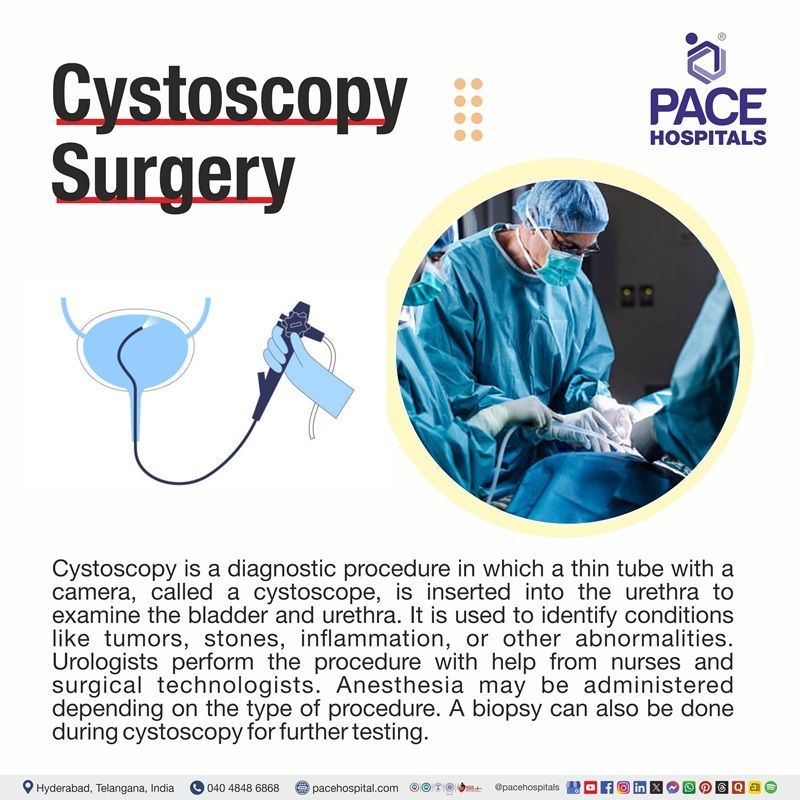
Cystoscopy is performed by urologists (conducts the test), nurses or surgical technologists (who help prepare the instruments and monitor the patient), and an anesthesiologist or nurse anesthetist (if any form of anesthesia, such as general, local, or regional anesthesia, is used).
Cystoscopy meaning
The term cystoscopy comes from two Greek-derived words:
- “Cysto” – meaning “bladder” or “sac.”
- “Scopy” – meaning “to look at” or “to examine visually.” It later came to mean “viewing with an instrument.”
So, cystoscopy literally means “looking inside the bladder.” In medical usage, it refers to a procedure in which a thin, flexible tube with a camera (a cystoscope) is inserted through the urethra to examine the bladder and urethra.
Types of Cystoscopy
Cystoscopy procedure can be categorized according to the equipment used and their intended objectives. Knowledge of the different types makes it easier for urologists to select an appropriate diagnostic or therapeutic technique. The following are the cystoscopy types, which include:
- Flexible cystoscopy
- Rigid cystoscopy
- Blue light cystoscopy
Flexible cystoscopy
The procedure for flexible cystoscopy involves inserting a long tube called a flexible cystoscope into the bladder and urethra. This test is conducted at an outpatient clinic where anesthesia is administered using gels. Flexible cystoscopy is mainly used when there is blood in the urine, recurrent infections, or issues with urination. It is estimated to take just a few minutes to perform.
Rigid cystoscopy
Rigid cystoscopy involves the use of a rigid cystoscope and is generally performed in a hospital or operating theatre under general or spinal anesthesia. Its image quality is very high, and it also offers bigger work channels for other equipment. This type is preferred when procedures such as biopsies, stone extraction, stenting, or other treatments within the bladder are required. The bladder is filled with sterile fluid to allow full inspection of the lining.
Blue light cystoscopy
Blue light cystoscopy is an advanced method primarily used for diagnosing bladder cancer. Before performing this process, the light-sensitive agent is injected into the patient’s bladder. When the bladder is examined under blue light, the malignant cells appear red, making them visible and allowing physicians to detect lesions that are usually missing under white light and that would not have been found with conventional examination methods.
Cystoscopy Indications
A cystoscopy is indicated when signs or test results suggest a problem with the bladder, the urethra, or the lower part of the urinary tract. Cystoscopy can help diagnose the cause of urinary problems and guide treatment. The common indications of cystoscopy are:
- Hematuria (blood in urine)
- Recurrent urinary tract infections (UTIs)
- Lower urinary tract symptoms (LUTS)
- Urinary incontinence
- Chronic pelvic pain or bladder pain
- Suspected bladder or urethral cancer
- Bladder stones or foreign bodies
- Urethral stricture or obstruction
- Follow-up after bladder cancer treatment
Hematuria (blood in urine)
Cystoscopy is commonly performed when blood is visible in the urine or when it is microscopically detected. It helps identify causes such as bladder tumors, stones, inflammation, or bleeding lesions inside the bladder and urethra.
Recurrent urinary tract infections (UTIs)
Persistent UTIs can be a sign of structural issues, obstruction, calculi(stones), or chronic issues within the bladder. Cystoscopy permits visualization of the lower urinary tract for these causes.
Lower urinary tract symptoms (LUTS)
Symptoms such as increased urinary frequency, urgency, hesitancy, poor flow, pain on urination, or incomplete emptying may necessitate a cystoscopy to assess obstruction, irritation, strictures, or prostatic urethral stenosis (narrowing).
Urinary incontinence
When the cause of urinary leakage is unclear, cystoscopy may be used to inspect the bladder neck and urethra. It can help detect anatomical defects, fistulas, or other abnormalities contributing to incontinence.
Chronic pelvic pain or bladder pain
Persistent pelvic discomfort, painful bladder syndrome, or suspected interstitial cystitis (inflammation of the bladder) may need cystoscopy. The procedure helps look for inflammation, ulcers, stones, or other bladder wall changes.
Suspected bladder or urethral cancer
If imaging, urine cytology, or symptoms raise concern for malignancy, cystoscopy is essential. It allows visualization of suspicious lesions and enables biopsy for diagnosis.
Bladder stones or foreign bodies
Cystoscopy is used when stones or retained objects are suspected in the bladder. It confirms their presence and may also allow removal during the same procedure.
Urethral stricture or obstruction
Narrowing of the urethra, causing poor urine flow or retention, is an indication for cystoscopy. It helps locate the blockage and assess its severity for treatment planning.
Follow-up after bladder cancer treatment
Patients treated for bladder cancer often need periodic cystoscopy. It is used for surveillance to detect early recurrence or new tumors.
Cystoscopy Contraindications
In some cases, cystoscopy might not be the best method due to its potential to increase the risk of infection, hemorrhage, or damage to the urinary tract. Identifying such contraindications enables medical professionals to select another approach that is safer for the patient. The following are the contraindications of cystoscopy:
- Active urinary tract infection (UTI)
- Severe urethral stricture or obstruction
- Inability to tolerate pain or discomfort
- Uncontrolled bleeding disorders or anticoagulation risk
- Recent severe inflammation or trauma of the urethra/bladder
- Recent urology surgery
Active urinary tract infection (UTI)
If there is an indication of acute urinary infection, cystoscopy should not be performed, as it could lead to further bacterial infection and even sepsis. Before the procedure, patients are usually instructed to undergo urinalysis. If there is an infection, then they are supposed to receive treatment first before the cystoscopy.
Severe urethral stricture or obstruction
A narrow urethra could make the introduction of the instrument dangerous for the patient due to pain, false passages, bleeding, or even injury of the urethra. Doctors might consider the treatment for obstruction before performing the cystoscopy.
Inability to tolerate pain or discomfort
Some patients are unable to undergo cystoscopy in office settings due to factors like intense fear, high pain threshold, or inability to lie still. In such situations, going ahead with the procedure is unsafe and even ineffective. The operation might then be done in a special facility under anesthesia.
Uncontrolled bleeding disorders or anticoagulation risk
Patients who suffer from clotting problems or those undergoing treatment with anticoagulants should be more prone to experience bleeding during or following cystoscopy. Doctors normally evaluate coagulation function before conducting the examination. It might be required to adjust the patient's drug regimen or postpone the procedure.
Recent severe inflammation or trauma of the urethra/bladder
If the urethra or bladder is acutely inflamed or has recently sustained trauma, the introduction of the cystoscope may further irritate or cause pain and may impair wound healing. Traumatic cases are thoroughly evaluated before starting the procedure. The timing of such procedures depends on individual clinical criteria.
Recent urology surgery
Cystoscopy is often delayed after surgery to the urethra, bladder, or prostate gland. The presence of healing wounds at the operative site may lead to increased irritation, increased bleeding risk, or hinder proper wound healing. The urologist should determine it.
Benefits of Cystoscopy
A cystoscopy provides a direct view of the urethra and bladder, allowing the physician to detect with certainty any problems in the urinary tract that cannot be seen on imaging scans. Cystoscopy can also treat problems such as blockages or stones. The following are the benefits of the cystoscopy procedure:
- Direct visualization
- Accurate diagnosis
- Therapeutic action
- Minimally invasive
- Outpatient procedure
- Early cancer detection
- Stent removal/placement
Direct visualization
Cystoscopy provides clear visualization of the urethral passage and bladder mucosa, which cannot be seen on ultrasound or CT scans. Cystoscopy enables clinicians to examine abnormalities such as inflammation, bleeding spots, tumors, strictures, or stone formation.
Accurate diagnosis
The technique helps diagnose the exact cause of hematuria, dysuria, urinary incontinence, frequent urination, or a urinary tract infection. Cystoscopy aids in making an accurate diagnosis and formulating appropriate therapy by allowing a view of the inside of the urinary system.
Therapeutic action
Cystoscopy not only serves a diagnostic purpose but is equally therapeutic. Physicians have the option of inserting certain medical instruments via cystoscope to remove bladder stones, excise bladder tumors, perform biopsies, or deliver drugs inside the bladder.
Minimally invasive
The process is minimally invasive, as it involves passing a scope through the natural urinary tract (urethra) without any external incision. It is expected to cause less discomfort, heal more quickly, and reduce complication rates compared with open surgery.
Outpatient procedure
Most cystoscopies, particularly flexible cystoscopy, are performed in clinics or as a day-care procedure using local anesthesia. Patients can leave the hospital the same day after undergoing this procedure and can quickly resume their daily activities.
Early cancer detection
Cystoscopy is an important diagnostic method for detecting bladder cancer. The procedure allows the physician to examine any unusual growth or changes in the bladder lining. It is possible to collect tissue samples from the bladder during the biopsy, which can help with early diagnosis and timely management.
Stent removal/placement
It is possible to perform cystoscopy, stent removal, and the placement of ureteric stents. Ureteric stents are very thin tubes that may be inserted when there is a blockage of the passage of urine from the kidney to the bladder.
Need clarity on cystoscopy indications and treatment options?
Get a free second opinion today.
At PACE Hospitals, we are committed to providing our patients with the best possible care, and that includes offering second medical opinions with super specialists for treatment or surgery. We recommend everyone to get an expert advance medical second opinion, before taking decision for your treatment or surgery.
Cystoscopy Procedure Steps
Procedure steps for cystoscopy include the following:
Before the Cystoscopy Procedure
Medical consultation and screening
- Medication review: Before cystoscopy, the doctor will review the patient’s medications, including blood thinners, diabetes medications, and supplements, as some may need to be adjusted or temporarily stopped. A urine test may be done first to check for infection, and the procedure is usually postponed if an active infection is present. Patients should also inform the doctor about any allergies, especially to medications or anaesthetics.
- Check for infection: Cystoscopy is preceded by taking a urine sample because doctors might want to detect infection in the urinary tract. Cystoscopy should not be performed during an infection; treatment must be initiated first if the patient has an active infection to decrease the risk of complications.
- Discuss allergies: If individuals have allergies to any medication, especially anaesthetics, inform the doctor as soon as possible to avoid a reaction during the procedure.
Fasting and diet
- For local anaesthesia (flexible cystoscopy): It usually involves the use of local anesthetic gel when the patient is conscious. In most cases, normal feeding is encouraged unless the hospital directs otherwise. Adhere strictly to the physician's recommendations.
- For general or spinal anaesthesia (rigid cystoscopy): For the procedure involving rigid cystoscopy using general or spinal anaesthesia, fasting before the operation will be advised. The instructions recommend not consuming food or fluids for a few hours before the procedure for safety reasons.
- Antibiotics: They may be used in some individuals before cystoscopy. This is done when there is an increased likelihood of infection, although antibiotics are not always necessary for routine diagnostic cystoscopy, but may be used based on individual medical factors.
Logistics and personal care
- Arrange a ride: If sedation, spinal, or general anesthesia is used, plan for transportation from the hospital after the procedure. Following rigid cystoscopy, the doctor recommends having someone remain with the patient for the next 24 hours.
- Clothing: It is recommended to wear comfortable clothes that are easy to put on and take off. Individuals might be required to wear a hospital gown during the procedure.
- Bladder management: Individuals should refrain from passing urine before the procedure. This is because a urine test may be performed before the procedure. At times, the staff might be asked to pass urine just before the procedure begins.
During the Cystoscopy Procedure
- Preparation: First, the patient is instructed to lie down on the examining table and keep their back up with knees bent and legs spread apart. Next, the urogenital region is washed with an antiseptic solution to reduce the risk of infection. In addition, sterile drapes may be placed in the examined area. The healthcare professional ensures that the patient feels comfortable and ready for the procedure.
- Anesthesia: In most cases, anesthetic gel is applied to or around the urethra to numb the area and minimize pain. However, in certain instances, a doctor may utilize sedation, spinal or general anesthesia. Once it is ensured that the anesthesia is effective, the scope is inserted.
- Scope insertion: A urologist carefully introduces the lubricated endoscope into the urethra and moves it towards the bladder. It should be noted that there are two types of cystoscopes – rigid and flexible. In most situations, a flexible endoscope is used to diagnose diseases, while a rigid one is used for treatment.
- Bladder distention: As the scope approaches the bladder, sterile fluid, such as water or saline, is introduced into the bladder in a controlled manner using the cystoscope to distend it. During bladder filling, patients may feel the need to urinate and a sensation of bladder fullness.
- Visual examination: The physician inspects the interior surfaces of the bladder and urethra using the cystoscope, with images displayed on a screen. Any lesions, including inflammation, stones, bleeding, tumors, strictures, and others, are looked for using the cystoscopy instruments. This direct view from bladder cancer cystoscopy helps in the accurate diagnosis of urinary tract problems.
- Additional procedures (if needed): If any lesions, such as cancerous lesions, are identified, various procedures can be performed using the cystoscope, including taking a biopsy, removing stones, treating blockages, administering medication, or arresting bleeding, among others. This avoids the need for another separate surgery in many cases.
- Completion: The liquid may then be removed from the bladder after the procedure, or the individual may be allowed to expel it naturally through urination. The cystoscope is then carefully drawn from the body. An uncomplicated cystoscopy typically lasts from 5 to 30 minutes.
After the Cystoscopy Procedure
Immediate post-procedure care
- Monitoring: After the procedure, the individual will be observed by staff for some time, especially if sedation or anesthesia has been administered. It is to ensure they regain consciousness, stabilize, and can urinate before discharge. Some individuals will require observation for 1 to 4 hours of post-anesthesia.
- Fluids: Fluid intake after cystoscopy is often recommended by healthcare professionals to encourage the passage of urine through the bladder, thereby decreasing the risk of a burning sensation during urination. It also recommends adequate water intake in the first few hours after the procedure. Sufficient fluid intake can also help eliminate minor traces of blood found in the urine.
- Anesthesia: If spinal or general anesthesia was used, individuals may experience sleepiness for a few hours. This means you will have to abstain from driving, drinking alcohol, or operating any machinery for at least 24 hours. Arrange for someone to take you home and stay with the individual, if advised.
- Recovery at home
- Pain management: A burning sensation during urination and a degree of pain can persist for up to 1 or 2 days after cystoscopy. Pain relief medication could be recommended, if required, and advised to consult a concerned doctor if the pain persists or increases beyond expectations.
- Managing discomfort: Increased urinary frequency, urgency, and blood in the urine can persist for a while. Sitting in a slightly warm bath or using a hot pack over the urethra can ease the pain. These symptoms normally resolve in 24 to 48 hours.
- Activity: It is common for individuals to be fit enough to return to their normal routine activities very soon after undergoing flexible cystoscopy. Rest is required if anesthetic is used during the procedure. Follow any specific instructions regarding exercise, lifting, driving, or work.
- Diet: Generally, individuals may resume their usual diet post-cystoscopy unless advised otherwise. It is also recommended to drink plenty of fluids while avoiding alcohol until recovery, particularly if under anesthesia. In case of nausea following sedation, the individual should begin with light meals.
Cystoscopy Complications
Cystoscopy is considered a relatively safe and frequently performed medical procedure, it may be associated with certain complications. Individuals need to understand these complications so they can identify them early. The following are the complications after cystoscopy, which include:
Common side effects
- Burning micturition
- Frequent or urgent urination
- Minor bleeding
- Mild abdominal pain
Potential complications
- Urinary tract infection (UTI)
- Urinary retention
- Bladder or urethral injury
- Urethral stricture
- Anesthesia reactions
Common Side Effects
This is normal and does not need treatment if it disappears after two days.
Burning micturition
A minor burning or stinging during urination following cystoscopy could be due to the temporary irritation of the urethra from the endoscope. This will be resolved within 24 to 48 hours. Excessive hydration might relieve this symptom. Persistent burning sensations beyond 2 days require further medical evaluation.
Frequent or urgent urination
Frequent urination after cystoscopy is another possible side effect. The reason is that the bladder lining becomes inflamed and irritated after instrumentation. This will subside within 1 to 2 days. However, if symptoms persist, an infection or irritation may be the cause.
Minor bleeding
There might be some minor bleeding seen when urinating. In addition, pinkish urine coloration is common after a cystoscopy, particularly if biopsies are taken. Minor bleeding in the urine poses no significant health threat and resolves quickly. Excessive bleeding requires immediate attention.
Mild abdominal pain
Discomfort, pressure, or pain in the lower abdomen may develop after the cystoscopy test due to bladder irritation or cramping. These symptoms usually resolve on their own with some rest or over-the-counter medication. Severe or worsening pain should be evaluated immediately.
Potential Complications
While uncommon, some potential complications can arise and require treatment.
Urinary tract infection (UTI)
A cystoscopy might occasionally expose the body to bacteria through the urinary tract, leading to an infection. The signs of such infections include fever, chills, cloudy urine, pain during urination, or pelvic pain. UTI needs antibiotic treatment. Immediate treatment prevents spread to the kidneys.
Urinary retention
Inflammation of the urethra or the urethral opening during cystoscopy might lead to problems with urination. Inflammation of the bladder may cause bladder fullness with an inability to pass urine. Catheterization is often required for this complication until the inflammation subsides.
Bladder or urethral injury
Occasionally, injury of the urethra or bladder lining may occur due to a cystoscope. It may lead to pain, bleeding, or inability to urinate. Minor injuries heal on their own, while serious injuries may require surgery.
Urethral stricture
Scar formation in the urethra following cystoscopy instrumentation can lead to urethral stricture disease, resulting in a poor urine stream, dribbling (leaking urine in small drops), straining, or difficulty with complete urination. Urologic intervention will be necessary if any of these problems arise.
Anesthesia reactions
In case the procedure involves sedation, spinal, or general anesthesia, there could be adverse effects, including vomiting, nausea, dizziness, allergic reaction, or breathing difficulties. The patient will be under close observation to monitor such complications. Serious reactions are uncommon.
Cystoscopy Recovery Time
Most individuals recover from cystoscopy in 1 to 2 days. Although the test is quick, taking only five to ten minutes to complete, full recovery of the bladder and urethral lining can sometimes take up to a week. The recovery time after cystoscopy includes the following steps:
Immediate recovery (first 24-48 hours)
- Activity: After a flexible cystoscopy, individuals can resume their usual activities as soon as they feel up to it. After a rigid cystoscopy, the patient would have to spend some time in the hospital to recover from the anesthesia effect, which will take about a few hours after surgery. Gentle exercises can be performed on the first day following the procedure, avoiding strenuous exercise until comfortable.
- Driving: If the patient underwent a spinal or general anesthesia for a rigid cystoscopy, then the individual would need another person to escort them back home to stay with them for at least 24 hours. During this time, it would not be wise for the patient to drive or operate machinery since they will have impaired judgement and reflexes. The same applies to taking alcoholic beverages.
- Common side effects: Bleeding in the urine, irritation during micturition, and slight bladder pain are typical reactions after a cystoscopy. Such conditions may be resolved on their own without further medical intervention. If the patient feels uncomfortable, they can try taking fluids and over-the-counter pain medication.
Extended recovery (up to 1-2 weeks)
- Symptom duration: In most cases, pain will subside within a couple of days. However, inflammation of the bladder or urethra can take 1-2 weeks to resolve completely. Seek medical help if there is an increase in pain or blood in the urine.
- Restrictions: The individual will be able to slowly return to their normal activities as soon as they feel well enough. Individuals may be advised to avoid heavy lifting or strenuous exercise for several days, depending on their level of discomfort. Always follow the specific instructions given by the hospital team.
What questions can patients ask the healthcare team about cystoscopy?
- What are the reasons for suggesting a cystoscopy?
- What diseases can be identified through a cystoscopy?
- How do I prepare myself for a cystoscopy?
- Is a cystoscopy a painless test, and what kind of anaesthesia is administered?
- How much time does it usually take to perform a cystoscopy?
- What are the possible complications from cystoscopy?
- What happens during the test?
- How much time is required to recover from a cystoscopy?
- Are there any restrictions after a cystoscopy?
- Under what circumstances should one seek immediate medical assistance after the test?
- Is the result after cystoscopy known immediately, or will there be a delay?
- Are there any other types of tests that can be considered as alternatives?
Differenece between Ureteroscopy and Cystoscopy
Ureteroscopy vs Cystoscopy
Ureteroscopy and cystoscopy are two common urological procedures that use an endoscope to evaluate and manage conditions of the urinary system. While both involve introducing a thin tube through the urethra, they differ primarily in the location(specific site) examined and the specific clinical purpose. The table below shows the key differences between these procedures.
| Characteristics | Ureteroscopy | Cystoscopy |
|---|---|---|
| Primary target | This procedure is mainly indicated for the ureters and kidneys (renal pelvis). | The main target of the cystoscopy test is the urethra and the bladder. |
| Scope design | It is longer and thinner, designed specifically to reach the upper tract. | Cystoscopes are shorter but have comparable diameters (typically 4-10 Fr) to ureteroscopes, available in both flexible and rigid forms. |
| Typical anaesthesia | Typically requires general anesthesia or deep sedation due to upper tract access. | Local anesthesia, sedation, or general anesthesia depending on complexity. |
| Main uses | It is used to diagnose and treat kidney/ureter stones, upper tract tumors, and strictures. | It is used to diagnose and evaluate bladder/urethral conditions, including cancer, inflammation, strictures, stones, and abnormal structures. |
| Common procedures | Laser stone fragmentation and stent placement. | Biopsy, injecting medications, and removing bladder stones. |
| Stent requirement | Often requires a temporary ureteral stent post-procedure to aid healing. | Rarely needed after diagnostic cystoscopy, but may be used in therapeutic cases. |
| Duration | It requires 30 minutes to 2 hours, depending on the stone size. | It usually takes 15-20 minutes to complete the procedure. |
Cystoscopy Cost in Hyderabad, India
The cost of Cystoscopy in Hyderabad generally ranges from ₹15,000 to ₹1,50,000 and above (approx. US $180 – US $1,805). The exact cost of cystoscopy depends on the type of procedure (diagnostic vs. therapeutic), the complexity of the case, and whether additional treatments (such as biopsy, stone removal, or laser therapy) are required. Cystoscopy can be performed as an outpatient procedure or may require hospitalization if complications arise or for more complex therapeutic interventions. Additional factors such as preoperative consultations, diagnostic tests (urine analysis, imaging), sedation, and follow-up visits also influence the overall cost. Availability of cashless treatment options, TPA corporate tie-ups, and insurance assistance may further impact the cost.
Cost Breakdown According to Type of Cystoscopy Procedure
- Diagnostic Cystoscopy (Outpatient) – ₹15,000 – ₹40,000 (US $180 – US $480)
- Cystoscopy with Biopsy (For Cancer Screening) – ₹40,000 – ₹80,000 (US $480 – US $960)
- Cystoscopy with Stone Removal (Therapeutic) – ₹50,000 – ₹1,00,000 (US $600 – US $1,205)
- Cystoscopy with Laser Therapy (For Tumors, Lesions) – ₹70,000 – ₹1,50,000 (US $840 – US $1,805)
- Complex Cystoscopy (With Extended Procedure or Complications) – ₹1,00,000 – ₹2,00,000 (US $1,205 – US $2,410)
Frequently Asked Questions (FAQs) on Cystoscopy Procedure
Which Is the Best Hospital for Cystoscopy in Hyderabad, India?
PACE Hospitals, Hyderabad, is a trusted centre for urological diagnostics and treatment, including cystoscopy for bladder and urinary tract evaluation.
We have highly experienced urologists, interventional radiologists, and pathologists who follow evidence-based protocols to perform cystoscopies safely and effectively, focusing on early detection and minimally invasive treatment for bladder-related conditions. Whether the procedure is diagnostic or therapeutic, our specialists ensure comfort and safety throughout the process.
We have excellent facilities including state-of-the-art cystoscopy equipment, imaging systems (ultrasound, CT scans), and advanced therapeutic techniques, PACE Hospitals ensures the highest standard of care for cystoscopy procedures.
What Is the Cost of Cystoscopy at PACE Hospitals, Hyderabad?
At PACE Hospitals, Hyderabad, the cost of cystoscopy typically ranges from
₹12,000 to ₹1,50,000 and above (approx. US $145 – US $1,805), making it a cost-effective and competitive option for diagnostic and therapeutic urology procedures in Hyderabad. However, the final cost depends on:
- Type of cystoscopy (diagnostic vs. therapeutic)
- Type of intervention (biopsy, stone removal, laser treatment)
- Preoperative diagnostic tests (urinalysis, imaging, etc.)
- Duration of procedure and hospital stay
- Postoperative follow-up and care
For diagnostic cystoscopy, costs remain toward the lower end, while therapeutic cystoscopy procedures such as stone removal or laser therapy may fall toward the higher end.
After a detailed urological evaluation and imaging, our specialists will provide a transparent cost estimate tailored to the patient’s needs and treatment plan.
Looking for the Best Cystoscopy Hospital Near Me?
If you’re searching for the top cystoscopy hospital near me in areas like HITEC City, Madhapur, Kondapur, Gachibowli, Kukatpally, or KPHB, it is important to choose a hospital with experienced urologists and advanced diagnostic facilities.
Effective cystoscopy procedures require:
- Accurate diagnosis with imaging (ultrasound, CT)
- Minimally invasive procedures for diagnosis and treatment
- Post-procedure care and follow-up for recovery
Specialized treatment for conditions such as bladder cancer or stone removal
At PACE Hospitals, Hyderabad, we provide comprehensive care with a multidisciplinary approach, ensuring the best possible outcomes for patients undergoing cystoscopy.
What should be expected after cystoscopy?
Post-cystoscopy symptoms include some degree of pain, such as burning during urination, increased frequency of urination, and pale pink urine for 1-2 days. It is recommended that individuals drink more fluids to help clear their bladders. Although these symptoms may seem typical, extreme pain, heavy bleeding, and fever need urgent medical attention.
Are there any risks or complications of cystoscopy?
Cystoscopies are generally safe. However, the procedure carries certain risks such as UTIs, hematuria, bladder spasms, and painful urination. Less common risks involve injuries to the bladder and/or urethra, difficulty passing urine, and anesthetic reactions. The side effects are usually temporary, subsiding within one or two days.
How long is the recovery after cystoscopy?
Postoperative care following a cystoscopy usually involves a recovery period of 1 to 2 days before returning to regular daily activities. However, mild pain or pink urine may persist for up to 1 week. Patients are typically allowed to return home on the day of the procedure and resume work after 1 to 2 days, but strenuous exercise and heavy lifting should be avoided for 1 to 2 weeks.
Is cystoscopy safe during pregnancy?
Cystoscopy is generally considered safe when necessary for diagnosing and treating a condition. It is generally performed when the patient is not pregnant. This is because the procedure poses a very slight chance of causing miscarriage, although it does not pose much danger. Flexible cystoscopy with local anesthesia is the safest type of cystoscopy during pregnancy, including in the second trimester.
When is cystoscopy preferred over other diagnostic tests?
For the examination of the bladder and urethra with direct visualization and high precision, cystoscopy is the preferred option compared to other diagnostic procedures such as CT urography, ultrasonography, and urinalysis. This test is considered the "gold standard" for diagnosing bladder disease because it can detect small or flat growths that are not visible on imaging studies.
What is cystoscopy?
The cystoscopy procedure is a non-surgical technique performed by a urologist to examine the bladder and urethra using a small tube known as a cystoscope. The cystoscope helps detect and treat disorders of the bladder and its urinary tract, such as hematuria (blood in the urine), infections, or tumor growth. Other names for cystoscopy include cystourethroscopy and bladder endoscopy.
Why is cystoscopy done?
Cystoscopy is a diagnostic procedure that involves inspecting the internal tissues of the bladder and urethra using a viewing instrument called a cystoscope. The purpose of this test is mainly to identify the underlying causes of blood in the urine, chronic pelvic pain, bladder stones or blockages in the urinary tract.
Is cystoscopy painful?
Cystoscopy is not usually a painful procedure, although it may be uncomfortable, often associated with a burning or pressing sensation as the scope moves through the urethra and the bladder sphincter. It is performed under local anesthesia, which makes it quite painless and well tolerated, with most patients rating their discomfort at 2-3 out of 10.
How long does a cystoscopy procedure take?
Cystoscopy usually takes a short time; an ordinary examination can take 5 to 15 minutes. The exact time required may vary depending on the type of scope used and whether other procedures are performed during the cystoscopy.
What conditions can be diagnosed with cystoscopy?
Cystoscopy is a diagnostic test that allows doctors to visualize the lining of the bladder and urethra. It is performed for diagnosing various health problems, including bladder cancers, recurring UTIs, bladder stones, strictures(narrowing), and bladder inflammation, among others. This test may be performed when patients experience symptoms such as hematuria (blood in the urine) and urinary incontinence (involuntary leakage of urine).
How to prepare for a cystoscopy?
Preparation for cystoscopy may include testing for infection with a urine sample, discontinuing blood thinners for a short time, and fasting for 6-8 hours if sedation or anesthesia is used. The patient will need someone to drive them home after the procedure if they were put under sedation, wear comfortable clothing, and take prescribed pre-procedure antibiotics if ordered.
What happens during a cystoscopy?
Cystoscopy is an outpatient diagnostic test that takes between 5 to 20 minutes. In this test, the doctor inserts a cystoscope into the patient’s urethra to inspect the bladder lining and urethra for irregularities. This process is usually performed under anesthesia, using special jelly applied to the urethra. Fluid is inserted into the bladder to enhance visualization, and the procedure can be used to take biopsies or treat minor issues.
Can cystoscopy detect bladder cancer?
Yes, cystoscopy is the preferred, gold-standard test for identifying and diagnosing bladder cancer. This technique involves visual examination of the inner bladder wall for tumors and other abnormal growths or lesions. If there are any signs of such abnormalities, then a biopsy can be done to confirm the presence of cancer.
Is cystoscopy done under anesthesia?
If general anesthesia is required during a cystoscopy, it depends on the procedure being performed; in most cases, the patient remains awake during a routine diagnostic cystoscopy with local anesthetic jelly. The use of general anesthesia is normally restricted to more complex procedures, such as cystoscopy with rigid instruments, biopsies, or tumor removals.
Can cystoscopy be used for treatment?
Yes, cystoscopy is used to diagnose and treat bladder and urethral problems. Using a thin tube with a camera, minor interventions like tumor removal through transurethral resection, removal of bladder stones, management of strictures, administration of drugs, and tissue sampling(biopsies) are performed.
Who performs a cystoscopy?
A cystoscopy is performed by a urologist, a physician who specializes in diseases and disorders of the genitourinary tract. In this procedure, the physician examines the urethra and bladder through a small tube called a cystoscope.
Is cystoscopy dangerous?
Cystoscopy is regarded as a relatively safe procedure; However, it carries potential risks including urinary tract infection, bleeding, bladder spasms, pain or burning during urination, and rare serious issues like bladder or urethral damage. The procedure is performed to check for abnormalities of the urinary bladder and urethra and usually lasts between 5 to 20 minutes.
After a cystoscopy, when is it necessary to get medical help?
It is recommended to contact the concerned doctor immediately if problems occur after a cystoscopy, such as being unable to pass urine, having a fever of 100.4°F (38°C) or higher, chills, passing blood or clots when urinating, or experiencing severe pain not relieved by medication. It is normal to have a slight burning sensation and slightly pink urine for 1 to 2 days following the procedure; severe symptoms may indicate potential complications, such as infection.
Is cystoscopy suitable for elderly patients?
Flexible cystoscopy is usually considered appropriate and is frequently performed in geriatric (elderly) patients, often playing a pivotal role in diagnosing conditions such as hematuria and in bladder cancer screening. Although advanced age is a risk factor for complications such as UTI infection and hemorrhage(bleeding), office flexible cystoscopy is usually safe, tolerable, and efficient.
Can cystoscopy be done if I have a urinary tract infection (UTI)?
No, cystoscopy should not be performed in patients with an ongoing urinary tract infection (UTI). It will make the condition worse and help spread bacteria from the bladder to the kidneys. The test is preceded by a urine test for infections to determine whether to undergo cystoscopy. If an individual has a UTI, the doctor may postpone the cystoscopy and treat the UTI with antibiotics first.
How long does burning during urination last after a cystoscopy?
Post-cystoscopy, urine burning tends to occur over 24-48 hours; however, some patients may experience it for 2-3 days. Some symptoms include mild burning, a stinging sensation, and pinkish urine, which are normal side effects after the procedure that usually subside as the urethra heals.
When is it safe to resume sexual activity after a cystoscopy?
It is advisable to commence sexual activity following cystoscopy only when all sensations such as pain, burning sensation or bleeding have stopped, usually within 1–2 days after a routine examination. For cases in which a biopsy is performed or a rigid cystoscopy is performed, a waiting period of 1-2 weeks may be needed as per physician guidance.
When can I return to work after a cystoscopy?
It is safe for most individuals to resume work and perform their daily routines one to two days post-cystoscopy. Though some patients return to their activities within 24 hours, slight discomfort, increased urination, or pinkish-colored urine in small amounts are common on the first 1-2 days.
Are there any dietary restrictions after cystoscopy?
There are usually no dietary restrictions following cystoscopy, but some temporary diet recommendations, such as beginning with clear liquids, refraining from consuming spicy, oily, caffeine-containing, or heavy foods for 24 hours, and drinking more fluids along with fibre-rich foods, may assist in managing potential complications, including burning, infection, and constipation.
Will I need a catheter after cystoscopy?
For routine cystoscopy, an individual might not require a catheter; however, if an invasive procedure such as a biopsy, tumor removal, or stricture treatment is performed, it is common practice to use a catheter for a limited period to manage bleeding or help with urination if the bladder is inflamed.
Can people with diabetes undergo cystoscopy safely?
Yes, people with diabetes can safely undergo cystoscopy; however, this category of patients is classified as being at high risk of contracting infections. Despite cystoscopy being extremely safe for this category of patients, they must make extra efforts to control their sugar levels and coordinate with their healthcare team to prevent potential issues.
Is Cystoscopy Covered by Insurance at PACE Hospitals?
Yes, cystoscopy is generally covered under most health insurance policies at PACE Hospitals, subject to policy terms and approval. Since cystoscopy is often required to diagnose or treat bladder conditions, it is typically included under urology and diagnostic procedure coverage in private insurance and corporate health plans.
At PACE Hospitals, patients can benefit from:
- Cashless hospitalization facilities with empaneled insurance providers
- Assistance from a dedicated insurance and TPA coordination team
- Pre-authorization support and documentation guidance
- Transparent cost estimates before admission
- Support for government health schemes where applicable
Coverage depends on diagnostic or surgical procedure clauses, sum insured limits, and policy inclusions. Patients are encouraged to share their insurance details in advance so the hospital’s insurance desk can verify eligibility and streamline approvals.


