Kidney Cancer Diagnosis, Treatment & Cost
PACE Hospitals offers comprehensive
kidney cancer treatment in Hyderabad, India, delivering personalized care for patients diagnosed with renal cancer, including renal cell carcinoma, the most common type of kidney cancer. Our multidisciplinary oncology team provides accurate diagnosis using advanced imaging, biopsy, and staging protocols to determine the extent of disease and guide the most effective treatment approach.
Book an Appointment for Kidney Cancer Treatment
Kidney Cancer Treatment Appointment
Why Choose PACE Hospitals for Kidney Cancer Treatment?

Advanced Diagnostic Facilities: Detailed Clinical Evaluation, CT Scan, MRI, PET-CT & Image-Guided Biopsy
Specialized Kidney Cancer Treatment by Expert Urologic Oncologists in Hyderabad
Comprehensive Treatment Options: Partial & Radical Nephrectomy, Lap. Surgery, Targeted & Immunotherapy
Affordable Kidney Cancer Treatment with Insurance & Cashless Options
Recognized for excellence in healthcare delivery with
NABH, NABL, NBE/DNB, NABH Nursing Excellence, and ISCCM accreditations.
Kidney Cancer Diagnosis
The diagnosis of kidney cancer or renal cell carcinoma (RCC) starts with a detailed consultation and review of the patient's medical history to guide further investigations. Early detection can be difficult, as symptoms often do not appear until the disease has spread. A urologist, radiation oncologist, medical oncologist and nephrologist consider the following before selecting the appropriate tests to diagnose kidney cancer:
- Taking medical history
- Performing physical examination
Taking Medical history
A detailed medical history will be taken regarding the patient’s symptoms, risk exposures, past medical conditions, and family history. This will help guide appropriate diagnostic evaluation and management.
Have you noticed hematuria (blood in your urine) or pain in your side or back?
- Have you felt any lump or swelling in your abdomen?
- Have you experienced unexplained weight loss, fever, or fatigue?
- Do you have high blood pressure or any known kidney problems?
- Do you smoke or have you smoked in the past?
- Have you been exposed to chemicals at work (such as cadmium or asbestos)?
- Do you regularly take painkillers or anti-inflammatory drugs?
- Have you ever had kidney stones or frequent urinary infections?
- Does anyone in your family have kidney cancer or similar conditions?
- Have you noticed swelling in your legs, ankles, or face?
Performing physical examination
- Patients may appear pale due to anemia, cachectic (severe weight loss) from advanced malignancy, and occasionally febrile due to paraneoplastic fever or infection.
- Elevated blood pressure can result from renin secretion by the tumor or mechanical compression of the renal artery.
- Peripheral edema may occur secondary to renal dysfunction or inferior vena cava (IVC) obstruction from tumor extension.
- On abdominal examination, a firm, non-tender, irregular mass may be palpable in the flank region. This mass typically moves with respiration, is ballotable, and does not cross the midline—features consistent with renal origin.
- Dilated superficial abdominal veins can be present, indicating possible IVC (Inferior vena cava) involvement.
- Auscultation may reveal a renal bruit, suggesting increased vascularity or arterial involvement.
- Hepatomegaly may be present if there is metastatic spread to the liver.
- In male patients, a persistent left-sided varicocele that does not resolve when recumbent may suggest invasion of the left renal vein.
- Evaluation of the respiratory system may reveal signs of pulmonary metastases; musculoskeletal examination may reveal bone tenderness or supraclavicular lymphadenopathy, indicating disseminated disease.
- Facial flushing, cushingoid features, or other paraneoplastic syndromes may occasionally occur.
- Classic triad (seen less frequently): hematuria, flank pain, and palpable abdominal mass.
- Most patients present with non-specific symptoms or are asymptomatic at diagnosis; hence, systematic examination is crucial.
Kidney Cancer Diagnostic Tests
In addition to reviewing the personal and family medical history and performing a physical examination, doctor may perform various diagnostic tests and procedures to detect the presence of disease, determine its type, and evaluate its location and extent. The following are the tests that might be recommended to diagnose kidney cancer:
- Laboratory Tests
- Blood tests
- Urinalysis
- Imaging Tests
- Ultrasound exam
- DMSA scan
- Computed tomography (CT) scan
- Magnetic Resonance Imaging (MRI)
- Tissue/Cellular Tests
- Biopsy
- Staging
- Genetic testing and biomarker analysis
Laboratory Tests
- Blood tests: A blood test analyzes a sample to measure the levels of particular substances released by organs and tissues in the body. Abnormally high or low levels of these substances may indicate the presence of disease.
- Urinalysis: A urinalysis examines the color of urine as well as its components, including protein, sugar, red blood cells, and white blood cells.
Imaging Tests
- Ultrasound exam: It uses high-frequency sound waves to create real-time images of internal organs, helping detect masses, cysts, or structural abnormalities. It is non-invasive and used as a first-line imaging tool.
- Dimercaptosuccinic acid (DMSA) scan: A nuclear medicine scan that assess kidney structure and function by tracking a radioactive tracer absorbed by renal tissue. It helps detect scarring, differential function, or congenital abnormalities.
- Computed tomography (CT) scan: It uses X-rays and computer processing to produce clear and detailed cross-sectional images of the body, helping identify tumors, their size, location, and spread. It is widely used for diagnosis, staging, and treatment planning.
- Magnetic Resonance Imaging (MRI): It uses strong magnetic fields and radio waves to provide the detailed images of soft tissues and organs without radiation exposure. It is especially useful for detecting tumors, vascular involvement, and tissue characterization.
Tissue/Cellular tests
Biopsy: It involves removing cells or tissues so the pathologist can examine them under a microscope and look for indications of malignancy. A tiny needle is inserted into the tumor and a sample of tissue is taken out in order to perform a biopsy for renal cell cancer. If the imaging test results are sufficient to establish a diagnosis, a biopsy may not be required.
Staging
After a diagnosis of renal cell carcinoma, additional tests are performed to determine whether the cancer has spread within the kidney or to other body parts. This process, called staging, helps guide treatment decisions. The following tests are commonly used for staging:
- Chest X-ray: A chest X-ray uses a type of radiation that passes through the body to create images of the organs and bones inside the chest.
- Bone scan: It is a procedure used to detect rapidly dividing cells, such as cancer cells, in the bones. A small amount of radioactive material is injected into a vein, travels through the bloodstream, and accumulates in areas of abnormal bone activity, which is then detected by a scanner.
Genetic testing
Genetic testing for kidney cancer identifies inherited gene mutations, such as VHL, MET, FH, and FLCN, that increase the risk of developing the disease. It is especially useful for individuals with a family history of kidney cancer, enabling early detection and informed decision-making for prevention and treatment.
Biomarker analysis
Biomarker analysis detects specific molecular markers in the blood, urine, or tumor tissue, such as VEGF, CA9, PD-L1, and PBRM1. These markers help assess the disease's behavior, guide treatment selection, and monitor for recurrence.
✅Kidney Cancer Stages
The Tumor Node Metastasis (TNM) system, established by the American Joint Committee on Cancer (AJCC), is used to stage kidney (renal) cancer both clinically and pathologically, providing a standardized framework to describe tumor size, lymph node involvement, and the presence of distant metastasis.
T – Primary Tumor
- T1: Tumor ≤7 cm, confined to the kidney
- T1a: Tumor ≤4 cm, confined to the kidney
- T1b: Tumor >4 cm but ≤7 cm, confined to the kidney
- T2: Tumor >7 cm, confined to the kidney
- T2a: Tumor >7 cm but ≤10 cm, confined to the kidney
- T2b: Tumor >10 cm, confined to the kidney
- T3: Tumor extends into major veins or perinephric tissues but not into ipsilateral adrenal gland and not beyond Gerota’s fascia
- T3a: Tumor invades renal vein or its segmental branches, pelvicalyceal system, or perirenal/renal sinus fat (not beyond Gerota’s fascia)
- T3b: Tumor extends into the inferior vena cava below the diaphragm
- T3c: Tumor extends into the vena cava above the diaphragm or invades the vena cava wall
- T4: Tumor invades beyond Gerota’s fascia, including contiguous extension into the ipsilateral adrenal gland
N – Regional Lymph Nodes
- NX: Regional lymph nodes cannot be assessed
- N0: No regional lymph node metastasis
- N1: Metastasis in regional lymph node(s)
M – Distant Metastasis
- M0: No distant metastasis
- M1: Distant metastasis present
✅Kidney Cancer Differential Diagnosis
A renal mass can be caused by various conditions that mimic RCC, so careful evaluation is needed to identify the exact cause. The following conditions need to be considered in a patient that presents with a renal mass as they can mimic the appearance of RCC:
- Sarcomas: These are rare malignant tumors arising from the kidney’s connective tissue. They can mimic RCC but usually grow rapidly and may invade adjacent structures.
- Angiomyolipoma (AML): It is a benign tumor composed of blood vessels, smooth muscle, and fat. It is usually asymptomatic but can cause bleeding if it becomes large. The presence of fat in the tumor on imaging helps differentiate AML from RCC.
- Renal cysts: These are commonly fluid-filled and benign. Simple cysts are usually harmless, but complex cysts with septa or calcification can mimic RCC. The Bosniak classification system is used to differentiate benign from suspicious cysts.
- Renal oncocytoma: It is a benign epithelial tumor of the kidney that often presents as a solitary mass and can mimic RCC on imaging. A central stellate scar seen on imaging may suggest oncocytoma.
- Renal adenomas: These are small, benign epithelial tumors of the kidney. They are usually asymptomatic and found incidentally. Although rarely clinically significant, they can be confused with RCC on imaging.
- Renal infarction: It refers to the death of kidney tissue due to loss of blood supply. It can appear as a wedge-shaped hypodense area on CT imaging and is often associated with acute flank pain and hematuria.
- Metastases from distant primary lesions: Includes metastatic melanoma, involving the kidney secondary to another primary cancer. These lesions are often multiple and bilateral, and the history of the primary malignancy is crucial for diagnosis.
- Renal lymphoma: It occurs when the kidney is involved by systemic lymphoma, usually non-Hodgkin. It usually presents with multiple bilateral masses, typically lacking calcification, and may show minimal enhancement on imaging studies.
Differential Diagnoses Based on Clinical Findings:
- Chronic pyelonephritis: It results from recurrent kidney infections leading to scarring and deformity. Imaging may reveal asymmetrical shrinkage or mass-like lesions, potentially mimicking RCC.
- Acute pyelonephritis: It is a bacterial infection of the kidney parenchyma. Patients typically present with fever, flank pain, dysuria, and pyuria. Imaging may show an enlarged kidney with striated enhancement, which can sometimes mimic a renal mass.
- Non-Hodgkin lymphoma: It can involve the kidney either primarily or secondarily. It usually presents as multiple masses, often bilateral, and may cause minimal symptoms, making differentiation from RCC important.
- Bladder cancer: This usually presents with hematuria and irritative urinary symptoms. Although it primarily affects the bladder, it can rarely invade the kidney and appear as a mass on imaging.
- Adult-type Wilms tumor: It is rare in adults and more common in children. It presents as a unilateral renal mass, sometimes with hematuria or pain, and requires histological examination to differentiate it from RCC.
✅Kidney Cancer Goals of Treatment
The goals of treatment focus on effectively managing kidney cancer while improving survival and maintaining the patient’s overall health and quality of life. The goals of the treatment are as follows:
- To achieve complete removal or destruction of the tumor.
- To preserve and maintain optimal kidney function.
- To prevent the spread (metastasis) of cancer to other organs.
- To relieve symptoms like pain, bleeding, or obstruction.
- To improve overall survival and enhance the patient’s quality of life.
- To provide individualized treatment based on the cancer’s stage, type, and the patient’s condition.
Kidney Cancer Treatment
Renal Cancer treatment aims to eliminate or control the growth of cancer cells, prevent recurrence or spread, and enhance the patient’s survival and quality of life through appropriate therapeutic approaches. Treatment also depends on the type of kidney cancer. The following are the treatment options of kidney cancer:
Non-pharmacological treatment
- Lifestyle modifications and supportive care
- Active surveillance
Surgical treatment
- Partial nephrectomy
- Radical nephrectomy
- Cytoreductive nephrectomy
Ablative (minimally invasive) techniques
- Cryotherapy (Cryoablation)
- Radiofrequency ablation (RFA)
- Microwave ablation
- Arterial embolization
Pharmacological treatment
- Targeted therapy
- Tyrosine kinase inhibitors (TKIs)
- Vascular endothelial growth factor (VEGF) inhibitors
- mTOR inhibitors
- Immunotherapy
- PD-1 inhibitors
- PD-L1 inhibitors
- Combination therapies
- Chemotherapy
- Cytotoxic agents
- Radiation therapy
- External beam Radiation Therapy (EBRT)
- Palliative and Supportive Therapies
- Pain Management
- Anemia Management
- Psychological Counseling and Patient Education
- Nutritional Support
Non-Pharmacological Treatment
Lifestyle Modifications and Supportive Care: Lifestyle changes and supportive care play an important role in improving overall health, enhancing treatment outcomes, and reducing disease-related complications.
- Balanced diet with proper hydration:
- A nutritious diet high in vegetables, fruits, whole grains, and lean proteins helps maintain body strength and supports immune function.
- Adequate hydration helps in flushing the toxins and maintaining kidney health, especially important in patients with renal conditions or those undergoing treatment.
- Regular physical activity as tolerated:
- Moderate exercise improves cardiovascular health, enhances mood, reduces fatigue, and helps maintain a healthy weight.
- Physical activity needs to be adjusted according to the patient’s condition and tolerance.
- Smoking cessation and limiting alcohol:
- Smoking and excessive alcohol intake can worsen disease progression and increase the risk of recurrence or complications.
- Quitting smoking and minimizing alcohol consumption improve overall outcomes and quality of life.
- Stress management and psychological support:
- Long term illness often leads to anxiety, depression, and stress. Techniques such as relaxation therapy, meditation, counseling, and participation in support groups help patients cope emotionally and maintain a positive outlook.
Active Surveillance
It is a conservative management method for some patients, mainly those with small or slow-growing tumors.
- Patient selection: Ideal for tumors smaller than 4 cm, slow-growing lesions, or individuals with comorbid conditions.
- Regular imaging follow-up: Periodic ultrasound, computed tomography (CT), or magnetic resonance imaging (MRI) are used to monitor tumor size and characteristics.
- Prompt intervention: If significant tumor progression occurs, active treatment options are started.
Surgical treatment
- Partial Nephrectomy:
- Involves removal of the tumor while preserving the remaining kidney tissue.
- It is preferred for small, localized tumors to maintain optimal renal function.
- Radical Nephrectomy:
- Entails complete removal of the affected kidney along with surrounding tissues or lymph nodes if necessary.
- This procedure is indicated for large, invasive, or advanced renal tumors.
- Cytoreductive Nephrectomy:
- Refers to the surgical removal of the primary kidney tumor in patients with metastatic disease.
- It helps reduce overall tumor burden and may enhance the effectiveness of systemic therapies.
Ablative (Minimally Invasive) Techniques
Thermal ablation
- Cryotherapy (Cryoablation):
- Utilizes extreme cold to freeze and destroy cancer cells within the tumor.
- It is suitable for small renal masses or patients who are poor surgical candidates.
- Radiofrequency Ablation (RFA):
- Destroys tumor tissue using heat generated by high-frequency electrical currents, minimally invasive and effective for localized tumors.
- Microwave Ablation:
- Uses electromagnetic energy to produce heat that destroys tumor cells.
- This technique is effective for small tumors and beneficial in patients unfit for surgery.
Other Minimally Invasive Techniques
- Arterial Embolization:
- A minimally invasive procedure that blocks the tumor’s blood supply by injecting embolic materials into the renal artery, leading to tumor shrinkage and necrosis.
- It is primarily used for palliative purposes to control bleeding, relieve pain, or reduce tumor burden in inoperable or metastatic cases, and may also be performed preoperatively to minimize surgical blood loss.
Pharmacological Treatment
Targeted Therapy: Targeted therapy aims to inhibit tumor growth and angiogenesis (formation of new blood vessels), thereby limiting cancer progression.
- Tyrosine Kinase Inhibitors (TKIs): These block signaling pathways involved in tumor cell proliferation and vascular development.
- Vascular Endothelial Growth Factor (VEGF) Inhibitors: Suppress vascular endothelial growth factor activity, reducing blood supply to the tumor.
- mTOR Inhibitors: Interfere with cellular growth and metabolism pathways to inhibit cancer cell survival.
Immunotherapy
- Immunotherapy enhances the body’s immune response to identify and destroy cancer cells.
- PD-1 Inhibitors: Stimulate immune cells to recognize and attack tumor cells by blocking inhibitory checkpoints.
- PD-L1 Inhibitors: Prevent tumor cells from evading immune detection, improving immune-mediated tumor destruction.
- Combination Therapies: Utilize checkpoint inhibitors or targeted agents together to enhance therapeutic efficacy.
Chemotherapy: Chemotherapy has limited effectiveness in renal cell carcinoma but may be used for certain non-clear cell variants.
- Cytotoxic Agents: Act by damaging DNA and inhibiting cell division, leading to tumor cell death.
Radiation Therapy
Radiation therapy is primarily used in kidney cancer palliative care to relieve symptoms such as bone pain, bleeding, or discomfort from metastatic lesions.
- External Beam Radiation Therapy (EBRT): Directs high-energy radiation to specific tumor sites to alleviate symptoms and improve quality of life.
Palliative and Supportive Therapies
Palliative and supportive care focus on improving quality of life, managing symptoms, and providing holistic support for patients throughout the course of the disease and its treatment.
- Pain Management: Involves the use of analgesics like nonsteroidal anti-inflammatory drugs (NSAIDs), opioids, and, when needed, nerve blocks to decrease pain and improve comfort.
- Anemia Management: Aims to correct treatment- or disease-related anemia through the use of erythropoiesis-stimulating agents (ESAs) or blood transfusions, improving oxygen delivery and reducing fatigue.
- Psychological Counseling and Patient Education: Provides emotional support, stress management, and education about the disease and treatment options to help patients and families cope effectively.
- Nutritional Support: Ensures adequate dietary intake to maintain body strength, promote healing, and enhance tolerance to treatment.
✅Renal Cancer Prognosis
The prognosis of renal cell carcinoma (RCC) depends mainly on tumor stage and grade, with a 5-year relative survival rate of approximately 75% overall and up to 93% for localized disease. Clinically localized tumors (stage 1–2) have cancer-specific survival rates of 85–90%. The WHO/ISUP grading system, adopted in the year 2012, uses objective nuclear features and considers tumor invasion, venous involvement, lymphovascular invasion, necrosis, sarcomatoid differentiation, and tumor grade, although chromophobe RCC is not graded.
Prognostic factors can be grouped into tumor-related factors, including stage, size, histologic type, necrosis, and sarcomatoid transformation; patient-related factors, such as symptoms, performance status, weight loss, paraneoplastic syndromes, metastasis-free interval, and prior nephrectomy; and laboratory markers,such as elevated LDH, hypercalcemia, anemia, thrombocytosis, and inflammatory markers like ESR or CRP. Integrating these factors enhances prognostic accuracy and helps guide treatment and management decisions.
Kidney Cancer Treatment Cost in Hyderabad, India
The cost of Kidney Cancer treatment in Hyderabad generally ranges from ₹1,80,000 to ₹6,50,000 (approx. US $2,165 – US $7,830).
The exact cost of kidney cancer treatment varies depending on factors such as the stage of cancer, size and location of the tumour, type of treatment required (surgery, targeted therapy, immunotherapy, or combination treatment), whether partial or radical nephrectomy is performed, surgical approach (open, laparoscopic, or robotic), patient risk profile, duration of treatment, and hospital facilities — including cashless treatment options, TPA corporate tie-ups, and assistance with medical insurance wherever applicable.
Cost Breakdown According to Type of Kidney Cancer Treatment
- Partial Nephrectomy (Kidney-Sparing Surgery) – ₹1,80,000 – ₹3,50,000 (US $2,165 – US $4,210)
- Radical Nephrectomy (Complete Kidney Removal) – ₹2,20,000 – ₹4,50,000 (US $2,650 – US $5,420)
- Laparoscopic / Minimally Invasive Nephrectomy – ₹2,50,000 – ₹5,00,000 (US $3,010 – US $6,020)
- Robotic-Assisted Kidney Cancer Surgery – ₹3,50,000 – ₹6,50,000 (US $4,210 – US $7,830)
- Targeted Therapy for Kidney Cancer – ₹40,000 – ₹1,50,000 per cycle (US $480 – US $1,805)
- Immunotherapy for Advanced Kidney Cancer – ₹80,000 – ₹2,00,000 per cycle (US $960 – US $2,410)
Is kidney cancer curable?
Kidney cancer can be curable, especially when diagnosed at an early stage. If kidney cancer is identified early, surgery to remove the tumor or the damaged kidney is frequently very successful in treating the disease. Some patients may also need targeted therapy or immunotherapy. The chance of a cure depends on the cancer stage and overall health. Early treatment gives the best results.
Which Is the best hospital for Kidney Cancer Treatment in Hyderabad, India?
PACE Hospitals, Hyderabad, is a trusted centre for comprehensive kidney cancer care, offering advanced diagnostic, surgical, and medical oncology services for patients with early-stage and advanced renal cancers.
We resolve complicated cases guided by experienced urologists, uro-oncologists, medical oncologists, radiologists, and oncology nursing teams follow evidence-based treatment protocols, using precision surgical techniques and modern systemic therapies to optimise cancer control while preserving quality of life whenever possible.
We deliver best outcomes with access to advanced imaging (CT, MRI, PET-CT), minimally invasive and robotic surgical facilities, in-house pathology, chemotherapy day-care units, and structured follow-up programs, PACE Hospitals ensures safe, effective, and patient-centred kidney cancer treatment — supported by cashless insurance facilities, TPA corporate tie-ups, and seamless documentation assistance.
Is kidney cancer fatal?
Kidney cancer is not always fatal. Many individuals survive, mainly when the cancer is found early. Even in advanced cases, modern treatments can control the disease. Survival depends on the stage and extent of disease, as well as the response to treatment. Regular medical care improves outcomes.
What causes kidney cancer?
The exact cause of kidney cancer is not known. Some of the risk factors increase the chances of developing it. These include smoking, obesity, hypertension (high blood pressure), and older age. Some inherited genetic conditions also raise risk. Long-term kidney disease may also contribute.
What is the survival rate for kidney cancer?
Survival rates depend on the stage of kidney cancer at diagnosis. Kidney cancer detected at an early stage has a high survival rate. Advanced stages have lower survival rates, but treatments still help. Many patients live long lives with proper care. Ongoing advances continue to improve survival.
What Is the cost of Kidney Cancer Treatment at PACE Hospitals, Hyderabad?
At PACE Hospitals, Hyderabad, the cost of kidney cancer treatment typically ranges from ₹1,70,000 to ₹6,20,000 and above (approx. US $2,050 – US $7,470), making it a cost-effective option for advanced uro-oncology care compared to many premium cancer centres in Hyderabad. However, the final cost depends on:
- Stage and spread of kidney cancer
- Type of surgery (partial or radical nephrectomy)
- Surgical approach (open, laparoscopic, or robotic)
- Requirement for targeted therapy or immunotherapy
- Patient’s overall health and kidney function
- Surgeon expertise and technology used
- Duration of hospital stay and postoperative care
- Diagnostic tests (CT scan, MRI, biopsy, blood tests)
- Medications, consumables, and follow-up treatment
For early-stage kidney cancer treated with surgery alone, costs remain toward the lower end of the range, while advanced or metastatic disease requiring multimodal therapy may fall toward the higher side.
After a detailed urological and oncological evaluation, imaging review, and staging work-up, our specialists provide a personalised treatment plan and transparent cost estimate, aligned with your cancer stage, recovery goals, and long-term care needs.
What is kidney cancer?
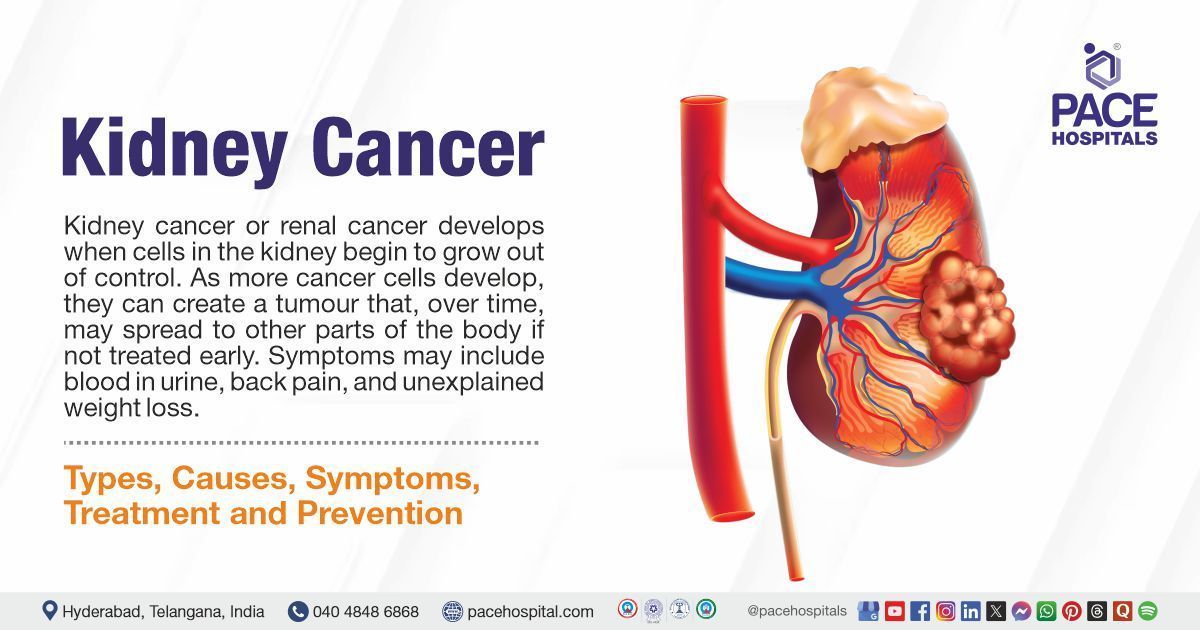
Kidney cancer is a disease in which abnormal cells grow uncontrollably in one or both the kidneys. These abnormal cells form a tumor which can interfere with normal kidney function. If left untreated, the cancer can spread to other organs. Early detection improves treatment outcomes.
Can kidney cancer be detected in a blood test?
No single blood test can directly detect kidney cancer. Blood tests may show signs of anaemia or abnormal kidney function. These results can suggest a problem but cannot confirm cancer. Imaging tests like CT scans and ultrasounds are more reliable. Blood tests are mainly supportive tools.
Is stage 4 kidney cancer curable?
Stage 4 kidney cancer is usually not considered curable. However, treatments can slow the cancer and help people live longer. Immunotherapy and targeted drugs are commonly used. Some patients respond very well and live for many years. Treatment focuses on control and quality of life.
Are all kidney tumors cancerous?
Not all kidney tumors are cancerous; some are benign and do not spread to other parts of the body. Doctors use imaging tests and sometimes biopsies to identify the type. Benign tumors may not need treatment right away. Cancerous tumors require closer monitoring or surgery.
How fast does kidney cancer spread?
Kidney cancer spreads at different speeds in different people. Some tumors grow very slowly over many years. Others can spread more quickly to organs such as the lungs or bones. The growth rate depends on the cancer type and stage. Early diagnosis helps prevent spread.
How successful is immunotherapy for kidney cancer?
Immunotherapy has significantly improved treatment for advanced kidney cancer. It helps the immune system recognise and attack cancer cells. Many patients experience slowed tumor growth or shrinkage. Results vary from person to person. Overall, success rates are better than older treatments.
Is kidney cancer contagious?
Kidney cancer is not contagious and it cannot spread from one person to other through contact. It cannot be transmitted by sharing food, air, or objects. The disease develops due to changes within a person's own cells and is not caused by any infection.
Is kidney cancer genetic?
Most kidney cancers are not inherited. However, a small number are linked to inherited genetic conditions. Having a close relative with kidney cancer slightly increases the risk. Genetic testing is only needed in some instances. Most cases occur without a family history.
Is kidney cancer painful?
Early kidney cancer often causes no pain or symptoms. Pain may appear as the tumor grows larger. It is usually felt in the lower back or side. Blood in the urine can also occur. Symptoms often appear in later stages.
Do kidney stones cause cancer?
Kidney stones do not directly cause kidney cancer, and most people with stones never develop cancer. Rarely, long-term kidney irritation may slightly elevate the risk. Kidney stones and cancer are generally unrelated, but regular checkups help keep kidneys healthy.