
Meatoplasty Surgery, Procedure and Cost
PACE Hospitals is a
leading hospital for Meatoplasty Surgery in Hyderabad, India, providing comprehensive urological care for urethral meatal stenosis and other meatal abnormalities in adults and children. Meatoplasty is a reconstructive urological procedure performed to widen and restore the urethral opening, improve urinary stream, relieve obstructive urinary symptoms, and preserve normal urethral function.
Our experienced urologists utilize advanced diagnostic evaluation, precision surgical techniques, and minimally invasive approaches to ensure optimal functional outcomes, reduced postoperative complications, and faster recovery. Supported by modern surgical infrastructure and multidisciplinary perioperative care, we deliver evidence-based, patient-centric treatment.
Book an Appointment for Meatoplasty Surgery
Meatoplasty Surgery Appointment
Why Choose PACE Hospitals for Meatoplasty Procedure?
Expert Urologists & Reconstructive Urology Specialists in Hyderabad
Precision-Guided Meatoplasty Surgery for Urethral Meatal Stenosis with Functional Restoration, Improved Urinary Flow & Personalized Postoperative Care.
Transparent Meatoplasty Surgery with Insurance & Cashless Treatment Option
Recognized for excellence in healthcare delivery with
NABH, NABL, NBE/DNB, NABH Nursing Excellence, and ISCCM accreditations.
What is Meatoplasty?
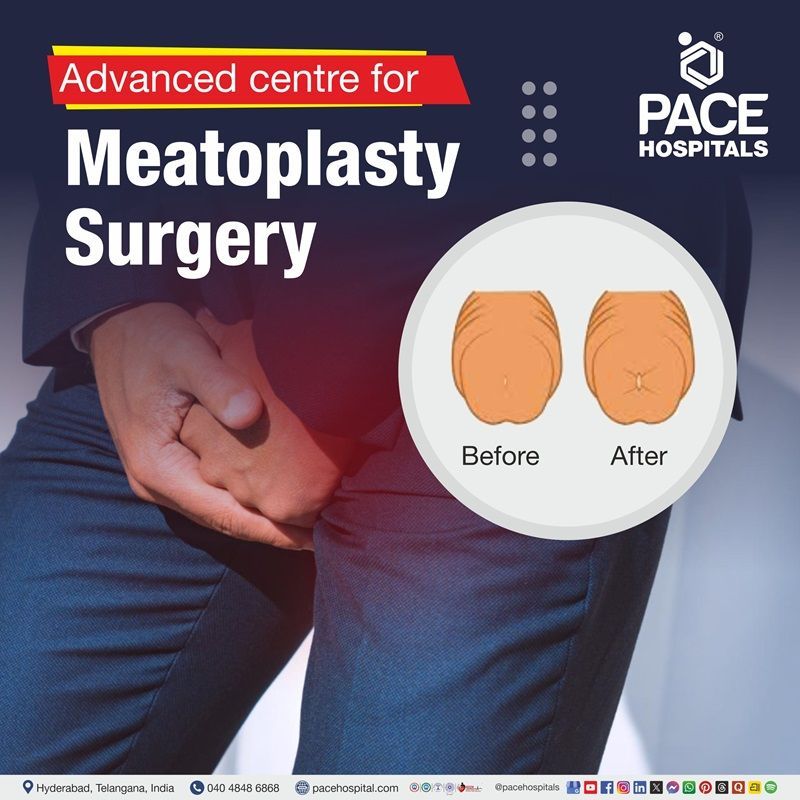
Meatoplasty is a surgical technique employed for reconstruction, enlargement, and/ or changing the position of the external opening of the urethra (called meatus) in such a way as to ensure proper flow of urine and appearance of the meatus in a more natural manner. In cases of hypospadias repair, meatoplasty may be performed to construct a vertically(tip) positioned normal meatus, whereas in meatal stenosis, it may help widen the narrowed meatus.
The aims of meatoplasty surgery are primarily to improve urine flow, eliminate obstruction or spraying, prevent recurrent narrowing, and achieve a better cosmetic result. Some indications of meatoplasty include meatal stenosis, abnormal or misplaced meatus in hypospadias, stenosis following hypospadias surgery, and urinary problems from a pinpointed urethral meatus.
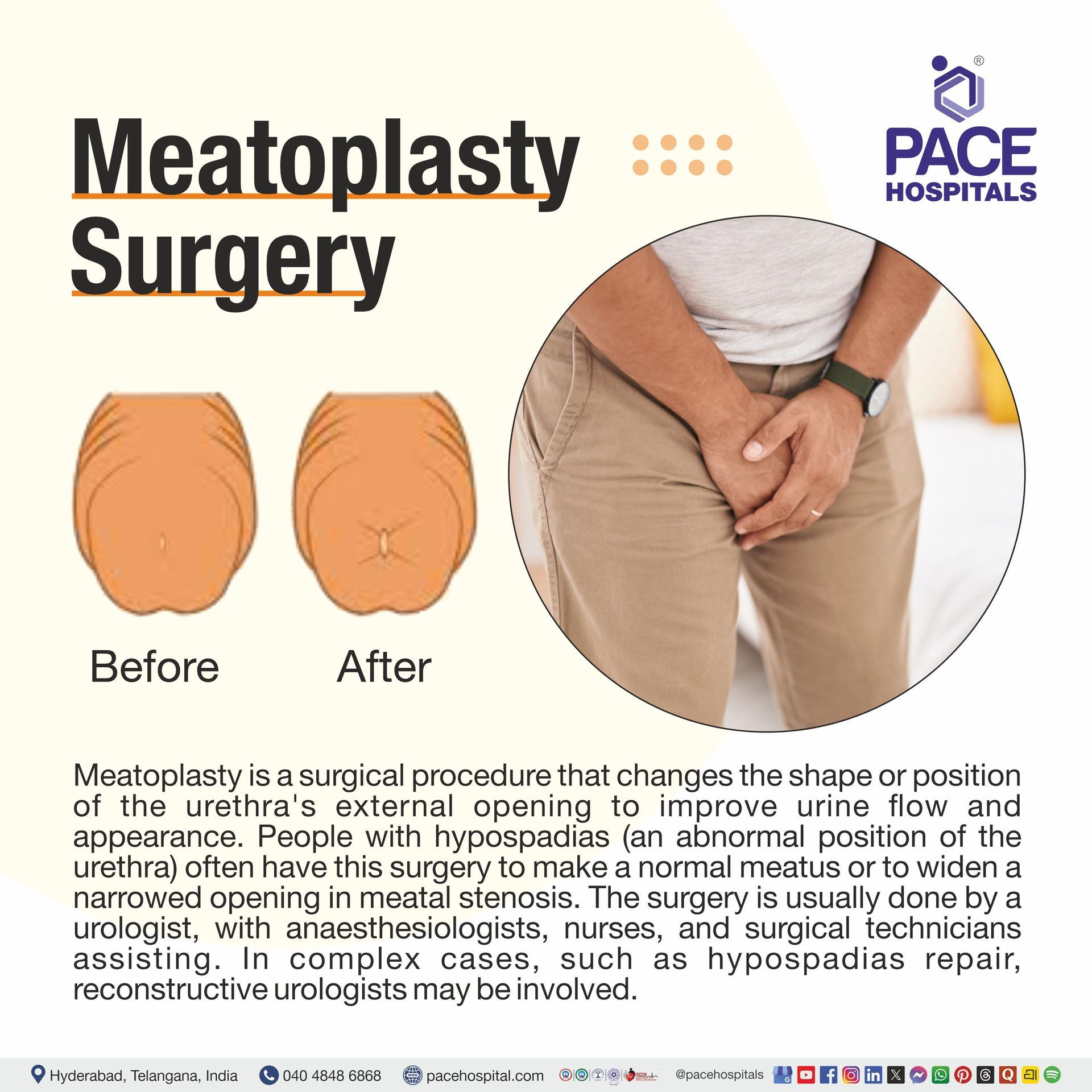
The meatoplasty surgery is often conducted by a urologist, especially a pediatric urologist in a child, and an adult urologist in an adult patient. Other medical professionals who could be included in the team are anesthesiologists (who will administer anesthesia and monitor its effects), nurses, and surgeons/surgical technicians. If the case is complex, as in hypospadias repair, reconstructive urologists may also be included.
Meatoplasty meaning
The term meatoplasty is derived from both Latin and Greek words:
- “Meato” –originated from the Latin word meatus, meaning “passage” or “opening” (relating to a meatus).
- “Plasty” – comes from the Greek word plassein, meaning “to mold” or “to shape”.
So, meatoplasty procedure means “surgical molding or reshaping of an opening.” In medical usage, it refers to a plastic surgery procedure to enlarge or reconstruct a meatus, such as the urethral opening, often to treat narrowing (meatal stenosis) and hypospadias (where the urethral meatus is positioned under the penis rather than its tip).
Types of Meatoplasty
Meatoplasties are categorized according to the surgical procedure used to widen, reconstruct, or reposition the urinary passage to restore normal urinary flow and function. The main meatoplasty types are categorized as follows:
- Meatotomy(simple)
- Sutured meatoplasty with eversion
- Pedicled flap meatoplasty
- Free flap/graft meatoplasty
- Staged reconstruction
Meatotomy(simple)
It is an effective procedure that involves making an incision into the narrowed urethral opening. Simple meatotomy is frequently performed for uncomplicated meatal stenosis. This procedure is not complicated; it can be performed on an outpatient basis. Its effect is almost instantaneous, as it facilitates urination.
Sutured meatoplasty with eversion
It is a method that widens the urethral opening and fixes the urethral mucosa to the edges of the glans skin with sutures. This technique helps to prevent the narrowing of the meatus. In addition, sutured meatoplasty with eversion is a commonly used reconstructive surgery for meatal stenosis. Absorbable fine sutures are applied.
Pedicled flap meatoplasty
The pedicled flap meatoplasty is characterized by adjacent tissue whose blood supply is preserved via a vascular pedicle to reconstruct the meatus. It is recommended in case of local tissue loss, scarring, or inflammatory disease. It is associated with good outcomes, as preservation of the vascular pedicle is a standard principle. Fine absorbable sutures are commonly used.
Free flap/graft meatoplasty
This technique employs skin grafts or free flaps from another site when the surrounding tissues are insufficient. It may be necessary in severe cases of scarring, recurrent stricture, or urethral reconstruction at the distal end. Grafting helps restore the size of the opening and the inner lining of the lumen. It is more complicated than a standard meatoplasty.
Staged reconstruction
This procedure involves multiple-stage surgery when the condition is advanced or when the previously performed surgery was unsuccessful. During the first surgery, the scarred region is opened, and healthy tissues are prepared, whereas the second and subsequent surgeries involve recreating the meatus and the urethral tract. It is often used in cases of complicated strictures or widespread balanitis xerotica obliterans (a chronic skin condition affecting a large area of the penis).
Meatoplasty Indications
Meatoplasty should be considered if the patient has trouble passing urine, has an obstructed flow due to abnormalities of the meatus, or requires surgical correction. The common indications of meatoplasty surgery are:
- Meatal stenosis
- Balanitis xerotica obliterans (BXO)
- Hypospadias repair
- Urethral stricture involving the meatus
- Traumatic injury
- Post-surgical scarring
- Recurrent urinary obstruction symptoms
Meatal stenosis
Meatal stenosis is the narrowing of the urinary channel that results in a narrow, upward, thin, strong, or aim-incompetent stream of urine. It may cause pain while passing urine and difficulty in emptying the bladder. Meatoplasty is said to have curative potential for the condition.
Balanitis xerotica obliterans (BXO)
BXO causes chronic(long-lasting) inflammation of the glans, foreskin, and urinary opening, leading to scarring and narrowing of the opening. If obstruction develops or steroid treatment fails, meatotomy/meatoplasty is indicated to relieve obstruction and restore normal urine flow.
Hypospadias repair
In cases of hypospadias where the urethral opening is found on the underside of the penis, a meatoplasty procedure may be done as part of reconstructive surgery to create a normally positioned and functional meatus.
Urethral stricture involving the meatus
Strictures caused by scar tissue may be present around the meatus or the distal urethra near the meatus and cause poor flow, straining, spraying, or urinary retention. The condition may require meatoplasty.
Traumatic injury
Damage to the end of the penis and the urethral meatus can occur through accidents, injuries during catheterization, or medical procedures and result in a distorted or narrowed meatus.
Post-surgical scarring
Surgeries previously performed on the penis and urethra have resulted in scar tissue formation and narrowing of the meatus. Meatoplasty is needed for reconstruction.
Recurrent urinary obstruction symptoms
Repeated symptoms such as poor stream, straining, prolonged duration of urine, spraying, and incomplete bladder emptying indicate meatal narrowing. If conservative treatment fails, meatoplasty can provide long-lasting relief.
Meatoplasty Contraindications
Contraindications to meatoplasty are conditions or circumstances in which it would be inadvisable to perform the surgery, to minimize complications and ensure safe healing. Contraindications may be absolute or relative. They include:
- Extensive BXO fibrosis
- Proximal urethral strictures
- Active inflammation/infection
- General surgical risks
Extensive BXO fibrosis
BXO can lead to increased fibrosis/scarring of the meatus and urethra. If the fibrosis is extensive, performing a meatoplasty alone will be inadequate, as the contracting tissues may still narrow the aperture. In this scenario, an extensive surgery like urethroplasty may be preferable.
Proximal urethral strictures
When the stricture is extended proximally to the meatus, a procedure such as meatoplasty alone would be insufficient to cure the problem. BXO-induced strictures always begin at the meatus and progress proximally; thus, an appropriate examination should be performed before surgical treatment. Such individuals would need urethral reconstruction instead of meatoplasty alone.
Active inflammation/infection
Local infection or inflammation is associated with an increased risk of impaired wound healing, haemorrhage, and postoperative pain and infection. Elective meatoplasty is usually performed only after infection or inflammation has been addressed. The quality of tissues should be improved before undergoing surgery.
General surgical risks
People suffering from unstable health problems such as heart ailments, bleeding complications, or high anesthesia risk should be considered later after stabilizing. The risks associated with these conditions are not specific to meatoplasty procedures but pertain to almost all types of surgery.
Meatoplasty Benefits
There are functional advantages to meatoplasty, including expanding or constructing a new urinary passage to improve urine flow and ensure urinary well-being. The following are the advantages of meatoplasty surgery:
- Improved urinary flow
- Symptom relief
- Reduced infection risk
- Prevention of kidney damage
- High success rate
Improved urinary flow
Meatoplasty increases the size of a small meatus by surgically widening a narrowed opening of the urethra. This will increase urine flow, which can resolve symptoms of a thin, forceful, or spraying urine stream. In most cases, patients resume normal urination following surgery.
Symptom relief
This treatment may provide relief from painful or burning sensations when urinating, straining to urinate, increased frequency of urination, increased time needed to urinate, and inability to control the urinary stream. Correcting the obstruction often improves daily comfort and quality of life.
Reduced infection risk
An unaddressed obstruction can lead to incomplete bladder emptying, increasing the risk of urinary tract infections. With the help of meatoplasty, the risk of recurrent infection due to obstruction can be minimized.
Prevention of kidney damage
Obstruction can adversely impact bladder functioning and cause renal issues in rare cases. Early surgery can reverse the situation and prevent complications of the urinary tract.
High success rate
Meatoplasty is regarded as a routine, safe, reliable, and efficient procedure for treating meatal stenosis. According to medical literature, the condition is often curable with this procedure, with a rapid recovery and prevention of symptoms following surgery.
Need clarity on meatoplasty procedure, recovery time, or treatment options?
Get a free second opinion today.
At PACE Hospitals, we are committed to providing our patients with the best possible care, and that includes offering second medical opinions with super specialists for treatment or surgery. We recommend everyone to get an expert advance medical second opinion, before taking decision for your treatment or surgery.
Meatoplasty Procedure Steps
Procedure steps for meatoplasty surgery include the following:
Before meatoplasty surgery
- Consultation and diagnosis: Before the surgical procedure, the physician assesses symptoms such as a narrowed or spraying urine stream, difficulty urinating, and pain. The doctor may perform a physical examination, inspect the urethral meatus, observe the urine stream, and sometimes measure its force to establish that the patient has meatal stenosis or other conditions that necessitate meatoplasty.
- Medical history review: The physician will discuss any pre-existing conditions, allergies, bleeding tendencies, and previous operations. It helps identify the risks of anaesthesia, healing, and other complications and confirms that the operation is suitable for the patient.
- Medication adjustments: The patient should notify the physician about all prescription drugs, over-the-counter (OTC) medicines, and any herbal treatments. Certain medications, including NSAIDs and anticoagulants, should be temporarily discontinued before the operation due to their ability to increase bleeding risks.
- Fasting (NPO): Patients must refrain from eating and drinking for a few hours before surgery if general anaesthesia is scheduled. Fasting significantly reduces the risk of regurgitation or aspiration during the anaesthesia procedure.
- Day of surgery: At the time of surgery, the patient is registered, vital signs are measured, and the surgical site is cleaned. Before the meatoplasty procedure, the patient receives a numbing ointment or anaesthesia to ensure a pain-free procedure.
During meatoplasty surgery
- Anaesthesia and preparation: The penis is first cleansed with an antiseptic skin solution. Numbing creams may be used before the procedure. Anaesthesia is normally administered to put the patient to sleep throughout the procedure and avoid any pain.
- Measurement: Once the effects of anaesthesia have set in, the clinician inserts a thin, soft tube or instrument into the meatus. This helps assess the degree of narrowing and guides the required enlargement.
- Incision(V-shaped): A tiny V-shaped incision is made on the lower side of the meatus opening. This incision helps stretch the narrow tissue to create an enlarged opening.
- Widening/correction: Once the incision is made, the surgeon remodels the tissue to enlarge the opening. Obstructed scarred tissues are corrected at this stage.
- Suturing: The two ends of the new opening will then be joined with absorbable sutures or medical glue, which will help maintain the widened state and promote healing.
- Final inspection: Post-surgery, the doctor inspects the newly created hole to determine whether it is large enough and identifies possible areas that still appear narrow and require widening using a catheter.
- Ointment application: In addition, a medicated ointment or lubricant may be applied as the final step to reduce irritation, prevent adhesion, and support healing.
After meatoplasty surgery
- Wound care and separation: The surgical site should always remain clean and dry. It should be checked daily for signs of swelling, redness and discharge. Some doctors recommend carefully and gently dilating the meatus during healing to prevent sticking or restrengthening. Follow the surgeon's specific instructions regarding local hygiene.
- Ointment application: The specified antibiotic ointment or petroleum jelly should be applied to the end of the penis/meatal skin as required by the doctor. The purpose is to prevent irritation, prevent narrowing/stenosis, avoid adhesion to clothes and diapers, and promote healing of the surgical site.
- Bathing: It may be permitted after surgery, depending on the physician's recommendations. However, keep the site clean with plain soap and water, then pat dry gently without rubbing the wound.
- Pain relief: Temporary pain symptoms, such as a burning sensation when passing urine, may occur. It is recommended to use only prescribed pain medications, if necessary, as directed by the physician.
- Diaper care: Change the diaper frequently to maintain cleanliness and dryness. Minimising irritation and moisture helps reduce inflammation near the healing meatus.
- Urination: This tends to improve following treatment, and most individuals urinate without issues as healing progresses. Temporary discomfort and mild spraying may occur initially, but severe problems should be discussed with the concerned doctor.
- Activity restrictions: Rest is advised in the first few days post-surgery. Rough play, cycling, straddling toys, sports, and other strenuous activities should be avoided until authorized by the surgeon since they can apply pressure to the reproductive organs.
- Hydration: Promote adequate fluid consumption unless told otherwise. Sufficient intake will help dilute the urine and facilitate more comfortable urination.
- Diet: In most cases, a patient can eat normally post-surgery, except when experiencing nausea from anaesthesia. The meals should start with light foods and increase gradually if tolerated.
- Follow-up visits: It is necessary to attend all follow-up sessions arranged to monitor progress and the urine flow. Seek medical care sooner if there is fever, bleeding, worsening pain, or trouble passing urine.
Meatoplasty Complications
While meatoplasty is normally considered safe and effective, patients need to understand that it may involve potential complications, as with any other surgical procedure. Meatoplasty surgery complications include:
- Restenosis (recurrence of meatal stenosis)
- Abnormal stream
- Immediate post-op issues
- Bleeding
- Pain/dysuria
- Rare complications
Restenosis (recurrence of meatal stenosis)
In certain individuals, scar tissue can recur following surgical intervention, resulting in meatal narrowing and a spraying or difficult urine stream that requires further management by revision of surgery. Follow-up allows for an early detection of this complication.
Abnormal stream
Following recovery, some people may report a spraying or splitting of the urine stream or even a deviation in the stream. These are related to swelling, unusual healing pattern or persistent meatal narrowing. In most cases, the abnormality resolves on its own, but persistent symptoms require review.
Immediate post-op issues
- Bleeding: A small amount of bleeding or spotting immediately after meatoplasty is common. Minor bleeding will resolve spontaneously with local care; however, continuous or excessive bleeding must be reported to the surgeon.
- Pain/dysuria: It is common for the patient to experience transient pain and/or dysuria (painful urination) following the procedure due to tissue healing. These symptoms are controlled using drugs and fluids, but increasing or severe pain may indicate irritation or infection.
Rare complications
Some unusual complications are infections at the site of surgery, excess scarring, urinary problems, and dissatisfaction with appearance. In very rare cases, bladder or kidney illness may result if left untreated for a prolonged period. Early diagnosis can prevent such problems.
Meatoplasty Recovery Time
Healing after urethral meatoplasty is typically quick, with most children returning to their usual routine within a few days. However, complete healing takes about 2-3 weeks, depending on the individual and the extent of the procedure.
Initial recovery
Most urethral meatoplasty surgeries are performed on an outpatient basis, so the patient returns home on the same day. Swelling, spotting, or changes in the urine stream could occur shortly after surgery. Most of the children return to their regular pattern of urination within a short period after surgery.
Pain management
The child may experience a degree of burning sensation or discomfort when urinating in the first few days after surgery. Simple painkillers could be recommended for managing any pain. Taking warm baths can help reduce pain and promote urination.
Activity restrictions
During the first 1-2 weeks after surgery, light physical activity may be recommended. Rough physical activities, such as cycling, riding straddle toys, or participating in any sport, should be avoided until recovery is confirmed by a physician.
Care instructions
Keep the area clean and dry. Apply any prescribed cream as directed by the surgeon. necessary. Frequent diaper changes can help prevent irritation. Staying hydrated will be helpful because it makes urine less irritating.
Follow-up
The next step would be a follow-up appointment to confirm that the passage remains open and that healing proceeds as expected. It is essential to contact the doctor early if anyone experiences any fever, severe bleeding, worsening pain, or difficulty passing urine.
What questions can patients ask the healthcare team about meatoplasty?
- What is meatoplasty, and why do I need it in my case?
- How will this surgery affect urinary flow/appearance / sexual function?
- What is the chance that the narrowing or symptoms will come back after surgery?
- What alternative treatment options might I consider?
- How is meatoplasty performed?
- Will the procedure be done under local or general anaesthesia?
- What are the possible risks of meatoplasty?
- How long will the surgery take?
- What should I expect during recovery?
- Will I have pain after surgery, and how will it be managed?
- When can I return to work, exercise, and do normal activities?
- Is there a risk of the condition recurring after surgery?
- Will I need a follow-up after surgery?
Difference between Meatoplasty and Meatotomy
Meatoplasty vs Meatotomy
Meatoplasty and meatotomy are surgeries used to treat meatal stenosis and improve urine flow. Although meatoplasty and meatotomy aim to widen the urethral opening, meatotomy is an incisional procedure, while meatoplasty involves reconstruction for more durable correction. The table below shows the key differences between these procedures.
| Characteristics | Meatoplasty | Meatotomy |
|---|---|---|
| Definition | Meatoplasty involves surgically reconstructing or widening the urinary meatus (opening), often with suturing for meatal stenosis. | Meatotomy is a simpler incision to enlarge the meatus without reconstruction or stitches. |
| Complexity | A more difficult procedure that includes tissue reconstruction. | Minimal intervention: procedure is relatively easy. |
| Sutures(stitches) | Usually uses biodegradable (dissolvable) sutures to retain the new shape. | None required, as no sutures are used to close the incision. |
| Tissue work | Often involves the use of skin flaps or even grafts for stability. | It involves cutting, and no tissue movement or removal is required in this procedure. |
| Anaesthesia | The procedure is done under general anaesthesia in the operating room. | Usually done in the office under local/topical anaesthesia via numbing gel. |
| Primary goal | Structural repair was done to avoid recurrence of the condition. | Allows for immediate improved urine flow through "unzipping" the scar tissue. |
Meatoplasty Surgery Cost in Hyderabad, India
The cost of Meatoplasty Surgery in Hyderabad generally ranges from ₹20,000 to ₹1,50,000 and above (approx. US $240 – US $1,805). The exact cost of meatoplasty surgery depends on the type of condition being treated (meatal stenosis, urethral narrowing, or ear canal issues), the complexity of the procedure, and whether it is performed in children or adults. Additional factors such as preoperative evaluation, type of anesthesia, hospital stay, and postoperative care also influence the total cost. Availability of cashless treatment options, TPA corporate tie-ups, and insurance assistance may further affect expenses.
Cost Breakdown According to Type of Meatoplasty Surgery
- Simple Meatoplasty (Minor Procedure) – ₹20,000 – ₹50,000 (US $240 – US $600)
- Meatoplasty for Meatal Stenosis (Urological) – ₹30,000 – ₹80,000 (US $360 – US $960)
- Ear Meatoplasty (For Ear Canal Narrowing) – ₹40,000 – ₹1,00,000 (US $480 – US $1,205)
- Meatoplasty with Additional Procedures (e.g., Urethral Reconstruction) – ₹70,000 – ₹1,50,000 (US $840 – US $1,805)
- Complex Meatoplasty with Hospitalization & Monitoring – ₹80,000 – ₹1,80,000+ (US $960 – US $2,170+)
Frequently Asked Questions (FAQs) on Meatoplasty
What are the benefits of meatoplasty?
Meatoplasty is a surgical procedure that is performed on an outpatient basis to correct meatal stenosis by enlarging the opening of the urethra. Some of the advantages of undergoing meatoplasty include restoring the normal flow of urine, improving the strength and direction of the urine stream, and relieving symptoms such as pain during urination, straining to urinate, frequent urination, and splashing during urination. Promptly correcting meatal stenosis could even help prevent more serious complications, such as urinary tract infections or damage to the urinary bladder and kidneys.
What are the risks of meatoplasty surgery?
The complications involved in meatoplasty (also known as penile meatoplasty) are bleeding, infections, formation of scar tissue, and recurrence of a constricted urethra. Common side effects include a burning sensation while passing urine, a spraying urine stream, and inflammation. Serious complications are rare but include urine retention problems.
Which Is the best Hospital for Meatoplasty Surgery in Hyderabad, India?
PACE Hospitals, Hyderabad, is a trusted centre for urology and ENT surgical procedures, including meatoplasty.
We have highly experienced urologists, ENT surgeons, anesthesiologists, and pediatric specialists who follow evidence-based protocols to perform meatoplasty with precision and safety.
We have excellent facilities including state-of-the-art modular operation theatres, advanced surgical instruments, and postoperative care facilities, PACE Hospitals ensures effective and patient-centred meatoplasty surgery with minimal complications.
What is the recovery time after meatoplasty?
The recovery period following a meatoplasty typically lasts about 1 to 2 weeks, with patients regaining their normal routine within 7 to 14 days. The initial pain and swelling subside in a couple of days, while total recovery may take some weeks.
How long will the results of meatoplasty last?
The effects of meatoplasty are usually lifelong and highly successful; in fact, nearly all individuals who undergo the procedure experience long-lasting improvements in their urinary function. Although recovery takes several weeks, research shows that success is long-lasting, with many individuals retaining a permanently enlarged and functioning meatus. In rare cases of severe scarring, the opening can narrow again, requiring further treatment.
What Is the cost of Meatoplasty Surgery at PACE Hospitals, Hyderabad?
At PACE Hospitals, Hyderabad, the cost of meatoplasty surgery typically ranges from ₹18,000 to ₹1,40,000 and above (approx. US $215 – US $1,685), making it a cost-effective and competitive option for urological and ENT procedures in Hyderabad. However, the final cost depends on:
- Type of meatoplasty (urological vs ENT)
- Severity of narrowing or obstruction
- Need for additional reconstructive procedures
- Type of anesthesia used
- Duration of hospital stay and postoperative care
- Specialist consultations and follow-up
For simple procedures, costs remain toward the lower end, while complex surgeries requiring reconstruction or hospitalization may fall toward the higher range.
After a detailed clinical evaluation and diagnostic assessment, our specialists provide a transparent cost estimate tailored to the patient’s condition and treatment plan.
Is meatoplasty surgery safe for children?
Yes, meatoplasty surgery is safe, common and with very high success rates in children suffering from meatal stenosis. This type of surgery is simple and can be carried out on a day-care basis under general anaesthesia, even at the age of 3 months.
Looking for the best Meatoplasty Surgery Hospital Near Me?
If you’re searching for the top meatoplasty surgery hospital near me in areas like HITEC City, Madhapur, Kondapur, Gachibowli, Kukatpally, or KPHB, it is important to choose a hospital with experienced specialists and advanced surgical facilities.
Effective meatoplasty surgery requires:
- Accurate diagnosis of narrowing or obstruction
- Skilled surgical correction with minimal tissue damage
- Proper postoperative care to ensure healing
- Regular follow-up to prevent recurrence
At PACE Hospitals, Hyderabad, patients receive comprehensive care with a multidisciplinary approach, ensuring safe surgery and optimal recovery.
Can meatoplasty improve urinary flow in adults with meatal stenosis?
Yes, a meatoplasty procedure is highly effective for enhancing the urine stream and resolving urinary symptoms in adults with meatal stenosis. It is a surgical procedure that widens the meatus, typically resulting in a stronger, straighter stream and reduced difficulty with urination.
Is hospitalization required for meatoplasty surgery?
No, the surgery usually doesn’t require you or your child to be hospitalized. It's normally performed on an outpatient basis so that the patient can leave the hospital the same day after the procedure. The whole process is simple and takes about 1 to 2 hours to complete. Hospitalization is rarely needed but may be required for complex cases or complications.
How successful is meatoplasty surgery?
Meatoplasty for the treatment of meatal stenosis has an excellent success rate, even considered curative, with reported success rates of 87.5% or higher. It works very well in treating problems with the urinary stream and has a low reoperation rate of 0.2% to 3.5% when performed properly.
What is meatoplasty surgery?
Meatoplasty is a type of surgery in which the meatus (urethral opening) is widened and reconstructed to improve the passage of urine. This surgery can be used to treat meatal stenosis, in which the urethral opening is constricted, resulting in an abnormal urinary stream.
What conditions are treated with meatoplasty surgery?
The procedure referred to as meatoplasty is done mainly to correct meatal stenosis which is characterized by a narrowed urethral opening of the penis, and which usually presents itself through painful urination, spraying or a weak stream. It may also be done for congenital or acquired meatal narrowing, including cases after trauma or prior surgery.
How is the meatoplasty surgery performed?
Urethral meatoplasty is an outpatient surgical procedure performed by a urologist to enlarge a narrowed or constricted urethral opening (meatus). It is usually done under local or general anaesthesia, involving a small incision at the meatus (the urethral opening at the tip of the glans), widening the opening, and then closing the area with dissolvable stitches. The procedure typically takes about an hour.
Are there any long-term complications after meatoplasty?
Although long-term complications following a meatoplasty are uncommon, one such complication that can occur is the recurrence of stenosis (narrowing) due to scar formation at the meatus site, which may require further treatment. Some other possible long-term complications include chronic recurrent urethral stricture, spraying of the urinary stream, and permanent loss of tissue elasticity at the meatus.
Is meatoplasty surgery painful?
The Meatoplasty procedure is usually not painful, as it is performed under general or local anaesthesia; therefore, the patient should not feel any pain. In the first one to two weeks after the surgery, there will be some pain, stinging, or burning sensation when urinating. The pain is only temporary and can be relieved using prescription pain medications.
What are the potential side effects of meatoplasty surgery?
Meatoplasty is generally safe, but possible side effects of the surgery are often mild and transient, including pain or a burning sensation while urinating, swelling, slight bleeding, inflammation, and discomfort at the surgical site. Sometimes, complications such as infections, spraying of the urinary stream, and urethral restenosis may occur. Rarely, scarring or changes in urine flow can occur.
How can I prepare for meatoplasty surgery?
The process of preparing for meatoplasty surgery involves preoperative evaluation, which includes discussing the patient’s medical history, discontinuing certain drugs such as NSAIDs/blood thinners, following fasting instructions, and arranging transportation from the hospital. In children, the physician will assess the patient’s urine flow pattern and provide instructions for preparing for anaesthesia.
Can meatoplasty surgery improve the appearance of the penis?
Yes, the meatoplasty surgical procedure can improve the physical appearance of the penis, especially by widening or reshaping a narrowed urethral opening (meatus) on the head of the penis. Although the main objective of this medical procedure is functional, it also helps restore a more natural appearance of the meatus, especially in cases of congenital problems, injuries, or complications after circumcision that cause meatal narrowing, such as after hypospadias repair or circumcision.
What are the post-operative care instructions after meatoplasty?
Postoperative care following meatoplasty surgery primarily focuses on preventing urethral meatus restenosis (narrowing) after it has been widened. This surgery is usually performed on children and involves the regular application of cream and cleaning.
How can I prevent complications after meatoplasty surgery?
Complications associated with meatoplasty or meatotomy surgery can be avoided by taking proper wound care measures, which involve monitoring the surgically expanded urethral opening, pain management, and activity limitations. Postoperative care’s main objective is to maintain the urethral opening free of infection and to prevent narrowing, a condition known as recurrent meatal stenosis.
Who is an ideal candidate for meatoplasty?
Meatoplasty should ideally be performed on individuals who have developed meatal stenosis or constriction of the urinary meatus resulting in dysfunction and pain. This condition occurs more frequently in young males, but even adults might qualify for meatoplasty, depending on the underlying cause of the meatal stenosis.
How is meatoplasty different from meatotomy?
Both meatoplasty and meatotomy are surgical procedures performed to correct meatal stenosis; they differ in complexity and technique. While meatotomy is an operation that involves making an incision for widening the opening, meatoplasty is a complicated procedure that involves restructuring, rearranging and suturing tissue at the tip of the penis.
Can adults undergo meatoplasty surgery?
Yes, meatoplasty can be performed on adults, too. Although meatal stenosis (narrowing of the opening of the urethra) tends to occur in children, adults are also not immune to it. Meatal stenosis in adults may occur due to chronic catheter use, prior urethral surgery, or other inflammatory diseases such as balanitis xerotica obliterans (a skin condition affecting a large area of the penis).
Is Meatoplasty Surgery Covered by Insurance at PACE Hospitals?
Yes, meatoplasty surgery is generally covered under most health insurance policies at PACE Hospitals, subject to policy terms and approval. Since it is a medically necessary procedure for conditions like meatal stenosis or ear canal obstruction, it is typically included under urology or ENT surgical coverage in private insurance and corporate health plans.
At PACE Hospitals, patients can benefit from:
- Cashless hospitalization facilities with empaneled insurance providers
- Assistance from a dedicated insurance and TPA coordination team
- Pre-authorization support and documentation guidance
- Transparent cost estimates before admission
- Support for government health schemes where applicable
Coverage depends on surgical coverage clauses, waiting periods, sum insured limits, and policy inclusions. Patients are encouraged to share insurance details in advance so the hospital’s insurance desk can verify eligibility and streamline approvals.
Why choose PACE Hospitals?
- A Multi-Super Speciality Hospital.
- NABH, NABL, NBE & NABH - Nursing Excellence accreditation.
- State-of-the-art Liver and Kidney transplant centre.
- Empanelled with all TPAs for smooth cashless benefits.
- Centralized HIMS (Hospital Information System).
- Computerized health records available via website.
- Minimum waiting time for Inpatient and Outpatient.
- Round-the-clock guidance from highly qualified super specialist doctors, surgeons and physicians.
- Standardization of ethical medical care.
- 24X7 Outpatient & Inpatient Pharmacy Services.
- State-of-the-art operation theaters.
- Intensive Care Units (Surgical and Medical) with ISO-9001 accreditation.


