Affordable RIRS Surgery Cost in Hyderabad, India
PACE Hospitals
All You Need To Know About RIRS Surgery
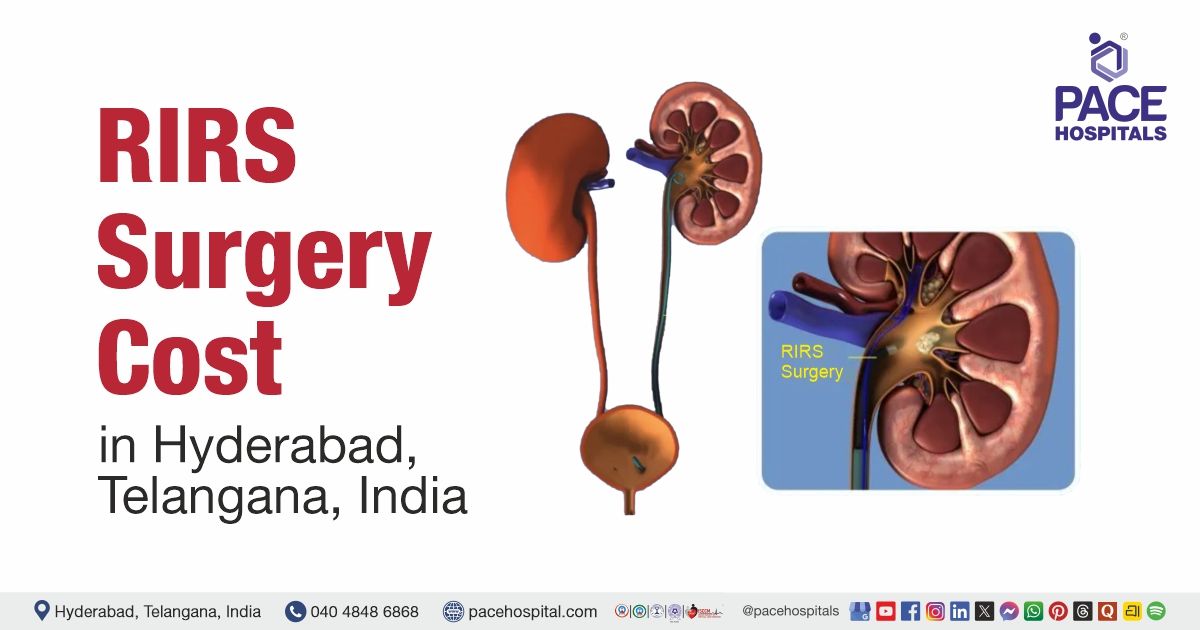
RIRS (Retrograde Intrarenal Surgery) is a minimally invasive procedure to remove kidney stones located in the renal collecting system. RIRS Surgery allows precise stone removal with minimal disruption to the kidney and urinary tract:
- A flexible ureteroscope is inserted through the urinary tract to reach the kidney without external incisions.
- Stones are visualized, fragmented, and removed using laser lithotripsy or other specialized instruments.
- Ideal for small to medium-sized stones or stones in areas difficult to reach with standard procedures.
- Minimizes tissue trauma, reduces post-operative pain, and allows for shorter recovery time.
RIRS Surgery Cost in India
On average, cost of RIRS Surgery in India ranges from ₹60,000 to ₹2,00,000 and above (approximately US $631 – $2,102). However, the actual RIRS surgery cost for kidney stones may vary depending on several factors, including:
- Size, number, and location of kidney stones
- Type of RIRS procedure (standard flexible ureteroscopy, laser-assisted, or combined techniques)
- The patient’s age, overall health, and kidney function
- The type of hospital (private, corporate, or trust hospitals)
- Hospital charges, including room category and facilities
- Anesthesia type and surgical team expertise
- Pre-operative evaluations and post-operative care requirements
- Insurance coverage or corporate approvals for cashless treatment
RIRS Surgery Cost in Hyderabad, Telangana
On average, RIRS (Retrograde Intrarenal Surgery) cost in Hyderabad ranges from ₹65,000 to ₹1,80,000 and above (approximately US $683 – $1,892). These rates provide a competitive and cost-effective option compared to other top hospitals in the city, with advanced urological care and personalized treatment planning readily available.
However, the cost of RIRS Surgery in Hyderabad is influenced by several factors, such as:
- Size, number, and location of kidney stones
- Type of RIRS procedure (standard flexible ureteroscopy, laser-assisted, or combined approaches)
- Consumables and temporary DJ (Double-J) stent
- Hospital facility and infrastructure chosen
- Surgeon expertise and multidisciplinary urology care
- Insurance or corporate approvals for cashless services
- Extent of pre-operative evaluations and post-operative care
- Potential complications during or after the procedure
Cost Breakdown According to Type of RIRS Procedure
- RIRS for Small Renal Stones (≤10 mm) – ₹65,000 – ₹95,000 (US $683 – US $999) (approx.)
- RIRS for Medium Stones (10–20 mm) – ₹80,000 – ₹1,20,000 (US $841 – US $1,261) (approx.)
- Standard RIRS (Standard Flexible Ureteroscopy) – ₹75,000 – ₹1,30,000 (US $788 – US $1,367) (approx.)
- RIRS for Large Stones (>20 mm) – ₹1,00,000 – ₹1,60,000 (US $1,051 – US $1,682) (approx.)
- RIRS with Laser Lithotripsy + DJ Stent Placement – ₹1,10,000 – ₹1,70,000 (US $1,156 – US $1,787) (approx.)
- Bilateral RIRS (Both Kidneys) – ₹1,20,000 – ₹1,80,000 (US $1,261 – US $1,892) (approx.)
- Complex / Multiple Stone RIRS – ₹1,20,000 – ₹2,00,000+ (US $1,261 – US $2,102+) (approx.)
Note: These are estimated costs based on typical clinical practice patterns for RIRS Surgery (Retrograde Intrarenal Surgery) and may vary. The exact cost for an individual patient is determined after a thorough evaluation by the urology team, including assessment of stone size, location, anatomical complexity, anesthesia preference, and anticipated hospital stay.
Additional Information: The total cost of RIRS Surgery may vary depending on several factors, including the type of procedure (standard, laser-assisted, bilateral, or complex), stone size and number, type of anesthesia, duration of hospitalization, inclusion of DJ stenting, and the experience of the surgical team. This ensures each patient receives a personalized treatment plan and a transparent cost estimate tailored to their medical needs.
Breakdown of RIRS Costs
The cost of RIRS (Retrograde Intrarenal Surgery) involves multiple components, which can vary depending on the hospital, type of procedure, and the patient’s overall health. Below is a detailed breakdown of the expenses typically associated with RIRS Surgery:
Pre-Surgery Costs
- Consultation Fees: Charges for consulting with experienced urologists, which vary depending on the doctor’s expertise and hospital.
- Diagnostic Tests: Includes blood and urine tests, blood sugar tests, kidney imaging (ultrasound, X-ray, or CT scan), and clinical evaluation to assess stone size, location, and anatomy.
- Routine Pre-Op Panel (for Anesthesia): Comprehensive check-up including Complete Blood Count (CBC), Liver Function Test (LFT), Kidney Function Test (KFT), and Coagulation profile (PT/PTT) to ensure safety for anesthesia.
- Pre-Surgical Screening including Medical History and Physical Exam: Health assessment to evaluate overall fitness. The urologist reviews medical history, examines the abdomen and kidneys, and checks related systems to rule out underlying conditions that may affect surgery.
RIRS Surgery Costs
- Hospitalization Charges: Private room charges during pre-surgery preparation and post-operative recovery. ICU or extended monitoring charges if needed.
- Surgical Procedure: Costs associated with standard RIRS, laser-assisted RIRS, or bilateral/complex procedures, including surgeon’s fees and operating room charges.
- Anesthesia and Surgical Team Fees: Charges for anesthesia, anesthesiologists, and the surgical team involved in the procedure.
- Disposables & Implants: Includes costs for DJ Stenting (Double J Stent), guidewires, and laser fiber usage required during the procedure.
Post-Surgery Care Costs
- Post-Operative Monitoring: Charges for observation and initial follow-up during recovery.
- Hospital Stay: General hospitalization expenses for post-operative recovery, typically 1–2 days for standard cases; longer for complex or bilateral procedures.
- Post-Operative Medications: This includes antibiotics, anti-inflammatory medicines, and pain relief medications prescribed to support a smooth and safe recovery.
- DJ Stent Removal: This cost covers the procedure when concerned urologist removes the stent through a minor follow-up cystoscopy.
- Follow-Up Visits: Routine follow-ups to monitor kidney function, wound healing, and ensure complete stone clearance.
Who Needs RIRS (Retrograde Intrarenal Surgery)?
RIRS (Retrograde Intrarenal Surgery) is not required for all patients with kidney stones. It is recommended when stones cannot be removed by non-invasive methods like shockwave lithotripsy or medical therapy, or when stones cause pain, recurrent infections, or risk of kidney damage.
Common Conditions Indicating the Need for a RIRS Procedure:
- Small to Medium Kidney Stones: Stones located in the kidney’s collecting system that continue to appear despite non-surgical treatments.
- Large or Complex Stones: Stones that are challenging to reach or break apart using conventional non-invasive methods.
- Multiple Stones or Bilateral Kidney Stones: Presence of several stones or stones affecting both kidneys simultaneously.
- Recurring Urinary Tract Infections (UTIs): Stones that repeatedly trigger infections not resolved by medication alone.
- Obstructive Urinary Symptoms: Signs such as hematuria (blood in the urine), persistent flank pain (lower back pain), hydronephrosis (swelling of the kidney) or urinary blockages that affect kidney function.
Who Is Not Eligible for RIRS (Retrograde Intrarenal Surgery)?
Although RIRS is generally safe, it may not be appropriate for all patients in certain situations:
- Active Urinary Tract Infection: Performing surgery during an ongoing infection can increase the risk of post-operative complications.
- Severe or Uncontrolled Medical Conditions: Patients with poorly controlled diabetes, significant heart problems, or advanced kidney disease may need medical stabilization before surgery.
- Blood Clotting Disorders or Use of Blood Thinners: Elevated bleeding risk makes the procedure unsafe until the condition is managed.
- Tumors Along the Urinary Tract: Tumors in the access path may prevent safe ureteroscopic entry.
- Pregnancy: RIRS is usually avoided due to potential risks from anesthesia and imaging exposure.
- Severe Anatomical Variations: Structural abnormalities of the urinary tract that impede safe passage of instruments can contraindicate the surgery.
To avoid any confusion or to make a better decision, a detailed evaluation by a urologist is essential to determine eligibility and ensure safe, effective outcomes.
RIRS (Retrograde Intrarenal Surgery) – How is the Procedure Done?
RIRS Surgery is performed under general or spinal anesthesia, depending on stone size and complexity. The procedure steps typically include:
- Preoperative Evaluation: Consultation, lab tests, and imaging (ultrasound, X-ray, or CT scan) to assess stone size, location, and kidney anatomy.
- Surgical Plan: Determining whether standard flexible ureteroscopy, laser-assisted fragmentation, or DJ stenting is required.
- Stone Access and Removal: A flexible ureteroscope is inserted through the urinary tract; stones are fragmented and removed with laser or other instruments.
- Monitoring and Dressing: Placement of a DJ (Double J) stent if needed and applying sterile dressing to ensure proper healing.
- Recovery: Most patients are discharged within 24–48 hours, with postoperative imaging confirming stone clearance; however, complete recovery may take 3 to 7 days, as it may require the surgeon’s confirmation.
At PACE Hospitals, Hyderabad, a multidisciplinary team of urologists, anesthesiologists, and nursing staff ensures safe RIRS Surgery with advanced imaging, laser lithotripsy, and personalized post-operative care.
Different RIRS (Retrograde Intrarenal Surgery) Based on Techniques
Different technical approaches within RIRS (Retrograde Intrarenal Surgery) can be used based on an individual’s stone size, location, and clinical considerations. Each type of procedure is chosen to optimize stone clearance while minimizing risk and recovery time:
- Standard RIRS – Uses a flexible ureteroscope passed through the urinary tract to reach and remove stones located in the kidney without creating an external incision. Suitable for many small to moderate stones.
- Laser Assisted RIRS – This method combines flexible ureteroscopy with laser lithotripsy to break stones into fine fragments before removal. This technique is commonly used when stones are harder or larger.
- RIRS with DJ Stent Placement – This technical method involves placement of a Double J (DJ) stent before or after the procedure to ensure proper urinary drainage and facilitate healing, especially in inflamed or narrowed ureters.
- Bilateral RIRS – It is performed when stones are present in both kidneys during the same surgical session, reducing the need for multiple admissions and anesthetic procedures.
- Complex RIRS – Used for stones in challenging anatomical locations (e.g., lower pole calyx) or for patients with multiple stones that require extended endoscopic manipulation and fragmentation techniques.
Note: Costs may vary based on the type of RIRS procedure, stone size and number, type of anesthesia, and hospital stay. Advanced or combined procedures, such as laser-assisted fragmentation or DJ stent placement, generally incur higher costs than standard or simpler RIRS procedures.
Post-RIRS Care Tips
After RIRS (Retrograde Intrarenal Surgery), careful attention is essential to ensure proper healing and optimal kidney function:
- It is advised to attend all scheduled follow-up appointments with the surgical urologist team for imaging and monitoring of stone clearance and kidney function.
- Light walking is recommended to support recovery, but activity should be paused if fatigue or discomfort occurs.
- Driving should be avoided until the patient feels fully capable and can react quickly, and the surgeon confirms it is safe.
- It is recommended to avoid strenuous physical activity, such as heavy lifting or high-impact exercises including running, for approximately 2–4 weeks.
- It is suggested to drink adequate fluids daily to maintain urinary flow and help prevent recurrence of kidney stones.
- It is advised to take light and balanced meals, avoid caffeinated drinks including alcohol as it may irritate the bladder.
- It is advised not to submerge in pools, hot tubs, or baths for 4–6 weeks to reduce the risk of infection.
- If medications such as antibiotics, painkillers, or anti-inflammatory drugs are prescribed at discharge, it is suggested to complete the full course as instructed.
- It is recommended to inform the physician before undergoing other treatments, such as dental procedures or elective surgeries, that could affect recovery.
- It is advised to follow all post-operative instructions to monitor for infection, bleeding, urinary obstruction, or other complications.
Following these recommendations ensures safe recovery and optimal long-term outcomes after RIRS Surgery.
Key Factors Influencing RIRS (Retrograde Intrarenal Surgery) Cost
RIRS (Retrograde Intrarenal Surgery) involves multiple factors that can influence the overall cost. Understanding these key elements helps patients plan effectively:
Pre-Surgery Evaluation
Comprehensive assessments, including consultations with urologists, physical examination, and imaging studies (ultrasound, X-ray KUB (Kidney, Ureter, Bladder), or CT scan), contribute to the total cost of RIRS Surgery.
Insurance Coverage
The extent of insurance coverage or corporate approvals for cashless treatment can significantly affect out-of-pocket expenses for RIRS Surgery.
Hospital and Location
Reputed hospitals in major cities like Hyderabad may charge higher fees compared to smaller hospitals or suburban clinics.
Post-Surgery Care
Follow-up visits, imaging, medications, and monitoring for healing or complications contribute to ongoing expenses after RIRS Surgery.
Complications During Surgery
Unforeseen complications such as infection, bleeding, ureteral injury, or need for additional interventions can increase the overall cost.
Surgeon Expertise
Highly experienced urologists and surgical teams often charge premium fees for their skill, advanced techniques, and proven outcomes in stone clearance.
Surgical Technique
The type of RIRS procedure performed (standard flexible ureteroscopy, laser-assisted RIRS, bilateral RIRS, or complex multi-stone procedures) affects the cost due to equipment, laser usage, and operative complexity.
Travel and Accommodation
Expenses for travel, stay, and meals for the patient and accompanying family members can add to the overall financial considerations.
Patient Health
The patient’s overall health, kidney function, stone burden, and comorbidities influence the complexity of surgery and post-operative care, impacting the total cost.
Why Choose PACE Hospitals for RIRS Surgery in Hyderabad, India?
PACE Hospitals, Hyderabad is a trusted centre for RIRS (Retrograde Intrarenal Surgery) and minimally invasive kidney stone treatment.
- We have highly experienced urologists, anesthesiologists, and specialized nursing staff who follow evidence-based protocols to ensure safe and effective procedures.
- Our facilities include state-of-the-art modular operation theatres, advanced endourology instruments such as high-power Holmium:YAG and Thulium lasers, and dedicated post-operative monitoring units. Patient-centered care ensures minimal complications, with personalized treatment plans and transparent cost estimates tailored to each patient.
For patients searching for the Best RIRS Surgery Hospital in Hyderabad, Telangana, India, PACE Hospitals offers expert care, advanced surgical techniques, competitive costs, and safe outcomes for kidney stone treatment.
Financial Assistance and Payment Plans at PACE Hospitals
RIRS (Retrograde Intrarenal Surgery) should be accessible without financial stress. Our team assists patients with insurance and cashless support.
- Cashless hospitalisation with empanelled insurers and TPAs
- Reimbursement assistance if cashless facility is not available
- Pre-authorization and documentation guidance
- Transparent pre-admission cost estimates
- Support for corporate and government health schemes
Success Rate of RIRS (Retrograde Intrarenal Surgery)
RIRS (Retrograde Intrarenal Surgery) is a minimally invasive and highly effective procedure for removing kidney stones. Overall success rates generally range from 85% to 95% (for stones less than 20 mm or 2 cm), depending on stone size, location, and patient-specific anatomical factors.
However, for larger stones (greater than 20 mm or 2 cm) multiple sessions may be required based on stone burden and composition, like harder stones (composed of calcium oxalate monohydrate), hence success rate remains slightly lesser.
Patients typically experience:
- Relief from symptoms such as pain, urinary blockage, or repeated urinary tract infections
- Quicker recovery with minimal post-surgery discomfort
- Long-term benefits maintained through proper hydration, follow-up scans, and following post-operative care instructions
Frequently Asked Questions (FAQs) on RIRS Surgery
Is RIRS a major surgery?
RIRS Surgery is a minimally invasive procedure performed through the natural urinary tract without external incisions. Although it is less invasive than open kidney surgery, it still requires careful planning, anesthesia, and monitoring. Patients benefit from reduced post-operative pain, shorter hospital stay, and quicker recovery compared to traditional surgical methods.
Does RIRS require a hospital stay?
Most patients stay in the hospital for one to two days, depending on the complexity of the procedure and whether a stent is placed. Overnight monitoring ensures that there are no immediate complications, such as bleeding, infection, or urinary obstruction.
Is RIRS surgery cost effective?
Yes, RIRS is generally considered cost-effective for kidney stones smaller than 2 cm. It lowers the risk of post-operative complications, reduces hospital stay, and often avoids the requirement for multiple procedures. Compared to open surgery, RIRS provides effective stone removal at a lower overall recovery cost, allowing patients to return to normal daily activities sooner and experience a shorter recovery period.
How safe is the RIRS procedure?
RIRS Surgery is generally very safe when performed by an experienced urologist. Complications are rare but may include infection, bleeding, or residual stones. Careful imaging, surgical planning, and post-operative monitoring significantly reduce risks.
What to expect after RIRS?
After RIRS Surgery, patients may experience minor hematuria (blood in the urine), minimal pain, a burning sensation when urinating, or temporary urinary urgency. But full recovery usually occurs within 1–2 weeks, and follow-up imaging confirms stone clearance. Adhering to post-operative instructions ensures safe recovery and reduces the risk of recurrence.
Is anesthesia required for RIRS?
Yes, RIRS Surgery is performed under general or spinal anesthesia, depending on stone size and complexity. The use of anesthesia ensures that the patient remains comfortable and pain-free during the procedure, allowing the urologist to safely utilise the ureteroscope and remove the kidney stones.
Does it pain after RIRS surgery?
It is common among individuals to experience mild soreness or discomfort in the lower back or flank area following RIRS (Retrograde Intrarenal Surgery). At PACE Hospitals, Hyderabad, pain is carefully managed with prescribed medications, and patients are closely monitored to ensure safety and comfort. Discomfort usually eases within a few days, and most patients can gradually return to light activities within one to two weeks under the guidance of the urology team.
What to eat after RIRS surgery?
Following RIRS surgery, patients are advised to follow a light and balanced diet rich in fresh fruits, vegetables, and whole grains to support recovery and maintain kidney health. Adequate hydration is important to ensure proper urine flow and reduce the risk of recurrent kidney stones. It is also recommended to avoid foods high in salt or oxalates until cleared by the urologist, and to choose easily digestible meals that place minimal strain on the kidneys.
How much time does RIRS take?
The RIRS procedure generally takes around 1 to 3 hours, depending on factors like stone size, number, and location. Additional time may be required for laser fragmentation or stent placement. Proper surgical planning ensures the procedure is completed efficiently with minimal risk.
Does RIRS require stents?
A Double J (DJ) stent is often placed during or after RIRS to ensure urine flows freely from the kidney to the bladder and to support healing. The surgeon decides based on stone location, ureteral anatomy, and intraoperative findings.
How to prepare for RIRS surgery?
Preparation for RIRS surgery involves completing blood and urine tests, undergoing necessary imaging studies, and having an anesthesia evaluation. Patients may need to temporarily stop certain medications, such as blood thinners, and must follow fasting instructions of 6–8 hours before the procedure. Proper preoperative preparation helps ensure a safer surgery and reduces the risk of complications.
Is a DJ stent necessary after RIRS?
In most cases, a DJ stent is recommended to prevent urinary obstruction and allow the kidney to drain properly after stone removal. The decision depends on stone size, location, and any anatomical challenges encountered during surgery.
How painful is removing a ureteral stent at home?
Stent removal should be done in a medical facility using appropriate instruments. At-home removal is not recommended. The process is usually quick and may cause mild discomfort, but it is generally well-tolerated and short in duration.
Is RIRS covered in insurance at PACE Hospitals?
Most health insurance plans may cover RIRS Surgery (Retrograde Intrarenal Surgery) when it is medically necessary to treat kidney stones. Coverage depends on the policy details, waiting periods, and approvals required by the insurance provider. PACE Hospitals, Hyderabad provides dedicated assistance with cashless approvals, pre-authorization, and reimbursement guidance, helping patients manage their out-of-pocket expenses effectively and ensuring timely access to treatment.
Share on
Request an appointment
Fill in the appointment form or call us instantly to book a confirmed appointment with our super specialist at 04048486868
Appointment request - health articles
Recent Articles