
Snake Bite Diagnosis, Treatment & Cost
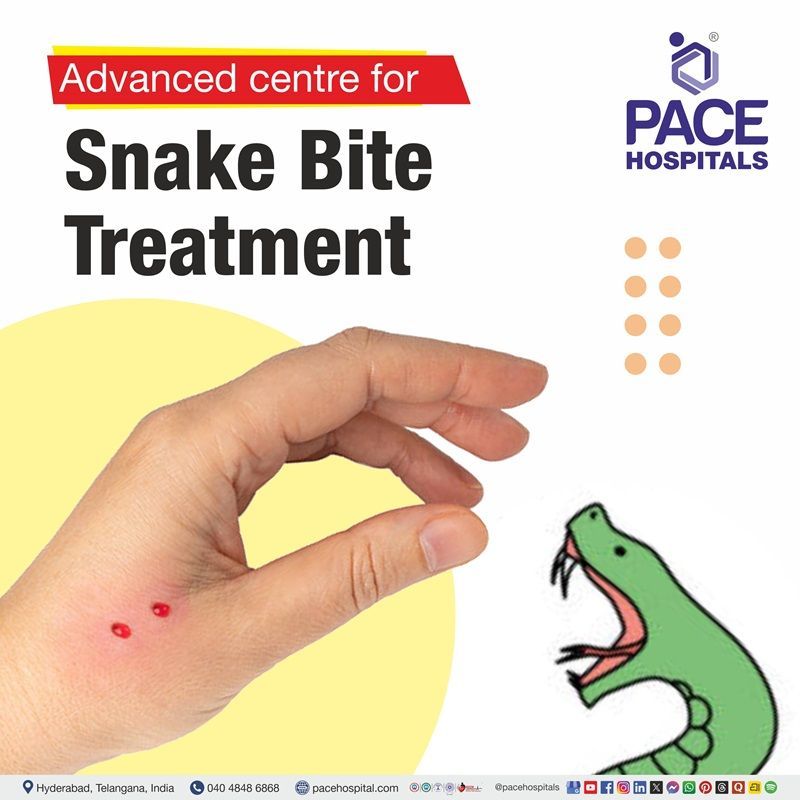
PACE Hospitals offers advanced snake bite treatment in Hyderabad, India, delivering rapid emergency care for all types of snake envenomation, including venomous and non-venomous bites. Our specialists ensure accurate snake bite diagnosis through clinical assessment, blood tests, and continuous monitoring, followed by immediate administration of anti-snake venom (ASV) and supportive care for better survival outcomes.
From first aid management of snake bite to critical care intervention, we provide complete snake bite management as per standard treatment protocols. Our approach focuses on early stabilization, preventing complications such as bleeding disorders, paralysis, and organ damage, and ensuring safe recovery across all age groups.
Book Appointment for Snake Bite Treatment
Snake Bite Treatment Appointment
Why Choose PACE Hospitals for Snake Bite Treatment?
Advanced Emergency Diagnostic Facilities: Snakebite identification, 20-minute whole blood clotting test (20WBCT), coagulation profile, KFT, urine monitoring & vital assessment
Expert General Physicians & Critical Care Specialists in Hyderabad for Complete Snakebite Management
Personalised Snakebite Treatment with Anti-Snake Venom, Wound Care, Pain Control, Fluid Support & Complication Management
24x7 Emergency Care & Transparent Snakebite Treatment with Insurance and Cashless Options
Recognized for excellence in healthcare delivery with
NABH, NABL, NBE/DNB, NABH Nursing Excellence, and ISCCM accreditations.
Snake Bite Diagnosis
Snake bite identification is important for recognizing envenomation early and initiating medical treatment immediately. To provide appropriate care that could save a life, healthcare workers need to know how to identify snake bite marks, signs of snake bite, and the snake species involved, distinguishing venomous snake bite from non-venomous snake bite, including dry snake bite (no venom injected) and species-specific cases like cobra snake bite. Understanding the biting mechanism of snakes, including how fangs strike and deliver venom, helps clinicians interpret bite patterns and assess the likelihood of envenomation. An emergency physician, surgeon, critical care specialist (intensivist), toxicologist, or nephrologist trained in managing medical emergencies and toxic exposures can accurately diagnose a snake bite and provide appropriate treatment, including snake bite injection of antivenom (via intravenous or intramuscular injection routes) when required.
The following are the steps involved in the diagnosis of a snake bite before selecting appropriate tests:
- ABC assessment
- Medical history
- Physical examination
ABC assessment
The ABC assessment of snake bite is the first step clinicians take in an emergency to identify and treat life-threatening complications of envenomation. It stabilizes the patient by focusing on their airway, breathing, and circulation. To ensure the airway is clear and not obstructed by swelling or paralysis, it is checked. Because neurotoxic venom can cause breathing problems, the health care team assesses breathing by checking breathing rate, chest movement, and oxygen saturation (the level of oxygen in the blood). Circulation is assessed by checking the pulse rate, blood pressure, and signs of shock. Intravenous access (IV) is established to maintain blood flow and support vital organs.
Medical history
A snake-bite patient's medical history is an important part of the evaluation. The healthcare provider should ask the patient when and where they were bitten, and what activity they were doing at the time. Also, clinicians should investigate any snake bite first aid measures or traditional medication for snake bite that the person received before arriving at the hospital. It is important to document the patient's medical history, including any diseases, medications, allergies, and the date of their last tetanus shot. Also, if the snake is seen or caught, its description or identification may help doctors guide snake bite management, but patients shouldn't try to capture the snake because of the risk of being bitten.
Physical examination
To look for signs of envenomation, the healthcare professionals will carefully examine the bite site and the patient's overall health. Health professionals first look for fang marks, swelling, tenderness, bruising, or bleeding at the bite site, which indicate local venom effects. The amount of swelling and pain in the affected limb is noted, and the nearby lymph nodes are palpated to assess the spread of venom. Vital signs such as pulse rate, respiratory rate, and blood pressure are checked, and the 20-minute whole blood clotting test (20WBCT) is performed to detect blood clotting abnormalities. The patient needs to be monitored closely and rechecked from time to time to assess whether their systemic or local snake bite symptoms are worsening.
✅Diagnostic Evaluation of Snake Bite
In the case of a snake bite, a proper diagnostic evaluation helps clinicians confirm the bite, assess the severity of the envenomation, and determine the appropriate treatment for the patient. To identify a snake bite, the following tests may be recommended:
- Bedside snake bite blood test
- Laboratory test for snake bite
Bedside snake bite blood test
These snake-bite tests are quick, easy clinical tests performed at the patient's bedside to detect signs of envenomation and blood-clotting abnormalities. They help doctors guide early diagnosis and management of snakebite cases. It includes the following test:
- The 20-minute whole blood clotting test (20WBCT): This is a simple whole-blood test performed at the bedside to detect venom induced coagulopathy rather than to confirm that a bite has occurred. A small amount of abnormal fresh venous blood is put in a clean, dry glass test tube for this test and left alone for 20 minutes. After 20 minutes, the tube is carefully tilted to see if the blood has clotted. If the blood remains unclotted and stays liquid, it suggests that the venom has disrupted the clotting system, which is commonly seen in viper envenomation but may occasionally occur with other snake venoms as well.
Laboratory test for snake bite
Laboratory tests are an important part of diagnosing and treating snake bites because they can detect systemic envenomation and other complications. The following laboratory tests are commonly performed in the evaluation of snake bites:
- Complete blood count (CBC)
- Coagulation profile (PT, INR, PTT, Fibrinogen)
- Serum creatinine
- Serum electrolytes
- Serum creatine kinase
- Urinalysis
- Serum glucose
Complete blood count (CBC): CBC assesses haemoglobin, white blood cells, and platelets to determine whether someone has anaemia, an infection, or thrombocytopenia due to a bleeding disorder. A decrease in platelets (thrombocytopenia) or an increase in white blood cells (leukocytosis) indicates systemic envenomation and haematological complications, suggesting that the body has been poisoned and that there are problems with the blood. Monitoring CBC levels over time helps assess the progression of venom effects.
Coagulation profile (PT, INR, PTT, Fibrinogen): It assesses whether the blood-clotting ability is impaired and looks for coagulopathy caused by venom. Prolonged prothrombin (PT), International Normalized Ratio (INR), or partial thromboplastin time (PTT) levels and low fibrinogen levels indicate that snake venom has disrupted the body's ability to clot. These tests are performed periodically to monitor bleeding risk and treatment response.
Serum creatinine: After a snakebite, serum creatinine is evaluated to see kidney function. Increased levels of creatinine indicate that the kidneys are damaged because of hemolysis (breakdown of red blood cells), rhabdomyolysis (muscle breakdown), or hypotension (low blood pressure) caused by venom. Monitoring this parameter helps diagnose and treat kidney problems early.
Serum electrolytes: It includes assessing serum sodium and potassium levels to detect metabolic disturbances that can occur after envenomation, such as vomiting, dehydration, or muscle bruising. During rhabdomyolysis or kidney dysfunction, an electrolyte imbalance can also occur. Monitoring these levels helps guide supportive therapy.
Serum creatine kinase: It is performed to determine whether myotoxic snake venom has caused rhabdomyolysis (muscle breakdown). Clinicians look for creatine kinase levels. Raised CK levels indicate that muscle tissue is breaking down and may mean that the kidneys are at risk of damage. Monitoring CK levels over time helps determine the severity of muscle involvement.
Urinalysis: It is performed to detect abnormalities such as hematuria (loss of blood in urine), proteinuria (loss of proteins in urine), hemoglobinuria (Presence of hemoglobin in urine), or myoglobinuria (presence of myoglobin in urine). These results could indicate that the person has a bleeding disorder, muscle breakdown, or kidney damage associated with snake envenomation. The colour and contents of urine are useful indicators of systemic complications.
Serum glucose: Serum blood glucose levels help monitor metabolic status in snakebite victims. Stress, systemic toxicity, or severe illness resulting from envenomation can induce abnormal glucose levels. Monitoring glucose levels helps detect metabolic disturbances and plan supportive care.
Monitor vital signs and electrocardiogram (ECG)
In cases of snake bites, it is important to monitor vital signs such as heart rate, temperature, respiratory rate, and blood pressure continuously. This is to look for early signs of systemic envenomation or shock. These parameters should be checked regularly for signs of low blood pressure, respiratory depression (Abnormally slow or reduced breathing that leads to inadequate ventilation), or cardiovascular instability. Also, it is suggested to use an electrocardiogram (ECG) to detect complications such as arrhythmias, bradycardia (slow heart rate), or tachycardia (fast heart rate), which can be caused by venom. Regular ECG and vital sign checks help clinicians assess the severity of the envenomation and determine the immediate treatment needed, such as antivenom therapy and supportive care.
Assess for envenoming
In diagnosing a snake bite, checking for envenomation means looking for signs that venom has been injected and is causing local or systemic effects in the patient. Clinicians check the bite site for pain, swelling, bleeding, or tissue damage. They also look for systemic symptoms such as vision problems, muscle weakness, or abnormal bleeding. Patients need to be monitored and tested repeatedly because snake bite symptoms can appear immediately or develop over time (for example, neuroparalysis after krait bites). Even if the initial tests are normal, it is advised to monitor the snake bite victim, as envenoming can occur hours after the bite and worsen quickly if left untreated.
✅Snake Bite Differential Diagnosis
To ensure the correct diagnosis and treatment, it is important to rule out other conditions that can mimic snake envenomation, such as insect stings, allergic reactions, cellulitis, or traumatic injuries. The following conditions can present similarly to a snake bite:
- Insect or arthropod stings/bites
- Allergic reactions or anaphylaxis
- Cellulitis or soft-tissue infection
- Compartment syndrome from trauma
- Acute hemorrhagic disorders
- Sepsis
Insect or arthropod stings/bites: Insect or arthropod bites, such as those from bees, wasps, spiders, or scorpions, can cause pain, redness, swelling, and sometimes puncture marks that resemble snake bites. But they usually only cause small red bumps or stings that itch, and they don't usually cause progressive systemic envenoming as seen in snake bites.
Allergic reactions or anaphylaxis: Severe allergic reactions can cause rapid swelling, urticaria (characterized by itchy, raised, red or pale wheals (swollen patches), hypotension (low blood pressure), trouble breathing, and a fast heart rate (tachycardia), which can mimic systemic envenomation. But allergic reactions usually occur immediately after contact with an allergen and are often accompanied by a generalized rash or angioedema, which is not the case with snakebites.
Cellulitis or soft-tissue infection: Localized redness, warmth, swelling, and pain in the affected limb are signs of cellulitis. This can resemble inflammatory swelling after a snake bite. Infection, on the other hand, usually happens slowly over more than 24 hours after an injury. Snakebite swelling, on the other hand, occurs quickly after being bitten.
Compartment syndrome from trauma: Trauma-related compartment syndrome causes severe limb pain, tense swelling, paresthesia (tingling sensation), and weaker distal pulses. Swelling may resemble viper snake bite envenomation, but it usually occurs after a clear injury and doesn't have fang marks or systemic venom effects.
Acute hemorrhagic disorders: Disseminated intravascular coagulation or bleeding disorders can cause spontaneous bleeding, bruising, and abnormal coagulation tests that mimic the effects of a snakebite. But these disorders can occur even in the absence of a history of bites or fang marks.
Sepsis: It may manifest with fever, tachycardia, hypotension, and organ dysfunction, resembling systemic toxicity associated with severe envenomation. Sepsis usually comes from an already known infection and doesn't have bite marks or rapid swelling at the bite site.
✅Snake Bite Treatment Goals
The main goals of snake bite treatment are to
- The main goal of snake bite therapy is to reduce mortality, morbidity and complications caused by snake bite envenoming in humans.
- To stop or reverse the harmful effects of snake venom, it is very important to give the right amount of anti-snake venom (ASV) as soon as possible.
- The goal of treatment is to support breathing, circulation, and the airway, and to address complications such as respiratory paralysis, bleeding, or shock.
- Properly caring for wounds and receiving supportive treatment can help prevent tissue necrosis, infections, and permanent disability.
- To improve survival and recovery rates, it is important to conduct a quick assessment, send the patient to the appropriate facility, and start treatment immediately.
- The goal of effective management is to reduce long-term physical and functional problems and help patients get back to their normal lives.
Need clarity on snake bite first aid or treatment options? Get a free second opinion.
At PACE Hospitals, we are committed to providing our patients with the best possible care, and that includes offering second medical opinions with super specialists for treatment or surgery. We recommend everyone to get an expert advance medical second opinion, before taking decision for your treatment or surgery.
Snake bite management is a medical emergency that requires immediate evaluation and treatment to prevent serious complications and death. First aid management of snake bite, prompt hospital care, and timely administration of antivenom are all part of the early management of snakebite, which can reduce the risk of mortality and morbidity.
The following are the steps involved in snake bite management protocol:
- First aid treatment for snake bite on leg
- Urgent transport
- Hospital assessment
- Antivenom therapy (snake bite antidote)
- Supportive care
First aid treatment for snake bite on leg: First aid is the care given immediately after a snake bite, before going to the hospital. The main goal is to slow the spread of venom and keep the patient stable until they reach the hospital. The victim should be calmed and reassured, as movement, including panic, can speed the spread of venom through the lymphatic system. Starting at the bite site and working up to the trunk, apply a pressure-immobilization bandage (PIB) tightly, like a sprained ankle wrap. Make sure there are no gaps and that the limb doesn't move. Only use a splint if a fracture is seen. PIB is recommended for neurotoxic snake bite treatment (elapids like kraits). Remove PIB if viper envenoming is suspected or if significant swelling already exists. If the victim is wearing tight clothing, rings, or other jewelry, remove them, as they may cause swelling. Avoid harmful actions like cutting the wound, sucking venom, putting ice on it, or using tight tourniquets, as these could make the tissue damage worse. The next step is to transfer the victim to the nearest hospital as soon as possible.
Urgent transport: Transporting to a hospital immediately is very important for treating a snakebite because only there can you get the appropriate emergency treatment of snake bite, such as antivenom (ASV). The victims should be moved with minimal movement to prevent increased venom circulation. The patient should be carried on a stretcher or transported by ambulance rather than walking. While moving, the airway, breathing, and level of consciousness should be checked. If the patient vomits, they should be put in a recovery position to keep their airway clear. Early transport greatly reduces the risk of death and complications associated with snakebite envenoming.
Hospital assessment: Once the patient is transferred to the hospital, they are quickly assessed and resuscitated. Doctors first check the airway, breathing, and circulation, and, if needed, stabilize the patient. A thorough account of the bite is recorded, encompassing the time, location, and subsequent symptoms. A physical exam is done to look for fang marks, swelling, bleeding, or neurological symptoms. Blood tests, such as the 20-minute whole-blood clotting test and other lab tests, can help detect systemic envenomation, and these tests further help determine whether the snakebite is venomous and guide further management decisions, including krait snake bite treatment.
Antivenom therapy (Snake bite antidote): Antivenom (anti-snake venom or ASV) is the primary snake bite treatment medicine that prevents snake venom from spreading through the body. When there are clear signs of envenomation, like neurotoxicity, coagulopathy, or progressive swelling, it is given in a hospital. Because allergic reactions can happen, the drug is usually given through an IV with close medical supervision. After administering the drug, doctors monitor their response and may give additional doses if the symptoms don't resolve. Early administration of antivenom greatly increases the survival rate and lowers the risk of serious complications. Administer polyvalent ASV IV only for systemic envenoming: initial 10 vials (adults) diluted in 5-10 ml/kg fluid over 1 hour after IV access/ adrenergic agonist ready. No routine test dose; premedicate with an antihistamine if allergic history. Repeat 10 vials if no improvement (persistent 20WBCT failure, swelling, neuro signs) up to 200 vials max. Monitor for anaphylaxis.
Supportive care: Along with antivenom therapy, snake bite victims get supportive care to prevent complications and keep their vital functions stable. This includes oxygen therapy, pain relief (paracetamol), tetanus prophylaxis, IV fluids, and monitoring vital signs. People who have been exposed to neurotoxins may need drugs like anticholinesterase agents if ptosis or ophthalmoplegia occurs after the edrophonium test (not routine for krait snake bite treatment), and help with ventilatory support if their breathing fails. Follow-up 20WBCT/creatinine daily until normal. Cleaning the bite site and caring for the wound helps prevent infection and swelling. Continuous monitoring helps detect and prevent problems like kidney damage, neurotoxicity, and bleeding disorder recurrence. Supportive care is important for speeding recovery and improving overall patient outcomes.
Snake Bite Prognosis
The prognosis for snakebite mostly depends on how quickly good medical care is given. The longer the treatment is delayed, the worse the outcomes become. Most snakebites heal without any long-term problems, but venomous bites can cause tissue damage, local problems that need surgery or limb amputation, severe paralysis, kidney failure, or death. The death rate varies a lot depending on the type of snake, how much venom it injected, where the bite happened, and how easy it is to get antivenom, intensive care, and other help. Long-term problems like chronic pain, musculoskeletal disability, or scarring can happen to some survivors even after the acute envenomation has gone away.
Snake Bite Treatment Cost in Hyderabad, India
The cost of Snake Bite Treatment in Hyderabad generally ranges from ₹10,000 to ₹3,00,000 and above (approx. US $120 – US $3,610). The exact cost of snake bite treatment depends on the type of snake (venomous or non-venomous), severity of envenomation, and how quickly treatment is initiated. Management may include anti-snake venom (ASV) administration, ICU care, ventilator support, dialysis (in case of kidney injury), and management of complications such as bleeding or paralysis. Additional factors such as diagnostic tests (blood tests, coagulation profile, kidney function tests), hospital stay, and supportive care also influence the overall cost. Availability of cashless treatment options, TPA corporate tie-ups, and insurance assistance may further affect expenses.
Cost Breakdown According to Type of Snake Bite Treatment
- Non-Venomous Snake Bite (Observation & Basic Care) – ₹10,000 – ₹30,000 (US $120 – US $360)
- Mild Envenomation (ASV & Monitoring) – ₹20,000 – ₹80,000 (US $240 – US $960)
- Moderate Snake Bite (Hospitalization & Multiple ASV Doses) – ₹50,000 – ₹1,50,000 (US $600 – US $1,805)
- Severe Snake Bite with ICU Care – ₹1,00,000 – ₹2,50,000 (US $1,205 – US $3,010)
- Complicated Snake Bite (Kidney Failure, Bleeding Disorders) – ₹1,50,000 – ₹3,00,000+ (US $1,805 – US $3,610+)
Frequently Asked Questions (FAQs) on Snake Bite
What is the most effective treatment for a snake bite?
To prevent the spread of venom and other complications, a snakebite requires immediate first aid and medical care. To slow the spread of venom, the person who was bitten should be kept calm, and the limb that was bitten should be immobilized. Remove any tight clothing, such as rings or bangles, that are close to the bite and transport the person to the nearest hospital as soon as possible. When a venomous snakebite occurs, the patient is administered antivenom (ASV) in the hospital, along with supportive care and monitoring.
What are the do's and don'ts after a snake bite?
After a snake bite, appropriate first aid measures are essential to prevent complications and get immediate snake bite management. The victim should stay calm, avoid unnecessary movement, remove any tight accessories, including rings or clothing, and be transported to the nearest hospital immediately for medical care. Avoid harmful things like cutting the wound, sucking out the venom, putting on a tourniquet, or using traditional remedies because they can make the injury worse and delay proper treatment.
How long does it take to recover from a snake bite?
Snake bite recovery depends on the severity of envenomation and the type of snake. After antivenom therapy, clinical improvement may begin immediately. Some symptoms may improve in 30 to 60 minutes, and most patients feel better within 24 to 48 hours. But full recovery may take longer if there are complications or excessive venom was injected. Patients require several days of monitoring and supportive care, but full recovery may take weeks to months, especially if they have systemic complications like bleeding disorders or respiratory paralysis.
What is anti-snake venom (ASV) treatment?
The specific medical treatment for snake bites is anti-snake venom (ASV) therapy. Administration of antivenom antibodies that block the snake's venom from exerting its effects and prevent or reverse envenoming is part of the process. In India, polyvalent antivenom is the most common type of ASV. It works against the four most dangerous snakes: the cobra, krait, Russell's viper(also called as ghonas snake bite), and saw-scaled viper. Injecting ASV early in an adequate dose can prevent the progression of envenomation and reduce complications and death.
What are the best ways to prevent snake bites in high-risk areas?
To avoid snake bites in areas with a high risk of such incidents, it is important to wear protective clothing (long trousers and strong boots). Individuals should also avoid stepping into or putting their hands into areas with poor visibility, use a torch when moving around in the dark, and keep homes/yards clear of debris to reduce hiding spots. Avoid handling or killing snakes, as these are the main reasons people get bitten.
Which Is the best Hospital for Snake Bite Treatment in Hyderabad, India?
PACE Hospitals, Hyderabad, is a trusted centre for the emergency management of snake bites and toxicological conditions.
We have highly experienced emergency physicians, intensivists, nephrologists, and internal medicine specialists who follow evidence-based protocols for rapid assessment, timely administration of anti-snake venom, and management of complications.
We provide 24/7 emergency services, well-equipped ICUs, dialysis units, advanced laboratory monitoring, and critical care support, PACE Hospitals ensures prompt and effective snake bite treatment.
What are the signs to identify a venomous snake?
Venomous snakes have triangular heads (often wider at the back) due to the presence of venom glands, vertical elliptical pupils (though not in all species) like those of a cat, and pits that detect heat located between their eyes and nose (in pit vipers only). Others include thick bodies, rattles, colours, and behaviour such as adopting an S-shape posture when threatened. This does not apply universally in all regions.
How does the severity of a snake bite differ between children and adults?
Snakebites tend to be more serious among children compared to adults, as the symptoms develop quicker, together with increased chances of complications. The higher chances of fatality for children are related to the lower body weight and hence a lower dilution effect and therefore a much higher concentration of venom in the blood.
What Is the cost of Snake Bite Treatment at PACE Hospitals, Hyderabad?
At PACE Hospitals, Hyderabad, the cost of snake bite treatment typically ranges from ₹9,000 to ₹2,80,000 and above (approx. US $110 – US $3,375), making it a cost-effective and competitive option for emergency care in Hyderabad. However, the final cost depends on:
- Type of snake bite (venomous vs non-venomous)
- Severity of envenomation
- Number of anti-snake venom doses required
- Need for ICU care, ventilator support, or dialysis
- Duration of hospital stay and monitoring
- Laboratory investigations and supportive treatment
For mild cases, costs remain toward the lower end, while severe envenomation with ICU care and complications may fall toward the higher range.
After immediate clinical evaluation and stabilization, our specialists provide a transparent cost estimate based on the patient’s condition and treatment requirements.
How long should a patient be monitored after being treated for a snake bite?
Patients who receive treatment for snake bites require hospitalisation for 12 to 24 hours for possible systemic envenomation. Even though patients exhibit serious symptoms after 6 hours, it is advisable to set the observation period at 24 hours to ensure the venom has been flushed from their system and that the clotting issue has been resolved.
Looking for the best Snake Bite Treatment Hospital Near Me?
If you’re searching for the top snake bite treatment hospital near me in areas like HITEC City, Madhapur, Kondapur, Gachibowli, Kukatpally, or KPHB, it is critical to choose a hospital with 24/7 emergency care and ICU support.
Effective snake bite treatment requires:
- Immediate medical evaluation and monitoring
- Timely administration of anti-snake venom (ASV)
- Management of complications like bleeding, paralysis, or kidney injury
- Continuous ICU care for severe cases
At PACE Hospitals, Hyderabad, patients receive rapid, life-saving care with a multidisciplinary approach to ensure the best possible outcomes.
What is the 20 min test for snake bite?
The 20-minute whole blood clotting test (WBCT20) is the standard bedside test to detect coagulopathy (impaired blood clotting) caused by venom from snakebites, especially from vipers. It entails placing clean, freshly collected venous blood into a new, dry glass tube and letting it sit for a few minutes. If the blood remains liquid after 20 minutes, the test is positive, indicating that the blood is not clotting properly.
How many hours are critical after a snake bite?
The first few hours after a snake bite are very important, especially the first 1–6 hours after the bite. The first hour is known as the "golden hour," and during this time, the victim should be taken to a medical facility for quick evaluation and care. Getting medical help immediately, including administration of antivenom when required, greatly reduces the risk of serious complications and death. So, immediate transportation and treatment in the first few hours are very important for better patient outcomes.
How will doctors know if my snake bite is serious?
To diagnose a snake bite, clinicians look for local fang marks, rapid pain and swelling, and systemic symptoms like nausea, paralysis, or bleeding. Health care teams evaluate venom type (neurotoxic or hemotoxic) by examining the patient's symptoms and lab tests. This is because identifying a snake is rarely possible. Immediately, expert medical care is very important for determining envenomation occurrence and severity.
What are the laboratory tests used to diagnose snake bites?
Laboratory tests are useful for confirming systemic envenomation and detecting complications that may occur after a snakebite. Common tests include a complete blood count (CBC), a coagulation profile (PT, INR, or PTT), serum creatinine and blood urea nitrogen for kidney function, serum electrolytes, serum creatine kinase (for myotoxicity), and urinalysis. These tests help assess bleeding disorders, kidney damage, or other systemic effects of venom.
Is tetanus required after a snake bite?
Yes, tetanus shots are usually recommended after a snake bite. If the patient isn't fully immunized, they should get tetanus toxoid because a snakebite can cause a puncture wound resulting in tetanus infection. The vaccine can be given once the person is stable or once their coagulation problems have been corrected. So, tetanus vaccination is often administered as part of snakebite care to prevent tetanus.
Can traditional remedies treat snake bites?
No, traditional remedies are not effective in treating snake bites. They do not work for snakebite and should be avoided. Using herbs, "black stones (refer to a porous animal bone), or other alternative methods instead of getting the appropriate treatment immediately can make the patient's condition worse. The recommended course of action is to urgently transfer the person to a hospital and administer anti-snake venom (ASV).
Can snake bites be life-threatening?
Yes, snake bites can be life-threatening, specifically if the snake is poisonous. Snakebite envenoming is a disease that can kill victims because the venom can cause serious problems like paralysis that may cause trouble breathing, bleeding disorders, or kidney failure. Snakebites can kill between 81,000 and 138,000 people around the world, reflecting a serious health risk. Most deaths and serious complications can be prevented with immediate medical care and administration of IV antivenom.
How long does a patient need to stay in the hospital after a snake bite?
Patients who have been bitten by a snake or are suspected of having been bitten should be admitted and kept under clinical observation for at least 24 hours, even if their symptoms are mild. This observation period is important because signs of envenomation may not appear until later. If no symptoms arise during this period, the patient may be discharged; however, those with complications may require extended hospitalization, depending on severity and treatment response.
Can children be more affected by snake bites?
Yes. Snake bites can more severely affect children because the same amount of venom works on a smaller body mass, which makes the toxic effects occur rapidly and more severely. They may experience symptoms such as bleeding disorders, paralysis or respiratory failure, which vary by snake species and exert faster than adults. So, snake bites in children require urgent diagnostic evaluation and management.
What should I expect after receiving snakebite treatment in the hospital?
Following antivenin administration after snakebite treatment, which often involves a wait of 24 hours or more, there is an expected recovery period that ranges from several weeks to months. Snake bite symptoms after 24 hours may still appear or persist in some patients, including ongoing pain, progressive swelling, or systemic features of envenoming such as bleeding tendencies or neurotoxicity. Although full recovery is common, individuals need to prepare themselves for the likelihood of pain, wound treatment, and possible delayed allergy to the antivenom.
Are there long-term effects of a snake bite that require additional care?
Yes, there are long-term effects from snake bites that can persist for months or even years, depending on the severity of the bite. Despite some effects being immediate and short-lived, others tend to be long-lasting, survivors face may face both physical and psychological complications.
Is it okay to use a tourniquet in the case of a snake bite?
No, patients bitten by snakes must not use a tourniquet. This is because tourniquets prevent blood circulation, which can cause the death of tissues and lead to gangrene and even amputation. This procedure is ineffective in stopping the spread of venom and may increase the chances of complications.
How effective is anti-snake venom (ASV) for different types of snakes?
However, ASV acts effectively against the toxin circulating in systemic poisoning cases that involve neurotoxic or hemotoxic types, as long as it is administered early. However, it will not be effective locally where there is tissue damage because the venom will be firmly attached to the skin and requires supportive treatment like wound care. The polyvalent ASV, which is frequently used in India, is mainly useful for treating the "Big Four " species, i.e., Russell's viper, cobra, krait, and saw-scaled viper snake bites, but has limited efficacy against other species, such as the King Cobra.
Are there any side effects or risks associated with ASV?
Yes, ASV may induce certain side effects, most of which are adverse reactions, including early-onset allergic reactions such as hives, nausea, vomiting, and difficulty in breathing, or late-onset reactions such as serum sickness, characterized by fever, rashes, and joint pain. Although uncommon, anaphylactic shock may be experienced, necessitating treatment using appropariate injections.
Are snake bites more dangerous for elderly patients?
Yes, snakebites pose a greater danger to elderly people. The reason for their greater risk is due to comorbidities like heart diseases and the intake of certain drugs, including blood thinners, that increases the effects of venom. Other elderly people are at greater risk of complications and death from snakebites.
What follow-up care is required after a snake bite?
Aftercare following a snake bite includes observing for signs of infection, performing wound care to prevent necrosis, possibly ordering blood tests to check for clotting problems, and rehabilitative exercises for limb movement. Individuals are normally recommended to visit a medical practitioner within 3 to 4 days after discharge, keep the wound clean/dry, and avoid NSAIDs (which increase the bleeding risk).
Is Snake Bite Treatment Covered by Insurance at PACE Hospitals?
Yes, snake bite treatment is generally covered under most health insurance policies at PACE Hospitals, subject to policy terms and approval. Since snake bite is considered a medical emergency, treatment involving hospitalization, ICU care, and life-saving interventions is typically included under private insurance and corporate health plans.
At PACE Hospitals, patients can benefit from:
- Cashless hospitalization facilities with empaneled insurance providers
- Assistance from a dedicated insurance and TPA coordination team
- Pre-authorization support and documentation guidance
- Transparent cost estimates before treatment
- Support for government health schemes where applicable
Coverage depends on emergency care clauses, ICU coverage limits, sum insured, and policy inclusions. Patients are encouraged to share insurance details at the earliest so the hospital’s insurance desk can facilitate faster approvals.


