
Deep Brain Stimulation (DBS) Surgery, Procedure and Cost
PACE Hospitals offers advanced Deep Brain Stimulation (DBS) Surgery in Hyderabad, India, providing effective treatment for Parkinson’s disease, tremors, and other movement disorders. Our experts perform precise, image-guided deep brain stimulation procedures to improve symptom control and enhance success rates.
With a focus on accurate diagnosis, safe techniques, and personalized care, we ensure reduced risks, faster recovery, and better quality of life after DBS surgery.
Book an Appointment for DBS Surgery
DBS Surgery Appointment
Why Choose PACE Hospitals for Deep Brain Stimulation Surgery?

Expert Neurosurgeons & Neurologists in Hyderabad
Precision DBS Surgery with Targeted Electrode Placement, Programmable Neurostimulators & Personalized Neuromodulation Therapy
Transparent DBS Surgery with Insurance & Cashless Options
Recognized for excellence in healthcare delivery with
NABH, NABL, NBE/DNB, NABH Nursing Excellence, and ISCCM accreditations.
What is Deep Brain Stimulation?
Deep brain stimulation (DBS) is an advanced neurosurgical procedure used to relieve symptoms associated with specific movements and
neurological disorders, like
Parkinson's disease, essential tremor, and dystonia. It involves surgically implanting electrodes into specified areas of the brain that are connected to a pulse generator implanted under the skin, generally in the chest, that transmits regulated electrical signals. These signals help control nerve activity that isn't normal and is causing movement-related symptoms.
DBS doesn't cure the disease, but effectively manages symptoms such as tremors, stiffness, and involuntary movements. Doctors usually suggest DBS when drugs stop working as well or cause undesirable side effects. In general, DBS is considered to be safe and effective.
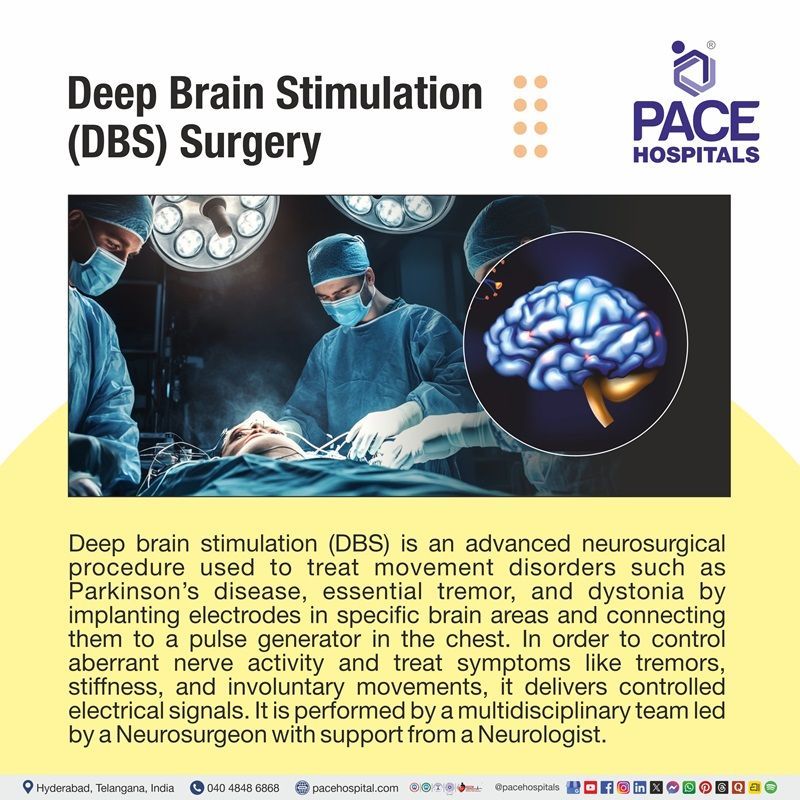
Deep brain stimulation (DBS) is performed by a multidisciplinary neurocare team led by neurosurgeons who specialise in functional and selective brain surgeries. They work closely with neurologists, neuroanaesthesiologists, neurophysiologists, and neuropsychiatrists to comprehensively evaluate the patient's neurological condition, identify the specific brain targets responsible for symptoms, and design a personalised stimulation and treatment plan to achieve optimal symptom control and long-term functional improvement.
Types of Deep Brain Stimulation
Deep Brain Stimulation (DBS) can be classified based on anatomical target, surgical types, lead type and stimulation methods. These classifications guide treatment decisions based on the patient’s condition and response to therapy.
By Anatomical Target (common targets)
Each type of DBS targets a different part of the brain involved in controlling abnormal movement, providing personalised and effective symptom relief. Based on the target site, DBS are classified into the following types:
- Globus pallidus internus
- Subthalamic nucleus
- Thalamus
- Globus pallidus internus" Globus Pallidus Internus DBS is used for dystonia (a neurological movement disorder) and advanced Parkinson's disease, particularly for reducing stiffness, muscle spasms, and involuntary movements. It is usually selected for patients who have severe movement alterations or side effects of dystonia with medications.
- Subthalamic nucleus: Subthalamic nucleus DBS is frequently used to treat Parkinson's disease tremors, rigidity, and slowed movements by controlling abnormal brain signals. It enhances general motor control and often reduces the need for high doses of Parkinson's drugs.
- Thalamus: Thalamic DBS targets specific thalamic nuclei to control severe tremors that don't respond to drugs. It is especially helpful for people whose main problem is tremor that makes it hard for them to move around, without causing much stiffness or slowness.
By surgical procedure / guidance
Surgical Procedure Types in DBS refer to the methods used for precise lead placement during the surgery. It has two types:
- Frame-Based Stereotactic
- Interventional MRI/CT-Guided ("Asleep")
- Frame-Based Stereotactic: This technique involves fixing the patient's head in a rigid frame, using preoperative MRI to calculate target coordinates, and intraoperative microelectrode recording (MER) for physiological confirmation. The patient is usually awake during the procedure for real-time feedback.
- Interventional MRI/CT-Guided ("Asleep"): This technique uses real-time MRI or CT scans to guide lead placement while the patient is under general anesthesia, allowing direct anatomical targeting without the need for MER, offering a less invasive and more streamlined process.
By lead type and stimulation methods
By Lead Type and stimulation methods refers to the different electrode designs and methods of stimulation used in DBS to achieve optimal therapeutic effects. It includes:
- Conventional (cylindrical contact) DBS
- Directional (segmented contact) DBS
- Monopolar vs. Bipolar DBS
- Conventional (cylindrical contact) DBS: This uses electrodes with four cylindrical contacts, delivering monopolar stimulation. It is the standard configuration for treating Parkinson's disease, tremors, and dystonia.
- Directional (segmented contact) DBS: Uses segmented electrodes to control a current in certain directions, which improves position selectivity and reduces side effects. This process is becoming more and more common for Parkinson's disease and essential tremor.
- Monopolar vs. Bipolar DBS: Monopolar has one active contact with the implanted pulse generator that acts as the return, which makes the electric field larger. Bipolar uses two active contacts to make the electric field more focused, which is helpful for stimulating thalamic tremor.
Deep Brain Stimulation Indications
When the symptoms of some neurological disorders start to impair everyday functioning and quality of life seriously and are not sufficiently managed with medication, deep-brain stimulation is advised. It is usually recommended for patients who initially respond to medications but subsequently experience fluctuations, paralysing symptoms, or adverse drug reactions. DBS is not a cure, but it does help control abnormal brain signals and enhance motor function. Deep brain stimulation is frequently indicated for the following reasons:
- Parkinson’s Disease
- Dystonia
- Essential tremor
- Epilepsy
- Obsessive-compulsive disorder (OCD)
Parkinson’s Disease
DBS is advised in parkinson’s disease that targets the precise brain regions which regulate abnormal movement control. Medication alone may become less effective as the illness worsens or result in serious side effects like involuntary movements and motor fluctuations. Although drugs may still be useful in some conditions, DBS is frequently advised because it provides more dependable, long-term symptom control. By changing abnormal brain signals, DBS can significantly reduce tremor, stiffness, and poor movement quality, enhancing daily functioning and quality of life.
Dystonia
Dystonia is characterised by uncontrolled, painful muscle movements. Deep brain stimulation (DBS), especially globus pallidus internus DBS, provides significant relief from the main symptoms of dystonia by disrupting abnormal activity within the brain's motor control circuits. Advances in neuroimaging and DBS technology are helpful in target selection, stimulation flexibility, and long-term outcomes.
Essential tremor
DBS is advised for essential tremors when drugs are insufficient to treat symptoms, and the tremor substantially interferes with daily activities. This effective and successful treatment reduces tremor by adjusting abnormal brain activities. DBS provides long-term tremor control and improves the patient's quality of life with medically refractory essential tremor; it does not cure the underlying illness.
Epilepsy
When conventional treatments are insufficient to control drug-resistant seizures in epilepsy patients, DBS is utilised. DBS may enhance cognitive abilities such as memory, attention, and executive control, in addition to reducing seizure frequency. DBS modulates abnormal brain activity by stimulating particular brain regions. DBS is an effective treatment option for epilepsy patients with related cognitive impairment due to its demonstrated safety and new cognitive advantages.
Obsessive-compulsive disorder (OCD)
Patients with severe, treatment-resistant obsessive-compulsive disorder (OCD) who do not improve with the best medication and cognitive behavioural therapy may benefit from deep-brain stimulation (DBS). Research demonstrates that DBS can significantly reduce symptoms over the short and long terms. However, its use requires appropriate patient selection and management by skilled multidisciplinary teams that include behavioural therapists, psychiatrists, and neurosurgeons.
Deep Brain Stimulation Contraindications
Deep brain stimulation is unsuitable for some individuals, even though it is effective. Appropriate patient selection is important to ensure safety and substantial clinical benefit. Certain medical, neurological, and psychiatric conditions may reduce the DBS effect or increase the risk of complications. When assessing a patient for DBS therapy, the following conditions can be considered as important contraindications or limiting factors. These include:
- Untreated psychiatric disorders
- Clinically defined dementia or severe cognitive impairment
- Advanced axial motor impairment (inability to stand or walk in the best-treated state)
- Advanced stage of neurodegenerative disease
- Significant medical comorbidities increase surgical risk
- Structural brain changes or marked brain atrophy
Untreated psychiatric disorders
DBS is not recommended for patients with uncontrolled psychiatric disorders, including severe depression, psychosis, or active suicidal ideation. These conditions can get worse after surgery, which can make it difficult for postoperative adjustment and outcomes. Before considering DBS, the patient's psychological condition must be stable.
Clinically defined dementia or severe cognitive impairment
Patients suffering from dementia are not suitable for DBS due to their inability to respond to cognitive decline in advanced neurodegeneration to stimulation. DBS might impair cognition and daily life activities. Before surgery, a careful cognitive assessment is necessary.
Advanced axial motor impairment (inability to stand or walk in the best-treated state)
Even with the best medical care, DBS is unlikely to help a patient regain mobility if they are unable to stand or walk. Severe walking and balance issues frequently react poorly to stimulation. Consequently, DBS should be considered prior to the onset of advanced axial symptoms.
Advanced stage of neurodegenerative disease
The efficacy of DBS is limited in advanced stages of conditions like Parkinson's disease due to extensive brain degeneration. At this point, circuits that DBS can modulate are frequently no longer responsible for symptoms. Better results are achieved in early- to mid-stage illness.
Significant medical comorbidities increase surgical risk
Some of the conditions, like uncontrolled high blood pressure, bleeding disorders, or amyloid angiopathy, raise the risk of surgical problems, such as bleeding in the brain. Anaesthesia and recovery risks are also increased by poor general health.
Structural brain changes or marked brain atrophy
Accurate electrode placement may be challenging if there is significant brain atrophy or anatomical abnormalities. These modifications raise the possibility of intraoperative brain shift and targeting errors. DBS may therefore be unsafe or less successful in these patients.
Benefits of Deep Brain Stimulation
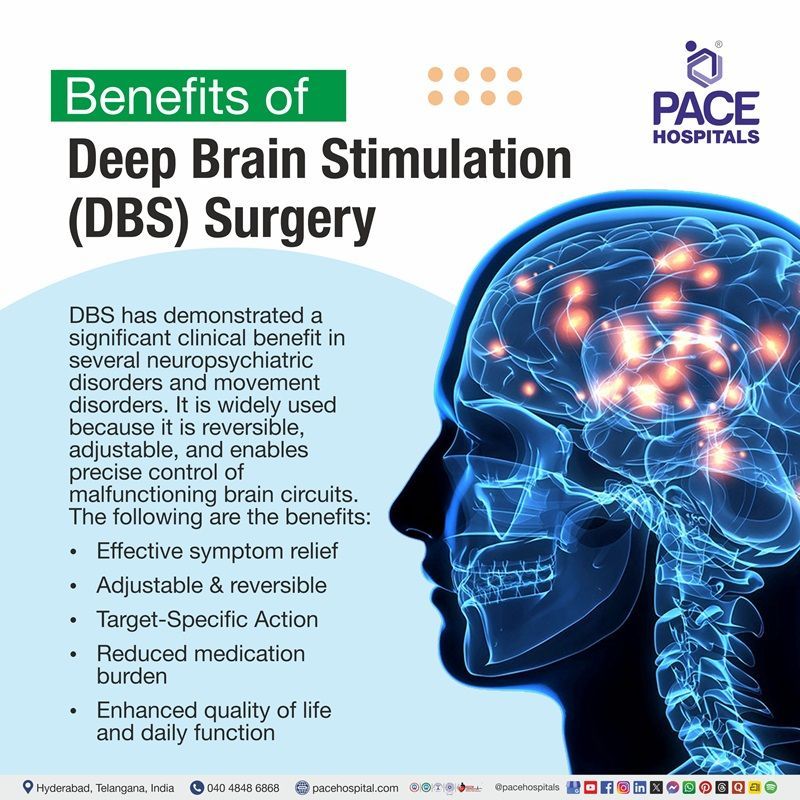
DBS has demonstrated a significant clinical benefit in several neuropsychiatric disorders and movement disorders. It is widely used because it is reversible, adjustable, and enables precise control of malfunctioning brain circuits. The following are the benefits:
- Effective symptom relief
- Adjustable & reversible
- Target-Specific Action
- Reduced medication burden
- Enhanced quality of life and daily function
Effective symptom relief
DBS effectively reduces motor symptoms such as tremor, rigidity, bradykinesia, and motor fluctuation and dyskinesias. It also helps control unusual behaviours and some psychological problems in conditions like Parkinson's disease, dystonia and essential tremors. This makes daily life easier and improves quality of life.
Adjustable & reversible
Deep brain stimulation causes slight changes to the brain and can be stopped by removing or turning off the battery if any side effects occur. The stimulation settings are easily adjustable without additional surgery, allowing treatment to be tailored as symptoms change. Patients can also control the device using a programmer, including turning it off or making minor adjustments when needed.
Target-Specific Action
Deep brain stimulation targets specific brain nuclei that cause abnormal symptoms. Only these specific regions receive electrical signals; the surrounding brain tissue is mainly unaffected. This targeted action reduces unwanted side effects while helping correct abnormal neural circuits.
Reduced medication burden
Many patients require a low dosage of medications to manage their symptoms after deep brain stimulation. This is because DBS directly modifies the abnormal brain circuits that cause the disease. Medication reduction improves overall quality of life by reducing side effects like nausea, sedation, and dyskinesia.
Enhanced quality of life and daily function
Patients' physical and mental quality of life, as well as their motor symptoms, have been demonstrated to be considerably improved by deep brain stimulation (DBS). DBS offers significant improvements in general functioning and health-related quality of life in addition to decreasing dyskinesia, underscoring its wider therapeutic benefit.
Get a Free Second Opinion for Deep Brain Stimulation (DBS) Surgery from Expert Neurosurgeons
At PACE Hospitals, we are committed to providing our patients with the best possible care, and that includes offering second medical opinions with super specialists for treatment or surgery. We recommend everyone to get an expert advance medical second opinion, before taking decision for your treatment or surgery.
Deep Brain Stimulation Procedure
The deep brain stimulation surgery procedure includes the following steps:
Before deep brain stimulation surgery
- Before the surgery, the neurologist and neurosurgical team perform a preoperative evaluation to make sure the patient is suitable for DBS. This includes a physical examination, a medical history, and imaging tests like CT or MRI scans to check the specific areas that are causing the symptoms. Additional assessments by specialists, such as a psychologist, are required to assess cognitive and emotional problems for surgery.
- Patients must inform the doctor about all allergies (medications, anaesthetics) and provide a complete list of medications, including prescribed drugs, over-the-counter medicines, vitamins, and herbal supplements. Certain medications, especially blood thinners and anti-inflammatory drugs, may need to be stopped before surgery as advised by the medical team.
- Before DBS surgery, lifestyle modifications such as quitting smoking, reducing alcohol intake, and maintaining good control of conditions such as
diabetes or heart disease are advised, which can reduce surgical risks and promote better recovery.
- Women who are pregnant must inform the doctor, as this may affect surgical planning and imaging choices.
- Before the procedure, informed consent is obtained after the surgeon explains the benefits, risks, alternatives, and expected outcomes of DBS. Patients are instructed to fast before surgery, follow medication guidelines, arrive at the hospital on time, and arrange transportation and home support for the postoperative period.
During deep brain stimulation surgery
- Anaesthesia and Monitoring: DBS surgery is done with either local or general anaesthesia, depending on the stage of the procedure. Local anaesthesia is often used during electrode placement so the patient can remain awake for neurological testing, and their vital signs can be continuously monitored. During the implantation of a neurostimulator, general anaesthesia is used to keep the patient safe and comfortable.
- Surgical Technique: DBS is usually performed in one or two stages, depending on patient-specific considerations and surgical strategy. The procedure involves carefully targeting particular areas of the brain that produce the symptoms.
- Stage 1: Lead Placement: Before electrode implantation, the scalp may be numbed, some hair may be shaved, and the head may be held in a unique frame with tiny screws. After local anaesthesia, a small opening (burr hole) is drilled in the skull, and the lead is inserted into the targeted brain region on one or both sides as needed. To verify proper electrode placement and effective symptom control, electrical stimulation is tested, and the patient may be asked to respond to questions or move limbs.
- Stage 2: Neurostimulator Implantation: It is carried out under general anaesthesia to keep the patient asleep and pain- free. The neurostimulator is implanted beneath the skin after the surgeon makes a tiny incision, typically beneath the collarbone. An extension wire is tunnelled beneath the skin of the head, neck, and collar bone to connect the stimulator to the brain leads. The incision is then closed, leaving the device hidden under the skin. Electrical impulses travel from the neurostimulator to the brain once they are connected, helping block abnormal signals that cause symptoms.
After deep brain stimulation surgery
- After DBS surgery, the patient is usually monitored closely in the recovery room for vital signs and neurological status. This helps in detecting early complications such as infection, bleeding, or changes in neurological function.
- During recovery, the patient is advised to rest and slowly resume gentle activities as directed by the neurology team. Appropriate medications and antibiotics may be given to prevent pain and infection.
- After surgery, the neurostimulator is turned on and programmed, with adjusted stimulation settings based on symptom response.
- Before discharge, the patient is given instructions on wound care, activity restrictions, medication use, and follow-up appointments, and advised to report any concerning symptoms promptly.
Deep Brain Stimulation Complications
Like all invasive surgeries, deep brain stimulation has some risks. Complications result from the surgical procedure, stimulation effects on nearby brain tissue, or long-term device-related problems. Although many side effects are manageable, careful monitoring is necessary. The following are the complications:
- Surgical-related complications
- Device-related (hardware) complications
- Stimulation-related side effects
- Neuropsychiatric and cognitive effects
- General postoperative effects
Surgical-related complications
There are minimal surgical risks associated with DBS, which involves implanting electrodes deep within the brain. These include seizures, brain tissue edema, brain bleeding, and infections. Despite being rare, these complications can cause some neurological symptoms and require immediate medical attention. Sterile methods, skilled surgical teams, and careful imaging greatly lower these risks.
Device-related (hardware) complications
DBS systems consist of a pulse generator, extension wires, and implanted leads. complications like lead movement, damage to the wire, battery problems, or device malfunction may arise over time. These problems might require minor additional surgery or device reprogramming to control symptoms.
Stimulation-related side effects
Electrical stimulation can occasionally spread to nearby brain areas. Tingling sensations, stiff muscles, difficulties with balance, blurred vision, or trouble speaking may arise from this. Changing the stimulation settings can frequently improve or completely reverse these side effects, which are usually temporary.
Neuropsychiatric and cognitive effects
After DBS, some patients may experience mood or behavioural changes, including anxiety, depression, irritability or impulsivity. There may also be slight alterations in thinking, memory, or attention, particularly in susceptible people. Early detection and management of these effects are made possible by thorough pre-surgical evaluation and continuous monitoring.
General postoperative effects
After DBS surgery,
headache, dizziness, pain at the incision sites, and mild discomfort surrounding the implanted device are common short-term side effects. With regular postoperative care and medication, these symptoms, which are a normal part of recovery, usually go away in a few days or weeks.
Deep Brain Stimulation Surgery Recovery
Recovery time for deep brain stimulation (DBS) is usually a few weeks to several months. Most patients stay in the hospital for one to three days after surgery. Healing the incision, controlling pain or swelling, and progressively resuming their regular activities are the main goals of their early recovery. Light movement is encouraged during this phase, but strenuous activity is not recommended.
After adequate healing, the DBS device is typically programmed and activated 2 to 6 weeks after surgery. Regular follow-up appointments help optimise symptom control and functional recovery over the following two to three months by adjusting stimulation. By three to six months, the majority of patients experience significant improvement, with continued monitoring and adjustments as necessary.
What questions can patients ask the healthcare team about deep brain stimulation surgery?
- When can I go home after deep brain stimulation surgery?
- When is my next follow-up visit, and what will happen during DBS programming?
- How long will it take for the surgical wounds on my head and chest to heal completely?
- What activities can I safely do in the first few weeks after DBS surgery?
- Will I need to continue my current medications long-term after DBS, and why?
- How should I take care of the incision sites and the implanted device area?
- What warning signs or symptoms should prompt immediate medical attention after DBS?
- When will the DBS device be turned on, and how often will it need adjustment?
- How will DBS affect my daily activities, work, or mobility over time?
- What habits or precautions should I follow to maintain the DBS system and long-term results?
Difference between thalamotomy and deep brain stimulation
Thalamotomy vs Deep brain stimulation
When medication fails to treat movement disorders like tremors, surgical procedures like thalamotomy and deep brain stimulation are used. While both target specific parts of the brain to reduce symptoms, DBS uses adjustable electrical stimulation, whereas thalamotomy involves implanting a permanent lesion. The following are the differences:
| Parameters | Thalamotomy | Deep brain stimulation (DBS) |
|---|---|---|
| Definition | A thalamotomy is a surgical procedure used to treat tremors, which are uncontrollable shaking or trembling of a part of the body. Using radiation therapy (heat produced by radio waves), a small portion of the thalamus is destroyed. A "lesion" is the term for an area that is destroyed during this process. | Deep brain stimulation (DBS) is an advanced neurosurgical procedure used to relieve symptoms associated with specific movements and neurological disorders, like Parkinson's disease, essential tremor, and dystonia. |
| Purpose | People with abnormal movement conditions, such as Parkinson's disease or essential tremor, have difficulty controlling involuntary movements | Parkinson’s disease, essential tremors, dystonia, epilepsy |
| Type of treatment | Destructive (lesion-based) surgery | Electrical stimulation (modulation-based) surgery |
| Duration of surgery | About 1–2 hours | About 3–6 hours (may be staged) |
| Recovery time | 4-6 weeks | 3-6 months |
Frequently Asked Questions (FAQs) on Deep Brain Stimulation (DBS) Surgery
How effective is deep brain stimulation for parkinson's disease?
Deep brain stimulation can be beneficial for Parkinson's patients who respond to medications but have drug- related reactions. It reduces motor symptoms like rigidity, stiffness, and tremor. DBS can improve the quality of life and provide significant long-term relief from severe motor symptoms. Still, it cannot prevent the progression of the disease or reduce non-motor symptoms like speech, balance, or dementia.
Is deep brain stimulation safe?
Deep brain stimulation is generally considered safe and effective for appropriately selected patients, particularly those with movement disorders like Parkinson's disease that no longer respond well to medications.
What Is the Cost of Deep Brain Stimulation (DBS) Surgery at PACE Hospitals, Hyderabad?
At PACE Hospitals, Hyderabad, the cost of DBS surgery typically ranges from
₹5,50,000 to ₹16,50,000 and above (approx. US $6,630 – US $19,900), making it a competitive option for advanced neuromodulation therapy in Hyderabad. However, the final cost depends on:
- Condition being treated (Parkinson’s, tremors, dystonia, epilepsy)
- Type of DBS system (single vs dual channel, rechargeable vs non-rechargeable)
- Number of electrodes implanted
- Surgical complexity and duration
- ICU stay and postoperative monitoring
- Device programming and follow-up sessions
For unilateral DBS procedures, costs remain toward the lower end, while bilateral DBS with advanced devices may fall toward the higher range.
After a detailed neurological evaluation, imaging, and multidisciplinary assessment, our specialists provide a transparent cost estimate tailored to the patient’s condition and treatment plan.
What are the risks of deep brain stimulation surgery?
Deep brain stimulation surgical risks include bleeding, infection, headaches, seizures, and temporary pain. It can also cause cognitive changes, speech or balance problems, and behavioural effects. Device malfunctions, such as a broken piece of hardware or a dead battery, may need additional surgery. However, many side effects can be lessened by changing the stimulation settings.
What conditions is deep-brain stimulation used for?
Deep brain stimulation is recommended for certain neurological disorders when symptoms severely affect daily life and are no longer adequately controlled by medication. Although not a cure, DBS helps regulate abnormal brain signals and improve function in conditions such as Parkinson’s disease, dystonia, essential tremor, and epilepsy.
Looking for the Best Deep Brain Stimulation (DBS) Surgery Hospital Near Me?
If you’re searching for the top DBS surgery hospital near me in areas like HITEC City, Madhapur, Kondapur, Gachibowli, Kukatpally, or KPHB, it is important to choose a hospital with experienced neurosurgeons and advanced neuro-navigation technology.
Effective DBS treatment requires:
- Precise brain mapping and electrode placement
- Advanced neuro-navigation and intraoperative monitoring
- Multidisciplinary neurological evaluation
- Long-term device programming and follow-up
At PACE Hospitals, Hyderabad, patients receive comprehensive neurosurgical care with advanced technology and expert support for improved quality of life.
Will medication still be needed after DBS?
Yes, in many situations. Some medications are often still necessary to effectively manage the condition, even though DBS may significantly reduce symptoms and frequently allows a reduction in medication dosage.
Which Is the Best Hospital for Deep Brain Stimulation (DBS) Surgery in Hyderabad, India?
PACE Hospitals, Hyderabad, is a trusted centre for advanced neurosurgical procedures, including Deep Brain Stimulation for movement disorders.
We have highly experienced neurosurgeons, neurologists, neurophysiologists, anesthesiologists, and rehabilitation teams who follow evidence-based protocols to deliver precise electrode placement and optimal neurological outcomes.
We provide excellent facilities to manage cases through state-of-the-art modular operation theatres, stereotactic navigation systems, intraoperative imaging, advanced neuro-monitoring, and specialised DBS programming clinics, ensuring safe, accurate, and patient-centred DBS surgery at PACE Hospitals.
What is the recovery time for deep brain stimulation?
Deep brain stimulation recovery can range from a few weeks to several months. The majority of patients spend 1 to 3 days in the hospital, during which time their wounds heal, and they gradually resume their regular activities. Usually, the DBS is activated within 2–6 weeks and continues to improve symptoms over the following few months with routine monitoring and adjustments.
What is the deep brain stimulation success rate?
Deep brain stimulation can provide long lasting relief of motor symptoms in people with Parkinson's disease, dystonia, and essential tremor. Many patients maintain meaningful improvement in motor function and quality of life for 7–10 years or more, although the disease itself continues to progress over time. As neurodegeneration advances, there will be a decrease in the benefits. The battery life and stimulation settings usually determine the duration of therapeutic support provided by the device, while symptom worsening upon stimulation stops usually indicates that the disease gets worse rather than treatment failure.
What is deep brain stimulation?
Deep brain stimulation is an advanced neurosurgical technique used to treat neurological and movement disorders like dystonia, Parkinson's disease, and essential tremor. In this surgery, electrodes are placed in specific regions of the brain and are connected to a pulse generator in the chest to control abnormal neurological activity.
How does deep brain stimulation work?
DBS works by delivering controlled electrical stimulation. DBS targets abnormal electrical signals in brain regions that regulate movement, which are the cause of movement symptoms in Parkinson's disease. A neurostimulator positioned beneath the collarbone is connected to electrodes implanted in specific brain areas. The device is programmed over a period of weeks to months to achieve maximum symptom control while minimising side effects.
How long does deep brain stimulation last?
Patients with Parkinson's disease, essential tremor, and dystonia can maintain significant long-term motor improvement for seven to ten years with deep brain stimulation. But over time, the amount of benefit might gradually decline. Battery life varies based on the condition treated and stimulation settings used, and worsening of symptoms when stimulation is turned off indicates continued disease progression.
Is deep-brain stimulation reversible?
Deep brain stimulation is regarded as reversible in a limited, complicated manner, as stimulation can be changed, stopped or terminated without causing damage to brain tissue. However, new evidence suggests that DBS may also have effects that don't depend on stimulation and could last for a long time. This means that it is not completely reversible in all ways and should be examined carefully.
Who are unsuitable for Deep Brain Stimulation (DBS) therapy?
Deep brain stimulation is not suitable for all patients, so careful selection is necessary to ensure safety and benefit. People with severe cognitive impairment, advanced neurodegenerative disease, significant surgical risk, untreated psychiatric illness, or significant brain structural abnormalities are generally not advised to use it.
Is deep brain stimulation a cure?
No. DBS is not a cure. Although it is an effective tool for managing and improving movement symptoms like involuntary movements and difficulty maintaining posture, it does not stop or slow the progression of neurodegeneration in movement disorders like Parkinson's disease.
How effective is deep brain stimulation for essential tremor?
Patients with essential tremor whose symptoms do not improve with medication may find deep brain stimulation to be a safe and effective treatment. Although more research is required to compare stimulation targets and evaluate long-term effects on quality of life and cognition, it may generally reduce the severity of tremors.
Is Deep Brain Stimulation (DBS) Surgery Covered by Insurance at PACE Hospitals?
Yes, DBS surgery is generally covered under most health insurance policies at PACE Hospitals, subject to policy terms and approval. Since DBS is a medically necessary procedure for conditions like Parkinson’s disease and severe movement disorders, it is typically included under private insurance and corporate health plans.
At PACE Hospitals, patients can benefit from:
- Cashless hospitalization facilities with empaneled insurance providers
- Assistance from a dedicated insurance and TPA coordination team
- Pre-authorization support and documentation guidance
- Transparent cost estimates before admission
- Support for government health schemes where applicable
Coverage depends on device coverage clauses, sum insured limits, waiting periods, and policy inclusions. Patients are encouraged to share insurance details in advance so the hospital’s insurance desk can verify eligibility and streamline approvals.
Why choose PACE Hospitals?
- A Multi-Super Speciality Hospital.
- NABH, NABL, NBE & NABH - Nursing Excellence accreditation.
- State-of-the-art Liver and Kidney transplant centre.
- Empanelled with all TPAs for smooth cashless benefits.
- Centralized HIMS (Hospital Information System).
- Computerized health records available via website.
- Minimum waiting time for Inpatient and Outpatient.
- Round-the-clock guidance from highly qualified super specialist doctors, surgeons and physicians.
- Standardization of ethical medical care.
- 24X7 Outpatient & Inpatient Pharmacy Services.
- State-of-the-art operation theaters.
- Intensive Care Units (Surgical and Medical) with ISO-9001 accreditation.


