
Knock Knees (Genu Valgum) Diagnosis, Treatment & Cost
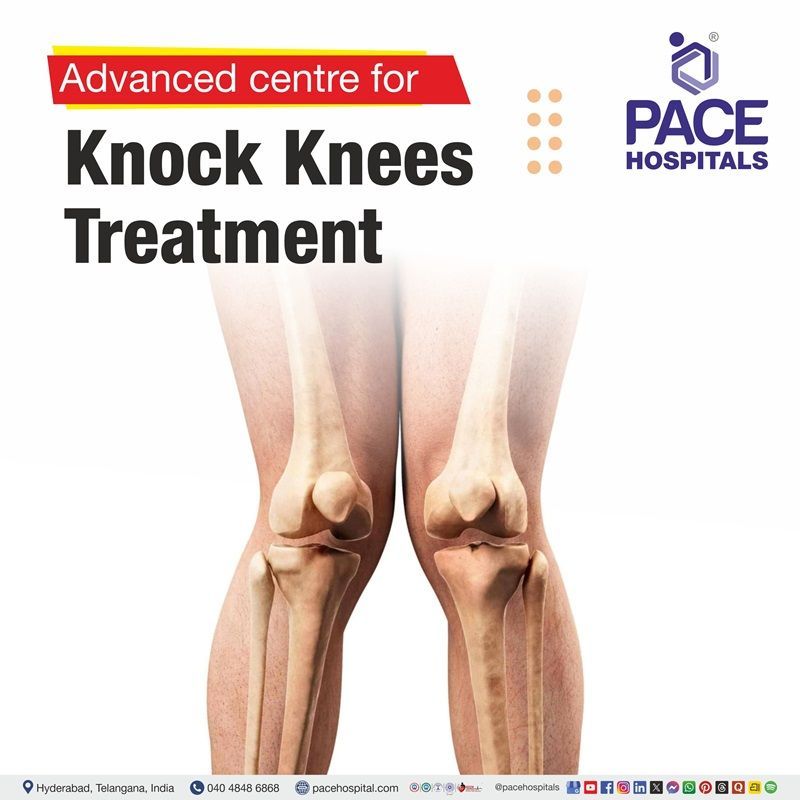
PACE Hospitals offers advanced knock knees treatment in Hyderabad, India, providing comprehensive care for all forms of genu valgum, including mild knock knees, bilateral genu valgum, and complex deformities in both children and adults. Our specialists ensure precise genu valgum diagnosis through detailed clinical evaluation, alignment tests, and advanced imaging, followed by personalized treatment plans for effective correction and long-term results.
From early-stage knock knee problems to severe genu valgum deformities, we provide both non-surgical and surgical knock knee correction options with high precision and success rates. Our approach focuses on correcting leg alignment, improving mobility, reducing joint stress, and preventing future complications such as arthritis.
Book Appointment for Knock Knees Treatment
Knock Knees Treatment Appointment
Why Choose PACE Hospitals for Genu Valgum Treatment?
Comprehensive Diagnostic Facilities: Clinical Evaluation, X-ray, CT Scan, 3D Gait Analysis & Knee Alignment Assessment
Expert Orthopedic Doctor in Hyderabad for Complete Knock Knees (Genu Valgum) Management
Personalized Genu Valgum Treatment with Physical Therapy, Orthotics, Bracing, and Surgical Correction
Transparent Knock Knees Treatment with Insurance & Cashless Options
Recognized for excellence in healthcare delivery with
NABH, NABL, NBE/DNB, NABH Nursing Excellence, and ISCCM accreditations.
Knock Knees Diagnosis
Diagnosing knock knees involves a careful assessment to understand the severity of the condition and identify any underlying causes. It usually includes a combination of physical examination, measurement of leg alignment, and, if needed, imaging tests. Early and accurate diagnosis helps in deciding whether the condition is a normal developmental phase or requires treatment.
The following are the initial steps involved in the diagnosis of knock knees (Genu valgum):
- Medical History
- Physical Examination
Medical History
Taking a proper medical history helps in understanding when the knock knees started and how they have changed over time.
- It usually begins with simple questions about when the condition was first noticed and whether it has been present since childhood or developed later. It is also important to understand if the alignment is getting better, worsening, or staying the same.
- The discussion then moves to symptoms. Questions are asked about any pain in the knees, hips, or legs, and whether there is difficulty in walking, running, or balancing. A history of any injury or trauma to the legs is also explored, as this can sometimes affect the alignment of the knees.
- Family background is also considered, since similar conditions can run in families. Information about diet is important, especially whether there is enough intake of
vitamin D and calcium. Past medical conditions like rickets or other bone-related disorders are also taken into account, as they can influence bone growth.
- In children, details about growth and development are helpful. This includes when the child started walking and whether there has been rapid weight gain or obesity. The presence of swelling, stiffness, or a feeling of instability in the joints is also checked. In addition, any previous treatments such as exercises, the use of braces, or medications are also discussed.
- All this information together helps in forming a better understanding of the condition and deciding the next steps in evaluation and care.
Physical Examination
The physical examination for knock knees (genu valgum) focuses on assessing the alignment of the legs, the range of motion in the knee joints, and the overall functional impact of the deformity. The following steps are typically involved in a thorough physical examination:
- Visual Inspection and intermalleolar distance: The first step is a visual examination of the patient's posture and leg alignment. The patient is asked to stand with their feet together and knees straight. In genu valgum, the knees will appear to angle inward and may touch or be very close together. The examiner measures intermalleolar distance (between inner malleoli with medial femoral condyles touching; >8 cm pathologic) to quantify severity and progression.
- Range of Motion: The doctor will assess the range of motion (ROM) in the knees to check for any restrictions or abnormal movement. Full extension and flexion of the knee joints are tested to ensure that there is no joint stiffness or pain, which may suggest an underlying condition such as arthritis or cartilage damage.
- Hip and Foot Evaluation: Since genu valgum can affect the alignment of the entire lower limb, it includes checking the alignment of the feet and hips. Excessive pronation (inward rolling of the foot) can be a compensatory mechanism, contributing to deformity. Additionally, hip rotation and alignment may be assessed to rule out other contributing factors.
- Palpation for Tenderness: The doctor gently examines the knee to check for pain or swelling, which may indicate inflammation, instability, or early joint problems. This helps identify any underlying condition that may be causing or worsening genu valgum.
- Measurement of Q-Angle: The Q-angle (quadriceps angle) is measured to assess the alignment of the quadriceps muscle and the patella tendon. The angle is formed between a line from the anterior superior iliac spine to the center of the patella and a line from the center of the patella to the tibial tuberosity. A larger Q-angle is typically seen in individuals with genu valgum and is associated with a greater risk for knee problems.
- Gait Analysis: The patient's walking pattern is observed to determine if the knock knees are affecting their gait. Individuals with genu valgum may exhibit compensatory walking patterns, such as an altered stride or limping, which could cause additional strain on the knees, hips, and lower back.
- Rotational Profile: The rotation of the hip and ankle joints is checked for any abnormal internal or external rotation that could contribute to misalignment of the knees. Internal rotation of the femur (thigh bone) and tibia (shin bone) is often associated with knock knees, contributing to further instability in the joint.
✅Knock Knees Tests
Diagnostic tests for knock knees help assess the severity of the condition and identify any underlying causes contributing to knee misalignment.
The following are the tests used for the diagnosis of knock knees:
- Blood Tests (metabolic causes)
- Serum creatinine
- Calcium
- Phosphate
- Alkaline phosphatase
- 25‑hydroxy vitamin D [25(OH)D]
- Parathyroid hormone (PTH)
- Renal function profile
- Imaging tests
- X-rays
- EOS Imaging (Pediatric)
- Computed Tomography with 3D reconstruction (CT Scan)
- Magnetic Resonance Imaging (MRI)
- Functional Assessment
- Physiotherapy / biomechanical assessment
Blood Tests (Metabolic Causes)
These
blood tests are commonly used to identify underlying bone metabolism or endocrine issues that can contribute to knee deformity.
- Serum creatinine: It is used to check how well the kidneys are working. High creatinine levels may indicate kidney problems, which can affect bone health over time. Poor kidney function can disturb mineral balance, indirectly leading to weak bones and improper alignment of the knees.
- Calcium: Calcium is essential for maintaining healthy bones. Low calcium levels(hypocalcemia) can weaken bones and make them more prone to deformities such as genu valgum. This test helps detect metabolic imbalances affecting bone strength.
- Phosphate: Phosphate works together with calcium to maintain bone health. Low phosphate levels, commonly seen in conditions like rickets, can result in soft and weak bones, leading to deformities such as genu valgum.
- Alkaline phosphatase: Alkaline phosphatase (ALP) is an enzyme involved in bone growth and turnover. High levels of this enzyme can signal bone diseases such as rickets or osteomalacia, both of which can cause genu valgum, particularly in children and adults with metabolic bone disorders.
- 25-hydroxy vitamin D [25(OH)D]: Vitamin D is vital for calcium absorption and bone health. A deficiency in vitamin D can lead to bone deformities like genu valgum. This test measures vitamin D levels to check for deficiencies that could result in rickets or osteomalacia, conditions that may contribute to knee misalignment.
- Parathyroid hormone (PTH): PTH helps regulate calcium levels in the body. Abnormal PTH levels can indicate bone disorders like hyperparathyroidism, which can lead to bone deformities, including genu valgum. Testing PTH levels helps in diagnosing conditions that may affect bone structure and alignment.
- Renal Function Profile: Renal function is used to determine how well the kidneys are functioning. It often involves measures of urea, creatinine, and electrolyte levels. Abnormal results may indicate kidney dysfunction, which can disrupt the balance of calcium, phosphate, and vitamin D in the body. These imbalances can weaken bones and lead to disorders like Genu Valgum. Identifying kidney-related disorders helps doctors determine whether metabolic abnormalities are contributing to knee misalignment.
Imaging Tests
It is used to visually assess bone alignment, growth patterns, and the degree of angular deformity for accurate confirmation and severity grading of knock-knee.
- X-rays: X-rays are the most common tool for assessing knee alignment. They help visualize the degree of misalignment in genu valgum and detect any bone abnormalities. X-rays are important for determining the severity of the condition and identifying structural issues in the knees.
- EOS Imaging (Pediatric): EOS imaging is a low-dose technique that provides 3D images of the body, particularly useful for children. This method helps assess knee alignment and gives a detailed view of deformity, making it ideal for evaluating growing children.
- Computed Tomography (CT scan): A CT scan is a special type of X-ray that takes detailed pictures of the bones from different angles. For someone with knock knees, this test helps the doctor clearly see how the thigh bone and leg bone are aligned. It can show how much the knees are bending inward and where exactly the problem is coming from.
- Magnetic Resonance Imaging (MRI): MRI scans give high-resolution images of both bone and soft tissue structures. They are useful in diagnosing underlying causes of genu valgum, such as damage to ligaments or cartilage. MRI is particularly useful when there is concern about soft tissue involvement in knee misalignment.
Functional Assessment
This evaluates gait, posture, muscle balance, and the biomechanical impact of knock knee on movement and daily activities.
- Physiotherapy/Biomechanical Assessment: This assessment examines how the legs align during standing, walking, and movement. It helps identify any muscle imbalances, gait problems, or posture issues that might be contributing to genu valgum. This assessment is key in creating a treatment plan that includes exercises to improve alignment and joint function.
✅Knock Knees Differential Diagnosis
Differential diagnosis for genu valgum involves differentiating it from other conditions that may cause similar knee misalignment or deformities. The following conditions need to be considered as part of the diagnostic process to ensure accurate identification and appropriate treatment:
- Rickets
- Renal Osteodystrophy
- Osteoarthritis (OA)
- Cerebral Palsy
- Duchenne Muscular Dystrophy
- Marfan Syndrome
- Ehlers-Danlos Syndrome
- Skeletal Dysplasias
- Blount’s Disease (unilateral cases)
- Physeal Injury
- Obesity-related persistence
Rickets
Rickets is a metabolic bone disorder often caused by a vitamin D deficiency in children, leading to softening and weakening of the bones. It can result in both genu valgum and genu varum. Blood tests (checking vitamin D and calcium levels) and X-rays can help differentiate rickets from primary knock knees, especially in children.
Renal osteodystrophy
Renal osteodystrophy occurs in children with chronic kidney disease, where the body cannot maintain proper calcium and phosphate balance. This leads to weak bones that may grow abnormally, resulting in deformities like knock knees.
Osteoarthritis (OA)
OA in the knee joint can cause joint deformity and altered gait, that might mimic genu valgum and it is typically associated with pain, stiffness, and decreased range of motion, while genu valgum may be painless in its early stages. X-rays can help distinguish between osteoarthritis-related deformities and genu valgum.
Cerebral Palsy
In cerebral palsy, muscle stiffness and imbalance affect how a child walks and stands. Tight muscles around the hips and knees can pull the legs inward, giving an appearance similar to knock knees, even though the bones themselves may not be structurally abnormal.
Duchenne Muscular Dystrophy
This is a genetic disorder causing progressive muscle weakness. As muscles weaken, especially around the hips and thighs, it alters walking patterns and alignment, which can lead to or mimic knock knees over time.
Marfan Syndrome
Marfan syndrome is a genetic condition affecting connective tissue. People often have long limbs and loose joints, which can lead to abnormal alignment of the legs, including knock knees due to joint instability.
Ehlers-Danlos Syndrome
This condition causes hyperflexible joints and weak connective tissue. Because the ligaments are loose, the knees may drift inward, producing a knock-knee appearance, especially during standing or walking.
Skeletal Dysplasias
These are a group of genetic bone growth disorders. Abnormal bone development can directly affect the alignment of the legs, leading to persistent or severe knock knees from early childhood.
Blount's Disease (Unilateral Cases)
Blount’s disease usually causes bowing (varus) in one leg. To compensate, the other leg may develop a knock-knee appearance, leading to asymmetry. This makes it important to differentiate from true bilateral genu valgum.
Physeal Injury
Injuries to the growth plate (physis) in children can disturb normal bone growth. If one side of the bone grows slower than the other, it can lead to angular deformities like knock knees.
Obesity-related Persistence
Excess body weight puts extra pressure on growing knees, which can worsen or prolong knock knees beyond the normal age. This is a common non-disease cause of persistent genu valgum.
✅Goals of Treatment for Knock Knees
The primary goals of treating genu valgum are to correct the alignment of the knees, relieve any associated symptoms, and prevent further joint damage. Treatment goals include:
- Improve Knee Alignment: The main goal is to correct the misalignment of the knees to restore a normal posture and gait.
- Relieve Pain and Discomfort: Managing pain associated with knee misalignment through physical therapy, braces, or medications is essential to improve the patient’s quality of life.
- Prevent Joint Degeneration: Early therapy aims to prevent the development of disorders such as osteoarthritis, which can result from long-term knee misalignment.
- Enhance Mobility and Function: The treatment should improve the patient’s ability to walk, run, and engage in daily activities without difficulty or instability.
- Correct Underlying Causes: If the genu valgum is caused by a condition like as rickets or metabolic problems, treating the underlying cause is critical for preventing future deformity.
- Minimize Risk of Progression: For growing children, the goal is to monitor and treat the condition to prevent it from worsening or becoming permanent.
- Avoid Surgical Intervention if Possible: Whenever possible, the goal is to use non-surgical methods such as bracing or physical therapy to manage the condition, delaying or avoiding surgery.
Need clarity on knock knee diagnosis or treatment options? Get a free second opinion.
At PACE Hospitals, we are committed to providing our patients with the best possible care, and that includes offering second medical opinions with super specialists for treatment or surgery. We recommend everyone to get an expert advance medical second opinion, before taking decision for your treatment or surgery.
The treatment for genu valgum (knock knees) depends on the severity of the condition, the patient's age, and the underlying causes. While mild cases, particularly in children, may resolve naturally, more severe cases may require medical intervention. The following are the different treatment options for knock knees:
Non-surgical knock-knee correction (conservative management)
- Observation (For Mild Cases, Especially in Children)
- Physical Therapy and Exercises
- Muscle Strengthening
- Stretching Exercises
- Posture Training
- Foot Orthotics
- Bracing
- Knee Braces/Supports
- Adjustable Splints
- Night Bracing
- Lifestyle Modifications
- Weight Management
- Low-Impact Exercises
- Avoiding High-Impact Activities
- Medications (For Pain and Inflammation)
- Nonsteroidal Anti-Inflammatory Drugs (NSAIDs)
- Analgesics
Surgical management (Genu valgum correction surgery)
- Osteotomy
- Tibial Osteotomy
- Femoral Osteotomy
- Guided Growth Surgery (For Children)
- Hemiepiphysiodesis
- Knee Realignment Surgery (Proximal Tibial Osteotomy)
Complementary and Alternative Treatment Options
- Chiropractic Care
- Acupuncture
- Massage Therapy
Monitoring and Follow-Up Care
- Regular Check-Ups
Non-surgical knock-knee correction (conservative management)
Focuses on improving limb alignment and function through bracing, physiotherapy, activity modification, and growth monitoring in appropriate cases (especially children with physiological or mild deformity).
- Observation (For Mild Cases, Especially in Children): In many cases, genu valgum in children resolves on its own as part of natural growth. Observation involves regular follow-up visits to monitor the condition, especially in children under the age of 7. If the condition improves over time, no intervention may be necessary. However, if it worsens, more active treatment may be required.
- Physical Therapy and Exercises
- Muscle Strengthening: Physical therapy plays a key role in strengthening the muscles surrounding the knee joint. Targeted exercises that focus on the quadriceps, hamstrings, and hip muscles help stabilize the knee, improve function, and reduce the risk of further deformity.
- Stretching Exercises: These exercises focus on improving flexibility in the legs, especially the hip flexors and calf muscles. Stretching helps alleviate tightness around the knee joint, which can reduce discomfort and improve mobility, aiding in alignment correction.
- Posture Training: Proper posture training teaches patients to adjust their walking pattern and body alignment to alleviate stress on the knees. Correct posture can significantly reduce knee strain and improve long-term function by preventing further deformity.
- Foot Orthotics: Custom-made foot orthotics or insoles are commonly recommended for patients with abnormal foot positioning, such as overpronation, which can contribute to genu valgum. Foot orthotics help improve alignment and reduce strain on the knees during walking or running.
- Bracing
- Knee Braces/Supports: These are used to help stabilize the knee joint and guide its alignment. These braces help correct alignment and prevent further misalignment, particularly in children or adults with moderate knock knees.
- Adjustable Splints: Adjustable splints are used to gently reposition the knee joint over time. They are particularly useful in growing children to guide bone growth and knee alignment while avoiding surgical intervention.
- Night Bracing: For children, night bracing can be used to gradually correct the alignment of the knee while they sleep. This non-invasive approach can be an effective alternative to surgery in mild to moderate cases.
- Lifestyle Modifications
- Weight Management: Maintaining a healthy body mass index is important for managing genu valgum, particularly in adults or overweight children. Excess weight puts extra stress on the knee joints, which can exacerbate the deformity and lead to further complications such as osteoarthritis (OA).
- Low-Impact Exercises: Doing low-impact workouts like swimming and cycling helps to develop the muscles around the knee without placing too much pressure or stress on the joints. These activities can assist to alleviate discomfort and increase general mobility.
- Avoiding High-Impact Activities: Avoiding high-impact activities such as running and jumping can help prevent further stress on the knee joints. These activities can worsen alignment issues and lead to joint damage over time.
- Medications (For Pain and Inflammation): These are used only for symptomatic relief to reduce pain and joint inflammation when present, without correcting the underlying bone alignment.
- Nonsteroidal Anti-Inflammatory Drugs (NSAIDs): NSAIDs are frequently used to manage pain and inflammation associated with genu valgum. These medications can help reduce discomfort and reduce swelling around the knee joints, especially in cases where misalignment causes irritation or stiffness.
- Analgesics: For mild to moderate pain, over-the-counter pain relievers may be used. In selected cases where genu valgum is associated with joint inflammation (such as osteoarthritis), stronger prescription medications may be advised. Corticosteroid injections may be considered only in specific conditions with significant inflammation, not as routine treatment.
Surgical management (Genu valgum correction surgery)
Surgery is considered for severe, progressive, or symptomatic deformities, aiming to realign the lower limb mechanically and restore normal knee biomechanics. Surgery includes:
- Osteotomy
- Tibial Osteotomy: Tibial osteotomy involves cutting and realigning the shinbone (tibia) to correct the angle of the knee joint. This surgery is typically used in adults with severe deformities or in cases that do not respond to conservative treatments.
- Femoral Osteotomy: Femoral osteotomy is a surgical procedure to correct alignment issues involving the thigh bone (femur). It is typically done in adults with significant knee misalignment.
- Guided Growth Surgery (For Children)
- Hemiepiphysiodesis: It is a minimally invasive procedure used to correct bone deformities in growing children, such as knock knees (genu valgum) or bow legs (genu varum). In this surgery, small metal plates or screws are placed across the growth plates on one side of the bone. This reduces growth on that side, enabling the opposing side to grow at its usual rate and eventually realigning the knee as the kid grows. The procedure is performed with minimal incisions, ensuring quicker recovery and less discomfort for the child. It’s a non-permanent solution, as the growth plates will naturally close once the desired knee alignment is achieved. This is an effective way to guide the bones into proper alignment without the need for more invasive surgery.
- Knee Realignment Surgery (Proximal Tibial Osteotomy): This surgery is performed to realign the tibia in adults with advanced knee deformities or arthritis. The procedure involves cutting the bone and repositioning it to correct the alignment and improve function.
Supportive and Complementary Therapies
These therapies may help relieve symptoms, but do not correct the bone deformity.
- Chiropractic Care: Chiropractic (manual therapy focusing on spine and joint alignment) adjustments may help improve knee alignment and reduce discomfort by manipulating the bones and joints. It is often used alongside other therapies to manage symptoms.
- Acupuncture: This practise can be used to reduce pain and inflammation in the knee joint. It helps stimulate the body's natural pain-relief mechanisms and improve joint mobility.
- Massage Therapy: Massage therapy can help alleviate muscle tension around the knee joint, reducing strain and discomfort associated with genu valgum. It may improve circulation and mobility.
Monitoring and Follow-Up Care
- Regular Check-Ups: Regular follow-up visits are essential to monitor the progression of the condition, especially in children. If the condition is not improving or gets worse, the treatment plan may need to be adjusted.
Knock Knee Prognosis
The prognosis for knock knees (Genu Valgum) depends on the patient's age and the severity of the condition. In children, genu valgum is usually a normal part of growth and resolves by the age of 7–8, with a positive outcome in most cases. If the condition persists or worsens beyond this age, further intervention may be needed. In adults, untreated genu valgum can result in knee pain, instability, and early osteoarthritis (OA). Early treatment, including physical therapy and bracing, typically improves prognosis. For cases caused by conditions such as rickets or Blount's disease, proper management of the underlying cause is important for a good outcome. In severe cases, surgery can effectively correct the misalignment and prevent long-term complications.
Knock Knees Treatment Cost in Hyderabad, India
The cost of Knock Knees Treatment in Hyderabad generally ranges from ₹30,000 to ₹3,00,000 and above (approx. US $360 – US $3,610).
The exact cost of knock knees treatment depends on the severity of the condition, the age of the patient, and the type of treatment approach (non-surgical or surgical). Non-surgical treatments such as bracing, physiotherapy, and lifestyle modifications are generally more affordable, while surgical procedures like guided growth surgery, osteotomy, or knee realignment surgery tend to cost more. Additional factors such as preoperative diagnostics (X-ray, MRI), hospital stay, and post-surgery rehabilitation can further influence the overall cost. Availability of cashless treatment options, TPA corporate tie-ups, and insurance assistance may also affect the total expenses.
Cost Breakdown According to Type of Knock Knees Treatment
- Non-Surgical Treatment (Bracing & Physiotherapy) – ₹30,000 – ₹60,000 (US $360 – US $720)
- Corrective Exercises & Lifestyle Modifications – ₹20,000 – ₹50,000 (US $240 – US $600)
- Guided Growth Surgery (for Children) – ₹50,000 – ₹1,50,000 (US $600 – US $1,805)
- Osteotomy for Adult Knock Knees – ₹1,00,000 – ₹2,50,000 (US $1,205 – US $3,010)
- Knee Realignment Surgery (with or without Joint Replacement) – ₹1,50,000 – ₹3,00,000
- (US $1,805 – US $3,610)
- Knee Replacement (In Severe or Late-Stage Cases) – ₹2,00,000 – ₹5,00,000+ (US $2,410 – US $6,020+)
Frequently Asked Questions (FAQs) on Knock Knees
Is knock knee curable permanently?
For many children, knock knees are temporary and resolve naturally as they grow. Once the growth plates close, the alignment typically improves or stabilises. However, in some cases, persistent or severe genu valgum may require ongoing treatment, including surgery.
In adults, while surgery can significantly improve knee alignment, it may not be considered a permanent cure. Regular follow-up and lifestyle modifications are necessary to maintain improvements and prevent further complications.
How to correct knock knees without surgery?
Non-surgical treatment for knock knees mainly includes physical therapy. It helps strengthen the muscles around the knee, which can improve alignment and provide better stability. Bracing or the use of orthotics can also help guide the knee into a better position, particularly in children.
Lifestyle changes, such as maintaining a healthy weight and performing low-impact exercises, can further reduce stress on the knee joints. These measures are effective in mild cases and can prevent the condition from worsening.
Looking for the Best Knock Knees Treatment Hospital Near Me?
If you’re searching for the top knock knees treatment hospital near me in areas like HITEC City, Madhapur, Kondapur, Gachibowli, Kukatpally, or KPHB, it is essential to choose a hospital with experienced orthopedic surgeons and advanced diagnostic support for limb deformities.
Effective knock knees treatment requires:
- Accurate diagnosis with imaging (X-ray, MRI)
- Early intervention through physiotherapy and bracing
- Surgical correction when required (osteotomy, knee realignment)
- Post-treatment rehabilitation and mobility restoration
At PACE Hospitals, Hyderabad, patients receive comprehensive care with multidisciplinary support, ensuring faster recovery and reduced risk of long-term complications.
What are the best exercises for knock knees?
The best exercises for knock knees focus on strengthening the muscles around the knees and hips. Exercises such as quadriceps strengthening (e.g., squats), hamstring stretches, and hip abduction exercises (e.g., side leg raises) help stabilize the knee joint and improve alignment. Additionally, exercises that improve balance and flexibility, like yoga or swimming, can help reduce stress on the knee joint and improve movement. They also support joint health and may help prevent the condition from getting worse.
What Is the Cost of Knock Knees Treatment at PACE Hospitals, Hyderabad?
At PACE Hospitals, Hyderabad, the cost of knock knees treatment typically ranges from ₹25,000 to ₹2,80,000 and above (approx. US $300 – US $3,375), making it a cost-effective and competitive option for orthopedic care in Hyderabad. However, the final cost depends on:
- Severity of the knock knees (mild, moderate, or severe)
- Type of treatment (non-surgical vs. surgical)
- Age of the patient (children vs. adults)
- Need for pre-surgical imaging (X-ray, MRI)
- Duration of hospital stay and rehabilitation
- Specialist consultations and follow-up care
For mild cases, non-surgical treatment remains towards the lower end, while surgical procedures like osteotomy or knee realignment surgery may fall toward the higher range.
After a detailed orthopedic evaluation and diagnostic imaging, our specialists provide a transparent cost estimate tailored to the patient’s condition and treatment needs.
How to fix knock knees in adults?
In adults, treatment options for knock knees focus on improving knee function and alignment. Conservative treatments such as physical therapy can help strengthen the muscles around the knee, improving stability and relieving pain. Weight management and low-impact exercises also reduce the strain on the knees.
In more severe cases, when non-surgical treatments don’t work, surgery like osteotomy may be needed. This procedure realigns the bones to improve knee function and help prevent further joint damage.
At what age is it too late to fix knock knees?
The ideal age for correcting knock knees is before growth plates close, typically around the ages of 7 to 8 in children. After this age, it becomes more difficult to correct the condition without surgery because the bones have stopped growing. In adults, while the condition can be treated, it is more challenging and may require surgical intervention. Early intervention is key for the best outcomes, particularly in children who are still growing.
Which Is the Best Hospital for Knock Knees Treatment in Hyderabad, India?
PACE Hospitals, Hyderabad, is a trusted centre for the diagnosis and treatment of knock knees and other orthopedic conditions affecting the lower limbs.
We have highly experienced orthopedic surgeons, physiotherapists, and rehabilitation specialists who follow evidence-based treatment protocols to correct knock knees, focusing on both non-surgical and surgical options. Whether it is through physiotherapy and bracing or more advanced procedures like osteotomy or knee realignment surgery, our specialists provide personalized care.
With access to state-of-the-art diagnostic tools (X-rays, MRI), advanced surgical techniques, and post-treatment rehabilitation programs, PACE Hospitals ensures effective and patient-centred knock knees management.
What happens if knock knees are left untreated?
If knock knees are not treated, mainly in adults, they can lead to issues over time, like knee pain, weak joint support, and early arthritis. The uneven alignment puts extra pressure on the knees, which can slowly wear down the cartilage and cause joint damage. In children, untreated knock knees may resolve naturally, but if the condition persists beyond normal growth years, it could lead to similar issues.
How knock knees are treated?
Treatment for Knock knees (genu valgum) depends on how severe it is and the patient’s age. In children, doctors usually just observe the condition because it often corrects itself as a child grows, typically by around 7 to 8 years of age. If needed, non-surgical options like physical therapy, braces, and changes in daily activities may help improve leg alignment and reduce strain.
In more serious cases, particularly in adults, surgery such as osteotomy or guided growth procedures may be recommended. These treatments aim to correct knee alignment and help prevent problems like pain or joint instability later on.
Can knock knees be corrected?
Yes, knock knees can be corrected, particularly in children, because it usually improves naturally as they grow. In adults, whether it can be corrected depends on the severity and the underlying cause. For subtle (mild) cases, non-surgical methods such as physical therapy and braces helps to improve alignment and reduce discomfort.
However, for more severe cases or those that do not improve with conservative treatment, surgical options like osteotomy or guided growth surgery offer long-term correction.
Can weight loss improve knock knees?
Yes, weight loss can help improve knock knees (genu valgum), especially in overweight individuals. Excess body weight increases stress on the knee joints, which can worsen the inward alignment and cause pain. Losing weight reduces this pressure, helps improve walking patterns, and may prevent the condition from worsening. In children with mild cases, it may even aid gradual improvement, while in adults, it mainly helps relieve symptoms rather than fully correct the alignment.
How to prevent knock knees from getting worse?
Preventing knock knees (genu valgum) from getting worse mainly focuses on reducing stress on the knees and supporting proper alignment. Maintaining a healthy body weight is important because excess weight increases pressure on the knee joints. Regular exercises that strengthen the thigh (quadriceps), hip, and leg muscles can help improve stability and alignment.
Practising good posture and not standing for a long time with knees turned inward is also beneficial. Wearing supportive footwear or using orthotic inserts, if advised, can help maintain proper leg alignment. In children, ensuring adequate nutrition, especially calcium and vitamin D, supports healthy bone development.
Can yoga help in correcting knock knees?
Yes, yoga can help improve flexibility and strength in the muscles surrounding the knee joint, which can support better alignment. Specific yoga poses that focus on hip strength, leg stretches, and balance can help correct posture and reduce knee strain. Yoga alone may not fix severe knock knees, but it can support other treatments like physical therapy and braces. It helps improve joint movement and may slow down the worsening of the condition.
Are braces effective for knock knees?
Yes, braces can help manage knock knees, especially in children or mild cases. They support the knee and help guide it into better alignment. They are often used to correct alignment during growth or prevent the condition from getting worse. While braces are not a permanent solution, they can be a useful tool in conjunction with other non-surgical treatments, such as physical therapy or exercise, to improve knee function and reduce discomfort.
How long does it take to correct knock knees naturally?
For children, knock knees typically resolve on their own by the age of 7 or 8 as part of normal growth. The timeline for natural correction varies based on the severity of the condition and the child's growth rate. In adults, correction through non-surgical methods can take several months of consistent physical therapy and lifestyle changes. However, more severe cases may require surgery to achieve a lasting correction.
How effective is physical therapy in treating knock knees?
Physical therapy is effective in treating knock knees, especially in mild to moderate cases. Through targeted exercises, physical therapy strengthens the muscles around the knee and improves joint stability. This can reduce pain, improve mobility, and prevent the condition from worsening. In addition to muscle strengthening, physical therapy may include stretching and posture training, which further support knee alignment. It is often combined with other non-surgical methods like bracing or orthotics for optimal results.
Can custom orthotics or insoles help in managing knock knees?
Yes, using custom orthotics or regular insoles can help with knock knees. They fix foot position and reduce pressure on the knees. They also help to spread body weight more evenly, which makes the knees feel less strain, preventing further misalignment. Orthotics can be particularly helpful in children or adults with flat feet or abnormal gait patterns, as they help promote better posture and alignment during walking or running.
What lifestyle modifications help manage knock knees?
Lifestyle modifications, such as maintaining a healthy weight and engaging in low-impact exercises, can significantly help in managing knock knees. Weight management reduces the stress on the knees and prevents further misalignment or joint damage. In addition, avoiding high-impact activities like running and jumping helps prevent additional strain on the knee joint, while regular exercise strengthens the muscles around the knee to improve alignment and mobility.
Can I fix knock knees without surgery?
Yes, knock knees can often be managed without surgery, especially in mild to moderate cases. Non-surgical treatments include physical therapy to strengthen the muscles around the knees, the use of braces or orthotics, and lifestyle modifications like weight management and low-impact exercises. For children, observation and growth monitoring can help determine if the condition will improve naturally over time.
Is knock-knee a birth defect?
No, knock knees are usually not a birth defect. They are a normal stage of growth in young children, most frequently seen between the ages of 2 and 5, when the knees come closer together while the ankles stay apart. In most cases, the legs gradually straighten on their own as the child grows. However, in some situations, knock knees may be linked to conditions such as rickets or other bone-related problems. It is advisable to consult a doctor if the condition continues after the age of 7, affects one leg more than the other, or is associated with pain, limping, or growth concerns.
What kind of doctor treats knock knees?
The primary doctor who treats knock knees is an orthopedic specialist, specifically an orthopedic surgeon who specialises in musculoskeletal issues. For children, a pediatric orthopedic surgeon may be involved to monitor growth and manage the condition. In some cases, physical therapists may also play a role in treating knock knees through exercise and joint stabilisation.
What are the different treatment options for knock knees in children vs adults?
Genu valgum (knock knees) in children is usually treated through observation and regular monitoring, as the problem often improves on its own as they develop. Physical therapy, braces, or guided growth surgery may be performed as needed to improve leg alignment and assist normal development.
In adults, treatment depends on how severe the condition is. Subtle(mild) cases are usually managed with physical therapy, knee braces, and maintaining a healthy weight to reduce stress on the joints, while more severe cases may need surgery to realign the bones and improve knee function and long-term joint health.
Is Knock Knees Treatment Covered by Insurance at PACE Hospitals?
Yes, knock knees treatment is generally covered under most health insurance policies at PACE Hospitals, subject to policy terms and approval. Since knock knees can lead to joint pain, disability, and other complications if left untreated, treatment is often included under orthopedic surgery coverage in private insurance and corporate health plans.
At PACE Hospitals, patients can benefit from:
- Cashless hospitalization facilities with empaneled insurance providers
- Assistance from a dedicated insurance and TPA coordination team
- Pre-authorization support and documentation guidance
- Transparent cost estimates before admission
- Support for government health schemes where applicable
Coverage depends on outpatient vs. inpatient care clauses, joint surgery coverage, sum insured limits, and policy inclusions. Patients are encouraged to share insurance details at the time of admission so the hospital’s insurance desk can verify eligibility and streamline approvals.


