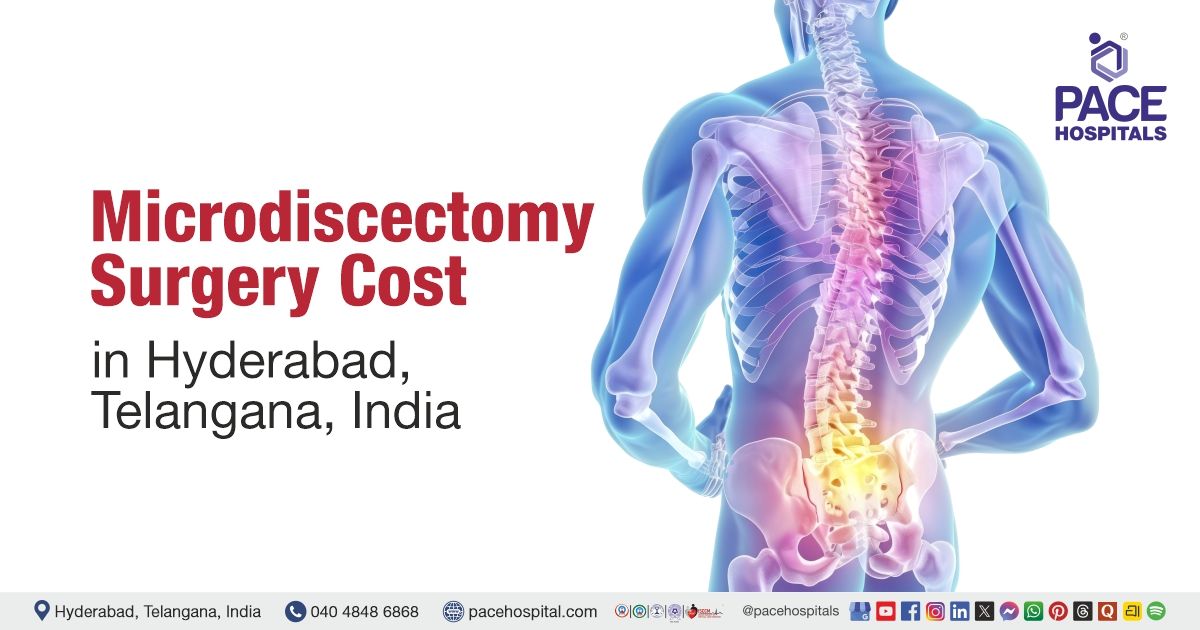
Affordable Microdiscectomy Surgery Cost in Hyderabad, India
PACE Hospitals
All you need to know about Microdiscectomy Surgery
Microdiscectomy is a minimally invasive spine surgery, which is utilised to remove a small portion of a herniated or slipped disc that is pressing on a spinal nerve. This pressure can cause sciatica, lower back pain, leg pain, numbness, tingling, or weakness.
During microdiscectomy, the surgeon uses a small incision, a microscope, and special instruments to carefully remove the disc fragment causing nerve compression. Most of the normal disc and surrounding spinal structures are preserved.
Microdiscectomy is usually recommended when nerve pain does not improve with medicines, physiotherapy, rest, or spine injections. The main goal of the surgery is to relieve nerve pressure, reduce leg pain, improve walking, and help patients return to daily activities with better comfort.
Get a Cost Estimate for Microdiscectomy Surgery
Microdiscectomy Surgery Cost Query
Microdiscectomy Surgery Cost in India
On average, Microdiscectomy cost in India ranges from ₹1,00,000 to ₹5,00,000 (approximately US $1,048 to US $5,241). The exact cost can vary based on several factors, such as:
- The patient’s age, overall health, and severity of disc herniation
- Location of the affected disc (such as lumbar, cervical, or thoracic spine)
- Type of microdiscectomy technique utilised (such as microscopic, minimally invasive, endoscopic-assisted or robotic-assisted approach)
- Depends on hospital tier (such as private, government, or trust hospitals)
- Hospital charges, depending on room type, operation theatre charges, and other amenities
- Surgeon's expertise, anesthesia charges, and surgical team fees
- Pre-operative evaluations and post-operative care requirements
- Insurance coverage or company approvals for cashless care
- Any complications that may occur during or after the procedure.
Microdiscectomy Cost in Hyderabad, Telangana
The average cost for a microdiscectomy in Hyderabad generally ranges from ₹1,30,000 to ₹3,90,000. (approximately US $ 1,362 to US $ 4,088). These rates may vary depending on the hospital facility and location, surgical technique, spine level involved, and the patient’s overall health condition.
However, the cost of Microdiscectomy Surgery in Hyderabad is influenced by several factors, such as:
- The patient’s disc condition, age, overall health, and medical history
- Location and severity of the herniated or slipped disc causing nerve compression
- Type of surgical approach utilised (microscopic, minimally invasive, or endoscopic-assisted microdiscectomy)
- Duration of hospital stay and room category selected
- Extent of pre-operative evaluations and post-operative care
- Insurance or corporate approvals for cashless services
- Potential complications during or after the procedure
Cost Breakdown According to the Microdiscectomy Procedure
The cost of the surgery may vary depending on the specific surgical approach used and spinal location:
Cost by Surgical Type
- Standard / Open Microdiscectomy – Surgery cost: ₹1,50,000- ₹ 1,90,000 (US $1,572 -US $1,991) (approx.)
- Minimally Invasive Microdiscectomy (MIS) – Surgery cost: ₹1,90,000-₹ 3,80,000 (US $1,991-US $3,983) (approx.)
- Endoscopic Microdiscectomy – Surgery cost: ₹2,00,000 –₹ 4,80,000 (US $ 2,096 -US $ 5,031) (approx.)
- Robotic-Assisted Microdiscectomy – Surgery cost: ₹ 3,00,000 - ₹ 5,00,000 (US $ 3,144-US $ 5,241) (approx.)
- Cost by Spinal Location
- Lumbar (Lower Back) Microdiscectomy – Surgery cost: ₹1,30,000 – ₹3,50,000 (US $ 1,362- US $ 3,669) (approx.)
- Cervical (Neck) Microdiscectomy– Surgery cost: ₹1,30,000 – ₹3,80,000 (US $ 1,362-US $ 3,983) (approx.)
- Thoracic (Mid-Back) Microdiscectomy – Surgery cost: ₹1,50,000 to ₹3,80,000 (US $ 1,572-US $ 3,983) (approx.)
Note: These are only estimated costs. The exact cost of Microdiscectomy surgery for an individual patient is determined after a comprehensive evaluation by the spine surgeon and multidisciplinary spine care team.
Additional Information: The cost of microdiscectomy surgery may vary depending on several factors, including the location and severity of the disc herniation, the type of surgical technique, the complexity of nerve compression, the duration of hospitalization, any additional procedures required, the patient's overall health condition, and the expertise of the spine surgical team. This ensures that every patient receives a personalised treatment plan and a transparent cost estimate tailored to their specific clinical needs.
Breakdown of Microdiscectomy Surgery Costs
The cost of Microdiscectomy involves multiple components, which can vary depending on the hospital, surgical technique, affected spine level, severity of disc herniation, and the patient’s overall health condition. Below is a detailed breakdown of the expenses typically associated with Microdiscectomy surgery:
Pre-Surgery Costs
- Consultation Fees: Charges for consulting with a spine surgeon, neurosurgeon, or orthopaedic spine specialist, which may vary depending on the doctor’s expertise and hospital.
- Diagnostic Tests: Includes blood tests, X-ray, MRI spine, CT scan if required, ECG, and other investigations to identify the affected disc level and assess nerve compression.
- Pre-Surgical Screening: Comprehensive health assessments to check
blood sugar, blood pressure, heart, lung, kidney function, infection status, and anaesthesia fitness before surgery.
Microdiscectomy Surgery Costs
- Hospitalisation Charges: Room charges during pre-surgery preparation and post-operative recovery. ICU or high-dependency monitoring may be required for certain patients with medical risks.
- Surgical Procedure: Costs associated with Microdiscectomy surgery, which may include surgeon's fees, operation theatre charges, surgical instruments, microscope-assisted equipment, and procedure-related consumables.
- Anaesthesia and Surgical Team Fees: Charges for anaesthesia, anaesthesiologist, operating room staff, nursing team, and spine surgery team involved in the procedure.
Post-Surgery Care Costs
- Recovery Room or ICU Monitoring: Charges may apply if the patient requires close monitoring after surgery, especially in elderly patients or those with other health conditions.
- Hospital Stay: General hospitalisation expenses for post-operative recovery. Many patients may need a short hospital stay, while some may require longer admission based on pain control, walking ability, and medical condition.
- Medicines and Wound Care: This includes pain control medicines, antibiotics if prescribed, nerve pain medicines, dressing materials, and wound care support after surgery.
- Physiotherapy and rehabilitation: To promote safe healing and mobility, guided physiotherapy, walking advice, posture correction, strengthening exercises, and healing instructions may be required.
- Follow-Up Visits and Recovery Monitoring: To evaluate pain relieve, nerve repair, and overall progress, follow-ups, wound checks-ups, suture removal when needed, and repeat evaluations may be required.
Note: This cost structure ensures transparency and helps patients to plan their finances more effectively for the microdiscectomy surgery. At PACE Hospitals, Hyderabad, detailed and personalised estimates are provided based on every patient's disc condition, surgical needs, health status, and recovery requirements.
Who Needs Microdiscectomy Surgery?
Microdiscectomy surgery may be needed for patients who have a
herniated or slipped disc pressing on a spinal nerve. This nerve pressure can cause pain that starts from the lower back and travels down the leg, commonly known as sciatica.
Microdiscectomy may be recommended when symptoms do not improve with medicines, rest, physiotherapy, lifestyle changes, or spine injections. It is usually considered when pain is severe, long-lasting, or affecting walking, sitting, sleeping, work, and daily activities.
Common Conditions Indicating Need for Microdiscectomy Surgery include:
- Herniated / Slipped Disc: A herniated disc occurs when the soft inner part of the spinal disc comes out and presses on a nearby nerve. Microdiscectomy removes the small disc fragment that is causing nerve compression.
- Sciatica: Sciatica causes pain that travels from the lower back to the buttock, thigh, leg, or foot. Microdiscectomy can help when sciatica is caused by a disc pressing on the sciatic nerve roots.
- Lumbar Disc Prolapse: Lumbar disc prolapse affects the lower back region and may cause leg pain, numbness, tingling, or weakness. Microdiscectomy removes the prolapsed disc portion, compressing the nerve.
- Nerve Root Compression: It is a condition that occurs when a disc presses on a nerve root, which can cause radiating pain, burning sensation, weakness, or reduced sensation. Microdiscectomy helps by freeing the compressed nerve.
- Disc-Related Leg Pain: Some patients have more leg pain than back pain because of nerve irritation from a disc problem. Microdiscectomy is commonly performed to reduce this nerve-related leg pain.
- Recurrent Disc Herniation: In selected cases, microdiscectomy may be considered if a previously treated disc herniates again and causes nerve compression symptoms.
Note: A spine surgeon, neurosurgeon, or orthopaedic spine specialist can thoroughly evaluate the patient's symptoms, imaging studies findings, nerve function, overall health, and response to prior treatment before advising microdiscectomy.
Who is Not Eligible for Microdiscectomy Surgery?
Microdiscectomy surgery may not be suitable for every patient with back pain, leg pain, or disc-related symptoms. It is usually recommended only when a herniated or slipped disc is clearly pressing on a spinal nerve and causing symptoms such as sciatica, numbness, tingling, or weakness.
Patients who may not be eligible for microdiscectomy surgery include:
- Mild symptoms: If pain is mild and improves with medicines, physiotherapy, rest, posture correction, or lifestyle changes, surgery may not be needed.
- Nerve compression: Microdiscectomy is mainly done to remove disc material pressing on a nerve. If MRI or CT scan does not show clear nerve compression, this surgery may not help.
- Patients with only back pain and no leg pain: Microdiscectomy is usually more helpful for nerve-related leg pain than for general back pain. If the main problem is only back pain, other treatments may be more suitable.
- Spinal instability: If the spine bones are moving abnormally or the spine is unstable, microdiscectomy alone may not be enough. Such patients may need a different spine procedure, such as stabilization or fusion.
- Spinal fracture: Microdiscectomy is not the right surgery for spine fractures. Fractures may require bracing, vertebroplasty, kyphoplasty, fixation, or fusion depending on severity.
- Spinal infection or tumor: If symptoms are due to infection or tumor rather than disc herniation, microdiscectomy is not appropriate. These conditions need separate medical or surgical treatment.
- Severe spinal stenosis: If nerve compression is mainly due to bony narrowing of the spinal canal, decompression surgery may be needed instead of microdiscectomy alone.
- Uncontrolled medical conditions: Uncontrolled diabetes, severe heart disease, lung disease, bleeding problems, or poor general health may increase surgical and anaesthesia risks. Surgery may be delayed until the patient is medically fit.
- Active infection: Any active infection in the body or near the surgical area can increase the risk of post-surgery infection. Surgery is usually postponed until the infection is treated.
Microdiscectomy - How is Microdiscectomy Done?
Microdiscectomy is a minimally invasive spine surgery usually performed under general anaesthesia. The steps include:
- Pre-procedure evaluation: Comprehensive assessment, including physical examination, nerve function evaluation, MRI or CT scan review, blood tests, ECG, and anaesthesia fitness check.
- Surgical planning: The spine surgeon identifies the exact disc level, side of nerve compression, severity of disc herniation, and the safest surgical approach.
- Surgical procedure: A small incision is made over the affected spine level. Using a microscope or magnification, the surgeon gently moves the muscles aside and removes the small disc fragment pressing on the nerve.
- Nerve decompression: After this, the compressed nerve is carefully released to reduce leg pain, numbness, tingling, or weakness caused by the herniated disc.
- Closure and healing: The incision is closed with sutures or staples, and the patient is moved to the recovery room for observation. Many patients can be discharged within 24-48 hours, depending on their health and progress.
Types of Microdiscectomy Surgery
Different types of microdiscectomy surgery may be performed based on the location of the slipped disc, severity of nerve compression, patient’s symptoms, and the surgeon’s treatment plan.
- Conventional Microdiscectomy: A small incision over the affected spine level, and the surgeon uses a microscope or magnification to remove the disc fragment pressing on the nerve.
- Minimally Invasive Microdiscectomy: This is done through a smaller incision, which causes less muscle disruption and may support faster recovery in selected patients.
- Endoscopic Microdiscectomy: Small incision to view and remove the herniated disc fragment, with reduced tissue damage and hospital stay.
- Lumbar Microdiscectomy: This is performed in the lower back to treat lumbar disc herniation, sciatica, leg pain, numbness, or weakness.
- Cervical Microdiscectomy: Done for the neck region for selected cervical disc herniation cases causing arm pain, numbness, tingling, or weakness.
- Revision Microdiscectomy: This may be done when disc herniation occurs again after a previous disc surgery and causes repeat nerve compression symptoms.
Note: Costs may vary based on the type of microdiscectomy performed. More advanced techniques usually cost more than conventional approach. This is due to specialized equipment, surgical skills, and the complexity of the procedure.
Post Microdiscectomy Surgery Care Tips
After Microdiscectomy Surgery, careful attention to recovery is essential to support wound healing, reduce nerve irritation, and prevent disc re-injury.
- It is advised to attend follow-up visits with the spine surgeon for evaluation and recovery monitoring.
- It is suggested to keep the incision area clean and dry, and to follow wound care instructions given by the doctor.
- It is recommended to avoid bending, twisting, heavy lifting, sudden movements, and strenuous activity during the early recovery period.
- It is suggested to avoid sitting for long periods in the early recovery phase and to change positions as advised by the doctor.
- If medicines such as painkillers, antibiotics, or nerve pain medicines are prescribed at discharge, it is recommended to take them exactly as instructed.
- It is advised to follow physiotherapy and exercise instructions only after approval from the spine surgeon.
Key Factors Influencing Microdiscectomy Cost
The cost of Microdiscectomy surgery can vary from one patient to another depending on several factors, which include:
- Severity of the Disc Problem – More complex or advanced spinal conditions may require additional surgical expertise and resources.
- Hospital Type and Facilities – Costs may differ based on the hospital's infrastructure, operating theatre facilities, ICU availability, and overall level of care.
- Surgeon’s Expertise – Experienced spine surgeons with specialized training may have different professional fees.
- Diagnostic Tests and Preoperative Evaluation – MRI scans, blood tests, cardiac assessments, and other investigations performed before surgery can affect the overall cost.
- Type of Surgical Technique Used – Costs may vary depending on whether a standard microscopic technique or a more advanced minimally invasive approach is used.
- Implants or Special Surgical Equipment – In certain cases, some specialized instruments or additional surgical materials may be required.
- Length of Hospital Stay – Patients requiring longer hospitalization or additional monitoring may incur higher costs.
- Postoperative Care and Rehabilitation - Physiotherapy sessions, drugs, follow-up consultations, and recovery-related services can all affect the total cost.
- Management of Underlying Medical Conditions – Patients with medical conditions such as diabetes, heart disease, or hypertension may require additional care and monitoring.
- Insurance Coverage and Cashless Facilities – The final out-of-pocket cost depends on the extent of health insurance coverage, policy terms, and approved claims.
Why Choose PACE Hospitals for Microdiscectomy Surgery in Hyderabad, India?
PACE Hospitals, Hyderabad, is a trusted centre for Microdiscectomy surgery and comprehensive spine care.
We have highly experienced spine surgeons, neurosurgeons, orthopaedic spine specialists, anesthesiologists, and specialised rehabilitation teams who follow evidence-based protocols to ensure safe and effective treatment. Our multidisciplinary approach helps provide accurate diagnosis, individualised surgical planning, and optimal recovery outcomes.
Our facilities include modern modular operating theatres, up-to-date imaging systems, and dedicated post-operative care and rehabilitation services. Patient-centered care aims to minimize complications, shorten recovery time, and offer personalized treatment options with clear cost estimates.
For patients who are looking for the best hospital for Microdiscectomy surgery in Hyderabad, Telangana, India, PACE Hospitals offers advanced spine care, experienced specialists, state-of-the-art surgical technology, and comprehensive recovery support.
Financial Assistance and Payment Plans at PACE Hospitals
Our team helps patients and families with insurance, offers cashless support, and provides clear cost estimates before admission.
- We offer cashless hospitalisation support with empanelled insurers and Third-Party Administrators (TPAs).
- Pre-authorization and documentation guidance for Microdiscectomy surgery approval.
- Reimbursement assistance if the cashless facility is unavailable.
- Support for corporate and government health schemes, where applicable.
- Guidance on insurance coverage for microdiscectomy and other spinal decompression procedures.
- Transparent explanation of estimated treatment costs before surgery to help patients and families plan their healthcare expenses.
- Dedicated support from our insurance and billing teams throughout the treatment process.
Success Rate of Microdiscectomy Surgery
A microdiscectomy has a high success rate, typically ranging from 80% to 95%.
Most patients experience: -
- Rapid relief from leg pain or sciatica
- Reduced numbness, tingling, or nerve pain
- Enhanced walking and regular activities.
- Quicker recovery compared to the traditional method
Long-term success depends on proper postoperative care, physiotherapy, posture correction, and regular follow-ups.
Frequently Asked Questions (FAQs) on Microdiscectomy Surgery
Is microdiscectomy a major surgery?
Microdiscectomy is a spine surgery, but it is usually considered less invasive than compared to traditional open spine surgery. It is performed through a small incision using a microscope or magnification, which helps reduce tissue damage and supports faster recovery.
How long does it take to recover from microdiscectomy surgery?
Usually, most of the patients start walking within a few hours after surgery and may return to light daily activities within a few weeks. Complete recovery may take several weeks, depending on healing, physiotherapy, work type, and the patient’s overall health.
Can microdiscectomy cure sciatica permanently?
Microdiscectomy can provide long-lasting relief from sciatica when the pain is caused by a herniated disc pressing on a nerve. However, maintaining spine health through proper posture, exercise, weight control, and follow-up care is important to reduce the risk of recurrence.
What are the risks and complications of microdiscectomy surgery?
Microdiscectomy is a safe and effective procedure when done by skilled spine surgeons. However, like any surgery, there are some risks involved. These can include infection, bleeding, nerve injury, spinal fluid leakage, persistent pain, or recurrence of the disc herniation. Serious complications are uncommon, and most patients recover without major problems when appropriate postoperative care and follow-up are followed.
Can Microdiscectomy help treat sciatica?
Yes. Microdiscectomy is highly effective in treating sciatica when it is caused by a herniated or slipped disc pressing on a spinal nerve. By removing the disc fragment causing the compression, the procedure helps relieve radiating leg pain, numbness, tingling, and weakness. Many patients experience noticeable improvement in their symptoms shortly after surgery, with continued recovery over the following weeks and months.
What is microdiscectomy surgery?
Microdiscectomy is a minimally invasive spine surgery performed to remove a small part of a herniated or slipped disc that is pressing on a spinal nerve. It is mainly done to relieve sciatica, leg pain, numbness, tingling, or weakness caused by nerve compression.
How long does microdiscectomy surgery take?
Microdiscectomy surgery usually takes about 1 to 2 hours. The duration may vary depending on the disc location, severity of nerve compression, patient’s condition, and the surgical technique used.
Is microdiscectomy covered by health insurance?
In many cases, the microdiscectomy procedure is covered by health insurance when it is medically necessary and recommended by a spine specialist. The extent of coverage largely depends on the insurance provider, policy terms, waiting periods, and approval requirements. Patients are advised to check with their insurer or hospital insurance desk regarding eligibility, pre-authorisation requirements, and cashless treatment options before surgery.
What is the difference between microdiscectomy and endoscopic discectomy?
Both microdiscectomy and endoscopic discectomy are minimally invasive procedures used to relieve nerve compression caused by a herniated disc.
- In Microdiscectomy, the surgeon uses a small incision and a surgical microscope to remove the disc fragment pressing on the nerve.
- Endoscopic Discectomy uses a specialised camera (endoscope) inserted through a smaller incision to perform the procedure.
The choice between the two depends on the location of the disc problem, the patient’s condition, and the surgeon’s recommendation.
Is microdiscectomy used for lumbar disc prolapse?
Yes. Microdiscectomy is one of the most commonly performed surgeries for lumbar disc prolapse, particularly when the prolapsed disc is compressing a spinal nerve and causing symptoms such as sciatica, leg pain, numbness, tingling, or weakness. The procedure removes the portion of the disc responsible for the nerve compression while preserving most of the normal disc structure.
Can microdiscectomy improve leg weakness caused by a slipped disc?
Yes. When a slipped or herniated disc presses on a spinal nerve, it can cause weakness in the leg, foot, or ankle. Microdiscectomy helps by removing the disc fragment that is compressing the nerve, allowing the nerve to recover. Many patients experience improvement in leg strength after surgery, especially when treatment is performed before significant or long-standing nerve damage occurs. The degree of recovery may vary depending on how severely and how long the nerve has been compressed.
What Conditions Can Be Treated with Microdiscectomy?
Microdiscectomy is primarily utilized to treat a herniated (slipped) disc in the lower back that is pressing on a spinal nerve. This pressure can cause symptoms like sciatica (pain radiating down the leg), numbness, tingling, and muscle weakness. The surgery helps relieve nerve compression and improve these symptoms when non-surgical treatments have not provided sufficient relief.
How Soon Will Leg Pain Improve After Microdiscectomy?
Many patients notice a reduction in leg pain soon after surgery because the pressure on the affected nerve is relieved. However, recovery can be from person to person. While pain often improves quickly, symptoms such as numbness, tingling, or weakness may take several weeks or months to fully resolve as the nerve gradually heals.
What Activities Should Be Avoided After Microdiscectomy?
After microdiscectomy surgery, patients are advised to avoid lifting heavy objects, repeated bending, twisting of the back, and strenuous physical activities during the recovery period. Prolonged sitting and sudden movements should be avoided as they can put additional strain on the repairing spine. Following the surgeon's advice and gradually returning to normal activities can help ensure a smooth recovery and reduce the risk of recurrence.
Can microdiscectomy prevent permanent nerve damage?
Microdiscectomy can help prevent further nerve damage by relieving pressure on the affected spinal nerve. When surgery is performed at the appropriate time, it may reduce the risk of long-term complications such as persistent pain, numbness, or muscle weakness. However, if nerve compression has been severe or present for a prolonged period, some symptoms may take time to improve, and recovery may not always be complete.
Share on
Request an appointment
Fill in the appointment form or call us instantly to book a confirmed appointment with our super specialist at 04048486868
Appointment request - health articles
Recent Articles