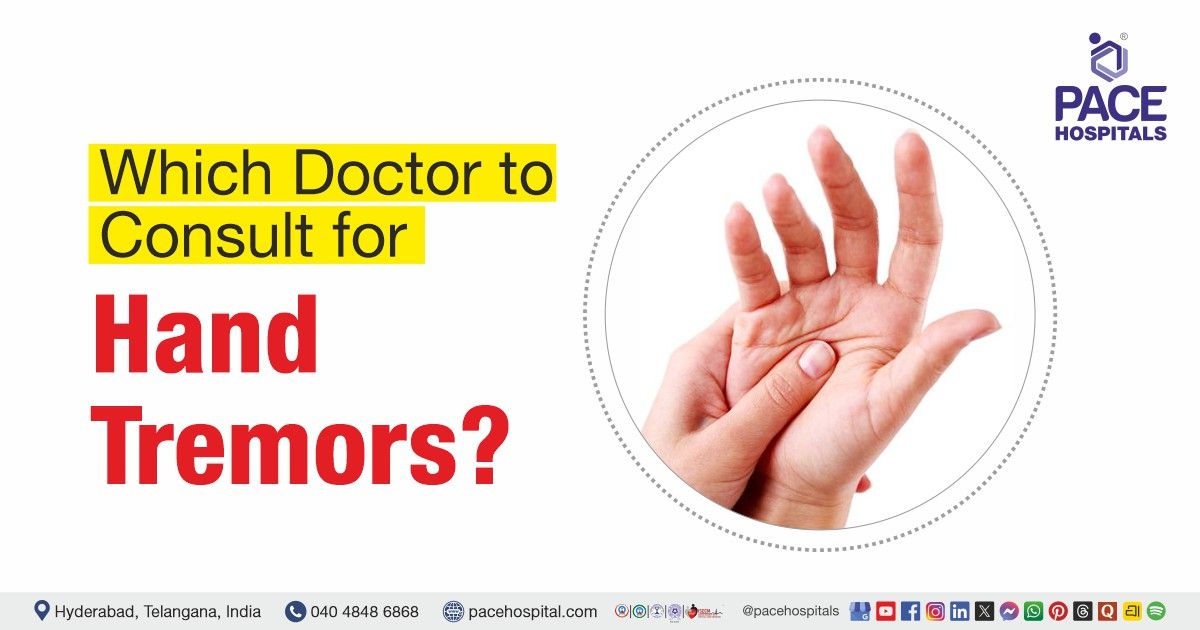
Which Doctor to Consult for Hand Tremors?
PACE Hospitals
Written by: Editorial Team
Medically reviewed by: Dr. S Pramod Kumar - Consultant Neurophysician & Neuromuscular Specialist
Introduction: When Your Hands Won't Stay Still?
You reach for a cup of tea and notice your hand is shaking. You try to write your name, and your handwriting looks unfamiliar — the letters uneven, the line trembling. You button a shirt and your fingers refuse to cooperate. For many people, hand tremors begin quietly and grow gradually, creating not just physical difficulty but emotional distress, social embarrassment, and an uneasy sense that something is wrong inside the body.
Hand tremors are one of the most common neurological symptoms that bring patients to a doctor's attention. They occur across all age groups — in a young professional whose hands shake during a presentation, in a middle-aged person whose tremor appears only while holding a glass, and in an elderly parent whose hands tremble even at rest. In India, tremors are an increasingly recognised concern, particularly as the population ages and awareness of conditions like Parkinson's disease and essential tremor continues to grow.
Yet despite how common hand tremors are, many patients and families remain unsure about which doctor to consult for hand tremors. Should you go to a general physician first? Do you need a neurologist? Could it be a thyroid problem requiring an endocrinologist? Could stress or anxiety be the culprit?
This article provides a clear, medically accurate, and patient-friendly guide to understanding hand tremors, identifying the right specialist, and knowing when the situation requires emergency attention.
Quick Answer: Which Doctor to Consult for Hand Tremors?
Consult a neurologist if hand tremors are chronic or getting worse, especially if they interfere with eating, writing, holding items, occurring at rest, or if they are accompanied by stiffness, slow motions, balance issues, weakness, numbness, or changes in speech. Mild tremors, drug side effects, low blood sugar, coffee, alcohol withdrawal, or vitamin deficiencies may be assessed initially by a General Physician or Internal Medicine specialist. Consult an endocrinologist if tremors co-occur with palpitations, sweating, weight loss, or thyroid problems. Sudden tremors along with confusion, seizures, weakness, or stroke symptoms require emergency medical care.
What Are Hand Tremors?
Hand tremors are involuntary, rhythmic, oscillating movements of one or both hands. They occur when the muscles in the hand and forearm contract and relax in a rapid, repetitive pattern that the person cannot consciously control. The frequency (speed) and amplitude (size of the movement) of tremors vary depending on the underlying cause.
Tremors are not a disease in themselves — they are a symptom, and they can arise from a wide variety of causes ranging from completely benign (such as too much caffeine or anxiety) to conditions that require prompt medical diagnosis and treatment (such as
Parkinson's disease,
hyperthyroidism, or a
neurological disorder).
Understanding the nature of your tremor — when it occurs, under what circumstances, and what other symptoms accompany it — is the first step toward identifying the right doctor and the right diagnosis.
Types of Hand Tremors: A Quick Overview
Doctors classify tremors based on the situation in which they occur. This classification is clinically important because it helps narrow down the underlying cause.
Resting Tremor
A resting tremor occurs when the affected hand is completely relaxed and supported — for example, when the hand is resting on a lap or on an armrest. The tremor tends to diminish or disappear when the person intentionally moves the hand. Resting tremors are strongly associated with Parkinson's disease and other Parkinsonian conditions. The classic description is a "pill-rolling" movement, where the thumb and fingers appear to be rolling a small object between them.
Action Tremor
Action tremors occur when the hand is in use. They are further divided into:
- Postural tremor: Occurs when the hand is held up against gravity (e.g., arms outstretched). This is a hallmark of essential tremor and is also seen in anxiety, thyroid disorders, caffeine excess, and certain medications.
- Kinetic tremor: Occurs during voluntary movement, such as reaching for an object, writing, or pouring a drink. Essential tremors typically worsen with this type of motion.
- Intention tremor: Occurs as the hand approaches a target (such as touching a finger to the nose) and worsens the closer it gets to the target. This type is more commonly associated with cerebellar disorders — conditions affecting the cerebellum, the part of the brain responsible for coordination.
- Task-specific tremor: Occurs only during certain skilled activities, such as writing (called primary writing tremor) or playing a musical instrument.
- Enhanced Physiological Tremor: All human beings have a very fine, fast tremor in their hands that is normally invisible. Certain conditions enhance this natural tremor to the point where it becomes visible and noticeable. Causes include anxiety, caffeine, certain medicines, alcohol withdrawal, low blood sugar (hypoglycaemia), overactive thyroid (hyperthyroidism), fatigue, and fever.
Doctor Selection Guide: Which Specialist Should You Choose for Hand Tremors?
| Situation | First Doctor to Consult | Specialist Needed If / Why |
|---|---|---|
| Persistent hand tremor | Neurologist | Essential tremor, Parkinson’s disease, or a neurological cause is suspected |
| Tremor at rest | Neurologist | Parkinsonism or movement disorder suspected |
| Tremor while writing/eating | Neurologist | Essential tremor or action tremor suspected |
| Tremor with stiffness or slowness | Neurologist | Parkinson’s disease suspected |
| Tremor with palpitations/weight loss | Endocrinologist / Internal Medicine | Hyperthyroidism suspected |
| Tremor with sweating/hunger | Diabetologist / Internal Medicine | Low sugar suspected |
| Tremor after the new medicine | General Physician / Internal Medicine | Medicine side effect review needed |
| Tremor with anxiety/panic | Psychiatrist / Psychologist / Internal Medicine | After medical causes are ruled out |
| Sudden tremor with weakness/confusion | Emergency Physician / Neurologist | Stroke, seizure, or acute brain issue suspected |
| Tremor in an elderly patient | Neurologist / Internal Medicine | Parkinson’s, essential tremor, medicines, or systemic cause suspected |
Common Causes and Which Specialist Treats Each?
| Possible Cause / Condition | Common Clues | Doctor/Specialist to Consult |
|---|---|---|
| Essential tremor | Action tremor while writing/eating | Neurologist |
| Parkinsonian tremor | Rest tremor, stiffness, slowness | Neurologist |
| Hyperthyroidism | Fine tremor, weight loss, palpitations, sweating | Endocrinologist |
| Low sugar | Shaking, sweating, hunger, confusion | Diabetologist / Emergency care if severe |
| Medicine-induced tremor | Tremor after new or changed medicine | Internal Medicine / Treating doctor |
| Anxiety-related tremor | Shaking during panic or stress | Psychiatrist / Psychologist after medical review |
| Alcohol withdrawal | Shaking after reducing/stopping alcohol | Emergency/Internal Medicine |
| Cerebellar or neurological disease | Coordination problems, intention tremor | Neurologist |
Which Doctor Should You Consult for Hand Tremors?
The answer depends on the nature, duration, and associated symptoms of your tremors. There is no single universal answer — different types of tremors have different origins and different specialists. Here is a comprehensive guide.
Neurologist — The Primary Specialist for Most Hand Tremors
A neurologist is a medical specialist trained in diagnosing and treating disorders of the nervous system, including the brain, spinal cord, peripheral nerves, and muscles. For the majority of patients with persistent, progressive, or functionally disabling hand tremors, a neurologist is the most appropriate first specialist to consult.
Within neurology, doctors who subspecialise in movement disorders — sometimes called movement disorder specialists — have the deepest expertise in tremors, Parkinson's disease, essential tremor, dystonic tremor, and related conditions.
When to See a Neurologist for Hand Tremors?
You should consult a neurologist if your hand tremors have any of the following characteristics:
- Tremors at rest — especially if they occur when the hand is relaxed and improve with movement
- Tremors that are worsening progressively over weeks or months
- Tremors that interfere with daily activities — writing, eating, drinking, buttoning clothes, or using a phone
- Tremors affecting one side of the body more than the other, especially in the early stages
- Tremors accompanied by stiffness or rigidity in the arms, legs, or trunk
- Tremors ac
- companied by slowness of movement (bradykinesia) — feeling that your movements have become slower, smaller, or less fluid
- Tremors accompanied by balance problems or a tendency to stoop or shuffle when walking
- Tremors accompanied by changes in handwriting — particularly micrographia (writing becoming progressively smaller)
- Tremors accompanied by speech changes — soft voice, slurred speech, or difficulty speaking clearly
- Tremors accompanied by facial masking — reduced facial expression, infrequent blinking
- Tremors that suggest essential tremor — rhythmic shaking during activities like pouring, eating with a spoon, or raising a glass, often running in the family
- Tremors accompanied by numbness, weakness, or loss of coordination in the hands
- Tremors accompanied by involuntary head movements or voice tremor
- Any tremor where Parkinson's disease,
multiple sclerosis, cerebellar disease, or dystonia is suspected
Neurological Conditions That Cause Hand Tremors
The following are among the most important neurological causes of hand tremors that a neurologist is trained to diagnose and manage:
- Essential Tremor (ET): The most common movement disorder worldwide, essential tremor primarily causes action and postural tremors — shaking during activities rather than at rest. It often affects both hands and the head, and sometimes the voice. It tends to worsen over time and may run in families. Many patients with essential tremor note that a small amount of alcohol temporarily reduces their shaking. A neurologist can confirm this diagnosis, distinguish it from Parkinson's disease, and offer effective treatment options.
- Parkinson's Disease: A progressive neurodegenerative condition caused by the loss of dopamine-producing cells in a region of the brain called the substantia nigra. The tremor in Parkinson's disease is classically a resting tremor that is often asymmetric (starting on one side). It is accompanied by bradykinesia, muscle rigidity, postural instability, and a variety of non-motor symptoms. A neurologist or movement disorder specialist is essential for accurate diagnosis, staging, and management of Parkinson's disease.
- Cerebellar Tremor: Caused by damage to or disorders of the cerebellum, this tremor is an intention tremor — it worsens as the hand moves toward a target. Causes include multiple sclerosis, stroke affecting the cerebellum, alcohol-related cerebellar degeneration, and inherited ataxias.
- Dystonic Tremor: Occurs in the context of dystonia — a condition where sustained muscle contractions cause abnormal postures or repetitive movements. The tremor may be irregular and often associated with abnormal posturing of the affected limb.
- Drug-Induced Tremor: Many medications can cause tremors by affecting the brain's dopamine pathways or by other mechanisms. When the causative medicine cannot simply be stopped, or when there is uncertainty about whether the medicine is truly responsible, a neurologist helps guide evaluation and management.
- Tremor Due to Peripheral Neuropathy: Damage to the peripheral nerves can sometimes produce a tremor. This may be seen in
diabetic neuropathy, alcohol-related neuropathy, or inherited neuropathies.
General Physician or Internal Medicine Specialist — The First Point of Contact
A general physician (also called a general practitioner or family doctor) or an internal medicine specialist is often the right first stop for patients whose tremors are mild, have appeared recently, or are associated with a systemic illness or medication.
When to Start with a General Physician?
- Mild tremors that have appeared recently and are not worsening rapidly
- Suspected medication side effects — tremors that began after starting a new medicine
- Known systemic illness — diabetes, liver disease, kidney disease, or infection
- Low blood sugar (hypoglycaemia) — shaking hands, sweating, and dizziness in a diabetic patient
- Alcohol use or withdrawal — tremors in the context of alcohol dependence
- Excessive caffeine use — multiple cups of strong coffee or tea per day, causing visible shaking
- Vitamin B12 deficiency — a common but underdiagnosed cause of neurological symptoms including tremors in India
- Fever or systemic infection — tremors accompanying an acute illness
- Fatigue and stress — recent severe stress or sleep deprivation causing transient shaking
- Routine screening — when the patient wants an initial evaluation before deciding on a specialist
A general physician will perform a clinical examination, order basic blood tests, and either manage simple or reversible causes directly or provide a referral to the appropriate specialist — most commonly a neurologist or endocrinologist.
Endocrinologist — When Hormones and Metabolism Are Involved?
An endocrinologist specialises in disorders of hormones and the endocrine glands. Several endocrine conditions are well-known causes of hand tremors, and when the tremor is accompanied by other metabolic or hormonal symptoms, consulting an endocrinologist is important.
When to Consult an Endocrinologist for Hand Tremors?
- Hyperthyroidism (Overactive Thyroid): An overactive thyroid gland produces excess thyroid hormone, which accelerates nearly every function in the body. Among its many effects is a fine, fast postural tremor of the outstretched hands. Patients with thyroid-related tremors often also notice palpitations (a racing or irregular heartbeat), unexpected weight loss despite a normal or increased appetite, excessive sweating and heat intolerance, anxiety and irritability, diarrhoea, and bulging eyes (in Graves' disease). If you have hand tremors along with any of these symptoms, an endocrinologist should evaluate your thyroid function.
- Hypoglycaemia (Low Blood Sugar): In people with diabetes who use insulin or certain oral medications, a drop in blood sugar can trigger trembling, sweating, confusion, and palpitations. Severe or recurrent hypoglycaemia requires careful review of the diabetes management plan by an endocrinologist.
- Adrenal Disorders: Conditions affecting the adrenal glands — such as phaeochromocytoma (a tumour that releases adrenaline) can cause episodic tremors, palpitations, sweating, and elevated blood pressure.
- Parathyroid Disorders: Abnormal calcium levels in the blood, which may result from parathyroid disease, can produce neuromuscular symptoms, including tremors.
If blood tests ordered by a general physician reveal thyroid abnormalities, abnormal blood sugar, or electrolyte imbalances, a referral to an endocrinologist for specialised management is appropriate.
Psychiatrist or Psychologist — When Anxiety or Functional Causes Are Involved
Mental health conditions can produce real, measurable physical symptoms — and tremors are among them. This does not mean the tremors are "imaginary." The brain-body connection is powerful, and psychological states can directly alter the way the nervous system functions.
When to Consult a Psychiatrist or Psychologist?
- Anxiety Disorders and Panic Attacks: Anxiety activates the body's sympathetic nervous system — the "fight or flight" response — causing the release of adrenaline, which produces a visible postural tremor. People with generalised anxiety disorder, social anxiety disorder, or panic disorder may experience hand tremors during periods of stress, social situations, or panic episodes. The tremors resolve as the anxiety is managed. If anxiety is suspected as a primary cause and medical causes have been ruled out, a psychiatrist or psychologist is the appropriate specialist.
- Functional Tremor (Psychogenic Tremor): This is a type of tremor caused by a functional neurological symptom disorder (FNSD), previously called conversion disorder. The tremor does not have an underlying structural neurological disease, but it is not consciously produced or "faked" — it arises from the way the brain is regulating movement under psychological distress. Functional tremors often have characteristic features that distinguish them from organic tremors, and a collaborative approach between a neurologist and a psychiatrist or psychologist is typically needed for accurate diagnosis and management.
- Post-Traumatic Stress Disorder (PTSD): Trauma-related psychological states can manifest with physical symptoms including tremors, especially in situations that trigger stress responses.
Important note: Psychiatric causes of tremors should only be considered after an appropriate medical and neurological evaluation has been completed. Tremors are never assumed to be purely psychological without first ruling out organic causes.
Emergency Department — When to Seek Urgent Care Immediately?
Certain presentations of hand tremors or shaking are medical emergencies. If any of the following occur, do not wait for an outpatient appointment — go to the nearest emergency department or call for emergency medical assistance immediately.
Signs That Hand Tremors Require Emergency Attention
- Sudden onset of tremors or shaking with weakness on one side of the body — this may indicate a stroke
- Sudden tremors accompanied by facial drooping or an uneven smile — a warning sign of stroke
- Sudden tremors with difficulty speaking, slurred speech, or inability to understand speech
- Tremors with sudden severe headache that feels unlike any previous headache ("thunderclap headache")
- Tremors with confusion, disorientation, or altered consciousness
- Seizures — generalised convulsions that may be confused with or accompany tremors
- Tremors with chest pain, difficulty breathing, or palpitations — especially if a cardiac event is suspected
- Tremors in a diabetic patient who is becoming confused or losing consciousness — severe hypoglycaemia requiring immediate glucose replacement
- Tremors in the context of a known drug overdose or poisoning
- Severe alcohol withdrawal tremors (delirium tremens) a life-threatening condition requiring immediate medical management
- High fever with uncontrolled shaking — rigors with a high temperature may indicate serious infection or sepsis
Red-Flag Symptoms
Seek urgent medical care if the symptom is sudden, severe, worsening, or associated with any of the following warning signs:
- Sudden tremors with weakness
- Facial drooping
- Slurred speech
- Confusion
- Seizure
- Loss of consciousness
- Severe headache
- Chest pain
- Severe dizziness
- Tremor after head injury
- Very low sugar symptoms
- Sudden difficulty walking
If these warning signs are present, do not wait for a routine OPD appointment. Visit an emergency department immediately.
What Tests Are Done to Diagnose the Cause of Hand Tremors?
The evaluation of hand tremors involves a combination of clinical assessment and targeted investigations. The specific tests ordered will depend on what the treating doctor suspects after examining the patient.
Clinical Examination
A neurologist will do a clear and thorough neurological examination, monitoring the tremor at rest and during different movements, evaluating its frequency, amplitude, and distribution, and searching for concomitant symptoms of Parkinson's disease, cerebellar disease, or other disorders.
Blood Tests
- Thyroid function tests (TFT): To detect hyperthyroidism or hypothyroidism
- Blood glucose and HbA1c: To assess blood sugar control
- Complete blood count (CBC): To detect anaemia or infection
- Liver function tests (LFT): Liver failure (hepatic encephalopathy) can cause tremors
- Kidney function tests: Chronic kidney disease can affect neurological function
- Serum electrolytes: Calcium, magnesium, and potassium imbalances can cause tremors
- Vitamin B12 and folate levels: Deficiency is common in India and can cause neurological symptoms
- Serum ceruloplasmin and urine copper: If Wilson's disease (a copper metabolism disorder causing tremors in young people) is suspected
Brain Imaging
- MRI brain (Magnetic Resonance Imaging): Used to look for structural causes of tremors, including stroke, multiple sclerosis plaques, cerebellar disorders, or hydrocephalus. MRI is generally preferred over CT for detailed brain imaging.
- CT brain: May be ordered in acute or emergency situations.
Dopaminergic Imaging (DaTscan / DAT-SPECT)
In selected patients where the distinction between essential tremor and Parkinson's disease remains uncertain after clinical evaluation, a specialised nuclear medicine scan — the dopamine transporter scan (DaTscan) — can visualise the integrity of the dopamine system in the brain. Reduced dopamine transporter activity supports a diagnosis of Parkinson's disease.
Electrophysiology
- Electromyography (EMG) and nerve conduction studies (NCS): To assess the health of peripheral nerves and muscles when neuropathy or neuromuscular disease is suspected
- Tremor analysis: Specialised equipment can measure tremor frequency and amplitude, which aids in classification
Additional Assessments
- Drug history review: Careful documentation of all current medications, supplements, and substances.
- Genetic testing: In young patients with a strong family history or in suspected inherited conditions like familial essential tremors, spinocerebellar ataxia, or Wilson's disease.
Treatment of Hand Tremors: An Overview
Treatment is directed at the underlying cause whenever possible, rather than the tremor itself. The approach varies significantly depending on what is found.
For Essential Tremor
The neurologist may recommend medications that lessen the tremor's amplitude and frequency. These include widely used and frequently successful anti-epileptic medications and beta-blockers. Stereotactic radiosurgery, focused ultrasound thalamotomy (non-invasive), and deep brain stimulation (DBS), a surgical procedure in which electrodes are positioned in particular brain regions to deliver controlled electrical impulses that suppress the tremor, are among the procedural options available to patients with tremors that do not respond well to medication.
For Parkinson's Disease
Management of Parkinson's disease tremor involves dopaminergic medication, which replenishes the brain's dopamine. Other classes of medications, including dopamine agonists and MAO-B inhibitors, are used depending on the patient's stage, age, and other factors. For patients whose tremor does not adequately respond to medication, deep-brain stimulation (DBS) is a highly effective surgical option that can dramatically reduce tremor and improve quality of life. Multidisciplinary care — including
physiotherapy, occupational therapy, and speech therapy — is an important part of comprehensive Parkinson's management.
For Thyroid-Related Tremors
When hyperthyroidism is confirmed and appropriately treated — with antithyroid medicines, radioiodine, or surgery — thyroid-related tremors typically resolve as thyroid hormone levels normalise.
For Medicine Induced Tremors
In many cases, adjusting the dose of the offending medicine or switching to an alternative is sufficient to resolve the tremor. This is done under the guidance of the prescribing doctor.
For Anxiety-Related Tremors
Treatment of the underlying anxiety disorder — through psychotherapy (particularly cognitive behavioural therapy), lifestyle modifications, mindfulness practices, or, when necessary, pharmacological management — typically results in improvement or resolution of the anxiety-related tremor.
For Functional Tremors
Management involves psychoeducation (helping the patient understand the nature of the condition), physiotherapy focused on movement re-training, and psychological therapy. Outcomes can be very good when patients are engaged in treatment.
Hand Tremors in Specific Populations
- Hand Tremors in the Elderly: In people over 65 years of age, hand tremors are relatively common. The most important considerations in elderly patients are essential tremor (which is the most common cause), Parkinson's disease (which increases in prevalence with age), and enhanced physiological tremor from multiple medicines (polypharmacy is common in the elderly). Any new or worsening tremor in an elderly person deserves a proper neurological evaluation, as early diagnosis of Parkinson's disease enables better management.
- Hand Tremors in Young Adults: In young adults (below 40), new-onset tremors should not be assumed to be Parkinson's disease, which is rare in this age group, though it can occur. Important considerations include essential tremor (which can begin at any age), Wilson's disease (a treatable genetic condition affecting copper metabolism that can cause tremors, liver disease, and psychiatric symptoms, typically presenting before age 40), anxiety-related tremors, medicine-induced tremors, hyperthyroidism, and drug or alcohol use.
- Hand Tremors in Children: Tremors in children require specialist evaluation and are beyond the scope of a self-directed patient guide. A paediatric neurologist should be consulted for tremors in children.
Hand Tremor Specialists at PACE Hospitals, Hyderabad
PACE Hospitals, located in Hitech City, Hyderabad, is a multi-super speciality hospital with the capacity to assess and treat hand tremors caused by a variety of neurological, metabolic, hormonal, and psychological factors. Patients can obtain:
- Neurology and Movement Disorders — for evaluation and treatment of essential tremor, Parkinson's disease, dystonic tremor, cerebellar tremor, and other movement disorders
- General Medicine and Internal Medicine — for first-point-of-contact assessment of tremors related to infections, medications, vitamin deficiencies, alcohol withdrawal, caffeine excess, and systemic illnesses
- Endocrinology and Diabetes Care — for tremors associated with hyperthyroidism, hypoglycaemia, adrenal disorders, electrolyte abnormalities, and other hormonal or metabolic conditions
- Psychiatry and Psychology — for anxiety-related tremors, panic disorders, functional neurological symptom disorders (functional tremor), and psychological assessment when appropriate
- Emergency and Critical Care — for sudden tremors associated with stroke symptoms, seizures, severe hypoglycaemia, altered consciousness, poisoning, alcohol withdrawal emergencies, or other acute neurological conditions
- Radiology and Advanced Neuroimaging — including MRI brain and CT brain for identifying structural neurological causes such as stroke, cerebellar disorders, multiple sclerosis, and other brain conditions
- Neurophysiology Services — including nerve conduction studies (NCS), electromyography (EMG), and specific neurological evaluations when neuropathy or neuromuscular problems are suspected
- Physiotherapy, occupational therapy, and rehabilitation services—for balance training, Parkinson's rehabilitation, tremor management techniques, functional enhancement, and assistance with everyday tasks
- Advanced diagnostics and multidisciplinary care, including laboratory evaluation (thyroid profile, blood glucose, HbA1c, vitamin B12, electrolytes, liver and kidney function tests), neurological assessment, movement disorder evaluation, neuroimaging, and coordinated specialist care under one roof.
Why Choose PACE Hospitals for Hand Tremor Evaluation and Treatment?
PACE Hospitals, Hitech City, Hyderabad, is a multi-super-specialty hospital offering comprehensive diagnostic and treatment services for hand tremors and all neurological conditions. The Department of Neurology and Movement Disorders at PACE Hospitals is led by experienced neurologists who specialise in the evaluation and management of tremors, Parkinson's disease, essential tremor, and related movement disorders.
What PACE Hospitals Offers for Tremor Patients?
- Experienced movement disorder neurologists with expertise in Parkinson's disease, essential tremor, dystonia, and functional tremor
- Advanced neuroimaging including high-resolution MRI brain
- Comprehensive blood work and metabolic evaluation in the hospital's accredited diagnostic laboratory
- Multidisciplinary coordination between neurology, endocrinology, psychiatry, and internal medicine for patients with complex tremors
- Physiotherapy and rehabilitation services — including tremor-specific rehabilitation and occupational therapy for patients with essential tremor or Parkinson's disease
- Patient education and counselling — helping patients and families understand the diagnosis and participate actively in treatment planning
- Convenient location and OPD booking — located in Hitech City, Hyderabad, with easy access for patients from across Hyderabad and the surrounding region
If you or a loved one is experiencing hand tremors and seeking expert evaluation, PACE Hospitals is equipped to provide the full spectrum of care — from initial assessment to advanced treatment.
Key Takeaway
Most patients with persistent or worsening hand tremors should see a Neurologist, especially if tremors are interfering with writing, eating or holding objects, if the tremors occur at rest, or if they are associated with stiffness, slow movements, problems with balance, weakness, numbness or changes in speech. A General Physician or Internal Medicine specialist can assess mild recent onset medication related tremors, metabolic or lifestyle tremors and guide you to the right specialist. If tremors are accompanied by symptoms of thyroid disease, blood sugar abnormalities or hormonal disorders, an Endocrinologist may be required. Seek immediate emergency medical care for sudden shaking or tremors, weakness, drooping of the face, confusion, seizures, severe headache or other neurological symptoms. The most important steps to determine the cause and improve long-term outcomes are early evaluation, accurate diagnosis and timely referral to a specialist.
Frequently Asked Questions (FAQs)
Which doctor should I consult for hand tremors?
For most cases of persistent or worsening hand tremors, a neurologist is the most appropriate specialist to consult. If your tremors are mild, recent, or accompanied by hormonal or metabolic symptoms (such as palpitations and weight loss), starting with a general physician who can screen for systemic causes and refer you appropriately is also a reasonable approach. If thyroid disease is suspected, an endocrinologist is the right specialist. If anxiety is a clear trigger, a psychiatrist or psychologist may be helpful — but only after medical causes have been evaluated.
Are hand tremors always Parkinson's disease?
No. Hand tremors are a very common symptom with many possible causes, and Parkinson's disease is just one of them — and not the most common. The most prevalent cause of hand tremors is essential tremor, which is distinct from Parkinson's disease and often responds well to treatment. Other causes include thyroid disorders, anxiety, medication side effects, low blood sugar, caffeine excess, vitamin deficiency, and cerebellar disorders. A thorough evaluation by a neurologist is essential to arrive at the correct diagnosis.
Can thyroid problems cause hand tremors?
Yes. Hyperthyroidism — an overactive thyroid gland — is a well-recognised cause of hand tremors. Excess thyroid hormone produces a fine, fast postural tremor of the outstretched hands, often accompanied by palpitations, weight loss, increased sweating, anxiety, and heat intolerance. A simple blood test measuring thyroid-stimulating hormone (TSH) and free thyroid hormone levels (FT3, FT4) can confirm or rule out a thyroid cause. When hyperthyroidism is treated, and thyroid hormone levels normalise, the tremors typically resolve.
Can anxiety cause hand tremors?
Yes. Anxiety activates the body's stress response, releasing adrenaline and other stress hormones that increase heart rate, cause sweating, and produce a visible postural tremor of the hands. This is a normal physiological response in situations of acute stress, but in people with anxiety disorders, it may occur frequently or with disproportionate intensity. The tremors resolve when the anxiety is managed. If anxiety-related tremors are persistent or distressing, a psychiatrist or psychologist can provide effective treatment — but other medical causes should be evaluated first.
When are hand tremors an emergency?
Seek emergency care immediately if hand tremors are accompanied by any of the following: sudden weakness or numbness on one side of the body, facial drooping, sudden difficulty speaking or understanding speech, sudden severe headache, confusion or altered consciousness, seizures, chest pain, or high fever with rigors. These may indicate a stroke, seizure disorder, severe hypoglycaemia, or another life-threatening condition. Sudden tremors in a patient known to use alcohol heavily may represent delirium tremens — also a medical emergency.
Can hand tremors be treated?
Yes, in most cases, hand tremors can be effectively managed or treated. The approach depends on the underlying cause. Treatable systemic causes — such as hyperthyroidism, low blood sugar, or vitamin deficiency — often resolve completely when the root cause is addressed. Essential tremor can be significantly reduced with medications and, in severe cases, with focused ultrasound or deep-brain stimulation (DBS). Parkinson's disease tremors respond well to dopaminergic medications and, when needed, to DBS. Anxiety-related tremors improve with psychological treatment and stress management. Very few types of tremor are completely untreatable, and a neurological assessment gives patients access to the full range of available options.
Which is the best hospital for hand tremors treatment in Hyderabad?
PACE Hospitals, Hitech City, Hyderabad is a trusted multi super-specialty hospital that provides comprehensive care for hand tremors and neurological conditions. The hospital offers expert neurological assessment and state of the art brain imaging, multidisciplinary co-ordination between neurology, endocrinology and psychiatry, physiotherapy and rehabilitation services for tremor patients. PACE Hospitals' team of experienced neurologists and movement disorder specialists are equipped to diagnose and manage the full spectrum of tremor conditions — from essential tremor and Parkinson's disease to thyroid-related and anxiety-related tremors. Patients from across Hyderabad and Telangana visit PACE Hospitals for specialised neurological care. To book an appointment, visit pacehospital.com or contact the hospital helpline.
Should I see a neurologist for shaky hands?
If your shaky hands are persistent (more than a few days), getting worse over time, present at rest, interfering with daily activities such as writing or eating, or associated with stiffness, slowness or balance changes, yes, you should see a neurologist. A neurologist can tell you what is causing your tremors, differentiate between things like essential tremor and Parkinson’s disease, order the right tests and prescribe the right treatment.
Can low blood sugar cause shaking hands?
Yes. A drop in blood glucose below normal levels — called hypoglycaemia — is a well-known cause of hand trembling or shaking, typically accompanied by sweating, palpitations, dizziness, and a sense of weakness or hunger. This is most commonly seen in people with diabetes who use insulin or certain oral diabetes medicines. If a diabetic patient develops hand trembling, checking blood glucose immediately is an important first step. Severe or recurrent hypoglycaemia requires review of the diabetes management plan by an endocrinologist.
What causes tremors while writing or eating?
Tremors during writing or eating are action or kinetic tremors — they occur during purposeful movement rather than at rest. The most common cause is essential tremor, which characteristically worsens with fine motor activities like writing, using a spoon, or raising a glass. Parkinson's disease can also cause some difficulty with writing (particularly micrographia — shrinking handwriting), though Parkinson's tremor is more prominent at rest. Other causes include cerebellar disorders, anxiety-related tremors, and certain medications. A neurologist can determine the precise cause after clinical evaluation.
What causes hand tremors at rest?
Tremors that are present when the hand is completely relaxed and supported — resting tremors — are most characteristically associated with Parkinson's disease. In Parkinson's disease, the resting tremor is often described as a "pill-rolling" movement and typically begins asymmetrically, affecting one hand or arm before the other. Other causes of resting tremors include some other Parkinsonian conditions (called "Parkinson-plus syndromes") and occasionally severe essential tremor. A resting tremor always warrants neurological evaluation.
What tests are done for hand tremors?
The tests that are ordered depend on what the doctor suspects after examining the patient. Investigations commonly include blood tests (thyroid function, blood glucose, liver and kidney function, electrolytes, vitamin B12, full blood count), MRI brain (looking for structural neurological causes) and nerve conduction studies (looking at peripheral nerve health). In selected patients, a dopamine transporter scan (DaTscan) may be performed to differentiate Parkinson’s disease from essential tremor. The most relevant tests are usually suggested by the doctor’s clinical examination and history.
Can medicines cause hand tremors?
Yes. Many of the medicines you use regularly can have hand tremors as a side effect. These include some psychiatric medicines (some antidepressants and antipsychotics), bronchodilators (inhalers), corticosteroids, thyroid hormone replacement (if the dose is too high), some heart medicines, immunosuppressants, and some anti-nausea medicines that affect dopamine pathways. If you develop hand tremors after starting or increasing the dose of a medicine, tell your doctor immediately. The tremor may subside with adjustment of dose or change of medication.
Which doctor treats essential tremor?
A neurologist — ideally one with subspecialty training in movement disorders — is the appropriate doctor to diagnose and treat essential tremor. The neurologist will confirm the diagnosis, rule out other causes, and recommend the best treatment strategy based on the severity of the tremor and its impact on daily life. For patients who require procedural intervention (focused ultrasound, DBS), a multidisciplinary team including a functional neurosurgeon is involved.
Conclusion
Hand tremors are one of the body's ways of signalling that something needs attention — but what that "something" is varies widely from person to person. While the trembling of the hands can feel alarming, the majority of tremors have identifiable causes and effective treatments once the right medical evaluation is undertaken.
The key to getting the right care is seeing the right doctor. A neurologist is the primary specialist for most persistent, progressive, or functionally limiting hand tremors, and is essential when Parkinson's disease, essential tremor, cerebellar disease, or other neurological conditions are suspected. A general physician provides valuable first-line evaluation for mild or systemic causes. An endocrinologist is critical when thyroid disorders, blood sugar dysregulation, or hormonal causes are in question. A psychiatrist or psychologist offers specialised support when anxiety or functional causes are identified after a medical evaluation. And some tremor presentations require emergency care — without delay.
If you or a family member is dealing with tremors of the hands, don’t just dismiss this as a normal part of ageing or a natural consequence of stress. Get a proper medical evaluation. Early and accurate diagnosis provides patients access to treatments that can significantly diminish tremors, preserve function and improve quality of life.
Share on
Request an appointment
Fill in the appointment form or call us instantly to book a confirmed appointment with our super specialist at 04048486868
Appointment request - health articles
Recent Articles