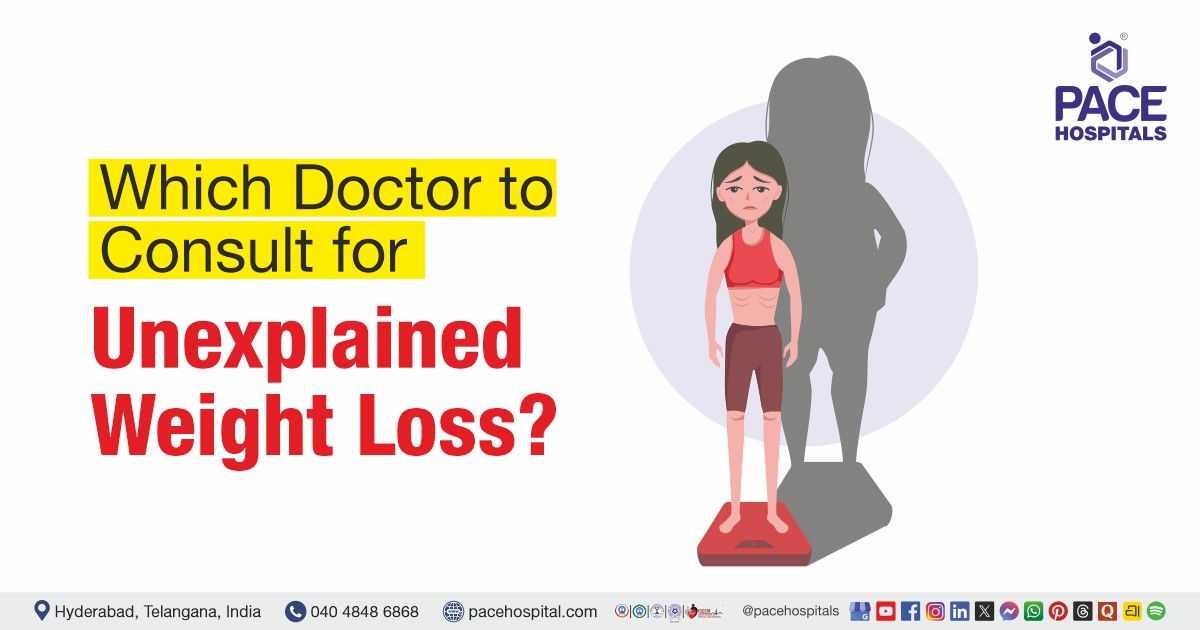
Which Doctor to Consult for Unexplained Weight Loss?
PACE Hospitals
Written by: Editorial Team
Medically reviewed by: Dr. Tripti Sharma - Endocrinologist (Adult & Paediatric), Physician & Diabetologist
Introduction: A Complete Guide for Patients and Families
Losing weight without trying may seem like a good thing at first. But if the body loses kilograms without any intentional change in diet or physical activity, it is a sign that something could be wrong internally. Unintentional weight loss is one of the most significant warning signs that clinicians take seriously. Medically, it is defined as losing more than 5 % of body weight in 6 to 12 months, without intentional effort.
Unexplained weight loss can arise from a wide spectrum of conditions — ranging from an overactive thyroid gland and uncontrolled
diabetes to chronic infections, digestive disorders, mental health conditions, and cancer. Because the causes are so diverse, many patients and families are uncertain about which doctor to consult first and where to begin the diagnostic journey.
Important: Unexplained weight loss is never a normal finding and always requires professional medical evaluation. Do not ignore it or attribute it to stress alone without seeing a doctor.
Quick Answer: Which Doctor to Consult for Unexplained Weight Loss?
For unexplained weight loss, consult a general physician or an internal medicine specialist first. They can look for common causes such as diabetes, thyroid disease, infections, digestive problems, liver disease, kidney disease, medication side effects, nutritional problems, mental health concerns and cancer warning signs. Based on symptoms and test results, they may refer you to an Endocrinologist, Gastroenterologist, Oncologist, Pulmonologist, Infectious Disease specialist, Psychiatrist, or Dietitian.
Understanding Unexplained Weight Loss: What Does It Mean?
Weight loss becomes medically significant when a person loses 5% or more of their usual body weight over a period of 6 to 12 months without making any conscious effort, such as changes in diet, exercise, or medication. For example, if a person weighs 70 kg, losing 3.5 kg or more without a clear reason should be medically evaluated.
This kind of weight loss is commonly called unintentional weight loss, involuntary weight loss, or unexplained weight loss. It is not the same as intentional weight loss for health or aesthetic purposes. This distinction is important because unintentional weight loss may be a manifestation of an underlying disease process.
According to guidelines from the National Institute for Health and Care Excellence (NICE) and internal medicine standards, any weight loss exceeding this threshold — particularly when accompanied by other symptoms such as fatigue, fever, pain, or changes in appetite or bowel habits — must be evaluated without delay.
Common symptoms include fatigue and weakness, loss of appetite (anorexia), pain (abdominal, chest, or bone), fever or night sweats, diarrhoea or changes in bowel habits, excessive thirst and urination, swollen glands or lumps, persistent cough, and mood changes or depression.
Which Doctor Should You Consult First for Unexplained Weight Loss?
The most important first step for anyone experiencing unexplained weight loss is to consult a General Physician or a specialist in Internal Medicine. This is because unexplained weight loss is a non-specific symptom — meaning it does not point to one organ or one disease on its own. A general physician or internist is trained to assess the whole body, take a complete history, order an initial panel of investigations, and identify patterns that point toward the most likely underlying cause.
Imagine the General Physician or Internal Medicine specialist as the navigator of your diagnostic journey. They will look at your entire medical history, review current medications (some medications cause weight loss as a side effect), ask you about your dietary habits, examine you thoroughly and order baseline
blood tests and imaging tests. Depending on these findings, they will either manage the condition themselves or refer you to the appropriate specialist.
First Doctor to Consult: General Physician or Internal Medicine Specialist — they will assess, investigate, and guide you to the right specialist if needed.
Why not go directly to a specialist? It is tempting to visit a specialist directly, but without an initial evaluation, it is impossible to know which specialist is most appropriate. A person who thinks their weight loss is due to stress may actually have hyperthyroidism or early-stage lymphoma — both of which require completely different specialists. The general physician ensures that no important cause is missed and that the right referral is made.
Doctor Selection Guide: Which Specialist Should You Choose?
| Situation | First Doctor to Consult | Specialist Needed If / Why |
|---|---|---|
| Weight loss without a clear reason | General Physician / Internal Medicine | Initial evaluation and referral needed |
| Weight loss with thirst/urination | Endocrinologist / Internal Medicine | Diabetes suspected |
| Weight loss with palpitations/tremors | Endocrinologist | Hyperthyroidism suspected |
| Weight loss with diarrhoea/abdominal pain | Gastroenterologist | Digestive disorder, malabsorption, IBD, or infection suspected |
| Weight loss with chronic cough/fever/night sweats | Pulmonologist / Infectious Disease specialist | TB, lung disease, or chronic infection suspected |
| Weight loss with a lump/swelling | Internal Medicine / Oncologist if needed | Tumour, lymph node, or other serious cause suspected |
| Weight loss with low mood/anxiety | Psychiatrist / Psychologist / Internal Medicine | Mental health or an eating-related cause is suspected |
| Weight loss with difficulty swallowing | Gastroenterologist / ENT specialist | Oesophageal, throat, or swallowing disorder suspected |
| Weight loss in an elderly patient | Internal Medicine / Geriatric specialist, if available | Multi-system evaluation needed |
| Weight loss with severe weakness/dehydration | Emergency Physician | Urgent care needed |
Common Causes of Unexplained Weight Loss
Unexplained weight loss has a wide differential. Patients are more likely to accept the need for systematic evaluation if they know the range of conditions that can cause it. The major categories include:
Endocrine and Metabolic Disorders
- Hyperthyroidism: The thyroid gland causes overproduction of hormones, which speed up metabolism, resulting in significant, rapid weight loss even when eating normally or more.
- Type 1 Diabetes (new onset): Insulin deficiency prevents glucose from entering cells, so the body breaks down fat and muscle for energy, causing weight loss along with excessive thirst and frequent urination.
- Poorly controlled Type 2 Diabetes: Uncontrolled blood sugar can lead to caloric loss through urine and altered metabolism, resulting in weight loss.
- Adrenal insufficiency (Addison's disease): Insufficient cortisol leads to fatigue, weight loss, and low blood pressure.
Hypercalcaemia and pituitary disorders can also contribute to unintentional weight loss.
Gastrointestinal and Digestive Disorders
- Inflammatory bowel disease (Crohn's disease and ulcerative colitis): Chronic gut inflammation impairs nutrient absorption, causes pain and diarrhoea, and reduces food intake.
- Coeliac disease: An immune reaction to gluten damages the small intestinal lining and severely impairs absorption of nutrients, leading to weight loss, anaemia, and fatigue.
- Peptic ulcer disease, chronic gastritis, and gastroparesis can reduce food intake due to pain and nausea.
- Pancreatic exocrine insufficiency: Reduced digestive enzymes lead to malabsorption of fat and protein.
- Liver cirrhosis and chronic
hepatitis affect metabolism and nutritional status significantly.
Cancers
Many
cancers often have unintentional weight loss. Weight loss is a common early or prominent symptom of cancers of the lung, colon, stomach, pancreas, oesophagus, liver and of haematological malignancies (lymphoma,
leukaemia).
Cancer-related weight loss (cachexia) is driven by metabolic changes, tumour-related inflammation, reduced appetite, and altered nutrient metabolism.
According to the American Cancer Society, unexplained weight loss of 10 pounds or more (approximately 4.5 kg) is one of the most important early warning signs of cancer and should always prompt investigation.
Chronic Infections
- Tuberculosis (TB): India has one of the highest TB burdens in the world. Common symptoms of pulmonary and extrapulmonary TB include weight loss, night sweats, fever, and fatigue.
- HIV/AIDS: HIV infection that damages immune function and leads to significant weight loss, particularly in advanced disease.
- Chronic hepatitis B and C infections cause liver damage and systemic illness, leading to weight loss.
- Parasitic infections such as hookworm, Giardia, and amoebiasis can cause malabsorption and chronic diarrhoea.
Mental Health and Psychological Conditions
Depression is one of the most underdiagnosed causes of unexplained weight loss in India. It causes loss of appetite, reduced interest in food, and fatigue.
Anxiety disorders, bereavement, and significant life stressors can suppress appetite and disrupt eating patterns.
Eating disorders such as anorexia nervosa are a critical cause of severe, dangerous weight loss and require urgent psychiatric and nutritional intervention.
Chronic Organ Disease
- Chronic kidney disease (CKD): Advanced
CKD causes protein-energy wasting, nausea and a reduced appetite, which causes weight loss.
- Heart failure: Cardiac cachexia.
Heart failure is characterised by complex metabolic and inflammatory changes that lead to significant weight loss.
- Chronic obstructive pulmonary disease (COPD): Increased work of breathing increases caloric needs, leading to weight loss.
Medications and Substance Use
Certain medications commonly cause weight loss as a side effect, such as some antidepressants, stimulant medications, thyroid hormone preparations, and chemotherapy agents.
Alcohol dependence and illicit substance use can severely impair nutrition and cause weight loss.
Common Causes and Which Specialist Treats Each?
| Possible Cause / Condition | Common Clues | Doctor/Specialist to Consult |
|---|---|---|
| Diabetes | Thirst, frequent urination, increased hunger | Endocrinologist / Internal Medicine |
| Hyperthyroidism | Weight loss, tremor, palpitations, heat intolerance | Endocrinologist |
| Digestive disorders | Diarrhoea, abdominal pain, poor absorption | Gastroenterologist |
| Tuberculosis/chronic infection | Cough, fever, night sweats | Pulmonologist / Infectious Disease specialist |
| Cancer warning signs | Lump, anaemia, bleeding, appetite loss | Internal Medicine / Oncologist if needed |
| Depression/anxiety | Poor appetite, low mood, sleep disturbance | Psychiatrist / Psychologist |
| Kidney/liver disease | Swelling, jaundice, poor appetite, abnormal tests | Nephrologist / Gastroenterologist |
| Medicine/substance-related | Weight loss after medicines or alcohol/substance use | Internal Medicine / Psychiatrist if needed |
Red-Flag Symptoms: When to Seek Urgent Medical Care?
Seek urgent medical care if the symptom is sudden, severe, worsening, or associated with any of the following warning signs:
- Rapid or progressive weight loss
- Weight loss with fever or night sweats
- Persistent cough or coughing up blood
- Blood in stool or black stools
- Vomiting blood
- Difficulty swallowing
- Unexplained lump or lymph node swelling
- Severe weakness or fainting
- Persistent diarrhea or vomiting
- Severe loss of appetite
- Chest pain or breathlessness
- Confusion or dehydration
If these warning signs are present, do not wait for a routine OPD appointment. Visit an emergency department immediately.
Diagnostic Tests for Unexplained Weight Loss
The evaluation of unexplained weight loss is systematic. A General Physician or Internal Medicine specialist will begin with a careful history and physical examination before ordering tests. The standard diagnostic work-up typically includes:
Initial Blood Tests
- Complete Blood Count (CBC): Detects anaemia, infection, or blood cell abnormalities that may indicate cancer or chronic disease.
- Blood glucose and HbA1c: To assess diabetes or prediabetes.
- Thyroid function tests (TSH, Free T3, Free T4): For evaluating hyperthyroidism or hypothyroidism.
- Liver function tests (LFTs): To detect liver condition, hepatitis or cirrhosis.
- Kidney function tests (urea, creatinine, eGFR): To identify chronic kidney disease.
- Serum electrolytes and calcium: To detect adrenal or parathyroid disorders.
- Erythrocyte sedimentation rate (ESR) and C-reactive protein (CRP): Markers of systemic inflammation or infection.
- HIV serology and Hepatitis B and C screening: When clinically indicated.
Urine and Stool Tests
- Urine routine examination and culture are used to evaluate infections, glucose, or protein.
- Stool examination for ova, cysts, and parasites; faecal occult blood test (FOBT) to detect hidden blood in stools.
Imaging Studies
- Chest X-ray: This is the first investigation for pulmonary tuberculosis, lung cancer and heart failure.
- Ultrasound abdomen and pelvis: For evaluation of liver, pancreas, kidneys, lymph nodes and abdominal organs.
- PET-CT scan: Used in oncology to determine and stage cancer when initial imaging studies are ineffective.
- CT Scan: Chest, abdomen and pelvis in cases where initial findings raise suspicion of malignancy or complex disease.
Specialised and Endoscopic Investigations
- Upper GI endoscopy (gastroscopy): To examine the oesophagus, stomach, and upper small intestine for ulcers, inflammation, or cancer.
- Colonoscopy: To evaluate the large intestine for polyps, IBD, or colorectal cancer.
- Biopsy and histopathology: When a mass or abnormality is detected on imaging or endoscopy.
- Sputum Examination: To check for pulmonary tuberculosis and other lung infections by testing the mucus coughed up from the lungs.
- Mantoux Test or IGRA: To detect tuberculosis infection, especially when TB is suspected based on symptoms, exposure history, or imaging findings.
- Hormonal panels: Such as cortisol levels, ACTH stimulation test for adrenal insufficiency.
Treatment and Management of Unexplained Weight Loss
Unexplained weight loss is not a disease in itself — it is a symptom of an underlying condition. Treatment is therefore directed at identifying and managing the root cause. The approach varies significantly depending on the diagnosis:
- Diabetes: Optimising blood glucose control with medications, insulin, and lifestyle changes.
- Hyperthyroidism: Anti-thyroid medications, radioactive iodine therapy, or surgery.
- Tuberculosis: A structured course of anti-TB medications under DOTS (Directly Observed Treatment, Short-course) guidelines as per national TB elimination protocols.
- Cancer: Treatment may include surgery, chemotherapy, radiotherapy, targeted therapy, or immunotherapy, depending on the cancer type and stage.
- IBD and coeliac disease: Anti-inflammatory medications, immune modulators, and dietary management.
- Depression and anxiety: Psychotherapy, medication, and lifestyle interventions.
- Nutritional rehabilitation: A clinical dietitian plays a crucial role in correcting malnutrition and planning calorie-dense, nutrient-rich diets to support recovery.
With appropriate treatment of the underlying cause, most patients can stabilise their weight and begin to recover. Early detection is the most important factor in achieving better outcomes — particularly in conditions such as tuberculosis and cancer, where timely treatment is life-changing.
Unexplained Weight Loss in India: Epidemiological Context
Unexplained weight loss is particularly important in India, where there is a unique and complex burden of disease. The India TB Report, published by the Ministry of Health and Family Welfare, indicates that the country has the highest burden of tuberculosis in the world, with about 2.8 million new cases of TB being reported every year. Pulmonary TB remains a leading cause of unexplained weight loss, night sweats, and chronic cough in India, and must be actively ruled out in all such cases.
India also bears the world's second-largest diabetes burden, with over 101 million people living with diabetes according to the Indian Council of Medical Research (ICMR) and Madras Diabetes Research Foundation national estimates. Uncontrolled or newly diagnosed diabetes is a common and often missed cause of significant weight loss. Additionally, thyroid diseases — particularly hyperthyroidism — affect millions of Indians, with iodine status, genetic predisposition, and autoimmune conditions all playing a role.
The incidence of cancer in India is increasing, and approximately 1.46 million new cancer cases are diagnosed every year, according to the National Cancer Registry Programme. Unexplained weight loss is a prominent early symptom of cancers of the stomach, lung, oesophagus and haematological malignancies. Awareness of recognising this symptom and seeking prompt medical evaluation is critical to improve survival outcomes across India.
Specialists at PACE Hospitals, Hyderabad
A multi-super speciality hospital, PACE Hospitals, located in Hitech City, Hyderabad, has the clinical expertise and the advanced diagnostic infrastructure required for a thorough and accurate evaluation of unexplained weight loss.
Our multi-disciplinary team consists of experienced specialists in
Internal Medicine,
Endocrinology,
Gastroenterology and
Hepatology, Medical Oncology, Surgical Oncology,
Pulmonology, Infectious Diseases,
Psychiatry,
Nephrology, and Clinical Nutrition. This comprehensive approach provides all patients with unexplained weight loss with a thorough evaluation without the delays and multiple referrals across multiple facilities.
PACE Hospitals is equipped with a fully integrated diagnostic centre offering advanced blood investigations, imaging modalities including CT,
MRI, and PET-CT, digital X-ray, high-definition endoscopy suites, biopsy and pathology services, and nuclear medicine facilities. Our dietetics and clinical nutrition department provides personalised nutritional support as part of the treatment journey.
Whether your unexplained weight loss is caused by a thyroid disorder, gastrointestinal disease, a systemic infection, or requires cancer screening, the specialists at PACE Hospitals are here to help you find answers and start the right treatment without delay.
Frequently Asked Questions (FAQs)
Which doctor should I consult for unexplained weight loss?
For unexplained or unintentional weight loss, consult a General Physician or an internal medicine specialist first. They can screen for diabetes, thyroid disease, infections, digestive problems, liver or kidney problems, medications, nutritional problems, mental health problems and warning signs for cancer and then refer you to the appropriate specialist.
Can diabetes cause unexplained weight loss?
Yes, diabetes can cause weight loss, especially when blood sugar is uncontrolled. Symptoms may include frequent urination, excessive thirst, increased hunger, fatigue, blurred vision, and recurrent infections. A Diabetologist or Endocrinologist can evaluate and manage diabetes-related weight loss.
Can thyroid problems cause weight loss?
Yes. Even with normal or increased appetite, hyperthyroidism can lead to weight loss. It may be associated with palpitations, tremor, sweating, heat intolerance, anxiety, loose stools and sleep disturbances. An endocrinologist can confirm thyroid-related weight loss by running tests of thyroid function.
When is unexplained weight loss serious?
Unexplained weight loss can be more worrying if it is rapid or progressive. It is more worrying if it is accompanied by fever, night sweats, persistent cough, blood in stool, black stools, vomiting blood, difficulty swallowing, lump, extreme tiredness, loss of appetite or anaemia. These symptoms need immediate medical evaluation.
Can stress or depression cause weight loss?
Yes, stress, anxiety, depression, grief and eating disorders can cause appetite loss and weight loss. However, unexplained weight loss should not be blamed on stress alone until medical causes such as thyroid disease, diabetes, infection, digestive disorders, and cancer warning signs are ruled out.
Can a general physician evaluate unexplained weight loss?
Yes, a General Physician or Internal Medicine specialist is the first doctor to evaluate unexplained weight loss. They can take a complete history, perform a physical examination, order baseline tests, review previous medicines, and identify whether you require a Gastroenterologist, Endocrinologist,Oncologist, Pulmonologist, Psychiatrist, or Dietitian.
When should I see an endocrinologist for weight loss?
See an Endocrinologist if weight loss occurs with increased thirst, frequent urination, high blood sugar, increased appetite, palpitations, tremors, sweating, heat intolerance, or abnormal thyroid tests. Diabetes and hyperthyroidism are important endocrine causes of unexplained weight loss.
When should I see a gastroenterologist for weight loss?
Consult a Gastroenterologist if weight loss is associated with abdominal pain, diarrhoea, vomiting, blood in stool, black stools, difficulty swallowing, acidity, loss of appetite, jaundice, bloating, or long-term digestive symptoms. Digestive disorders can reduce intake or absorption and cause weight loss.
When should I see an oncologist for unexplained weight loss?
If your evaluation finds suspicious findings such as an unexplained lump, abnormal imaging, biopsy findings, blood in stool or urine, persistent cough with blood, unexplained anaemia or significant weight loss with fever or night sweats, you may need to see an Oncologist. Not all weight loss is cancer, but red flags need evaluation.
Can stomach or intestinal problems cause weight loss?
Yes, digestive disorders such as chronic gastritis, ulcers, inflammatory bowel disease, celiac disease, chronic diarrhoea, pancreatitis, liver disease, swallowing disorders, or digestive tract cancers can cause weight loss. A gastroenterology evaluation is needed when digestive symptoms are present.
What tests are done for unexplained weight loss?
Tests may include CBC, ESR/CRP, blood sugar, HbA1c, thyroid profile, liver and kidney function tests, urine test, stool test, vitamin levels, chest X-ray, ultrasound abdomen, CT scan, endoscopy, colonoscopy, infection tests, and biopsy if a suspicious lump or lesion is found.
Can unexplained weight loss be due to infection?
Yes, chronic infections such as tuberculosis, HIV, chronic hepatitis, parasitic infections, or other long-term infections can cause weight loss, fever, night sweats, fatigue, and appetite loss. Internal Medicine, Pulmonology, or Infectious Disease evaluation may be needed based on symptoms.
What should I do if weight loss occurs with fever or night sweats?
Weight loss with fever or night sweats needs prompt evaluation by an Internal Medicine specialist, and sometimes a Pulmonologist, Infectious Disease specialist, or oncologist. Causes may include infections, TB, inflammatory conditions, or malignancy warning signs. Do not delay medical assessment.
Can unexplained weight loss be treated?
Treatment is based on the cause. Weight loss that requires cause-specific care can be caused by diabetes, thyroid disease, infection, digestive disorder, depression, medication side effects, nutritional deficiency or cancer. After a medical assessment, a dietitian can assist with nutrition for recovery.
Which is the best hospital for unexplained weight loss evaluation in Hyderabad?
For unexplained weight loss in Hyderabad, choose a hospital with Internal Medicine, Endocrinology, Gastroenterology, Pulmonology, Oncology, Psychiatry, Nutrition, diagnostic imaging, endoscopy, and lab support. PACE Hospitals provides multi-speciality evaluation for unexplained weight loss.
Conclusion
The doctor you consult depends on the pattern of symptoms, severity, duration, age, associated warning signs and underlying health conditions. Consult your most appropriate first-contact doctor, but if you have red-flag symptoms, seek emergency care immediately. An early evaluation determines the cause, avoids delays and directs safe treatment.
Share on
Request an appointment
Fill in the appointment form or call us instantly to book a confirmed appointment with our super specialist at 04048486868
Appointment request - health articles
Recent Articles