
Stroke Emergency Care in Hyderabad
24/7 Emergency Assessment and Treatment for Stroke Symptoms
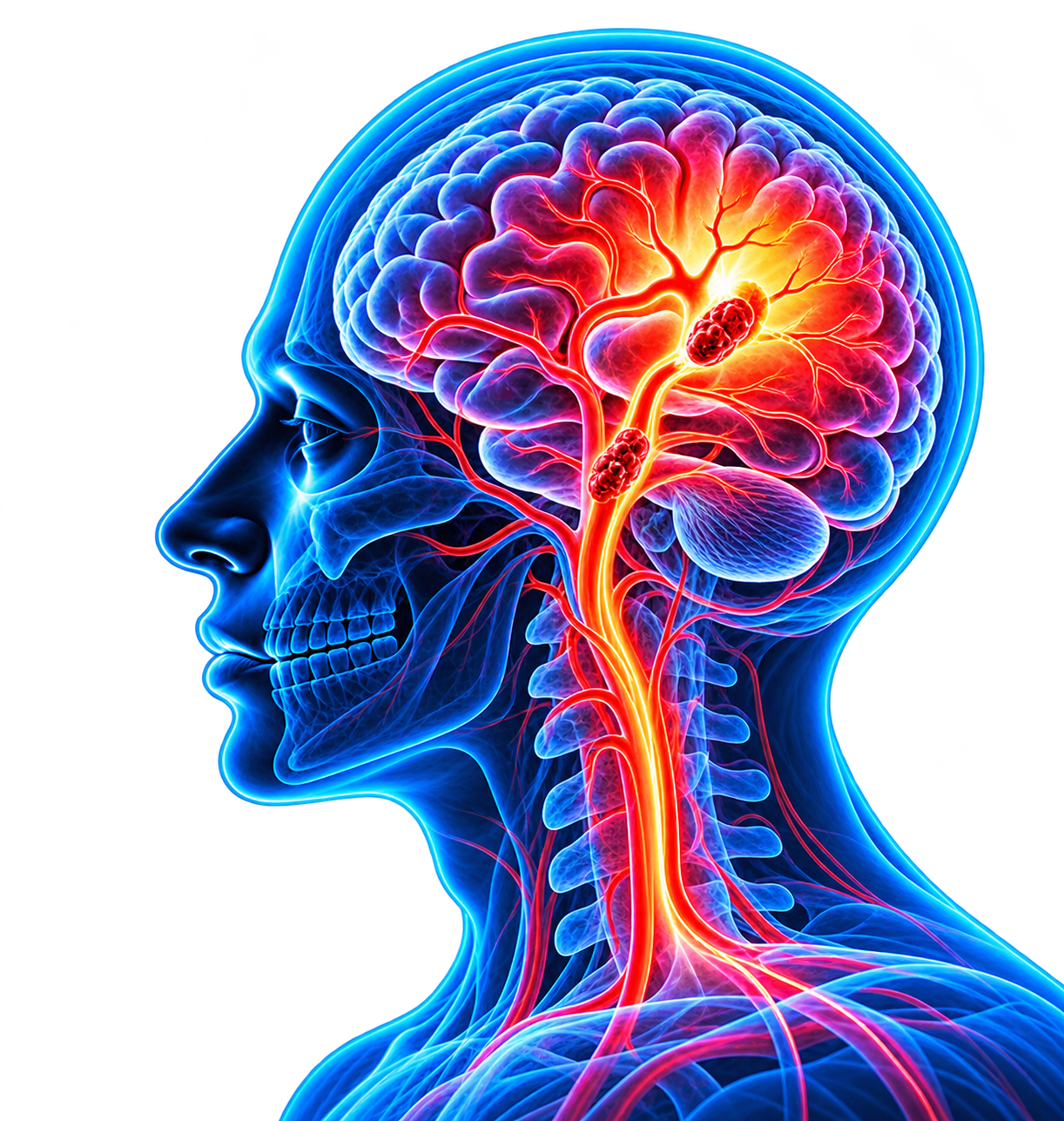
24 / 7 - Stroke Emergency Response
Emergency assessment of suspected stroke symptoms
Rapid CT · MRI - Emergency Brain Imaging
Prompt imaging to help identify the type and location of stroke
Thrombolysis · Thrombectomy - Time-Critical Stroke Treatment
Assessment for clot-dissolving medication or clot removal when clinically indicated
Stroke Unit · ICU - Specialised Stroke Care
Neurological monitoring and critical care based on patient needs
Emergency Signs
Sudden facial drooping, weakness or numbness on one side of the body, slurred speech, sudden vision changes, loss of balance, or severe unexplained headache may be signs of a stroke. Seek emergency medical care immediately. Call PACE Hospitals: 04048486868.
What Is a Stroke Emergency?
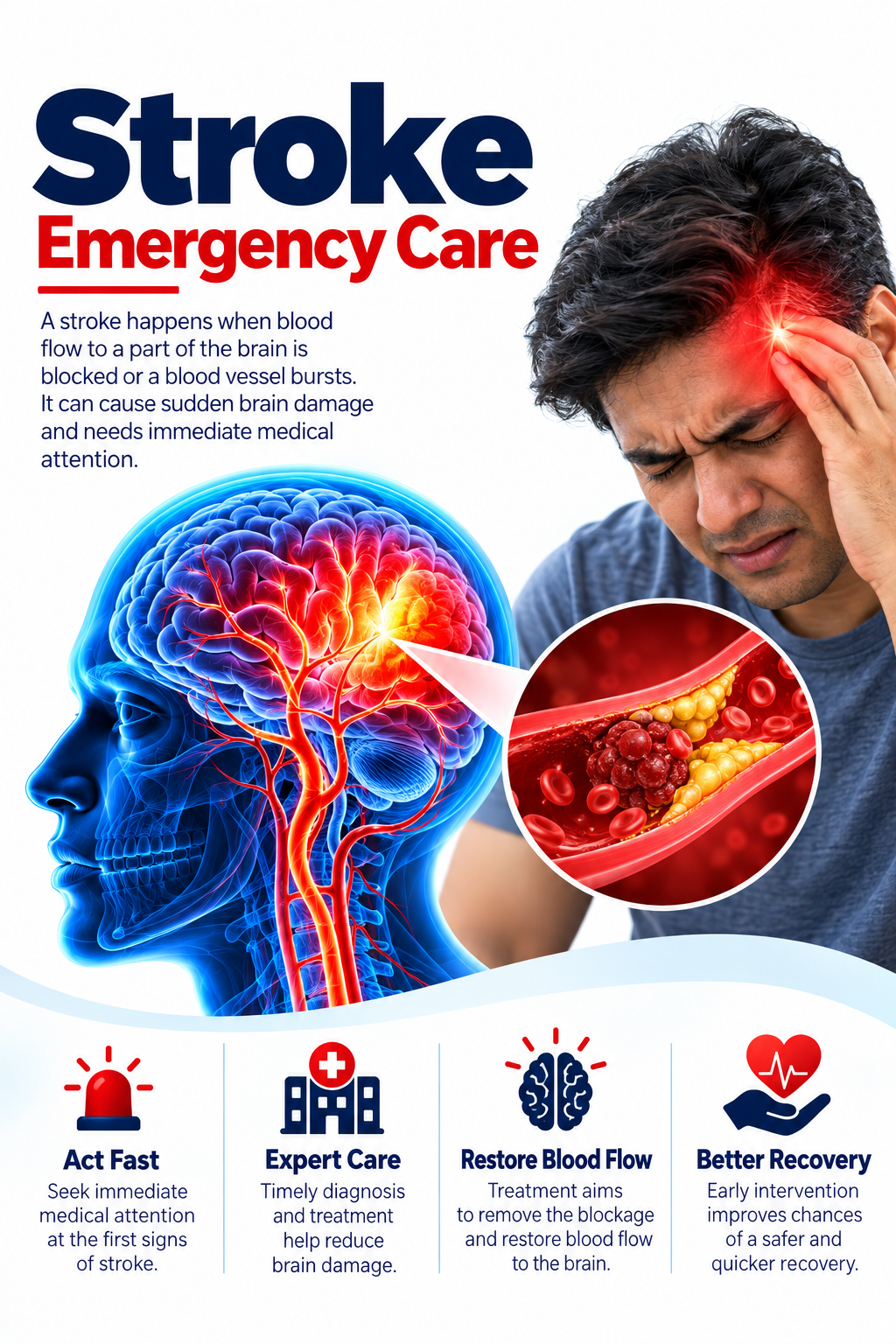
A stroke emergency occurs when the blood supply to part of the brain is suddenly interrupted or when a blood vessel in the brain bleeds. A stroke can affect movement, speech, vision, balance, consciousness, and other brain functions.
PACE Hospitals provides 24/7 stroke emergency care in Hyderabad for patients with suspected stroke symptoms. The emergency team assesses the patient promptly, arranges appropriate brain imaging and other investigations, begins stabilisation and treatment, and coordinates care with neurologists, neurosurgeons, critical care specialists, radiologists, and other specialists when required.
Stroke is a time-sensitive medical emergency. Early assessment helps doctors (neuro specialists) determine the type of stroke, identify potentially treatable causes, and decide whether treatments such as thrombolysis or mechanical thrombectomy may be appropriate for eligible patients.
When to Seek Emergency Care for Stroke Symptoms?
Immediate medical attention is needed if any of the following symptoms occur:
- Sudden weakness or numbness of the arm, face, or leg, particularly on one side.
- Sudden facial drooping or an uneven smile.
- Sudden difficulty speaking, slurred speech, or inability to understand speech.
- Sudden confusion or difficulty finding or forming words.
- Sudden vision problems in one or both eyes.
- Sudden loss of balance, dizziness, or difficulty walking.
- Sudden loss of coordination.
- Sudden severe headache with no known proper cause, especially when accompanied by other neurological symptoms.
- Sudden difficulty swallowing or unexplained loss of consciousness.
- Sudden deterioration in movement, speech, alertness, or other neurological functions.
Stroke symptoms can sometimes improve or disappear after a short period. This can occur with a transient ischemic attack (TIA), but it should not be ignored. A TIA may be a warning of a future stroke and requires urgent medical assessment.
Do Not Ignore B.E.F.A.S.T. for Stroke Warning Signs
B – Balance: Is there sudden loss of balance, coordination, or difficulty walking?
E – Eyes: Is there sudden blurred, double, or reduced vision or loss of vision in one or both eyes?
F – Face: Does one side of the face droop or feel numb when the person smiles?
A – Arms: Is one arm suddenly weak or numb, or does it drift downward when both arms are raised?
S – Speech: Is speech suddenly slurred, unclear, difficult to understand, or absent?
T – Time: Time to seek emergency medical help immediately.
The American Stroke Association recommends
B.E. F.A.S.T. as a way to recognise common stroke warning signs and stresses the importance of acting immediately when symptoms occur.
Do not wait for stroke symptoms to improve on their own. Note the time when the symptoms were first noticed and seek emergency medical care immediately.
Not all chest pain is caused by heart disease. It may be related to the lungs, food pipe, stomach, muscles, ribs, or nerves. However, it is not safe to assume that chest pain is minor without medical evaluation.
Treat chest pain as an emergency when it is:
- New or unexplained.
- Severe or persistent.
- Associated with sweating, nausea, or breathlessness.
- Accompanied by fainting or severe dizziness.
- Spreading to the arm, jaw, neck, shoulder, back, or upper abdomen.
- Present in a person with diabetes, high blood pressure, high cholesterol, kidney disease, or known heart disease.
- For severe symptoms, ambulance transport is generally safer than driving to the hospital because emergency assessment and support can begin during transfer when needed.
Not all chest pain is caused by heart disease. It may be related to the lungs, food pipe, stomach, muscles, ribs, or nerves. However, it is not safe to assume that chest pain is minor without medical evaluation.
Treat chest pain as an emergency when it is:
- New or unexplained.
- Severe or persistent.
- Associated with sweating, nausea, or breathlessness.
- Accompanied by fainting or severe dizziness.
- Spreading to the arm, jaw, neck, shoulder, back, or upper abdomen.
- Present in a person with diabetes, high blood pressure, high cholesterol, kidney disease, or known heart disease.
- For severe symptoms, ambulance transport is generally safer than driving to the hospital because emergency assessment and support can begin during transfer when needed.
Common Stroke Emergencies Treated at PACE Hospitals
Ischemic Stroke
An ischemic stroke occurs when a blood vessel supplying the brain becomes blocked, reducing or stopping blood flow to part of the brain. A blood clot is a common cause.
Ischemic stroke emergency treatment depends on the time of symptom onset or last-known-well time, neurological findings, brain imaging, blood-vessel imaging when indicated, and the patient's overall medical condition.
Eligible patients may be considered for intravenous thrombolysis, while selected patients with a large-vessel blockage may be considered for mechanical thrombectomy.
Symptoms may include:
- Facial drooping.
- Sudden numbness or weakness on one side of the body.
- Slurred or difficult speech.
- Sudden confusion.
- Vision problems.
- Loss of balance or coordination.
- Sudden severe headache or other neurological symptoms.
Hemorrhagic Stroke
A hemorrhagic stroke occurs when a blood vessel in the brain ruptures and causes bleeding within or around the brain.
Hemorrhagic stroke emergency treatment focuses on stabilising the patient, identifying the location and extent of bleeding, controlling factors that may worsen the bleeding, and involving neurology, neurosurgery, critical care, and other specialists when required.
Further treatment depends on the type and location of the bleeding, the patient's neurological condition, and the underlying cause.
Symptoms may include:
- Sudden severe headache.
- Vomiting.
- Weakness or numbness on one side.
- Facial drooping.
- Difficulty speaking.
- Loss of balance or coordination.
- Seizures.
- Reduced consciousness or sudden deterioration.
Transient Ischemic Attack (TIA)
A transient ischemic attack occurs when there is a temporary interruption of blood flow to part of the brain, causing stroke-like symptoms that resolve.
Even when the symptoms disappear, a TIA requires urgent medical evaluation. Doctors may assess the possible cause and the patient's risk of a subsequent stroke and recommend appropriate investigations and treatment.
TIA symptoms may include:
- Sudden facial weakness or drooping.
- Slurred speech or difficulty understanding speech.
- Sudden weakness or numbness of an arm or leg.
- Sudden vision changes.
- Sudden dizziness or loss of balance.
Sudden Paralysis or One-Sided Weakness
Sudden weakness or paralysis affecting one side of the face, arm, or leg is an important stroke warning sign. The weakness may appear suddenly and may occur with facial drooping, speech difficulty, vision changes, or loss of balance.
- Do not wait to see whether the weakness improves. Immediate emergency assessment is important because some stroke treatments are time-sensitive.
Facial Drooping
A sudden uneven smile or drooping on one side of the face may indicate a stroke.
- A simple way to recognise this warning sign is to ask the person to smile. If one side of the face does not move normally or appears to droop, seek emergency medical attention immediately, particularly when it occurs with arm weakness or speech difficulty.
Slurred Speech
Sudden slurred, unclear, or difficult-to-understand speech may occur during a stroke. A person may also have difficulty speaking, finding words, understanding what others are saying, or forming meaningful sentences.
- Sudden speech difficulty should be treated as an emergency, especially when it occurs with facial drooping, weakness, confusion, or other neurological symptoms.
Sudden Vision Problems
A stroke can cause sudden changes in vision, including blurred or double vision or loss of vision in one or both eyes.
- Sudden unexplained vision problems, particularly when accompanied by other neurological symptoms, require urgent assessment.
Sudden Loss of Balance
A sudden loss of balance, coordination, or ability to walk normally can be a sign of stroke, particularly when it develops without an obvious explanation.
- Sudden dizziness with difficulty walking, weakness, vision changes, or speech problems should not be dismissed as a minor problem.
Sudden Severe Headache
A sudden, severe headache with no known cause can be a warning sign of a serious neurological emergency, including hemorrhagic stroke.
- When severe headache occurs with vomiting, weakness, speech difficulty, seizures, confusion, loss of consciousness, or other sudden neurological changes, emergency medical evaluation is required.
Stroke Emergency Assessment and Diagnosis
Patients with suspected stroke are assessed according to the severity and timing of their symptoms. The emergency team's immediate priorities are to identify neurological deficits, stabilise the patient, determine the likely type of stroke, and assess whether time-sensitive treatment may be appropriate.
01
Rapid Triage and Initial Stabilisation
The emergency team may immediately assess:
- Airway, breathing, circulation, and level of consciousness.
- Blood pressure, pulse, oxygen level, temperature, and blood glucose.
- Neurological symptoms and changes in consciousness.
- Facial movement, speech, arm and leg strength, coordination, and sensation.
- Time when symptoms started or when the person was last known to be well.
- Previous stroke or TIA.
- History of high blood pressure, diabetes, atrial fibrillation, high cholesterol, or other relevant conditions.
- Current medicines, including antiplatelet or blood-thinning medicines.
- Known allergies and relevant medical history.
- Need for airway support, intravenous access, cardiac monitoring, or critical care.
02
Brain Imaging for Suspected Stroke
Brain imaging is an important part of stroke emergency diagnosis.
Depending on the patient’s admitted situation, doctors may use:
- CT scan of the brain.
- CT angiography to assess blood vessels when indicated.
- CT perfusion in selected cases.
- MRI of the brain when clinically appropriate.
- Magnetic resonance angiography or other vascular imaging when required.
Imaging helps distinguish between ischemic and hemorrhagic stroke and may help identify a blocked blood vessel or other cause of the neurological symptoms.
03
Blood Tests and Other Investigations
Depending on the patient's condition, investigations may include:
- Blood glucose.
- Complete blood count.
- Kidney function tests.
- Electrolytes.
- Blood clotting tests.
- Other blood tests based on the patient's symptoms and medical history.
- ECG or cardiac monitoring when indicated.
These investigations help doctors assess factors that may influence emergency stroke treatment and identify associated medical problems.
Emergency Treatment for Stroke at PACE Hospitals
Stroke emergency treatment depends on whether the stroke is ischemic or hemorrhagic, the time since symptoms began, brain imaging findings, the patient's neurological condition, and other medical factors.
The emergency team first focuses on stabilisation and rapid assessment before coordinating specialist treatment.
Stroke Emergency Care May Include:
- Neurological assessment and monitoring.
- Blood pressure and oxygen monitoring.
- Blood glucose assessment and management when required.
- Intravenous access and appropriate fluid management.
- Brain imaging and vascular imaging when indicated.
- Treatment for eligible acute ischemic stroke patients with intravenous thrombolysis.
- Evaluation for mechanical thrombectomy in selected patients with a suitable large-vessel blockage.
- Management of seizures or other acute complications.
- Airway and breathing support when required.
- Critical care or neurocritical care monitoring for patients who need closer observation.
- Specialist neurological and neurosurgical evaluation.
- Treatment of the underlying cause and associated medical conditions.
The choice of treatment is individualised after clinical assessment and imaging. Not every patient with stroke is eligible for thrombolysis or thrombectomy.
Ischemic Stroke Emergency Treatment
For an acute ischemic stroke, the immediate goal is to restore or improve blood flow to the affected part of the brain when appropriate and to prevent further brain injury.
Depending on the patient's eligibility, treatment may include:
- Intravenous thrombolysis using an appropriate thrombolytic medicine.
- Mechanical thrombectomy for selected patients with an eligible large-vessel blockage.
- Medicines and supportive treatment based on the patient's condition.
- Blood pressure and blood glucose management when clinically indicated.
- Close neurological monitoring.
- Neurocritical care when required.
The treatment window and eligibility vary according to the type of stroke, symptom onset or last-known-well time, imaging findings, and other clinical factors.
Hemorrhagic Stroke Emergency Treatment
Hemorrhagic stroke emergency management focuses on stabilising the patient and controlling the factors that may contribute to continued bleeding or neurological deterioration.
Treatment may include:
- Close neurological and vital-sign monitoring.
- Careful blood pressure management.
- Management or reversal of certain blood-thinning medicines when clinically appropriate.
- Treatment of raised intracranial pressure when required.
- Seizure management when indicated.
- Neurosurgical evaluation.
- Critical care or neurocritical care.
- Surgical or endovascular treatment for selected patients, depending on the location and cause of bleeding.
The appropriate treatment depends on the type of hemorrhage, its location, severity, cause, and the patient's overall condition.
What to Do During a Suspected Stroke Emergency?
Recognise the warning signs using B.E. F.A.S.T.
- Call emergency medical services immediately.
- Note the exact time the symptoms started, or the last time the person was known to be well.
- Keep the person safe and avoid unnecessary walking or physical exertion.
- Do not give food, drinks, or medicines unless advised by a healthcare professional.
- Do not wait for the symptoms to disappear.
- Do not attempt to treat the symptoms at home.
- If the person becomes unconscious or develops abnormal breathing, follow emergency medical instructions and begin appropriate resuscitation measures if trained.
- Take the person's current medication details and relevant medical records if they are readily available, without delaying emergency transport.
Even if stroke symptoms disappear, urgent medical assessment is still important because the episode may have been a TIA.
Why Timely Stroke Emergency Care Matters?
Stroke is a time-sensitive emergency. The longer the brain remains without adequate blood flow, or the longer bleeding continues, the greater the risk of permanent neurological injury.
Timely stroke emergency care can help doctors:
- Identify whether the stroke is ischemic or hemorrhagic.
- Assess the location and extent of brain injury.
- Determine whether time-sensitive treatment may be appropriate.
- Identify patients who may benefit from thrombolysis or mechanical thrombectomy.
- Monitor and manage breathing, blood pressure, blood glucose, and other vital functions.
- Detect neurological deterioration or complications.
- Coordinate emergency care between emergency medicine, neurology, neurosurgery, radiology, critical care, and other specialists.
Who Is at Higher Risk of Stroke?
Stroke can occur in people without a previous history of neurological disease. However, the risk may be higher in people with:
- High blood pressure.
- Diabetes.
- High cholesterol.
- Atrial fibrillation or certain other heart rhythm disorders.
- Previous stroke or TIA.
- Smoking or tobacco use.
- Obesity or physical inactivity.
- Certain heart and blood-vessel conditions.
- Family history of stroke.
- Increasing age.
Having one or more risk factors does not mean that a stroke will definitely occur. Similarly, people without known risk factors can still develop a stroke. Sudden neurological symptoms should always be treated as an emergency.
Emergency Management of Stroke at PACE Hospitals
PACE Hospitals provides 24/7 stroke emergency care in Hyderabad for patients with sudden neurological symptoms, suspected ischemic stroke, hemorrhagic stroke, sudden paralysis, transient ischemic attack (TIA), or mini-stroke, facial drooping, speech difficulty, vision problems, loss of balance, and other acute neurological emergencies.
The emergency team coordinates with neurology, neurosurgery, critical care, radiology, diagnostic, and other specialist teams according to the patient's condition.
Emergency Stroke Care Pathway
- Immediate triage: Rapid assessment of stroke symptoms, vital signs, neurological status, and the time of symptom onset or last-known-well time.
- Rapid brain imaging: CT or other appropriate brain and vascular imaging to help identify the type and cause of stroke.
- Specialist evaluation: Neurology, neurosurgery, radiology, critical care, and other specialist input when required.
- Time-sensitive treatment: Evaluation for thrombolysis, thrombectomy, or other appropriate emergency treatment in eligible patients.
- Stabilisation and monitoring: Management of breathing, blood pressure, blood glucose, neurological status, and other immediate needs.
- Ongoing care: Admission to an appropriate monitored unit, ICU/neurocritical care, ward, or specialist service based on the patient's condition.
Need Urgent Help? If someone develops sudden facial drooping, one-sided weakness, slurred speech, sudden vision changes, loss of balance, confusion, or a severe unexplained headache, seek emergency medical care immediately. Note the time when the symptoms began and do not wait for them to improve. Call PACE Hospitals: 04048486868.
When Should You Call an Ambulance for a Stroke Emergency?
Call emergency medical services immediately if someone has:
- Sudden facial drooping.
- Sudden weakness or numbness on one side.
- Sudden difficulty speaking or understanding speech.
- Sudden loss of vision or other major vision changes.
- Sudden loss of balance or coordination.
- Sudden severe headache with neurological symptoms.
- Sudden confusion or altered consciousness.
- Seizure or sudden loss of responsiveness.
- Any combination of B.E. F.A.S.T. stroke warning signs.
For suspected stroke, emergency medical transport can allow the patient to receive appropriate assessment during transport and can help the receiving hospital prepare for the patient's arrival when systems allow. Most importantly, do not delay emergency care while arranging transport.
Frequently Asked Questions on ENT emergencies
What is a stroke emergency?
A stroke happens when blood flow to a portion of the brain is disrupted or when a blood vessel in the brain bleeds. Both ischemic and hemorrhagic strokes necessitate immediate medical attention because brain harm can occur quickly.
What are the early warning signs of a stroke?
Common warning signs include sudden facial drooping, weakness or numbness on one side of the body, slurred speech, difficulty understanding speech, sudden vision changes, loss of balance, and a severe unexplained headache. B.E. F.A.S.T. can help identify several important warning signs.
What to do in stroke emergency?
Call emergency medical services immediately, note the time the symptoms started or when the person was last known to be well, and arrange urgent medical transport. Do not wait for the symptoms to disappear or try to treat the stroke at home.
Can stroke symptoms disappear on their own?
Yes. Stroke-like symptoms can sometimes disappear within a short period, as may occur with a transient ischemic attack (TIA). However, this still requires urgent medical assessment because a TIA can be a warning of a future stroke.
What is the difference between ischemic and hemorrhagic stroke?
An ischemic stroke occurs when a blood vessel supplying the brain becomes blocked. A hemorrhagic stroke occurs when a blood vessel ruptures and causes bleeding in or around the brain. Brain imaging helps doctors determine which type of stroke has occurred.
What is the emergency treatment for an ischemic stroke?
Treatment depends on the patient's symptoms, timing, imaging findings, and medical eligibility. Some patients may be considered for intravenous thrombolysis, while selected patients with certain large-vessel blockages may be considered for mechanical thrombectomy.
What is mechanical thrombectomy for stroke?
Mechanical thrombectomy is an endovascular procedure used in selected patients with an eligible blood clot blocking a major artery supplying the brain. A catheter-based approach is used to remove the clot and restore blood flow. The patient's eligibility depends on clinical and imaging findings.
How is a stroke diagnosed in an emergency?
Doctors assess the symptoms, neurological status, medical history, vital signs, and the time symptoms began or the patient was last known to be well. Brain imaging such as CT or MRI, vascular imaging when indicated, blood tests, and other investigations may be used to determine the type and cause of the stroke.
Can a TIA become a stroke?
A TIA does not cause the same lasting brain injury as a completed stroke, but it can indicate an increased risk of a future stroke. Even when symptoms have completely resolved, urgent medical evaluation is important.
Why is the time of stroke symptom onset important?
The time symptoms began, or the last time the person was known to be well, can influence emergency treatment decisions. Some stroke treatments are time-sensitive, while other treatment options depend on brain and blood-vessel imaging and the patient's clinical condition.
Can a stroke happen without severe headache?
Yes. A severe headache is only one possible stroke symptom. Many strokes present with sudden weakness, facial drooping, speech difficulty, vision changes, confusion, or balance problems without a severe headache. Any sudden neurological change requires urgent assessment.
When should I call an ambulance for a suspected stroke?
Call emergency medical services immediately when sudden stroke warning signs occur, including facial drooping, one-sided weakness, speech difficulty, sudden vision changes, loss of balance, or a severe unexplained headache with neurological symptoms. Do not wait to see whether the symptoms improve.
Can dizziness or sudden balance problems be a sign of stroke?
Yes. Certain strokes may cause dizziness, loss of balance, trouble walking, or poor coordination. When these symptoms occur unexpectedly, especially if they are associated with speech, vision, or physical issues, an emergency assessment is required and it should not be overlooked.
Can a stroke affect vision suddenly?
Yes. A stroke may cause sudden blurred or double vision, reduced vision, or loss of vision in one or both eyes. Sudden unexplained vision changes should be assessed urgently, particularly when they occur with other stroke warning signs.
Can a stroke cause a seizure or loss of consciousness?
Yes. Some strokes, particularly certain types of brain bleeding, may be associated with seizures or reduced consciousness. A seizure, sudden collapse, or loss of responsiveness with suspected stroke symptoms requires immediate emergency medical attention and should not be ignored.
Conclusion
Stroke is a medical emergency in which symptoms occur unexpectedly and might intensify or result in irreversible neurological damage if not diagnosed and treated promptly. Sudden facial drooping, one-sided weakness, slurred speech, vision changes, loss of balance, or a severe unexplained headache should never be ignored.
PACE Hospitals provides 24/7 stroke emergency care in Hyderabad for suspected ischemic stroke, hemorrhagic stroke, TIA, and other acute neurological emergencies. Rapid assessment, brain imaging, specialist evaluation, stabilisation, and appropriate time-sensitive treatment can help the medical team determine the best course of care for each patient.
If you suspect a stroke, remember B.E. F.A.S.T. — Balance, Eyes, Face, Arms, Speech, Time — and seek emergency medical care immediately.


