
Percutaneous Nephrolithotomy (PCNL) Surgery, Procedure & Cost
PACE Hospitals offers advanced percutaneous nephrolithotomy (PCNL) in Hyderabad, India, for effective treatment of large and complex kidney stones. Our expert urologists perform the PCNL procedure using minimally invasive techniques to safely remove stones, relieve pain, and restore kidney function with precision.
The PCNL surgery procedure involves a small incision in the back to directly access and remove stones, making it ideal for large or difficult cases. We follow standardized PCNL procedure steps to ensure safety, minimize complications, and support faster recovery.
Book an Appointment for PCNL Surgery
PCNL Surgery Appointment
Why Choose PACE Hospitals for PCNL Surgery?
Expert Urologists specializing in effective Percutaneous Nephrolithotomy for Large & Complex Kidney Stones
Minimally Invasive PCNL Procedure with Small Incisions, Precision Stone Removal & Faster Recovery
Transparent PCNL Surgery with Insurance & Cashless Options
Recognized for excellence in healthcare delivery with
NABH, NABL, NBE/DNB, NABH Nursing Excellence, and ISCCM accreditations.
PCNL Surgery
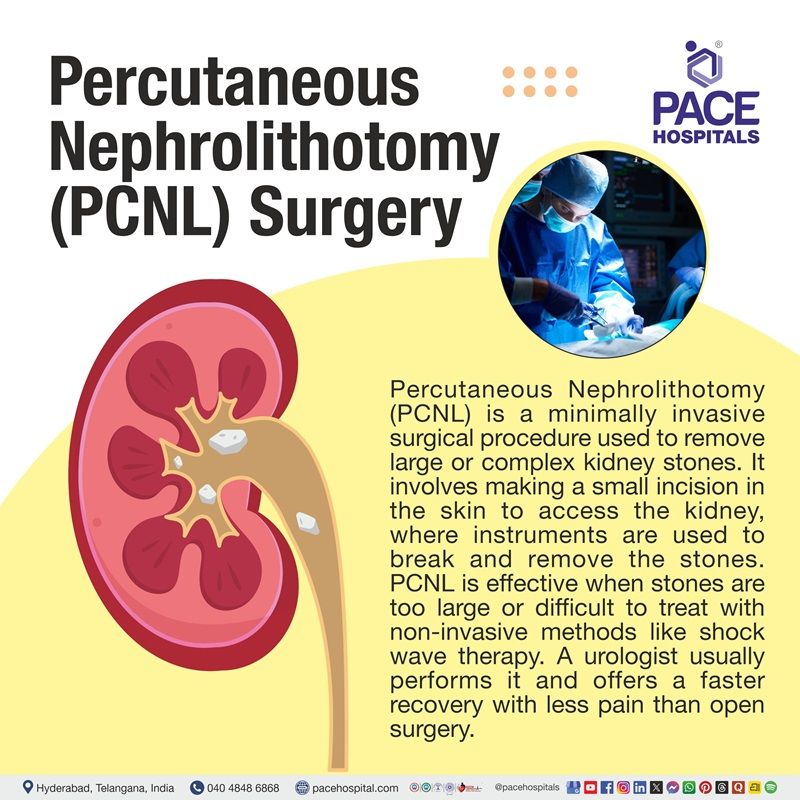
PCNL Stands for Percutaneous Nephrolithotomy, is a type of minimally invasive surgical procedure used to remove large kidney stones. The procedure involves making a small incision in the skin to access the kidney, where a tube is inserted to break up and remove the stones. PCNL is especially effective for larger stones that cannot be treated with non-invasive methods like shock wave therapy. This method is used for stones that are hard to reach or very complicated. It works faster and causes less pain than regular open surgery. It is often used when stones are too large or numerous for other treatments to be effective. This procedure is generally performed by a urologist, a doctor who specializes in the urinary tract and its diseases, who is trained to perform surgery for kidney stones and other related conditions.
PCNL Meaning
The word "percutaneous" comes from Latin and means "through the skin." "Nephro" means "kidney," and "lithotomy" means "stone removal." This is a procedure in which a small incision in the skin is used to remove kidney stones.
Percutaneous Nephrolithotomy (PCNL) Types
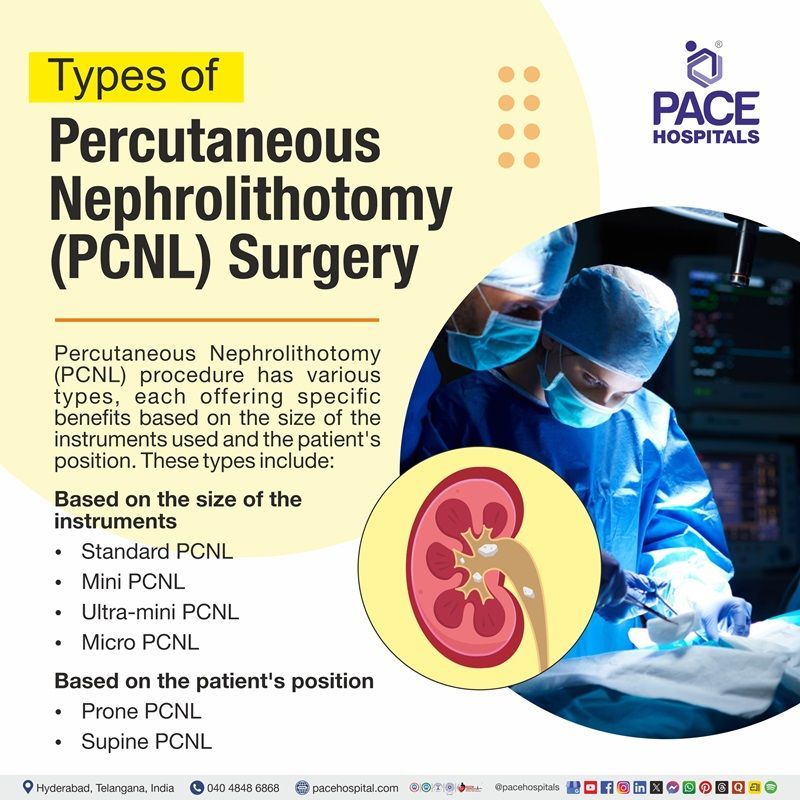
Percutaneous Nephrolithotomy (PCNL) procedure has various types, each offering specific benefits based on the size of the instruments used and the patient's position. These types include:
Based on the size of the instruments
PCNL types are classified by instrument size. They include:
- Standard PCNL
- Mini PCNL
- Ultra-mini PCNL
- Micro PCNL
Standard PCNL
Standard Percutaneous Nephrolithotomy (PCNL) is the conventional and widely accepted minimally invasive surgical procedure used to remove large or complex kidney stones by creating a small tract through the skin directly into the kidney and using instruments (usually 24–30 French) to break up and extract the stones. It is done under anesthesia with imaging guidance, has higher stone-free rates for stones that can't be treated with less invasive methods, and has mostly replaced open surgery for large kidney stones.
Mini PCNL
Mini Percutaneous Nephrolithotomy (Mini-PCNL) is a surgical procedure that removes kidney stones with very little damage to the body. It uses a smaller incision and fine instruments (usually less than 20 French) than a regular PCNL. This method removes stones effectively while causing less damage to tissue, less bleeding, and a shorter recovery time. Mini-PCNL is often a safer alternative for treating many types of kidney stones, offering similar success rates as the standard method but with fewer complications.
Ultra-mini PCNL
Ultra-mini Percutaneous Nephrolithotomy (Ultra-mini-PCNL) involves an even smaller tract (about 11–13 French) and thinner scopes than mini PCNL, making it less invasive for removing medium-sized (often ≤2 cm) kidney and upper ureteric stones. It has been shown to reduce blood loss, pain, and length of hospitalization compared with standard PCNL in appropriately selected stones.
Micro PCNL
Micro Percutaneous Nephrolithotomy (Micro PCNL) uses very small instruments and access tracts (about 4.8–10 French) that are meant to be as non-invasive as possible. This is especially helpful for smaller stones (up to about 15 mm). It also causes less damage to tissue and bleeding than larger PCNL techniques, while continuing to receive good stone-free outcomes in some patients.
Based on the patient's position
There are two main types, based on how the patient is positioned during the procedure. They include:
- Prone PCNL
- Supine PCNL
Prone PCNL
The patient lies face down (on the abdomen) during the procedure. It is the traditional approach and provides better access to the kidney, especially for large or complex stones.
Supine PCNL
The patient lies on their back (face up) during surgery. It allows easier anesthesia management and may offer improved comfort and shorter procedure time in selected cases.
Indications of PCNL
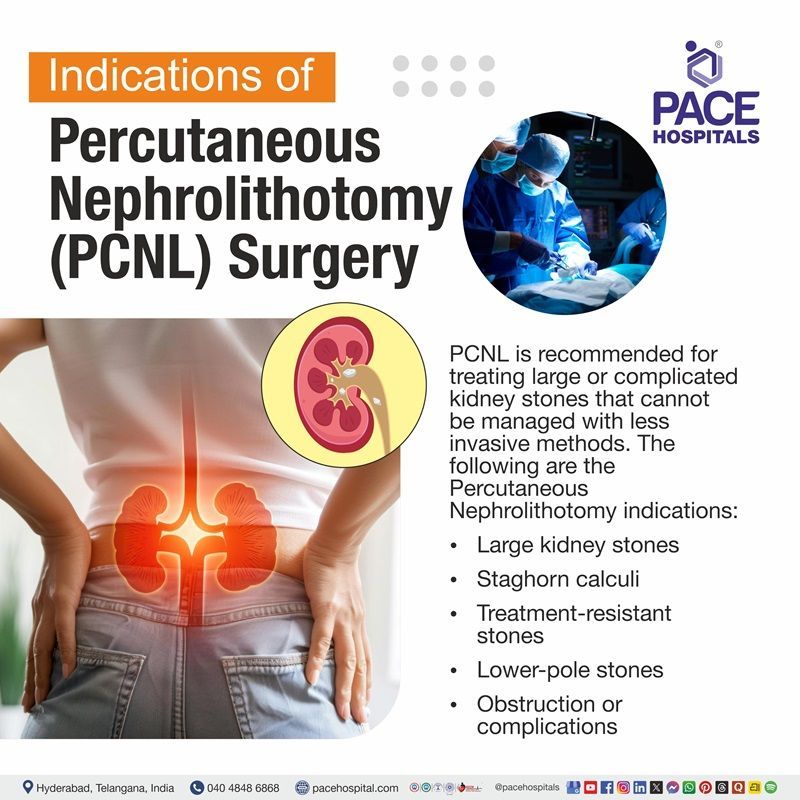
PCNL is recommended for treating large or complicated kidney stones that cannot be managed with less invasive methods. It is used when other treatments fail or are unsuitable for the patient's condition. The following are the Percutaneous Nephrolithotomy indications:
- Large kidney stones
- Staghorn calculi
- Treatment-resistant stones
- Lower-pole stones
- Obstruction or complications
Large kidney stones
PCNL is recommended for stones larger than 2 cm, as they are less likely to pass on their own and cannot be effectively treated with non-invasive methods like shock wave lithotripsy. PCNL allows direct access to remove these stones efficiently.
Staghorn calculi
These are large, branched stones that occupy multiple parts of the kidney. Due to their complexity and size, they cannot be treated with less invasive methods, making PCNL the preferred treatment for complete stone removal.
Treatment-resistant stones
When kidney stones do not respond to shock wave lithotripsy or ureteroscopy, PCNL is recommended. This method ensures the complete removal of stones that are resistant to less invasive treatments.
Lower-pole stones
Stones present in the lower pole of the kidney are difficult to treat with non-invasive techniques due to their position. PCNL provides a direct approach for more effective stone removal in these locations.
Obstruction or complications
Stones causing urinary obstruction, infections, or kidney damage require prompt removal. PCNL is used to relieve obstruction and prevent further complications, such as kidney damage or infections.
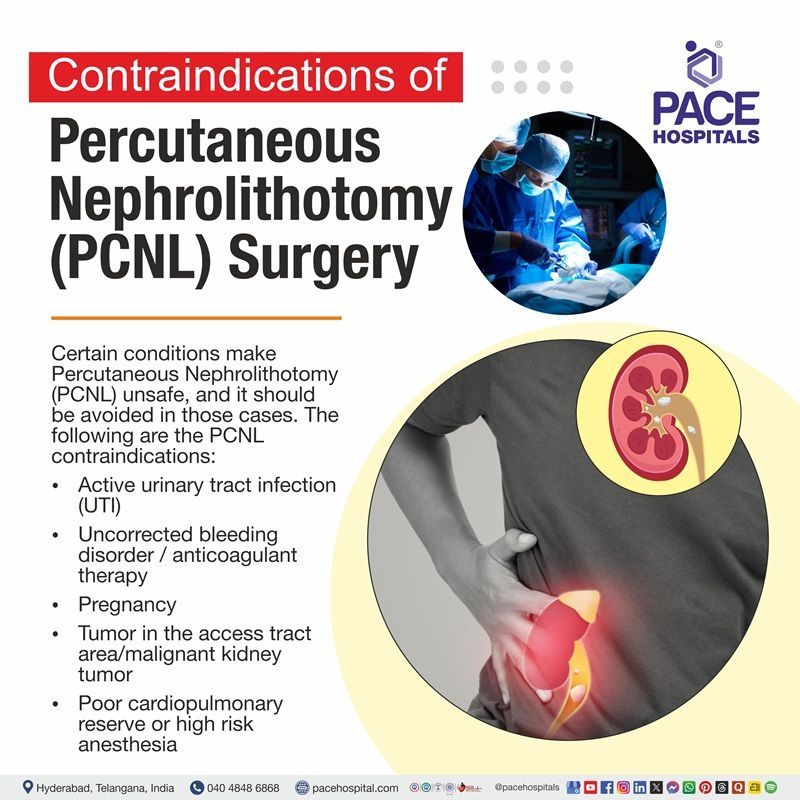
Contraindications of PCNL
Certain conditions make Percutaneous Nephrolithotomy (PCNL) unsafe, and it should be avoided in those cases. The following are the PCNL contraindications:
- Active urinary tract infection (UTI)
- Uncorrected bleeding disorder / anticoagulant therapy
- Pregnancy
- Tumor in the access tract area/malignant kidney tumor
- Poor cardiopulmonary reserve or high risk anesthesia
Active urinary tract infection (UTI)
PCNL should not be performed if there is an active urinary tract infection, as manipulating the kidney can cause the infection to spread and lead to
sepsis. Antibiotic treatment must resolve the infection before surgery.
Uncorrected bleeding disorder / anticoagulant therapy
Patients with bleeding disorders or on anticoagulant therapy have an increased risk of excessive bleeding. These conditions must be corrected, or anticoagulants must be managed appropriately before the procedure to avoid complications.
Pregnancy
PCNL is generally contraindicated during pregnancy due to the risks of radiation exposure to the fetus from fluoroscopic X-ray imaging. If the procedure is absolutely necessary, a thorough multidisciplinary evaluation is required, and alternative methods like ureteroscopy may be considered.
Tumor in the access tract area/malignant kidney tumor
A tumor in the planned access route or in the kidney can make PCNL unsafe, as the procedure may spread malignant cells or cause severe bleeding. The area should be evaluated to rule out malignancy before proceeding.
Poor cardiopulmonary reserve or high risk anesthesia
Patients with severe heart or lung conditions, or those who cannot tolerate anesthesia, face high risks during PCNL. These patients may require alternative treatments or adjustments in the surgical procedure to reduce risk.
Considerations in PCNL
Several factors must be considered before performing Percutaneous Nephrolithotomy (PCNL) to ensure the procedure's safety and effectiveness. It includes:
- Imaging like CT or ultrasound before the procedure, is crucial for identifying stone size, location, and kidney structure to plan safe access and avoid complications.
- Patient comorbidities, including renal function and cardiovascular conditions, should be carefully assessed to determine the surgical risk and suitability for PCNL.
- Anesthesia considerations in PCNL are based on the patient's health, surgery duration, and positioning needs, along with the requirement for immobility during the procedure.
- Careful renal access is critical to minimize injury to surrounding organs and blood vessels, requiring accurate puncture and tract dilation.
- It is important to drain the kidneys after surgery using a nephrostomy tube to make sure they function properly and get rid of any residual fragments.
- It is crucial to control infection, and appropriate antibiotics should be given to stop infection after surgery.
- Follow-up imaging is done to see if the stones have been cleared and to look for any residual fragments after the procedure.
- Pain management strategies are adjusted based on the patient's individual needs and the surgical complexity.
- Metabolic testing may be required for patients with recurrent stones to help prevent future stone formation.
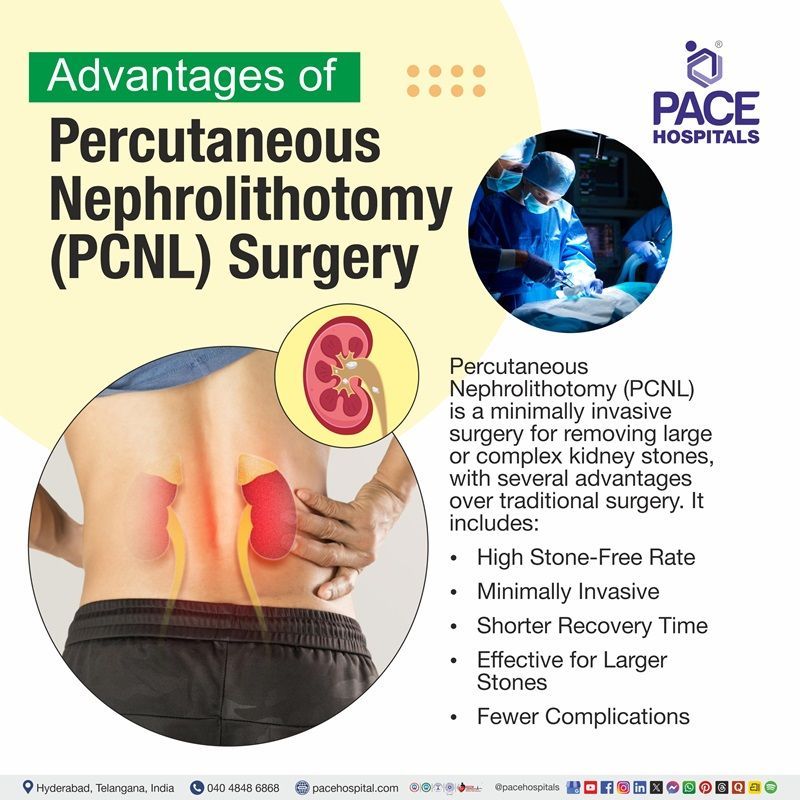
Advantages of PCNL
Percutaneous Nephrolithotomy (PCNL) is a minimally invasive surgery for removing large or complex kidney stones, with several advantages over traditional surgery. It includes:
- High Stone-Free Rate
- Minimally Invasive
- Shorter Recovery Time
- Effective for Larger Stones
- Fewer Complications
High Stone-Free Rate
PCNL is highly effective in completely removing large or complex kidney stones, providing a high success rate compared to non-invasive treatments like shock wave lithotripsy. This leads to fewer stone fragments and reduces the likelihood of requiring additional procedures.
Minimally Invasive
The procedure makes small incisions, which indicates that less damage is done to nearby organs and tissue. This not only reduces pain after surgery but also lowers the chance of infection and scarring, making it a safer choice.
Shorter Recovery Time
Because PCNL is less invasive than open surgery, patients experience faster recovery, shorter hospital stays, and a quicker return to daily activities, improving overall quality of life post-surgery.
Effective for Larger Stones
PCNL is especially effective for large stones (larger than 2 cm) or those that are difficult to treat with other methods, such as shock wave lithotripsy. It can also treat staghorn calculi and stones in the lower pole of the kidney.
Fewer Complications
PCNL generally carries a lower risk of complications like bleeding, infection, and kidney injury compared to traditional open surgery, due to its minimally invasive nature. This leads to safer outcomes and less time spent in the hospital.
Book Your Free Second Opinion for PCNL Procedure with Our Kidney Stone Specialists
At PACE Hospitals, we are committed to providing our patients with the best possible care, and that includes offering second medical opinions with super specialists for treatment or surgery. We recommend everyone to get an expert advance medical second opinion, before taking decision for your treatment or surgery.
PCNL Procedure Steps
The following are the percutaneous nephrolithotomy (PCNL) procedure steps:
Before the Procedure
- Imaging and Evaluation: Imaging tests like CT, ultrasound, or X-ray are done to evaluate the size, location, and type of kidney stones. Blood tests are done to evaluate kidney function and overall health, and antibiotics may be given to prevent infection.
- Anesthesia Assessment: The patient undergoes an assessment to determine the best anesthesia option, typically general anesthesia, to ensure comfort during the procedure.
- Preparation and Positioning: The patient is lying in a prone position (lying face down) to allow access to the kidney from the back. The surgical site is sterilized to minimize the risk of infection.
During the Procedure
- Incision and Access: A small incision is made in the patient’s back. Using fluoroscopy or ultrasound, the surgeon inserts a needle to create a path to the kidney. This allows for the placement of a guidewire and dilation of the tract to accommodate the necessary instruments for stone removal.
- Stone Removal: A nephroscope (a small tube with a camera) is inserted to locate and visualize the stones. Various techniques, like laser lithotripsy or ultrasonic devices, are used to break the stones into smaller pieces, which are then removed through the access tract using specialized instruments.
- Draining: A nephrostomy tube may be placed into the kidney to allow urine to drain out and promote healing. This tube helps prevent infection and obstruction, and also facilitates the removal of any remaining stone fragments during the recovery period.
After the procedure
- Recovery and Monitoring: After the procedure, the patient is monitored in a recovery room to make sure they are stable. Pain management is given, and vital signs like blood pressure, heart rate, and oxygen levels are checked on a regular basis. Before the patient is discharged, the medical team ensures they are completely conscious and comfortable.
- Follow-Up Imaging: After surgery, CT scans or X-rays are done to make sure that all the stones were taken out and that the kidney is working properly. This imaging checks for any remaining stone fragments and any possible problems, such as bleeding or infection.
- Discharge and Care Instructions: The patient is discharged once they get stable, with wound care instructions and advised on activity restrictions to avoid stress on the recovery site. The patient is also instructed on signs of complications like infection or bleeding, and is scheduled for a follow-up visit.
PCNL Complications
Although PCNL is effective, it carries potential complications such as bleeding, infection, and injury to surrounding organs. The following are the PCNL surgery complications:
- Bleeding
- Infection
- Incomplete Stone Removal
- Injury to Kidney or Other Organs
Bleeding
During or after surgery, PCNL can cause bleeding around the kidney because the surgery was performed in a certain way. This might lead to blood loss, which might require a blood transfusion or further treatment to stop the bleeding and ensure a complete recovery. Managing blood loss is essential for a safe recovery.
Infection
Even though antibiotics are used to lower the risk, there is still a chance of getting an infection after PCNL, such as a urinary tract infection or sepsis. Infections can cause fever, pain, or discomfort, and if they aren't treated, they could lead to serious problems that require further treatment, such as antibiotics or drainage.
Incomplete Stone Removal
PCNL works very well, but a few pieces of stone may still be present after the surgery. These residual stones can cause signs or conditions to reappear, and patients may require additional treatments, like more PCNL sessions or other methods, to get rid of the remaining stones.
Injury to Kidney or Other Organs
PCNL may damage the kidney or nearby organs, like the bowel, spleen, liver, or lungs, but this is not common. This is because it requires access to the kidney. These injuries can happen when the needle or nephroscope is placed in, and additional surgery may be required to repair any damage.
PCNL Surgery Recovery Time
After Percutaneous Nephrolithotomy (PCNL), most patients only require staying in the hospital for 1–2 days for monitoring. After that, they usually get back to light daily activities within 1–2 weeks. Depending on the patient's health and the difficulty of the procedure, full recovery could take from two to four weeks. During this time, patients are advised not to do excessive activities and should follow their doctor's instructions. Follow-up imaging may be done to make sure the stone has been completely removed, and the process of healing is progressing properly.
Questions that the patients can ask the healthcare team about PCNL?
- Why is PCNL the best treatment option for my kidney stones?
- What are the risks and possible complications of this procedure?
- Are there any alternative treatments available for my condition?
- How should I prepare before the surgery?
- What type of anesthesia will be used during the procedure?
- How long will the procedure take?
- How many days will I need to stay in the hospital?
- What will recovery be like, and how long will it take?
- Will I need a nephrostomy tube or stent after the procedure?
- What signs of complications should I watch for after surgery?
- Will I need follow-up tests or imaging after the procedure?
- What can I do to prevent kidney stones from forming again?
Difference between RIRS and PCNL
RIRS vs PCNL
RIRS and PCNL are two minimally invasive procedures used to treat kidney stones. They differ in their approach, indications, recovery time, and potential complications. The following are the differences:
| Parameters | RIRS (Retrograde Intrarenal Surgery) | PCNL (Percutaneous Nephrolithotomy) |
|---|---|---|
| Definition | A minimally invasive procedure where a flexible scope is passed through the urinary tract to treat kidney stones. | A minimally invasive surgical procedure where stones are removed through a small incision in the back directly from the kidney. |
| Purpose | To break and remove small to medium-sized kidney stones using a laser. | To remove large or complex kidney stones effectively in a single procedure. |
| Surgery Type | Endoscopic (no incision, natural pathway) | Minimally invasive surgery (small skin incision) |
| Indications | Small to medium stones (< 2 cm), difficult locations, patients unfit for PCNL | Large stones (> 2 cm), staghorn calculi, failed other treatments, and complex stones. |
| Recovery Time | Faster recovery, usually 3–7 days | Slightly longer, around 1–2 weeks (full recovery 2–4 weeks) |
| Complications | Mild bleeding, infection, ureteral injury (rare) | Bleeding, infection, injury to the kidney or nearby organs, residual stones |
Frequently Asked Questions (FAQs) on PCNL Surgery
Is PCNL safe?
Yes, PCNL (Percutaneous Nephrolithotomy) is usually safe and effective, but it has some risks. When done by an experienced urologist, most patients get better quickly. Bleeding, infection, fever, or damage to nearby organs are all possible complications, but are uncommon. Overall, for large kidney stones, the benefits of PCNL usually outweigh the risks.
Are there any side effects of PCNL?
Yes, PCNL can have some side effects, although they are usually uncommon and manageable. These may include bleeding, infection, fever, or pain after the surgery. In rare cases, there can be injury to the kidney or nearby organs. Most patients recover well, and the benefits of removing large kidney stones generally outweigh the risks.
Which types of kidney stones require PCNL surgery?
PCNL surgery is usually required for large kidney stones, typically those larger than 2 cm in size. It is also recommended for hard stones that cannot be broken easily by other treatments, like shock wave therapy. Multiple stones or complex stones that fill a large part of the kidney (such as staghorn stones) may need PCNL. Additionally, stones causing severe blockage or infection are often treated with this procedure.
What is the success rate of PCNL surgery?
Percutaneous nephrolithotomy (PCNL) has a high success rate for removing stones. About 82% of patients are stone-free after the first procedure. The procedure works especially well for large or complicated stones, and the success rate increases even more if secondary treatments are required. The overall success rate can vary based on factors such as stone size, location, and patient health, but PCNL remains a highly effective method for kidney stone extraction.
Which Is the Best Hospital for PCNL Surgery in Hyderabad, India?
PACE Hospitals, Hyderabad, is a trusted centre for advanced kidney stone treatments and minimally invasive surgeries, including Percutaneous Nephrolithotomy (PCNL).
We have highly experienced urologists, nephrologists, anesthesiologists, and surgical teams who follow evidence-based protocols to treat kidney stones with PCNL. Our hospital specializes in minimally invasive techniques to ensure faster recovery, reduced risk of complications, and better patient outcomes.
We have excellent facilities and equipped with state-of-the-art modular operation theatres, advanced imaging systems (CT, ultrasound, fluoroscopy), and laser technology, PACE Hospitals ensures precise and effective management of kidney stones through PCNL surgery.
How many days of hospital stay are required after PCNL?
After PCNL surgery, the patient stays in hospital for 1 to 3 days. This allows the medical team to monitor recovery, control their pain, and make sure there are no problems. Some patients may need to stay longer if their condition worsens or if complications arise. Most of the time, people can go home after a short stay in the hospital.
Can kidney stones come back after PCNL treatment?
Yes, kidney stones can come back after PCNL treatment. PCNL works effectively in order to get rid of large or complicated stones, but it does not prevent new stones from developing. Diet, fluid intake, underlying medical conditions (such as metabolic disorders), and genetics are among the factors that can contribute to the recurrence of kidney stones. It’s important to follow post-surgery guidelines, such as staying well-hydrated and addressing any risk factors, to reduce the chances of recurrence.
What Is the Cost of PCNL Surgery at PACE Hospitals, Hyderabad?
At PACE Hospitals, Hyderabad, the cost of PCNL surgery typically ranges from
₹65,000 to ₹2,20,000 and above (approx. US $780 – US $2,650), making it a cost-effective and competitive option for kidney stone treatment in Hyderabad. However, the final cost depends on:
- Size, number, and location of kidney stones
- Type of procedure (standard PCNL vs. PCNL with laser lithotripsy)
- Need for postoperative ICU care and monitoring
- Use of advanced imaging techniques (fluoroscopy, CT, ultrasound)
- Duration of hospital stay and recovery
- Postoperative rehabilitation and follow-up care
For simple PCNL procedures, the cost remains toward the lower end, while complex cases requiring additional techniques, ICU care, or open surgery may fall toward the higher range.
After a detailed urological evaluation, imaging studies, and specialist consultation, our experts provide a transparent cost estimate tailored to your treatment plan.
Is PCNL suitable for elderly patients?
Yes, PCNL may be suitable for elderly patients, based on their general health and renal function. Even though the risks may be higher because of age-related factors, it is still an excellent method to treat large or complicated kidney stones. Before recommending PCNL, the healthcare team examines the patient's condition. An accurate assessment makes sure that the benefits are greater than the risks.
What precautions should be taken after PCNL surgery?
After PCNL surgery, patients should stay hydrated, avoid heavy lifting, and attend follow-up appointments. Pain management and taking prescribed medications are essential for recovery. Any signs of complications, such as fever or difficulty urinating, should be reported to a healthcare provider.
Looking for the Best PCNL Surgery Hospital Near Me?
If you’re searching for the top PCNL surgery hospital near me in areas like HITEC City, Madhapur, Kondapur, Gachibowli, Kukatpally, or KPHB, it is important to choose a hospital with experienced urologists and advanced kidney stone treatment technologies.
Effective PCNL surgery requires:
- Accurate diagnosis through imaging (CT, ultrasound, fluoroscopy)
- Minimally invasive surgical techniques
- Advanced laser technology for hard stone fragmentation
- Postoperative care and recovery support
At PACE Hospitals, Hyderabad, patients receive comprehensive care with cutting-edge technologies and expert surgical teams for optimal outcomes.
How effective is PCNL compared to laser kidney stone removal?
PCNL works better for stones that are larger or more complicated, usually over 2 cm, while laser removal works better for stones that are smaller. PCNL is a direct way to treat large stones, while laser treatment is less invasive but may need to be done more than once for larger stones. Both work very effectively, with the choice depending on the stone size.
How soon can someone travel after PCNL surgery?
Most people can travel within 1–2 weeks after PCNL surgery, once they have healed enough and are no longer in significant levels of pain or discomfort. But during the first few weeks of recovery, avoid long flights or long trips. Before making travel plans, it's best to consult a doctor to make sure it's safe based on the extent to which the individual is recovering.
What lifestyle changes help prevent kidney stones after PCNL?
After PCNL surgery, preventing kidney stones includes staying hydrated, reducing intake of animal protein, and maintaining a balanced diet. Regular exercise and managing conditions like obesity or diabetes are important. Following a physician's advice on diet and medications can help prevent further stone recurrence.
What is PCNL surgery?
Percutaneous nephrolithotomy (PCNL) is a minimally invasive surgery used to remove large kidney stones, where a small incision is made in the back to insert a nephroscope into the kidney; the stones are then broken into smaller pieces and removed through this tube, and it is usually recommended for stones larger than 2 cm or when other treatments are unsuccessful.
What is the recovery time for PCNL surgery?
The recovery time for PCNL surgery is generally shorter than after traditional surgery, with most patients requiring a hospital stay of 1–3 days, resuming their daily activities within 1–2 weeks, and reaching complete recovery over the following few weeks, depending on their health condition.
How painful is PCNL surgery?
PCNL surgery is not painful while performing the procedure because of anesthesia. Even after surgery, patients may experience mild to moderate pain around the back or incision site, which can be treated with medications. Most people can manage the pain as it gradually reduces within a few days, allowing them to return to normal activities soon.
Who performs PCNL?
Overall, PCNL is chosen when other less invasive methods are not effective.
A trained urologist who specializes in treating kidney stones performs PCNL. The procedure takes place in a hospital and utilizes special instruments to gain access to the kidney. Most of the time, it is done under anesthesia to make sure the patient is comfortable. It is important to have an experienced urologist perform the stone removal safely and effectively. A supporting medical team assists throughout the procedure.
Does PCNL damage the kidneys?
Yes, PCNL (Percutaneous Nephrolithotomy) can cause some degree of damage to the kidney because the procedure includes puncturing and dilating the kidney to remove stones, which may lead to temporary or, rarely, lasting renal damage as a surgical complication. Studies show that most patients' kidney function remains the same or gets better after stones are removed. However, creating an access tract always carries some risk of damaging the renal tissue, and in a small number of cases, there can be a measurable loss of function or acute kidney injury.
Does PCNL require stitches?
Yes, PCNL (percutaneous nephrolithotomy) usually needs stitches to close the cut in the skin, which is usually only about 1 cm long. The incision is made so that the kidney can be accessed, and stitches are used to close it after the procedure is completed. In some cases, dissolvable stitches may be used. In more modern methods, adhesive glue may even be used instead of stitches to close the wound. The need for stitches depends on the size of the incision and the surgical approach.
Is a stent necessary after PCNL surgery?
After a percutaneous nephrolithotomy (PCNL) procedure, a stent is commonly placed to ensure that urine is draining properly from the kidney. This is because the surgery can lead to swelling or blockages in the renal system. The stent usually remains in place for a few days to a week, which helps the kidney heal and reduces the chance of complications like urinary retention or infection. However, the need for a stent can depend on the specifics of the surgery and individual patient factors.
What is the difference between PCN and PCNL?
The main difference between PCN (Percutaneous Nephrostomy) and PCNL (Percutaneous Nephrolithotomy) is that PCN is mainly used to drain the kidney to relieve an obstruction or infection. This usually involves placing a catheter. PCNL, on the other hand, is a surgical procedure that is used to remove large or complicated kidney stones. PCN helps with urinary drainage and pain relief, while PCNL is used to remove stones when other methods, like shock wave lithotripsy, are ineffective.
What type of diet should be followed after PCNL surgery?
After PCNL surgery, it's important to maintain adequate hydration by drinking plenty of water. A diet low in salt and animal protein and avoiding high-oxalate foods (such as spinach, beets, nuts, and chocolate) that may contribute to kidney stone formation can help reduce the risk of future stones. Calcium-rich foods like fruits and vegetables, and fibre support kidney health and recovery. Gradually reintroduce a balanced diet as tolerated to promote healing and prevent complications.
Does PCNL use radiation?
Yes, radiation is usually used in PCNL (Percutaneous Nephrolithotomy). During the procedure, the surgeon uses X-ray or fluoroscopy to help them identify the proper location on the kidney and surgically remove the stones. A CT scan may also be used to plan the surgery in some cases. Radiation is used, however precautions are taken to minimize the amount of exposure for both the patient and the medical staff.
Is PCNL Surgery Covered by Insurance at PACE Hospitals?
Yes, PCNL surgery is generally covered under most health insurance policies at PACE Hospitals, subject to policy terms and approval. Since PCNL is a medically necessary procedure for kidney stones that cannot be treated with non-invasive methods, it is typically included under private insurance and corporate health plans.
At PACE Hospitals, patients can benefit from:
- Cashless hospitalization facilities with empaneled insurance providers
- Assistance from a dedicated insurance and TPA coordination team
- Pre-authorization support and documentation guidance
- Transparent cost estimates before admission
- Support for government health schemes where applicable
Coverage depends on stone treatment clauses, sum insured limits, policy inclusions, and pre-existing conditions. Patients are encouraged to share their insurance details in advance so the hospital’s insurance desk can verify eligibility and streamline approvals.
Why choose PACE Hospitals?
- A Multi-Super Speciality Hospital.
- NABH, NABL, NBE & NABH - Nursing Excellence accreditation.
- State-of-the-art Liver and Kidney transplant centre.
- Empanelled with all TPAs for smooth cashless benefits.
- Centralized HIMS (Hospital Information System).
- Computerized health records available via website.
- Minimum waiting time for Inpatient and Outpatient.
- Round-the-clock guidance from highly qualified super specialist doctors, surgeons and physicians.
- Standardization of ethical medical care.
- 24X7 Outpatient & Inpatient Pharmacy Services.
- State-of-the-art operation theaters.
- Intensive Care Units (Surgical and Medical) with ISO-9001 accreditation.


