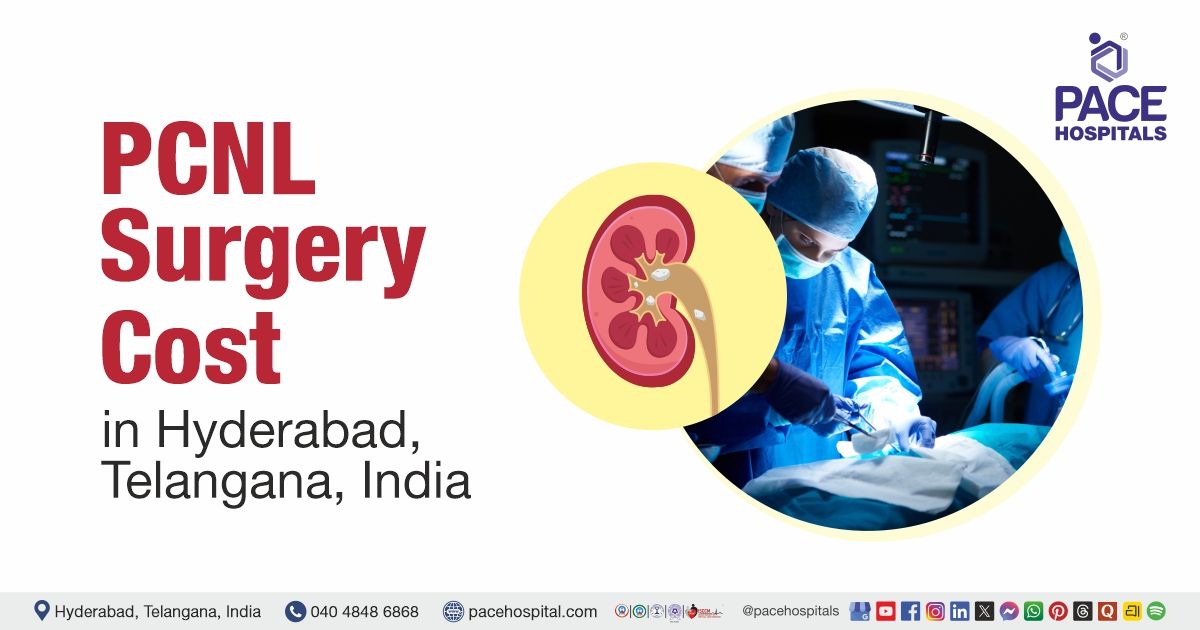
Affordable PCNL Surgery Cost in Hyderabad, India
PACE Hospitals
All You Need to Know About PCNL Surgery
PCNL (Percutaneous Nephrolithotomy) Surgery is a minimally invasive procedure used to remove large or complex kidney stones through a small incision in the back, performed under imaging guidance.
- It allows direct access to the kidney, enabling removal of stones that are too large or complex for shockwave or ureteroscopic procedures.
- PCNL is often preferred for staghorn stones, multiple stones, or stones located in difficult parts of the kidney, providing a high success rate for complete stone clearance.
- The procedure reduces tissue damage and recovery time compared to traditional open kidney surgery.
- The procedure can be combined with laser lithotripsy or flexible endoscopy if necessary to fragment and remove residual stones effectively.
PCNL Surgery Cost in India
On average, PCNL (Percutaneous Nephrolithotomy) Surgery cost in India ranges from ₹50,000 to ₹3,50,000 and above (approximately US $524 to US $3,670). However, the actual cost may vary depending on several factors, including:
- Size, number, and location of kidney stones
- Type of surgical technique (standard PCNL, mini-PCNL, or combined procedures)
- The patient’s age, overall health, and kidney function
- The type of hospital (private, corporate, or trust hospitals)
- Hospital charges, including room category, ICU usage, and facilities
- Anesthesia type and surgical team expertise
- Pre-operative evaluations and post-operative care requirements
- Insurance coverage or corporate approvals for cashless treatment
PCNL Surgery Cost in Hyderabad, Telangana
On average, PCNL (Percutaneous Nephrolithotomy) Surgery cost in Hyderabad generally ranges from ₹70,000 to ₹2,50,000 and above (approximately US $734 – US $2,621). These rates offer a competitive and cost effective option compared to other top urology centres in the city, with advanced imaging, surgical care, and personalized treatment planning readily available.
However, the cost of PCNL Surgery in Hyderabad is influenced by several factors, such as:
- Size, number, and complexity of kidney stones
- The hospital facility and infrastructure chosen
- Surgeon expertise and multidisciplinary urology care
- Type of anesthesia and duration of hospital stay
- Inclusion of a Double J (DJ) Stenting as part of the procedure for PCNL with DJ stenting
- Imaging and monitoring requirements (e.g., fluoroscopy, ultrasound)
- Insurance or corporate approvals for cashless services
- Extent of pre-operative evaluations and post-operative care
- Potential complications requiring extended monitoring or additional intervention
Cost Breakdown According to Type of PCNL Surgery
- Standard / Simple PCNL Surgery – ₹70,000 – ₹1,50,000 (US $734 – US $1,572) (approx.)
- Mini PCNL Surgery – ₹1,00,000 – ₹1,80,000 (US $1,048 – US $1,887) (approx.)
- Complex or Bilateral PCNL Surgery – ₹1,20,000 – ₹2,00,000 (US $1,258 – US $2,097) (approx.)
- PCNL Surgery with Laser Lithotripsy – ₹1,70,000 – ₹2,50,000 (US $1,782 – US $2,621) (approx.)
- PCNL Surgery with Postoperative ICU Care – ₹1,80,000 – ₹3,00,000 (US $1,887 – US $3,145) (approx.)
- PCNL Surgery with Open Surgery for Severe Complications – ₹2,50,000 – ₹3,50,000+ (US $2,621 – US $3,670+) (approx.)
Note: These are estimated costs based on commonly performed PCNL procedures. The exact cost for an individual patient is determined after a comprehensive clinical and imaging evaluation by the urology team, taking into account stone size, location, anatomical variations, anesthesia preferences, and any additional interventions required.
Additional Information: The total cost of PCNL Surgery may vary depending on several factors, including stone complexity, surgical technique (standard, mini-PCNL, or multi-tract), need for laser fragmentation, postoperative ICU care, intraoperative imaging support, and the experience of the surgical team. This ensures that each patient receives a personalized, transparent cost estimate tailored to their specific medical requirements.
Breakdown of PCNL Surgery Costs
The cost of PCNL (Percutaneous Nephrolithotomy) Surgery involves multiple components, which can vary depending on the hospital, the type of procedure (standard PCNL, mini-PCNL, laser-assisted, or complex), and the patient’s overall health condition. Below is a detailed breakdown of the expenses typically associated with PCNL surgery for kidney stone:
Pre-Surgery Costs
- Consultation Fees: Charges for consulting with urologists and surgical specialists, which vary depending on the doctor’s expertise and hospital.
- Diagnostic Tests: Includes blood and urine tests, blood sugar tests, imaging studies (ultrasound, X-ray, or CT scan) to locate kidney stones, and evaluate kidney function.
- Routine Pre-Op Panel (for Anesthesia): Comprehensive check-up including Complete Blood Count (CBC), Liver Function Test (LFT), Kidney Function Test (KFT), and Coagulation profile (PT/PTT) to ensure patient fitness for anesthesia.
- Pre-Surgical Screening including Medical History and Physical Exam: Comprehensive health assessments to check overall fitness. The surgeon evaluates medical history, examines the abdomen and kidney areas, and may check related systems to rule out underlying medical conditions that could affect PCNL operation for kidney stone.
PCNL Surgery Costs
- Hospitalization Charges: Private room charges during pre-surgery preparation and post-operative recovery. ICU charges if critical monitoring is required.
- Surgical Procedure: Costs associated with standard PCNL, mini-PCNL, laser-assisted, or complex PCNL, including surgeon’s fees and operating room charges.
- Disposables and Implants: Costs for surgical consumables such as guidewires, dilators, nephrostomy tubes, and Double J (DJ) Stent placement used to ensure proper urinary drainage after the procedure.
- Anesthesia and Surgical Team Fees: Charges for anesthesia, anesthesiologists, and the surgical team involved in the procedure.
Post-Surgery Care Costs
- Post-Operative Monitoring: Charges for observation and initial follow-up during recovery.
- Hospital Stay: General hospitalization expenses for post-operative recovery, typically 1–3 days for standard cases, longer for complex or multi-tract procedures.
- Follow-Up Visits: Routine follow-ups to monitor kidney function, wound healing, and ensure complete stone clearance.
This cost structure ensures transparency and helps patients plan their finances effectively for PCNL Surgery. At PACE Hospitals, Hyderabad, we provide detailed, personalized estimates tailored to each patient’s specific medical needs, ensuring affordable and high-quality urological care.
Who Needs PCNL Surgery?
PCNL (Percutaneous Nephrolithotomy) Surgery is not required for all kidney stone cases. It is recommended for patients when kidney stones are large, complex, or not removable by non-invasive treatments, and when the stones cause pain, recurrent urinary tract infections, or risk of kidney damage.
Common Conditions Indicating the Need for PCNL Surgery:
- Large Kidney Stones: Stones typically larger than 2 cm that cannot be treated with shockwave lithotripsy or ureteroscopy.
- Multiple Kidney Stones: Patients with more than one stone in the kidney requiring simultaneous removal.
- Staghorn Stones: Stones occupying multiple parts of the renal pelvis and calyces.
- Frequent Urinary Tract Infections (UTIs): Stones causing persistent infection not resolved by antibiotics.
- Obstructive urinary symptoms: Hematuria (blood in urine), painful urination or obstruction affecting kidney function.
Who is Not Eligible for PCNL Surgery?
PCNL Surgery may not be suitable for all patients. Certain medical conditions or risk factors can make the procedure unsafe or less effective:
- Active Urinary Tract Infection: Patients with ongoing infections may be at higher risk of complications.
- Severe or Uncontrolled Medical Conditions: Uncontrolled diabetes (hyperglycemia), heart disease, or kidney failure-related conditions like End-Stage Renal Disease (ESRD) or Chronic Kidney Disease (CKD) may require stabilization before surgery.
- Coagulation Disorders: Patients with unmanageable bleeding or coagulation disorders face increased surgical risk.
- Severe Anatomical Abnormalities: Structural anomalies in the kidney or urinary tract may prevent safe percutaneous access. In some cases, severe skeletal deformities (such as extreme scoliosis) or certain organ placements can pose a threat to kidney access.
- Tumors in the Access Tract: Presence of malignant tumors along the pathway to the kidney may contraindicate the procedure.
- Pregnancy: PCNL is generally not recommended during pregnancy due to anesthesia and radiation exposure through imaging, as it increases the risks to the developing fetus.
A thorough evaluation by a urologist including imaging, lab tests, and overall health assessment is essential to determine eligibility, ensuring safety and optimal outcomes.
PCNL Surgery – How is the Procedure Done?
PCNL (Percutaneous Nephrolithotomy) Surgery is performed under general or spinal anesthesia depending on the size and complexity of kidney stones. The procedure steps typically include:
- Preoperative Evaluation: Consultation with a urologist, lab tests, and imaging (ultrasound or CT scan) to assess stone size, location, and kidney anatomy.
- Surgical Planning: Determining the type of PCNL procedure required — standard, mini-PCNL, or combined with laser lithotripsy — and whether postoperative stenting (Double J Stent) is needed.
- Access and Stone Removal: A small incision is made in the back to introduce a nephroscope, which is a specialized instrument used to fragment or remove kidney stones under close observation.
- Monitoring and Dressing: Ensure appropriate hemostasis by placing a nephrostomy tube or DJ stent as needed and applying sterile dressings.
- Recovery: Most patients are monitored in hospital for 1–3 days post-surgery depending on complexity; post-operative imaging confirms stone clearance, and pain or infection is managed.
At PACE Hospitals, Hyderabad, a multidisciplinary team including urologists, anesthesiologists, and trained nursing staff ensures safe PCNL Surgery with optimal pre- and post-operative care, imaging support, and personalized follow-up.
Types of PCNL Surgery
Different PCNL techniques are used based on stone size, location, and complexity, and the choice influences treatment and overall cost:
- Standard / Simple PCNL Surgery: Used for a single kidney stone; minimally invasive and generally the most cost-effective option.
- Mini PCNL Surgery: This method uses a smaller tract; suitable for moderate stones, with less tissue trauma and faster recovery.
- Complex PCNL Surgery: For multiple or large stones; may require longer operative time and additional instrumentation.
- PCNL Surgery with Laser Lithotripsy: This procedure combines percutaneous access with laser fragmentation to remove difficult stones efficiently.
- PCNL Surgery with Postoperative ICU Care: It includes critical monitoring and intensive care post-surgery for high-risk or complex cases.
- PCNL with Open Surgery with Severe Complications: Reserved for rare cases where standard PCNL is not feasible or complications occur; involves additional operative procedures.
Note: Costs vary depending on stone size, number, anatomical complexity, type of PCNL technique, anesthesia, hospital stay, and inclusion of additional interventions like DJ Stenting or postoperative ICU care. Advanced or combined procedures generally result in a higher cost of PCNL Surgery compared to a standard or simple technique.
Post-PCNL Surgery Care Tips
After PCNL (Percutaneous Nephrolithotomy) Surgery, careful attention is essential to ensure proper healing and optimal kidney function:
- It is advised to attend all scheduled follow-up appointments for imaging and monitoring of kidney function and stone clearance.
- It is suggested to maintain adequate hydration to support urinary flow and prevent recurrence of stones.
- It is recommended to completely avoid smoking or consuming alcohol during the recovery period, as it can delay healing and trigger the risk of infection.
- It is advised not to consume caffeinated or carbonated drinks during recovery, as it may hamper the bladder.
- It is recommended to avoid strenuous activity, heavy lifting, or vigorous exercise for approximately 2–4 weeks.
- It is advised to refrain from submerging in pools, hot tubs, or baths for at least 4–6 weeks to reduce the risk of infection.
- It is recommended to take light meals and follow diet plan as recommended by specialist team.
- If medications such as antibiotics, painkillers, or anti-inflammatory drugs are prescribed at discharge, it is suggested to complete the full course as instructed.
- It is recommended to inform the physician before undergoing other treatments, such as dental procedures or elective surgeries, that could affect recovery.
- It is advised to follow all post-operative instructions to monitor for infection, bleeding, urinary obstruction, or other complications.
Following these recommendations ensures safe recovery and optimal long-term outcomes after PCNL Surgery.
Key Factors Influencing PCNL Surgery Cost
PCNL (Percutaneous Nephrolithotomy) Surgery involves multiple factors that can influence the overall cost. Understanding these key elements helps patients plan effectively:
Pre-Surgery Evaluation
Comprehensive assessments, including consultations with urologists, physical examination, and imaging studies (ultrasound or CT scan), fluoroscopy used as guidance system, contribute to the overall cost of PCNL surgery.
Insurance Coverage
The extent of insurance coverage or corporate approvals for cashless treatment can significantly affect out-of-pocket expenses for PCNL Surgery.
Hospital and Location
Reputed hospitals in major cities like Hyderabad may charge higher fees compared to smaller hospitals or suburban facilities.
Post-Surgery Care
Follow-up appointments, imaging studies, medications, and monitoring for kidney function or potential complications contribute to ongoing expenses after surgery, and additional care.
Complications During Surgery
Unforeseen complications such as infection, bleeding, or need for additional interventions can increase the total cost of surgery.
Surgeon Expertise
Highly experienced urologists and surgical teams often charge premium fees for their skill, successful outcomes, and specialized training in endourology.
Surgical Technique
The type of PCNL procedure performed (standard, mini-PCNL, laser-assisted, complex multi-tract) affects the overall cost due to the complexity and equipment required.
Disposables and Implants
Costs related to consumables, guidewires, dilators, nephrostomy tubes, and Double J (DJ) stents required for the procedure may vary.
Travel and Accommodation
Expenses related to travel and accommodation for patients and accompanying family members add to the overall financial considerations.
Patient Health
The patient’s overall health, kidney function, stone complexity, and comorbidities influence the complexity of surgery and post-operative care, affecting the total cost.
Why Choose PACE Hospitals for PCNL Surgery in Hyderabad, India?
PACE Hospitals, Hyderabad is a trusted centre for PCNL Surgery and kidney stone management:
- Highly experienced urologists, anesthesiologists, and trained nursing staff
- State-of-the-art operating theatres with advanced endourology instruments
- Dedicated post-operative monitoring units for early detection of major complications
- Patient-centered care with personalized treatment plans and transparent cost estimates
For patients searching for the Best PCNL Surgery Hospital in Hyderabad, Telangana, India, PACE Hospitals provides excellent expert care, competitive costs, and safe surgical outcomes.
Financial Assistance and Payment Plans at PACE Hospitals
PCNL Surgery should be accessible without financial stress. Our team assists patients with insurance and cashless support.
- Cashless hospitalisation with empanelled insurers and TPAs
- Pre-authorization and documentation guidance to simplify hospital admission
- Reimbursement assistance if cashless facility is not available
- Transparent pre-admission cost estimates tailored to the procedure
- Support for corporate and government health schemes to help reduce out-of-pocket expenses
PCNL Surgery Success Rate
PCNL (Percutaneous Nephrolithotomy) Surgery is a highly effective treatment for large or complex kidney stones, with some reported high success rate of approximately above 90% for complete stone clearance.
Post-PCNL surgery after kidney stones removal, patients typically experience:
- Significant relief from pain and urinary symptoms caused by kidney stones
- Improved kidney function and reduced risk of recurrent infections
- Faster recovery and shorter hospital stay compared to open surgery
Long-term success depends on adherence to post-operative care, proper hydration, follow-up imaging, and management of any underlying metabolic or urinary conditions under the guidance of a trained urologist or endourologist.
Frequently Asked Questions (FAQs) on PCNL Surgery
What is PCNL Surgery and is PCNL safe?
PCNL (Percutaneous Nephrolithotomy) Surgery is a minimally invasive procedure to remove large or complex kidney stones through a small incision in the back under imaging guidance. It is generally considered safe when performed by an experienced urology team, with success rates in the range of 90–95%, and serious complications are rare with proper preoperative evaluation and post-operative care.
What are the risks or complications associated with PCNL Surgery?
Potential risks of PCNL Surgery include bleeding, infection, injury to surrounding organs, residual stones, or the need for repeat intervention. At PACE Hospitals, Hyderabad, all procedures are performed by an experienced urology team using advanced imaging and minimally invasive techniques, which significantly reduce the likelihood of complications. Patients receive comprehensive preoperative assessment, intraoperative monitoring, and structured post-operative care, ensuring that any potential risks are managed promptly for safe and effective outcomes.
What is the recovery time for PCNL Surgery?
Hospital stay is usually 1–3 days, with full recovery for routine activities typically within 1–2 weeks. Complete stone clearance and follow-up imaging are required to confirm success.
Is PCNL best surgery option?
PCNL is considered the preferred treatment for large, complex, or multiple kidney stones. Less invasive options may be suitable for small stones, but PCNL is recommended when non-invasive treatments are unlikely to succeed.
What to eat after PCNL surgery?
After PCNL Surgery, a light, balanced diet is recommended. It is advised to include plenty of fluids, while avoiding carbonated and caffeinated drinks, to help prevent stone recurrence. Patients should consume easily digestible foods to reduce strain on the kidneys and avoid excessively salty or high-oxalate foods until cleared by the urologist.
Can a patient resume workouts after PCNL Surgery?
After PCNL Surgery, strenuous activity and heavy lifting should be avoided for at least 2–4 weeks. However, light walking is usually recommended to support circulation and recovery. Normal exercise routines can usually be resumed once the surgeon confirms complete healing and stone clearance.
Is alcohol/beer good after PCNL Surgery?
Alcohol, including beer, should be avoided during the recovery period after PCNL Surgery. Alcohol can cause dehydration, interfere with healing, and increase the risk of kidney stone recurrence. Resumption of moderate alcohol intake should only occur after clearance from the urologist.
Is fever after PCNL Surgery is normal?
A low-grade fever may occur in the first 24–48 hours due to post-operative inflammation. Persistent or high fever may indicate infection or complications and should be reported immediately to the surgical team.
Is keyhole surgery possible in PCNL?
Yes, PCNL is a minimally invasive keyhole procedure, performed through a small incision in the back, reducing tissue damage and recovery time compared to open surgery.
What is the pre-test for PCNL and DJ stenting?
Preoperative tests include blood and urine analysis, kidney function tests, and imaging (ultrasound or CT scan) to assess stone size and location. Double J (DJ) stenting may be planned before or during surgery to ensure proper urinary drainage.
Is PCNL Surgery permanent?
PCNL Surgery effectively removes existing kidney stones and provides long-term relief when underlying causes are addressed. However, patients with a tendency to form stones may develop new ones over time. Adhering to preventive measures, lifestyle modifications, and regular follow-up appointments is essential to reduce the risk of recurrence and maintain kidney health.
Can elderly patients undergo PCNL Surgery?
Yes, elderly patients can safely undergo PCNL Surgery after a careful preoperative evaluation to assess kidney function, comorbidities, and anesthesia risk.
How many hours does PCNL Surgery take?
The PCNL procedure duration typically takes 1–3 hours, depending on stone size, number, complexity, and whether additional techniques such as laser fragmentation or stenting are used.
Does insurance cover PCNL Surgery at PACE Hospitals?
Most health insurance plans may cover PCNL Surgery when it is medically necessary for kidney stone removal. Coverage depends on the policy terms, waiting periods, and specific approvals required by the insurance provider. PACE Hospitals, Hyderabad offers dedicated support for cashless approvals, pre-authorization, and reimbursement guidance, helping patients manage out-of-pocket expenses effectively.
Share on
Request an appointment
Fill in the appointment form or call us instantly to book a confirmed appointment with our super specialist at 04048486868
Appointment request - health articles
Recent Articles