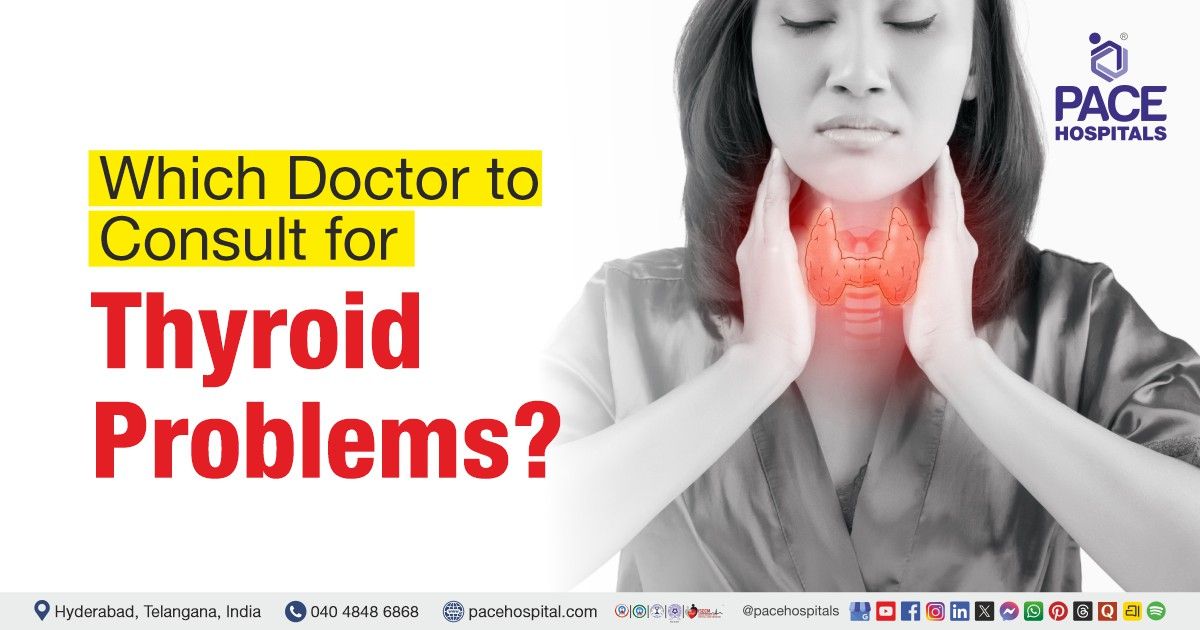
Which Doctor to Consult for Thyroid Problems?
PACE Hospitals
Written by: Editorial Team
Medically reviewed by: Dr. Tripti Sharma - Consultant Endocrinologist (Adult & Paediatric), Physician & Diabetologist
Introduction
Thyroid problems are among the most common hormonal disorders in India, and yet they are also among the most commonly mismanaged — through delayed diagnosis, self-medication, incorrect dosing, or overlooked symptoms in women, children, and pregnant patients. If you have been told your TSH is abnormal, noticed unexplained weight changes, discovered a swelling in your neck, or are experiencing fatigue, hair fall, irregular periods, or palpitations, this guide will help you understand which doctor to consult for thyroid problems, when specialist care is important, and when to seek emergency attention.
Quick Answer: Which Doctor Should You Consult for Thyroid Problems?
For most thyroid problems, consult an Endocrinologist — especially if you have abnormal TSH, hypothyroidism, hyperthyroidism, thyroid swelling, thyroid nodules, thyroid problems during pregnancy, infertility, palpitations, unexplained weight changes, or repeated abnormal thyroid reports. A General Physician or Internal Medicine specialist may evaluate mild or routine thyroid findings first. An ENT surgeon, endocrine surgeon, or surgical oncologist may be needed for thyroid nodules, goitre, pressure symptoms, suspected cancer, or thyroid surgery.
A
Gynaecologist may be involved when thyroid problems affect pregnancy, periods, or fertility. A Pediatrician or Pediatric Endocrinologist is the right doctor for thyroid problems in children. Emergency care is needed for severe or rapidly worsening thyroid symptoms.
What Are Thyroid Problems?
The thyroid is a small, butterfly-shaped gland present at the base of the neck. Despite its small size, it plays a central role in regulating metabolism, body weight, heart rate, energy levels, body temperature, cholesterol, bone health, the menstrual cycle, and many other essential body functions. It produces thyroid hormones — primarily thyroxine (T4) and triiodothyronine (T3) — under the direction of thyroid-stimulating hormone (TSH) produced by the pituitary gland.
When this system is disrupted, a range of thyroid disorders can develop:
- Hypothyroidism — the thyroid produces insufficient hormone; everything slows down
- Hyperthyroidism — the thyroid produces excess hormone; the body becomes overactive
- Thyroiditis — inflammation of the thyroid, which may cause temporary hypo- or hyperthyroidism
- Autoimmune thyroid disease — including Hashimoto's thyroiditis and Graves' disease
- Thyroid nodules — solid or fluid-filled lumps within the thyroid gland; most are benign
- Goitre — an enlarged thyroid gland, which may or may not be associated with abnormal hormone levels
- Thyroid cancer — uncommon but important to detect early; often presents as a thyroid nodule
Thyroid disorders are typically detected through blood tests measuring TSH, free T4, and free T3 levels, with thyroid ultrasound used to assess gland size and nodule characteristics.
Thyroid Problems Should Not Be Self-Treated
Thyroid symptoms — fatigue, weight gain, hair fall, anxiety, palpitations, cold or heat intolerance — overlap extensively with other common conditions, including anaemia, diabetes, PCOS, perimenopause, depression, and nutritional deficiencies. This overlap means that self-diagnosing a thyroid problem and self-medicating based on symptoms alone is not only unreliable but potentially harmful.
Specific risks of unsupervised thyroid management include:
- Starting thyroid medicine without a confirmed diagnosis — unnecessary thyroid hormone can accelerate heart rate, reduce bone density, and worsen anxiety
- Adjusting thyroid medicine doses without medical guidance — both under- and over-replacement- carries health risks
- Stopping thyroid medicine abruptly during pregnancy — can have serious consequences for the developing baby
- Taking thyroid hormone for weight loss — this is not a medically appropriate use and carries real health risks
- Relying on online thyroid 'support' supplements — many contain undisclosed thyroid hormone or iodine in doses that disrupt thyroid function.
Whenever a thyroid abnormality is suspected or detected, the correct step is to consult a qualified doctor — not to begin self-treatment.
Doctor Selection Guide: Which Specialist Should You Choose for Thyroid Problems?
| Situation | First Doctor to Consult | Specialist Needed If |
|---|---|---|
| Abnormal TSH in routine test | General Physician / Internal Medicine | If TSH remains abnormal, symptoms present, or pregnancy is planned |
| Hypothyroidism | Endocrinologist / Internal Medicine | Dose adjustment, pregnancy, infertility, or difficult control needed |
| Hyperthyroidism | Endocrinologist | Fast heartbeat, tremors, weight loss, eye symptoms, or severe imbalance |
| Thyroid swelling/goitre | Endocrinologist / ENT surgeon | Large swelling, pressure symptoms, nodules, or surgery consideration |
| Thyroid nodule | Endocrinologist / ENT surgeon | Ultrasound / FNAC needed or suspicious features present |
| Suspected thyroid cancer | Endocrinologist / Surgical Oncologist / ENT surgeon | Biopsy, staging, surgery, and follow-up are needed |
| Thyroid problem in pregnancy | Obstetrician + Endocrinologist | Maternal and fetal safety need close monitoring |
| Thyroid with irregular periods/infertility | Gynaecologist + Endocrinologist | Hormonal and reproductive evaluation needed |
| Thyroid in children | Paediatrician / Pediatric Endocrinologist | Growth, development, puberty, or congenital thyroid issues |
| Thyroid with heart palpitations | Endocrinologist / Cardiologist | Fast heartbeat, rhythm problem, or hyperthyroidism suspected |
| Thyroid with eye bulging | Endocrinologist / Ophthalmologist | Graves' eye disease suspected |
| Thyroid with voice change or swallowing difficulty | ENT surgeon / Endocrinologist | Large goitre, nodule, or pressure symptom suspected |
| Severe thyroid symptoms | Emergency Physician / Endocrinologist | Thyroid storm or severe hypothyroidism (myxoedema) suspected |
When to See an Endocrinologist for Thyroid Problems?
An Endocrinologist is a hormone specialist and the primary specialist for thyroid disease. All thyroid hormone disorders — whether deficiency, excess, or autoimmune — fall within the core scope of endocrinology. Consult an Endocrinologist for:
- Hypothyroidism — especially if TSH is significantly elevated, symptoms persist, or standard doses are not achieving adequate control
- Hyperthyroidism — manages anti-thyroid medicines, assesses Graves' disease, evaluates need for radioiodine therapy or surgery
- Repeated or persistently abnormal TSH results
- Very high or very low TSH values at any age
- Thyroiditis — including Hashimoto's and subacute thyroiditis
- Graves' disease — including eye involvement assessment and treatment planning
- Thyroid problems during pregnancy — where under- and over-treatment both carry significant risks
- Thyroid-related infertility or recurrent pregnancy loss
- Thyroid nodules — hormone status and nodule risk assessment
- Goitre — hormone evaluation and determination of further investigation or surgical referral
- Thyroid eye disease — in coordination with an Ophthalmologist
- Difficult thyroid medicine adjustment — when doses are hard to titrate, or symptoms persist
- Thyroid disorders alongside diabetes, PCOS, obesity, or adrenal disorders
- Post-thyroid surgery hormone management
Understanding TSH — A Plain-Language Explainer
TSH (thyroid-stimulating hormone) is the most important and widely used screening test for thyroid function. It is produced by the pituitary gland and signals the thyroid how much hormone to make. When thyroid hormone levels are low, the pituitary produces more TSH — so a high TSH typically suggests underactivity (hypothyroidism). When thyroid hormone levels are very high, the pituitary reduces TSH — so a low TSH suggests overactivity (hyperthyroidism).
Always interpret TSH results in combination with symptoms, clinical examination, T3/T4 levels, antibody tests and other factors with a qualified doctor. A single TSH value alone is never enough to make a complete thyroid diagnosis.
When to See a General Physician or Internal Medicine Doctor?
A General Physician or Internal Medicine specialist is commonly the most practical first point of contact when:
- A routine health check or an unrelated blood test shows an abnormal TSH for the first time
- Symptoms such as fatigue, hair fall, constipation, weight change, or palpitations are present, but the cause is not yet clear.
- Multiple conditions are present alongside possible thyroid symptoms — such as anaemia, diabetes, PCOS, or depression — requiring broad initial evaluation.
- Thyroid disease is already known, well-controlled, and routine monitoring is sufficient.
The General Physician will assess symptoms, measure TSH, T3, and T4, assess relevant associated conditions, and refer to an Endocrinologist when specialist input is warranted.
When to See an ENT Surgeon, Endocrine Surgeon, or Surgical Oncologist?
Some thyroid problems are primarily structural — involving the physical size of the thyroid gland, the presence of nodules, or the possibility of thyroid cancer. These require input from a surgical specialist. Consult an ENT surgeon, Endocrine surgeon, or Surgical Oncologist when:
- A thyroid nodule has suspicious features on ultrasound — irregular margins, calcification, increased blood flow, or lymph node changes
- FNAC (Fine Needle Aspiration Cytology) of a nodule suggests suspicious or cancerous cells
- A large goitre is causing pressure symptoms — difficulty swallowing, breathing difficulty, voice change
- There is a rapidly growing neck swelling
- The patient has a recurrent thyroid cyst that has refilled after drainage
- Thyroid surgery is being planned — for any reason
- Thyroid cancer has been confirmed or is strongly suspected — for staging, surgery planning, and radioiodine coordination
- Compressive symptoms are present: persistent hoarseness of voice, choking sensation, or breathlessness related to neck swelling.
When to See a Gynaecologist for Thyroid Problems?
Thyroid health and reproductive health are closely interconnected in women. Menstrual irregularities, inability to ovulate, fertility problems, increased risk of miscarriage, complicated pregnancy and postpartum symptoms are all possible consequences of thyroid disorders. A Gynaecologist should be involved when thyroid problems intersect with:
- Irregular or absent periods
- Heavy or prolonged menstrual bleeding
- Difficulty conceiving
- Recurrent pregnancy loss
- PCOS — thyroid evaluation is a standard part of PCOS assessment
- Pregnancy — both hypothyroidism and hyperthyroidism in pregnancy need careful joint management
- Postpartum symptoms — postpartum thyroiditis can overlap with postpartum depression and new-mother fatigue
Women planning pregnancy who have known thyroid disease should have their thyroid levels optimised before conception, in consultation with both their Gynaecologist and Endocrinologist.
When to See a Cardiologist for Thyroid-Related Symptoms?
The thyroid directly influences cardiac function. A Cardiologist should be involved in thyroid care when:
- Hyperthyroidism causes a sustained fast heartbeat, palpitations, or atrial fibrillation (irregular heart rhythm)
- There is chest pain or chest discomfort alongside thyroid symptoms
- Breathlessness on minimal exertion suggests a possible cardiac impact of thyroid disease
- Fainting or near-fainting episodes are present
- Known heart disease exists alongside a thyroid disorder — as treatment decisions interact
- Hypothyroidism contributes to elevated cholesterol or pericardial effusion in severe cases
When to See an Ophthalmologist for Thyroid Eye Problems?
Thyroid eye disease (TED) — also known as Graves' orbitopathy — is an autoimmune condition most commonly associated with Graves' hyperthyroidism. An Ophthalmologist should be involved when symptoms include:
- Eye bulging (proptosis) — eyes appearing to protrude forward
- Eye redness, irritation, or excessive watering
- Dry or gritty eyes from incomplete eyelid closure
- Double vision (diplopia)
- Pain behind or around the eyes, especially on eye movement
- Difficulty closing the eyelids fully
- Swelling of the eyelids
- Reduced or blurred vision — where the optic nerve may be compressed
When to See a Pediatrician or Pediatric Endocrinologist?
Children can develop thyroid disorders at any age. The impact of thyroid imbalance in children includes effects on growth, intellectual development, puberty, school performance, weight, sleep, and energy. A Pediatrician is the right first doctor; depending on findings, they may refer to a Pediatric Endocrinologist. Seek Pediatric evaluation when a child has:
- An abnormal result on newborn thyroid screening
- Poor growth or unexplained short stature
- Delayed or early puberty
- Unexplained weight gain or difficulty losing weight
- A neck swelling or goitre
- Fatigue, constipation, or cold intolerance
- Hyperactivity, tremors, anxiety, or rapid weight loss (suggesting possible hyperthyroidism)
- Poor school performance or concentration, along with other thyroid symptoms
- Abnormal TSH detected during routine evaluation
Types of Thyroid Problems and Which Specialist Treats Each?
| Type of Thyroid Problem | Common Features | Doctor / Specialist | Why? |
|---|---|---|---|
| Hypothyroidism | Weight gain, fatigue, cold intolerance, hair fall, constipation | Endocrinologist / Internal Medicine | Hormone replacement, monitoring, and dose adjustment |
| Hyperthyroidism | Weight loss, palpitations, tremors, sweating, anxiety | Endocrinologist | Anti-thyroid medicines, radioiodine, or surgery assessment |
| Subclinical hypothyroidism | Mildly high TSH, normal T4, few or no symptoms | General Physician / Endocrinologist | Treatment decision based on TSH level, age, and pregnancy |
| Subclinical hyperthyroidism | Mildly low TSH, normal T3/T4, often asymptomatic | General Physician / Endocrinologist | Monitoring, cardiac risk assessment, and treatment decision |
| Hashimoto's thyroiditis | Autoimmune hypothyroidism; positive anti-TPO antibodies | Endocrinologist / Internal Medicine | Long-term hormone replacement and monitoring |
| Graves' disease | Autoimmune hyperthyroidism; eye symptoms, goitre | Endocrinologist ± Ophthalmologist | Multi-modal treatment; eye disease monitoring |
| Thyroiditis | Neck pain, temporary hypo/hyperthyroidism | Endocrinologist / Internal Medicine | Short-term management; monitoring for resolution |
| Goitre | Enlarged thyroid; variable hormone levels | Endocrinologist + ENT surgeon if large | Hormone evaluation + structural assessment |
| Thyroid nodule | Lump in thyroid; most benign | Endocrinologist + ENT surgeon | Ultrasound, FNAC if needed, surgical referral if indicated |
| Multinodular goitre | Multiple nodules; variable hormone status | Endocrinologist + ENT surgeon | Function assessment, cancer risk, surgery if needed |
| Thyroid cyst | Fluid-filled nodule; usually benign | Endocrinologist / ENT surgeon | Monitoring or drainage if large or recurring |
| Thyroid eye disease | Eye bulging, irritation, double vision | Endocrinologist + Ophthalmologist | Coordinated medical and eye-specific management |
| Thyroid in pregnancy | Abnormal TSH; risk to mother and baby | Obstetrician + Endocrinologist | Close monitoring; dose adjustment; fetal safety |
| Postpartum thyroiditis | Thyroid changes after delivery | Gynaecologist / Endocrinologist | Monitoring; often self-resolving but needs assessment |
| Thyroid in children | Growth delay, development issues | Pediatrician / Pediatric Endocrinologist | Age-appropriate dosing and monitoring |
| Suspected thyroid cancer | Hard nodule, rapid growth, suspicious FNAC | Endocrinologist + Surgical Oncologist / ENT surgeon | Biopsy, staging, surgery, radioiodine, follow-up |
| Post-surgery hormone management | Hormone levels after thyroidectomy | Endocrinologist | Ongoing replacement monitoring and TSH suppression |
Hypothyroidism — Which Doctor to Consult?
Hypothyroidism — an underactive thyroid gland — is the most common thyroid disorder in India, particularly among women. Common symptoms include:
- Unexplained weight gain despite no significant dietary change
- Persistent fatigue and low energy
- Constipation, dry skin, brittle nails, and hair thinning or loss
- Cold intolerance — feeling cold when others around you do not
- Heavy, irregular, or prolonged menstrual periods
- Low mood, slow thinking, or poor concentration
- Slow pulse and high cholesterol on blood tests
- Puffiness of the face, especially around the eyes
An Endocrinologist or Internal Medicine specialist can manage hypothyroidism effectively. Endocrinologist care is particularly important when: the patient is pregnant or planning pregnancy; hypothyroidism is associated with infertility; the patient is young; TSH is very significantly elevated; or symptoms persist despite medicine.
Hyperthyroidism — Which Doctor to Consult?
Hyperthyroidism — an overactive thyroid — means the thyroid produces more hormone than the body needs. Common symptoms include:
- Unexpected weight loss despite normal or increased appetite
- Fast, pounding, or irregular heartbeat (palpitations)
- Tremors — particularly of the hands
- Anxiety, irritability, nervousness, or restlessness
- Excessive sweating and heat intolerance
- Loose stools or increased bowel frequency
- Sleep disturbances and muscle weakness
- Neck swelling (goitre) and eye changes — particularly in Graves' disease
An Endocrinologist should evaluate hyperthyroidism. Treatment options include anti-thyroid medicines, radioiodine therapy, and surgery — each with specific indications.
Emergency: Severe, uncontrolled hyperthyroidism can lead to a thyroid storm — a life-threatening surge causing very high fever, rapid heartbeat, extreme agitation, confusion, vomiting, or loss of consciousness. Go to the Emergency Department immediately.
Subclinical Thyroid Disorders — What to Know?
Subclinical Hypothyroidism
This means TSH is mildly elevated, but free T4 is still within the normal range, and the patient may have few or no symptoms. Whether treatment is needed depends on multiple factors — the degree of TSH elevation, the presence or absence of symptoms, anti-TPO antibody status, age, pregnancy status, and cardiovascular risk. This is a decision made by the treating doctor based on individual assessment — not a universal 'treat all' or 'treat none' situation. A General Physician or Endocrinologist can advise appropriately.
Subclinical Hyperthyroidism
This means TSH is mildly suppressed, but free T3 and free T4 are within the normal range. Most patients are asymptomatic. However, sustained low TSH is associated with increased risk of atrial fibrillation and bone density loss in some groups — particularly post-menopausal women and older adults. Neither subclinical condition should be self-managed; medical evaluation is needed to determine the most appropriate monitoring or treatment approach.
Thyroid Nodule or Neck Swelling — Which Doctor to Consult?
A thyroid nodule is a discrete lump within the thyroid gland. The vast majority are benign, but a minority require further investigation because of features that may suggest a higher risk of malignancy. An Endocrinologist will assess thyroid hormone levels and evaluate the nodule using ultrasound — assessing size, composition, margins, echogenicity, calcification, and lymph node status — and recommend FNAC if indicated. An ENT surgeon or Endocrine surgeon will be involved when FNAC results are suspicious, the nodule is large, or surgery is recommended.
Not all thyroid nodules need biopsy, and not all biopsied nodules turn out to be cancer. A structured, evidence-based evaluation gives the most accurate and proportionate assessment of risk.
Goitre — Which Doctor to Consult?
Goitre refers to an enlarged thyroid gland. It can develop with normal, low, or high thyroid hormone levels. An Endocrinologist should evaluate goitre to determine hormone function, check for autoimmune antibodies, arrange a thyroid ultrasound to assess gland size and detect nodules, and recommend FNAC if nodules are present and meet investigation criteria. An ENT surgeon or Endocrine surgeon may be needed when the goitre is very large, has grown rapidly, or is causing pressure symptoms — difficulty swallowing, throat tightness, voice change, or breathing difficulty.
Thyroid Problems During Pregnancy
Thyroid hormone is important for normal fetal brain development — particularly in the first trimester. Both untreated hypothyroidism and hyperthyroidism during pregnancy carry risks for mother and baby. Key points:
- Women with pre-existing thyroid disease should have TSH optimised before attempting pregnancy
- Thyroid hormone requirements typically increase during pregnancy — dose adjustments are often needed in the first trimester.
- Pregnant women with hyperthyroidism need specialist management; anti-thyroid medicines cross the placenta and must be used at the lowest effective dose.
- TSH should be monitored at regular intervals during pregnancy
- Do not stop thyroid medicine during pregnancy without explicit medical advice
A pregnant woman with any new thyroid symptoms or abnormal thyroid tests should be managed jointly by her Obstetrician/Gynaecologist and Endocrinologist.
Thyroid Problems After Delivery
Postpartum thyroiditis is an autoimmune condition causing inflammation of the thyroid that occurs in the months following childbirth. It generally causes temporary hyperthyroidism followed by temporary hypothyroidism, with most women returning to normal function over 12–18 months. However, a proportion develop permanent hypothyroidism, particularly those with strongly positive anti-TPO antibodies.
Postpartum thyroid symptoms — fatigue, anxiety, palpitations, low mood, or hair fall — can be easily mistaken for normal new-mother exhaustion, postpartum depression, or anaemia. Women experiencing these symptoms after delivery should consult a Gynaecologist, Endocrinologist, or Internal Medicine specialist for thyroid evaluation — particularly if they had thyroid antibodies in pregnancy or have a family history of thyroid disease.
Thyroid Problems and Fertility, Periods, PCOS
Thyroid imbalance can disrupt the menstrual cycle, suppress ovulation, reduce fertility, and increase the risk of miscarriage. Women with PCOS should also have thyroid function evaluated, as Hashimoto's thyroiditis is more common in women with PCOS, and the symptoms of both conditions — weight gain, hair loss, irregular periods, fatigue — can look very similar. A Gynaecologist manages the reproductive and menstrual aspects. An Endocrinologist manages the thyroid and any associated hormonal disorders.
Thyroid Problems in Men
While thyroid disease is more common in women, men can develop thyroid disorders at any age. Symptoms in men may include:
- Hypothyroidism: fatigue, unexplained weight gain, cold intolerance, constipation, hair thinning, muscle weakness, low mood, low libido, and reduced fertility
- Hyperthyroidism: weight loss, palpitations, tremors, sweating, heat intolerance, anxiety
Both conditions can affect male fertility and male hormone levels. Men with unexplained fatigue, weight changes, or fertility concerns should have thyroid function included in their evaluation. An Endocrinologist or Internal Medicine specialist can evaluate and manage thyroid disorders in men.
Thyroid Problems in Children and Teenagers
Thyroid disorders can profoundly affect a child's development, growth, and school functioning. In newborns, untreated congenital hypothyroidism can impair intellectual development — which is why newborn thyroid screening is a standard part of early healthcare. In older children and teenagers, symptoms may include:
- Hypothyroidism: poor growth, weight gain, constipation, fatigue, cold intolerance, puffy face, delayed puberty, or poor academic performance.
- Hyperthyroidism: weight loss, hyperactivity, tremors, rapid growth, fast heartbeat, heat intolerance, anxiety, or early puberty in girls.
A Pediatrician is the right first doctor; if thyroid disease is confirmed, a Pediatric Endocrinologist provides specialist age-appropriate management. Family support and school communication may also be part of holistic management.
Thyroid and Weight Gain or Weight Loss
Hypothyroidism can contribute to weight gain through a slowdown in metabolic rate. However, the weight gain attributable purely to thyroid hormone deficiency is typically modest. Significant obesity is rarely explained by thyroid disease alone. Importantly, weight gain should never be assumed to be thyroid-related without a blood test — and thyroid medicine should never be taken for weight loss in a person with normal thyroid function. This is medically inappropriate and potentially dangerous.
Hyperthyroidism accelerates metabolism, which can lead to unintentional and sometimes significant weight loss despite normal or increased food intake. Unexplained weight loss with palpitations, heat intolerance, anxiety or tremors should prompt evaluation of the thyroid by an Endocrinologist or Internal Medicine specialist.
Thyroid and Hair Fall
Both hypothyroidism and hyperthyroidism can cause diffuse hair loss — meaning hair thins throughout the scalp rather than in patches. Hair loss from thyroid disease typically improves with effective thyroid treatment, though this may take several months. Other important causes include iron deficiency anaemia, vitamin deficiencies (particularly D and B12), postpartum hair loss, PCOS, stress-related hair loss, and certain medications. An Endocrinologist or Internal Medicine specialist can identify whether thyroid disease is a contributing factor. A Dermatologist may be involved if hair fall persists after thyroid levels are normalised.
Thyroid and Mental Health Symptoms
Thyroid imbalance has a well-established effect on mood and mental functioning. Hypothyroidism can cause low mood, emotional blunting, depression-like symptoms, poor concentration, and cognitive slowing. Hyperthyroidism can cause anxiety, irritability, emotional volatility, and panic-like episodes. An Internal Medicine specialist or Endocrinologist should evaluate thyroid function as part of the workup for unexplained mood or cognitive symptoms. If thyroid levels are confirmed to be normal and symptoms persist, a Psychiatrist or Psychologist may then be involved. Effective thyroid treatment often significantly improves mental health symptoms.
When Thyroid Problems Are a Medical Emergency?
Two rare but serious thyroid emergencies should be recognised:
Thyroid storm (thyrotoxic crisis): A life-threatening exacerbation of hyperthyroidism — often triggered by infection, surgery, or stopping anti-thyroid medicines abruptly. Features include very high fever, extremely rapid heartbeat, severe agitation, confusion, vomiting, and, in severe cases, coma.
Myxoedema coma (severe hypothyroidism): A life-threatening presentation of severe, prolonged, untreated hypothyroidism — more common in elderly patients. Features include extreme drowsiness or loss of consciousness, very low body temperature, very slow heart rate, and severe swelling.
Go to the Emergency Department immediately if thyroid symptoms are associated with:
- Very fast heartbeat or irregular pulse
- Chest pain or breathlessness
- High fever along with thyroid symptoms
- Confusion, drowsiness, or loss of consciousness
- Fainting
- Severe weakness or unable to stand
- Very low body temperature along with confusion
- Severe neck swelling causing breathing difficulty
- Severe eye pain or sudden vision loss
- Severe thyroid symptoms during pregnancy
Emergency: If thyroid symptoms are associated with chest pain, severe breathlessness, fainting, confusion, very fast heartbeat, high fever, or breathing difficulty due to neck swelling — do not wait for an OPD appointment. Visit an Emergency Department immediately.
Tests Doctors May Recommend for Thyroid Problems
Thyroid hormone blood tests:
- TSH — primary screening test for all thyroid disorders
- Free T4 (FT4) — assesses thyroid hormone output; measured alongside TSH for a complete picture
- Free T3 (FT3) — helpful in hyperthyroidism and specific clinical situations
- Anti-TPO antibodies — marker of autoimmune thyroid disease (Hashimoto's, Graves')
- Anti-thyroglobulin antibodies — additional autoimmune marker
- TSH receptor antibodies (TRAb) — specific for Graves' disease; also used in pregnancy
Imaging:
- Thyroid ultrasound — assesses gland size, structure, nodule features, and lymph nodes
- FNAC (Fine Needle Aspiration Cytology) — minimally invasive sampling of thyroid nodule cells
- Thyroid scan/radioiodine uptake test — used in specific situations to assess thyroid activity.
Additional tests:
- CBC and haemoglobin — to check for anaemia, which can mimic thyroid symptoms
- Lipid profile — elevated cholesterol can be associated with hypothyroidism
- Blood sugar / HbA1c — thyroid disease and diabetes often coexist
- Liver function test — relevant when anti-thyroid medicines are being considered
- Kidney function test — when clinically indicated
- Calcium and vitamin D — relevant in some post-surgical or metabolic contexts
- ECG — if palpitations, fast heartbeat, or irregular rhythm are present
- Eye evaluation by an ophthalmologist — in confirmed or suspected thyroid eye disease
Important: Biotin and Thyroid Test Interference
Many people take biotin (vitamin B7) supplements for hair fall — often without informing their doctors. Biotin at high doses significantly interferes with many thyroid blood test assay systems, causing falsely abnormal TSH, T3, and T4 results. This can lead to incorrect diagnoses of hyperthyroidism or hypothyroidism when thyroid function is actually normal. If you are taking biotin supplements, inform your doctor before thyroid testing. Biotin should ideally be stopped at least 48–72 hours before thyroid blood tests, or as advised by the testing laboratory and treating doctor.
Tests depend on symptoms, age, pregnancy status, TSH level, neck swelling, nodule features, heart symptoms, and the doctor's assessment.
What to Expect at Your First Doctor Visit for Thyroid Problems?
At your first consultation, the doctor will take a thorough history. Be prepared to discuss:
- What symptoms are you experiencing, and for how long?
- Was thyroid detected through TSH, T3/T4 tests, or ultrasound?
- Do you have weight gain, weight loss, or difficulty managing weight?
- Any palpitations, tremors, anxiety, sweating, or heat intolerance?
- Any fatigue, constipation, hair fall, dry skin, or cold intolerance?
- Any neck swelling, difficulty swallowing, voice change, or breathing difficulty?
- Any irregular periods, heavy bleeding, difficulty conceiving, pregnancy loss history, or postpartum symptoms?
- Any family history of thyroid disease, autoimmune conditions, or thyroid cancer?
- Are you currently taking thyroid medicine — if so, what dose and for how long?
- Are you taking biotin supplements, iodine-containing medicines, or other supplements?
- Do you have diabetes, PCOS, high cholesterol, heart disease, or other autoimmune conditions?
Bring any previous thyroid blood test reports and scan results to the appointment. A pattern of TSH values over time is often more informative than a single result.
Treatment Options for Thyroid Problems
For hypothyroidism:
- Thyroid hormone replacement — when prescribed and at the correct dose
- Regular TSH monitoring to guide dose adjustment
- Correct medicine timing — typically taken on an empty stomach in the morning
- Managing associated conditions — anaemia, vitamin D deficiency, cholesterol, diabetes, PCOS
For hyperthyroidism:
- Anti-thyroid medicines — to suppress excess thyroid hormone production
- Beta-blockers — for rapid heartbeat and tremor symptom relief in selected patients
- Radioiodine therapy — a single-dose treatment that permanently reduces thyroid activity; not for pregnant women or those with severe thyroid eye disease
- Thyroid surgery — in selected cases, including large goitre, nodules, or patient preference
For thyroid nodules and goitre:
- Observation and monitoring for watchful waiting criteria for benign nodules
- Ultrasound findings suggestive of FNAC
- Surgery if indicated by FNAC results, size, symptoms or risk of cancer
- Post-surgical radioiodine and thyroid hormone therapy in thyroid cancer management
General guidance:
- Avoid stopping, starting, or changing thyroid medicine without a doctor's advice
- Do not use thyroid medication for weight loss
- Iodine intake — iodised salt is the standard and appropriate dietary source for most people in India; excessive supplemental iodine can worsen thyroid function in susceptible individuals
- Avoid unverified 'thyroid detox' products and supplements without medical advice.
- Regular follow-up as scheduled by the treating doctor
Treatment depends on thyroid type, TSH/T3/T4 levels, symptoms, pregnancy status, age, heart risk, nodule findings, and the doctor's evaluation.
Thyroid Specialists at PACE Hospitals, Hyderabad
PACE Hospitals, located in Hitech City, Hyderabad, is a multi-super speciality hospital with the capability to evaluate and manage thyroid disorders across all levels of complexity. Patients have access to:
- Endocrinology — for hypothyroidism, hyperthyroidism, Hashimoto's, Graves' disease, thyroid nodules, goitre, thyroid in pregnancy, and complex hormone disorders
- General Medicine / Internal Medicine — for initial thyroid evaluation, routine hypothyroidism management, and multi-condition co-management
- ENT surgery / Endocrine surgical support — for thyroid nodule biopsy, large goitre assessment, and thyroid surgery evaluation
- Obstetrics and Gynaecology — for thyroid in pregnancy, irregular periods, fertility evaluation, and postpartum thyroid symptoms
- Cardiology — for thyroid-related palpitations, rhythm problems, and heart symptoms
- Ophthalmology support — for thyroid eye disease evaluation and management
- Pediatrics support — for thyroid evaluation in children and newborn thyroid screening follow-up
- Advanced diagnostics — TSH, free T4, free T3, antibody panels, thyroid ultrasound, FNAC, and ECG
- Emergency and Critical Care — for severe thyroid presentations, including thyroid storm and myxoedema
Why Choose PACE Hospitals for Thyroid Evaluation and Management?
- Multi-speciality care under one system — patients with thyroid disease alongside pregnancy, infertility, PCOS, heart symptoms, or diabetes receive coordinated management
- Experienced Endocrinologists managing the full spectrum of thyroid hormone disorders, autoimmune thyroid conditions, thyroid in pregnancy, and post-surgical hormone care.
- Internal Medicine support provides initial evaluation and ongoing management for stable thyroid conditions.
- Gynaecology and Endocrinology coordination for thyroid-related menstrual, fertility, and pregnancy concerns
- ENT and surgical support for thyroid nodule evaluation, FNAC, and surgical planning
- Cardiology support for heart rhythm and palpitation concerns in hyperthyroid patients
- Advanced diagnostic facilities for comprehensive thyroid workup within one hospital system
- Emergency and Critical Care for rare but serious thyroid emergencies
- Personalised, evidence-based treatment and follow-up plans for each patient's unique clinical situation
Key Takeaway
For most thyroid problems, an Endocrinologist is the right specialist — particularly for abnormal TSH, hypothyroidism, hyperthyroidism, thyroiditis, thyroid nodules, thyroid problems in pregnancy, infertility, palpitations, or difficult-to-control thyroid levels. A General Physician or Internal Medicine specialist can evaluate mild or routine findings first and refer when needed. ENT or endocrine surgical specialists may be needed for goitre, nodules, pressure symptoms, or suspected thyroid cancer. A Gynaecologist and Endocrinologist work together for pregnancy, fertility, and menstrual concerns. Emergency care is needed for severe thyroid symptoms, including thyroid storm or myxoedema.
Frequently Asked Questions (FAQs)
Which doctor should I consult for thyroid problems?
For most thyroid problems, consult an Endocrinologist — particularly for abnormal TSH, hypothyroidism, hyperthyroidism, thyroid nodules, thyroid swelling, thyroid disease in pregnancy, palpitations, or difficult-to-control thyroid levels. A General Physician or Internal Medicine specialist is a practical first step for mild or incidentally detected abnormal TSH. An ENT surgeon or endocrine surgeon may be needed if there is a thyroid nodule, large goitre, or pressure symptoms. Emergency care is needed for severe or rapidly worsening symptoms.
Can thyroid problems affect periods and fertility?
Yes. Thyroid imbalance — both hypothyroidism and hyperthyroidism — can disrupt the menstrual cycle, suppress ovulation, reduce fertility, and increase the risk of miscarriage. Women with irregular periods, heavy bleeding, difficulty conceiving, or recurrent pregnancy loss should have thyroid function evaluated. A Gynaecologist manages reproductive concerns, and an Endocrinologist manages thyroid disorders. Women with PCOS should also have thyroid function checked as part of a complete hormonal evaluation.
Can thyroid problems cause weight gain or weight loss?
Yes. Hypothyroidism can contribute to modest weight gain by slowing metabolism. Hyperthyroidism can cause unintentional weight loss despite normal or increased appetite. However, significant obesity is rarely explained by thyroid disease alone, and thyroid medicine should never be taken for weight loss in a person with normal thyroid function — this is medically inappropriate and potentially harmful. An Endocrinologist or Internal Medicine specialist can identify whether thyroid disease is contributing to weight changes.
Can thyroid problems cause hair fall?
Yes. Both hypothyroidism and hyperthyroidism can cause diffuse hair thinning. Hair fall typically improves with effective thyroid treatment, though recovery takes several months. Other common causes of hair fall — including iron deficiency anaemia, vitamin deficiencies, PCOS, and postpartum changes — should also be evaluated alongside thyroid function. A Dermatologist may be needed if hair fall persists after thyroid levels normalise.
Can thyroid problems be cured permanently?
This depends on the type and cause of thyroid problem. Some causes of hypothyroidism require lifelong hormone replacement. Hyperthyroidism caused by Graves' disease can sometimes go into remission after a course of anti-thyroid medicines, though relapse can occur. Radioiodine therapy and thyroid surgery result in permanent reduction of thyroid activity, often requiring subsequent thyroid replacement. A treating Endocrinologist can advise on the expected course for each individual patient's specific condition.
Which is the best hospital for thyroid treatment in Hyderabad?
PACE Hospitals in Hitech City, Hyderabad, offers comprehensive thyroid evaluation and management with experienced Endocrinologists, Internal Medicine specialists, Gynaecologists, ENT surgeons, and Cardiologists working in a coordinated multi-speciality system. Advanced diagnostic facilities, including thyroid blood tests, thyroid ultrasound, and FNAC, are available. Emergency and Critical Care is available for severe thyroid presentations. To book a consultation, call 040-4848-6868 or visit pacehospital.com.
Should I see an endocrinologist for thyroid problems?
Yes, an Endocrinologist is the primary specialist for thyroid hormone disorders — including hypothyroidism, hyperthyroidism, Hashimoto's thyroiditis, Graves' disease, thyroid nodules, and thyroid disease in pregnancy. They are also the right specialist when thyroid problems are associated with diabetes, PCOS, obesity, or infertility. For straightforward or mild hypothyroidism already well-controlled, an Internal Medicine specialist with periodic Endocrinology review is a common approach.
Can a general physician treat thyroid problems?
Yes. A General Physician or Internal Medicine specialist can assess initial or routine thyroid findings, treat mild or stable hypothyroidism, order thyroid function tests, and give a broad assessment when symptoms overlap with other conditions. However, referral to an Endocrinologist is appropriate for hyperthyroidism, thyroid nodules, thyroid disease in pregnancy, recurrent abnormal TSH, infertility related to thyroid or difficult-to-manage thyroid levels.
Which doctor treats hypothyroidism?
An Endocrinologist or Internal Medicine specialist manages Hypothyroidism. The Endocrinologist is the best choice if TSH is very high, the patient is pregnant or planning pregnancy, hypothyroidism is associated with infertility, symptoms are not resolving despite treatment, or if there are comorbid hormone disorders like PCOS, diabetes, or adrenal disease. Stable, well-controlled hypothyroidism on a fixed dose may be managed with periodic specialist review by a General Physician.
Which doctor treats hyperthyroidism?
An Endocrinologist is the right specialist for hyperthyroidism. They manage anti-thyroid medicines, assess the cause (Graves' disease, toxic nodule, thyroiditis), evaluate eye involvement, and determine whether radioiodine therapy or surgery is appropriate. A Cardiologist may be involved if heart rhythm problems are present. Emergency care is needed if hyperthyroidism is associated with a very fast heartbeat, chest pain, high fever, or confusion — possible signs of a thyroid storm.
Which doctor should I consult for thyroid swelling or goitre?
Consult an Endocrinologist for thyroid swelling or goitre to evaluate hormone levels, check for nodules via ultrasound, and evaluate for autoimmune thyroid disease. An ENT surgeon or Endocrine surgeon may be needed if the goitre is large, causing pressure symptoms such as difficulty swallowing, voice change, or breathing difficulty, or if nodules require biopsy. Emergency care is needed if neck swelling causes acute breathing difficulty.
Which doctor treats thyroid nodules?
An Endocrinologist evaluates thyroid nodules — assessing hormone status and reviewing ultrasound features to determine whether FNAC (Fine Needle Aspiration Cytology) is needed. An ENT surgeon or Endocrine surgeon performs FNAC, manages surgical planning, and treats thyroid cancer if confirmed. Most thyroid nodules are benign and do not require surgery. The evaluation process determines which nodules need biopsy and which can be safely monitored.
Which doctor should pregnant women consult for thyroid problems?
Pregnant women with thyroid problems should be managed jointly by an Obstetrician/Gynaecologist and an Endocrinologist. Thyroid hormone requirements often change during pregnancy, and doses may need adjustment, particularly in the first trimester. Thyroid medicine should never be stopped during pregnancy without medical advice. Women with known thyroid disease should have their TSH optimised before conception and monitored regularly throughout pregnancy.
What tests are done for thyroid problems?
Thyroid tests that are commonly advised include TSH, free T4, free T3, anti-TPO antibodies, and anti-thyroglobulin antibodies. If Graves' disease is suspected, TSH receptor antibodies (TRAb) are measured. Thyroid ultrasound evaluates gland size and nodule features. FNAC is done for suspicious nodules. Other tests may include CBC, lipid profile, blood sugar and ECG for palpitations. Biotin supplements can falsely affect test results, so patients taking biotin should tell their doctor before testing their thyroid.
When is a thyroid problem an emergency?
A thyroid problem becomes an emergency when associated with chest pain, severe breathlessness, fainting, confusion, high fever, very fast or irregular heartbeat, extreme drowsiness, very low body temperature with confusion, severe neck swelling causing breathing difficulty, or severe eye pain with vision loss. These may indicate a thyroid storm or myxoedema — both life-threatening. Go to the Emergency Department immediately and do not wait for a clinic appointment.
Conclusion
Thyroid problems affect millions of people across India — and the right medical approach can make a meaningful difference to quality of life, long-term health, and, in the case of thyroid disease in pregnancy, the health of the next generation.
An Endocrinologist is the primary specialist for thyroid hormone disorders. A General Physician or Internal Medicine specialist is an appropriate and practical first contact for mild or routine thyroid findings. An ENT surgeon, Endocrine surgeon, or Surgical Oncologist is required when thyroid problems are structural. A Gynaecologist works along with the Endocrinologist when thyroid disease intersects with pregnancy, menstruation, or fertility. Pediatrician or Pediatric Endocrinologist care is needed for children at any stage of thyroid disease.
Thyroid medicine should never be started, stopped, or adjusted without medical guidance. Thyroid hormone should not be used for weight loss. Biotin supplements can interfere with thyroid test accuracy and should be disclosed to the treating doctor. Severe thyroid symptoms — particularly those suggesting thyroid storm or myxoedema — require Emergency Department care without delay.
Regular monitoring, correct medicine use, structured follow-up, and specialist coordination are the pillars of effective, long-term thyroid management.
Share on
Request an appointment
Fill in the appointment form or call us instantly to book a confirmed appointment with our super specialist at 04048486868
Appointment request - health articles
Recent Articles