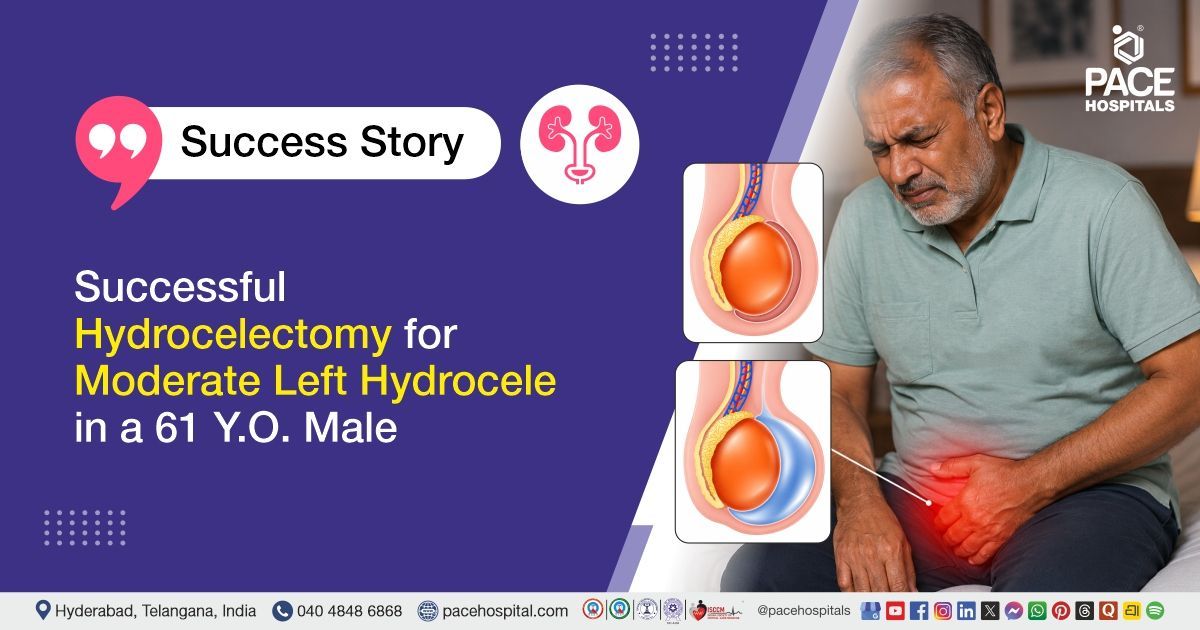
Successful Hydrocelectomy for Moderate Left Hydrocele in a 61 Y.O. Male
PACE Hospitals
PACE Hospital’s expert Urology team successfully performed a Left Hydrocelectomy on a 61-year-old male patient diagnosed with a left hydrocele. The procedure aimed to remove the fluid-filled sac surrounding the left testicle, relieve scrotal swelling and discomfort, and improve the patient’s overall quality of life.
Chief Complaints
A 61-year-old male patient with a body mass index (BMI) of 22 presented to the Urology Department at PACE Hospitals, Hitech City, Hyderabad, with complaints of left scrotal pain.
Past Medical History
The patient had no known significant past medical history of chronic systemic illnesses such as diabetes mellitus, hypertension, bronchial asthma, tuberculosis, or ischemic heart disease. He had no previous history of similar scrotal swelling or any prior urological surgeries.
On examination
On examination, the patient was conscious, coherent, and oriented. General examination revealed no pallor, icterus, cyanosis, clubbing, or lymphadenopathy. On local examination of the scrotum, a left-sided scrotal swelling was present, which was cystic and tense in consistency, mildly tender to palpation, and showed positive transillumination, suggestive of a hydrocele. The overlying skin was normal. The right hemiscrotum was normal, and bilateral testes were palpable and appeared normal. Abdominal examination did not reveal any significant abnormality.
Diagnosis
Upon admission to PACE Hospitals, the patient was thoroughly evaluated by the Urology team, including a detailed review of his medical history and a comprehensive clinical examination. He presented with left-sided scrotal pain. Based on the initial assessment and clinical findings, a provisional diagnosis of left hydrocele was made.
The patient was further evaluated with relevant investigations, including complete blood picture, which was within normal limits, serum electrolytes which were within normal limits, renal function tests including serum creatinine which remained within normal range, coagulation profile including PT, INR, bleeding time, and clotting time which were within normal limits, normal blood sugar, and viral screening including HIV, HBsAg, and HCV which were non-reactive or negative. Chest X-ray revealed normal findings with clear lung fields and no cardiopulmonary abnormalities.
An ultrasound of the scrotum demonstrated minimal right and moderate left hydrocele with left-sided epididymal simple cysts. Additionally, 2D echocardiography showed normal cardiac chamber sizes, good biventricular function, grade I diastolic dysfunction, and no significant structural abnormalities.
Based on these confirmed findings, the patient was advised to undergo
Left
Hydrocele Treatment in Hyderabad, India, under the expert care of the Urology Department.
Medical Decision Making (MDM)
After a detailed consultation with Dr. Abhik Debnath (Consultant Laparoscopic Urologist), a comprehensive evaluation was conducted focusing on the patient’s presentation of left scrotal pain and scrotal swelling. Clinical examination and diagnostic assessment, including complete blood picture, serum electrolytes, renal function tests, coagulation profile, viral markers, blood grouping and Rh typing, chest X-ray, USG scrotum, and 2D echocardiography, confirmed the presence of moderate left hydrocele with minimal right hydrocele and left epididymal simple cysts, with no evidence of active infection, coagulopathy, or cardiopulmonary contraindications for surgical intervention.
It was determined that Left Hydrocelectomy was the most appropriate intervention in view of the moderately tense symptomatic left hydrocele associated with pain and discomfort, with the aim of relieving scrotal swelling, alleviating symptoms, and improving quality of life.
The patient and his family members were informed about the diagnosis of left hydrocele with incidental epididymal cysts, the planned surgical management, the associated risks, benefits, and expected outcomes, and informed consent was obtained for the procedure.
Surgical Procedure
Following the decision, the patient was scheduled to undergo Left Hydrocelectomy Surgery in Hyderabad at PACE Hospitals, under the expert care of the urology department.
The procedure involved the following steps:
- Patient Preparation and Anaesthesia: The patient was taken to the operating room and placed in a supine position. After standard aseptic preparation and draping of the scrotal and groin region, spinal anaesthesia was administered successfully, and adequate anaesthetic effect was confirmed before proceeding with surgery.
- Surgical Exposure: A scrotal incision was made on the left side, and dissection was carried through the scrotal layers to expose the tunica vaginalis sac containing the hydrocele fluid. Careful hemostasis was maintained throughout the dissection.
- Identification and Evacuation of Hydrocele Sac: The hydrocele sac was isolated and opened, revealing clear fluid with internal septations. The fluid was completely evacuated, and the sac was inspected. The underlying testis was found to be normal in appearance and consistency.
- Surgical Correction of Hydrocele Sac: The tunica vaginalis sac was everted (Jaboulay’s technique) and the edges were carefully sutured to prevent re-accumulation of fluid. Complete hemostasis was achieved to ensure no active bleeding within the operative field.
- Closure and Drain Placement: A corrugated rubber drain was placed in the scrotal cavity to prevent fluid collection postoperatively. The wound was then closed in layers, and the skin was approximated using absorbable sutures, and a sterile dressing was applied.
Postoperative Care
Postoperatively, the patient had an uneventful course with stable vital signs and no complications such as bleeding or infection. The surgical site remained healthy with satisfactory drain output. Intravenous medication was administered to prevent postoperative infection. He tolerated oral intake well, mobilized early, and was discharged in stable condition.
Discharge Medications
Upon discharge, the patient was advised to take a short course of oral antibiotics to prevent postoperative infection, pain relievers to control postoperative pain, and gastroprotective medication to prevent acidity and gastric discomfort. Additionally, he was prescribed medication to reduce postoperative swelling and inflammation, along with supportive supplements to promote wound healing and overall recovery.
Advice on discharge
The patient was advised to continue a normal diet as tolerated, with adequate hydration and balanced nutrition to support postoperative recovery and wound healing.
Emergency Care
The patient was instructed to contact the emergency ward at PACE Hospitals in the event of an emergency or if symptoms such as fever, increasing scrotal pain or swelling, wound discharge, bleeding from the surgical site, or sudden onset of scrotal discomfort occur.
Review and Follow-up Notes
The patient was advised to return for follow-up with the Urologist in Hyderabad at PACE Hospitals after 3 days for dressing change and drain removal. He was also advised to review with the physician if blood pressure remains persistently elevated.
Conclusion
This case highlights a moderate left hydrocele with associated minimal right hydrocele and incidental left epididymal simple cysts presenting with scrotal pain. The patient underwent successful left hydrocelectomy under spinal anaesthesia, with an uneventful intraoperative and postoperative course. Preoperative evaluations were within acceptable limits, with no contraindications for surgery. The patient was discharged in stable condition with appropriate postoperative care and follow-up advice.
Principles of Hydrocele Management in Surgical Practice
Hydrocele management is primarily guided by symptom severity and clinical impact rather than imaging findings alone. Surgical intervention by a urologist/urology doctor is generally reserved for cases that are symptomatic, large, tense, or causing functional or cosmetic discomfort, while asymptomatic or minimal hydroceles are often managed conservatively with observation. Hydrocelectomy remains the definitive treatment with consistently good outcomes when appropriately indicated. Proper preoperative evaluation is essential to rule out systemic risks and ensure surgical fitness. Incidental findings such as small epididymal cysts or minor contralateral fluid collections typically do not require active intervention unless they become symptomatic. A tailored, patient-centered approach helps avoid overtreatment while ensuring effective and durable relief of symptoms.
Frequently Asked Questions (FAQs)
Why was left hydrocelectomy recommended in this case?
Left hydrocelectomy was recommended because the patient had a moderate and tense hydrocele on the left side with scrotal pain. Although the right side had minimal fluid, the left side was more symptomatic. Surgery was planned to remove the fluid collection and provide long-term relief.
What is the meaning of left hydrocelectomy?
A left hydrocelectomy is a surgical procedure performed to treat a hydrocele on the left side of the scrotum. During the surgery, the fluid-filled sac (tunica vaginalis) surrounding the testis is opened, drained, and surgically altered to prevent fluid from collecting again. It is commonly performed when a hydrocele becomes large, tense, or painful.
Is hydrocelectomy considered a major surgery?
Hydrocelectomy is usually considered a minor to moderate surgical procedure. It is commonly performed under spinal or general anaesthesia. Most patients recover well when the surgery is uncomplicated and proper post-operative care is followed.
Why was spinal anaesthesia used for hydrocelectomy?
Spinal anaesthesia helps numb the lower part of the body during the procedure. It allows the patient to undergo surgery without feeling pain in the operative area. It is commonly used for scrotal and lower abdominal surgeries when clinically suitable.
What does it mean if the hydrocele fluid is clear?
Clear fluid inside the hydrocele usually suggests a simple fluid collection around the testis. In this case, the testis was found to be normal during surgery, which is a reassuring finding. The final interpretation always depends on the surgeon’s assessment and clinical findings.
What are septations in a hydrocele?
Septations are thin internal walls or partitions found inside the hydrocele sac. They mean that the fluid collection is not completely uniform and is a bit more complex than a simple hydrocele. During surgery, the sac is opened and all these partitions are cleared so that the fluid is fully removed and the entire space is properly treated.
Why was a drain placed after hydrocelectomy?
A drain may be placed to remove any small amount of blood or fluid that can collect after surgery. This helps reduce swelling and supports better wound healing. In this case, review was advised after 3 days for dressing and drain removal.
How long does recovery take after hydrocelectomy?
Initial recovery after hydrocelectomy usually occurs within a few days to one week. Complete healing may take a few weeks. During the early recovery period, mild swelling, discomfort, or a feeling of heaviness in the scrotum (scrotal swelling area) is normal. Follow-up visits are important to assess wound healing and to remove the drain if it has been placed.
What precautions are needed after hydrocelectomy?
After hydrocelectomy, patients should keep the wound area clean and dry, avoid heavy lifting, avoid strenuous activity, and wear scrotal support if advised. Dressing care should be done as instructed. Any fever, increasing pain, swelling, bleeding, or discharge should be reported immediately.
Can a hydrocele come back after hydrocelectomy?
Recurrence after hydrocelectomy is uncommon when the sac is properly treated during surgery. In this case, the tunica sac was everted and sutured to reduce the chance of fluid collecting again. Regular follow-up helps confirm proper healing and early detection of any recurrence.
Share on
Request an appointment
Fill in the appointment form or call us instantly to book a confirmed appointment with our super specialist at 04048486868
Appointment request - health articles
Recent Articles