Angiogram Test Cost in Hyderabad, India – 2026 Guide
Get a Cost Estimate for Angiogram Test
Procedure & Surgery Cost Pages
All You Need To Know About Angiogram (Angiography) Procedure
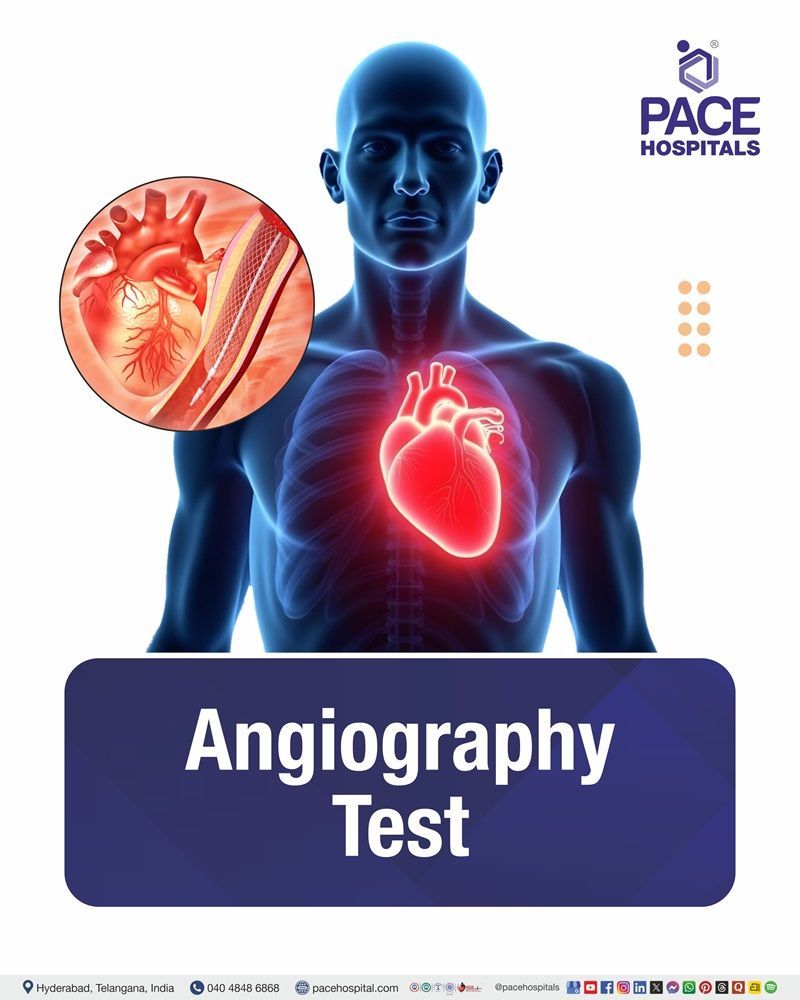
Angiography is a minimally invasive diagnostic imaging technique used to visualise blood vessels and detect abnormalities, including blockages, narrowing, aneurysms, and other vascular disorders.
- Under X-ray guidance, a thin, flexible catheter is inserted into a blood vessel, typically through the wrist or groin, and guided to the area under examination.
- To accurately monitor blood flow and identify vascular abnormalities, a contrast dye is administered through the catheter to make the blood vessels clearly visible on X-ray images (angiograms).
- In some cases, the technique allows for timely therapy, such as stent placement or angioplasty, if required. Additionally, it helps diagnose issues with the heart, brain, kidneys, lungs, and other organs.
- Angiography is typically advised for patients with suspected or confirmed blood vessel disease when non-invasive imaging tests do not yield enough information. It is typically carried out utilizing local anesthesia with mild sedation as necessary.
Angiogram Test Cost in India
On average, the Angiogram (Angiography) test/ Angiogram price cost in India ranges from ₹8,000 to ₹28,000 and above (approximately US $83 to US $290). However, the actual cost may vary depending on several factors, including:
- Type of angiography being done (coronary, cerebral, peripheral, renal, pulmonary, or any other form of vascular angiography)
- Purpose of the procedure (diagnostic angiography or angiography followed by some interventional procedure)
- Age of the patient, general well-being, and the medical condition of the patient
- Type of hospital (private, corporate, government, or trust hospitals)
- Charges at the hospital, room type, and facility provided
- Type of anesthesia/sedation needed for the procedure
- Experience of the cardiologist/radiologist/vascular specialist performing the procedure
- Investigations before the procedure and monitoring/hospitalization after the procedure
- Type of dye used along with the type of imaging system used
- Insurance coverage or corporate approval for cashless treatment
Angiogram Test Cost in Hyderabad, Telangana
On average, Angiogram (Angiography) test cost in Hyderabad ranges from ₹10,000 to ₹25,000 and above (approximately US $103 to US $259). These rates offer a competitive and cost effective option compared to other top hospitals in the city, with advanced surgical care and personalized treatment planning readily available.
However, the coronary angiogram cost in Hyderabad is influenced by several factors, such as:
- The type of angiography being performed (coronary, cerebral, peripheral, renal, pulmonary, etc.)
- The hospital setup, catheterization laboratory (Cath Lab), and infrastructure facilities
- The experience of the interventional cardiologist or interventional radiologist
- The severity of the patient’s condition and the number of blood vessels to be tested
- The type of contrast material, catheters, and consumables used during the procedure
- The requirement of further tests, medicines, or overnight stay in the hospital
- Insurance coverage or corporate approvals for cashless procedures
- Any complications that might occur during or after the procedure
Cost breakdown according to Type of Angiogram Test/CAG test
- Coronary Angiography (Catheter-Based) – ₹8,000 – ₹12,000 (US $84– US $126) (approx.)
- CT Angiogram/CT Coronary Angiogram (Angiography) (Non-Invasive) – ₹7,500 – ₹11,000 (US $79– US $115) (approx.)
- Peripheral Angiography (Upper/Lower Limbs) – ₹18,000 – ₹30,000 (US $189– US $314) (approx.)
- Cerebral Angiography (Brain Vessels) – ₹25,000 – ₹45,000 (US $262– US $472) (approx.)
- Renal Angiography (Kidney Vessels) – ₹15,000 – ₹28,000+ (US $157– US $294+) (approx.)
Note: These are the estimated costs, depending on the usual practice patterns in clinics, and can vary from person to person. The precise cost depends on the thorough evaluation carried out by the cardiologist, interventional radiologist, or vascular expert, which includes the medical condition, the type of angiography required, the use of contrast medium, the procedure’s complexity, and the hospitalization period.
Additional Information: The type of angiography, the blood vessels being examined, the imaging technology (CT or catheter-based angiography), the type of contrast dye, the patient's general health, the necessity of sedation or anesthesia, the hospital's infrastructure, and the medical team's experience are some of the factors that can affect the cost of an angiography procedure. The total cost of treatment may go up if additional procedures like angioplasty or stent implantation are needed in the same session. This guarantees that every patient receives a clear cost estimate based on their clinical needs, as well as a customized diagnostic and treatment plan.
Breakdown of Angiography Test Costs
The type of angiography (coronary, cerebral, peripheral, CT, or other specialist angiography), the facility, the severity of the problem, and the patient's general health all affect how much an angiography procedure will cost. The costs usually included during an angiography procedure are broken down in detail below:
Pre-Procedure Costs
- Consultation Fees: Depending on the type of angiography being done, fees for consultations with a cardiologist, interventional cardiologist, vascular surgeon, neurologist, or interventional radiologist.
- Diagnostic Tests: Blood tests, electrocardiogram (ECG), chest X-ray (if necessary), renal function tests, coagulation profiles, blood sugar levels, and other studies to determine the patient's suitability for treatment are considered diagnostic tests.
- Routine Pre-Procedure Evaluation (for Contrast and Sedation): Prothrombin Time (PT/INR), Kidney Function Test (KFT), Liver Function Test (LFT) (if necessary), Complete Blood Count (CBC), and other tests to ensure the safe use of contrast dye and medicines.
- Pre-Procedure Medical Assessment: To select the best angiography technique, a thorough review of the patient's medical history, allergies (particularly to contrast dye), current medications (such as blood thinners), kidney function, prior heart or vascular conditions, and physical examination is conducted.
Angiography Procedure Costs
- Hospital Charges: Costs related to admissions, daycare (for most of the diagnostic angiography procedures), imaging suite or catheterization laboratory (Cath Lab), and recovery room.
- Angiography Procedure Charges: Expenses related to fluoroscopic imaging, contrast dye delivery, specialized catheters, guidewires, vascular access devices, disposable medical supplies, imaging equipment, and catheter insertion (for catheter-based angiography). This covers the use of a CT scan and the injection of intravenous contrast for CT angiography.
- Contrast Dye and Consumables: Fees for sterile drapes, introducer sheaths, syringes, catheters, iodinated contrast media, and other disposable equipment required in the process.
- Specialist and Medical Team Fees: Fees for the procedure's interventional cardiologist, interventional radiologist, vascular specialist, neurologist (for cerebral angiography), anesthesiologist (if sedation or anesthesia is needed), nurses, and Cath Lab workers.
Post-Procedure Care Costs
- Post-Procedure Monitoring: Costs are related to monitoring the patient's vital signs, assessing the puncture site, recovering from the contrast injection, and identifying any complications early before discharge.
- Hospital Stay: General hospital costs for post-procedure observation. Patients undergoing further operations or with medical issues may need a longer hospital stay, but most diagnostic angiography procedures require only a few hours of monitoring or a single day.
- Follow-Up Visits: Regular follow-up consultations to discuss additional treatment options (if necessary), evaluate the catheter insertion site, monitor recovery, review angiography results, and handle any post-procedure issues.
This cost structure ensures transparency and facilitates patient's efficient financial planning for an Angiography Procedure. To deliver reasonably priced, excellent, and patient-centered care, PACE Hospitals, Hyderabad, offers comprehensive, customized cost estimates based on the type of angiography, the patient's clinical status, and any additional treatments required.
Who Needs Angiography Procedure?
Angiography is not necessary for all patients with heart problems or blood vessel problems. Angiography is advised when noninvasive diagnostic methods indicate narrowing, obstruction, or abnormalities of blood vessels that require accurate diagnosis or treatment planning.
Common Conditions Indicating the Need for an Angiography Procedure:
- Suspected Coronary Artery Disease (CAD): Patients with angina (chest pain), dyspnea, or abnormal stress test findings are assessed for cardiac artery blockages.
- Heart Attack (Myocardial Infarction): To detect blocked coronary arteries and direct prompt treatment, such as angioplasty or stent implantation, emergency angiography is carried out.
- Peripheral Artery Disease (PAD): Patients with poor circulation, non-healing wounds, or leg pain during walking should have their limb arteries assessed for narrowing or blockage.
- Suspected Brain Blood Vessel Disorders: To identify constriction of the blood vessels supplying the brain, aneurysms, or arteriovenous malformations (AVMs).
- Unexplained Blood Vessel Abnormalities: Patients who need comprehensive imaging because they may have vascular abnormalities, blood vessel damage, or unexplained bleeding.
- Pre-Surgical or Pre-Interventional Evaluation: To precisely map the blood vessels before treatments such as coronary artery bypass grafting (CABG), vascular surgery, or endovascular therapies.
- Abnormal Findings on Imaging Tests: When an MRI, CT scan, Doppler ultrasound, or other imaging study shows potential blockage, narrowing, or abnormalities in blood vessels that require further evaluation.
- Monitoring After Vascular Procedures: To determine whether prior angioplasty, stent implantation, bypass surgery, or other vascular procedures were successful and to identify any recurrent blockage or narrowing.
Who is Not Eligible for Angiography Procedure?
Angiography is a frequently used and generally safe diagnostic treatment, it might not be appropriate for everyone. In some circumstances, it may be necessary to postpone the procedure or suggest different imaging tests.
- Active Infections: To lower the risk of complications, patients with severe systemic infections, bloodstream infections (sepsis), or infections at the catheter insertion site may require therapy before angiography.
- Uncontrolled Medical Conditions: Before the procedure, patients may need to be stabilized if they have uncontrolled high blood pressure, severe heart failure, uncontrolled diabetes, serious bleeding problems, severe anemia, or advanced kidney disease. Patients who have a history of severe contrast dye allergies or untreated thyroid conditions, particularly hyperthyroidism, may also require further assessment and preventive care.
- Severely Reduced Kidney Function: It is possible that those patients who have been diagnosed with acute kidney injuries or chronic kidney diseases could be more susceptible to having their kidneys damaged by contrast because of the use of iodinated contrast media for angiography. Alternative imaging methods or additional safety measures might be considered in certain situations.
- Pregnancy (Unless Medically Necessary): Unless the procedure is deemed life-saving or medically necessary, angiography is often avoided during pregnancy due to exposure to X-rays and contrast dye.
- Uncontrolled Bleeding Risk or Anticoagulation Issues: Individuals with severe clotting abnormalities, active bleeding, or taking blood thinners without proper adjustment may be more susceptible to bleeding at the catheter insertion site. It is possible to postpone the procedure till it is safe to carry out.
To ascertain whether angiography is appropriate, evaluate potential risks, and ensure the treatment is carried out safely and successfully, a comprehensive evaluation by an interventional cardiologist, interventional radiologist, vascular surgeon, or neurointerventional specialist is necessary.
Angiography – How is the Procedure Done?
A minimally invasive diagnostic procedure called angiography is carried out under local anesthesia, with moderate sedation if necessary. It is used to see blood vessels and spot vascular abnormalities such as aneurysms, blockages, and narrowing. Usually, the process steps consist of:
- Pre-Procedure Evaluation: To assess the patient's general health and select the most appropriate angiography technique, a medical history review, physical examination, blood tests, and imaging (if necessary) are performed.
- Preparation and Anesthesia: Sanitization and preparation are performed at the catheter insertion site, which is often the wrist (radial artery) or the groin (femoral artery). Local anesthesia is used to numb the area before the surgery.
- Catheter Insertion and Contrast Injection: The area under examination is reached by carefully inserting a thin, flexible catheter into the blood vessel. To make the blood vessels visible on X-ray imaging, a contrast dye is subsequently injected through the catheter.
- Imaging and Assessment: The clinician can detect any narrowing, blockages, aneurysms, or other vascular abnormalities by taking a sequence of X-ray images (angiograms) as the contrast dye passes through the blood vessels.
- Catheter Removal and Recovery: After imaging is complete, the catheter is removed, and the insertion site is sealed with pressure or a closure device to stop bleeding. Depending on their condition and whether further treatment is needed, some patients may need to stay overnight, although most patients are observed for a few hours before being discharged on the same day.
To ensure precise diagnosis, patient safety, and thorough post-procedure care, angiography is performed at PACE Hospitals, Hyderabad, by experienced interventional cardiologists, vascular specialists, anesthesiologists, radiologists, and trained nursing staff, with the use of cutting-edge imaging technology.
Types of Angiography Procedure
Depending on the blood vessels being studied, the patient's health, and the diagnostic goal, various angiography procedures are carried out. The type of angiography performed influences the total cost of the treatment.
Coronary Angiography: This procedure is used to assess the coronary arteries that supply the heart. Patients experiencing heart attacks, suspected coronary artery disease, chest pain, or abnormal cardiac test findings are frequently advised to use it.
- CT Coronary Angiography (CTCA): A non-invasive imaging technique that visualizes the coronary arteries using a CT scanner and contrast dye. Patients with a low-to-moderate risk of coronary artery disease frequently use it.
- Cerebral Angiography: Cerebral angiography examines the blood vessels in the brain and neck. It aids in the diagnosis of diseases such as cerebral artery blockage or narrowing, stroke, brain aneurysms, and arteriovenous malformations (AVMs).
- Peripheral Angiography: To identify peripheral artery disease (PAD), blockages, narrowing, or vascular abnormalities, peripheral angiography examines blood vessels in the arms, legs, kidneys, and other peripheral areas.
- Pulmonary Angiography: To diagnose pulmonary embolism, pulmonary artery abnormalities, or other vascular diseases affecting the lungs, pulmonary angiography is performed to evaluate the pulmonary arteries.
- Renal Angiography: Used to identify renal artery stenosis, aneurysms, vascular abnormalities, or unexplained hypertension associated with kidney blood vessels by seeing the arteries supplying the kidneys.
Note: The type of angiography procedure, the blood vessels being examined, the imaging technology (CT or catheter-based angiography), the type of contrast agent, the hospital, the specialist's level of expertise, and whether additional therapeutic procedures like angioplasty or stent placement are carried out during the same session can all affect the cost of angiography. Routine diagnostic angiography is typically less expensive than more complex or specialized angiography procedures.
Post-Angiography Procedure Care Tips
To encourage healing, avoid complications, and ensure a seamless recovery following an angiography procedure, appropriate post-procedure care is crucial:
- Attend all follow-up visits to discuss angiography findings and evaluate progress.
- It is recommended to keep the catheter insertion site (groin/wrist) clean, dry, and covered as directed to prevent infection.
- It is advisable to consume plenty of fluids unless there is any contrary advice from the doctor, to help wash out the contrast dye.
- It is recommended not to perform strenuous physical activity such as heavy lifting within 24–48 hours after the procedure, or as directed by the treating physician.
- It is recommended not to bend, strain or put too much pressure on the catheter insertion point until it has healed well enough.
- If there are certain medicines, such as blood thinners, that are recommended to take after the procedure, take them as directed by the doctor.
- It is recommended to contact a physician immediately if one experiences heavy bleeding, pain, swelling, numbness of the leg, discolored leg, fever or chest pain after the procedure.
Following these instructions reduces the risk of complications after an angiography procedure and helps ensure a healthy recovery.
Key Factors Influencing Angiography Procedure Cost
Several medical and non-medical factors affect the cost of an angiography procedure. Patients can estimate the total cost and adjust their treatment plans by being aware of these factors.
Pre-Procedure Evaluation
The cost includes consultations, physical examinations, blood tests, an electrocardiogram (ECG), kidney tests, and other investigations necessary to determine whether the patient is fit for an angiogram.
Insurance Coverage
The scope of health insurance coverage, government health programs, or corporate cashless approvals might considerably decrease the patient's out-of-pocket costs for the angiography procedure.
Hospital and Location
Charges may depend on the hospital's facilities, accreditation, the availability of advanced catheterization labs, and the city where the test is being done. Hospitals located in metropolitan cities such as Hyderabad may have higher fees than other hospitals or diagnostic centers.
Post-Procedure Care
Charges related to observation, consultations, drugs, laboratory investigations, and temporary admission, if necessary, all account for the total cost after the procedure.
Complexity of the Procedure
The complexity of the angiography procedure, such as coronary, cerebral, peripheral, renal, and multi-vessel angiography, can affect the cost of the procedure.
Specialist Expertise
The expertise and experience of the cardiologist, neurointerventional radiologist, or vascular specialist conducting the procedure can influence the overall cost.
Type of Angiography
The type of angiography being performed, such as conventional catheter angiography, CT angiography, coronary angiography, cerebral angiography, peripheral angiography, or renal angiography, greatly influences the cost of the procedure.
Contrast Material and Medical Supplies
The type and quantity of contrast dye used, together with catheters, guidewires, vascular closure devices, and other disposable medical equipment, all affect the overall cost.
Patient's Health Condition
The total cost of the angiography procedure may be raised by the patient's general health, age, pre-existing medical disorders (such as diabetes, kidney illness, or heart disease), and the requirement for additional monitoring or supportive care.
Why Choose PACE Hospitals for Angiography Procedure in Hyderabad, India?
PACE Hospitals, Hyderabad is a trusted center for diagnostic and interventional angiography procedures:
- Expert interventional cardiologists, vascular specialists, neurologists, radiologists, anesthesiologists, and highly skilled Cath Lab technicians
- State-of-the-art Cath Labs with advanced angiography equipment for proper visualization of blood vessels
- Thorough evaluation before the procedure and monitoring after the procedure for improved safety of the patients
- Patient-focused treatment with customized treatment plans, transparent pricing, and insurance and cashless hospitalization support
PACE Hospitals provides experienced professionals, cutting-edge diagnostic technology, affordable procedure rates, and excellent patient care for those searching for the Best Angiography Procedure Hospital in Hyderabad, Telangana, India.
Financial Assistance and Payment Plans at PACE Hospitals
Angiography Procedure should be accessible without financial stress. Our team assists patients with insurance and cashless support.
- Cashless hospitalization through insurance companies that have been appointed and Third-Party Administrators (TPAs).
- Helping with pre-authorizations and paperwork to facilitate easy admission into the hospital.
- Reimbursement service for patients in case of the absence of cashless insurance facilities.
- Cost estimation for the procedure before it takes place according to its type and individual needs.
- Corporate and government health benefits scheme facilitation to minimize expenses.
Success Rate of Angiography Procedure
Angiography is a highly effective diagnostic method, achieving success rates of about 95%-99% in clearly visualizing blood vessels for diagnosis and treatment planning. Angiography is regarded as the gold standard diagnostic technique for many vascular diseases when carried out by experienced specialists.
Following an angiography procedure, patients may experience:
- Proper identification of narrow or blocked blood vessels
- Prompt identification to facilitate the proper treatment process, which includes medication, angioplasty, or surgery when required
- Minimal discomfort with a fast recovery in most cases
The type of angiography used, the patient's underlying medical condition, compliance with pre- and post-procedure instructions, and the experience of the interventional cardiologist, radiologist, or vascular specialist performing the procedure all affect the overall success and safety of angiography. The finest diagnostic results and recovery are ensured by attending planned follow-up appointments and heeding physician recommendations.
Request a Personalized Treatment Cost Estimate
Every patient's medical condition and treatment plans are unique, which means the overall cost can vary. To receive an accurate estimate, our specialists evaluate your diagnosis, medical history, recommended treatment, and any necessary investigations before providing a detailed cost breakdown.
Whether you are planning a diagnostic test, treatment, or surgery, our team is here to help you understand the expected expenses and guide you through every step of the process.
Get in touch with us today to request a personalized treatment cost estimate.