Endoscopic Ultrasound (EUS) Test Cost in Hyderabad, India - 2026 Guide
Get a Cost Estimate for Endoscopic Ultrasound (EUS)
Procedure & Surgery Cost Pages
All You Need To Know About Endoscopic Ultrasound (EUS) Procedure
Endoscopic Ultrasound (EUS) is a specialized diagnostic and therapeutic procedure that evaluates the digestive system and adjacent organs, including the liver, gallbladder, pancreas, and bile ducts, by combining endoscopy and ultrasound imaging. EUS provides detailed imaging that can improve diagnosis and staging of many pancreatic and gastrointestinal cancers.
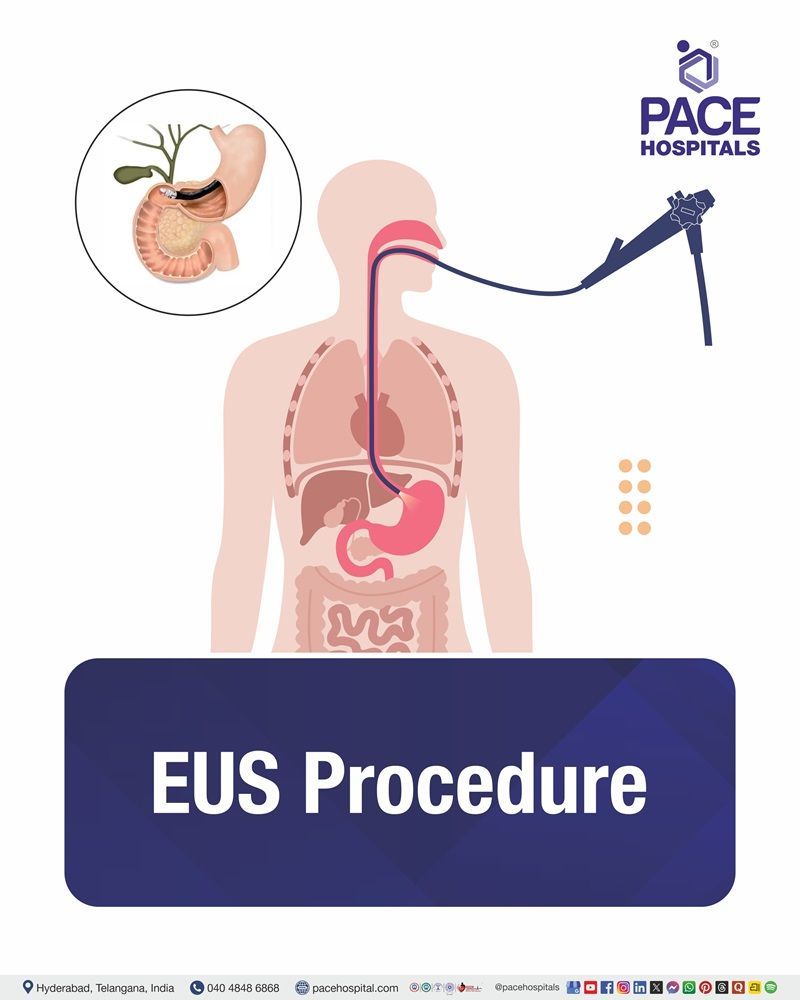
- To provide detailed views of the digestive tract and adjacent structures, a thin, flexible endoscope with an integrated ultrasound probe is passed through the mouth or rectum.
- The process offers high-resolution imaging that helps detect abnormalities that may not be apparent on traditional imaging tests, such as tumors, cysts, gallstones, enlarged lymph nodes, and inflammation.
- Additionally, EUS can be used to collect tissue or fluid samples for laboratory investigation using fine-needle aspiration (FNA) or fine-needle biopsy (FNB), which helps confirm a diagnosis.
- When a thorough assessment of gastrointestinal or pancreatobiliary problems is required or when the results of other imaging tests are inconclusive, EUS is typically carried out as a minimally invasive outpatient procedure under sedation.
EUS Test Cost in India
On average, the EUS Procedure cost in India ranges from ₹18,000 to ₹42,000 and above (approximately US $215 to US $505). However, the actual cost may vary depending on several factors, including:
- The reason for performing the EUS procedure (therapeutic/diagnostic)
- Organ being visualized by EUS (oesophagus, stomach, pancreas, bile ducts, rectum, or lymph nodes around these areas)
- Use of FNA or FNB performed during the procedure
- Complexity of the case
- Patient's age, general condition, and existing diseases/conditions
- Type of hospital (private, corporate, or trust hospitals)
- Hospital costs, which may include day care or room costs and facility costs (in case of hospital admission)
- Anesthesia/Sedation administration cost during the procedure
- Expertise of the gastroenterologist/endosonographer and other medical personnel assisting in the procedure
- Pre-procedural tests, pathology/lab costs (in case of biopsy) and post-procedural care needed
- Insurance approval or corporate approval for cashless procedure
EUS Test Cost in Hyderabad, Telangana
On average, the cost of an EUS procedure in Hyderabad ranges from ₹20,000 to ₹40,000 (approximately US $208 to US $415). These rates offer a competitive and cost effective option compared to other top hospitals in the city, with advanced surgical care and personalized treatment planning readily available.
However, the Endoscopic Ultrasound Cost in Hyderabad is influenced by several factors, such as:
- The objective of the procedure (diagnostic or EUS-guided biopsy/FNA/FNB)
- The level of complexity and time involved in the procedure
- The selected hospital and endoscopy unit facilities
- Expertise of the gastroenterologist and multi-disciplinary help
- Type of anesthesia/sedation needed
- Scope of investigation and follow-up after the procedure
- Necessity of biopsy or any other procedure during and after the procedure or management of procedure-related complications
Cost Breakdown According to Type of EUS Procedure
- Diagnostic Endoscopic Ultrasound (Upper GI / Lower GI) – ₹18,000 – ₹28,000 (US $215 – US $335) (approx.)
- EUS-Guided Biopsy / Fine Needle Aspiration (FNA) – ₹25,000 – ₹35,000 (US $300 – US $420) (approx.)
- EUS for Pancreatic/Biliary Evaluation – ₹28,000 – ₹40,000 (US $335 – US $485) (approx.)
- EUS-Guided Cyst Drainage / Therapeutic EUS – ₹30,000 – ₹42,000+ (US $360 – US $505+) (approx.)
Note: These are the estimated costs based on standard clinical practice and may vary. The actual cost of the procedure will be known after a thorough evaluation by the gastroenterology department, depending on the cause of the procedure, whether there is a need for sample collection or any therapeutic procedure, the type of anesthesia or sedation used, and the length of stay in the hospital.
Additional Information: The EUS test price may differ according to various considerations, such as whether the EUS is a diagnostic or therapeutic procedure, fine needle aspiration (FNA) or fine needle biopsy (FNB) is required, the complexity of the condition being evaluated, the type of anesthesia or sedation used, the time of the procedure, need for special instruments or accessories, laboratory evaluation of biopsy specimens, hospitalization(if required), and the experience level of the gastroenterologist. It helps ensure that each patient receives a customized approach and cost consideration tailored to their medical needs.
Breakdown of EUS Procedure Costs
The complexity of the procedure (diagnostic or therapeutic EUS), the type of anaesthesia used, the hospital, and the patient's overall health all affect the cost of an Endoscopic Ultrasound (EUS) procedure. The endoscopic ultrasound price usually includes several cost components, which are broken down in detail below:
Pre-Procedure Costs
- Consultation Fees: Depending on the hospital and the doctor's experience, consultation fees with a gastroenterologist or therapeutic endoscopist may differ.
- Diagnostic Evaluation: Consists of a review of prior imaging examinations (CT, MRI, PET, or abdominal ultrasound), laboratory testing, and clinical evaluation to ascertain whether EUS is necessary.
- Routine Pre-Procedure Tests (for Sedation or Anesthesia): To ensure patient safety during sedation or anesthesia, routine pre-procedure tests may include a complete blood count (CBC), liver function tests (LFTs), kidney function tests (KFTs), coagulation profile (PT/INR), blood sugar levels, and other investigations as clinically indicated.
- Pre-Procedure Assessment including Medical History and Physical Examination: This includes a physical examination and medical history review, a thorough assessment of the patient's symptoms, allergies, current heart, lung, liver, or renal diseases, and medications (particularly blood thinners). Before the surgery, the doctor also provides instructions on medication adjustments and fasting.
EUS Procedure Costs
- Hospital or Endoscopy Suite Charges: Fees associated with using the endoscopic unit, procedure room, recovery area, daycare admission, or hospital services as needed.
- EUS Procedure Charges: Expenses related to carrying out the Endoscopic Ultrasound examination, such as the usage of sophisticated imaging equipment and a specialist echoendoscope. Procedures such as EUS-guided Fine Needle Aspiration (FNA), Fine Needle Biopsy (FNB), cyst drainage, or therapeutic procedures may include additional costs.
- Sedation/Anesthesia and Medical Team Fees: Expenses for intravenous sedation or general anesthesia (if necessary), anesthesiologist fees, nursing personnel, endoscopic technicians, and the gastroenterology team performing the surgery are included.
Post-Procedure Care Costs
- Post-Procedure Monitoring: Fees for monitoring the patient in the recovery area until the sedation or anesthesia wears off and their condition is stable.
- Hospital Stay (if Required): The majority of diagnostic EUS procedures are performed on a day-care basis; however, if therapeutic EUS is required, complications arise, or the patient's condition necessitates overnight observation, hospitalization expenses may be included.
- Follow-Up Visits and Additional Care: Follow-up consultations with the concerned physician should be included to review the findings, plan further therapy, review biopsy/pathology reports, and monitor recovery after an interventional EUS was performed.
This cost transparency makes it easier for patients to manage their finances and undergo EUS. We offer you outstanding medical service and cost transparency through comprehensive cost estimates that consider your clinical condition and individual needs at PACE Hospitals, Hyderabad.
Who Needs EUS Procedure?
Not all patients with digestive complaints need an EUS procedure. When other imaging procedures, such as an MRI, CT scan, or ultrasound, do not yield sufficient information, it is typically advised for individuals who require a thorough assessment of the digestive system or adjacent organs. EUS helps in the diagnosis, staging, and occasionally treatment of several pancreatic and gastrointestinal disorders.
Common Conditions Indicating the Need for an EUS Procedure:
- Unexplained digestive symptoms: Individuals who have abdominal pain, weight loss, dysphagia, vomiting, or other symptoms should consider undergoing EUS to properly examine their digestive tract.
- Evaluation of pancreatic and biliary disorders: The procedure is frequently recommended to evaluate problems involving the gallbladder, bile ducts, or pancreas, such as unexplained bile duct enlargement, pancreatic cysts, chronic pancreatitis, or bile duct stones.
- Diagnosis of abnormal growths or lesions: EUS assists in evaluating suspicious findings identified during endoscopy, ultrasound, CT scan, or MRI, as well as abnormal masses, cysts, polyps, and enlarged lymph nodes.
- Cancer diagnosis and staging: It is generally considered the best choice for diagnosing and staging cancers of the oesophagus, stomach, pancreas, rectum, bile ducts, or adjacent lymph nodes. The procedure can also be used to guide fine-needle aspiration (FNA) or tissue biopsy for accurate diagnosis.
- Need for minimally invasive tissue sampling: EUS-guided fine-needle aspiration (FNA) or fine-needle biopsy (FNB) may be beneficial for those requiring biopsy of suspected lesions, cysts, or lymph nodes. In many circumstances, this can help prevent the need for more invasive surgical treatments.
Who is Not Eligible for EUS Procedure?
Although endoscopic ultrasound (EUS) is often regarded as a minimally invasive and safe diagnostic technique, not everyone may benefit from it. In the following circumstances, the procedure may be avoided or postponed:
- Unstable Medical Conditions: Because sedation and the treatment itself may increase health risks, patients with severe heart or lung illness, uncontrolled low blood pressure, or other major medical problems may not be suited for EUS until their condition is stabilized.
- Severe Bleeding Disorders: If an EUS-guided fine-needle aspiration (FNA) or biopsy is scheduled, people with uncontrolled bleeding disorders or those using blood thinners without proper medical supervision may be at a higher risk of bleeding.
- Acute Infection or Serious Illness: Until the underlying issue has been treated and the patient's general health has improved, patients with severe infections, high fever, sepsis, or other acute illnesses may need to postpone the treatment.
- Significant Gastrointestinal Obstruction or Perforation: Until these conditions are properly assessed and treated, patients with significant narrowing (strictures), complete obstruction, or suspected perforation of the oesophagus, stomach, or intestine may not be good candidates for EUS.
- Unable to Safely Undergo Sedation: Unless an alternative anesthesia or specific precautions are planned, people with a known allergy to sedative medicines, significant respiratory compromise, or who are unable to tolerate sedation may not be eligible for EUS.
To determine whether Endoscopic Ultrasound (EUS) is appropriate, ensure patient safety, and obtain precise diagnostic results, a comprehensive assessment by a Gastroenterologist is necessary.
Endoscopic Ultrasound (EUS)– How is the Procedure Done?
To ensure patient comfort during the treatment, endoscopic ultrasound (EUS) is typically carried out under general anesthesia or conscious sedation. The following steps are often involved in the procedure:
- Pre-Procedure Evaluation: To determine whether EUS is appropriate and safe, the physician reviews the patient's medical history, prescription medications, allergies, and fasting status.
- Sedation and Endoscope Insertion: Depending on the location being examined, a thin, flexible endoscope with an integrated ultrasound probe is carefully inserted through the mouth into the oesophagus, stomach, or duodenum following the administration of sedation or anesthesia.
- Ultrasound Examination and Tissue Sampling: The digestive system and surrounding organs, including the pancreas, bile ducts, liver, and lymph nodes, are assessed using high-frequency ultrasound pictures. When necessary, tissue or fluid samples are obtained for laboratory analysis using Endoscopic Ultrasound-Guided Fine-Needle Aspiration/Biopsy (EUS-FNA/FNB).
- Completion and Recovery: Once the procedure is over, the endoscope is removed, and any required tissue biopsies are taken. If the patient does not require further assistance, they will be discharged the same day after recovery from sedation.
Experienced gastroenterologists, therapeutic endoscopists, anesthesiologists, and skilled nursing staff use cutting-edge endoscopic ultrasound (EUS) technology at PACE Hospitals in Hyderabad to ensure accurate diagnosis, safe tissue sampling, and comprehensive patient care.
Types of EUS Procedure
Depending on the organ being assessed, whether tissue collection is required, and the goal of the examination, several Endoscopic Ultrasound (EUS) methods may be performed. The cost and total treatment strategy can be affected by the type of procedure performed.
- Diagnostic Endoscopic Ultrasound (EUS): The digestive tract and surrounding organs, including the pancreas, liver, gallbladder, bile ducts, and lymph nodes, are imaged in detail using diagnostic endoscopic ultrasound (EUS). Tumors, cysts, stones, and other gastrointestinal disorders are frequently diagnosed with it.
- EUS with Fine-Needle Aspiration (EUS-FNA): This minimally invasive technique involves passing a fine needle through the endoscope to obtain tissue or fluid samples from suspected tumors, cysts, or swollen lymph nodes for laboratory analysis.
- EUS with Fine-Needle Biopsy (EUS-FNB): Similar to EUS-FNA, EUS with Fine-Needle Biopsy (EUS-FNB) takes a larger tissue sample using a specialized biopsy needle, enabling more thorough pathological investigation in some circumstances, such as suspected malignancies.
- Therapeutic Endoscopic Ultrasound (Interventional EUS): Interventional EUS, or therapeutic endoscopic ultrasound, is used for treatment rather than diagnosis. It involves treatments such as biliary or pancreatic duct drainage; celiac plexus block or neurolysis for pain management; drainage of pancreatic fluid collections or cysts; and, in certain situations, stent implantation.
Note: The type of Endoscopic Ultrasound (EUS) procedure (diagnostic or therapeutic), whether Fine-Needle Aspiration (FNA) or Fine-Needle Biopsy (FNB) is necessary, the complexity of the condition, the anesthesia used, laboratory or pathology fees, and the length of hospital stay, if necessary, can all affect the cost of the procedure. The cost of therapeutic and biopsy-based EUS procedures is typically higher than that of a typical diagnostic EUS.
Post- EUS Procedure Care Tips
Following the suggested post-procedure care guidelines after an Endoscopic Ultrasound (EUS) procedure promotes smooth recovery and lowers the possibility of complications:
- It is recommended that one rest for the remainder of the day after the procedure, especially if anesthesia or sedation is used.
- It is advised that individuals do not drive, operate any equipment, sign important papers, or consume alcohol within 24 hours after sedation.
- It is advised that individuals start with clear fluids and then progress to a regular diet, as instructed by the doctor, especially if they have undergone a biopsy or fine-needle aspiration (FNA).
- It is advised to take all prescribed medications, including pain relievers or antibiotics (if prescribed), exactly as instructed by the physician.
- It is advisable to drink enough fluids after the test, unless told otherwise, to remain hydrated.
- It is suggested that one look out for symptoms such as extreme stomach pain, continuous vomiting, fever, shivering, difficulty swallowing, pain in the chest area, black stools, or throwing up blood.
- It is advised to attend all follow-up appointments to discuss the outcomes of the EUS test, any biopsies performed, and any future treatment or investigations required.
Following these instructions helps ensure prompt detection and treatment of any potential issues after an Endoscopic Ultrasound (EUS) procedure and supports a safe recovery.
Key Factors Influencing EUS Procedure Cost
Several medical and hospital-related factors affect the cost of an endoscopic ultrasound (EUS) procedure. Patients are better able to plan their therapy and estimate overall costs when they are aware of these factors.
Pre-Procedure Evaluation
The total cost includes a gastroenterology consultation, a review of the patient's medical history, blood tests, imaging, and a fitness evaluation before treatment.
Insurance Coverage
The extent of health insurance coverage or corporate cashless approval may significantly reduce the patient's out-of-pocket costs for the EUS procedure.
Hospital and Location
The hospital's infrastructure, accreditation, and location all affect the cost. In large cities like Hyderabad, sophisticated multi-specialty hospitals could charge more than smaller healthcare institutions.
Type and Purpose of the EUS Procedure
Compared with interventional techniques such as EUS-guided Fine Needle Aspiration (FNA), Fine Needle Biopsy (FNB), cyst drainage, celiac plexus block, or other therapeutic interventions, which require additional knowledge and tools, diagnostic EUS is typically less expensive.
Sedation or Anesthesia Requirements
The overall cost of the procedure may vary depending on the type of sedation or anesthesia used and the anesthesiologist's fees, if applicable.
Specialist Expertise
Higher professional costs may be associated with procedures performed by highly skilled gastroenterologists or advanced endoscopists with specialized training in EUS.
Equipment and Technology Used
The cost of the treatment may increase if specialist biopsy needles, high-resolution imaging, advanced endoscopic ultrasound systems, and other disposable accessories are used.
Additional Laboratory and Pathology Tests
The laboratory fees are added to the overall cost if tissue or fluid samples are taken during EUS for cytology, histopathology, microbiological examination, or molecular testing.
Patient Health and Hospital Stay
The total cost of treatment may vary depending on the patient's general health, underlying medical conditions, the severity of the illness, and whether hospitalization or observation is necessary after the procedure.
Why Choose PACE Hospitals for EUS Procedure in Hyderabad, India?
A trusted center for Endoscopic Ultrasound (EUS) procedures, PACE Hospitals, Hyderabad, provides cutting-edge gastrointestinal diagnostic and therapeutic care.
- Experienced gastroenterologists, endoscopy experts, anesthesiologists, and nursing staff
- High-resolution endoscopic ultrasound with detailed images for precise diagnosis and minimally invasive interventions
- Highly equipped endoscopy rooms with full patient monitoring measures
- Patient-focused care with customized assessment, clear cost estimates, and full pre-and post-procedure support
PACE Hospitals offers professional care, competitive pricing, cutting-edge technology, and high standards of patient safety for individuals searching for the Best EUS Procedure Hospital in Hyderabad, Telangana, India.
Financial Assistance and Payment Plans at PACE Hospitals
By offering transparent costs and extensive financial assistance, we at PACE Hospitals strive to make Endoscopic Ultrasound (EUS) procedures affordable.
- Cashless admission by insurance-empanelled hospitals and TPAs based on the terms and conditions of the policy/eligibility.
- Help with pre-admission authorization, insurance documentation, and admission processes to ensure that the treatment process runs smoothly.
- Financial assistance for patients with an insurance plan who lack cashless admission facilities.
- Pre-treatment estimate of costs for EUS based on the indications, whether it is a diagnostic or EUS-guided procedure like FNA/biopsy.
- Assistance with corporate insurance, government health programs, and any other healthcare benefit available to help reduce out-of-pocket expenses.
Success Rate of EUS Procedure
A very precise and secure diagnostic technique is endoscopic ultrasound (EUS). Depending on the condition being assessed, the lesion's location, and whether EUS-guided Fine-Needle Aspiration (FNA) or Fine-Needle Biopsy (FNB) is carried out, the diagnostic accuracy of EUS typically ranges from 85% to 95%. When performed by skilled gastroenterologists using state-of-the-art technology, EUS yields highly reliable results that aid in selecting the best course of treatment.
After an EUS procedure, patients may benefit from:
- The detection and staging of various ailments and conditions of the GI tract, pancreas, and bile ducts.
- Collection of accurate samples using EUS-guided FNA/FNB, thereby eliminating the need to undertake additional invasive procedures for diagnosis.
- Timely detection of cancers, cysts, tumors, and other abnormal findings, enabling timely treatment planning.
The overall success of this procedure will depend on factors such as the patient's condition, the lesion's position and size, the quality of tissue samples that may be obtained when needed, and adherence to instructions before and after the procedure. The choice of a highly experienced gastroenterology team and attending, along with recommended follow-up appointments, further contributes to optimal diagnostic outcomes.
Request a Personalized Treatment Cost Estimate
Every patient's medical condition and treatment plans are unique, which means the overall cost can vary. To receive an accurate estimate, our specialists evaluate your diagnosis, medical history, recommended treatment, and any necessary investigations before providing a detailed cost breakdown.
Whether you are planning a diagnostic test, treatment, or surgery, our team is here to help you understand the expected expenses and guide you through every step of the process.
Get in touch with us today to request a personalized treatment cost estimate.