Radiofrequency Ablation (RFA) Cost in Hyderabad, India – 2026 Guide
Get a Cost Estimate for Radiofrequency Ablation (RFA) Procedure
Procedure & Surgery Cost Pages
All You Need To Know About Radiofrequency Ablation (RFA) Procedure
Radiofrequency Ablation (RFA) is a minimally invasive procedure used to treat chronic pain and certain medical conditions by using heat generated from radiofrequency energy to target specific nerves or abnormal tissue.
- To deliver controlled radiofrequency energy to the targeted nerve or tissue, a tiny needle is inserted under imaging guidance.
- The heat generated minimizes harm to nearby healthy structures while disrupting the transmission of pain signals or destroying abnormal tissue.
- Depending on the condition being treated, the procedure can help control some cancers and irregular heart rhythms, increase mobility, lessen the need for painkillers, and provide long-lasting pain relief.
- RF Ablation is normally carried out in an outpatient setting where local anesthesia is used, usually with mild sedation. It is recommended for individuals who fail to get sufficient symptom relief from medication and physiotherapy or any other conservative treatments.
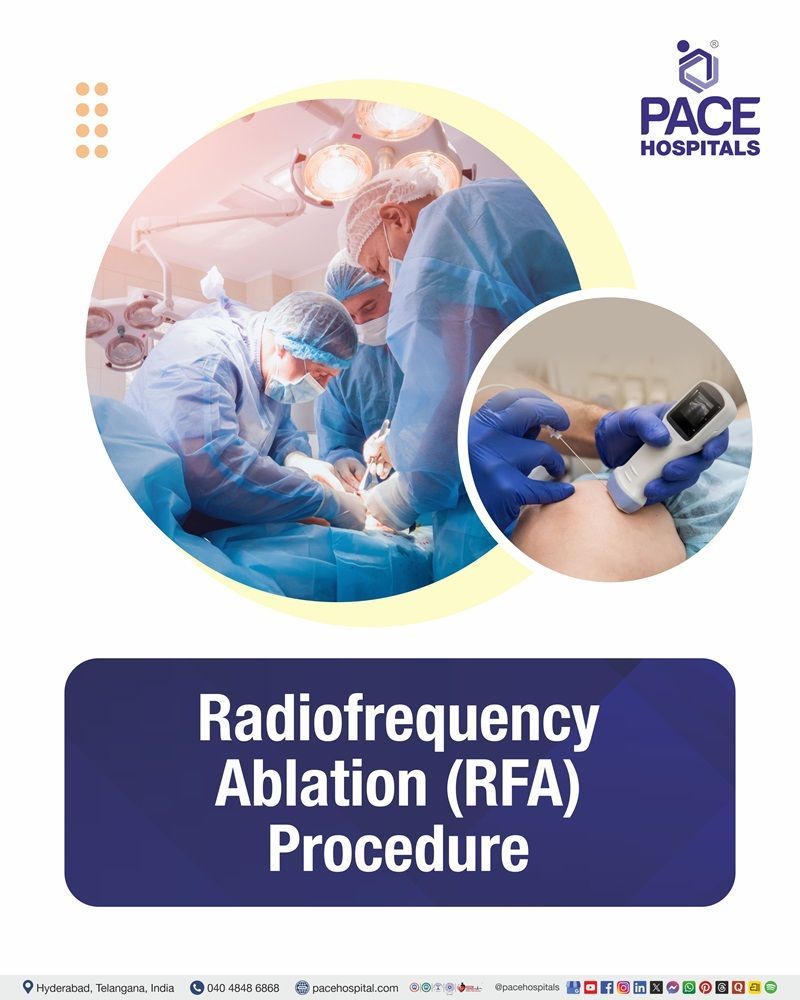
Radiofrequency Ablation Cost in India
On average, the Radiofrequency Ablation cost in India ranges from ₹40,000 to ₹4,50,000 and above (approximately US $414 to US $4,662). However, the actual cost may vary depending on several factors, including:
- The medical condition to be managed (chronic pain, cardiac arrhythmia, varicose veins, tumors in the liver, kidney, lung, or bone)
- Type of radiofrequency ablation procedure to be performed and its site
- Number and size of nerves, veins or tumors to be treated
- Age and general health condition of the patient and associated diseases
- Type of hospital (private, corporate or trust hospital)
- Hospital fees and category of room along with other facilities in the hospital
- Use of imaging, need for anesthesia, and experience of interventional radiologist
- Pre-procedure tests, hospitalization (if needed) and post-procedure care
- Insurance coverage or corporate approvals for cashless treatment
Radiofrequency Ablation Cost in Hyderabad, Telangana
On average, the Radiofrequency Ablation Procedure cost in Hyderabad ranges from ₹1,00,000 to ₹3,00,000 and above (approximately US $1,036 to US $3,108). These rates offer a competitive and cost effective option compared to other top hospitals in the city, with advanced surgical care and personalized treatment planning readily available.
However, the cost of Radiofrequency Ablation Procedure in Hyderabad is influenced by several factors, such as:
- The cause for the treatment and the complexity of the procedure itself.
- The location where treatment will be done (such as spine, liver, thyroid gland, kidneys, and lungs).
- The choice of facility and hospital infrastructure.
- Expertise required from the specialists and need for multi-specialists care.
- Imaging techniques to be employed during the procedure (Ultrasound, CT or fluoroscopy).
- Insurance or corporate approvals for cashless treatments.
- Tests required before and after the treatment procedure.
- Any potential complications requiring additional treatment or hospitalization
Cost Breakdown According to Type of Radiofrequency Ablation Procedure
- Cancer Pain RFA (Palliative) - ₹50,000 - ₹1,20,000 (US $524– US $1,258) (approx.)
- Facet Joint RFA- ₹40,000 - ₹80,000 (US $419– US $839) (approx.)
- Trigeminal Neuralgia RFA - ₹60,000 - ₹1,80,000 (US $629– US $1,887) (approx.)
- Varicose Vein RFA- ₹80,000 - ₹1,00,000 (US $839– US $1,048) (approx.)
- Spinal RFA (Pain management)- ₹40,000 - ₹2,00,000 (US $419 – US $2,096) (approx.)
- Tumor Ablation (Liver, Kidney, Lung)- ₹1,80,000 - ₹3,00,000 (US $1,887– US $3,145) (approx.)
- Cardiac RFA- ₹2,20,000 – 4,50,000+ (US $2,306 – US $4,717+) (approx.)
Note: These are approximate expenses that may differ between hospitals and are based on standard clinical practice. After a thorough assessment by the treating specialist, which considers the condition being treated, the size and location of the target tissue, the need for imaging guidance (CT or ultrasound), the need for anesthesia, and the expected length of hospital stay, the precise cost for each patient is ascertained.
Additional Information: There are several factors such as the type of RFA involved, the medical problem to be treated (such as tumors, varicose veins, chronic pain, etc.), the nature of the procedure, the type of imaging guidance involved, anesthesia used, hospital stay, other procedures, and the expertise of the specialist performing the procedure that might influence the cost of the procedure. All these ensure that each patient gets a clear cost estimate tailored to their individual needs and a treatment plan to go along with it.
Breakdown of Radiofrequency Ablation (RFA) Procedure Costs
The body part being treated (such as the spine, liver, thyroid, veins, or nerves), the complexity of the procedure, the need for imaging guidance, and the patient's general health condition all affect the cost of Radiofrequency Ablation (RFA). The costs usually related to an RFA procedure are broken down in detail below:
Pre-Procedure Costs
- Consultation Fees: Depending on the medical condition being treated, fees for consultation with the appropriate professional (pain management specialist, interventional radiologist, vascular surgeon, oncologist, endocrinologist, or other specialists).
- Diagnostic Tests: Blood tests, imaging examinations (X-ray, ultrasound, CT scan, or MRI), and other investigations needed to establish the diagnosis, identify the treatment area, and design the procedure are all considered diagnostic testing.
- Routine Pre-Procedure Panel (for Anesthesia/Sedation): Complete Blood Count (CBC), Liver Function Test (LFT), Kidney Function Test (KFT), blood sugar levels, coagulation profile (PT/INR, aPTT), and other tests as needed to guarantee patient safety during the procedure are all included.
- Pre-Procedure Evaluation including Medical History and Physical Examination: This is done through a comprehensive evaluation of the patient's past medical history, medications (especially anti-coagulants), allergies, surgical history, and physical examination to ascertain suitability for RFA and minimize procedural risks.
Radiofrequency Ablation (RFA) Procedure Costs
- Hospital or Daycare Charges: Recovery room charges, nursing services, operating room or catheterization/interventional suite charges, and admission charges. For complicated cases that would need close monitoring, there might be ICU charges.
- RFA Procedure Charges: Comprises the cost of the actual radiofrequency ablation process, specialized disposable electrodes or probes, imaging guidance (such as CT, ultrasound, or fluoroscopy), and procedural equipment.
- Anesthesia/Sedation and Procedural Team Fees: Consultation fees for the anesthesiologist, the interventional team performing the treatment, local anesthesia, conscious sedation, or general anesthesia (if necessary).
Post-Procedure Care Costs
- Post-Procedure Monitoring: Fees for monitoring vital signs before discharge, pain assessment, and supervision just after the treatment.
- Hospital Stay (if Required): The majority of RFA treatments are carried out as day-care procedures; but, in certain complex cases or if complications arise, an overnight hospital stay or longer stay may be necessary.
- Follow-Up Visits: Comprises regular follow-up consultations, clinical assessment, imaging (if necessary), evaluation of treatment response or symptom reduction, wound care, and handling of any issues or complications that may arise after the procedure.
This more transparent cost structure helps patients better understand the various costs associated with Radiofrequency Ablation (RFA). To provide patients with high-quality, reasonably priced, and patient-centered care, PACE Hospitals, Hyderabad, offers customized pricing estimates based on the patient's medical condition, the type of RFA procedure needed, and unique treatment needs.
Who Needs Radiofrequency Ablation Procedure?
RFA is not appropriate for all people who have pain or abnormal tissue. The following are some cases in which an individual would benefit from RFA when conservative measures have failed to treat the situation; when long-lasting pain relief is necessary; and when significant surgery needs to be avoided.
Common Conditions Indicating the Need for Radiofrequency Ablation (RFA):
- Chronic Back or Neck Pain: Persistent pain that has not improved with conservative treatment and is caused by facet joint degeneration or arthritis.
- Trigeminal Neuralgia or Chronic Nerve Pain: Severe facial or nerve-related pain that persists despite medication is referred to as trigeminal neuralgia or chronic nerve pain.
- Cancer-Related Pain: Pain caused by specific cancers that are not sufficiently managed by painkillers.
- Benign or Cancerous Tumors: When surgery is not an option or is not feasible, certain tumors of the liver, kidney, lung, bone, thyroid, or other organs can be treated using thermal ablation.
- Varicose Veins (Venous Insufficiency): Endovenous radiofrequency ablation is a treatment for enlarged, painful, or symptomatic varicose veins caused by defective veins.
- Cardiac Arrhythmias: Catheter-based RFA is advised to restore a normal heart rhythm in some abnormal heart rhythms, such as supraventricular tachycardia (SVT) or atrial flutter.
- Persistent Symptoms Despite Conservative Treatment: Patients who still have severe pain or symptoms after receiving medication, injections, physical therapy, or other non-surgical treatments are said to have persistent symptoms despite conservative treatment.
- Improved Quality of Life: Patients who may benefit from RFA and whose everyday activities, mobility, employment, or sleep are greatly impacted by chronic pain or the underlying condition.
Who is Not Eligible for Radiofrequency Ablation Procedure?
Although radiofrequency ablation (RFA) is typically a minimally invasive and safe procedure, not everyone is a suitable candidate for it. In the following circumstances, RFA may be avoided or postponed:
- Active Infection: As the procedure may increase the risk of spreading infection, patients with a systemic illness or a local skin infection at the treatment site may not be eligible until the infection has fully resolved.
- Uncontrolled Medical Conditions: Complications during or following the procedure may be more likely in people with uncontrolled diabetes, severe heart or lung disease, uncontrolled hypertension, bleeding disorders, or significant medical instability. Before RFA, these issues should be medically optimized.
- Blood Clotting Disorders or Blood Thinner Use: Due to an increased risk of bleeding, patients with major coagulation disorders or those using anticoagulant (blood-thinning) drugs may not be eligible unless the medications can be properly adjusted under medical care.
- Pregnancy (In Certain Cases): Unless the anticipated benefits clearly outweigh the possible risks, RFA may not be advised during pregnancy, especially when fluoroscopy (X-ray guidance) is necessary.
- Unsuitable Anatomy or Underlying Condition: Patients may not be good candidates for the procedure if their tumor or pain source cannot be precisely identified, if their lesions are too close to important organs, blood vessels, or major nerves, or if their disease is advanced and RFA is unlikely to be of significant benefit.
- Unrealistic Expectations or Inability to Cooperate: RFA might not be suitable for people who have unrealistic expectations about the results of their treatment or who are unable to stay motionless, follow directions, or participate in the required follow-up care.
To determine whether Radiofrequency Ablation (RFA) is a safe and suitable therapy based on the patient's medical condition and treatment goals, a comprehensive evaluation by an Interventional Radiologist, Pain Management Specialist, or the treating specialist is necessary.
Radiofrequency Ablation (RFA) – How is the Procedure Done?
RFA is a minimally invasive technique that is performed under local anesthesia, which can be associated with some sedation depending on the site of treatment and the health status of the patient. The procedure generally involves the following stages:
- Pre-Procedure Evaluation: Identification of the target nerve, vein, or tumor using imaging guidance (such as ultrasound, fluoroscopy, or CT scan), clinical evaluation, and review of medical history.
- Procedure Planning: Procedure planning involves selecting the appropriate RFA technique, treatment location, and needle or catheter insertion based on the underlying disease.
- Needle or Catheter Placement and Ablation: Using imaging guidance, a customized RFA needle or catheter is placed into the target area. The targeted tissue is then destroyed or rendered inactive while the surrounding healthy structures are preserved by the regulated heat produced by the delivery of radiofrequency radiation.
- Monitoring and Dressing: A small dressing is placed at the insertion site while the treated area is observed for any immediate complications. Before discharge, vital signs are monitored.
- Recovery: Following a brief observation period, most patients are discharged the same day. Depending on the condition being treated, recovery is typically rapid, and many people can return to their regular daily activities in a couple of days.
At PACE Hospitals in Hyderabad, a multidisciplinary team of interventional radiologists, pain management specialists, vascular surgeons, oncologists, anesthesiologists, and trained nurses perform Radiofrequency Ablation (RFA) using state-of-the-art image-guided techniques to guarantee safe treatment, efficient pain relief, and comprehensive post-procedure care.
Types of Radiofrequency Ablation (RFA) Procedures
Depending on the underlying medical condition being treated, several Radiofrequency Ablation (RFA) techniques are carried out. The technique selection affects the overall cost, complexity, and treatment strategy:
- Facet Joint Radiofrequency Ablation: This is performed to relieve chronic neck, upper back, or lower back pain from facet joint arthrosis or degeneration. This technique is used on the medial branches of nerves that carry pain impulses.
- Trigeminal Neuralgia Radiofrequency Ablation: It is done to provide relief from severe facial pain from trigeminal neuralgia. The treatment destroys pain-conducting nerve fibers but leaves other tissues intact.
- Genicular Nerve Radiofrequency Ablation: For persistent knee discomfort after knee replacement surgery or chronic knee pain caused by osteoarthritis, genicular nerve radiofrequency ablation is advised. The genicular nerves surrounding the knee joint are the target.
- Sacroiliac (SI) Joint Radiofrequency Ablation: This procedure treats the sensory nerves that supply the sacroiliac joints in the lower back and pelvis to relieve chronic pain.
- Varicose Vein Radiofrequency Ablation (Endovenous RFA): Varicose veins caused by venous insufficiency can be treated with varicose vein radiofrequency ablation (Endovenous RFA), a minimally invasive vascular surgery. To improve blood flow and alleviate symptoms, heat energy is delivered inside the damaged vein to seal it.
- Tumor or Cancer Pain Radiofrequency Ablation: When medication is not enough to alleviate pain from some malignancies or metastatic bone lesions, this procedure is used. Small tumors in organs like the liver, kidney, lung, or bone may occasionally be removed by RFA.
Note: The type of procedure, the condition being treated, the number of nerves or lesions targeted, imaging guidance (fluoroscopy, ultrasound, or CT), the need for anesthesia, and whether the procedure is done as a day-care procedure or requires hospitalization all affect the cost of radiofrequency ablation (RFA). Single-site treatments are typically less expensive than more complicated or multi-site RFA procedures.
Post-Radiofrequency Ablation (RFA) Care Tips
To maximize treatment results, reduce complications, and encourage healing following a Radiofrequency Ablation (RFA) procedure, appropriate post-procedure care is crucial:
- It is recommended that you attend all follow-ups to keep track of your progress and evaluate the success of the procedure.
- It is advisable that you maintain hygiene in the treatment area for 24-48 hours, or according to the doctor's instructions.
- It is recommended to refrain from intense physical activity, lifting heavy objects, and high-impact exercise for a couple of days after the procedure.
- It is advisable to refrain from driving or using machinery for at least 24 hours if the procedure has been done using anesthesia/sedatives.
- If the doctor prescribes drugs such as painkillers or antibiotics after the procedure, it is advisable to use them as directed and continue taking them as long as necessary.
- The patient should be aware of any signs of infection, too much swelling, redness, pus formation, fever, or increased pain at the site where the treatment was done.
- The patient should also discuss with the doctor any other medical procedures that they intend to undergo in the future, especially in relation to the part where the procedure has been done.
- It is important to adhere to all post-procedural instructions, particularly on gradually going back to normal activities as advised by the doctor.
Following these instructions promotes the best long-term results after a Radiofrequency Ablation (RFA) procedure, ensures a safe recovery, and reduces the risk of complications.
Key Factors Influencing Radiofrequency Ablation Cost
Various medical and procedural factors affect the cost of radiofrequency ablation (RFA). Patients can estimate the total cost of treatment and make appropriate plans by understanding these essential components:
Pre-Procedure Evaluation
The total cost of therapy includes consultation with the doctor, diagnostic procedures, imaging examinations (such as MRI, CT scan, ultrasound, or X-ray), and laboratory tests performed before RFA.
Insurance Coverage
The scope of health insurance coverage or corporate cashless treatment approvals can considerably decrease out-of-pocket costs for radiofrequency ablation.
Hospital and Location
Because of their modern facilities and specialized care, treatment at multispecialty or tertiary care hospitals in urban areas like Hyderabad may be more expensive than treatment at smaller hospitals or healthcare facilities.
Post-Procedure Care
The entire cost of treatment includes follow-up consultations, prescription drugs, physiotherapy or rehabilitation (if necessary), and routine monitoring following the procedure.
Complications During or After the Procedure
Although RFA is usually regarded as safe, unforeseen complications such as nerve damage, bleeding, infection, or the need for additional intervention could raise the total cost of treatment.
Specialist Expertise
The total cost may vary depending on the experience and skill of the interventional radiologist, cardiologist, oncologist, vascular surgeon, or interventional pain specialist performing the procedure.
Type of Radiofrequency Ablation Procedure
RFA for pain management (facet joint or trigeminal neuralgia), tumor ablation, varicose vein RFA, thyroid nodule ablation, liver tumor ablation, lung tumor ablation, kidney tumor ablation, or cardiac catheter ablation, the cost varies based on the condition being treated and the complexity of the procedure being performed.
Travel and Accommodation
Patients travelling from other cities or states should consider transportation, accommodation, and other related expenses for themselves and accompanying family members.
Patient's Health Condition
The length of the procedure, the length of the hospital stay, and the post-surgical care may all be impacted by the patient's general health, age, underlying medical conditions, the severity of the disease, and the complexity of the targeted area.
Why Choose PACE Hospitals for Radiofrequency Ablation (RFA) Procedure in Hyderabad, India?
A trusted center for Radiofrequency Ablation (RFA) procedures, PACE Hospitals in Hyderabad provides complete care for several liver, kidney, lung, thyroid, bone, and venous disorders.
- Qualified interventional radiologists, surgeons, anesthesiologists, and well-trained nursing staff
- Superior radiofrequency ablation (RFA) technology using advanced imaging guidance, such as ultrasound and CT-guided techniques
- Sophisticated catheterization labs, interventional radiology suites, and state-of-the-art operating theaters
- Careful pre-procedure and post-procedure monitoring to ensure the safety of our patients
- Tailored treatment plans, multidisciplinary approach, clear fee structure, insurance and cashless facilities
PACE Hospitals provides experienced professionals, cutting-edge technology, affordable treatment rates, and safe, evidence-based care with an emphasis on the best possible clinical results for patients searching for the Best Radiofrequency Ablation (RFA) Procedure Hospital in Hyderabad, Telangana, India.
Financial Assistance and Payment Plans at PACE Hospitals
The Radiofrequency Ablation (RFA) procedure should be accessible without financial stress. When necessary, our staff helps patients with cashless treatment support and insurance-related procedures.
- Cashless hospitalization with empanelled insurance providers and Third-Party Administrators (TPAs), subject to policy terms and procedure eligibility.
- Pre-authorization assistance and documentation support to help ensure a smooth admission process.
- Reimbursement guidance for patients whose insurance plans do not offer cashless treatment.
- Transparent pre-procedure cost estimates based on the type of Radiofrequency Ablation (RFA), the organ being treated, and the patient's clinical condition.
- Assistance with corporate health insurance and eligible government healthcare schemes to help reduce out-of-pocket expenses, where applicable.
Success Rate of Radiofrequency Ablation (RFA) Procedure
Depending on the condition being treated, the size and location of the target tissue, and patient-related factors, radiofrequency ablation (RFA) is a very successful minimally invasive procedure with an overall success rate of about 80%–95%. RFA offers long-lasting symptom alleviation in carefully chosen patients, and many report a marked improvement in their quality of life.
After a successful Radiofrequency Ablation (RFA) procedure, patients may experience:
- Targeted destruction of the abnormal tissue without damaging nearby normal tissue
- Elimination of symptoms related to the condition being treated, such as pain or discomfort
- Rapid recovery, shorter hospital stay, and faster resumption of normal activity than traditional surgery
- Better quality of life because there is no need for further intervention in most cases
The type of medical condition, sufficient ablation of the target tissue, follow-up evaluations, and adherence to post-procedure instructions as advised by the performing physician are some of the factors that affect the long-term success of RFA. To assess treatment efficacy and identify any recurrence or need for further care, follow-ups and imaging investigations are crucial.
Request a Personalized Treatment Cost Estimate
Every patient's medical condition and treatment plans are unique, which means the overall cost can vary. To receive an accurate estimate, our specialists evaluate your diagnosis, medical history, recommended treatment, and any necessary investigations before providing a detailed cost breakdown.
Whether you are planning a diagnostic test, treatment, or surgery, our team is here to help you understand the expected expenses and guide you through every step of the process.
Get in touch with us today to request a personalized treatment cost estimate.