TACE Procedure Cost in Hyderabad, India – 2026 Guide
Get a Cost Estimate for TACE Procedure
Procedure & Surgery Cost Pages
All You Need To Know About the TACE Procedure
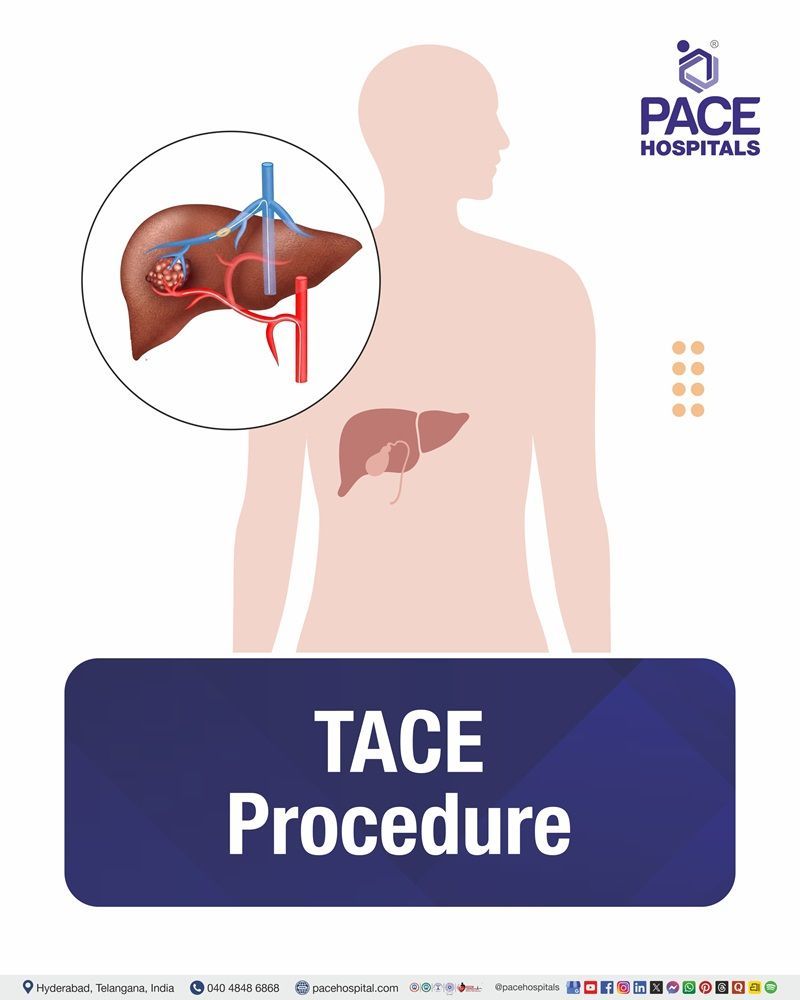
Transarterial chemoembolization (TACE) is a minimally invasive procedure used mainly to treat liver cancer. It combines chemotherapy with embolization, which means blocking the blood vessels that supply the tumour. This allows a concentrated dose of anticancer medicine to reach the tumor while reducing its blood supply and limiting exposure to the rest of the body.
- TACE procedure is recommended for patients with hepatocellular carcinoma (HCC) who are not suitable for surgical removal, liver transplantation, or certain ablation procedures. It may also be considered for selected cancers that have spread to the liver.
- Depending on the patient’s condition, TACE may be used as the main treatment, to control tumor growth, to reduce tumor size before another treatment, or as a bridge to liver transplantation.
- TACE is generally considered safe and effective for carefully selected patients. After the procedure, temporary symptoms such as fever, tiredness, nausea, and abdominal discomfort may occur. These are often part of post-embolization syndrome and usually improve with medical care.
TACE Procedure cost in India
On average, the TACE cost in India ranges between ₹1,00,000 - ₹5,50,000+ (approximately US $1,038 - US $5,713) per session. However, the actual cost may vary depending on several factors, including:
- The patient's age, overall health, liver function, and stage of liver disease.
- The type, size, number, and location of liver tumors.
- Whether a single TACE session or multiple treatment sessions are required.
- The type of embolic material, chemotherapy drugs, and specialised consumables used during the procedure.
- The type of hospital (private, government, or trust hospitals) and available interventional radiology facilities.
- Hospital charges, including room category, ICU stay (if needed ), and other medical facilities.
- Insurance coverage or corporate approvals for cashless treatment.
- Pre-procedure investigations, imaging studies, laboratory tests, and post-procedure follow-up care.
- Any complications that may require additional treatment or a longer hospital stay.
TACE Procedure Cost in Hyderabad, Telangana
On average, the Transarterial Chemoembolization (TACE) procedure cost in Hyderabad ranges between ₹1,20,000 - ₹3,70,000 (approximately US $1,245 - US $3,841). The exact cost varies depending on the patient's condition, the complexity of the procedure, and the type of embolic materials and chemotherapy agents used.
However, the cost of the TACE procedure in Hyderabad is influenced by several factors, such as:
- Patient's liver condition, tumor size/number, and stage of disease
- Type of TACE used
- Hospital infrastructure and reputation
- Number of sessions required (TACE is repeated every 10–14 months)
- Length of hospital stay and room category
- Interventional radiologist/oncology team expertise
- Pre- and post-procedure imaging and monitoring
Cost Breakdown According to Type of TACE Procedure
- Conventional TACE (c TACE) – Procedure Cost per Session: ₹1,20,000 – ₹2,00,000 (approx. US $1,245– US $2,076)
- Selective / Super Selective TACE – Procedure Cost per Session: ₹1,80,000 – ₹3,50,000+ (approx. US $1,868– US $3,633+)
- Drug Eluting Bead TACE (DEB TACE) – Procedure Cost per Session: ₹2,00,000 – ₹3,80,000 (approx. US $2,076– US $3,944)
- Balloon-Assisted TACE (b-TACE) – Procedure Cost per Session: ₹2,20,000 - ₹4,50,000 (approx. US $2,283– US $4,671)
- Repeat TACE Sessions – Procedure Cost per Session: ₹1,00,000 - ₹ 3,00,000 (approx. US $1,038– US $3,114)
- TACE Procedure for Complex Cases – Procedure Cost: ₹ 3,00,000 - ₹ 4,70,000+ (approx. US $1,038– US $4,879+)
Note: These are estimated costs. The exact cost for an individual patient is determined after a comprehensive evaluation by the interventional radiology and liver cancer team.
Additional Information: The cost of the TACE procedure may vary depending on several factors, including the type of TACE performed, the embolic materials and chemotherapy agents used, the number and size of liver tumours, liver function, imaging guidance required, duration of hospitalization, the need for repeat TACE sessions, and the expertise of the interventional radiologist and multidisciplinary liver cancer team. This ensures that every patient receives an individualized treatment plan along with a transparent cost estimate based on their specific medical condition.
Breakdown of TACE Procedure Costs
The transarterial chemoembolization procedure cost usually varies depending on the patient's medical condition, the complexity of the procedure, the type of embolic and chemotherapy agents used, and the duration of hospitalisation. Below is a detailed breakdown of the pricing associated with the TACE procedure:
Pre-Procedure Costs
- Consultation Fees: This includes the fees for consultations with hepatologists, medical oncologists, oncology surgeons, gastroenterologists, and interventional radiologists, which majorly depend on the patient's condition.
- Diagnostic Tests: Includes blood tests, liver function tests, kidney function tests, coagulation profile, viral hepatitis screening, tumor markers (if required), and imaging studies such as ultrasound, CT scan, or MRI to evaluate the liver tumor and plan treatment.
- Pre-Procedure Assessment: Comprehensive evaluation is conducted to determine liver function, cancer stage, overall health, and fitness for the procedure, including anaesthesia assessment if necessary.
TACE Procedure Costs
- Hospitalization Charges: Costs for hospital admission, expenses, nursing care, and monitoring prior to and following the treatment. Some patients may require a longer hospital stay depending on their condition.
- TACE Procedure: Costs related to the interventional radiology procedure, including catheterisation, angiography, delivery of chemotherapy directly into the tumour, embolization materials, and specialist fees.
- Procedure Consumables and Imaging during procedure: Charges for catheters, guidewires, contrast dye, embolic materials, chemotherapy drugs used during the procedure, angiography suite utilisation, and real-time imaging guidance.
Post-Procedure Care Costs
- Observation and Recovery: This includes costs for post-procedure monitoring, pain management, medications, and treatment of transitory symptoms .
- Hospital Stay: General hospitalization expenses until the patient is medically stable for discharge. The duration of stay varies depending on the patient's recovery and overall liver function.
- Follow-Up Visits and Imaging: Routine follow-up consultations, blood tests, CT scan or MRI, and additional imaging studies to evaluate the response to treatment, monitor liver function, and determine whether further TACE sessions or additional treatments are required.
This cost structure provides patients with a clear understanding of the expenses involved in the TACE. At PACE Hospitals, Hyderabad, we offer precise, personalised cost estimates based on each patient's medical condition, tumor type (non-cancerous or cancerous), and treatment requirements. This ensures transparent pricing and complete cancer care.
Who Needs the TACE Procedure?
Transarterial Chemoembolization (TACE) is not suitable for every patient with liver cancer. It is recommended for carefully selected patients whose liver function is adequate and whose tumours can benefit from targeted treatment through the liver's blood vessels. The decision to perform TACE is made after a thorough evaluation by a multidisciplinary team, including hepatologists, gastroenterologists, oncologists, liver surgeons, and interventional radiologists.
Common Conditions Indicating the Need for the TACE Procedure
- Intermediate-Stage Hepatocellular Carcinoma (HCC): TACE is most commonly recommended for patients with intermediate-stage liver cancer who have multiple tumours confined to the liver but are not suitable candidates for surgical removal or liver transplantation. It helps slow tumor growth and improve disease control.
- Unresectable Liver Cancer: Patients whose liver tumors cannot be safely removed because of the size, number, or locations, which may benefit from TACE procedure. The procedure delivers chemotherapy directly to the tumor while blocking its blood supply, helping to control tumor progression.
- Patients Unsuitable for Surgery or Ablation: Some patients cannot undergo liver surgery or local ablative treatments because of underlying liver disease, medical conditions, or tumor characteristics. TACE provides a minimally invasive treatment option that may help control the disease.
- Bridge to Liver Transplantation: For patients waiting for a liver transplant, TACE may be performed to slow tumor growth and keep the cancer within transplant eligibility criteria until a suitable donor liver becomes available.
- Recurrent Hepatocellular Carcinoma: If liver cancer returns after previous treatment also, then TACE may be recommended to control recurrent tumours, depending on the patient's liver function and overall health.
- Selected Liver Metastases: In carefully selected patients, TACE may also be used to treat cancers that have spread to the liver from other organs. This is when the disease is mainly confined to the liver and other treatment options are limited.
- Residual Tumor After Previous Treatment: If part of the liver tumor remains after treatments such as surgery, ablation, or other liver-directed therapies, TACE may be performed to target the remaining cancer cells and improve local tumor control.
In some cases, TACE procedure may also be combined with other treatment approaches, like targeted therapy, immunotherapy, ablation, or radiation therapy. This is dependent on the type of liver cancer, tumour stage, and the patient's overall health.
Who Is Not Eligible for the TACE Procedure?
While the TACE procedure is a safe and effective treatment for many patients with liver cancer, it is not suitable for everyone. Certain medical conditions may increase the risk of complications or reduce the benefits of the procedure.
- Severely impaired liver function: Patients with advanced liver failure or poor liver reserve may not tolerate TACE, as the procedure can further affect liver function.
- Extensive tumor spread outside the liver: TACE is generally not recommended when cancer has spread extensively beyond the liver, as other treatment options may be more appropriate.
- Complete blockage of the main portal vein: Patients with complete portal vein thrombosis may not be suitable for conventional TACE because reducing the liver's blood supply can increase the risk of liver damage.
- Active infection: Ongoing infections, including liver or bloodstream infections, should be treated before undergoing TACE to reduce the risk of complications.
- Severe kidney disease or contrast dye allergy: Since TACE uses contrast dye during imaging, patients with severe kidney impairment or a significant allergy to contrast agents may require alternative approaches or additional precautions.
- Uncontrolled bleeding disorders: Patients with severe clotting abnormalities or a very low platelet count may have an increased likelihood of bleeding during the procedure.
Assessment by a multidisciplinary liver team is essential to determine eligibility for TACE. A comprehensive evaluation, including blood tests, liver function assessment, imaging studies, and the patient's overall health, helps ensure that the procedure is safe and provide the greatest clinical benefit.
TACE Procedure – How is the TACE Procedure Performed?
TACE is a minimally invasive procedure performed by an interventional radiologist under local anaesthesia with sedation. The procedure typically involves the following steps:
- Pre-procedure evaluation: Complete assessment, includes blood tests, liver and kidney function tests, coagulation profile exams, CT or MRI scan, and evaluation by the liver care team to determine suitability for the procedure.
- Catheter placement: A thin catheter is inserted through an artery, usually in the groin or wrist, and carefully guided to the artery supplying the liver tumor using real-time imaging.
- Chemotherapy and embolization: Chemotherapy is delivered directly into the tumour-feeding artery, followed by embolic particles that block the blood supply, helping to keep the medication within the tumor and slow its growth.
- Monitoring and completion: Blood flow to the tumor is confirmed using imaging before the catheter is removed, and the puncture site is sealed.
- Recovery: Patients are monitored for several hours or overnight to manage pain or post-embolization symptoms, and most can return home within 1–2 days, depending on their overall condition and recovery.
Types of TACE Procedures
There are different types of TACE procedures are available depending on the patient's liver tumor, overall health, and treatment goals. The technique used may also influence the overall treatment cost.
- Conventional TACE (cTACE): Chemotherapy is mixed with an oily contrast agent and followed by embolic particles to block the tumor's blood supply; the most commonly performed technique.
- Drug-Eluting Bead TACE (DEB-TACE): Special microspheres loaded with chemotherapy are used to slowly release the drug directly into the tumor while simultaneously blocking its blood supply; may reduce systemic side effects.
- Balloon-Occluded TACE (B-TACE): In this, a small balloon catheter temporarily blocks blood flow during treatment, which allows better delivery of chemotherapy to selected liver tumors. It is used in carefully selected patients.
- Selective or Super-Selective TACE: The catheter is advanced into the specific artery supplying the tumor. This allows targeted treatment while preserving as much healthy liver tissue as possible. This approach is preferred whenever feasible.
Common Techniques Used During the TACE Procedure
- Selective Catheterization: A thin catheter is guided into the artery supplying the liver tumor to deliver treatment precisely while preserving healthy liver tissue.
- Super-Selective Catheterization: The catheter is advanced into smaller branches feeding the tumor, allowing highly targeted treatment and reducing damage to the surrounding liver.
- Image-Guided TACE: Real-time fluoroscopy and angiography are used throughout the procedure to accurately position the catheter and ensure precise delivery of treatment to the liver tumor.
Post-TACE Procedure Care Tips
After the transarterial chemoembolization procedure, following the doctor's instructions is important for a smooth recovery, monitoring liver function, and assessing the response to treatment.
- It is advised to rest for the first 24 to 48 hours after the procedure and gradually resume normal daily activities as recommended by your doctor.
- It is said to drink plenty of fluids, unless otherwise advised, to help the body recover and flush out the contrast dye used during the procedure.
- It is recommended to keep the catheter insertion site (groin or wrist) clean and dry, and watch for any swelling, bleeding, or signs of infection.
- It is suggested to avoid strenuous exercise, heavy lifting, and vigorous physical activity for several days or until the doctor confirms it is safe.
- If medications are prescribed to relieve pain, nausea, fever, or prevent infection, it is important to take them exactly as directed.
- It is recommended to eat a balanced, liver-friendly diet and avoid alcohol unless the healthcare provider advises otherwise.
- It is advised to attend all scheduled follow-up visits, including blood tests and imaging scans such as CT or MRI, to evaluate the tumor's response and monitor liver function.
- Seek urgent medical attention if you develop severe abdominal pain, persistent vomiting, high fever, jaundice, heavy bleeding from the catheter site, or worsening shortness of breath, as these may require prompt medical evaluation.
Key Factors Influencing TACE Procedure Cost
Transarterial Chemoembolization (TACE) is a specialised interventional radiology procedure used to treat liver tumours, and several factors influence the overall treatment cost. Knowing about these factors can help patients and their families better plan for the financial aspects of the procedure.
Pre-Procedure Evaluation
Comprehensive investigations, includes blood tests, liver function tests, kidney function tests, coagulation profile, CT scan or MRI of the liver, and consultations with hepatologists, oncologists, and interventional radiologists contribute to the overall cost.
Insurance Coverage
The extent of health insurance coverage or corporate approvals for cashless treatment can significantly reduce the patient's out-of-pocket expenses.
Hospital and Location
Treatment at multispecialty hospitals with advanced interventional radiology and oncology facilities in major cities such as Hyderabad may cost more than treatment at smaller healthcare centres.
Post-Procedure Care
Includes follow-up consultations, blood tests, imaging studies, medications, and regular monitoring to assess tumor response and liver function.
Procedure-Related Complications
If complications (like bleeding, infection, post-embolisation syndrome, liver dysfunction, or the need for additional treatment) occur, the overall cost may rise due to extended hospitalisation or more medical care.
Specialist Expertise
The experience of the interventional radiologist, hepatologist, medical oncologist, and multidisciplinary liver cancer team plays an important role in the success of the procedure and may influence the treatment cost.
Type of TACE Procedure
The cost of the procedure may vary depending on the type of TACE performed. DEB-TACE generally costs due to use of specialised drug-eluting beads and advanced embolisation materials.
Travel and Accommodation
Patients who are travelling from other cities or countries should also consider expenses related to transportation, accommodation, meals, and caregiver stay during the treatment period.
Patient's Overall Health
The size, number, and location of liver tumors, liver function, age, underlying medical conditions, and overall health can influence the complexity of the procedure, duration of hospital stay, and recovery; all of these affect the total treatment cost.
Why Choose PACE Hospitals for TACE Procedure in Hyderabad, India?
PACE Hospitals, Hyderabad, is a trusted centre for Transarterial Chemoembolization (TACE) and comprehensive liver cancer care.
- We have highly experienced interventional radiologists, hepatologists, gastroenterologists, medical oncologists, surgical oncologists, anaesthesiologists, and specialised nursing staff who follow evidence-based protocols to deliver safe and effective TACE procedures. Every patient is carefully evaluated by a multidisciplinary team to develop a personalised treatment plan based on the stage of liver disease, tumour characteristics, and overall health.
- Our facilities include advanced catheterisation laboratories, state-of-the-art imaging systems, modern interventional radiology suites, and dedicated critical care and post-procedure monitoring units to ensure precision, safety, and optimal outcomes for the patient. We are dedicated to patient-centred care, including complete support, treatment programs as per patient requirements, and transparent cost estimates.
For patients searching for the Best Hospital for TACE Procedure in Hyderabad, Telangana, India, PACE Hospitals offers advanced interventional oncology services, experienced hepatologist, cancer care, and transparent treatment planning.
Financial Assistance and Payment Plans at PACE Hospitals
At PACE Hospitals, we recognise that cancer treatment can be emotionally and financially difficult. Our team provides comprehensive assistance to patients in obtaining timely treatment with minimal financial stress.
- Cashless hospitalisation with empanelled insurance providers and TPAs
- Assistance with insurance pre-authorisation and required documentation
- Reimbursement guidance if a cashless facility is not available
- Transparent treatment cost estimates before the procedure
- Support for eligible corporate and government health schemes
TACE Procedure Success Rate
The TACE procedure is a well-established and effective treatment for selected patients with liver cancer. It has a technical success rate of approximately 95%–99% when performed by experienced interventional radiologists. The effectiveness in controlling the tumor depends on factors such as the size and number of tumors, liver function, and the patient's overall health.
Early-Stage HCC
- 1-Year Survival: ~91%
- 2-Year Survival: ~87%
- 3-Year Survival: ~66%
- 5-Year Survival: ~52%
Intermediate / Advanced HCC
- 1-Year Survival: ~82%
- 2-Year Survival: ~60%
- 3-Year Survival: ~47%
- 5-Year Survival: ~26%
Patients may experience:
- Slower tumor growth and improved disease control
- Reduction in tumor size in suitable patients
- Relief from cancer-related symptoms
Request a Personalized Treatment Cost Estimate
Every patient's medical condition and treatment plans are unique, which means the overall cost can vary. To receive an accurate estimate, our specialists evaluate your diagnosis, medical history, recommended treatment, and any necessary investigations before providing a detailed cost breakdown.
Whether you are planning a diagnostic test, treatment, or surgery, our team is here to help you understand the expected expenses and guide you through every step of the process.
Get in touch with us today to request a personalized treatment cost estimate.