TURP Surgery Cost in Hyderabad, India – 2026 Guide
Get a Cost Estimate for TURP Surgery
Procedure & Surgery Cost Pages
All You Need To Know About Transurethral Resection of the Prostate (TURP) Surgery
TURP (Transurethral Resection of the Prostate) is a standard surgical procedure for males who have benign prostatic hyperplasia (BPH), a non-cancerous enlargement of the prostate gland. BPH can cause urinary problems such as difficulty starting urination, weak urine flow, frequent urination, or incomplete bladder emptying, but it is not related to prostate cancer.
- TURP is most commonly performed in men over 50 years of age, as BPH prevalence increases with age.
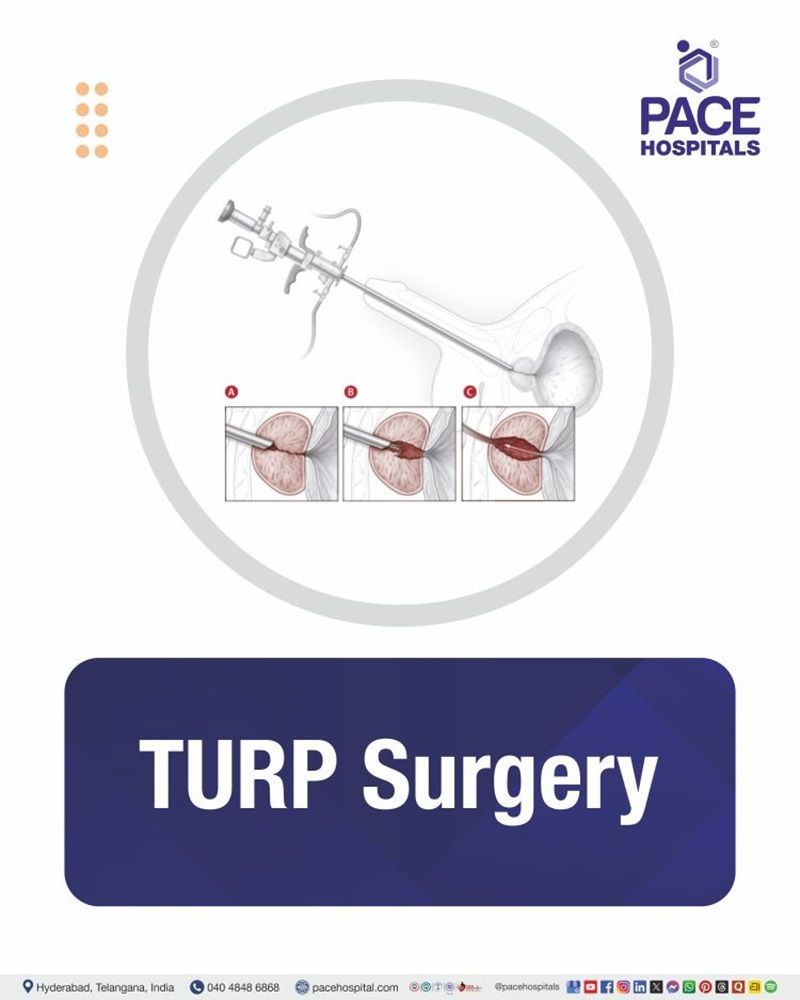
- During TURP, a specialized instrument called a resectoscope is inserted through the urethra to remove excess prostate tissue that blocks urine flow.
TURP Surgery Cost in India
On average, the cost of TURP (Transurethral Resection of the Prostate) Surgery in India ranges from ₹50,000 to ₹2,50,000 and above (approximately US $528 – $2,642). However, the actual cost may vary depending on several factors, including:
- Size of the prostate and severity of enlargement
- Type of TURP procedure (standard monopolar or bipolar TURP, laser-assisted TURP, or combined approaches for larger prostates)
- The patient’s age, overall health, and urinary tract condition
- The type of hospital (private, corporate, or trust hospitals)
- Hospital charges, including room category and facilities
- Anesthesia type and surgical team expertise
- Pre-operative evaluations and post-operative care requirements
- Insurance coverage or corporate approvals for cashless treatment
Cost of TURP Surgery in Hyderabad, Telangana
On average, the cost of Prostate Surgery - TURP (Transurethral Resection of the Prostate) in Hyderabad ranges from ₹60,000 to ₹2,00,000 and above (approximately US $630 – $2,100). These rates provide a competitive and cost-effective option compared to other top hospitals in the city, with advanced urology care and personalized treatment planning readily available.
However, the cost of TURP Surgery in Hyderabad is influenced by several factors, such as:
- Size of the prostate and severity of enlargement
- Type of TURP procedure, such as standard monopolar TURP, bipolar TURP, or laser-assisted TURP, combined approaches for larger prostates with additional bladder stone removal
- Consumables and stent use during the procedure
- Hospital facility and infrastructure chosen
- Surgeon expertise and multidisciplinary urology care
- Insurance or corporate approvals for cashless services
- Extent of pre-operative evaluations and post-operative care
- Potential complications during or after the procedure
Cost Breakdown According to Type of TURP Procedure
- Standard/Monopolar TURP – ₹50,000 – ₹1,50,000 (US $528 – US $1,585) (approx.)
- Bipolar TURP – ₹60,000 – ₹1,80,000 (US $634 – US $1,902) (approx.)
- Laser-Assisted TURP (Prostate Size less than 80 grams) – ₹1,00,000 – ₹2,00,000 (US $1,056 – US $2,114) (approx.)
- Combined or Large-Prostate TURP (Monopolar/Bipolar + Laser) – ₹1,50,000 – ₹2,50,000 (US $1,575 – US $2,642) (approx.)
- TURP with Postoperative ICU or Extended Monitoring – ₹1,80,000 – ₹3,00,000 (US $1,902 – US $3,150) (approx.)
- TURP for Complicated Cases or Revision Surgery – ₹2,50,000 – ₹3,50,000+ (US $2,642 – US $3,699+) (approx.)
Note: These are estimated costs based on commonly performed TURP procedures with different techniques. The exact cost for an individual patient is determined after a comprehensive clinical and imaging evaluation by the urology team, taking into account prostate size, anatomy, anesthesia type, and any additional interventions required.
Additional Information: The total cost of TURP Surgery may vary depending on several factors, including the type of TURP procedure performed such as monopolar TURP, bipolar TURP, laser-assisted TURP, or combined advanced techniques for complicated cases like additional bladder stone removal, revision surgery, prostate size and complexity, need for catheters or stents, post-operative care, and the experience of the surgical team involved. This information ensures each patient receives a personalized, transparent cost estimate tailored to their individual medical needs prior to surgery.
Breakdown of TURP Prostate Surgery Costs
The cost of TURP (Transurethral Resection of the Prostate) Surgery involves multiple components, which can vary depending on the hospital, type of procedure, and the patient’s overall health. Below is a detailed breakdown of the expenses typically associated with TURP Surgery:
Pre-Surgery Costs
- Consultation Fees: Charges for consulting with experienced urologists, which vary depending on the doctor’s expertise and hospital.
- Diagnostic Tests: Includes urine tests, blood tests, blood sugar tests, Prostate-Specific Antigen (PSA) Test for prostate cancer, imaging studies (ultrasound, KUB X-ray, and sometimes cystoscopy), Digital Rectal Exam (DRE) to evaluate prostate size, anatomy, and obstruction.
- Routine Pre-Op Panel (for Anesthesia): Comprehensive check-up including Complete Blood Count (CBC), Liver Function Test (LFT), Kidney Function Test (KFT), and Coagulation profile (PT/PTT) to ensure anesthesia safety.
- Cardiac and Pulmonary Evaluation: Electrocardiogram (ECG) and chest X-ray to assess heart and lung function, especially for patients undergoing general anesthesia or with known cardiac/pulmonary conditions.
- Pre-Surgical Screening including Medical History and Physical Exam: Assessment of overall health and comorbidities. The surgeon reviews medical history, examines the urinary tract, and checks related systems to rule out conditions that may affect surgery.
TURP Surgery Costs
- Hospitalization Charges: Private room charges during pre-surgery preparation and post-operative recovery. ICU or extended monitoring charges if required for complex cases.
- Surgical Procedure: Costs associated with different types of TURP procedures including monopolar TURP, bipolar TURP, or laser-assisted TURP, including surgeon’s fees and operating room charges.
- Anesthesia and Surgical Team Fees: Charges for anesthesia, anesthesiologists, and the surgical team involved in the procedure.
- Disposables & Implants: Includes catheters, surgical instruments, and stents used during the procedure.
Post-Surgery Care Costs
- Post-Operative Monitoring: Charges for observation and initial follow-up during recovery.
- Hospital Stay: General hospitalization expenses for post-operative recovery, typically 1–3 days for standard cases; longer for complex or high-risk procedures.
- Post-Operative Medications: Includes antibiotics, anti-inflammatory medications, and pain relief prescribed to support smooth and safe recovery.
- Catheter Removal or Stent Management: Cost for removal of urinary catheters or stents through minor follow-up procedures as advised by the urologist.
- Follow-Up Visits: Routine follow-ups to monitor urinary flow, wound healing, and urinary function, ensuring proper recovery and minimizing complications.
This cost structure ensures transparency and helps patients plan their finances effectively for TURP Procedure. At PACE Hospitals, Hyderabad, detailed, personalized estimates are provided for each patient, ensuring affordable, high-quality urological care and safe surgical outcomes.
Who Needs TURP Surgery?
TURP (Transurethral Resection of the Prostate) Surgery is recommended for patients when benign prostatic hyperplasia (BPH) causes significant urinary symptoms that are not relieved by medications, lifestyle changes, or failed medical management. TURP is indicated when prostate enlargement leads to difficulty in urination, two or more episodes of urinary retention, recurrent urinary tract infections, recurrent gross hematuria (blood in urine), incomplete emptying the bladder entirely, nocturia (feeling of frequent urination at night), obstructive azoospermia or other complications affecting bladder or kidney function.
TURP is generally recommended for specific urological conditions affecting male patients with enlarged prostates:
- Severe or Large Prostate Enlargement (Size Less than 80 grams): When the prostate is significantly enlarged and obstructs urine flow, causing symptoms such as weak urine stream, straining, or incomplete bladder emptying.
- Failed or Insufficient Medical Treatment: For patients whose urinary symptoms do not improve with medications or minimally invasive procedures like catheterization or stent placement, TURP provides a definitive and long-term solution.
- Recurrent Urinary Retention or Complications: Patients with repeated episodes of urinary retention, recurrent infections, or bladder stones due to obstruction from an enlarged prostate.
- Complications after Prior Prostate Surgery: TURP may be performed in patients requiring correction or improvement of symptoms following previous prostate procedures.
Who is Not Eligible for TURP Surgery?
TURP may not be suitable for all patients. Certain medical conditions or risk factors can make the procedure unsafe or less effective:
- Active Urinary Tract Infection or Inflammation: Patients with ongoing infection are at higher risk of post-operative complications.
- Severe or Uncontrolled Medical Conditions: Conditions such as uncontrolled diabetes, cardiac or pulmonary disease, or advanced kidney dysfunction may require stabilization before surgery.
- Anesthesia Intolerance: Patients who cannot safely undergo general or spinal anesthesia due to severe heart, lung, or other systemic conditions are not suitable candidates.
- Coagulation Disorders: Patients with bleeding or clotting abnormalities face higher surgical risks.
- Severe Anatomical or Urethral Abnormalities: Structural anomalies in the urinary tract may prevent safe TURP procedure access.
- Neurological Disorders: Patients with severe neurological conditions that affect bladder control, mobility, or recovery (such as spinal cord injury, multiple sclerosis, Parkinson’s disease, stroke, or severe peripheral neuropathy) may require specialized evaluation before surgery, as these conditions can complicate post-operative care and outcomes.
- Certain Cancer Cases: Patients with active prostate cancer or other malignant conditions may require alternative or more extensive oncological treatments instead of TURP.
- Patient’s Overall Health: Patients with weakened health, or comorbid conditions may not be suitable candidates for TURP, as it is performed under general or spinal anesthesia.
Note: Large prostate size and age are important considerations in TURP (Transurethral Resection of the Prostate) Surgery. Very large prostates (for example, greater than 80–100 g) may require careful evaluation to determine the most appropriate surgical approach, including alternatives such as laser vaporization or holmium laser enucleation (HoLEP) based on size, patient health, and symptom severity.
Age alone is not an absolute exclusion, and older male patients are assessed for overall fitness and anesthesia safety. The final eligibility for TURP procedure is decided by a highly experienced urologist or reconstructive urology specialist in consultation with the urological surgery team after a comprehensive evaluation, including laboratory tests, imaging studies, overall health assessment, comorbidities, and anesthesia risk, ensuring that the surgical procedure is safe, appropriate, and optimized for long-term outcomes.
TURP Surgery – How is the Procedure Done?
TURP (Transurethral Resection of the Prostate) Surgery is a minimally invasive surgical procedure designed to remove excess prostate tissue from inner core of the gland and restore normal urine flow in men with benign prostatic hyperplasia (BPH). The surgery is usually performed under general or spinal anesthesia, depending on the patient’s condition and the size of the prostate.
The TURP Surgery procedure typically involves the following steps:
- Preoperative Evaluation: The urologist reviews medical history, lab tests, and imaging studies (ultrasound, KUB X-ray, or cystoscopy) to assess prostate size, anatomy, and urinary tract function.
- Surgical Planning: The type of TURP procedure is selected based on prostate size, symptom severity, and patient factors, including monopolar TURP, bipolar TURP, laser-assisted TURP, or combined approaches for larger glands.
- Tissue Resection: Using a resectoscope inserted through the urethra, the surgeon removes excess prostate tissue that is causing obstruction, carefully restoring the urethral passage for normal urine flow.
- Bladder Flushing: During and after the TURP procedure, the bladder is continuously flushed with a non-conductive sterile fluid to remove tissue fragments and blood clots, ensuring clear urine flow and reducing the risk of blockage.
- Postoperative Drainage: A urinary catheter is inserted to allow proper urine drainage, support healing, and monitor for early complications.
- Monitoring and Recovery: Patients are observed for postoperative complications. Care includes catheter management, pain control, hydration, and follow-up checks with imaging or urine flow studies to confirm successful relief of obstruction. Recovery from TURP Surgery usually takes 1–2 days of hospital stay for standard cases, though complete recovery and normalization of urinary function may take several weeks, in some cases recovery time after TURP surgery may take up to 6 weeks. Following post-operative instructions carefully is essential for safe healing and optimal long-term outcomes.
Types of TURP Procedure
The type of TURP (Transurethral Resection of the Prostate) procedure is chosen based on an individual's prostate size, anatomy, symptom severity, and patient-specific factors such as overall health and comorbidities. Each technique is designed to relieve urinary obstruction and improve urinary flow while minimizing complications:
- Standard Monopolar TURP: This is performed with the classic approach, using monopolar electrical current to remove obstructing prostate tissue. Typically used for moderate-sized prostates.
- Bipolar TURP: Uses bipolar energy for tissue resection and saline irrigation. Often preferred for larger prostates or patients at higher risk of fluid absorption complications.
- Laser-Assisted TURP: This method uses laser energy to vaporize or enucleate prostate tissue. Commonly used for larger glands, patients on anticoagulants, or high-risk cases.
- Combined or Large-Prostate TURP: Combines standard or bipolar resection with laser or other energy-assisted techniques to manage very large prostates but size less than 100 grams or complex cases.
- TURP with Postoperative ICU/Extended Monitoring: Applied in high-risk patients or those requiring extended observation due to comorbidities or intraoperative complexity.
Note: The cost, duration, and recovery may vary depending on the type of TURP performed, prostate size, patient health, age, and whether additional techniques or monitoring are required.
Post-TURP Surgery Care Tips
After TURP (Transurethral Resection of the Prostate) Surgery, careful attention is essential to ensure proper healing and restore normal urinary function:
- It is advised to attend all scheduled follow-up appointments with the urologist and reconstructive urology specialist for monitoring urinary flow, catheter management, and any post-operative complications.
- It is suggested to maintain adequate hydration to support urine flow and reduce the risk of infection or obstruction.
- A urinary catheter is usually in place for 1–3 days; it is important to follow catheter care instructions, keep drainage bags clean, and monitor for blockages or leakage.
- It is recommended to avoid smoking or consuming alcohol during recovery, as these can delay healing and increase infection risk.
- It is advised to limit caffeinated or carbonated drinks, which may irritate the bladder.
- Strenuous activity, heavy lifting, cycling, jogging, or vigorous exercise should be avoided for approximately 2–4 weeks, as advised by the surgeon.
- It is advised to refrain from submerging in pools, hot tubs, or baths during the first few weeks to reduce the risk of infection.
- It is recommended to follow a light diet and adhere to any dietary instructions provided by the surgical team.
- It is suggested to use stool softeners or high-fiber foods to avoid straining during bowel movements, which can place pressure on the urinary tract.
- Patients taking anticoagulants or blood-thinning medications should follow the surgeon’s instructions carefully. Some medications may need temporary adjustment before and after surgery to reduce bleeding risk.
- If antibiotics, painkillers, or anti-inflammatory drugs are prescribed at discharge, it is suggested to complete the full course.
- It is advised to avoid driving or operating heavy machinery until cleared by the physician, particularly if on pain medication.
- It is recommended to inform the physician before undergoing other procedures, such as dental work or elective surgeries, that could affect recovery.
- Monitor urine output, pain, bleeding, or fever, and report any sudden changes promptly to the surgeon.
- It is advised to follow all post-operative instructions carefully to ensure healing, prevent complications, and optimize long-term urinary function.
Following these recommendations ensures safe recovery and optimal long-term outcomes after TURP Surgery.
Key Factors Influencing TURP Surgery Cost
TURP (Transurethral Resection of the Prostate) Surgery involves multiple factors that can influence the overall cost. Understanding these elements helps patients plan effectively:
Pre-Surgery Evaluation
Comprehensive assessments, including initial consultations with experienced urologists, physical examination, preoperative diagnostic tests such as blood profiles, Prostate-Specific Antigen (PSA) blood test and imaging studies (ultrasound, KUB X-ray, uroflowmetry, cystoscopy, or MRI if needed), contribute to the overall cost of TURP surgery.
Insurance Coverage
The extent of insurance coverage or corporate approvals for cashless treatment can significantly affect out-of-pocket expenses for TURP.
Hospital and Location
Reputed hospitals in major cities may charge higher fees compared to smaller or suburban facilities.
Post-Surgery Care
Follow-up appointments, catheter management, medications, wound care, and monitoring of urinary function or complications contribute to ongoing expenses after surgery.
Complications During Surgery
Unforeseen complications such as prostate volume as larger prostates require more resection time, infection, bleeding, or the need for additional interventions can increase the total cost.
Surgeon Expertise
Highly experienced urologists and urological surgery teams often charge premium fees for their skill, successful outcomes, and specialized training in endourology.
Surgical Technique and Complexity
The type of TURP procedure performed (e.g., monopolar TURP, bipolar TURP, laser-assisted TURP, or combined techniques) affects overall cost. Smaller prostates (less than 80 grams) and requiring fewer tissue removal techniques are less resource-intensive and comparatively less expensive, whereas larger or complex prostates requiring advanced techniques increase procedural complexity and cost.
Disposables and Implants
Costs related to catheters, stents, surgical instruments, and consumables used during the procedure may vary.
Travel and Accommodation
Expenses related to travel and lodging for patients and accompanying family members add to the overall financial considerations.
Patient Health
The patient’s overall health, comorbidities (such as diabetes or heart disease), prostate size, and urinary tract condition influence the complexity of surgery and post-operative care, thereby affecting the total cost.
Why Choose PACE Hospitals for TURP Surgery in Hyderabad, India?
PACE Hospitals, Hyderabad is a trusted centre for TURP Surgery and management of benign prostatic hyperplasia (BPH):
- Highly experienced urologists, surgeons, anesthesiologists, and trained nursing staff
- State-of-the-art operating theatres with advanced endourology instruments and a supportive Critical Care Unit
- Dedicated post-operative monitoring units for early detection of complications related to safeguarding patients from immediate surgical and anesthetic risks
- Patient-centred care with personalized treatment plans and transparent cost estimates
For patients searching for the Best TURP Surgery Hospital in Hyderabad, Telangana, India, PACE Hospitals provides top expert surgical care, competitive costs, and safe, effective outcomes.
Financial Assistance and Payment Plans at PACE Hospitals
TURP Surgery should be accessible without financial stress. Our team assists patients with insurance and cashless support:
- Cashless hospitalisation with empanelled insurers and TPAs
- Pre-authorization and documentation guidance to simplify hospital admission
- Reimbursement assistance if cashless facility is not available
- Transparent pre-admission cost estimates tailored to the surgical procedure
- Support for corporate and government health schemes to help reduce out-of-pocket expenses
TURP Surgery Success Rate
TURP (Transurethral Resection of the Prostate) Surgery is a highly effective treatment for men with benign prostatic hyperplasia (BPH). Clinical studies report enlarged prostate TURP surgery success rate of approximately above 80% in relieving urinary obstruction and improving urine flow.
Patients after undergoing TURP Procedure typically experience:
- Significant relief from urinary symptoms, including weak stream, difficulty starting urination, and frequent nighttime urination.
- Improved bladder emptying and reduced risk of recurrent urinary tract infections or bladder stones.
Long-term outcomes depend on proper post-operative care, hydration, adherence to follow-up appointments, and management of underlying medical conditions such as diabetes, cardiovascular issues, or bladder dysfunction. Age, prostate size, and overall health can also influence recovery and sustained results.
With experienced urologists and surgical teams, most patients achieve significant relief from urinary obstruction, improved bladder function, and enhanced quality of life after TURP Surgery.
Request a Personalized Treatment Cost Estimate
Every patient's medical condition and treatment plans are unique, which means the overall cost can vary. To receive an accurate estimate, our specialists evaluate your diagnosis, medical history, recommended treatment, and any necessary investigations before providing a detailed cost breakdown.
Whether you are planning a diagnostic test, treatment, or surgery, our team is here to help you understand the expected expenses and guide you through every step of the process.
Get in touch with us today to request a personalized treatment cost estimate.