Summer Heart Health Tips: How to Protect Heart in Summer?
PACE Hospitals
Written by: Editorial Team
Medically reviewed by: Dr. Seshi Vardhan Janjirala - Interventional Cardiologist & Endovascular Specialist
Summer is the time to be outdoors, relax and enjoy the sunshine. However, higher temperatures, humidity and physical activity can pose significant health risks for heart patients. Managing heart conditions in hot weather requires careful planning and an understanding of the risks involved. This blog provides heat safety tips for heart patients to stay safe during the summer.
During summer, the combination of heat, humidity, and increased outdoor activities can put extra strain on the heart. For those with existing heart conditions, such as coronary artery disease, heart failure, or high blood pressure, this can be dangerous. The body is no longer able to regulate its temperature properly. The heart has to work harder to cool the body down. This can lead to heat exhaustion, dehydration or even heatstroke.
How to Protect the Heart in Summer?
Extreme heat has a number of effects on the body, which are exacerbated in those with heart disease. Heat causes blood vessels to dilate to cool the body down, and this can reduce blood pressure. This can cause dizziness or fainting in people who are already at risk. High temperatures also put extra strain on the heart and can be stressful for people who already have heart problems.
Hot weather can make the heart work harder as the body works harder. Heat-related illnesses such as heat exhaustion and heatstroke can lead to dehydration, which can harm the heart's health. In the most extreme cases, this strain can lead to serious cardiac events such as a heart attack, arrhythmias (irregular heartbeats) and sudden cardiac arrest.
Key Risks of Summer for Heart Patients
During the summer, heart patients experience increased risks due to the heat and physical strain. Understanding these risks is necessary to take proactive steps for safety. The following are the risk factors:
Increased heart rate and blood pressure
High temperatures make the body work harder to cool itself, which means a higher heart rate and higher blood pressure. For patients with heart problems, this added strain can worsen existing conditions such as chest pain, dizziness or shortness of breath. On hot days, it’s important to monitor symptoms and not excessively use it.
Risk of dehydration due to higher fluid loss
Hot weather causes excessive sweating and can lead to dehydration, a serious problem for heart patients. When dehydrated, the blood volume shrinks, and the heart has to push harder to move blood around the body, and this can result in feelings of tiredness, dizziness or fainting. It is essential to keep hydrated to prevent these complications and to allow the heart to function properly.
Elevated strain on the heart during outdoor activities
Exercise in hot weather puts extra strain on the heart and is particularly dangerous for people with heart disease. Outdoor activities like walking, gardening or hiking can make heart rate and blood pressure spike, increasing the risk of heart attack or irregular heartbeats. It’s important to exercise in cooler parts of the day and take breaks frequently.
Heat-related illnesses, such as heat exhaustion and heatstroke
Heat exhaustion occurs when the body loses too much water and salt, causing symptoms like nausea, weakness, and a rapid heart rate. Heatstroke is more serious and happens when the body temperature goes over 104°F. It causes confusion, fainting and organ damage. Both conditions put tremendous strain on the heart and require immediate medical attention.
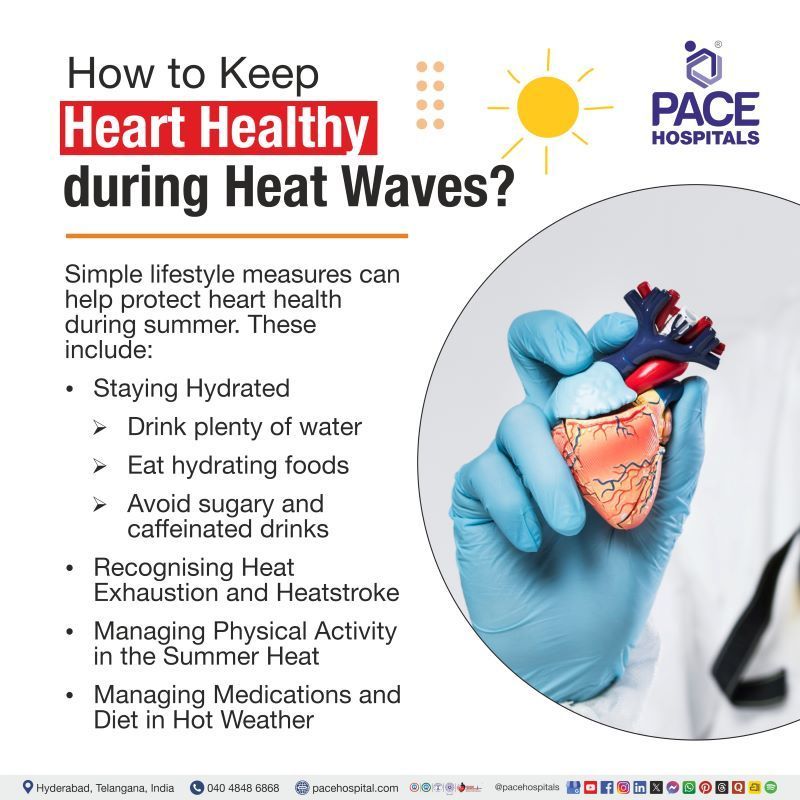
How to Stay Heart Healthy during Heat Waves?
1. Staying Hydrated
Summertime indicates hydration, especially for heart patients. Dehydration can make heart problems worse because it can lower blood pressure and make the heart work harder. It can also make it harder for the body to regulate its temperature, making it harder to cope with heat.
Tips for staying hydrated:
- Drink plenty of water: Drink 8 to 10 glasses of water a day, more in case of being out in the heat or exercising.
- Eat hydrating foods: Foods high in water content, such as watermelon, cucumbers, oranges, and strawberries, are great for staying hydrated and supplying vitamins.
- Avoid sugary and caffeinated drinks: These drinks can be dehydrating. Stay with water, electrolyte drinks (low in sugar) or herbal teas.
- Monitor for signs of dehydration: Look out for signs such as dry mouth, dizziness, dark urine, or confusion. If this happens, rehydrate and seek medical attention if symptoms worsen.
2. Recognising Heat Exhaustion and Heatstroke
Heat exhaustion and heatstroke are serious risks during summer, particularly for those with heart conditions. Heat exhaustion occurs when the body overheats and loses too much water and salt through sweating. Heatstroke is a life-threatening condition that happens when the body’s temperature reaches dangerously high levels.
Heat exhaustion signs for heart patients:
- Excessive sweating
- Weakness or fatigue
- Dizziness or lightheadedness
- Nausea or vomiting
- Rapid pulse and low blood pressure
Warning signs of heat stroke in heart patients:
- Body temperature above 104°F (40°C)
- Hot, dry skin (no sweating)
- Confusion, agitation, or loss of consciousness
- Increased heart rate and shallow breathing
What to do if these symptoms occur:
- Move to a cooler area immediately.
- Drink water and use cool compresses to help lower body temperature.
- Seek emergency medical care if heatstroke is suspected.
3. Managing Physical Activity in the Summer Heat
Exercise is important for heart health, but during the summer, it’s essential to manage physical activity to prevent overheating and excessive strain on the heart. Heart patients should be cautious about outdoor activities and time spent in high temperatures.
Heart patient summer exercise guide:
- Exercise early or late: Try to exercise in the early morning or late evening when temperatures are cooler.
- Avoid peak heat hours: Limit outdoor physical activity between 11 a.m. and 4 p.m., when the sun is at its hottest.
- Choose low-intensity exercises: Walking, swimming, and gentle stretching are good options. Avoid intense or prolonged exercise during extreme heat.
- Take breaks: Rest in shaded or air-conditioned areas frequently to avoid overheating.
- Stay hydrated: Drink water before, during, and after exercise to prevent dehydration.
4. Managing Medications and Diet in Hot Weather
The effects of summer heat can interfere with the way the body processes heart medications. Certain heart medications, such as diuretics (which get rid of excess fluid), can cause loss of fluid, so it’s important to watch hydration carefully. Also, some medications can affect blood pressure, and it may be necessary to monitor and change medication schedules.
Medication tips for heart patients:
- Consult a doctor: Talk to a healthcare provider about any adjustments to medications during the summer, particularly if they are taking diuretics or blood pressure medication.
- Store medications properly: Heat can affect the effectiveness of certain medications, so store them in a cool place away from direct sunlight.
Diet tips for summer:
- Eat light and healthy: Eat smaller meals that are easier to digest. Fresh salads, grilled vegetables and lean proteins such as chicken and fish are ideal.
- Limit salt intake: Excess salt can increase blood pressure and cause fluid retention, so avoid high-sodium foods.
- Increase potassium-rich foods: Bananas, spinach, and sweet potatoes are high in potassium, which helps maintain heart health.
When to Seek Medical Help?
Monitoring health during the summer months is crucial if one is a heart patient. Heat-related problems can rapidly worsen and need to be addressed promptly to prevent complications. Knowing when to consult the doctor is important to stay safe.
Warning Signs to Watch For:
- Chest pain or discomfort: This may be a sign of a heart attack. Call for urgent medical help.
- Shortness of breath: Having trouble breathing, especially with minimal physical activity, could be a sign of a heart problem.
- Dizziness or fainting: Such symptoms could be caused by dehydration, low blood pressure levels, or other issues related to the heart.
- Extreme fatigue or weakness: Feeling very tired and not better after resting can be a warning sign of heat exhaustion or heart strain.
Summer Diet for Heart Health
A heart-healthy summer diet is important for managing heart conditions and staying safe in the heat. It has the following:
- Hydrating Foods: Water-rich fruits like watermelon and cucumbers help maintain hydration and provide heart-healthy vitamins.
- Lean Proteins: chicken, fish, and plant-based proteins like beans to support muscle health.
- Healthy Fats: Use olive oil, avocado, and nuts to boost heart health and lower bad cholesterol.
- Fibre: Whole grains, fruits, and vegetables help lower cholesterol and improve heart function.
- Low Sodium: Limit processed foods and salt to manage blood pressure.
- Refresh with Low-Sugar Snacks: Choose fresh fruit, smoothies, and yoghurt instead of sugary treats.
- Avoid Sugary Drinks: Stick to water or herbal teas to keep sugar levels in check.
By following these guidelines, heart patients can stay nourished and safe during the summer months.
Conclusion: Enjoying a Safe Summer with Heart Disease
But with the right precautions, heart patients can enjoy the summer months and lower the risk associated with heat. To stay safe, drink plenty of water, avoid the hottest times of the day, manage medications, and know the early signs of heat-related illness. Be aware of the risks and always consult a healthcare provider for advice. Following these tips can help heart patients enjoy a healthy summer season.
Frequently Asked Questions (FAQs)
How does hot weather affect heart health?
The heart has to work harder in hot weather to keep the body cool. This makes the heart beat faster and the blood pressure drops. For heart patients, these extra strains can result in problems such as irregular heartbeats or even heart attacks. It’s important to keep cool and not overexert during hot days.
What are the risks of dehydration for heart patients in summer?
Dehydration can cause the heart to work harder by decreasing the amount of blood in the body, which causes low blood pressure and a rapid heart rate. This can cause dizziness, fainting and even heart attacks in heart patients. Being well hydrated is important to prevent these risks and support heart health in the summer.
How can heart patients prevent heatstroke during the summer?
Heart patients can avoid heatstroke by remaining in a cool, air-conditioned environment during the hottest part of the day (10 a.m. to 4 p.m.). They should wear light-weight, breathable clothing, drink plenty of water and avoid strenuous activity in the heat. It is also important to take breaks in the shade and watch for symptoms such as dizziness or confusion.
What types of foods should heart patients eat in summer?
Heart patients must have light, nutrient-dense foods like fruits, vegetables, and whole grains to support heart health. Foods rich in omega-3 fatty acids, such as walnuts and salmon, lower cholesterol. Foods having high water content, like watermelon and cucumbers, can also help stay hydrated and maintain healthy blood pressure.
How to control high blood pressure in summer?
Heart patients need to stay hydrated, stay away from excess heat and take less salt to keep high blood pressure under control during summer. Regular, moderate exercise in cooler parts of the day can help maintain healthy blood pressure. Eating a balanced diet rich in fruits, vegetables, and whole grains while reducing alcohol and caffeine also supports blood pressure management.
Is AC good for heart patients?
Yes, air conditioning is beneficial for heart patients, especially in hot weather, as it helps to keep the environment cool and prevents overheating. In the heat, staying cool can help heart patients reduce their heart's workload and avoid heat-related illnesses such as heatstroke or dehydration. Set the AC to a comfortable temperature and avoid sudden temperature changes.
Can extreme heat lead to a heart attack in heart patients?
Yes, excessive heat may increase the risk of a heart attack in heart patients. High temperatures make the heart work harder, increasing blood pressure, heart rate and dehydration, all of which put additional strain on the heart. People with heart disease, however, are at real risk from overexertion in the heat and dehydration, so this must be avoided.
What should heart patients wear in the summer to stay cool?
In summer, wear loose, light, airy fabrics such as cotton, which are cool to the touch. Light-colored clothing reflects sunlight, and wide-brimmed hats and sunglasses protect against direct exposure to the sun. Such choices may help to cool the body and ease the heart's burden.
What precautions should heart patients take when travelling in hot weather?
Heart patients travelling in hot weather should drink plenty of fluids, stay out of the heat during the peak hours and take frequent breaks in cool, shaded areas. Wear light, breathable clothing, watch for signs of dehydration or heat exhaustion and keep medications in a cool place. Consulting a doctor before travelling is also recommended to ensure proper precautions are in place.
Are there summer activities that heart patients should avoid?
People with heart disease should avoid strenuous activities such as intense exercise, heavy yard work or hiking during the peak heat hours. It is also important to avoid activities that can lead to dehydration, such as spending a lot of time in the sun or swimming in warm water. The best thing to do is to stick with low-intensity activities during the cooler parts of the day.
What is the role of sodium in heart patients' summer diets?
Sodium can raise blood pressure, forcing the heart to work harder, especially in hot weather. Heart patients need to watch their sodium intake, as excess sodium can lead to fluid retention and high blood pressure, which may aggravate heart problems. Fresh, whole foods instead of processed foods can help keep sodium in check and promote heart health.
What should heart patients do if they feel faint or dizzy in the heat?
Heart patients who feel faint or dizzy in the heat should go to a cooler place at once, ideally an air-conditioned room. Sit or lie and raise the legs to promote blood flow. It is important to drink water slowly and watch for symptoms. Seek medical help if symptoms persist.
What time of day is safest for heart patients to go outside in the summer?
Early morning or late evening are the best times for heart patients to go out in the summer when it is cooler. Staying indoors from 11 a.m. to 4 p.m., when the sun is strongest, helps to lower the risk of heat exhaustion or heatstroke. Always keep hydrated and take breaks in the shade.
How often should heart patients check their blood pressure during the summer?
The heat can impact blood pressure levels, so heart patients should check their blood pressure at least once a day during the summer. If one experiences symptoms like dizziness or increased physical activity, it is important to check more often. Regular checks ensure that any changes are dealt with early.
Share on
Request an appointment
Fill in the appointment form or call us instantly to book a confirmed appointment with our super specialist at 04048486868
Appointment request - health articles
Recent Articles